Nebraska: Bumpy lives, flat land (a review)

poster

Much like the Big Sky prairies that serve as its backdrop, Alexander Payne’s 2013 film Nebraska takes a little bit to get going, but when it hits its stride, there is no stopping it.

An irascible old drunkard Woody (Bruce Dern) thinks he’s won a $1,000,000 lottery and is determined to collect his prize in person, walking if he must from his home in Billings, Montana to the prize centre in Lincoln, Nebraska. When his youngest son David (Will Forte) realizes there is no stopping the senile old coot, he takes a few days off work and offers to drive.

Along the way, they stop for a few days in his father’s home town of Hawthorne, Nebraska, where they are joined by his mother Kate (June Squibb) and older brother Ross (Bob Odenkirk). But almost as quickly as the townsfolk and extended family realize the old man has struck it rich, the hands reach out for their cut, led by Woody’s former business partner Ed (Stacy Keach).

As I said, the movie starts out slow. Woody has nothing to say to any of his family, at times appearing to have dementia. David meanwhile faces an empty life and just wants to communicate on some level with his family, never having felt like he could talk to them. Thus, when the two men with nothing in common aside from chromosomes take to the road, it feels very much like the start of an opposites-connect buddy film.

NEBRASKA

The dialogue is excruciatingly simple in the early going, rarely more than one or two syllable conversations. Despite occupying the passenger seat of the car, Dern’s Woody is never really there, only being forced into human contact by having everything repeated louder. Forte’s David, meanwhile, has a perpetual pout of a puppy begging to be patted on the head.

Eventually, though, if only out of frustration, David begins to take control of the situation and his life. Through his own explorations and by observing his father interact with the home townfolk, he begins to see that there is so much more to his father, and this is where I really started to take note of Forte as an actor, as something more than his MacGruber caricature.

I would say that Dern turns in a solid performance, but his dialogue is so short and his stare so vacant that only once in a while do we get a real glimpse of the tormented soul within the husk of a man. June Squibb’s Kate is something to behold, however (her voice and attitude remind me of Shelley Winters). Starting more as a screeching shrew, she really comes into her own in the latter half of the film with some of the funniest lines and the staunchest defense of her messed up husband. Odenkirk is solid, but isn’t really given much to do here…this is Forte’s movie.

My strongest reaction, however, is reserved for Stacy Keach, who yet again, plays the charming, smarmy bully asshole for which he is famous (think Papa Titus on the sitcom Titus). I can’t remember a role for which Keach didn’t deliver. The man eats up the screen. You can’t not watch him.

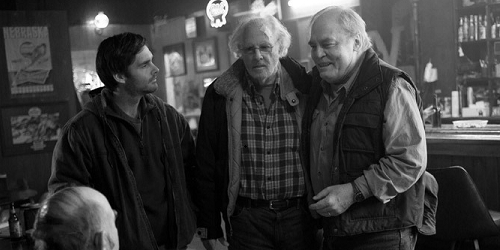
Nebraska-Dern-Forte-Keach

In terms of cinematography, Payne chose to film the entire movie in black and white, giving the whole story a sense of being trapped in another time, and adding to the sense of desolation exhibited by both the geography of the region and the simplicity of the town of Hawthorne, with its barren sidewalks and seemingly abandoned businesses. The whole thing feels like an emotional dead zone and the lack of human spark in all but a few citizens reflects that.

Bob Nelson’s screenplay is a simple one, devoid of plot twists or anxious moments. There are no great moments of revelation, but rather subtle hints at who Woody was when he was a young man. As such, the characters can come across as superficial and on-the-nose. But again, I think this was on purpose rather than a failing. I think he wanted to show us shallow people in a shallow land.

Toward the end, the movie started to take on a bit of a Hollywood ending feel, but although Nelson did start us down that road, he thankfully stopped himself before the point of schmaltzy no return.

All-in-all, I liked Nebraska, although I didn’t think it deserved the accolades it received at Cannes (Palme d’Or nomination, best actor for Dern), the Golden Globes (5 nominations) or the Oscars (6 nominations). It’s just not that deep a film, in my eyes.


You can find a PDF of the screenplay for Nebraska here.

Showing concern

One of the myriad gulls sharing the local boardwalk

One of the myriad gulls sharing the local boardwalk

There are truly good people yet in the world.

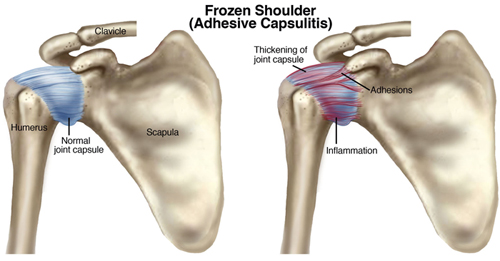
As some of you know, I am going through a bit of a problem with one of my shoulders (a condition with the stupid name frozen shoulder).

While wandering the boardwalk near my apartment earlier today, I absent-mindedly tossed an acorn at a bench (not a euphemism, folks) and immediately doubled up in searing pain, grabbing my arm and shoulder, and plopped on the bench to wait for the pain to subside. It did…it always does.

Ill-named condition involving loss of range of motion

Ill-named condition involving loss of range of motion

But as I was getting up to finish the trip home, two cyclists stopped to make sure I was okay. They had seen me grab my arm and drop to the bench. It probably looked like a heart attack or seizure.

I explained the affliction and that the pain was mostly due to my unthinking idiocy, which seemed to allay their concerns. I thanked them, however, for checking on me and making sure I wasn’t in more serious trouble.

Nice to know that I’m never alone…I only hope I show the same concern should I be presented with something similar.

Loved the mood captured by the street lamp

Loved the mood captured by the street lamp

Snow White more an off-grey (a review)

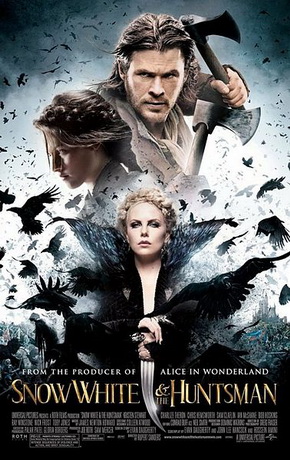
Snow_White_and_the_Huntsman_Poster

I find it difficult to appreciate a movie in isolation (its, not mine). At the same time that I strive to enjoy the movie, I also try to break down its various elements, ideally without immediate comparison to everything else I have seen.

Some movies make this easier by being truly unique stories (The Voices, for example), whereas others are either so familiar or so derivative that I find it virtually impossible to see it in isolation. The latter situation was the case for Snow White and the Huntsman, the 2012 take of the very familiar Grimm Brothers fairy tale by director Rupert Sanders.

This is not the Disney version, by a mile, but rather a much darker, more sinister take on the story of a young beauty (Kristen Stewart) condemned to death by her vainglorious step mother (Charlize Theron) who fights for her freedom in the dark woods where she meets all kinds of people and mystical creatures, including dwarves. Together, they reach a castle of renegades and Snow leads them into battle against her step mother.

So, we have the check list covered: evil step mother, check; mirror-mirror, check; bring me her heart, check; dwarves, check; poison apple, check; Prince Charming, sorta check.

Doing my best to isolate this movie from everything else, I give it a moderately passing grade. It is a fairy tale, so the dialogue hits the extremes of leaden cliché to screaming cliché.

There is no subtext to this movie…none, zero, nada, zilch. So don’t go looking for any. It is on-the-nose storytelling, which again, makes sense within the context of a fairy tale, but given that the film targets young adults to adults (much too dark for small children), I would have hoped for more.

The screenwriters offered a brief moment, where the huntsman (Chris Hemsworth) begins to let us into why he is so tortured over the death of his wife. But as soon as the moment starts, it slams shut and we are excluded from understanding the character beyond his alcoholic ramblings and Thor-like simplicity. (PS If I hadn’t seen the movie Rush, I might just think this is who Hemsworth is.)

So, where the dialogue wanes, the visuals have to take over and here, the director earns his keep. Special effects do not overwhelm the story, but instead are woven nicely into live action sequences to augment the reality. There was only one scene where I felt the director fell asleep at the SFX wheel and allowed his art director to run amok.

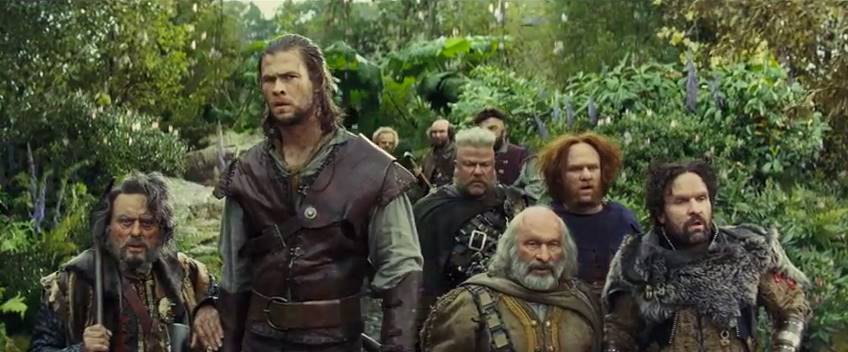
Dwarves huntsman

And perhaps my favourite part of the visual effects was how they took normal sized British actors and turned them into dwarves. Masterfully done. Imagine Ian McShane, Bob Hoskins, Ray Winstone, Nick Frost, Toby Jones, Eddie Marsan all about a meter tall yet perfectly proportioned, standing next to or fighting alongside Hemsworth. Don’t know how they did it…don’t want to know.

Where I found the movie particularly weak, however, was in the development of Snow White. Rather than be the protagonist of the story, I felt she was the victim of the story, literally being dragged across the countryside to avoid capture. While she clearly wasn’t the “Oh my. Dear me” victim of the Disney version, she was also not the “Girl Power” version that I think the movie promised.

Two snows

When she wasn’t being rescued by one or more men, she was being rescued by a mystical inner force of which she was initially unaware and over which she had no control.

I was willing to let her be the victim over the first part of the story, but I needed her to turn around at the midpoint and attempt to kick some ass.

Now, to open the comparative flood gates, this movie has Tolkein written all over it. You’ll see dwarves walking across hill tops. Floating towns will burn. Dark forests will haunt you. Guys with swords and axes will be moody.

Now I appreciate that this is bound to happen, as there are certain pastiches that run rampant throughout fairy tales and epic sagas. I am speaking here more in terms of cinematography, however. In several parts of the journey sequence and the battle scenes, it looked like the director decided to save a few bucks by splicing in rejected footage left behind by Peter Jackson.

For what is it, Snow White and the Huntsman is not the worst 90 minutes I have ever spent watching a movie. It’s just a damned shame that the running time is 127 minutes.

You have the write to know

Write

I write about writing. I’ve seen dozens of blogs that do the same and suspect there are hundreds if not thousands more blogs about writing I have yet to find.

I routinely visit web sites dedicated to writing, reading amazing posts from amazing (and some not so amazing) writers. And I have two bookshelves dedicated to various aspects of writing, from dictionaries and tomes on prose to bound witticisms and opinions on the minutiae of character, plot and the perfect turn of joke.

I have taken classes on sketch comedy, screenwriting and story editing, and have listened in on dozens of podcasts and teleconferences given by the kings and queens of screenwriting—the latest given by Robert McKee. And I have recently started going to writing conferences, bending and rubbing elbows with writers established and in the birthing process.

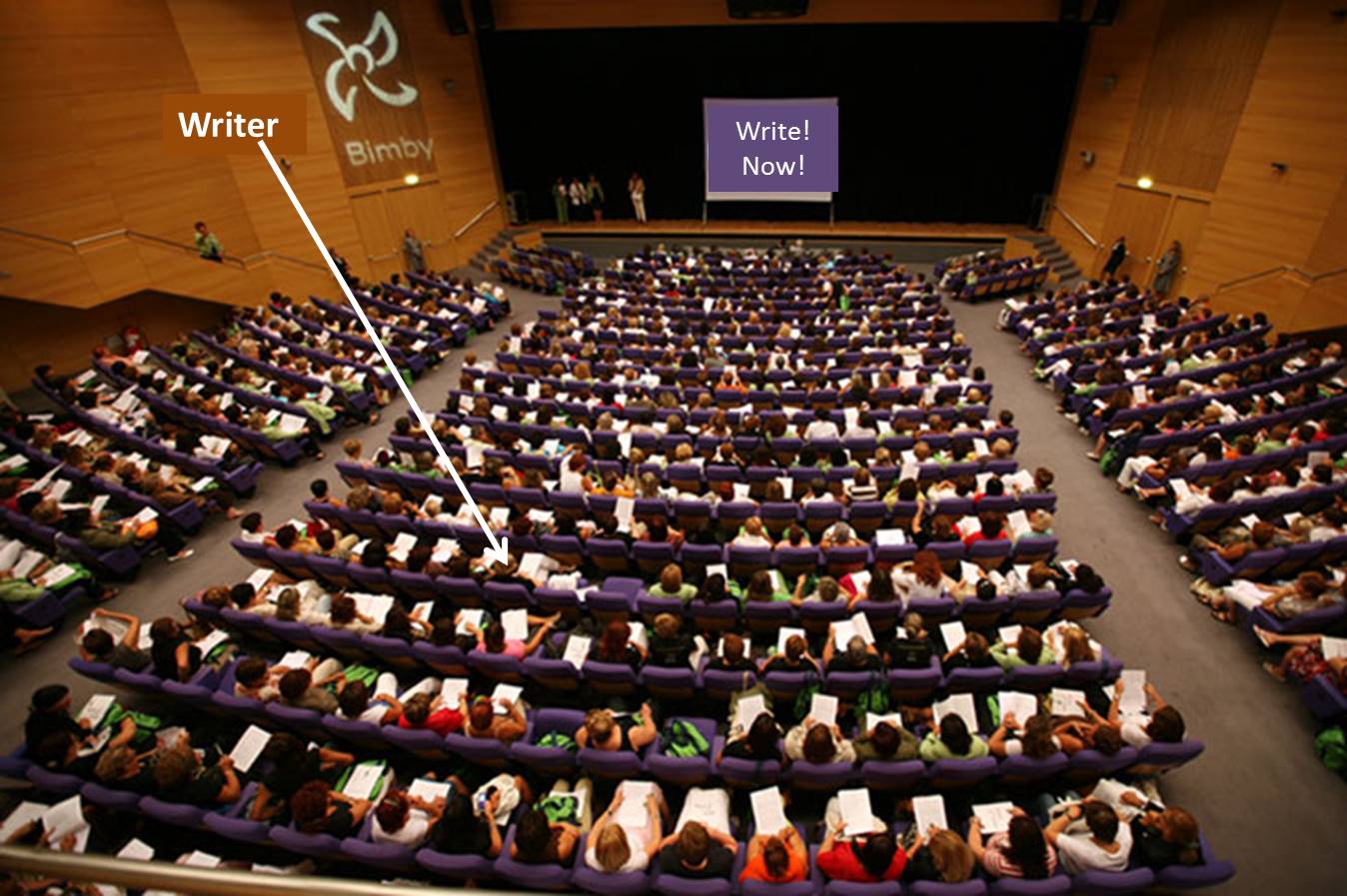
Conference

All of this information and guidance has been invaluable to helping me understand my craft. But for all those thousands of hours of effort, I’m really not sure that any of it has helped me be a better writer.

In truth, I think there are only really two things you need to do to be a better writer:

  1. Write
  2. Share what you’ve written

Unless you’re willing to write, write some more, write yet again, and then when your body has given up the ghost with exhaustion, write again, you will never get better. All of the academic training and guidance in the world will not make you a better writer if you are not willing to write.

Leonid_Pasternak_001

Writing can be like literally shoving fingers into brain to extract words

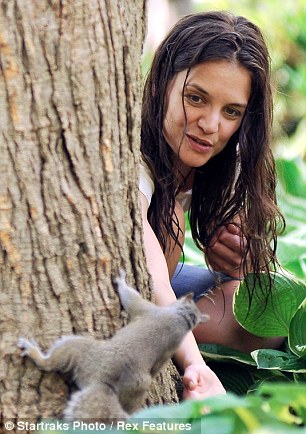
But writing is a very insular process, so it is equally important that you share what you have written…with literally anyone: your mom, your partner, your dog, the guy on the subway, the squirrel at the park.

How does the other party respond to your work? Are you communicating well? Do they see, hear, taste, what you see, hear, taste?

I am not asking do they like what you wrote. Personal tastes are just that. Rather, you want to know do they respond to what you’ve written…good, bad or ugly.

Oh, and I was only being half-facetious about the dog and squirrel…try it. You’ll be amazed at what happens.

Because most animals can’t read—I blame the current education models—you’ll be forced to read your work to them…the minute your work moves from visual to aural, a different part of your brain opens up and you hear whether you are affected by your work. Invaluable.

Love the internet for this stuff..."woman talking to squirrel"

Love the internet for this stuff…”woman talking to squirrel”

So read all you want, whether online or in those ancient paper constructs we call books. Attend conferences, lectures, podcasts and classes. I applaud your effort, your drive.

But I reiterate…there are only really two things you need to do to be a better writer:

  1. Write
  2. Share what you’ve written

Good luck.

The Beasts of the Nature

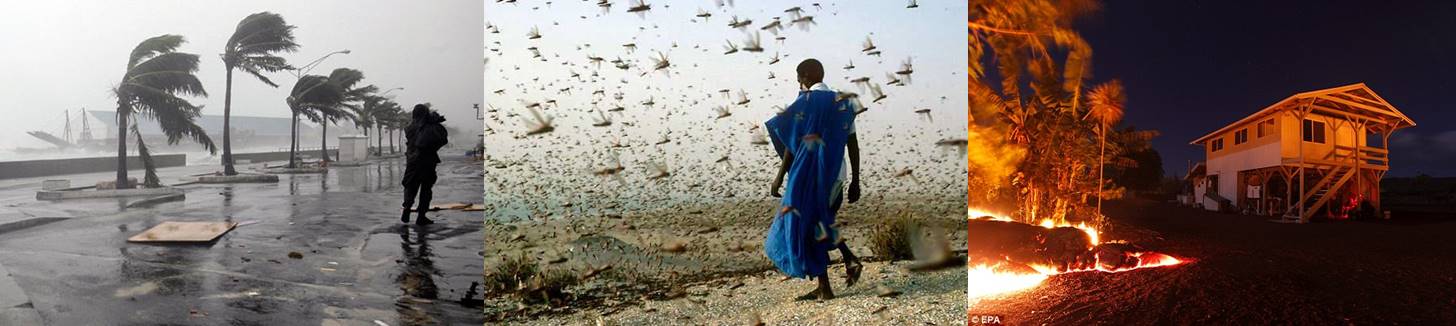
plagues

Nature doesn’t like me. I don’t know why. It just doesn’t.

I try to be respectful. I not only recycle, but I also reduce…or, at least, I’ve never thrown food away.

I barely leave my apartment, so my literal footprint is pretty small—9-1/2 wide, for those of you keeping track. And other than my laptop and coffee maker, I barely use any electricity. Nor do I use the heat, so if you come over for a visit, bring a sweater.

And I believe that all life is sacred…which is why my apartment is filled with four types of spiders, two varieties of sow bugs, and one rather large species of house centipede. As an aside, if any of you ladies are entomologists or just like to get your arachnid freak on, call me.

Hard to tell how the spider is fairing in this fight, but I'm not holding out hope

Hard to tell how the spider is fairing in this fight, but I’m not holding out hope

Hell, I barely wear any clothes at home, preferring to wander au naturel…again, call first before visiting.

And yet, for all this benign behaviour, Nature wants me dead.

Every Spring, 10,000 species of plants gather around my apartment in a massive botanic circle jerk, spraying me and my immune system with a dazzling array of ejaculates green, gold and white. And they do this knowing full well that in another life, my white cells worked for Al Qaeda. For me, the months immediately following March are Anaphylaxis and Can’t.

Bee-pollen-supplements1

You know when you make pancakes and first pour the batter into the scorching pan? Within moments, the batter bubbles up and bursts? That was me as a kid on a cloudy day. On a sunny day, I could watch Enola Gay footage and jealously think, “At least they had a breeze.”

And the water’s no better. Pond, stream, lake, ocean, they all think of me as chum, and not in the friendly sense. I’ve yet to find a boat I cannot fall out of. A canoe? An outdoor bathtub. A kayak? A restraining device designed to pin me underwater. A rowboat? Topless submersible.

2 upsidedown

Currents. Waves. Tides. All mechanisms to keep me from remembering where I left the air. I once went body surfing in Oahu and got so disoriented by the swirling currents that I flew home from San Francisco. You worry about an undertow? I’ve never experienced anything smaller than an underfoot.

And regardless of my home BioDome project, all of that goodwill is forgotten the moment I emerge from my apartment and become a blood bank for what must otherwise be the most anemic bugs on the planet. Even the vegan insects view my flesh as hyper-ripe banana paste.

And despite the most astringent soap and strongest deodorant, I apparently offer flies the personal banquet of a 6-week-old corpse vacationing in the Louisiana Bayou. I am the no-pest strip of the bed bug world.

Red-winged black birds strafe me. Squirrels can’t tell walnut meat from finger meat. And wasps see themselves as my personal EpiPen.

I tell you all this because I am travelling to Los Angeles in a couple of weeks, and so I would like to pre-emptively apologize for the events that will finally bring beachfront charm to the Vegas strip.

vegas


NOTE: This piece is written as my contribution to a wonderful creative assembly called “Tell Me A Story” organized by my friend Will Ennis, a lovely actor in the city of Toronto. You can see his acting reel below.

Wolf of Wall Street a never-ending bore (review)

Poster math

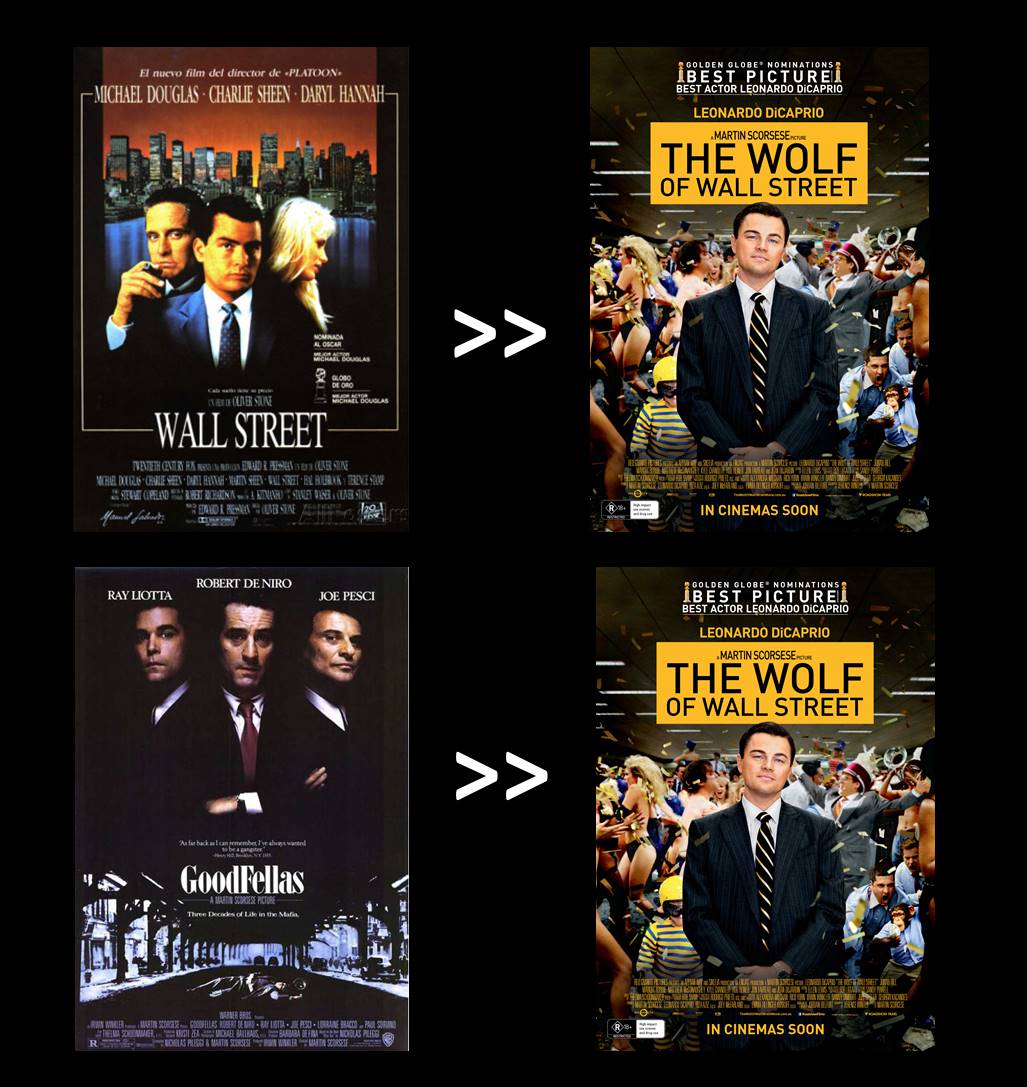
Layer the stylings of Martin Scorsese’s GoodFellas over Oliver Stone’s Wall Street and you have Scorsese’s 2013 treatise about greed in America, The Wolf of Wall Street. Unfortunately, where this should have been a wonderful blending of two great films, it was instead the mutated step-child.

Briefly, the movie follows the adventures of real-life stockbroker Jordan Belfort as he rises from the ashes of Wall Street to lie and cheat his way to fame and fortune from the then despised penny stocks market. Through a haze of booze, drugs and female flesh and relying on balls the size of the tri-state area, he pulls a fleet of nobodies into the middle of the financial maelstrom, becoming everything for which Wall Street is despised. Throw in a little money laundering and he, of course, becomes the target of an FBI and SEC investigation that ultimately brings him down.

4c78

If, from the synopsis, you don’t immediately see the influences of Wall Street and GoodFellas, you’re not really trying or you need to go back and watch them again.

I wish I could say it was just the 3-hour running time that interfered with my enjoyment of the film, but GoodFellas was 148 minutes and Wall Street was 126 minutes. Rather, I think the problem was that it felt like the movie was 6 hours long. Time seemed to drag out as though I was getting a contact high from all the Quaaludes the characters were consuming, but without the peaceful overtones.

I appreciate it was based on the life of Jordan Belfort, so perhaps the screenwriter Terrence Winter felt he had to be careful tiptoeing around the contents of Belfort’s book of the same title. But for the love of God, there was no place that Winter felt he could simply skip ahead?

When Leo DiCaprio would narrate the scenes, in some cases turning directly to the camera to do so, my mind immediately jumped to Ray Liotta in GoodFellas. Never more so than when he would try to explain how Wall Street functioned, almost mimicking Liotta’s explanation of the mob, down to the vocal cadence. The two examples below show both men introducing the troops.

And when DiCaprio would try to rally the troops, he became a bombastic Gordon Gecko (Michael Douglas), enthusiastically letting people know that greed was good…or in his case, that there was no nobility in poverty. Hell, in his narrative voice-over, he even mentions Gordon Gecko in an obvious homage that simply highlights how pale an imitator this movie is.

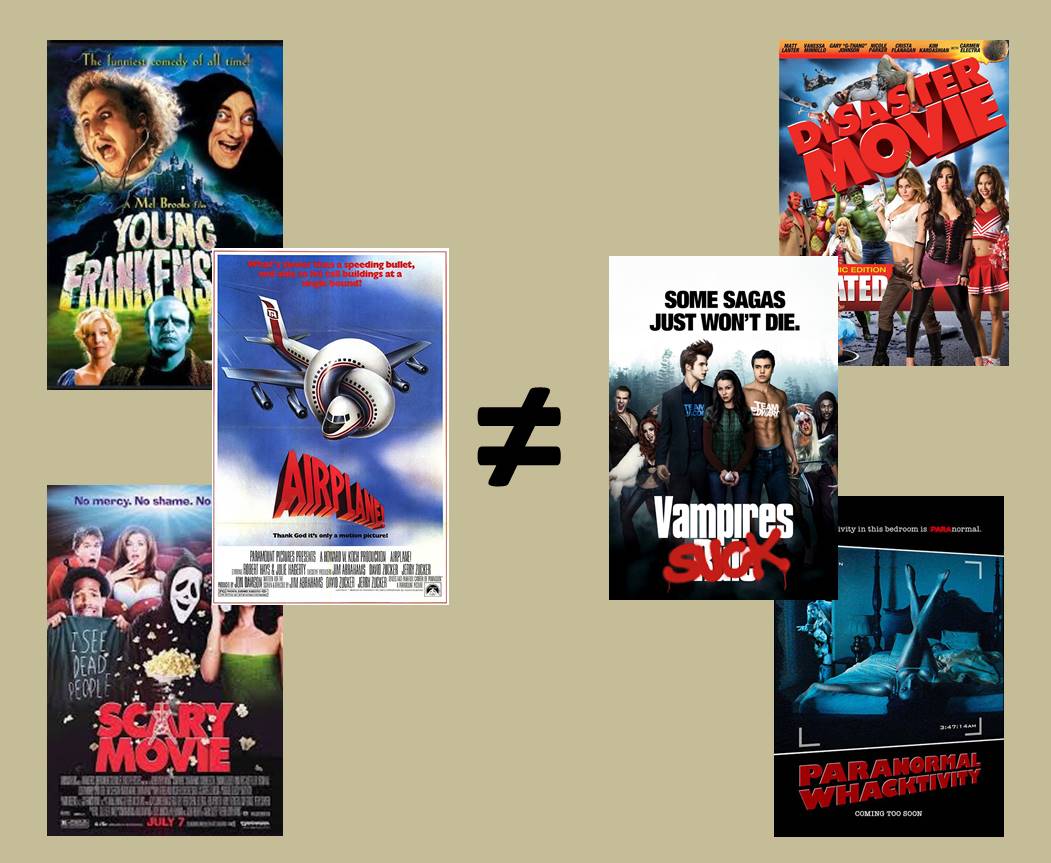
So I am left asking what exactly does The Wolf of Wall Street offer that the other two films didn’t.

Wealth, opulence, greed, excess? Been there, done that.

Booze, sex, drugs, violence? Watched that, saw it.

Illicit business, FBI investigations, wire taps? Old hat, nothing new.

Hubris, hedonism, idolatry? Biblical, but done and doner.

It made almost $400 million worldwide and was nominated for five Academy Awards (winning none), so people liked it.

For comparison, Wall Street earned $44 million globally in 1987 and won Douglas the Best Actor Oscar, while GoodFellas managed $47 million in the US in 1990 and won Joe Pesci the Best Supporting Actor Oscar (of six nominations).

DiCaprio has charm…and so did Liotta and Douglas.

Interestingly, I didn’t feel this one had the cinematographic snap of Scorsese’s earlier works…it didn’t feel like the camera was dancing with the actors as it did in GoodFellas.

Maybe it was simply a matter of timing. Wolf showed up just as the United States was truly starting to recover economically from the banking scandals and burst real estate bubbles, and in an almost self-abusive way, Wolf reminds Americans (and the rest of the world) of a time when money was cheap and easy. It’s definitely not a morality play, for no one is seen to suffer for their excesses.

It is the American dream seen through a tumbler of Scotch. The manifest destiny of anyone willing to gamble with the weaknesses of others. A sign that nothing has changed. That nothing ever changes.

Wall Street was a warning. GoodFellas was the rise and fall of Man. The Wolf of Wall Street is a love letter to unbridled greed.

Movie math

Crunchies, High Park, Toronto

And of course, what would a photography trip of mine be without a survey of all the things that crunch at Toronto’s High Park.

See also:

Grenadier Pond, High Park, Toronto

Gardens & Zoo, High Park, Toronto

Gardens and Zoo, High Park, Toronto

Aside from the more natural wilderness of Grenadier Pond, High Park is also home to beautiful gardens and a small zoo of various hoofed animals.

See also:

Grenadier Pond, High Park, Toronto

The Voices gets a hearing (a review)

poster

Not one to generally participate in the Toronto International Film Festival, it was a rare evening in which I found myself standing in a rush line to see a movie, but a friend of mine wanted to see the latest Ryan Reynolds film called The Voices. This is not your typical Ryan Reynolds film.

Reynolds is Jerry Hickfang, a good-natured if skittish guy who works in the shipping department of a bathroom fixtures company in Milton, the derelict remains of a town in Nowhere, USA. Jerry is a nice guy, who lives above a derelict bowling alley with his dog Bosco and cat Mr. Whiskers. And of course, Jerry has the hots for office cupcake Fiona, a misplaced Brit with a craving for bigger things, played by Gemma Arterton. For her part, Fiona finds Jerry a little creepy, but is not above using his puppy lust to get a lift during a rain storm.

Jerry Hickfang (Ryan Reynolds) struggles to understand Mr. Whiskers' advice

Jerry Hickfang (Ryan Reynolds) struggles to understand Mr. Whiskers’ advice

Oh, and the other thing you probably need to know about Jerry is that he is in court-appointed psychiatric treatment, isn’t really good about taking his meds, and has a family history of hearing voices, but that’s not something he likes to talk about.

So far, so harmless. But after a literal run-in with a deer who begs Jerry to finish him off, the blood-letting never really stops and the rest of the movie becomes a giant slip-and-slide of mostly implied blood and offal.

So, The Voices is a thriller…and a drama…and a comedy…and a farce. You squirm in revulsion (never really reaches horror) as often as you LOL.

Director Marjane Satrapi (who brought us Persepolis) attended the screening and describes the story as completely fucked up. She said she was mesmerized by the screenplay and desperately wanted to meet the man who penned it to see what messed up human could conceptualize such a story. So she was surprised when she met Michael R Perry, a tall normal-looking fellow.

Marjane Satrapi

Marjane Satrapi

As Perry explained, he wanted to look at the life of someone of multiple personality disorder from their perspective rather than society’s. And in that, he succeeded.

With Satrapi’s help, the two clearly crafted the oddly idyllic yet troubled world within Jerry’s mind, giving the audience only the briefest glimpse of how the rest of the world saw things. With Jerry, it was all perfect love and butterflies. To the rest of us, it was squalor and pain.

Where the story fell down for me was in explaining why everything went wrong so suddenly. In writing circles, we talk about “Why today?” Why does your story begin today, at this moment, and not 6 weeks ago or 5 months from now? In this case, what was the event that caused Jerry to go from lovable schmuck to… Some might suggest it was the deer accident, but even Mr. Whiskers called that bullshit

The other place I felt let down was that the conflict never escalated, it merely accumulated. Rather than find interesting ways for Jerry’s mania to manifest itself, the writer simply repeated the same event over and over, as though each of the characters voluntarily walked into a wood chipper.

And I don’t know if the ending was presented as written or was something that blossomed out of Satrapi’s mind, but it was lazy and bordered on the ludicrous. It was a bad after-taste on a film that had merits.

Ryan Reynolds, Gemma Arterton, Anna Kendrick

Ryan Reynolds, Gemma Arterton, Anna Kendrick

On the plus side, Ryan Reynolds was amazing to watch…this was not the charming goofball romantic comedy, although Jerry was sadly charming when he wasn’t obviously tortured by his snarky brogue-spewing cat. (NOTE: Bosco and Mr. Whiskers easily have the funniest lines in this film.)

Gemma Arterton’s Fiona was a delight. She was delicious to watch as the voluptuous vixen whose biggest fear in life is being bored. Problem solved!

Anna Kendrick (Up in the Air), as tier-two love interest Lisa (see, the writer even repeated this beat), was largely wasted. Her character was pretty two-dimensional. As nice girl looking for a nice guy, her function was to have Jerry explain his condition to the audience (exposition disguised as opening up).

The Voices is definitely worth seeing, if only for what it attempts to do. I can’t help feeling, however, that if they had rewritten the screenplay a few more times, they would have achieved their goals much better than this.

My recommend (and that of my friend) is that this is a Cheapie Tuesday movie (or whatever your local half-price day is).


PS I was unable to find a trailer for this movie, so I offer the following interview with Satrapi at Sundance London…I will warn you, however, that it does include a lot more info about the plot than I gave above.