In the last couple of weeks, I have spoken with many friends about the concept of happiness as it pertains to life’s pursuits, which has forced me to give thought to my past experiences and the reasons why happiness eluded me for so long in my life. The following is the sum of my thoughts.
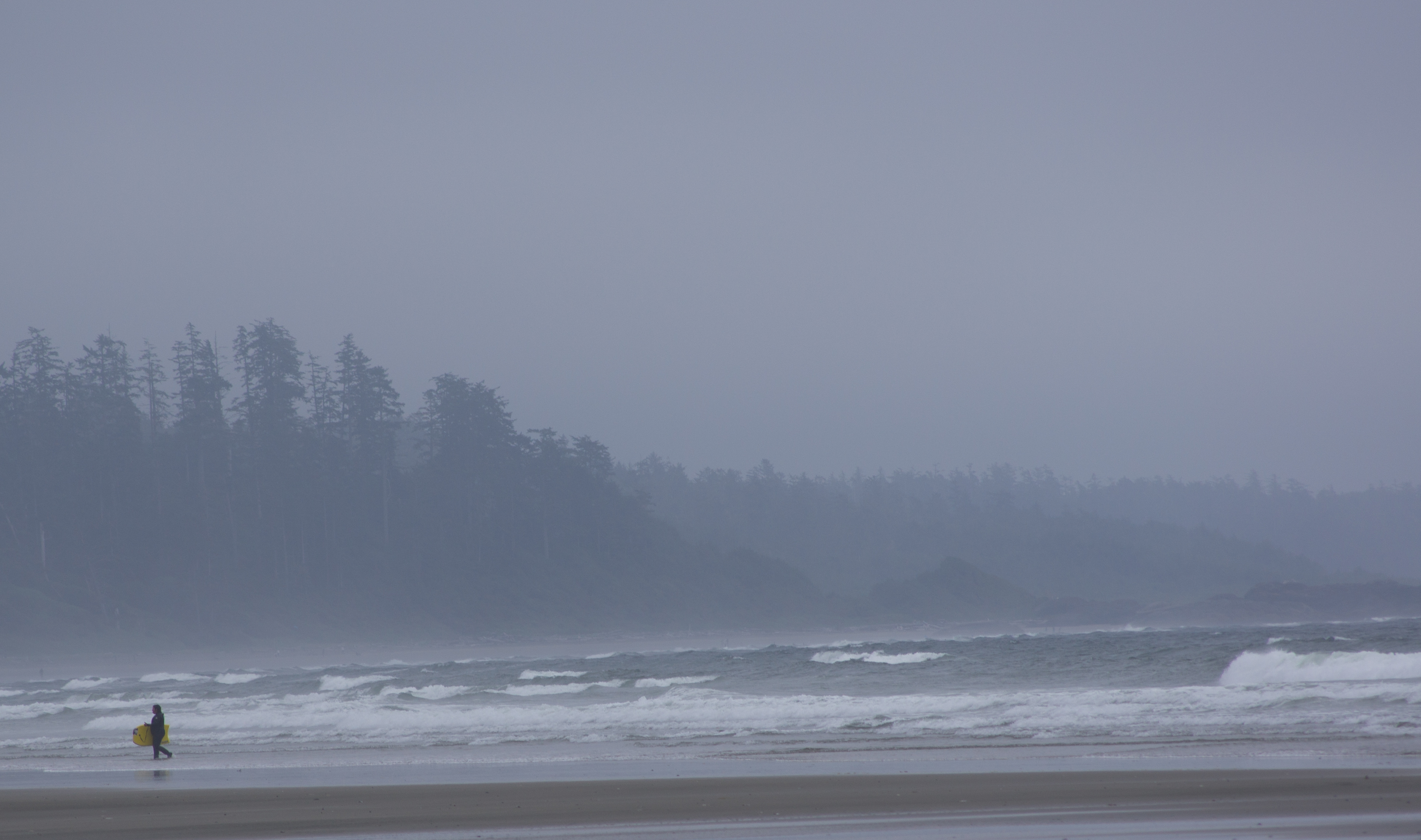
A surfer finds joy on a blustery day in Tofino, BC
Life is not about destinations. Or perhaps I should argue that a happy or satisfying life cannot be about destinations, because destinations are temporary at best and completely illusory in truth.
We have been taught that it is important to set goals, to aim for a destination, and to a limited extent, I agree. Where I struggle, however, is in the assumption, the programming that suggests the goal will bring happiness, that at your destination, you can rest.
For most of us, this sets up a couple of problems.
If we do not succeed in achieving our goal or reaching our destination, then not only have we failed, but more insidiously, we see ourselves as failures.
But even in those situations where we achieve our goal, arrive at our destination, we are faced with the daunting and disheartening revelation of “Now what?”
In Costa Rica, when you finish exploring the jungle, there is still the mountain to climb
For despite the momentary glow of success, we cannot rest. We must seek the next goal, identify the next destination. And the cycle repeats, ensuring that for all but the rarest of us, we will fail, we are failures.
Part of the challenge is that for many people, the idea of a goal or destination presupposes that we are not sufficient in the now, that our lives are incomplete and would somehow be better over there.
We don’t make enough money. We are alone. We have not achieved the heights for which we are destined. We—as we are today—are not good enough.
It is good to push boundaries. It is good to strive.
And while those two statements may sound contradictory to the questions I raise above, to what I have decried, I don’t think they are.
Pushing. Striving. These are actions, not endpoints. And that makes all the difference in the world.
A goal or a destination, a predetermined endpoint, is fine, but only in so far as it gets you moving in a direction. After that, it is meaningless.
Life is in the movement. It is in the process. It is in the journey, regardless of where that journey takes you.
Destinations and goals give us opportunities to shift the direction of that journey, but they are not the point of or the reason for the journey.
We are like photons in the universe of our lives. Without movement, a photon has no mass. When we cease to move, we cease to exist.
It is our movement that gives us life, and our interactions during that journey that gives that life meaning.
Feel free to set a direction, but be prepared for and welcome the changes that come along the way, for it is in that journey that we will truly live and ultimately find happiness.
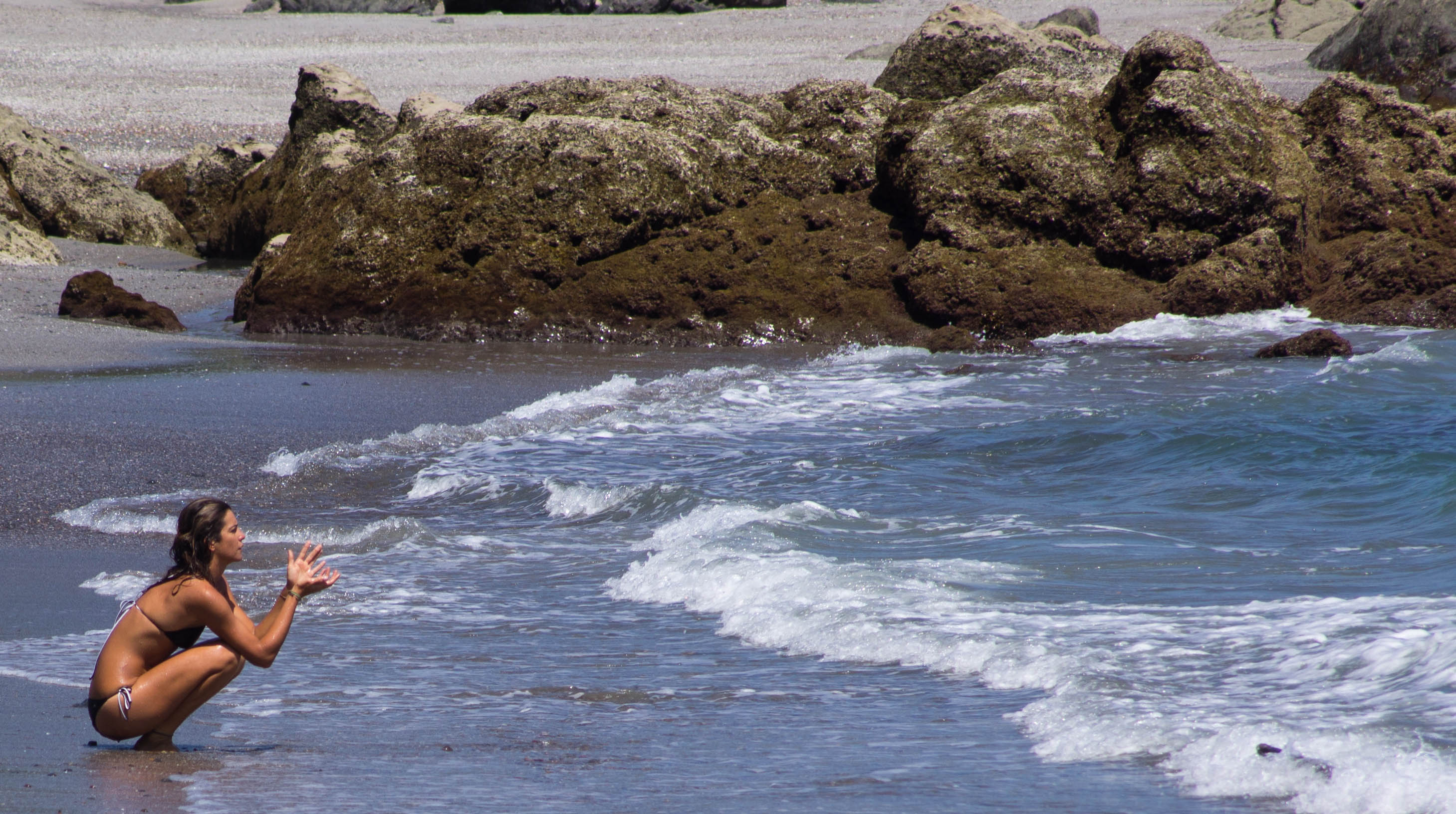
It is enough to experience the world; you do not need to conquer it (Montezuma, Costa Rica)
An example from my life:
Early in my writing career, I worked for a magazine in Washington, DC. Every year, my boss and I would set goals for the next 12 months; e.g., 3 features, 10 department articles, 20 short pieces. And being a little Type A, I would accomplish my benchmark within 3 months. At the end of the 12 months, I might have tripled or quadrupled the expected output.
I would demand a promotion, and I would be told no…there were apparently other factors not included in my annual goals before I could be promoted. This pissed me off.
But surprisingly, even when I received the promotion, it was not enough. I needed the next one. I set the goals and again, felt held back despite achieving the goals.
And very quickly, the job I loved, the job I practically ran toward every morning in anticipation, became a leaden weight. I ceased to write for the love of writing. I was miserable.
In hindsight, I can see now how much I learned on that job—not the least of which was “office politics”—but at the time, all I could see was failure. It was the journey that helped shaped the man I am today, not the endpoints. I might have been happier had I realized that then.
The following video is a rather clever summation of my thoughts. Thanks to my friend Agah for pointing me to it!
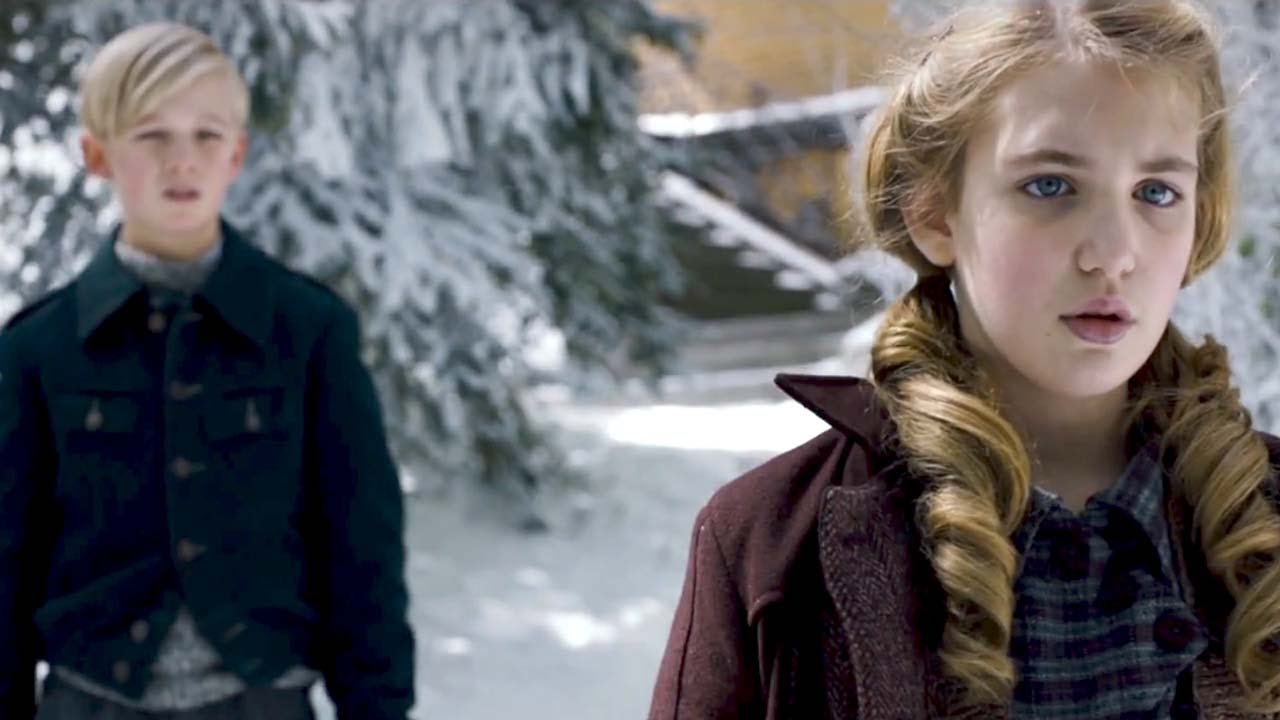
I just finished watching The Book Thief and I must admit that I am quite conflicted.
Released in 2013 with an amazing cast including Geoffrey Rush, Emily Watson and the mesmerizing Sophie Nélisse in the title role, The Book Thief tells the story of a young German girl adopted by aging parents in the months leading up to World War II.
Through Liesel’s eyes, we watch fascism take hold of Germany while good people try to lead simple lives. We watch her struggle to comprehend anti-Semitism through conversations with a young Jewish man her parents are hiding and at the same time, find her own gift for words through her exploration of books. We see the beauty of love and the pain of uncertainty.
All in all, the film was beautiful and heartfelt. And yet, in the end, I feel like I have witnessed a life, not heard a story.
Liesel floats through the world that moves around her. In only the rarest of instances does she actually drive the story forward. Instead, people and the fates make decisions for her at every turn. She is not the protagonist or hero of the story; rather, she is the victim of events.
Adding to my challenge is that, despite its setting in WWII Germany, there is no real conflict in the story. The ideological conflict amounts to Hitler bad, everyone else good. And even here, it’s discussed within isolated groups. There is no—or very little—confrontation between the two camps.
As our hero, Liesel has no goal and therefore nothing stands in her way. She has no need to make a plan and therefore nothing truly thwarts her.
And perhaps because of this—at least spinning out of this—there are never (NEVER) any repercussions of her actions or those around her despite the number of times the screenwriter (Michael Petroni adapting a novel by Markus Zusak) or director (Brian Percival) have set them up.
(SPOILER EXAMPLES)
When the vicious little Brownshirt Franz threatens to expose Liesel and her little friend Rudy for keeping secrets, nothing happens. When Liesel’s friendship with the Burgermeister’s wife causes Liesel’s mother to lose her valuable laundry contract, there are no repercussions. Even her spilling the beans about a Jew hiding in the basement has no impact on the story.
As we would describe in screenwriting lingo, there were no turning points where the hero has to make a decision, and there was no crisis and therefore no climax to the story.
Thus, my conflict with the movie.
A visually interesting film, acted beautifully, and yet I was unable to invest in the story at all because I never felt anything was in doubt. Where there were the odd surprises, they were telegraphed by the narrator, who popped up so haphazardly, I could never figure out why he was even in the story. And the choice of who narrates is also very odd.
And then, one after another, the loops of the bow-tie formed as the story came to a close, everything being explained away to leave the final screen moments devoid of meaning or feeling.
Sad, really. There was so much to like about this movie.
The melting pot that is Toronto is notably defined by its many distinct neighborhoods. By the time I realized I was working on a theme with these signage shots I had already overlooked about a dozen or so too many feet-miles earlier to readily retrace my steps.
Congratulations! You have just outlined your next screenplay. Or maybe you’ve written “Fade Out”. That’s quite an accomplishment and you should be proud of yourself.
Go ahead. Take a moment to luxuriate. I can wait.
Okay, now I need you to kill one of your characters…or two…or maybe even three.
What? Oh, I know you’re not writing a thriller, but murder will be good for you. And even if you are writing a thriller, you’ll feel better after you pull the plug on certain characters.
Having written a few screenplays and having read 50X more, one common thread I find is that writers (me included) create too many characters, some of which are completely unnecessary.
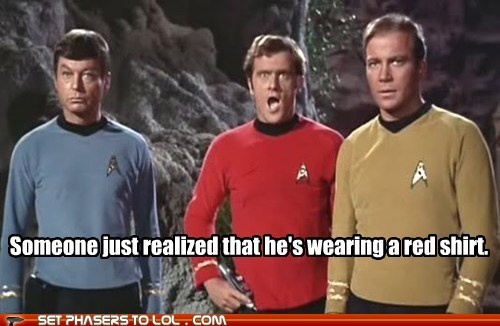
Now, I’m not talking about the red-shirted cannon-fodder that fills the background…the cab driver, the concierge, waiter, ex-boyfriend, whatever. No, I’m talking about those characters just below the protagonist, antagonist, side kick/mentor/love-interest who help move your characters through a plot point (or several) and then disappear completely.
Let me give you an example from a murder thriller collecting dust on my hard drive…The Children of San Miani.
In my story, a journalist provides a young detective with just enough information to introduce her to the lead suspect, a victim’s rights advocate with a major reason to want the first murder victim dead.
In reviewing my first draft, I realized that the moment the journalist connected the detective and the advocate, he completely disappeared from the story. He became superfluous to (story) need, so I simply stopped talking about him.
This begged the question: Did I need the journalist character at all?
With very little thought, I quickly realized I could accomplish all of the journalist’s plot points without the journalist, either by ascribing his actions to other main characters or to the story itself. And poof, he was gone.
The result was a story that was that much tighter. A story that was a bit less confusing and yet still maintained the mystery I needed for the thriller.
Look at your story. Focus on those second-tier characters.
Are there some that don’t make it to the end of your story; that simply trigger or drive a scene or two forward?
Can those triggers or drives be handled by another character in your story, maybe a main character? Or perhaps those actions can extend the life of another secondary character who just plops into your story from the ether?
In some cases, the answer may be no; that in the grand scheme of things, this character is vital if temporary.
Fine. Keep the character. You are the best judge of what is needed for your story. But I’ll bet at least one character can go.
Show no mercy. Cut the strings. Release the Kraken. (Oops, sorry. Wrong movie.)
Don’t smother your screenplay. By eliminating the unnecessary, people will better understand and appreciate your story more quickly.
And when you may only get one read (if that), the easier you make it on your audience, the better.
(Images are property of owners and are used here without permission, and may be completely superfluous.)
This weekend is the 26th Annual Beaches International Jazz Festival in the east end of Toronto, an oddly named celebration of eclectic music of all origins and stripes…not just jazz. In fact, in two years that I have visited this festival, I have yet to hear jazz more than 10% of the time.
Nonetheless, it is a very well attended party that keeps me largely locked in my home for three nights as it takes up 20+ blocks of street closures.
After being coerced into the melee by a couple of friends today, I offer the following images.
The day was sunny and so was the eager crowd
Sales were apparently starting to pick up for this cherub
The shorter guitarist struggled to keep up
This young guitarist seemed unimpressed
For a guy entertaining kids, he looks pretty serious
This Greek band definitely gave the street a Mediterranean feel
As if one neck wasn’t more than enough
The percussionist was a man of many talents
The hat was everywhere on the strip
People of all races joined into the festivities
He didn’t specify what year he was awarded his prize
Man could definitely rock the accordion
They just showed up to have their picture taken
High energy, high tempo, high spirits
The young singer wanted the world to know her feelings
Keyboardist never flinched a muscle
Love the dog’s look of “What the…?”
Although not actually playing blues
She croons lovingly into the mics ear
Guitarist has a great evening
The festival gives you a 360 degree view of things
Mother, Nehiyaw, Metis, & Itisahwâkan - career communicator. This is my collection of opinions, stories, and the occasional rise to, or fall from, challenge. In other words, it's my party, I can fun if I want to. Artwork by aaronpaquette.net



















































 createdbyrcw