Failure is not an option…it’s a skill

Fear-of-failure

I used to be terrified of failure. If I couldn’t know that I would succeed at something, I would put it off and potentially never do it.

And this was true in all aspects of life.

Driving. Dancing. Playing musical instruments. Talking to girls and later women. Athletics.

I became the best I could at one or two things—the things for which I seemed to have a natural aptitude—to avoid having to worry about being asked to do any of a thousand other things.

To me, failure was not an option. (I could spend months discussing why, but I won’t…at least, not here).

It has taken me a long time, but I have finally realized that I was only half right.

failure_success

Failure is not an option…it is an imperative.

It is a skill that I must practice time and time again in all aspects of life.

At its simplest, if I succeeded at everything to which I turned my hand, I would stop doing it.

I succeeded. I achieved my goal. What more could I hope to accomplish? Everything after that is pure redundancy and repetition.

When harnessed, however, failure and imperfection can be that thing that drives me forward, when purely creative urges do not.
ziglar

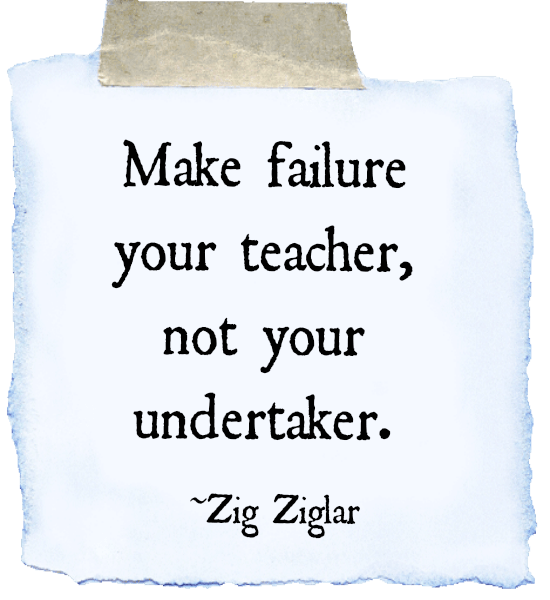
Failure is my teacher. Failure is my drill sergeant and mentor. And yes, failure can be my devil.

Perfection is an illusion and is therefore unattainable. This means that even at our zenith, we have failed. So what?

Even if we do not strive for perfection, but for an attainable, measurable goal, we are likely to fail if for no other reason than once we have achieved that goal, we instinctively move the goal posts. Our best is always a thing of the past and acts as a goad for us to do better.

Herein also lays the further challenge of failure in Art. There typically is no real metric other than external opinion. Rare is the individual who targets using 7.83% magenta in his next painting.

coyote

Wile E. Coyote is about the only artist I know who can actively test the realism of his Art. He has achieved his goal if the Roadrunner runs into the cliff wall painted to look like a tunnel. Ironically, his downfall was the hyperrealism he achieved such that the painting actually became a tunnel. In succeeding, he found failure.

Where I used to fear failure, I now embrace it. I use it to stretch myself and my skills. I use it as a lesson plan.

Failure-is-not-falling-down-but-refusing-to-get-up

But for this to work, I must envision failure as something internal and self-defined rather than something external and based on the opinions of others. There lies madness.

Yes, I rely on feedback garnered from others to determine my degree of success, but I do not allow others to define that success.

It is my Art. I define it and in doing so, define myself. And to do that, I must fail and fail again.
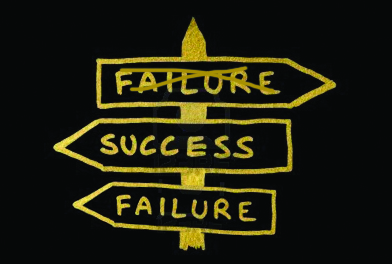
failure-and-success

(Images are property of owners and are used here without permission, which may be an epic failure on my part.)

Focus – a 400th blog entry

400 celebration monument

Well, it has taken about 10 months, but I have managed to reach my 400th blog entry. Now, admittedly, a few of these were reposts from someone else’s blogs, but the majority were the ramblings of li’l ol’ me.

So, first, thank you all for your patience and support. You have been victim of a seemingly ceaseless assault of verbal and visual abuse that bordered on the ludicrous with two or more posts as day for several months.

But, second, you may have noticed I have slowed down in that onslaught for the past month or so. I promise, it is not for lack of ideas but more for volume and variety of media with which I deal on a daily basis. And it is this volume that has had me thinking lately (and I hate thinking).

I have spread myself too thin…I am trying to do too many things such that I don’t know that I’m doing anything. Thus, for the next little while, at least, I am going to focus my efforts on just a few projects that I think will have the greatest impact.

This is not a resolution—I don’t do those anymore—but an admission that if I don’t finalize something, I will never get out of the basement apartment and will perpetually be tied to my previous careers as sources of $$$.

So, my completion priorities for early 2014 (in no particular order):

  1. Re-evaluate, rewrite and sell/option my screenplay Tank’s.
  2. Rewrite and sell/option my Santa screenplay The Naughty List (working title).
  3. Establish a screenplay reading/coverage service to make money now!
  4. Generate a book on creativity and writing from my blog entries.

That last one was actually one of the motivating factors for creating the blog in the first place…to finally make myself write down my thoughts, experiences and understanding of the creative process with particular focus on writing. This is not to say the postings will disappear from my blog, but my plan is to assemble the most salient ones, with editing, into a book format for sale.

For all of those with whom I am working on projects not listed above as a priority, I have not forsaken you and will continue to work on those projects…just not as a top priority. I can only hope you understand (and suspect you all will).

And again, to my blog followers, I thank you for your patronage and hope to continue to amuse, intrigue or stimulate you…just at a more leisurely pace for both of us.

Love to you all…Randy

From perspective to perception

A railway track is perspective trying to make a point

A railway track is perspective trying to make a point

What makes your writing unique from all others is your perspective, the way thoughts, words and actions are interpreted in your mind.

If 10 people witness the same collision between two cars, each one will recount a slightly varied story from another. Some may gauge the speeds of the vehicles differently or not remember the same car braking first.

Less what you remember and more how you remember is influenced consciously and unconsciously by your personal experiences, your beliefs and your moods. As good a reason as any for the police and court system not to rely on a single eye witness account whenever possible.

The same is true for your writing.

Although our imaginations give us some ability to write fanciful stories and characters outside our day-to-day scope, a close examination of our oddest creations will show that they are largely reinterpretations of things we have read or experienced in other stories.

Dragons, for example, are likely an amalgamation of flying raptors (e.g., eagles), strange lizards (e.g., monitors) and giant fossilized remains that humans have dug up for millennia. How else to explain the similarity of a T. rex skull and monitor lizards?

How to make a dragon with 3 simple ingredients!

How to make a dragon with 3 simple ingredients!

At the same time, it was the unique experience of these three factors in combination that may have resulted in the first dragon description. A truly unique perspective.

To consider it another way, think on the meaning of perspective in the visual arts:

The art of drawing solid objects on a two-dimensional surface so as to give the right impression of their height, width, depth, and position in relation to each other when viewed from a particular point.

Giving the right impression of [facts]…from a particular point [of view].

But what if you changed that point of view?

3-Point Perspective

Changing perspectives is perhaps the easiest way to approach cliché writing and makes the predictable unexpected.

If you want to tell a love story that is essentially Romeo & Juliet, tell it from the perspective of rival street gangs in New York. Oh, but wait; they already made that one.

Then how about from the perspective of fish in a pet shop and instead of rival families, it is the divide between fresh and salt water? Crazy, hunh? (NOTE: I already wrote this one, so please go write something else.)

The same holds true whether you’re considering an entire story, a single scene, an individual line of dialogue or a character trait.

How might the floor of a dance club look if you changed your perspective from that of an evening reveller to that of an observer seated on a ceiling rafter? Probably like one of those wild life documentaries describing the mating habits of some ridiculous animal.

Or what might your backyard “look” like if your only sense was touch?

By changing your perspective in even the smallest of ways (you don’t have to blind yourself), you can dramatically alter your perception of the world.

So, the next time you find yourself stuck for an idea or facing a cliché moment in your writing, try looking at your world upside-down or through another character’s eyes.

Take a new perspective and you’ll reach a whole new point.

(Drawing is property of owner and is used here without permission because I take a different perspective on these things.)

My Favorite Life

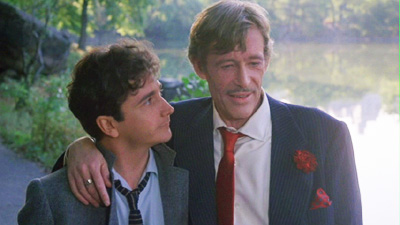
Peter O'Toole as Alan Swan

Peter O’Toole as Alan Swan

The announcement of Peter O’Toole’s death came as a bit of a shock to me. Not so much that he died—he was a very old gentleman—but rather in how it affected me. I felt like I’d lost a friend whom I had not seen in quite some time.

Fairly or unfairly, I give Peter O’Toole a lot of credit for the life that I am leading right now: the life of a creative artist who plies his art with words. You see, Peter O’Toole was the biggest name in a little movie that might not have seen the light of my consciousness had he not been in it.

The movie is My Favorite Year.

My Favorite Year poster

For the uninitiated (For shame, Swanny), the movie tells the story of a couple days in life of a budding young comedy writer working in the 1950s on the King Kaiser Show; a clear homage to Sid Caesar’s Show of Shows. On the day the movie opens, Benjamin is going to meet his greatest hero, fading matinee idol Alan Swan; a clear homage to Errol Flynn. Unfortunately, Swann’s star has faded into alcoholism and practical destitution, and it becomes Benjamin’s job to keep Swann sober enough for the live television performance. The rest is a love story between these two men; one ascending, the other wishing he were dead.

If that doesn’t want to make you see the movie, you’re dead yourself.

The thing is, for all the university science degrees and work I had done, my life was incomplete. What I didn’t realize right away upon seeing My Favorite Year—mostly because the young are stupid and blind—was that I desperately wanted to be Benjamin. More accurately, I WAS Benjamin, I just didn’t know it.

Benjamin Stone stares lovingly at his idol and now friend Alan Swan

Benjamin Stone stares lovingly at his idol and now friend Alan Swan

I was a creative writer. I was a comedy writer. But I didn’t know how to express it beyond my own personal doodlings. And even if I had, science seemed the more rationale move (btw, I love science…really, I do).

As I’ve related in previous posts on my creative journey, it wasn’t until my wife took me aside one day and cornered me into answering what I wanted to do more than anything that I realized and embraced my inner Benjamin.

My life of today was still about a decade away, but that moment, that recognition, that admission started the ball rolling.

I had a visual to go by, a guide. I couldn’t go back in time to write for a 1950s sketch comedy show, but I could work toward the modern equivalents.

The other posts will tell you what I did, but without having seen My Favorite Year, I might not have been able to articulate my dream that fateful day.

And without Peter O’Toole, there might not have been a My Favorite Year to see.

So thank you, Mr. O’Toole. Aside from being one of the finest actors to walk this stage, you made dreams come true. This dreamer will be eternally grateful.


Links of possible interest:

My Favorite Year trailer

If I were truly plastered (scene)

This is for ladies only (scene)

Who the hell is Niblick? (scene)

(Images are property of owners and are used here without permission, but a lot of love and gratitude)

Cadence and Orson Welles

My favourite shot of Welles as I believe that smile and those eyes tell me everything I need to know about the man

My favourite shot of Welles as I believe that smile and those eyes tell me everything I need to know about the man

Being a good writer necessitates having a good eye and a good ear.

The good eye is the attention to details that will help you paint a word-picture of what you have seen with your physical eyes and processed in your mind’s eye. It’s not necessarily about writing long-winded passages of backgrounds or going into minute detail of a character’s physical attributes (I’ve done plenty of that), but rather in choosing the most precise and meaningful words to describe the environment or the person.

The good ear is the attention to how people communication and how they speak, not always the same thing. Again, it involves finding the right words and inflections (at least implied inflections) that give the reader and actor clues as to who this person is. And perhaps just as importantly, it is about finding just the right cadence for your character’s speech patterns.

If you listen really closely to a conversation, you’ll realize that there is little difference between speaking and singing. There is a rhythm, a cadence to speaking. Conversation is an improvised duet sung a capella. But unlike a traditional song which may have a subset of arrangements, each of us sings to our own tune, with our own rhythms and inflections. It is one of the many things that sets us apart from each other.

When writing characters, it is important to keep this in mind as all too often, a group of characters can have a certain monotone, which I use not to imply flatness so much as sameness. Often, I believe, it occurs when the writer neglects to add variety to his characters’ speech patterns and instead writes them with one voice; his or hers.

The best writers don’t make this mistake…or at least minimize its occurrences. Each character he or she presents us is truly unique, jumps off the page or screen, provides his or her own internal musical accompaniment.

One of my favourite writers of the last decade or so is Aaron Sorkin whose overall writing has its cadence but whose characters also tango (or more often tarantella) across the screen. Read the pilot to The West Wing or the screenplay for The Social Network and you will know you’re reading Sorkin.

But for me, perhaps a better example is Orson Welles, the man who would be Kane.

Recently, someone discovered a long-lost unproduced screenplay by Welles called The Way to Santiago, written in 1940-41. Another blogger discussed the find recently, and provided a link to the actual screenplay (see link below). You only have to read a couple of pages to remind yourself (or educate yourself on) how Orson Welles wrote and the energies he imbued in his characters, each one a snowflake of facets and reflections.

The opening page of The Way to Santiago

The opening page of The Way to Santiago

Now, listen to the films or read the screenplays of The Third Man, The Magnificent Ambersons, Touch of Evil. Although you may question the choice of actors, you can clearly hear or see the distinctions in the characters. Bathe in the richness and depth of each one as he or she is captured for this brief moment. This is the stuff of which dreams are made.

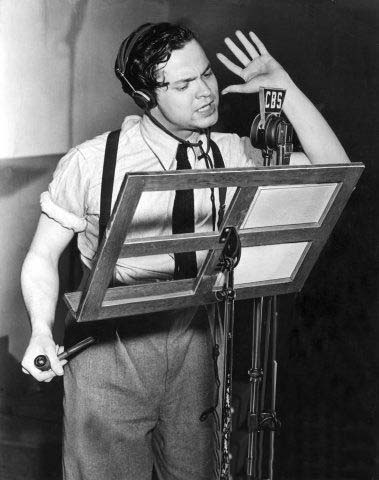
It is also interesting to consider that Welles got his start on stage and in radio, where the human voice plays such a larger role in conveying a story than it does in film. There is much less to occupy the mind onstage or in radio and so dialogue carries a significant burden of not only informing but also entrancing the listener.

Although the stories I write are distinctly different from the Wellesian oeuvre, there is much I can and do learn from this master of the written word. He is worth the read and the listen.

A classic image of Welles in his radio days

A classic image of Welles in his radio days

Links of interest:

The Way to Santiago at Cinephilia and Beyond

The Way to Santiago, starring Howard Hesseman on Vimeo (A valiant but not brilliant attempt)

“Thank You, Mr. Welles: Definitive actor, consummate director, and true auteur” at Curnblog.com

“Screenplays by Orson Welles” (listing) on Wikipedia

Me and Orson Welles A light but adorable movie that probably portrays Welles’ character better than Welles

Finding inspiration

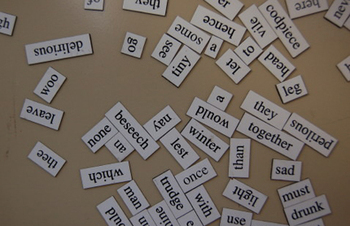
Inspiration

Where do you find inspiration? What causes one moment to pass completely unnoticed and another to trigger a flurry of activity?

Truth be told, I don’t think inspiration comes from outside but rather from within. The exact same moment viewed at different times by the exact same individual may result in completely different responses depending on the openness of the individual to inspiration.

When you are open to inspiration, you witness and experience life through a completely different lens, one that sees connections and patterns between events and objects that do not necessarily exist in the forms themselves.

The priests sitting in the bar become a foil for the man trying to pick up women. The dog urinating on a building becomes the unwitting initiator of the death of 275 people in an office tower. The crows on the telephone lines become dark angels surveilling the land, awaiting the arrival of a malevolent spirit.

The irony of inspiration coming from within, however, is that it is something you cannot really will into existence. You can easily sit for hours with pen poised over paper, awaiting inspiration’s wafting arrival, only to realize that days have gone by without result. And trying to force your way through artistic constipation only seems to worsen the situation as you strain against the blockage by forcing invisible connections. Rarely, if ever, will inspiration make itself known to you in this way.

All you can really do is till the soil in which inspiration will implant itself and hopefully germinate. Rather than clear away all distraction, you may find it better to envelope yourself in distraction. By allowing the mental and spiritual noise to flow over, under and through you, you remove the hard edges of the real world and let the boundaries criss-cross in chaotic flux, searching for new patterns that your mind’s eye can mark.

It may also be helpful to engage your mind in someone else’s art, whether of the same medium as yours or no, but remembering to also give your mind permission to wander.

There is no exam at the end of the novel you’re reading. No request to reproduce the painting you are viewing. No critical essay to argue once the concerto has ceased.

So let yourself go and let yourself respond—consciously and viscerally—to the art. Let a word, image or note ricochet through your mind until it attaches itself to an earlier thought or feeling. Don’t try to define or even understand the clusters that form but rather observe them until the need to create takes hold.

Inspiration is about the initial amount of discovery, not the final product. An ephemeral spirit, inspiration is likely to dissipate at your first attempt to put a leash on it. You cannot present inspiration with a road map and expect it to clear the path ahead. Rather, you must follow inspiration as it meanders, bearing witness to the miracles it triggers.

Where do you find inspiration?

Everywhere and anywhere, when you are ready to let it be seen.

Blind – A nightmare

The_Darkness_Wall_By_Kon_2560X1600

Just before 5 am on October 14—Thanksgiving morning—I had the sudden feeling that I’d gone blind…in my creative centre. I could think of things, objects, but I could not “see” them in my mind’s eye.

Just moments earlier, I had been asleep, dreaming of the typical nonsense one dreams of when suddenly lines of darkness spread across the dream, at first like large lightning bolts but then growing in width to eventually swallow the entire picture. It was as though the picture tube in my head was failing and then extinguished. .And stranger still, the static was accompanied by a slight clicking sound, and then the screen was blank, black, empty.

The sensation was strange enough to wake me up. I lay there in bed wondering what it was.

I wasn’t literally blind. Even in the near pitch darkness of the bedroom, I could make out shapes—the storage racks in the closet, the dresser, the bedside lamp. So, what was happening?

I tried to close my eyes to go to sleep, but all I saw was darkness, the flashes of light that one sees when closing the eyelids but continues to look. Have I had a stroke?

I tried to think of a duck—I don’t know why a duck, but it was a duck—and couldn’t see it. Still can’t, really, at 5:10 am.

This may sound ironic, but I immediately wondered if my imagination had died. I tried to tell myself a story, in my head, and the words came hesitantly at first, but soon began to flow.

I imagined a man being thrown from a car—again, I don’t know why that topic—and while I could narrate the event, I couldn’t really visualize it.

The door swinging open as the car veers. The man tumbling sideways through the opening, his body crumpling as it hits the pavement, limbs flailing as it rolls. He was already unconscious or dead when he fell out, it would seem.

Even now, as I write out the scene I created earlier in my head, the picture is tentative, furtive. I am somewhat relieved that I get any picture at all, but am still bothered about how fleeting it is.

I’m not struggling for words, which is some solace, but then this is my analytical mind that is speaking, telling the story of what I am experiencing, rather than my creative mind, telling a story of events completely synthetic.

If the thought of having lost my visual imaginative centre didn’t scare me so much, I’d be amused. For the last couple of weeks, as I complained to Leela yesterday, I have found it difficult to get to sleep because my mind has raced with ideas—ideas for scenes and rewrites in my latest screenplay, ideas for the DDNews article I have due shortly, ideas for social media, ideas for my blog.

Hell, I’ve even taken to seeing events in my life as a screenplay.

I am just getting over a cold, and while waiting for sleep the other night, I realized that I was thinking about my symptoms and my experiences with them as though they were written as a screenplay. I would consider them and then try to rewrite them for more dramatic effect. It was odd.

I wasn’t dissociating per se, pretending that it was happening to someone else, stepping out of my body. Rather it was more like I had morphed my reality into a printed page. It’s hard to explain, especially at 5:26 am.

And now, my mind races for exactly the opposite reason. My inner video screen has gone out. The bulb is shot. I don’t see what I think. And that terrifies me.

I have often told people that my writing feels like it is less about my creation and more like I am simply transcribing a movie that only I can see. The movie, story, idea already exists in the cosmos and is merely using me as a conduit through which to express itself.

This is not to denigrate my talents as a writer—or at least, I don’t think it is—but I think the talent is in not preventing that flow, not ignoring the sights, sounds, tastes, feelings as they move through me and eventually out of the nib of the pen or fingertip on the keyboard.

What if that flow just got turned off? What if that nexus of creative spirit just moved on to someone or somewhere else? This doesn’t feel like the standard “I’m a talentless hack” anxiety. I am a very talented hack.

This feels more like a switch has been turned. Like I have gone blind.

Maybe it’s the cold medication taking its toll. Maybe it’s my brain’s way of coping with the recent hyperactivity. Maybe it’s nothing and the switch will turn back on, the system will reboot in my sleep.

I hope so.

Because this is one nightmare I couldn’t live with.

(Image is property of owner and is used here without permission)

You’re quite the character

mirror

I just finished a post by fellow blogger Bare Knuckle Writer, entitled: Mutants: You and Your Protagonist. In it, she describes how her protagonists eventually end up being some version of herself; her beliefs, her mannerisms, her idioms. Not a carbon copy, you understand, but a variation on the theme that is she. (If you don’t know what a carbon copy is, talk to your grandma.)

This got me thinking about my own writing habits and quickly crystallized into the realization that all of my characters, or at least the major ones, are some variant of me.

Although I would never—or at least rarely—expect me to perform any of the actions or give any of the speeches of my characters, to make the characters believable, for me to truly get inside their heads, I have to give them free range inside mine.

I have no expectation that I will ever chase a murder suspect down an alley or cut off my enemy’s oxygen supply to get him to submit to my will, but I can’t say the idea is impossible given who I am (and what I have muttered in traffic).

To bring out the best and the worst in my characters, I have to be willing to reveal the best and the worst in me. The process is a variation on what makes other writers’ characters relatable to me.

othello-iago

If we look at one of my favourite plays—Shakespeare’s Othello—I can quite easily visualize aspects of my personality and even past behaviours in all of the main characters.

I have spit venom and schemed like Iago, been as empassioned as Othello, been as blinded by lust as Roderigo, as fawning for favour as Cassio, and as blinded by love as Desdemona. All various aspects of one person’s personality.

In an ironic footnote of life imitating art, my wife finally took me aside one day to explain that asides only work in the theatre. Although it was true that no one could hear Iago’s asides in Othello, everyone in the real world could quite easily hear mine. This, of course, helped explain why all of my evil and cunning plans failed so miserably.

I am my characters and my characters are me.

It is less “you are what you eat”, for people like me, and more “you are who you write”. Thus, to thine own characters, be true.

Falling in love…again?

Keep your story options open

Keep your story options open

So beautiful. The fullness. The curves. You make me smile. I want to be with you forever. You’re perfect. I love you.

This is the greatest paragraph ever written. The most beautiful dialogue ever conceived. A scene that will be remembered for eternity.

Many of the posts I’ve written have been about cutting yourself some slack, about overcoming the inner demons of doubt. Giving yourself permission to fail. That perfection isn’t your goal.

Well, now we need to remember that not only is perfection not your goal, it is not even possible. There is always room for improvement, so please don’t ever fall in love with your work.

When creating a new work—a novel, screenplay, whatever—it is important to leave yourself as many options as possible, to keep all of the doors open until you reach a combination that works best for you.

Too often, however, writers jump into their work, pursuing the idea that offered the first blush of love. In their zeal to express that love, they put on blinders to other possibilities. Perhaps it is a pure love, but I’m confident for a few of us, it’s also probably fear of never finding another love.

And once we express that love, we are loathe to question it, even when presented with another option. This is the only way the scene can be written. This is the best way to achieve the point of the scene. Everything else is weaker.

Maybe you’re right, once or twice in a work (or career), but rare are those moments. So let me recommend something scandalous.

Start seeing other options.

I’m not asking you to fall in love with them or to fall out of love with your original idea, but infidelity can be healthy. It may even make you appreciate your first love all the more. (Why do I suddenly feel like Silvio Berlusconi?)

Just dip your toe in the water, if this idea makes you nervous.

If your lovers currently meet in a restaurant, explore what would happen if they met in a post office, a house of mirrors, a sanitorium.

Too much too soon?

Then change the type of restaurant. How would your scene change if they were at an expensive restaurant, McDonalds, a hot dog cart, on a picnic?

Try this with any and every aspect of your story, and do it as early as possible. The longer you work on a project, developing its specifics, the harder it will be to change any aspect of it beyond cosmetic editing.

That path you see to your goal may be less of a path and more of a cavernous rut you’ve worn by running over the same idea time and again. Wait too long and you don’t see anything else. You can’t see beyond its limits.

Don’t let that happen to the concept that you love and more importantly, to the creative spirit you continue to nurture. It may be painful. You may have to walk away from the one you love, but trust me, you will fall in love again. I promise.

(The image is property of the owner and is used optioned here without permission.)

Something from nothing

“I don’t know what to write about.”

It is the clarion call of procrastinators worldwide.

There is this pervasive belief that if you are not writing about something then you are not really writing. As though words have no power, no authority unless they are tied to some portentous subject. Free association, it would appear, is not free. And yet, ironically enough, nowhere is this written. It is a myth.

It is just as valid to write about nothing as it is to write about something. To make no conjectures, to postulate no theories, to hold no opinions aside from the personally pleasing juxtaposition of two or more words.

Just as people can speak forever and yet say nothing of lasting import, so too can people wax jibberish and yet speak volumes.

In painting, we can view both delicately rendered images of nature in all its glory (my personal favourite is Robert Bateman) or the seeming chaotic void of splatter on canvas. Both are art, but speak to different tastes and preferences. Why too cannot words, which are merely the medium that in and of themselves hold little meaning?

Write about nothing. Tap into your inner anarchist, your inner artist, to express yourself in splashes of verbiage that may mean little in isolation but so much more in toto.

Embrace the freedom and release the fear that comes from working without a destination or plan. Fill the void with noise of your soul and spirit, only to discover the noise is in fact a song the tune of which you don’t yet recognize.

I think you’ll find that in writing about nothing, you will find something, and you will stand amazed.

Nothing is rarely nothing

Nothing is rarely nothing