Nebraska: Bumpy lives, flat land (a review)

poster

Much like the Big Sky prairies that serve as its backdrop, Alexander Payne’s 2013 film Nebraska takes a little bit to get going, but when it hits its stride, there is no stopping it.

An irascible old drunkard Woody (Bruce Dern) thinks he’s won a $1,000,000 lottery and is determined to collect his prize in person, walking if he must from his home in Billings, Montana to the prize centre in Lincoln, Nebraska. When his youngest son David (Will Forte) realizes there is no stopping the senile old coot, he takes a few days off work and offers to drive.

Along the way, they stop for a few days in his father’s home town of Hawthorne, Nebraska, where they are joined by his mother Kate (June Squibb) and older brother Ross (Bob Odenkirk). But almost as quickly as the townsfolk and extended family realize the old man has struck it rich, the hands reach out for their cut, led by Woody’s former business partner Ed (Stacy Keach).

As I said, the movie starts out slow. Woody has nothing to say to any of his family, at times appearing to have dementia. David meanwhile faces an empty life and just wants to communicate on some level with his family, never having felt like he could talk to them. Thus, when the two men with nothing in common aside from chromosomes take to the road, it feels very much like the start of an opposites-connect buddy film.

NEBRASKA

The dialogue is excruciatingly simple in the early going, rarely more than one or two syllable conversations. Despite occupying the passenger seat of the car, Dern’s Woody is never really there, only being forced into human contact by having everything repeated louder. Forte’s David, meanwhile, has a perpetual pout of a puppy begging to be patted on the head.

Eventually, though, if only out of frustration, David begins to take control of the situation and his life. Through his own explorations and by observing his father interact with the home townfolk, he begins to see that there is so much more to his father, and this is where I really started to take note of Forte as an actor, as something more than his MacGruber caricature.

I would say that Dern turns in a solid performance, but his dialogue is so short and his stare so vacant that only once in a while do we get a real glimpse of the tormented soul within the husk of a man. June Squibb’s Kate is something to behold, however (her voice and attitude remind me of Shelley Winters). Starting more as a screeching shrew, she really comes into her own in the latter half of the film with some of the funniest lines and the staunchest defense of her messed up husband. Odenkirk is solid, but isn’t really given much to do here…this is Forte’s movie.

http://www.youtube.com/watch?v=OHw_WbVtZio

My strongest reaction, however, is reserved for Stacy Keach, who yet again, plays the charming, smarmy bully asshole for which he is famous (think Papa Titus on the sitcom Titus). I can’t remember a role for which Keach didn’t deliver. The man eats up the screen. You can’t not watch him.
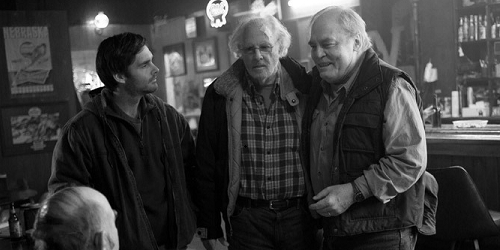
Nebraska-Dern-Forte-Keach

In terms of cinematography, Payne chose to film the entire movie in black and white, giving the whole story a sense of being trapped in another time, and adding to the sense of desolation exhibited by both the geography of the region and the simplicity of the town of Hawthorne, with its barren sidewalks and seemingly abandoned businesses. The whole thing feels like an emotional dead zone and the lack of human spark in all but a few citizens reflects that.

Bob Nelson’s screenplay is a simple one, devoid of plot twists or anxious moments. There are no great moments of revelation, but rather subtle hints at who Woody was when he was a young man. As such, the characters can come across as superficial and on-the-nose. But again, I think this was on purpose rather than a failing. I think he wanted to show us shallow people in a shallow land.

Toward the end, the movie started to take on a bit of a Hollywood ending feel, but although Nelson did start us down that road, he thankfully stopped himself before the point of schmaltzy no return.

All-in-all, I liked Nebraska, although I didn’t think it deserved the accolades it received at Cannes (Palme d’Or nomination, best actor for Dern), the Golden Globes (5 nominations) or the Oscars (6 nominations). It’s just not that deep a film, in my eyes.


You can find a PDF of the screenplay for Nebraska here.
Music and the soul

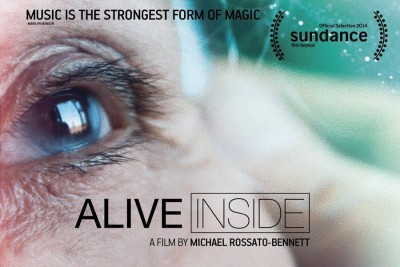
Alive Inside movie poster from the Sundance Film Festival

Alive Inside movie poster from the Sundance Film Festival

I am not a musician. I do not play an instrument, nor do I sing (not well, at least), and I do not understand how music is constructed. I do, however, like music and firmly believe that if we ever discover proof of a human soul, it will translate itself to us in the form of music.

I have, of course, no evidence to support this belief, although a recent experience at the Nashville Film Festival suggested I may be on the right track. The event was the showing of a documentary called Alive Inside: A story of memory and music.

The film, directed by Michael Rossato-Bennett, follows the story of social worker Dan Cohen who has spent the last several years bringing iPods to nursing homes across the United States. Cohen has found that even with the most neurologically shut down senior (e.g., clients with Alzheimer’s disease or other forms of dementia), revive when they music from their youth.

Director Michael Rossato-Bennett (l) and social worker Dan Cohen (r)

Director Michael Rossato-Bennett (l) and social worker Dan Cohen (r)

Slowly, as the story plays out, we are introduced to human husks that reside in these homes and palliative care centres. People who had once been husbands and wives, mothers and fathers, sons and daughters, but who have been reduced to masses of barely interactive biological matter by their medical conditions.

And yet, when the headphones are placed over their ears and music pours down thin white wires into ear buds, those husks are infused with life. Like a balloon that only shows its true form upon inflation, the inert bodies and death masks take the form and substance of the human beings they once were.

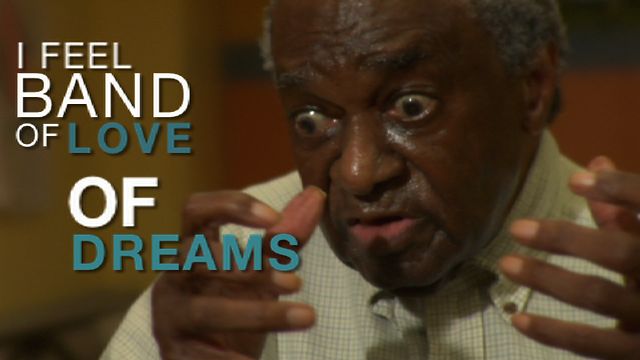
Henry comes alive again as the music reaches inside

Henry comes alive again as the music reaches inside

Eyes glow with life, spines regain flexibility, paralysis becomes movement, and disengaged spirits connect with the world. If only for a few hours, the catatonic fog lifts and a human is reborn.

The science—discussed in part with Dr. Oliver Sacks—suggests that the familiar, beloved music of the individual’s past activates that part of his or her brain as yet left untouched by disease, effectively relinking the connections between their worlds within and without. That may be true, scientifically.

What was certain to me was that the music either reignited the spark that makes us human or provided the fuel that converted a seriously diminished spark into a sputtering flame. The results were miraculous.

Even in cases where disease hadn’t erased the person’s individuality but dampened it with manic-depression or multiple sclerosis, the music seemed to quieten the internal maelstrom enough for the person to re-emerge. The woman immobile without her walker, shoved it aside to dance to Spanish guitar.

The story of Alive Inside had a personal connection for me as I immediately thought back to my now-deceased grandmother Dorothy who fortunately had maintained her mental faculties except at the very end. Her apartment, as I remember it, was constantly filled with music, her CD player rarely turned off. New CDs coming into her home every Christmas, every birthday. Elvis, Michael Buble, The Mills Brothers, Motown and light opera. She was at her most contented when listening to music.

The caregiver...

The caregiver…

...becomes the care-receiver.

…becomes the care-receiver.

But the world was completely different when she was in the hospital—a life of cardiac issues catching up with her eventually. In the anemic, lifeless wards where wonderful warriors did their best to stave off the inevitable, I could see Dorothy’s spirit wane with each passing day. Even if I didn’t always think she was physically ready, my happiest days were knowing she was going home.

When something upsets the norm, ceases to function correctly or goes completely dormant, it is easy to set it aside and forget about it. When that something is a loved one, setting them aside is never easy but it is often easier than coping with the problem. And once set aside, forgetting becomes that much easier.

Seeing that a person is still inside that morbid husk of a human, however, changes everything. Knowing that we have committed a living, breathing, connectable loved one to solitary exile becomes less palatable, less conscionable.

Music isn’t the solution. It doesn’t reverse what has happened to the person biomedically. Within minutes or hours of the music ceasing, the individual typically deflates to his or her former shell.

But we who have witnessed the transformation, we have been permanently changed because we can never see that human shell the same way ever again.

We know that shell is not lifeless, and once we know that, there is no going back.

If you get the opportunity to see Alive Inside, please do. And be sure to bring plenty of facial tissues.