Maps quest

In another life, I could have been a cartographer. I simply love maps.

Road maps. Old maps. Topographical maps. Biological maps. I love maps.

It is probably truer to say that I love visual information presentation, but let’s stick with maps.

Image

As a kid, I remember staring at maps that came out of the National Geographic or in my books and literally tracing the courses of rivers with my fingers, trying to understand what their winding patters told me about the lands through which they passed.

I would look at maps in history books, and see how topographical features literally and figuratively changed the course of civilization. There are several reasons, for example, why Montreal sits where it does, but most of them are geographical.

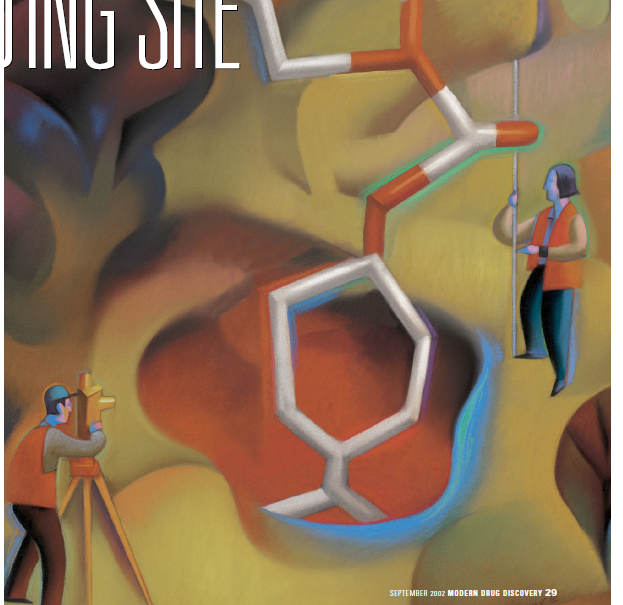
(Magazine art for my article on efforts to understand how proteins bind drug molecules.)
Image

Later in my life, I would draw maps—at first geographical, but later biological. The biochemical mechanisms that cells and organs use to communicate, to rejuvenate, to function are maps unto themselves, each criss-crossing with others, offering alternate routes to the same destination. The latter point is why diseases like cancer are so hard to treat.

Maps allow me to take journeys, but not just in the physical sense of providing direction. They also give a factual tether to my fantastical imaginings. I can go places I may never visit, understand things unfathomable, while pouring over a map.

And map systems like Google Street View have added to those imaginings. Often, when I write, I will visit the setting of my story on Google Street View to help me paint a more vivid picture of the location. Sometimes this makes my narrative sound more like a travel brochure, but that’s my fault and can easily be handled with editing. The important thing is that the reader gets the essence of what I’m trying to convey.

(Lake Maggiore in northern Italy. Setting for the climax of my murder thriller screenplay)

Image

My writing itself is a map. Like Google Street View, I am only giving the reader what fits within a specific frame, in essence guiding the reader. But at the same time, I cannot control what the reader thinks or how the reader feels as he or she journeys through my word jungles.

Just as with my childhood adventures of following rivers and mountain chains, the reader is free to layer his or her own imaginings on top of mine. And so, I have written not just one story, but hundreds or thousands.

Hunh?

I guess I became a cartographer, after all.

(Overview of my neighbourhood in downtown Toronto.)

Image

Witness

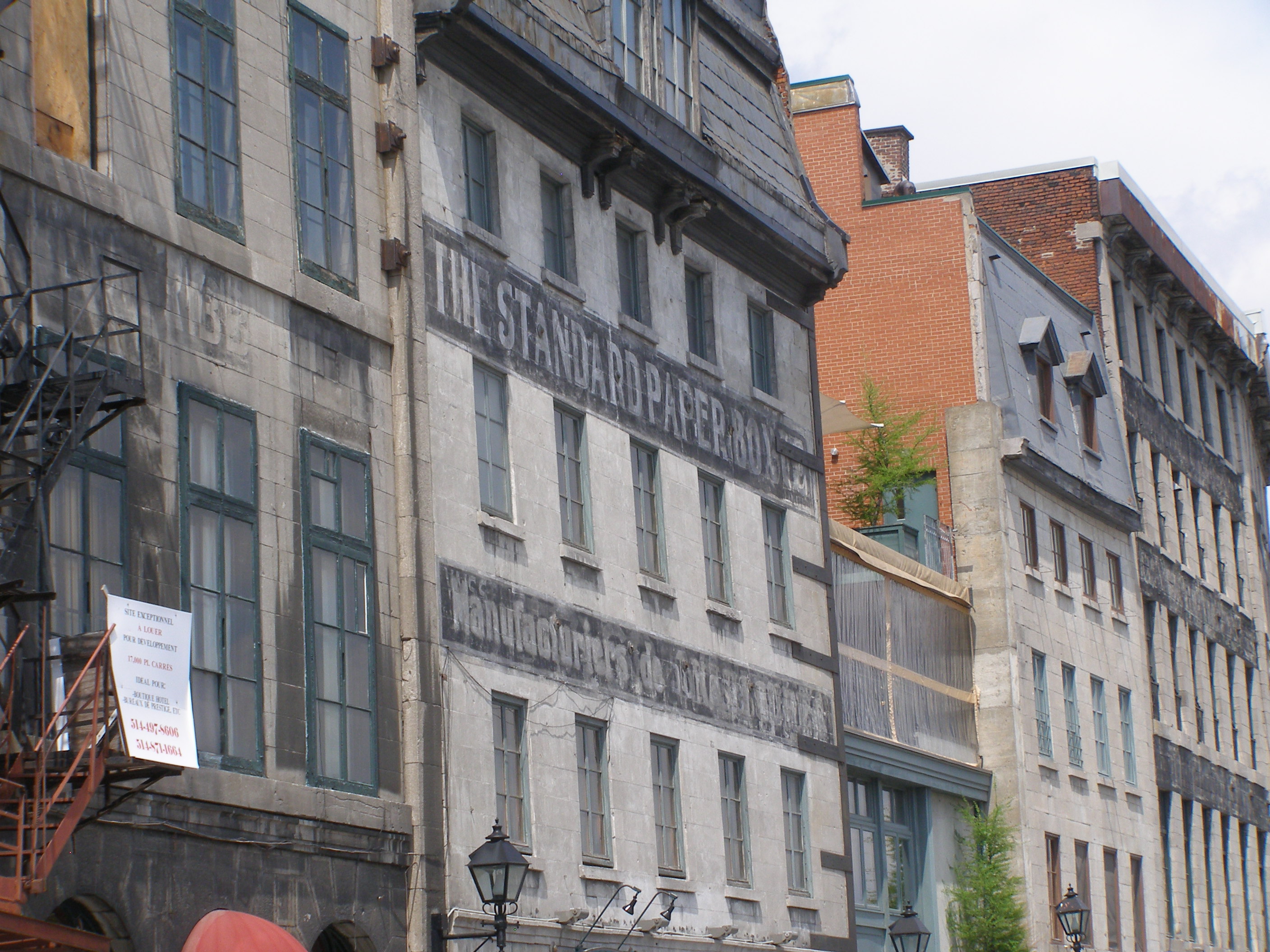
The building stands along the rue de la commune,

A sentinel on the waterfront of Montreal.

A few tourists walk by and the silence of morn

Is broken by the clack of cobblestones under the hooves

Of a horse pulling a caleche;

But the building is mute and observes.


It wears the marks of its hundred and fifty years

And hearkens back to Dickensian times.

The brick no longer white but stained

With the soot and rain of life in the city.

The windows are small, clouded irises

Through which pass the events of history.

The doors of the loading docks have been long painted shut

But the wood bears the scars of wagons poorly maneuvered.

She is a silent witness.


The wind blows ever so gently on an autumn’s morn

And the breeze passes the cracks and crevices

Of the wood and brick.

If you listen closely, you can just make out

The echoes of yesterday.

A foreman, en français, berates the workers

For being too careless with today’s papers

As they toss them into the backs of waiting wagons;

Threatening that the cost of bundles too damaged to sell

Will be deducted from their wages, mere pennies,

A meagre mouthful for the hungry families.


As your eyes scan up from the street

And you pass the windows,

You can see the signs of former residents.

Amongst the jumbled letters of words over words,

Signs painted over signs, you can still make out

The once proud letters of

Le Standard: toute la monde, tout le temps

A car drives by and the rhythmic beating

Of its wheels on the bricks echoes against the building;

Reviving the forgotten sounds of a printing press

Bringing the news to thousands of Montrealers.


Your eye continues skyward to a large bay window

On the top floor and you are startled by a reflection.

In the early morning sun, the light glints

Off dust-laden windows

And a spectre appears behind the panes.

Old Monsieur O’Toole, proprietor and publisher,

Still stands at his window, looking out over the river,

From his office and apartment above the presses.

The throb of the machines is a lullaby for the old man;

A mother’s heartbeat in the womb

Formed by the newspaper’s walls.

He smiles as he listens to the rantings of Gilles Garnier,

The foreman of the dock, remembering him

As an eager young lad who delivered the paper

For a much younger O’Toole

When Canada and The Standard were new.


These windows and this paper have been witness

To the founding of a nation,

Its history both ancient and new.

The presses have described the rhetoric of politicians,

George-Etienne, Wilfred and John A.,

Arguing the desirability of a union, a confederation.

It has announced the call to arms of Canadian boys

To fight for British guns in the fields of South Africa

And told of the death of a mighty monarch, la reine Victoria.

She has counted the bodies at Vimy Ridge

And, from these windows, has cried with joy

Of the end of the “war to end all wars”,

Only to weep at the start of the next one.

She called for calm on that infamous black Tuesday in October

And was instrumental in the programs to feed and clothe

The poor in its aftermath.


But now the building is silent,

A victim of post-war modernization;

A derelict in a sea of decay, the city fathers calling

For yet another committee to decide its fate.

A cloud crosses the sky, disturbing the light,

And O’Toole vanishes from the window.

The breeze dies and the Frankish rantings subside.

The presses have stopped and are long gone.

History proceeds.

Fading history clings tightly to the crumbling facade on Montreal's river front.

Fading history clings tightly to the crumbling facade on Montreal’s river front.

With the passage of time, Montreal's history fades into dust.

With the passage of time, Montreal’s history fades into dust.

Life in black & white – Hawaii (big island)

Back in the days of waning days of film photography, I was always frustrated when I would see a shot that I thought would be magnificent in black & white (b/w), but I knew my camera contained film for colour photographs.

I hardly wanted to ream off a dozen or more photos just to empty the camera so that I could change for one or two frames of b/w photos…and that assumed I could find anyone who even sold b/w film.

Ah, bless the advent of digital photography and photo manipulation software. While I appreciate that it is not the same, I can now take a colour photograph and make it b/w with a simple click of a button. At the same time, I realize I still have a lot to learn about special considerations for b/w photography, e.g., appropriate light balance.

A friend of mine once told me, if you have a nice photo that just doesn’t pop, try converting it to b/w and see what happens. Wow.

A year ago, I put that principle to work while traveling through the island of Hawaii.

Sometimes the object you’re photographing is already black and white, so making it b/w may seem redundant, but I found it softens things and adds depth to the image, in this case, a blow hole in the lava rock (Kailua-Kona).

Image

B/w is also great when you want to focus the eye on the emotion of the image rather than have it distracted by the surroundings. I loved the expression on the dog’s face. The most active I’d seen him all week. (Kailua-Kona)

Image

Same scenario here. I think the b/w helps simplify this image, allows me to focus on the key elements: the man serenading the Pacific Ocean, the white cross of commemoration, the crashing waves dancing to the song. (Kailua-Kona)

Image

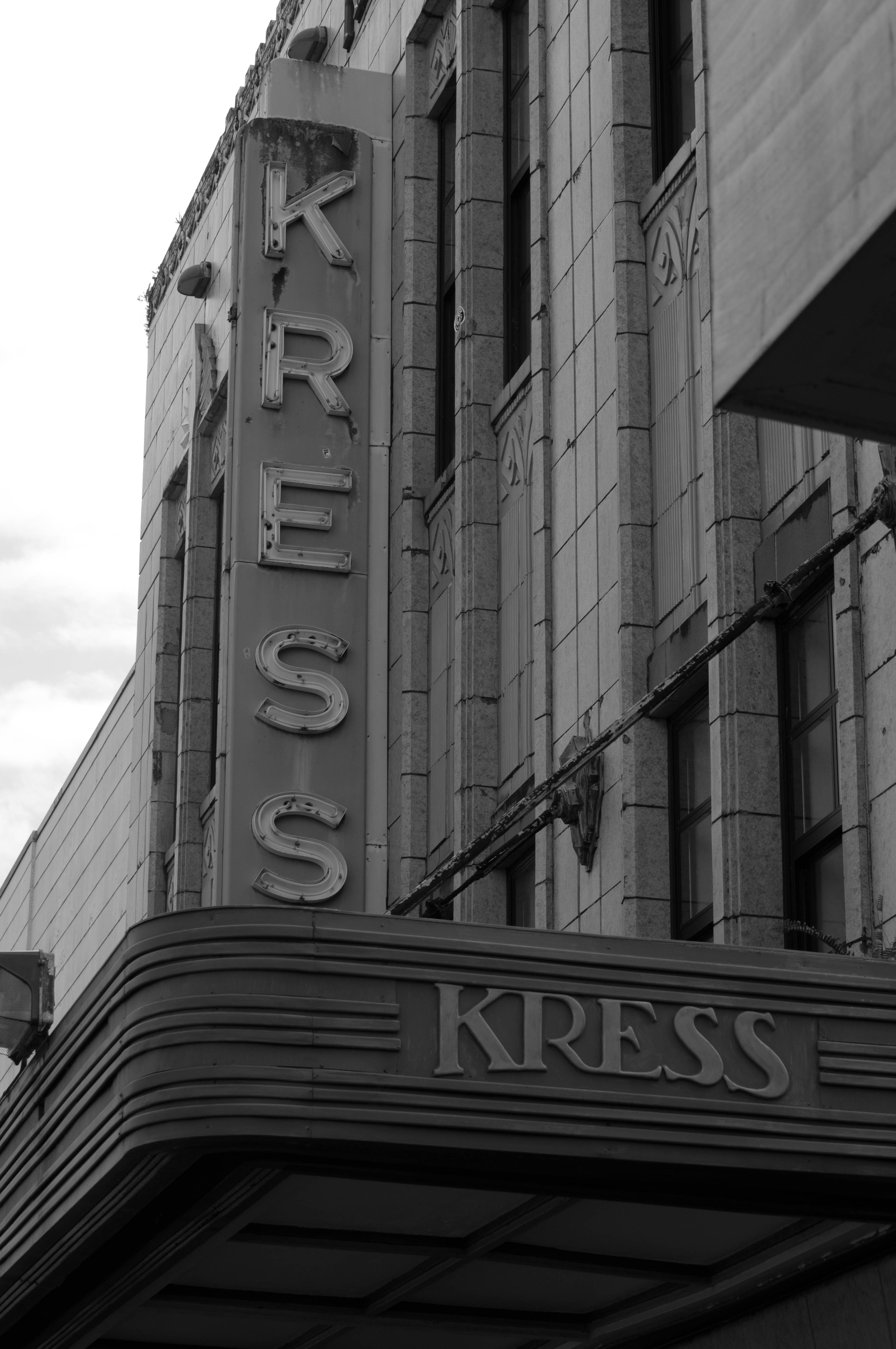
I think b/w can also impart a sense of history to an old building that otherwise would simply look derelict. The rust and decay are still there, but become a patina rather than a sign of decay. (Hilo)

Image

The treatment can also add a bit of emotion to an otherwise ordinary image. Whereas I took a photo of a woman standing bored while her husband and son fish, the image becomes that of a woman from any era, possibly considering the plight of her family. (Kailua-Kona)

Image

Cannery Row was the first thought that popped into my head as I walked by the back of this building, but in colour, that thought couldn’t be realized. (Hilo)

Image

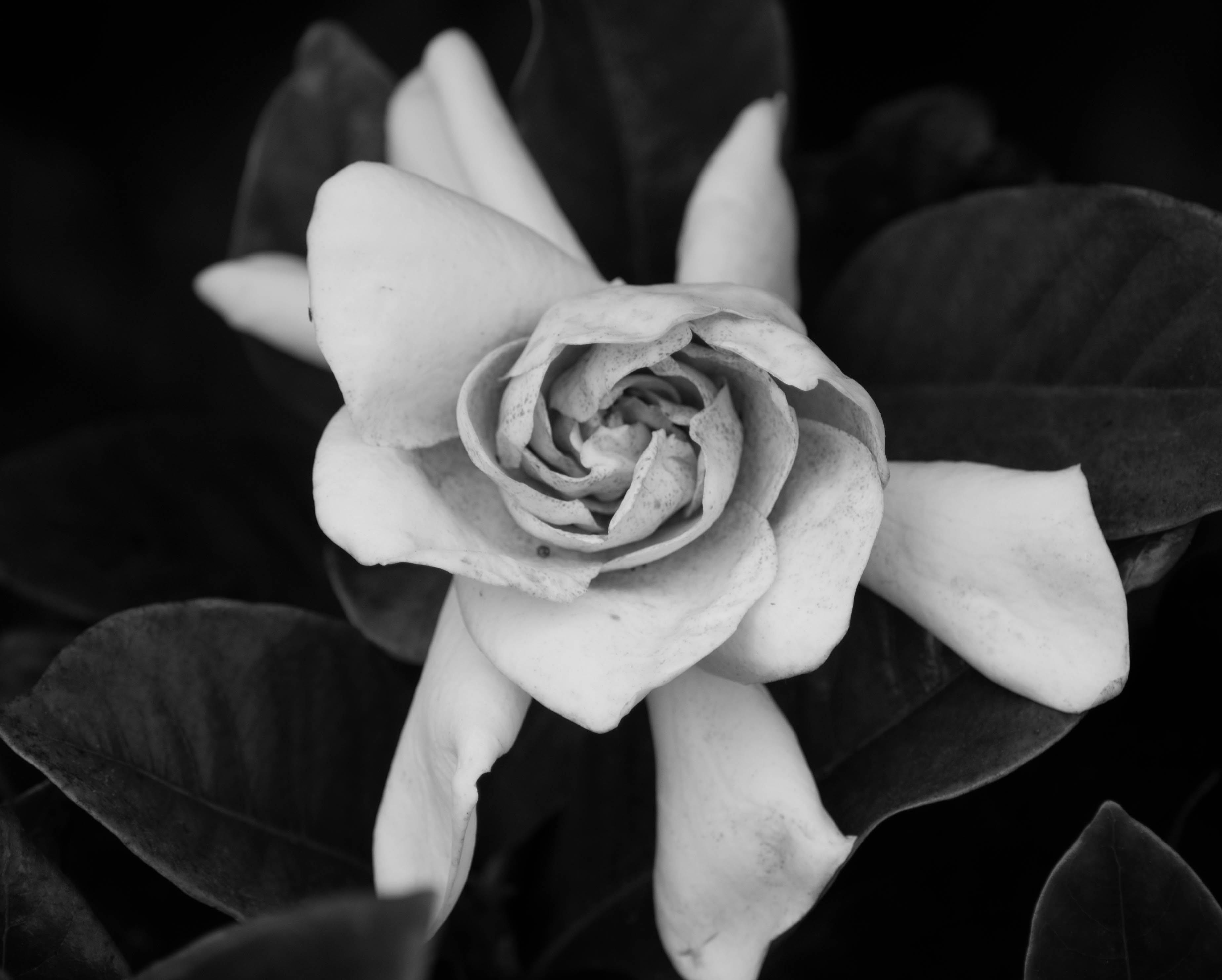
I call this image “Porcelain”. I was on the fence as to how best to treat this image. In colour, the flower is a gorgeous cream, but the flaws in the petals told me I had to make it b/w. I should really show the colour and b/w side-by-side here. (Kona coffee plantation)

Image

Damned smartphone! To me, that is the only flaw in what I wanted for this photo. An aging warrior rests in a pool surrounded by lava stone, weary of life (and checking his ruddy email). (Kailua-Kona)

Image

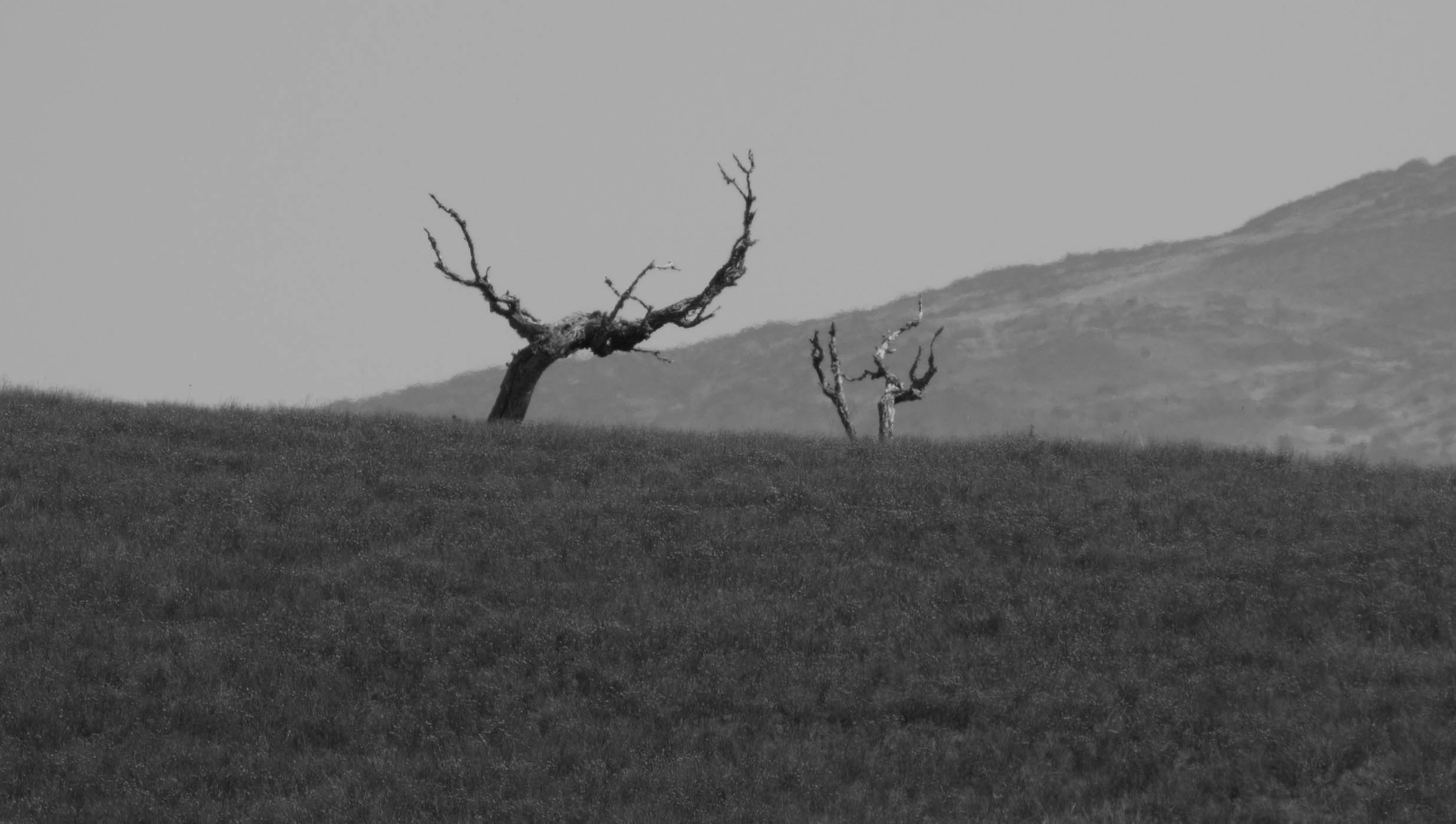
One of my favourite images from this trip. To me, it looks like the little tree is getting reamed out by the big tree, a la “What the hell were you thinking?” In colour, this image is meh. In b/w, it speaks volumes to me. (Mauna Kea)

Image