My Creative Journey – Part One

What follows are a few thoughts on why I write…the moments in my life that led me to embrace my passion. It is an incredibly personal story and I hope it doesn’t make anyone uncomfortable, but rather helps them reflect on why they embrace their own passions.

Image

I need to be creative on my terms.

When I was younger, it was all about acquiring knowledge and being recognized for having acquired that knowledge. In hindsight, I’m not exactly sure what I was planning to do with that knowledge.

In some respects, it was about solving a puzzle, which could range from how does this alarm clock work to how does the universe work. On another level, I think it was about control. Knowing how the universe worked meant knowing that there was a broader sense of organization out there; that the laws of physics and mathematics still held even when my own life seemed in constant flux. The subtle irony of entropy only occurred later.

But it was also about control in the sense that I couldn’t be expected to come up with answers, with solutions, until I had all the information I needed to make that decision. The aggravating reality of that method of control is it only works when you’re the one asking the questions. Nobody else is willing to wait until I have all of the info I need.

At the same time, I needed the safety of analysis and knowledge, I’ve also had a need to be creative. A need that has only recently blossomed as a regular part of my life.

When I was young, I was constantly creating new worlds through my stories. First, as play scenarios and then as the written word. I constantly developed short stories that took me in a million directions. Again, this might have been an attempt at control.

When I wrote, I was the master of my universe. I was the one who decided who lived and who died, who was allied and who was the enemy. I was the protagonist and the antagonist.

It was in 1977, as I started high school, that I first noticed the strength of my writing. That summer, my life changed with the release of Star Wars. So deeply effected was I by the characters and the story, that I immediately went home and started working on the sequel. My version took a very different turn than George Lucas’s—although there were some subplot overlaps—but over the next few weeks, I hand wrote 400 pages of dialogue.

I shared the script with my Grade 9 English teacher, who was impressed with the volume if not the content (my words, not hers). It was in her class that I first realized the power of my words to still and disturb an audience.

On day, Ms. Philp gave us a writing assignment that started with the sentence “I couldn’t believe it when I heard that sound.” It was supposed to be an in-class assignment, but I was onto something and asked if I could take it home to finish it. I guess she sensed something—that this was important to me—and she said yes. While I didn’t finish the story, I did hand her several pages the next day.

After reading the story herself, she decided to read it to the class. Whereas most people had written stories about funny sounds, spooky sounds or weird sounds, I had written about a man who comes upon a murder in an alleyway, first by the sound of bone and sinew breaking, and then by sight. I wrote about the fear and indecision in the witness’s heart as the murderer sees him and he flees for his life.

As Ms. Philp read the story aloud, there was silence in the room—a room of 14 and 15 year olds. No one said a word until she was done reading. It was magical for me.

I wish I could say that there was a rousing round of applause at the end and that this was the day that I decided to become a professional writer. There was no round of applause—although my class seemed to appreciate my story—and Ms. Philp continued to be supportive of my efforts, but there was no effort to foster this creative desire in a young boy struggling to define his world.

The opportunity was there. Everything was laid out for someone to recognize, but nobody tapped into it. Writing continued to be a strange little quirk of my life. I guess it was just easier to find ways to support my interest in science and history by buying me more books, taking me to the Science Centre.

What do you do for a budding writer? Get him a pen and a notebook? Buy him a typewriter?

Eventually, someone did buy me a typewriter—a vehicle to do my homework. But it quickly became the vehicle for my creative outlet, much to my mother’s chagrin. The muse hits me when I have time to be alone with my thoughts. When my day isn’t cluttered with requests for attention and responsibilities. Unfortunately, in my childhood home, those times only tended to occur when my family was asleep.

Routinely, my mother would yell down from her bedroom for me to stop wailing away at the keys. Loudly pounding them into submission. Watching the letter hammers get stuck because the thoughts occurred to me and be translated through my fingertips faster than the typewriter could accommodate. She wanted to be supportive, but not at the cost of a good night’s sleep.

It took no time at all before I had an incredible portfolio of work—half-finished thoughts, short stories—but they languished unread by anyone other than me. I had given voice to the creative urges in my soul but no one heard that voice. It was the proverbial tree in a forest. With no one to even acknowledge the existence of my efforts, did they really exist.

Where was my mentor to guide me through this process? Someone to help me hone my voice. To make my stories better. To help me get my voice heard.

To be continued…
Success Stories

Image

About 10 years ago, I had the opportunity to attend a science writers’ workshop outside Boston. In one of the sessions, the speaker spoke on the risks of anecdotal evidence using the following example:

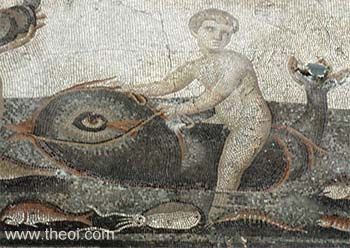
Dolphins are highly intelligent mammals, but also seem to have an inherent sense of humanity (for lack of a better word) as evidenced by the number of stories where dolphins have saved the lives of stranded sailors and fishermen by pushing them toward shore.

Unfortunately, there is a problem with this conclusion based on this evidence, which I will address later in this post.


In learning the craft of my arts—whether business/marketing, science writing or screenwriting—I have relied on various authors to teach me the benefits of specific approaches. And one of the most popular ways to describe these benefits is through the use of success stories.

My most recent read was The Element: How Finding Your Passion Changes Everything by Ken Robinson, a quite enjoyable book that ties nicely with my current thinking on my Art. (Nothing like rationalizing your own opinions with support from books you know to agree with you—but that’s another blog post.)

As Malcolm Gladwell so deftly does for business endeavours, Robinson weaves his discussion of the cross-over point between talent and passion with numerous success stories, most of which take the form of:

  • Young person faces adversity when she goes against the norm
  • Struggling to find her way, she is marginalized by the local community and authorities
  • Through personal tenacity and/or the support and guidance of a mentor, she blossoms in her Art
  • She is now worth bajillions of dollars and/or helps gazillions of people/animals

Who is Robinson talking about? Paul McCartney, Arianna Huffington, Richard Branson, and several others less famous.

These stories are inspiring and uplifting. Everybody enjoys an “against all odds” story.

Tell the same anecdote about a farm boy on Tatooine and you have Star Wars. An addled boxer in Philadelphia, you have Rocky. An addled boxer in New York, you have Raging Bull. Another addled boxer in New York, you have Cinderella Man. Anyways…

One thing that bothers me about these stories, however, is that they establish a linear relationship between individuality and success (which I can buy) at a success rate of approximately 100% (where it all falls down).

What about the individuals who followed a parallel process and didn’t become Paul McCartney, Richard Branson or Arianna Huffington? Who bucked the trend, stood up for themselves and were run over by society?

Failure is an option, friends. It shouldn’t be glossed over. You can theoretically do everything right and still not achieve the success you were looking for.

Again, I agree with the theses these (wow, that’s an odd juxtaposition) books describe—that following our individual strengths/talents/passions and relying on inner fortitude rather than simply conforming to society’s will is our best chance at happiness as individuals—but I balk at anything that smacks of guarantees or promotes unrealistic expectations of success.

Where is the balance? Where are the cautionary tales?

I don’t think any of the authors set out to perpetrate a scam. They’re not trying to pull the wool over anyone’s eyes or sell you snake oil. They’re truly trying to inspire people with feel-good stories, which is commendable. Their audiences, however, are typically so full of hope, so looking for a beacon, that they are apt to see these anecdotes through rouge-hued specs and so mistake proof-of-possibility for proof-of-concept.

It’s a case of reader be aspirational but realistic. Your efforts may not work the first time through, but that doesn’t mean you shouldn’t keep trying.


And the problem with the dolphin anecdote:

We will almost never hear about the times the dolphins pushed the stranded sea-farers further out to sea rather than to shore, because those people probably drowned. Thus, the anecdotal evidence is skewed in favour of success stories.

(Image is the property of its owner and is used here without permission.)

Approaches not panaceas

Image

As I said in Birth of a Reader, I am addicted to books. But even with my addiction, I must admit that every now and again, I wish there were no books on writing and most specific to me, screenwriting.

I say this not because the books available are particularly badly written, but more because they are well written by the author but often poorly understood by the reader; readers who more often than not are looking for the One True Way to screenplay writing.

The same is true in business books. If you tell me your favourite business author, I can tell you how—and possibly what—you think.

Seth Godin. Philip Kotler. Clayton Christensen. John C. Maxwell. Each of these authors has their own approach to various aspects of business, and the more you engage with each, the more your mind thinks in those directions. (It is probably more that they help you rationalize where you were going anyways.)

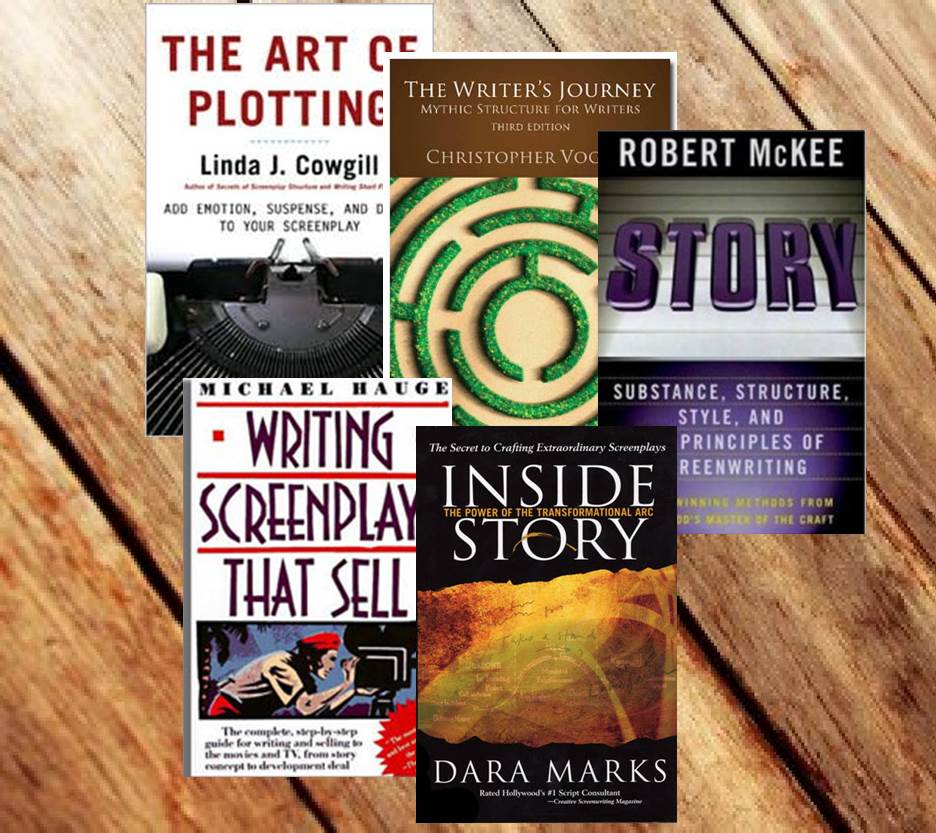
Linda Cowgill. Chris Vogler. Robert McKee. Michael Hague. Paul Joseph Gulino. Dara Marks. Each of these authors also has a trigger onto which student after student latches, like a remora on a shark, looking for their next artistic meal. Each offers an approach to screenplay writing that he or she found particularly useful.

Unfortunately, too many students miss the point that these are approaches or ways of thinking about screenwriting and not road maps to success. Each book offers one or more lessons that a writer can incorporate into his or her work today to make it better, but none of them are the One True Way.

In fact, too close a focus on any one author and you will never find Your True Way.

Too much focus on Dara Marks’ Inside Story and you will find yourself in a tailspin about Theme, as you struggle to force-fit your characters’ actions and dialogue around a theme that may or may not be true to your story.

If you find yourself able to quote Chris Vogler’s The Writer’s Journey, you’re likely describing your characters in terms of mythic archetypes a la Joseph Campbell and drawing parallels with The Wizard of Oz and Star Wars.

I’m not saying that novice writers should avoid these authors. I am simply saying that each should be approached cautiously as the novice writer—or seasoned writer, for that matter—can’t hope to achieve everything these authors discuss. The authors have the luxury of looking at a screenplay as a completed item and so discuss aspects and approaches for which you and/or your screenplay may not yet be ready. There is a reason that you will still find many of these books on the shelves of seasoned screenwriters…because they continue to find new lessons in old books as they develop their craft.

The authors and their tomes are more like a screenwriting buffet, offering you a variety of flavours that hopefully provide nourishment, but can also cause artistic indigestion.

So, sorry folks. The books offer no clues as to the One True Way. It doesn’t exist. And like everyone that came before you and will likely come after, you will continue to struggle as you search for Your True Way.

PS I own and have read books by all of the authors discussed here (and in Book larnin’), and every time I reread them, I find something new to apply to my screenwriting—including, interestingly enough, from the business writers.

It’s a meme!

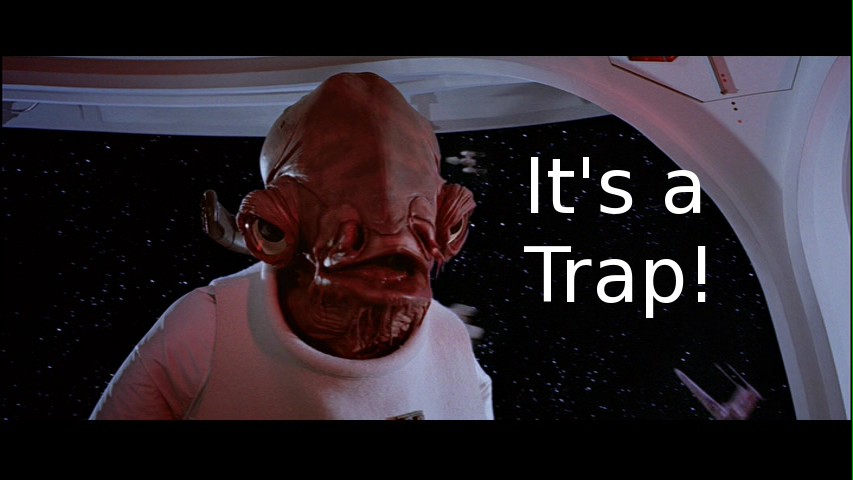
You never know what will take the internet by storm, only that every intellectual eddy has the chance of becoming a hurricane of the ludicrous. Case in point, the myriad variations on Star Wars’ General Ackbar and his sudden realization that “It’s a trap!”

Image

In the interests of short-cutting this process, I have tried to come up with a definitive list of variations of this meme for future use by one and all.

PS By the very nature of stating “definitive list”, you will immediately come up with others, so please feel free to add.

(I suck at graphic design, so I have not attempted to mock up any of the General Akbar memes I list below.)

It’s the clap! – Dr. F. Ackbar, family doctor

Use the flap! – Henry Ackbar, frustrated dog owner

There’s an app! – Simon Ackbar, computer nerd

Here’s your Pap! – Dr. G. Ackbar, gynecologist

Cut the crap! – Jodie Ackbar, frustrated wife

Mind the gap! – Eddie Ackbar, metro/subway driver

I played Hap! – Willie Ackbar, unemployed actor

Touch your lap?! – Candy Ackbar, stripper

Read the map! – Sir Edmund Ackbar, adventurer

Need a nap! – Old man Ackbar, old man

Want the wrap?! – Tootie Ackbar, waitress

Suck the sap! – Angus McAckbar, maple sugerer

Lick the strap! – Mistress Ackbar, dominatrix

Dis ma rap! – Big Daddy Ackbar, home boy

What’s on tap?! – Jessie Ackbar, Ackbarfly

Shut yer yap! – James Cagney Ackbar, mobster

It’s a snap! – Fast Eddie Ackbar, informercial host

Take a slap! – Jacques Acqbar, hockey coach

Please don’t….ZAP – the late Ensign Freddie Ackbar, red-shirted Starfleet cadet