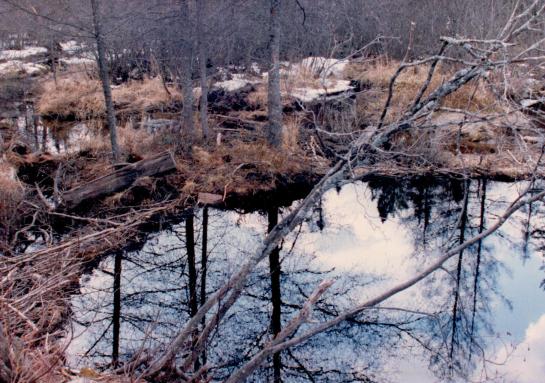
The mundane browns and greys of late Winter are slowly overwhelmed by the blue-skied hope of Spring yet to come. One of my favourite photos from Algonquin Park in Northern Ontario.
The mundane browns and greys of late Winter are slowly overwhelmed by the blue-skied hope of Spring yet to come. One of my favourite photos from Algonquin Park in Northern Ontario.
Yesterday, my friend Marsha posted a short piece on her blog—Why the Face (WTF)—where she discussed her challenges in writing narrative/action for a scene and how she found scene writing to be so much easier if she started the dialogue.
“On its own, free of formatting and figuring out what characters are doing physically,” she wrote, “it lets me really get into what these people are actually saying to each other.”
When I read this, I thought, what a fascinating approach as mine is the complete opposite.
When I start a scene, I can go on ad nauseum about the setting and what the characters are doing or how they are behaving, but I find actually expressing the characters in dialogue to be daunting. When I do start writing dialogue, I find that I am writing exactly what my characters are thinking (on-the-nose) or that their emotions and motivations are incredibly superficial.
When I describe a character’s behaviour, however, his or her emotions surface more slowly through unconscious tics. The tensions that I intone in my mind’s eye then inform the word choice when I start to write his or her dialogue. It is as though I have to psych myself into the character’s body before I can express his or her desires and impulses to the fullest.
What makes this ironic is that while discussing this with Leela, another friend, she reminded me of the days when I first started writing sketch comedy, and all I could seem to manage were a series of “talking-head” sketches. At that time, action was unimportant to me as I felt the only way to bring my point across was through words.
On paper, my sketches could be very engaging, whereas on stage, they were significantly less so. Thus, I needed to learn the power of the unspoken word. Apparently, the pendulum has swung full tilt and I am now in the process of finding a happy medium. (No wonder writing is so tiring.)
Ultimately, like a good Oreo cookie, the best screenwriting comes from the combination of solid narrative (icing) and solid dialogue (cookie), so I am glad Marsha has my back and I have hers.

Saddened by the sense of accomplishment I feel, having started this “project” at the New Year.
With military precision
The condiments await
A culinary decision
From Table 28



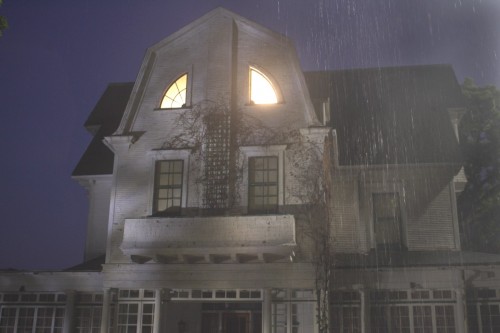
If I move into a beautiful New England home with my beautiful family and on our first night, the walls run red with blood and a disconnected voice cries “Get out!”, I go to a hotel and move the next day.
I do not search for an explanation (or at least not that night). I do not instinctively head for the dusty attic, the dank dark basement or that rather nasty looking shed under the menacing weeping willow in the darkest corner of the back yard.
So when I read about characters doing just that in a novel or screenplay or watch actors do it at the movies, I find myself thinking they deserve whatever comes next because they are idiots. What the hell motivated them to have that stupid response? Out of the gate, I disconnect from the character.
Now, despite the title of this blog post, I am not suggesting that only my instincts should be followed in screenplays, novels, etc.—these would be damned short stories if everyone did—but rather it is a call to writers to help me, as a reader or viewer, understand why the character behaved the way he or she did. Until I do, I cannot really bond with the character.
This isn’t easy, but it is necessary.
Whenever a character responds to something or takes an action, you have to ask yourself, why did he or she do that? And over the course of your story, are all of that character’s choices consistent with his or her personal journey from before your story’s opening to its conclusion?
And as if that isn’t difficult enough, you then have to ask yourself, have I written the story in such a way that the audience can see the logic of the choices, even if only in hindsight?
This last point is crucial, because as writers, we often know or understand things about our characters that never make it to the page. Thus, while everything may seem completely consistent and logical to us, it may still be confusing to our audience, who is not privy to the machinations within the head of the writer god.
At the same time, you never want to spell it out for the audience, because then story reading or watching becomes too passive an exercise and the audience doesn’t engage. You need to feed your audience just enough information that it can begin to make inferences about your characters’ behaviours and so become connected with your characters.
The good news is that this is unlikely to happen in your first draft or at best, will happen in drips and drabs.
As you develop your story past draft one, you will find moments of inconsistency or more likely, your trusted readers and advisers will find inconsistencies. Take those in and mull them over. Odds are, fixing those issues will not require a major refocus of your story…just a heavy-brush rewrite. And your story will improve.
So if the walls run red with blood, a disconnected voice cries “Get out!” and your protagonist doesn’t, I better understand why.

(Images are the property of the owners and are used here without permission.)
PIECES OF ME...
Mother, Nehiyaw, Metis, & Itisahwâkan - career communicator. This is my collection of opinions, stories, and the occasional rise to, or fall from, challenge. In other words, it's my party, I can fun if I want to. Artwork by aaronpaquette.net
Life at any age can be amazing! We only need to grab hold & experience it!
The internet web log of Michael Cedarwood. I used to be a stripper. Now I'm a writer.
Thoughts on creativity, Pharma and whatnot
Mindfulness, Philosophy, Spirituality, Meditation, Awareness, Religion, Nature Photography
Living for Happiness
A perspective from the other side of the hockey ocean
Romance Author
Author of Kritsotopoula, Girl of Kritsa and Rodanthe's Gift
Our opinions don't stink!
Rantings and Ravings on all things Screenwriting and Movies
My Elicits, an Inception... Learning to Live in Perfection
 createdbyrcw