Plant one on me

While I am addicted to the kingdom Animalia, I must admit to an expanding appreciation for plants.

There is a certain elegant simplicity at their most superficial that masks a magnificent complexity within. While typically more stationary than most animals, aside from the odd breeze, these biologic wonders seem to be more than capable of a vivacity that borders on personality.

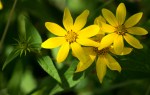
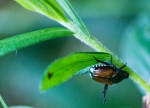
I appreciate that I am romanticizing them, but how can you look at the following images and not think that there is something going on. And it’s not the photographer’s talent. They are spectacular, I just captured the spectacle.

Do you see what I see?

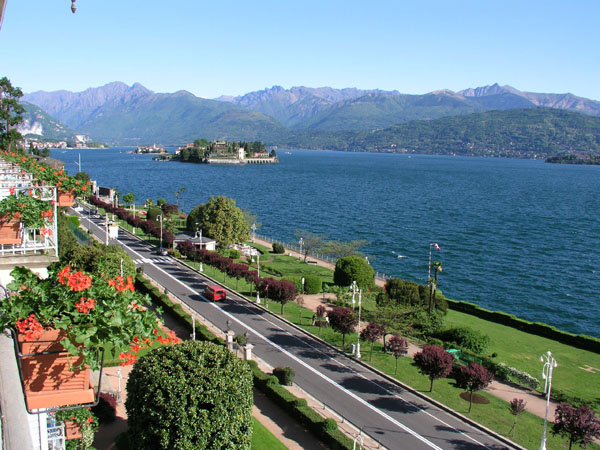
How can you NOT want to describe this place?

How can you NOT want to describe this place?

Now that I have worked on several screenplays, which I have shared with a number of friends and fellow writers, I have come to a conclusion: I am a novelist.

Fret not, fellow travellers. I say this not to suggest I will cease to write screenplays but more in recognition of an inherent weakness in my screenplays, or perhaps more accurately, in myself. I am addicted to narrative.

The problem is I instinctively write what I see, even when I only see it with my mind’s eye. If I were a painter, I would own brushes that only had one or two hairs. The concept of a paint roller would be anathema.

Nothing in a scene is unimportant to me. I see people, things, phenomena in terms of metaphor, although I do my best to avoid poetry.

I cannot simply write: The boat bobbed wildly on the waves. (Even writing that line now was taxing to me.)

Instead, I’m inclined to write: The battle-weary skiff, a patchwork of wood and fibreglass, tossed helplessly on the ocean swells, each wave of its own purpose, refusing to work together toward anything resembling a current.

The former is what is happening. The latter is how I envision it. To me, everything is a character in a story—an antagonist, an ally, a victim—and as such has its own story arc, however small.

I also want to make sure that my reader “sees” the movie I would like to make—the challenge of a pictorial and aural medium presented literally. I want the reader to “feel” the scene before the first word of dialogue is spoken, both to establish the mood of the scene and give a sense of how the line is said.

Unfortunately, in my zeal to be informative, I instead become onerous or tedious. My screenplay becomes a challenge to read as long tracts of narrative slow the story to a crawl. Instead of making it easier to read my manuscript, I’ve made it more challenging and less desirable.

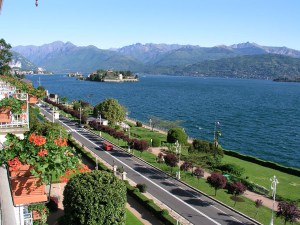
I was once accused of writing a travelogue of Northern Italy in a screenplay. Oh, what I had written was beautiful and made some people dream of travelling to the region—Lago Maggiore—but 90% of what I had written was completely unnecessary to the telling of the story.

So, what to do?

As of this moment, my writing process is my writing process, and I believe that any attempt to significantly change it would simply increase my challenges in writing at all. No, better to have written a first draft badly than to have never written.

Instead, I have chosen to rely on this little miracle I have discovered. They call it Draft Two. This will be my chance to go through my screenplay with a harsh eraser, and remove all of the lines or description that is not absolutely necessary to tell my story or to explain a character’s behaviour.

Sure, this may necessitate some rewriting of dialogue so that I don’t end up with mile-long verbal tracts. But in all likelihood, these speeches were too long and in desperate need of shortening.

One step at a time, though, for today, I continue to write Draft One of my screen-novel.

(Image is property of owner and is used here without permission, but plenty of description if you read my screenplay.)

The Upside of Down

As I examined the photos I took the other day walking the waterfront of Toronto’s east end, I realized that much of my world was apparently upside-down. See for yourself.

City on the lake

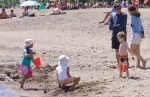
A long weekend Monday in Toronto saw thousands make their way to the beach. If this summer doesn’t get crappy soon, I may not get any work done.

Child’s play isn’t child’s play

Colloquially, when someone—an adult—states that some activity was child’s play, they are trying to convey that the action was simple or easy, that it took no effort. And yet, their use of the expression couldn’t be more wrong.

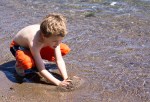
I had the pleasure of spending the afternoon yesterday with a few friends and their kids at the local beach. The kids ranged in age from infant to teen, although the majority were in the 3-5 range, I think—at my age, anyone under 30 looks 12.

Regardless, when lunch was over, the younger set and a few doughy adults headed to the water, where things got serious. Not for the adults, you understand, whose toughest job was to retrieve a tossed flip-flop from the frigid waters of Lake Ontario. No, it was at this moment that the child’s play began in deadly earnest, for four of the middling sprites decided to build a canal system that would have made the Panama and Suez engineers blanch.

Miran, the eldest of the group, became overseer, designing a series of causeways that challenged the imagination. Mounds of sand became islands in the stream. Canal walls were carefully constructed, through trial and error, to ensure sturdiness in the face of aquatic onslaught.

Cole, the lone boy in the group, became a human bulldozer, carving access channels to the lake itself that would help fill the channels with each invading wave. Samantha and Hana, meanwhile, worked bucket brigade, supplementing Cole’s efforts with frequent trips between lake and canal system.

This was not child’s play, despite it being play by children.

With each set back—a minor sand slide, a misplaced deluge, pee break—there would be a momentary expression of frustration followed quickly by brief meeting to discuss options and then an action plan to right the wrong. A lot of adult companies could stand to learn from this lesson.

This is not to say the process was flawless. At one point, Miran decided that she wasn’t crazy about the canals under construction and instead wanted a massive lake, which would have necessitated the removal of a large island. A new corporate executive is born.

She was quickly talked out of this by her subordinates who felt challenged enough to complete the canal system, let alone initiate island removal.

The children worked tirelessly for an hour or so and made substantial headway, but like all good infrastructure projects, senior management (parents) eventually got bored (and not just a little sun-stroked) and wanted to head back to the house.

Reluctantly, the children packed up shop and abandoned the construction site. Unbeknownst to them, however, as quickly as they left the site, another altitudinally-challenged crew appeared to continue the job.

This is how I want to live my life; playing with fervent intensity. I accept there will be momentary setbacks—as I approach 50 years, pee breaks are a necessary evil—but I will not let those setbacks deter me in my goals or disturb the pleasure I get in pursuing them.

I am embracing child’s play 2.0.

My important thoughts on narcissism

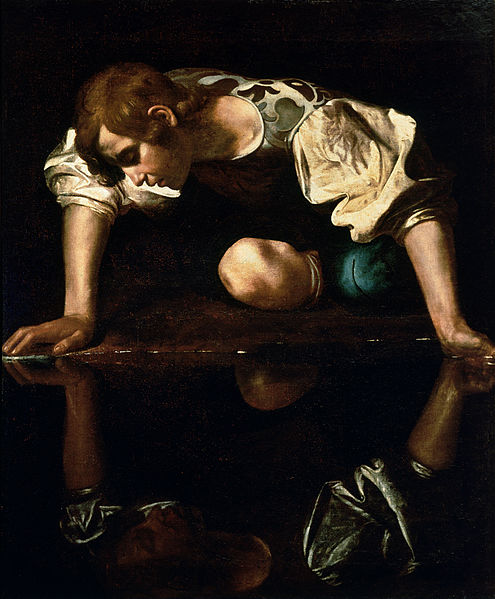
Ancient Greek algae specialist Narcissus

Ancient Greek algae specialist Narcissus

Makes complete sense when I engage in it, but it eludes me why anyone else would.

Narcissism is so perfect that even the Americans and British agree on its spelling.

Back in the day, a “selfie” was a form of masturbation. Today, it is a…hunh…how ironic.

Interestingly, the actual mythical figure of Narcissus never seemed to complain that the vision he loved was of the opposite hand to him.

How obvious for Narcissus to name narcissism after himself.

The original title of The Chronicles of Narnia was The Chronicles of Narcissus, but had to be changed when the children could never get beyond admiring their wardrobe.

Contrary to popular belief, narcissism is not a sign of personal insecurity…at least, it isn’t in me.

An alternative version of the myth of Narcissus involves an identical twin brother who drowned. Turns out Narcissus was a bit of a prick, but an imaginative one when it came to the inquest.

(Image is property of Caravaggio, but he wasn’t answering when I called to see if it was okay to use the image.)

The Drifts – A must see at NYC Fringe

Novelist, playwright, actor Thom Vernon

Novelist, playwright, actor Thom Vernon

Earlier this evening, I watched a run-through of The Drifts, a one-man play that will take the stage at this year’s New York Fringe Festival (Aug 9 – 25). I won’t go into the details of the plot other than to say it is excerpted from the book of the same name by Thom Vernon.

As I have written elsewhere, I do not generally like one-person plays. I find them to be self-involved and often so self-referential that they provide no context for me as a viewer. The Drifts, however, does not feel like a one-person play but rather a fully cast exhibition of characters that all happen to be performed by the same actor, again Thom Vernon.

In a good way, Vernon channels his inner Sibyl to schizophrenically present a cast of at least 8 or 9 characters, including a baby cow (seriously), and he does this with such clarity that you’ll only rarely find yourself confused as to who is speaking.

With a single motion, nervous tick, posture, sound or look, Vernon assures that you will immediately know if you are looking at desperate husband Charlie or exhausted wife Julie.

The story itself comes at you like an emotional jackhammer as each of the characters struggles to find or stand up for his or her individuality. And it is this sameness of their pursuits that provides the delicious irony of the piece, proving that what truly draws us to each other is our common need to be unique.

By the end of the hour, you will find yourself as exhausted as the playwright and actor, but it will be a welcome and refreshing exhaustion that will leave you changed—and no doubt heading to the nearest bookstore to find the book.

If you are fortunate enough to be in New York during the Fringe Festival, compound that fortune by taking in The Drifts.

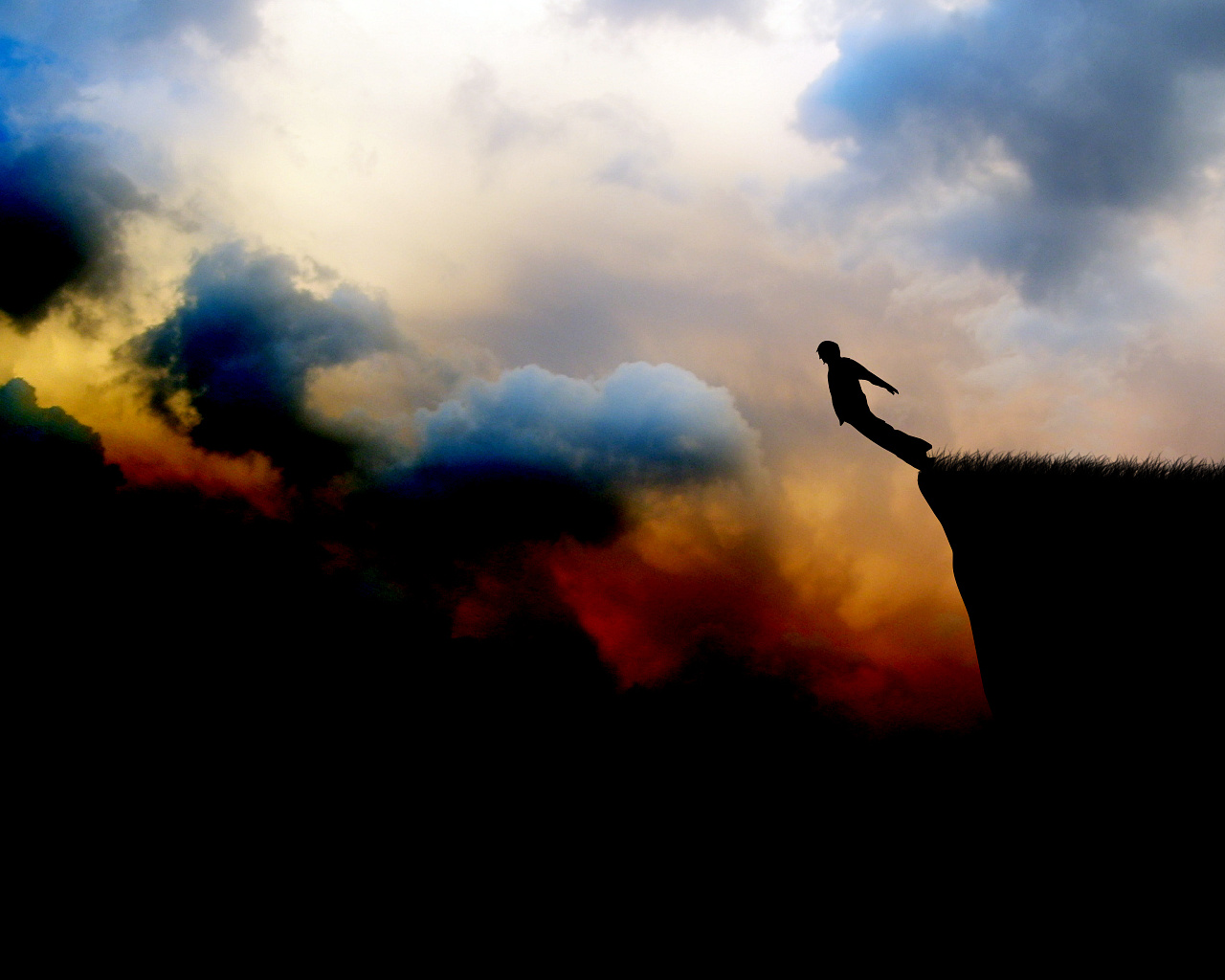
Free fall update

Free fall

With a pretty steady acceleration of about 9.8 m/s2 and a consistent headwind coming from below, I am happy to report that my free fall through the universe remains largely unchanged from my last check-in.

The ground remains nowhere in sight although recent episodes of blue-shifting suggest it is down there somewhere. Otherwise, the view continues to be spectacular, if a tad blurry.

The best movie metaphor I can offer for my journey thus far is a mashup between Indiana Jones & The Last Crusade and 2001: A Space Odyssey. It is as though I combined Indiana’s leap from the lion’s head over the yawning chasm with Dave’s journey into the monolith to find it full of stars. (My journey’s been full of actors, some of whom will one day be stars.)

When I stepped off the cliff in May 2012, I could not see the bottom. That there was even a bottom to be seen was pure conjecture. In some respects, that may have made it easier to step off. Ironically, not seeing what awaited me was less frightening.

As I fall—which I don’t see as a negative expression—I have come to realize that I care less and less about my potential destination. Instead, I am enjoying the freedom of soaring in whatever direction takes my fancy (falling is just soaring on a downward bias).

And in my journey, I am meeting an endless array of interesting people. Some are also soaring, while others are flailing in resistance. And still others have convinced themselves they are stable and stationary. Whatever floats their sense of well-being.

The forecast for tomorrow is a continued breeze with periodic pockets of turbulence in a sea of exhilaration. Can’t wait.