Attraction

Reading

I know it was static

That caused her hair

To reach for my arm;

Its gentle fibers

Mingling with mine.

A connection tenuous

Yet signalling more.

No attempt at retreat,

No urge to disconnect,

Only stationary comfort

Between two souls.

My arm immobile,

Exchanging warmth,

Seeking meaning,

Awaiting more;

The glimpse of an eye,

The curl of a smile,

The eddies of a sigh

Could not convey more

Than the subtlest attractions

Of the smallest ions.


(Image is property of owner and is used here without permission, so don’t give me any static.)

Top 50 Events – A personal perspective

mirror

On Monday, November 18, I celebrate my 50th birthday. To commemorate the half-century, I have tried to look back and capture my fondest memories or most life-changing events.

The following list is not in order, although the subject of event #2 would likely have no problem believing she ranks after #1 and possibly as low as #5. She can be assured little of this would have nearly the meaning or significance to me without her presence for much of it.

  1. Had my sketch comedy performed at Second City Toronto
  2. Married an amazingly intelligent woman
  3. Interacted with a Henson puppet
  4. Saw Star Wars (you cannot overstate the impact of this on me)
  5. Wrote my first screenplay
  6. Met Nicholas Lemon, puppeteer, actor, friend
  7. Coached adult hockey (beer league but it was hockey)
  8. Performed stand-up comedy (never again)
  9. Discovered the Beatles (not saying I was first to)
  10. Was bylined in a magazine
  11. Wrote sketch comedy for a television show
  12. Attended Patrick Roy’s last game as a Montreal Canadien
  13. Watched a Habs game at the Forum and the Leafs at the Gardens
  14. Snorkeled in Barbados, Costa Rica and Hawaii
  15. Became friends with my brothers
  16. Was a scientist
  17. Performed improv on the Second City stage (as part of SC Training Centre…don’t want SC mad at me)
  18. Visited Chichin Itza
  19. Taught college/university students
  20. Owned a collie named Rebel
  21. Photographed orcas in British Columbia
  22. Went to Disneyland
  23. Attended the Austin Film Festival
  24. Met Chris Vogler, author of The Writer’s Journey
  25. Published my own magazine Aliquotes
  26. Experienced 9/11 from Washington, DC
  27. Impacted by murder of John Lennon
  28. Visited Iceland
  29. Played with ferrets
  30. Saw Shakespeare performed in Stratford, ON
  31. Eloped to and married in Algonquin Park
  32. Received spread in Globe & Mail from my PR efforts
  33. Saw George Carlin, Bill Cosby and Billy Connelly on stage (Gods)
  34. Skated on the Rideau Canal during Winterlude
  35. Eulogized my grandparents
  36. Traveled to both coasts with grandparents
  37. Had my heart broken
  38. Discovered bipedal locomotion (hey, it was the 60s)
  39. Watched the movie My Favorite Year
  40. Received an electric typewriter for Christmas
  41. Saw the crystal structure of the active site of a GTPase (it’s a geek thing, but beautiful)
  42. Watched the Toronto Marlies make the Calder Cup Finals (see also ‘heart broken’)
  43. Saw an ad I created on the Toronto Transit system
  44. Met Peter Noone of Herman’s Hermits
  45. Discovered sex (again, not first; obviously, this list is not in order; strangely, Star Wars still ranks higher)
  46. Witnessed Toronto Varsity Blues win Vanier Cup on blocked last-second field goal attempt
  47. Rode in a submarine in Hawaii
  48. Did astral photography on a mountain top in Hawaii
  49. Birth (it meant a lot to me)
  50. Celebrated 40th birthday at pool hall with wonderful friends

Trench – A short story (Part Two)

trench2

(Click here for Part One)

At the sound of distant splashing, Francis opened his eyes. His face had slowly deformed the mud until it almost seemed a mask in which he might have suffocated. Trying to turn his head, he winced. Somewhere in the night, it seemed, his bones and muscles had fused to become an almost immobile mass.

Slowly, painfully, he pulled his arms to his chest and pushed himself up onto his knees. His body wanted to scream but his instincts said he needed to remain silent.

His world was a grey cloud. As it often did, a heavy morning fog had settled into the trenches, blurring the lines of reality and imagination, preventing the senses from reaching more than a half-dozen feet in any direction. The light said it was day, but that was where his universe stopped.

The splash sounded again, closer. Francis had seconds to debate friend or foe. He opted for safety, launching himself across the gap to the other side of the trench, burying himself behind the remnants of crates. Silence was key.

German voices pierced the fog. At least he assumed they were German. He knew Welsh and English, but just enough of the words sounded familiar to suggest he wasn’t hearing French.

His heart was ready to explode and he willed his breathing to calm, the rapid exhalations forming eddies in the fog that he was sure would give away his position.

From the mists, two boys in German uniforms emerged, poking their rifles into the detritus that lined the trench, presumably looking for food or ammo. They plodded through the puddles, secure in each other’s company, unaware of the din they created.

One soldier cried out and attacked the side of the trench.

His compatriot turned to find him tugging at the buried corpse. Placing his rifle to one side, he joined the other and between the two of them, they pulled the dead soldier out, the mud protesting their invasion with a loud sucking noise.

The first soldier reached inside the dead man’s great coat, feeling around blindly until his hand lighted on his quarry. Smiling at his partner, he extracted a sodden square of leather, teasing apart its folds and sliding out military script. His partner, meanwhile, was filling his pockets with items from the dead man’s kit.

Francis watched the vultures loot the corpse, his mind racing to comprehend the incomprehensible. This was one of their own.

He was as surprised as the German soldiers when the chest of one caved in at the bullet wound. The recoil of his rifle telling Francis that he had pulled the trigger.

By the time the unwounded soldier figured things out and was rising to his feet, he too found himself with a bullet in the chest. He gaped at Francis, who slowly emerged from his hiding place, and his eyes rolled into his head as he fell to his knees and then face down in the mud.

Francis shook, bracing himself against the crates lest he too collapse into the puddle. The dead soldiers—the men he had killed—lay at his feet. Francis tried to feel anguish at his crime. He tried to feel joy at his survival. He felt nothing.

Not cold. Not wet. Not even numb. His world had closed in on him, smothering him.

This was the first time Francis had fired in battle, all previous conflicts amounting to little more than scurrying from trench to trench, fox hole to fox hole, keeping you head low lest it be removed. The first time Francis had taken a human life, and yet he was intrigued that he felt no different than had he just slaughtered a hog for its meat or put down a rabid dog.

Francis dragged the soldiers onto their drowned comrade, laying their rifles next to them. He then stood silently, scanning the air for any sound, the splash of footsteps racing to the rifle shots. He heard nothing.

He pulled aside the coat of one soldier to find a filthy uniform underneath, not just torn in places but the material actually rotting away. A photo dangled precariously from the soldier’s pocket. He retrieved it and saw a youth, the soldier, standing in front of a portly woman near a well. He wondered if this was the boy’s mother. Flipping it over, the back was inscribed with German.

Without knowing why, Francis pocketed the photo and rose to his feet. As he lifted and flipped over the soldier’s military kit, he was startled by the rumble of artillery in the mists far ahead. The line had apparently moved in the night. Time to rejoin his unit.

Shouldering the German kit and his rifle, Francis stepped over the fallen soldiers, picked his way past the puddles and dissolved into the mists.

*****

Two months ago, while organizing my grandmother’s things after her funeral, I found an ancient, moth-eaten bag in her attic. Opening it, I discovered a German bible and a mixture of English and German war rations, as well as a photograph of a boy and his mother.

The back was inscribed in German, which I asked a neighbour to translate for me.

“Be safe, my beloved boy, and come home soon. Mama.”

No name. No date. Just a message of love and worry.

That my great-grandfather had his kit and photo suggested the boy did not make it home and his mother’s heart broke.

I keep the photo with me as a constant reminder of the sacrifices made on both sides. Sacrifices that let me lead the life I do.

I will never forget that.


Please note: This story is a fiction, although my great-grandfather Francis Sowden did serve in the first World War.

(Image is property of owner and is used here without permission, but utmost respect and reverence.)

Trench – A short story (Part One)

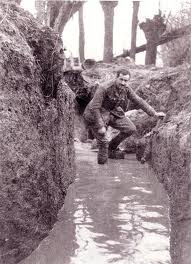
trench

Ass over tea kettle, Francis plunged into the trench, its existence in the darkness signalled by nothing but a lack of anything, his fall broken by ice-crusted water and gelatinous mud.

Spewing the filthy frigid water from his mouth, Francis tried to regain his footing, his body too cold, his mind too much in shock, to tell if anything was broken. Every movement, however, was a mired mess as the cloying mud that perpetually threatened to steal his boots worked in concert with the glass-sharp ice to hold him down.

Francis wasn’t a weak or timid lad by any estimation having learned some hard truths about life while fighting to survive in a Welsh orphanage before finally relocating to a rural town outside of Ottawa in Canada. He knew what it was to toil in the fields, to be completely responsible for your own welfare, to stay alive. But  this, this was stupid.

How could a month of running around a farmer’s field in full pack have prepared him for this? Better to have him run up the Ottawa River in full flood that teach him to worry about gopher holes and broken ankles.

This wasn’t the France he had read about. The France of Dumas and Monet. This was some sort of crazed underworld that only the cold and wet prevented him from calling Hell. Perhaps this was Canadian Hell, he thought as he tossed his gun to the side of the trench.

Using his knife to clutch the dirt, he slowly achingly pulled himself from the muck. His hand struck a fragment of barbed wire that used to sit atop the trench wall. A barb pierced his skin but he actually found the pain refreshing as this was the first thing that had broken through the numbing cold. The wire also gave him a bit more leverage.

Francis scooped a seat out of the mud wall and rested. He was uncomfortable. He was miserable. But he was out of the water and out of the line of fire.

The night was overcast—he couldn’t remember the last time he’d seen the sun—and was illuminated sporadically by the distant blast of artillery. A thunderstorm that perpetually threatened but never actually rained.

As he chewed on a piece of meat that he had found in an abandoned farmhouse—it could be cow tongue or boot tongue for all the flavour it had—he smiled at how blasé he’d become about artillery bombardment in six short months.

The noise used to terrify him as he’d watch the ambulance corps bring the still-breathing remnants of soldiers from the front. He remembered several times feeling the sudden warmth of his own urine as he moved from trench to trench in his first days in battle. He quickly learned it was possible to be proud and experience wrenching fear at the same time.

Now, he was completely fatalistic about his chances. His hope was that should he come under bombardment, it be swift. This was not to say he was suicidal, however. Francis very much wanted to live.

More a feeling than anything concrete, Francis turned rapidly toward a sound in the darkness, knowing there was only a 50-50 chance his rifle would fire if called upon.

It was a low noise, the sound of something being tugged in the darkness. Short bursts of sound followed by silence. The sound neither receded nor approached, however. Whatever was being moved and by whom, the going was hard. That and they hadn’t noticed him.

Keeping as still as he could, Francis craned his sight into the shadows, focusing as hard as he could when the distant flashes gave him a moment of light. The noise continued its ebb and flow, unphased by the chaos around it.

Just as he thought his eyes would leave his head for the strain, he caught a furtive movement. On the next distant explosion, it was clear he was watching a rat. For its size, it could easily have been a raccoon, but its scraggly state and focused snout clearly suggested a rat.

With rabies running rampant throughout the front, Francis would normally have steered clear of the animal or tried to shoo it off. These were anything but normal times.

Slowly moving from his perch, Francis slid down the trench wall to the mud’s edge, creeping slowly toward the rat, rifle barrel firmly in hand. A couple times, the rat froze as though ready to run, but then resumed its activity as the artillery covered Francis’s approach.

In a fluid motion, the rat’s skull crunched under the butt of Francis’s rifle. Death swooped in so quickly, the rat never flinched or made a sound.

Grabbing its tail, Francis flicked the rat into a puddle, immersing it to drown any fleas, knowing in his heart that he was more likely to give fleas to the rat than the other way around. He then raised his prize into the air, letting the muddy water drip for a moment, as he pulled his knife back out.

Life on the farm paid off handsomely, as within minutes, he had successfully gutted the rat, throwing the offal as far as he could to avoid unwelcome family members. He had also peeled back the skin to reveal what he knew to be pink protein-laden meat.

Between the wet and the lack of fuel, a fire was out of the question, but Francis had his lighter, which he used to char segments of the rat before he bit into the flesh. The flashes of warmth and juicy flesh revived his spirit somewhat.

As he roasted his fifth piece, however, his eyes focused beyond the burning flesh and fire to take in what the rat had been tugging at.

Through the muck and mire, Francis stared at the toothy grin of a German soldier, drowned in a muddy avalanche of a collapsing trench wall. The soldier’s bottom lip was flayed while the left top lip was completely missing. No wonder the rat had struggled to bring its find home.

Francis stared at the death mask for a moment, before shifting his gaze to the rat remnants in his hand. As though scalded, he threw the rat down the trench and doubled forward, fisting the mud at his feet.

His back arched violently several times as he convulsed a wretching wail, but his starving body refused to release its cannibalistic gains. Instead, from deep within came a mournful cry that rose in volume and violence until it seemed he might turn inside-out.

Part Two in the next post.

(Image is property of the owner and is used here without permission, but a lot of respect.)

Remembrance Day tributes

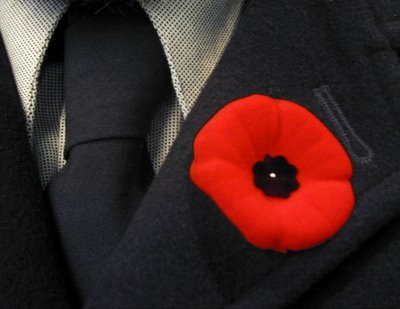
Remembrance Day Poppy

I have already posted my thoughts and experiences about Remembrance Day and my homage to the fallen.

Below are a few other pages I have found that I think tell profound or beautiful stories.

Korea: Mapping the dead of Canada’s forgotten war     

A war hero lived in my house

My conversation with a soldier today…

Alberta man on a mission to document Canadian veterans

In Flanders fields and John McRae

Remember the fallen    

Rick Mercer rants against shoddy treatment of veterans

Lest we forget: Thanking the fallen

Remembrance Day Poppy

On November 11th in Canada, we take a moment out of our day at 11am to remember those who have fallen in war to define and defend our rights and freedoms as a nation and a people. We call it Remembrance Day and in the British tradition, we symbolize it with a poppy.

I am of the fortunate age that while I never had to experience the terror of war myself, I am old enough to have spoken with many of my family members who have served in the Canadian military both in times of war and in times of peace.

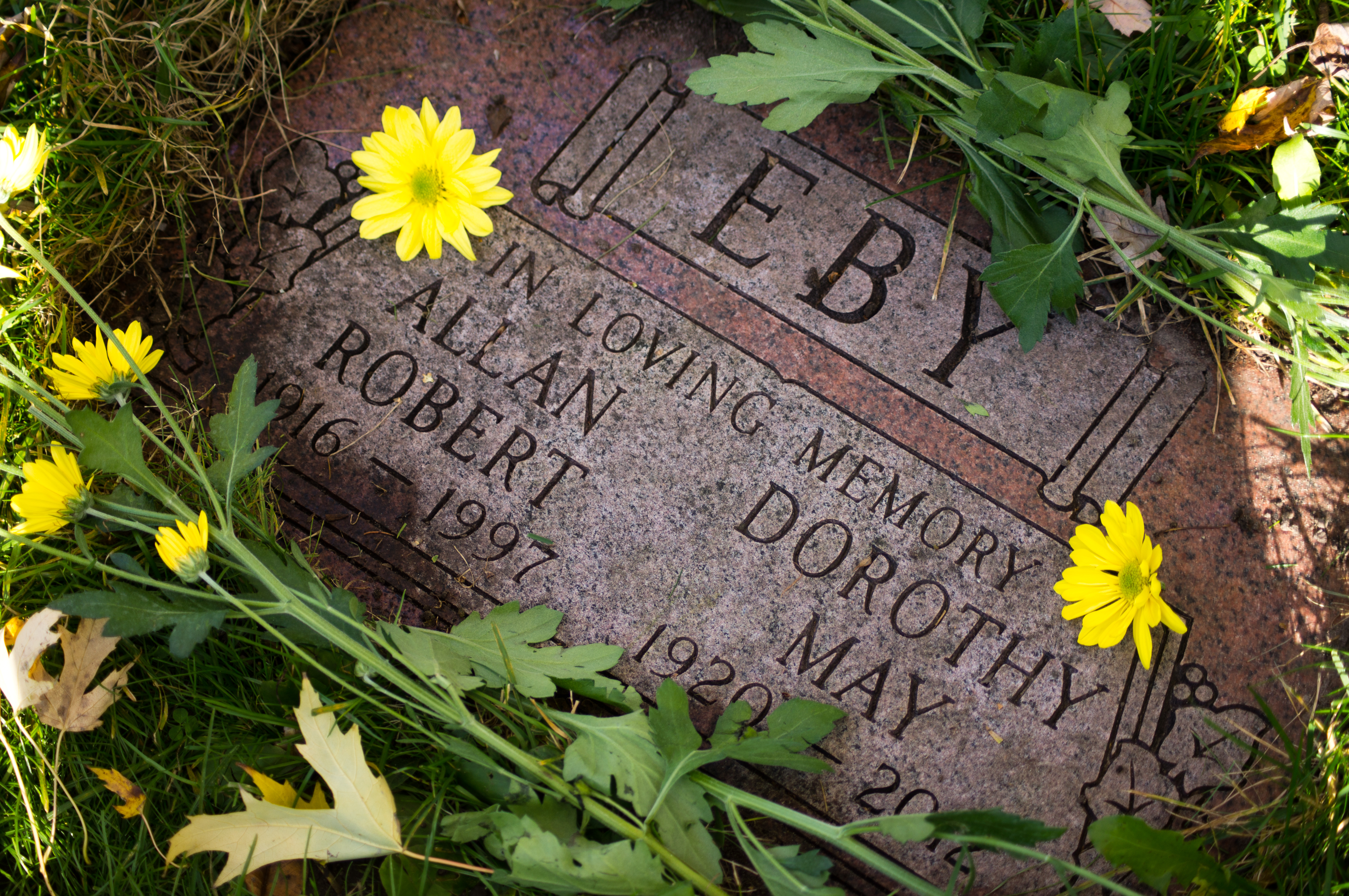
My great grandfather Francis Sowden served in the First World War, the war whose Armistice Day we commemorate. My grandfather Allan Eby served in the Second World War as part of the Canadian forces that invaded Italy and freed the region from Nazi occupation. Similarly, my great uncles served in the military, one making it his career.

Each man had his own experiences. Each man could relate his own stories.

I remember fondly, when I grew old enough to understand, listening to my grandfather relate his experiences; in some ways, his greatest days and in others, his worst. In his own gentle way, he taught a brash young know-it-all with all the answers on the failure of war a thing or two about life and the need to defend freedom when called upon.

Beloved and missed

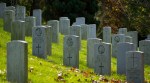
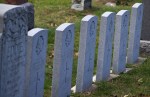
As I visited my grandparents’ gravesite the other day, I came upon the graves of several other soldiers, their tombstones clearly marked, their ranks smartly inscribed. And I stopped for a moment to thank them for their sacrifices.

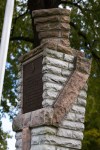
It was only then that I noticed a monument atop a hill, something I had never seen before, that paid homage to the fallen. A soldier with bowed head. Very humbling.

To the men and women who sacrificed everything for my home, I thank you.

To the men and women who served bravely or waited nervously for family members to return home, I thank you.

To my friends who continue to serve for Canada or any other country, I thank you.

As long as I am alive, your story will not go unheard or unremembered.

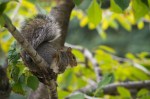
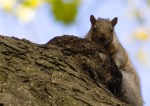
Keep away from my nuts

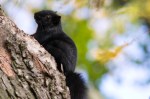
Yesterday, we checked out the birds of autumn. Today, it is a few furry friends I met in the cemetery who very warily kept an eye on me.

I guess I can understand that. Any movement in a cemetery must be a tad unnerving.

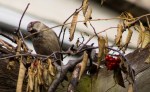
Autumn birds

As I mentioned earlier, I took a bit of a walk to visit my grandparents’ grave yesterday and brought along my camera. During my expedition, I was glad to see that a number of animals had not yet given up on Toronto and could still be found, prepping for the coming winter.

Today, the birds.