the boy in the striped pajamas (2008)

Couldn’t agree more with this analysis.

Jaime Fok's avatarjust my rating

Man, I gotta stop watching these historical movies. While powerful and amazing, these are really bringing me down.

The latest? The Boy in the Striped Pajamas.

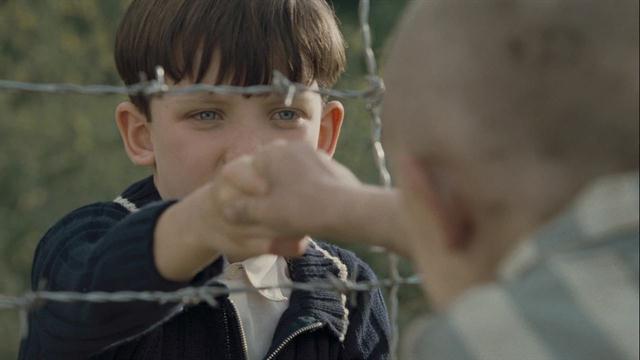
The forbidden friendship between two boys. The forbidden friendship between two boys.

This film follows young Bruno (Asa Butterfield), an 8-year-old son with a father at the head of a concentration camp during WW2. As the family gets relocated for the benefit of Bruno’s father, the family suffers, and Bruno, unaware of the situation, initiates a forbidden friendship with a Jewish boy (Bela Fesztbaum) on the other side of the fence.

Bruno and Schultz shaking hands through the fence. Bruno and Schultz shaking hands through the fence.

Not going to spoil the end of this movie for you – but I’m just going to let you know… I bawled. Like, literally sobbed. I watched this on Netflix with my parents in the comfort of my own home, and when it ended my mother offered…

View original post 113 more words

Losing two hours to “The Book Thief” – a review

BookThief

I just finished watching The Book Thief and I must admit that I am quite conflicted.

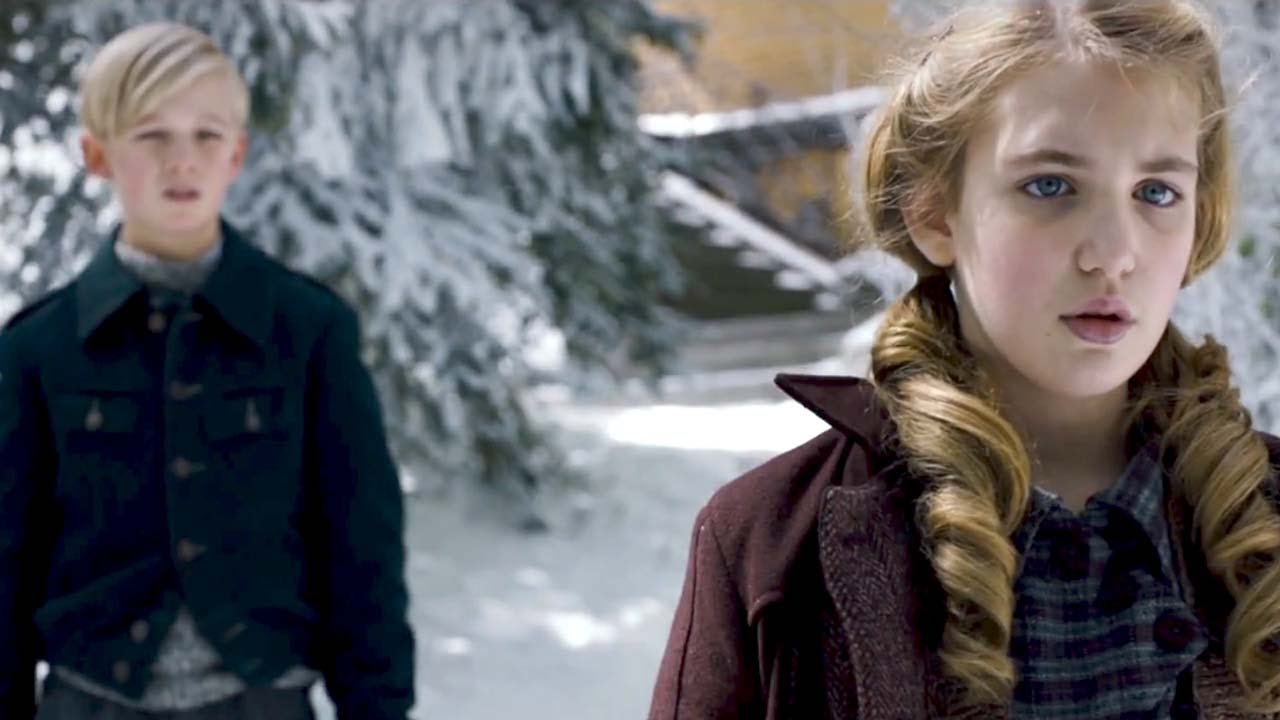
Released in 2013 with an amazing cast including Geoffrey Rush, Emily Watson and the mesmerizing Sophie Nélisse in the title role, The Book Thief tells the story of a young German girl adopted by aging parents in the months leading up to World War II.

Through Liesel’s eyes, we watch fascism take hold of Germany while good people try to lead simple lives. We watch her struggle to comprehend anti-Semitism through conversations with a young Jewish man her parents are hiding and at the same time, find her own gift for words through her exploration of books. We see the beauty of love and the pain of uncertainty.

All in all, the film was beautiful and heartfelt. And yet, in the end, I feel like I have witnessed a life, not heard a story.

Liesel floats through the world that moves around her. In only the rarest of instances does she actually drive the story forward. Instead, people and the fates make decisions for her at every turn. She is not the protagonist or hero of the story; rather, she is the victim of events.

Adding to my challenge is that, despite its setting in WWII Germany, there is no real conflict in the story. The ideological conflict amounts to Hitler bad, everyone else good. And even here, it’s discussed within isolated groups. There is no—or very little—confrontation between the two camps.

Book-Thief-large

As our hero, Liesel has no goal and therefore nothing stands in her way. She has no need to make a plan and therefore nothing truly thwarts her.

And perhaps because of this—at least spinning out of this—there are never (NEVER) any repercussions of her actions or those around her despite the number of times the screenwriter (Michael Petroni adapting a novel by Markus Zusak) or director (Brian Percival) have set them up.

(SPOILER EXAMPLES)

When the vicious little Brownshirt Franz threatens to expose Liesel and her little friend Rudy for keeping secrets, nothing happens. When Liesel’s friendship with the Burgermeister’s wife causes Liesel’s mother to lose her valuable laundry contract, there are no repercussions. Even her spilling the beans about a Jew hiding in the basement has no impact on the story.

maxresdefault

As we would describe in screenwriting lingo, there were no turning points where the hero has to make a decision, and there was no crisis and therefore no climax to the story.

Thus, my conflict with the movie.

A visually interesting film, acted beautifully, and yet I was unable to invest in the story at all because I never felt anything was in doubt. Where there were the odd surprises, they were telegraphed by the narrator, who popped up so haphazardly, I could never figure out why he was even in the story. And the choice of who narrates is also very odd.

And then, one after another, the loops of the bow-tie formed as the story came to a close, everything being explained away to leave the final screen moments devoid of meaning or feeling.

Sad, really. There was so much to like about this movie.

Unlucky Lucy – a review

lucy_ver21_xlg

What if every time…

Number Line #1

someone tried to tell you something…

Whispering+in+ear_jpg

they inserted a photo or video…

student

that showed the same thing they said?

mirror

Pretty irritating, eh?

Welcome to the first 30 minutes of Luc Besson’s Lucy, released to theatres this weekend.

(I’ve done my best to avoid spoilers, below.)

What could have been—should have been—an amazing sci-fi thriller about the possible repercussions of a young drug mule who becomes exposed to the drug and slowly finds her brain building to 100% functional capacity, was instead a massive disappointment weighted down by a ton of metaphoric sledgehammers and drowning in a sea of over-exposition.

To be sure, there is a really interesting movie somewhere in the middle of the morass that ironically becomes its own metaphor by the end of the movie. But it’s as though Besson the Director didn’t trust the story written by Besson the Screenwriter to simply let the story explore itself.

As the drug takes hold of Lucy, she goes from being an interesting female character (if a little cliché) to an automaton who simply narrates…literally narrates…what is happening inside her.

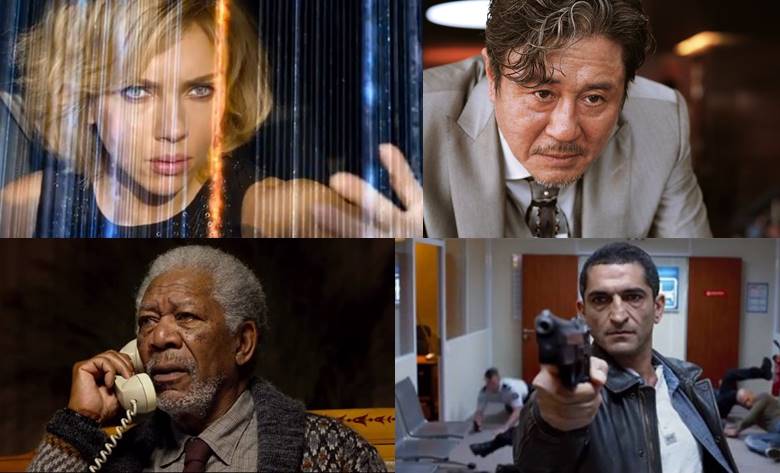
The drug lord Mr. Jang has the emotional range of complete indifference to mild irritation, which no doubt also expresses the feelings of acclaimed actor Min-Sik Choi, who portrayed him.

Even the calming voice and reason of Morgan Freeman’s Prof. Norman quickly gives way to befuddled camera-mugging and WTF?

The only truly interesting character was French police detective Pierre Del Rio, played beautifully by Amr Waked, who clearly functions as the eyes of the audience. As a friend of mine pointed out, even he at one point turns to Lucy and asks “What do you need me for?” What, indeed.

Lucy cast

To be certain, the visual effects in several parts of the movie were stunning, but as with so many movies I’ve seen in the past few years (e.g., Prometheus, Transcendence), the visual effects have become sleight-of-hand to keep you (or try) from seeing the weaknesses of plot and character.

The action sequences highlighted in the trailers take about as much time in the full movie as they did in the trailer, and so little is ever in doubt with the plot that the movie truly cannot be described a thriller.

But perhaps where the movie was most disappointing was in its promise to explore the nature of what it is to be human when faced with super-human capabilities. THIS is what the movie should have been about!

But Besson largely discards the question as quickly as he raises it in two short scenes involving a call home to mom and a simple kiss. And in both cases, Lucy coldly explains her conundrum, her human fears represented by the odd tear drop down an otherwise lifeless cheek. Rather than see Lucy struggle with her transformation, we watch her turn into a robot bent on a mission…a mission that she basically accomplishes without struggle.

But just to be sure we get the great metaphysical concepts behind the story, Besson then reverts to his earlier legerdemain, smacking the audience around with a brutally metaphoric journey through time and space. I give you intergalactic sperm meteors…you’ll know then when you see them.

And all this rancour without even touching on the biochemical, biomedical, anthropological and astronomical issues that run rampant in this mere 90 minutes.

This could have been an amazing movie. It wasn’t.

(Images are property of owners and are used here without permission.)

500

500b

So I have hit the milestone blog post: 500.

For some of you, who have followed me from the earliest days, you are no doubt thinking: “500? Really? Seems like 5,000.” For those of you relatively new to the wonder that is my blog, please note closely the previous statement.

I dithered over what to write for my 500th post, and have decided I’m going to talk about you…well, some of you.

I “follow” quite a few blogs…I read many fewer…and I seek out even fewer. I’m sorry for those I don’t visit more regularly…hours in a day and all that. It’s some of that last group, I want to highlight here…those glorious few who make me stop whenever I see they’ve posted something new.

crows

Filippa Levemarks Blog

The paintings that this woman creates and the themes she explores by mixing media and mixing subject-matter blow me away. Rare is the image that doesn’t elicit some emotion in me. Hers is a style I have seen nowhere else and is worth exploring.


Jack Flacco

To read Jack’s blog is to have no clear idea as to who Jack is, and I mean that as a compliment. Jack takes on any subject it seems, but always in a thought-provoking and welcoming way that makes you want to contribute with a comment. His latest topics have been: monotasking, Veronica Mars, infectious pandemic readiness and phone addiction.


bareknuckle

Bare Knuckle Writer

As the title suggests, Steph Snow is a no-holds-barred writer who likes to talk (or rant) about writing. With generous dollops of humour, she discusses the creative fortunes and practices that torture her soul on a seemingly daily basis. Misery truly does like company.


ionia julian

Readful Things Blog/Julian Froment’s Blog

I list these two blogs together because they are both discussions of the written word—e.g., reviews of books and authors, discussions of book marketing—and because the bloggers (Ionia Martin & Julian Froment) are beautifully connected at the soul (I don’t ask questions about any other forms of connections). Amazing people whose love for words is only surmounted by their love for each other.


Schelley Cassidy Photography

As a photo-hobbiest, I deeply appreciate the craft and skills that other photographers bring to the world. In this case, however, Schelley and I seem to share a greater fascination for the minute rather than the panoramic, as suggested by her regular feature “What is it?” where you only see an aspect of an object and are left guessing as to what that object is.


Ron Scubadiver’s Wild Life

If I couldn’t have my life, I would want Ron’s. A world traveller and freelance journalist, Ron is an amazing photographer, capturing incredible aspects of life in the many places he has visited. I particular enjoy his collections of people photos, often taken at a festival or gathering, which are incredibly natural and inviting.


ned

Ned’s Blog

Ned Hickson is not right in the head. And that’s what I love about him. A journalist in the Pacific Northwest and volunteer firefighter (or latex-coat fetishist…can’t really tell), Ned brings an irreverent sense of humour to everything he writes, earning him several accolades including his own NSA file. Ned also has a book to his credit, which I believe he has to return to the library next Tuesday.


Curnblog

More a collective than a personal blog, Curnblog offers amazing insights into all things film, whether examining an individual film or genre from angles such as sociology, creativity or cinematography. Predominantly the work of James Curnow, the blog is like having your own little film school where you can access new and unusual topics on a weekly basis without the pressure of essays, theses or exams.


There are so many other blogs to which I would like to direct you, but I am happy that you made it this far down the page. Perhaps for my 1000th blog post!

My gratitude for your patience and enduring interest.

post-milestone-500-1x

Much Review About Nothing

http://prettycleverfilms.com/movie-reviews/modern-times/review-much-ado-about-nothing-2013

There is a certain degree of irony in this review of Joss Whedon’s Much Ado About Nothing which is just that; the reviewer complains at length about the bare-bones nature of the production and the lack of interpretation over mere presentation (i.e., modern dress without modern sensibilities).

I seriously doubt the reviewer would have had quite the same issues with the setting simplicity if this had been a staged production rather than a filmed production, and it is important to remember that Shakespeare’s plays were written for the stage, not the screen.

As to modern interpretation and sensibilities, I largely think this is impossible without a complete rewrite of the play into another project all-together and most particularly in the case of the comedies. Take, for example, the movie 10 Things I Hate About You as a modern interpretation of The Taming of the Shrew.

The tragedies so better lend themselves to simple modern reinvention by simply changing the uniforms of the many and varied soldiery or political figures. As an example, I give you House of Cards, which to me is a retelling of Richard III with a soupcon of Othello for flavour.

And let’s face it, Much Ado About Nothing is one of the more frivolous and playful of Shakespeare’s comedies…it is play for the sake of play. It offers no deep meaning but instead centres on the silliness of love; a topic that will remain universal for all time.

Which brings me to the biggest challenge I have with this review.

The reviewer seems to assume that Whedon meant for this to be anything more than a lark…but Whedon being Whedon, a lark that he filmed with very good friends who happen to be very good actors.

I know as little as the reviewer, but I have every reason to believe the choice of modern dress was simply the reality of not having racks of Renaissance costumes lying around the house. The choice of black & white cinematography was perhaps an homage to the screwball comedies of yesteryear, of which this play is truly one and possibly the most yester of yesteryears.

As you can probably tell, I liked the movie…I had few expectations other than laughter and those were met. I also liked Kenneth Branagh’s version, which really only differed in multiple sets, colour film and period costume.


How I Met Your Series Finale

tv-set-with-a-broken-screen-81240769

Earlier today, my friend Marsha Mason posted her weekly blog on Why The Face. This week, Marsha chose to focus on series finales of television programs, picking up on the How I Met Your Mother phenomenon now that the teeth-gnashing and hair-pulling have died down.

Marsha considered this outpouring from the perspective of the magnanimous response of the show’s creators. An excerpt of her blog post:

And while they did what they felt they needed to do to bring their story to its completion, there was no way they were going to tell their audience that any of their feelings were wrong.

A beautiful way to look at the uproar.

But of course, Marsha’s post also made me think about the challenges of writing a series finale (damn you, Marsha, you made me think again).

I truly feel for showrunners who are faced with this task. It is a daunting task made that much more difficult by a dedicated audience, who for the most part can only be disappointed.

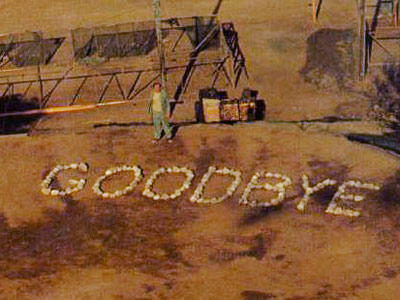
For me, the best series finales were done by shows like The Fugitive and M*A*S*H, where luckily, the writers had a hard end point in their story, i.e., the capture of the real killer and the end of the Korean conflict, respectively. In these cases, the resolutions between characters was more obvious (not to give the sense that the episodes would have been easy to write or weren’t written well). Similarly, The West Wing had the end of Bartlett’s 8-yr term and the inauguration of the new POTUS.

Mash-Goodbye_l

For other shows, the challenge is that the lives of the characters typically continue beyond the finale, if only in their fantasy worlds. From their perspectives, this isn’t the end of their lives; it’s Tuesday.

Thus, writers are forced to pencil in a flurry of seemingly arbitrary events to explain why the characters are parting ways or moving on, and typically, this means leaving a lot of unresolved questions for the audience. Closure is impossible when nothing is truly closing.

Take, for example, the end of The Sopranos…the family sits down to dinner in a restaurant…fade to black. After years of a series filled with violence that would make Titus Andronicus blush, the pure normality of this ending was almost a let down, and yet, rang as a true moment in human lives.

sopranos_final_scene_1

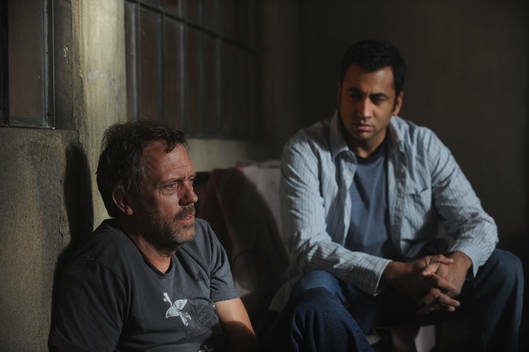
The alternative is to go big, such as the ludicrous ending of my beloved series House. The final 20 minutes or so looks like it was written by a group of pubescent boys hopped up on 24 consecutive hours of Grand Theft Auto. For god’s sake, it’s Gregory House…you couldn’t have him die of something he and his team couldn’t diagnose in time, only to have a letter arrive a week later from House showing he knew the diagnosis months ago?

houseandkutnerburning

Of course, the biggest complication is likely that most series have run out of steam well before they are given the opportunity for a series finale. All of the really great opportunities to end the series have long passed, the characters have little left to say to each other and it is only the blood-from-a-stone networks and die-hard fans who keep applying the paddles to the moribund concept. I give you the finale of Seinfeld. For this reason, I really do not look forward to the series finale of The Big Bang Theory.

TelevisionSeinfeldFinale

(I feel an admonition from Lee Aronsohn coming on.)

In these cases, better the mercy killing of cancellation than the sad wheeze of life-support equipment.

(Images are property of owners and are used here without permission…finale!)

charACTer

Anyone writing stories NEEDS to read the blog post by Chuck Wendig listed below!

http://terribleminds.com/ramble/2014/06/03/just-what-the-humping-heck-is-character-agency-anyway/

Wendig blog

Seriously. Please read this!

His pivotal point: “The story exists because of the character. The character does not exist because of the story.”

Too often, I read screenplays where the protagonist is merely swept along like a bobbing cork on a sea of conflict. They merely REACT to the injustice around them rather than ACT to change it. They are the victim of the story.

To my mind, a much more interesting character is one who takes action when presented with conflict and then deals with the repercussions of that action. In some stories (the best ones to my mind), the protagonist is his or her own worst enemy, bringing conflict upon him or herself.

It is not enough to chase your hero up a tree and then throw rocks at him. He can also catch some of the rocks and throw them back, perhaps hitting innocent bystanders who then turn on him as well.

As a reader and viewer, it is through the actions of your characters that we learn their perspectives, their world views, and thus, their flaws. And if your story has a redemptive angle, it is through the complete failure of this world view and the character’s re-evaluation of it that he or she is reborn.

Just like giving the same premise to 12 writers results in 12 different stories, placing any of 12 different characters into the identical situation with identical opponents will result in 12 different outcomes if the characters are real.

Honour that in your writing and honour your characters.

They are called char-ACT-ers, after all, not char-REACT-ers.


Wendig is on Twitter: 

And that’s the (mostly) truth – my new bio

Okay, so my producer for SomeTV!, the sketch comedy insanity currently in production in Toronto, asked me to provide him a short bio for the group’s web site.

Keeping in mind the sheer brilliance/stupidity of what we are attempting, I sent him this:

A born story-teller and punster, Randall told his first knock-knock joke in the Obstetrics Department of a Toronto hospital at the ripe old age of today. His early comedic repertoire consisted of poop jokes, fart jokes and snot jokes, but on learning that Vaudeville was dead, he learned how to write. After several failed attempts at living other people’s lives (scientist, journalist, press agent, ad man), he has more recently focused his energy on sketch comedy and screenwriting. In 2014, Randall won the Nashville Film Festival award for Best Animated Feature for his screenplay Tank’s. His influences are caffeine, Mel Brooks, sleep deprivation and human frailty.

Would love to hear your thoughts!

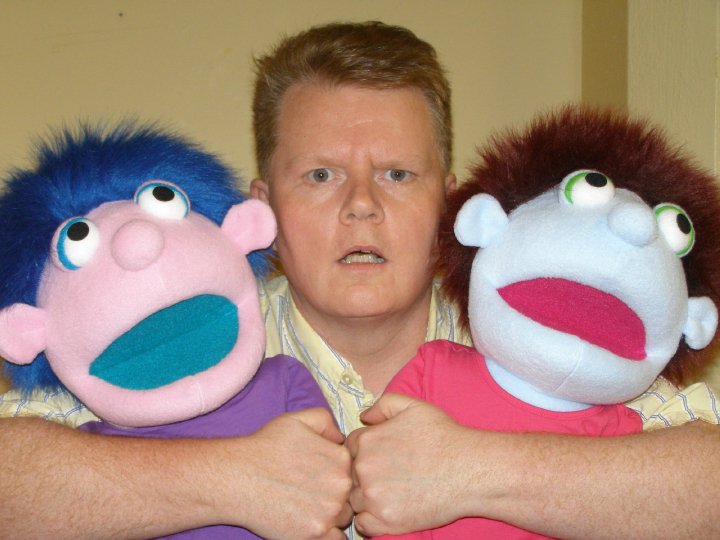
Randy (the one in the middle)

Image

I don’t hate movies!

This may sound like an unimportant statement, but as a newly minted screenwriter, I was starting to worry that I seemed to dislike every movie I watched in theatres or via Netflix.

Now, I must admit that I have spent much of my life as a hypercritical asshole, a picker of nits most egregious, so it perhaps came as no surprise that a movie had to be pretty solid to impress me…but when you go through dozens of movies and find all of them meh, you start to worry. Or at least, I did.

You see, I slowly began to doubt my own understanding of what makes for a good film, or more importantly to me, a good story. And as someone who has decided to be a professional storyteller that is a worrisome doubt to have.

Movies that I have found lacking despite their acclaim

Movies that I have found lacking despite their acclaim

The recent fare that I had heard wonderful reviews of or that had won awards:

  • Blue Jasmine – good performance by Cate Blanchett in a completely forgettable movie
  • The East – incredibly slow melodrama in which none of the characters was note-worthy and a moral dilemma on which the screenwriter and director refuse to take a position
  • Life of Pi – hated the book, bored by the movie…would have been more likeable as a Disney flick
  • Vicky Cristina Barcelona – boring people with no ties to the real world (like a need for money) screwing
  • Noah – missed opportunity to explore the more interesting character of Tubal-Cain
  • Dom Hemingway – a wonderful portrait of the eponymous character, a terribly flawed story (my thoughts)
  • Enemy – 2014 Cdn Screen Award as Best Picture, thief of 90 minutes of my life (my thoughts)

I have many colleagues who will defend some or all of these movies to the hilt and yet I found each of them somewhere between seriously flawed and downright insulting.

Clearly, I was the problem. In my zeal to craft my own stories, I had become myopic on what a good story is, what good characters are.

And then I watched The Boy In The Striped Pajamas.

Wow. I was blown away, not just by the subject matter, but by the story itself, the unique perspective and the richly drawn characters.

Sure, there were one or two small moments where I tilted my head askew, but they did not linger. Nor did they snowball in my consciousness as they were few and far between.

Movies that have renewed my faith in storytelling

Movies that have renewed my faith in storytelling

Last night, I watched The Reader.

Not as blown away, but still enthralled. Rich characters, slow revelations, palpable conflict both within and without.

I don’t hate movies.

I have no time for movies that fail…and more importantly, I aspire to and am inspired by movies that succeed.

Doubts remain, but thankfully, they have diminished.

Canadian Film Day: Hoorah or who cares?

nationalfilmday_photo

Via my social media outlets, I discovered that today is Canadian Film Day (presumably only in Canada).

Oh Canada, our home and native film industry… (although not necessarily native in the sense of indigenous peoples).

The discovery caused me to pause, as I realized that it has never mattered to me that a film is Canadian…only that it is good, entertaining, thought-provoking.

As an artist who is Canadian, I almost feel guilty that this is the case. And as a friend of several writers, directors, performers, etc, who live and work in Canada, I am embarrassed to say that I am not sure I can name 5 films that I know with any confidence are Canadian.

My attempt: Black Christmas, Exotica, The Sweet Hereafter, Decline of the American Empire, Scanners (honesty check: of this list, I have only seen Black Christmas)

Don’t get me wrong; I don’t have a problem with having a Canadian Film Day to celebrate my nation’s achievements. I think it’s great to pat our collective selves on the backs every once in a while.

CanadaPoster11

I guess my bigger question is does it really matter if a movie is Canadian or not, whether from an artistic or audience perspective?

When an industry is in its infancy, it needs to be protected and nurtured, but much as with the Canadian music industry, I think the Canadian film industry is well beyond its infancy. It doesn’t need training wheels. We shouldn’t be coddling it out of some odd sense of nationalism. It is more than capable of competing (and does) with the big boys and girls of the world.

This country has played incubator to world-renowned directors, writers, performers and production companies, and these people and groups became world-renowned by competing in the world. By setting the bar high and achieving even more.

My fear with art-via-nationalism is hearing the phrase “You know, for a Canadian film, this is pretty good.”

I worry that in blindly supporting the Canadian film industry simply because it is Canadian, we won’t push ourselves as hard. That we will be willing to settle for good enough for a Canadian film. That mediocrity will reign, punctuated here and there with islands of brilliance.

As some of you know, I am cowriter of a sketch comedy show–SomeTV!–currently in production in Toronto. One of our mandates as a writing team was that we are NOT writing a Canadian sketch show, regardless of all of the writers being Canadian and residing in Canada for initial broadcast in Canada.

Sure, the show will have Canadian sensibilities given the Canadian writing and acting, but we’re targeting a global stage with this project.

Likewise, none of my film screenplays are targeted as Canadian. Nor all but one of my teleplay concepts (the one revolves around Canada’s Parliamentary system).

Sure, many of them are set in Canada, but that is more an artifact of my knowledge base and personal experiences than anything else. Any of the Canadian locations could be swapped for American or British locations with only a few modifications to the story.

I’m not trying to write The Great Canadian Story. I’m trying to write The Great Story, which may or may not feature Canada and its people.

I wish every movie to do well, even the ones I don’t particularly like. I want all of the artists involved to find personal satisfaction and achieve greatness. I want audiences to be entertained and money to flow.

And maybe this is biting the hand that feeds me (when and if it ever decides to feed me), but I don’t particularly care if those movies, artists, audiences and money are Canadian.

MIC-LOGO-2

PS: I am a strong advocate of any organization that supports the development of new artists who push the envelope in storytelling. Again, though, I advocate these organization whether Canadian or other.


My screenplays:

Tank’s: Animated musical feature, female co-lead; Winner of Best Animated Feature Screenplay at 2014 Nashville Film Festival

An impulsive adolescent fish, ripped from his Amazonian home, struggles to find his place in the world of a pet shop, complicated by feelings for an idealistic, privileged fish and the iron-fisted rule of a villainous eel. A story that proves even a fish in water can be a fish out of water.

Captain Pete: Humourous family drama, female lead, set in Eastern Canada

To reconnect with her increasingly distant son, 35-year-old divorcee Billy tries to protect her son’s pirate-hunting lunatic friend from himself and an intolerant town, and in the process, may help both him and herself reconnect with the world.

The Children of San Miani: Murder thriller, female lead, set in Northern Italy and Canada

A crusading young Turin police officer must partner with a Vatican officer and faces Vatican interference as she tries to prevent another murder linked to a 35-year-old child abuse mystery, and in the process, faces the demons of her own Catholic upbringing.

The Naughty List: Dark adult comedy, holiday-themed

After a near-fatal accident, Santa vows to make amends to the Naughty kids, but when he learns two of them—now warlords—are racing toward war on Christmas Day, he drops everything to intervene as only he can, with catastrophic results.