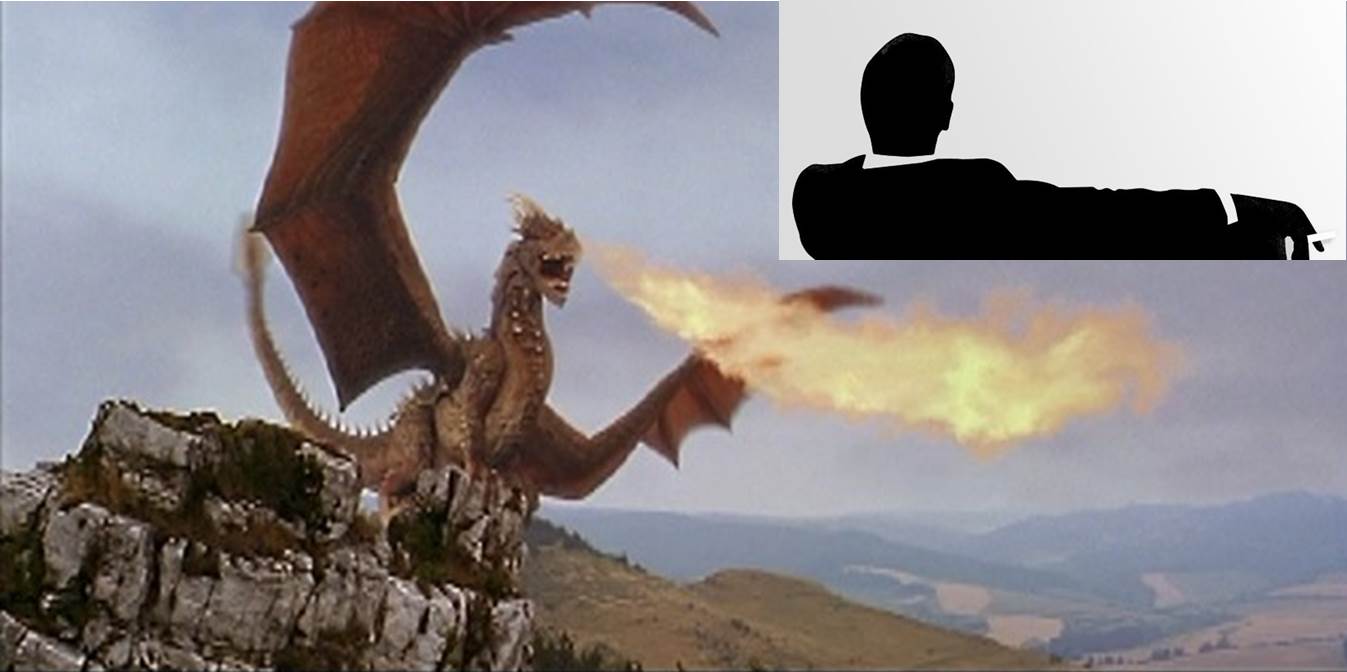
Can you relate?

Image

I spent three days this week wandering the show floor of a conference on stem cells, interviewing scientists and corporate executives for a series of articles I am writing. As this is the first time I have met most of these people, the conversation usually starts somewhat tentative as the people try to figure out how to address my journalistic needs while fulfilling their marketing agendas. This is just the nature of such interviews.

Luckily, I have a secret that tends to break the ice a little. Early in the conversation, I try to find an opening in what they are telling me to relate a personal anecdote or observation about my own scientific training as a protein biochemist—yes, I actually used to be quite smart.

Within seconds, the interviewee’s posture changes, their voice takes on a new timber as they realize that I am a kindred spirit even if my uniform has changed. Suddenly, they know I can relate, and the conversation becomes one between friends or colleagues.

The same holds true for storytelling.

When the reader picks up your novel or short story, the viewer sits down to watch your movie, the initial engagement can be tentative as the reader tries to figure out what you’re doing, where you’re taking them. The reader holds back from completely engaging with you as they wait for that magic moment when they can relate.

No matter how fantastical or mundane your story, the reader must be able to latch onto something, to find a kindred spirit.

More often than not, it is your protagonist—the canonical Everyman or Everywoman—who has some visceral need to fulfill or challenge to overcome. Killing the dragon is the superficial challenge, but damned few of us have had much experience killing dragons. Most of us, however, have fought for the respect of our community or have had to overcome a fear and step forward to take control or responsibility.

Hell, readers might even relate to the dragon, as in the movie Dragonheart, where Sean Connery’s Draco finally explained that his assaults on the townsfolk were [SPOILER ALERT] his attempts to save the last dragon—him—from extinction.

In the rarest of cases, it may not be a character, but the environment to which someone relates. This is my situation with the series Mad Men. I find it difficult to relate to any of the characters and their hyper-exaggerated soap opera problems. Having spent more than five years in advertising, however, I can relate to the creative challenges within the office. I find myself getting angry or frustrated as I watch pitch meetings or client presentations because of my own baggage.

As a creator of your story, you cannot hope to know everyone who will come across your story. Thus, you cannot—nor should you—build your story to accommodate these varied experiences. You have to tell your story to tell it effectively, but you can broaden its appeal by making sure your characters (and possibly your environment) offer clear parallels to the current human experience. (If your primary audience is dogs or fish, then change the word “human” as appropriate.)

At their most basic levels, what are the human conditions that your characters express or are trying to repress (oooh, subtext)? When you get a good handle on that, you’ll have a better understanding of how relatable your story will be to your audience.

(Images are used without permission.)

Two’s company, three’s a story

As I read through a lot of early-stage screenplays and stage plays (including my own), I have noticed an interesting trend: Any scene that only involves two characters is boring.

No matter what the posturing, no matter how violent or loving, no matter whom the characters are, a scene with only two characters quickly loses steam for me. The dynamic peters out, and I find a lot of writers try to overcompensate for that by simply making the characters’ gestures larger. As though they believe talking louder to someone who does not speak your language will make you any more intelligible.

I speak for the trios: Turns out there may be some behavioural psychology behind this…at least, if you’re a rock hyrax—no, no, not “Lorax”.

Last week, a research paper was published in the journal Animal Behaviour that looked at the dynamics of triad relationships between these small creatures living in the hills of Israel, and the results were fascinating.

In a dyad relationship (two individuals), the authors say, you cannot make any predictions about the future other than friends will likely remain friends and enemies will likely remain enemies. With a triad (3 individuals), however, a social power dynamic is established that can morph in any number of directions, although some directions are inherently more likely and more stable than others.

The researchers found plenty of examples of the standby relationships, such as the friend of my enemy is my enemy (+ – -) or the friend of my friend is my friend (+ + +), and found that these relationships were highly stable in that they were likely to remain unchanged from year to year for any set of three individuals.

Enemy mine: What was fascinating, however, was that the seemingly unstable and counter-intuitive state of the enemy of my enemy is my enemy (- – -) occurred a lot more often than expected by chance and that it could be quite stable from year to year. This completely flies in the face of the standard that the enemy of my enemy is my friend (- – +).

From a story perspective, however, it can make complete sense. What if all 3 of you are vying for the same objective? As one of the enemies, you have to be constantly wary that any effort to thwart one enemy will provide an advantage to the other enemy.

Friend of a friend: What was also interesting was how gender played a role in the evolution of the unstable triad the friend of my friend is my enemy (+ + -). In females, this triad tended to morph toward (+ + +), while in males, it tended toward (+ – -), suggesting the need for female cooperation in raising young and male competitiveness in breeding. Typical men, eh?

From a story perspective, though, consider the power of (+ + -). What if the friend of your friend pushed them to do something contrary to your desires? This would make them your enemy—whether you’re being altruistic or selfish. A much more interesting dynamic as you may inadvertently push your friend into making a choice between the two opposing forces.

Dynamite dynamics: Regardless of the way your scenes play out, the triad dynamic gives you so much more room to play with emotionally and socially than a dyad. At any given moment, one of the trio can switch poles and the dynamic changes. With a dyad, the sudden switching of poles better have a good rationale in your story or it won’t be believable. That brings me to my next point.

Two characters: Now, before you go out and scrub all your two-person scenes from your screenplays, novels and stage plays (because yes, my hubris states I am that influential), let me remind you I said two characters, not two people.

Environment, situation and unseen third parties can also be characters in a scene between two individuals. It is those subtextual elements that convert a vomitously dull scene into one that sizzles. The challenge is in making sure the reader/viewer knows it’s there through carefully selected word choice and narrative (NOT exposition).

Two friends meet, but one hides a secret from a previous conversation that muddies their exchange in ways unexpected by the ill-informed (- + – or + + -) (e.g., plot to every spy movie ever made).

Two men with diametrically opposed viewpoints have to set aside their differences to deal with an external threat (- – -) (e.g., Hooper’s shark to his Quint is his enemy), which turns into (- + -)).

So, when you find yourself creating a scene with only two people, ask yourself who or what is influencing this scene aside from the two people and remember to incorporate them or it into the dialogue and narrative.

As Jed Barlett said to Sam Seaborn while playing chess in a scene from West Wing, “Look at the whole board.”

Didn't want to play your silly games, anyways

Didn’t want to play your silly games, anyways

A medical writer for too long

I’m sitting at the Ricoh Coliseum waiting for a Toronto Marlies hockey game to start. As people move to their seats, they’ll stand at the railing to watch the warm up. As people join them and start to converse, they slow others trying to get to their seats.
Where others might see an annoying crowd, my mind strays to atherosclerosis, arterial plaque build up. If the lights suddenly go down at the Ricoh, the arena’s had a stroke.
I have seriously been in medical writing too long!

(Teddy Bear Toss game at the Ricoh back in November. Hooray charitable people)

Image