The Maples – A short story

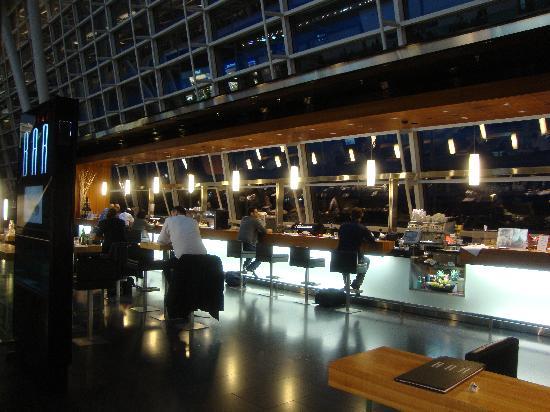
Center Bar

“The maples?”

“Still there,” Lucy smiled. “They look like hell, but they’re there.”

“I thought the hurricane took everything out,” Jeremy replied.

“Actually, the ice storm in February did the most damage. About half the trees split at the trunk, so the whole copse leans to the left.”

Jeremy smiled at her, eyes alight.

“What?”

“The whole ‘copse’?” he teased.

She slapped his arm, causing his rye and coke to splatter. She mopped the mess with her napkin as he licked the alcohol from his fingers.

“Well, it’s hardly a forest. There are what? Twenty trees?”

“Sounds right, from what I remember.”

Lucy sipped at her straw, taking in the new Jeremy as she took in her iced tea. He had come a long way from the torn jeans and sleeveless sweatshirt she remembered from school.

Truth be told, she too was a long way from the matching couture of her younger days, knock-off Gucci and Prada long replaced by Mommy and Dadda.

“So, what kind of law?” she asked.

“Corporate mostly,” he said. “M&As, takeovers, trusts.”

“A real-life Gordon Gecko!”

He laughed.

“Nothing that sexy. No Darryl Hannahs in my life. Although, I am okay with greed…within reason.”

“Still. New York City.”

“Might as well be Albuquerque for all I get to see the city,” he replied. “Most days, I sit in boardrooms watching people talk to tape recorders and then reading transcripts of the same conversation to verify the transcriptionist isn’t an idiot or deaf.”

Lucy rolled her eyes.

“Seriously, if I wasn’t charging $750 an hour to play Tetris, I’d go back to bicycle repair.”

Lucy’s eyes widened.

“I’m sorry. I should have said anything about the money. Sounds like I’m bragging.”

“Bragging?” Lucy repeated. “Surprised you’re not standing on the bar, crowing.”

Jeremy’s smile faded, triggering a flicker of self-consciousness in Lucy. She put her hand on his.

“Tell you what, you can buy the drinks,” she said, trying to make light of it all.

He smiled, and they fell silent for a moment.

Jeremy swished the ice around in his glass, attracting the bartender’s attention. Jeremy shook his head at him.

“So, two kids,” Jeremy finally managed.

“Yes, boy and a girl,” Lucy said, jumping at the change in conversation. “As well as three dogs, a cat and a goldfish that just won’t die. Don’t believe them when they tell you goldfish have the lifespan of a toilet flush.”

“That’s quite the menagerie,” Jeremy responded. “You hear about a big rain storm I should know about?”

“No,” Lucy giggled. “Besides, Dave would look terrible in the long white beard.”

“Your husband?”

“Yeah,” she replied. “Has a John Deere dealership in town. He’s stable.”

“Stable?” Jeremy chuckled. “Not the most ringing endorsement I’ve ever heard.”

Now it was Lucy’s turn to go quiet, adjusting her jacket below the bar.

“I’m sorry,” Jeremy interjected. “That came out totally wrong.”

“No, it’s okay,” Lucy replied softly. “And you’re right.”

Lucy poked at her ice cubes, searching her thoughts for her next words, as Jeremy waited. Something told him, she was actually glad to talk about this.

“Dave’s a good man. A good father,” she explained, adding quickly, “And husband!”

Another moment of silence.

“The best man I could ask for…in Bedford”

Jeremy waited. Lucy would continue when she was ready.

“I don’t know. Maybe I expected too much after high school…” she faded off into her own world.

Finally looking up, Lucy realized Jeremy was watching her, eyes full of concern. She laughed at herself.

“I’m babbling,” she blurted. “Life is good. Great. Really.”

A wistful smile migrated across Jeremy’s face.

“We all have skeletons, eh?”

“And some of them come with mortgage payments.”

“Attention passengers of US Airways flight 7783 to New York. We are now boarding executive and elite status members at Gate 61.”

Jeremy removed his boarding pass from his pocket and threw a $20 bill on the bar.

“Sounds like that’s my cue,” he said, rising to his feet.

Lucy stood, giving him a quick hug, which he returned, not releasing her right away.

“Good seeing you, again.”

“You, too,” Jeremy replied. “Give my best to Bedford.”

Lucy remounted her bar stool as Jeremy grabbed his bag and headed toward the concourse.

“Hey Jeremy,” Lucy called across the bar.

Jeremy turned back, confused.

“I didn’t think you liked me.”

Jeremy smiled and winked.

“I didn’t,” he laughed. “I like this you much better.”

Lucy blushed as he dissolved into the crowd.


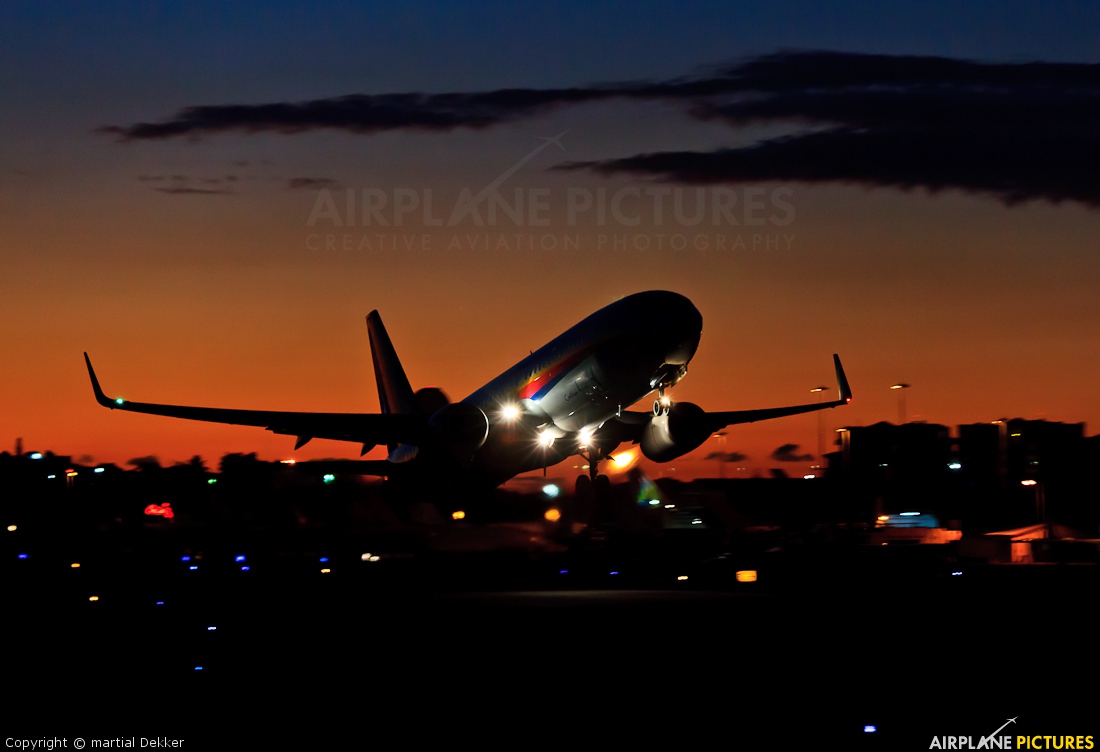
(Image is property of owner and is used here without permission because I had to fly.)
Flight (part two)

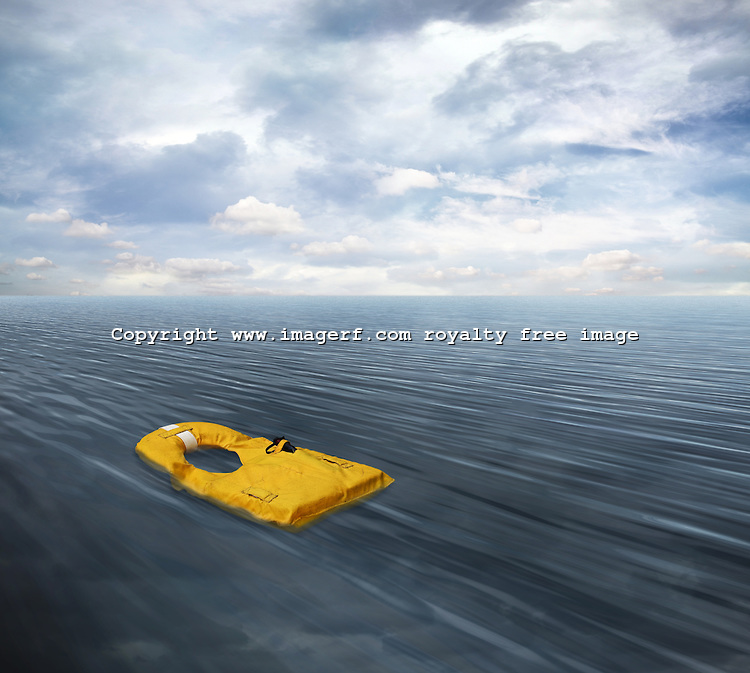
Life-jacket-floating-in-sea

(See previous post for Part One)

The plane vanished from radar screens about 400 kilometers southwest of Bristol. The last report suggested that everything was proceeding nicely. A particularly strong tailwind had put the flight almost 30 minutes ahead of schedule.

The rescue planes first picked up the escape chutes at 10 PM, the yellow bulks bobbing on 6-foot swells. Whatever happened to US786, it resulted in a controlled water landing. And the escape chutes suggested at least some of the passengers had gotten out before the fuselage went under.

It would be an hour or two, however, before the helicopters could get close enough to see.

* * * * *

Jocelyn was cold. Colder than she thought humanly possible as she clung to the surface of the chute.

Time had ceased to have any meaning for her as she had been awaken from a dead sleep by the crash and had no idea if the sun had just set or was about to rise. The absence of a Moon said she might not know for some time.

All she knew was that her left arm hurt like hell and her right leg didn’t feel at all. Whether from cold or injury seemed moot at this point.

Jocelyn slowly unclenched her left hand, letting the key chain and keys dangle from her palm, the key ring encircling her ring finger.

In the darkness, she could really see the inscription on the plate, but she knew what it said: Best Daddy. A token of remembrance, perhaps, of the man who’d forced her onto the chute as she floundered, drowning after the crash. She’d felt it press painfully into her arm as she scrambled atop the limp plastic. By the time she’d finished spewing water from her lungs, though, the man was gone and her hand fell onto the keychain.

For now, the pendulous weight gave Jocelyn some deep comfort as she felt the keychain rock on her finger as she rocked on the waves.

* * * * *

Captain Teresa Wei strained her eyes, searching the darkness for the yellow blobs she knew were down there. Somewhere.

The roar of the helicopter rotors had ceased long ago to be a distraction for Teresa. Her attention was focused and intense.

“We don’t have much time left,” the pilot called.

“A few more minutes. The current was strong but steady,” she replied. “They have to be somewhere around here.”

Before the last word even dissipated in the rotor wash, Teresa’s second spotter tapped her shoulder.

“Over there!”

Teresa turned just in time to see a glint of yellow roll down the backside of a wave. She took a deep breath and willed one or more people to be attached to the chute. This wouldn’t be like the last fiasco. There was no way she would leave people to die like she had on her last flight.

* * * * *

A flurry of fish roiled the water around the chute as Jocelyn’s vomit dispersed on the current. She wondered if there could be much left in her stomach as she hadn’t eater much more than a canister of Pringles since the airport.

Her tongue could feel her lips as they pruned from the salt. The light was only now cresting above the horizon, so she couldn’t have been out too long, but those lungs full of brine hadn’t helped.

And the only thing she wanted more than a bottle of water was a blanket.

“Oh, to be warm again,” she thought to herself. “Snug in bed or under a throw in front of a fire.”

Jocelyn felt a sudden downdraft, which sent a wracking chill through her, and caught a furtive movement and splash to one side.

Shark!

Something was moving toward her in the water. Something big and dark.

Jocelyn did what she could to move from the edge of the chute, but all that accomplished was to sink the middle, filling it with icy water.

She considered her rubberized platform and quickly surmised whatever was approaching could easily puncture the chute, submitting her to the ocean’s swells and its own appetites.

Her terror pounded in her head, pulsating as the downdraft continued.

* * * * *

Teresa manned the lift herself, hauling the woman achingly toward the hovering helicopter, knowing she’d repeat the process with the rescue diver. Step one, however, was getting the woman stabilized and hydrated.

* * * * *

Jocelyn felt as though she were an angel ascending to heaven, although her real angels were above her and still down in the water.

She was serene, at peace, and oh so tired. But she wasn’t about to release her grip on the guide wire, despite the pain in her left palm where her grip was embedding the keychain into her flesh.

If you looked really closely at her palm—even months later—you could just make out the faintest of words: Best Daddy.

Jocelyn was marked for life.

(Images is property of owner and is used here without permission because I float that way)

Flight (part one)

202944

His shoulder kept throbbing and it seemed there was nothing he could do about it. He wanted little more than to sleep, the flight to New York having left ridiculously early and his sales meeting having ended quite late, if you call a cab ride from bar to airport ending.

Terry’s body wasn’t as young as it used to be and he seriously started to wonder if 32 years in sales was 2 years too many. The awards that lined his shelves said no. Salesman of the Year. Millionaires Club. Best Daddy.

The last one had come from his daughter Ronny almost 25 years ago and it was the one he cherished most, perhaps because it helped him forget that it was a lie. Terry had been a terrible father and an even worse husband, but no one could say he’d been a bad provider. The family wanted for nothing, save perhaps for time with Terry.

He tried to convince himself that he’d spent so much time on the road for them, but he knew better. He wasn’t cut out to a husband or a father, the marriage had been a mistake of hormones and responsibility.

Terry looked up to see the flight attendant awaiting a response. Apparently, he had zoned out.

“Can I offer you a beverage?” she repeated, her smiling eyes betraying no sense of impatience. She would wait for him as though she had nowhere else to be.

“Coffee, please. Black, no sugar.”

“Certainly, sir.”

Terry watched her as she located the carafe on the cart, the way she slid the cup from its tray. Her hands were delicate but purposeful.

Her hair was short, brown, tucked behind her ear to expose the tiniest stud earring. Just a hint of down along her jawline and the back of her neck, which was paler than her face. She’d recently worn her hair longer.

Just a touch of makeup, to accentuate rather than disguise.

Rather than let her place the cup on his tray, Terry took it from her, his fingertips grazing the backs of her fingers as the weight shifted from her hands to his.

She smiled at him as she released the cup and quickly followed with a tray of biscotti. Terry took two, despite abhorring the stone-like biscuits.

His eyes lingered on her as she served the passenger on the other side of the aisle. She was shapely without being too curvy and her calves said she worked out. A regular spin class, perhaps, or a runner. Again, fit but not muscular.

At another time, he might have ended his flight with her number and managed a bit of exercise of his own during his business trip. Despite being confident he still could, Terry was presently content to sip his coffee and let the caffeine revive his sense of humanity. Besides, he needed to keep his focus if he was going to make this his last flight.

* * * * *

Dave could feel the eyes of the other passengers on him as he laughed raucously, but he didn’t care. Just like when he was a kid, Rocky & Bullwinkle made him laugh. He couldn’t help himself. The moose was just like his younger brother and the squirrel his mother, right down to the voice.

As Dave tapped the volume button on his arm rest, his seat mate smacked her book closed in annoyance and shoved it into her seat sleeve. She unbuckled her seat belt, and stared at Dave to let her by. Reluctantly, he yanked his ear buds and unclipped his seat belt, pulling himself to his feet using the seat in front of him. Navigating the narrow aisle, he let the woman pass to the back of the plane.

The row now empty, Dave shuffled to the window and gazed into the abyss. The sun was nowhere to be found as the plane sped toward morning. The sky was largely cloudless, so Dave could only guess how high they were, lines of waves barely visible on the ocean below.

This was Dave’s first time over such an expanse of water. He’d flown the Great Lakes and the length of the Mississippi, but an ocean was something else, indeed. A vast expanse of nothing. No boats. No land. Dave didn’t even see another plane. It was like that Kevin Costner movie.

“Water?” a voice asked over his shoulder.

“And plenty of it,” he responded, before turning and realizing it was the flight attendant with a stack of plastic cups and a two-liter bottle of water.

With a sheepish grin, Dave slid back to his seat and reached for a glass. If this was going to be Dave’s last flight, he wanted to grab all the amenities he could, even if it was only free water.

He wondered what the boys would say back home to see him living it up. Free drinks and free movies. Riley’s Pub may be cheap, but this was like an open bar.

He could still hear his boss’s voice: “Don’t embarrass us over there!”

His boss had always treated Dave as something of a retard, so Dave played along. If nothing else, it meant he had pretty light duties and medical insurance. His buddies wanted him to stand up for himself, but he didn’t see the point.

By the time the plane reached Europe, all of his problems would be over.

* * * * *

Jocelyn slept fitfully, her head and arms resting on her tray, memories of her last fight with her fiancé rousing her with a jolt. Turning, she found the bear in the next seat was still snoring for all he was worth. That the plane’s fuselage hadn’t disintegrated from the sonorous vibration was a surprise, but that wasn’t the way things worked for Jocelyn. No, her pains had always been slow and lingering.

She had hoped to be an Art Director for a magazine or ad agency, her art teachers had always said she had the talent, but an indiscrete moment in the back of Jake Bentley’s dad’s Camry had changed all that. Despite a quick visit to the next State, Jake’s parents insisted that they get married and weren’t the type to support a woman who had more than their boy.

Within a year, they had their first two grandchildren—a boy and a girl—but not from the same mother and neither of those women was Jocelyn. It would seem that Jake specialized in indiscretions.

Even with all that, it still took Jocelyn more than two years to get her freedom, but it was too late to reclaim her life. Her family was more invasive than ever, and her dad made sure she got a job in his factory.

That’s where she met Darryl, the dick.

Life had been bearable until Darryl started to get serious. Suddenly, every man who talked to Jocelyn was trying to get into her pants and every woman was trying to talk her into leaving him. The pressure was on to cloister her in the house so that he could feel more secure.

The slap was the final straw. But alternative plans take time, and Darryl’s growing aggressiveness didn’t give her much. Luckily, Jocelyn was pretty good at makeup and just looked like she hadn’t slept much, which was true.

The only thing Jocelyn knew about Sweden was Ace of Base, ABBA and those horse meatballs from Ikea. That, and it was thousands of miles from home.

Today, Jocelyn’s world was going to change.

* * * * *

Part Two to follow in next post

(Image is property of owner and is used here without permission because I grabbed it on my last flight)

Doug – a stupid short story

Holey hat

Doug had never been aware of his third ear, but it did help him understand why his hats didn’t fit very well. That he had a third ear wasn’t really the problem, though. Rather it was the shape of the ear. It was unlike anything he had ever seen before.

Where it attached to his head, it was cylindrical, but not smooth. A series of concentric rings ran perpendicular to the cylinder and whenever he would touch one, he would hear a mild, not unpleasant tone.

As the rings disappeared, however, the cylinder branched into a series of flower-like appendages. Tulips, if Doug was pressed, but gardening wasn’t really his thing.

Doug stood in front of the mirror, watching his reflection in the mirror mounted on the opposite wall. He had installed that one specifically for this purpose.

Over the course of the past hour, Doug had discovered that he could control the opening and closing of the ear petals with his cheek muscles. A strong squint and they all closed. More modest inflations and they would open and close in groups.

What use this new skill provided, he couldn’t tell. At the moment, it was just helping him occupy a Thursday afternoon for which he had no other plans.

“Gotta pee.”

The sound came out of nowhere. Doug just heard it, or at least thought he did.

“Gotta pee.”

Whatever the source, it was insistent, particularly as Doug had no real urge to pee.

Claws scraped against a metal sheet, snapping Doug from his thoughts.

“Gotta pee!”

Doug left the bathroom, following the scraping noise, and eventually ended up in the kitchen.

Beulah, his basset hound, turned slowly toward Doug as he entered the room, her tail wagging gingerly.

“Gotta pee!”

“Beulah?” Doug barely whispered.

“Peeing.”

Beulah looked sheepish but relieved as the amber puddle spread across the floor.

Doug raced to the door, stepping carefully over the dog, and threw the door open to the backyard. Beulah just looked up at him.

“I’m good.”

She waddled back to the den and her bed, trailing a pattern of damp footprints behind her.

Doug felt the breeze come through the open door.

“Licking myself clean.”

That’s it, Doug thought, that third ear had to go.

(Images are property of owners and are used here without permission because I heard nothing from them)

The Shoe – a short story

asics-white-men-casual-shoes-asisaaronm0cm

The shoe just sat there in the middle of the platform, taunting Joanne. A slight wearing of the laces through the eyelets and a long black scuff mark to the left of the toe, the only signs that it didn’t just arrive there by some act of God. Whoever had owned the shoe hadn’t owned it for very long.

Joanne wondered if he or she was limping down a road somewhere or if the shoe’s partner was lying somewhere nearby, alone or perhaps still connected to a dormant leg.

Inserting a pencil into the shoe like she’d seen done on TV a thousand times, Joanne held the shoe in the light to get a closer look.

A sneaker. ASICs. White with blue stripes. Size 9½. The wear pattern uneven, more pronounced to the outer edge. The owner pronated. Or was it supernated? Joanne would look it up later.

“What do you think?”

William always asked the obvious questions.

Joanne did her best to replace the shoe exactly as she’d found it, before turning to face William.

At four foot two, William wasn’t very imposing, and the green baseball cap didn’t help, skewed slightly to the left on his head.

What William lacked as a brother, he more than made up for as an investigative assistant. Today was no exception as his pen sat poised above a tiny flip pad.

Joanne was the brains of the operation, while William provided the…penmanship. Brawn was still a few years into the future.

William wasn’t stupid. He played dumb way too well to be considered stupid. But he was frugal with his intelligence, saving it for answers shouted full volume at Alex Trebek. He had yet to get an answer right, but you had to admire his tenacity.

Joanne scrutinized William as she formulated her response.

“We’re looking for a man wearing one shoe,” she said slowly, giving William time to write. “A white ASICs with a blue stripe. New. If he’s not dead, he’ll walk with a limp.”

“How do you know it’s a man?” William asked, as he finished his notes.

“Because the shoe is too big for a boy,” Joanne responded with an unspoken “gawd”.

William wrote this down too. You never knew what would be important later.

“I meant, what if it—“

“I know what you meant,” Joanne snapped.

That was good enough for William.

“The shoe points East,” she added. It did. “Meaning he was waiting for a Westbound train.”

But whether he was travelling west or awaiting the arrival of someone from the east, she could not tell.

“He may also have owned a dog, because I detect the faintest odor of dog poo,” Joanne noted, wrinkling her nose even as she took another deep whiff.

“That’s probably me,” William offered, lifting his right foot forward to expose rivers of brown slurry coursing through the grooves of the shoe tread.

It was all too much for Joanne.

“You’re contaminating my crime scene,” she bleated. “Mo-o-om, William is contaminating my crime scene.”

“Get over here, both of you,” Mom replied. “The train is coming. And leave that shoe.”

She was right. The train was indeed pulling into the station. It would mean playing the odds, but Joanne was going to bet the man with one shoe was travelling west.

As the train stopped, Mom herded first William and then Joanne onto the train.

“Why do I smell dog dirt?” she asked, sniffing the air.

This must be where William learned that annoying habit.

Joanne ignored the question, immediately scanning the car for anything suspicious.

Typical commuters. Some talking quietly. Others immersed in a book. Still others faking sleep but clearly listening to music through ear buds. And all wearing two shoes, except…

There, at the other end of the car, was a man with only one shoe. A white ASICs with a blue stripe. Joanne couldn’t be sure from her vantage point, but everything screamed it was size 9½.

On the man’s other foot was…nothing.

Not even a foot. Or shin. The man only had one leg. Ingenious.

Joanne swatted at William to get his attention, but caught nothing but air. Mom had apparently taken him to the second level of the train car. Joanne was on her own.

Slowly, she slid into the first available seat that gave her an uninterrupted view of the man with one leg.

How he’d gotten off the earlier train and onto Joanne’s was something she still had to figure out, but clearly this was a cagey customer. She would have to watch him closely.

At least until Port Credit, when she, William and her Mom would get off the train to visit her grandmother.

188445_fe56afd9

(Images are property of owners and are used here without permission, but please don’t tell Joanne.)

The dignity of characters

Defiance

Every human has an inherent nobility and dignity, and it is only in the limits of that dignity that people differ. Some people (the snots) hold themselves to a very high standard, while others (the goofs) appear significantly more relaxed in their approaches to life.

Even within an individual, there may exist multiple levels of dignity befitting the person’s roles or functions throughout the day. As a corporate executive, she may hold herself tightly constrained to maintain her air of authority, while as a doting mother, she may release her inner child for a game of tag.

And yet, even with the role-playing variations of life, each of us has an underlying threshold across we are hard-pressed to pass.

What is true for people is true for the characters we create, or at least should be, I believe. And it is in finding that central sense of dignity that we truly begin to understand these characters.

It is pivotal to their thoughts, actions, words and silences. It is also critical to how they view the world and how the world responds to them.

The goofiest, the most nebbish and most loathsome of characters has a line they will not cross, which writers exploit by presenting each one with a crisis. And while the writer and reader may think of that line as representing different things to different characters—for example, a move from light to dark for the good guys and dark to light for the bad guys—it is important to view the line from the character’s perspectives and aspirations.

Thus, the line is always a move from my light to my dark, my good to my bad, my right to my wrong. To approach it any other way would weaken and potentially two-dimensionalize the character’s resistance to change.

Scar from The Lion King completely believed in the truth and the righteousness of what he was doing. He understood that his actions flew in the face of tradition, but truly believed he was acting for the greater good.

Likewise, the anti-hero Edmond Dantès of the Count of Monte Cristo felt completely justified in his criminal actions because he was removing men worse than himself.

In both cases, as I have said elsewhere, each character was the protagonist of his own story.

In the end, society consumed Scar when he reached his line (i.e., bow to his nephew Simba) and he refused to cross it, and almost consumed Edmond Dantès until he released his anger and found peace.

Regardless of how prominent or fleeting a character, they all have their dignity, and although we may not explore all equally—lest we never complete our works—an awareness of that line will make for amazingly richer and more memorable characters, and thereby, better stories.

Tired

Some interesting recent blog posts on character:

Caroline Norrington’s Get to Know Your Character: 15 Minute Character Development Prompter

Persikore’s Context Matters

Richard Ellis Preston Jr.’s Character Development: Finding a Friend for Life

Just a Tasmanian’s Character Development series: ProtagonistAntagonistSidekick/Supporting characters

Final Exam

stock-photo-21365991-large-group-of-college-students-at-lecture-hall

The lecture hall drained of students as though a giant plug had been pulled, chattering bodies sluicing through a doorway meant for half as many people. The dwindling echoes of students bounced off walls of silence as the doors hissed shut.

“Is there something you need, Miss Pepper?” Professor Kawai asked as he wiped the blue and red notes from a board that had long ago ceased to be white.

Jess stared intently at the open chemistry book before her, willing the sticks and letters to form the words she sought.

Kawai cradled the eraser onto the ledge and packed his belongings into an ancient valise. Stopping another moment to examine the lone tableau figure before him, he snapped his bag shut, the click reverberating off the walls.

As his hand depressed the door handle, he felt more than heard the words directed at him.

“You said something, Miss Pepper.”

Without moving, the words fell out of Jess’s mouth and into her book. “I studied.”

“Apparently, the wrong chapters,” Kawai responded without emotion, as though reciting a number from a phone directory.

The indifference drew Jess to face Kawai, her eyes registering something between shock and incomprehension.

“Perhaps you’ll do better on the final,” Kawai added, as if by rote.

“I won’t be writing the final,” Jess responded, slowly pulling her bag to the next seat and closing her text.

Kawai sighed and turned back to the door. “Then maybe next—“

Kawai was unable to finish his though, his focus drawn by the loud noise and the searing pain as two ribs shattered from his back to his chest, splattering the door with blood.

Kawai’s cheek slammed against the door, his knees buckling below him and he slid down the slick door.

As Kawai’s body flopped sideways and his head struck the floor, the lecture chamber filled with another explosion.

Other than the odd drop of blood, Jess’s mid-term exam paper remained largely unscathed, the purple “84%” clearly emblazoned in the upper right-hand corner.

Jess’s parents had sacrificed so much for her to succeed at school. Her failure in chemistry would be unacceptable.

(Image is property of owner and is used here without permission.)

Anybody home?

The house was dark, which made Helen worry all the more. As long as she could remember, her neighbours kept at least one light on in the house.

“You never know when someone will show up for a visit,” Jackie would explain. “Would hate for them to think they’re not welcome.”

The funny thing was, Helen never saw any visitors at the Jarrols. Maybe that’s why the house always seemed to drip in melancholy.

Helen took the first step on to the porch, making sure not to lean on the railing that more than once abandoned poor Ned to the garden below. Jackie finally planted decorative cabbage just to cushion the blow.

Each step felt spongier than the next as Helen ascended. She wasn’t sure if it was the wood or her trepidation, the silence of the house growing more oppressive the closer she got.

Helen didn’t bother with the doorbell, it never worked, but instead rapped heavily on the door before turning the handle.

“It’s just Helen,” she called into the darkness, the weak light of blinded windows helping her make out the living room. “Jackie? Ned?”

Her words hung in the air, the warmth of her breath buoyant in a house unnaturally cold.

Helen hesitated at the door, afraid to proceed but worried about her neighbours. She really wished Sarah was with her right now, but she wouldn’t be home until tomorrow. Helen was on her own.

“Hello,” Jackie’s voice called from the kitchen.

“Jackie, it’s—“

“We’re not home right now, but if you leave a message, Neddy and I will get right back to you.”

Ned had long ago turned off the phone ringer because it always startled Jackie, who had a weak heart. Helen actually thought it was because Ned hated talking on the phone.

Helen searched the main floor, but the Jarrols were nowhere to be found. Upstairs it was.

As though pulling off a bandage, Helen vaulted the stairs to the second floor, but her hand froze as it came to rest on the bedroom door handle.

Knocking would have been respectful, but Helen just turned the knob and pushed. The door showed no resistance.

Jackie and Ned lay next to each other on the bed, eyes closed. Jackie was under the covers, hair bound in that all-too-familiar brown kerchief, while Ned was atop the covers.

Helen didn’t call out. She didn’t even check them. It was just like Ned to turn the heat off first. He wouldn’t do anything to hurt the potential resale value of the house.

The word was cat – an exercise

Image

“Cat killer,” Anthony thought to himself, ruefully. He was now going to be forever known as the cat killer of Borden Street.

To be fair, it was an accident. At worst, negligent manslaughter. Catslaughter?

Yes, if Anthony had gotten his car tuned up as he’d been promising himself for weeks, he might have noticed the strange sound emanating from his motor. But a “rowr” sounds an awful lot like a “rawr”, so it was hardly his fault.

Why would a cat crawl on the engine block in the first place? And it’s not like Anthony held its tail against the fan belt.

No. It was a mercy killing. Clearly, living in a house with 17 other cats had taken its toll on Snowball. She had lost the will to live and decided to end her days.

It was Old Lady MacGillvary’s fault. Nobody needs 18…17 cats. A sign of mental defectiveness on a grand scale.

Hell, Anthony was lucky it wasn’t the old woman herself who flung around his engine like a piñata on heroin.

Anthony liked cats. Well, he tolerated them. He’d never killed a cat before. Two dogs, a ferret and a budgerigar, sure, but never a cat.

It was a bad year for pets in his neighbourhood.

As he recalled, the Great Dane was an automotive accident, his hood still bearing the scars, and the chow was proof that you shouldn’t buy electric garden lamps from a guy in a van on the highway.

The ferret shouldn’t have been loose while he mowed the lawn, and why the bird was anywhere near his barbecue while he was using his leaf blower is anyone’s guess.

It had gotten so bad that Anthony had to beg off a trip to the petting zoo with his nephew for fear of dropping a horse on the kid.

You’d think Anthony’s job as a taxidermist would come in handy here, but apparently a stuffed pet is considered poor compensation for a loss.

The point was moot where Snowball was concerned. All the King’s horse and all the King’s men, you know?

Oh well, Anthony shrugged, no use crying over eviscerated Persian. If he took the highway to work, most of the fur would probably fall out and cooked flesh is so much easier to extract from metal.

Anthony turned the motor over, listening for the familiar “rawr”, and then put the car in reverse.

Thump.

My Creative Journey – Part One

What follows are a few thoughts on why I write…the moments in my life that led me to embrace my passion. It is an incredibly personal story and I hope it doesn’t make anyone uncomfortable, but rather helps them reflect on why they embrace their own passions.

Image

I need to be creative on my terms.

When I was younger, it was all about acquiring knowledge and being recognized for having acquired that knowledge. In hindsight, I’m not exactly sure what I was planning to do with that knowledge.

In some respects, it was about solving a puzzle, which could range from how does this alarm clock work to how does the universe work. On another level, I think it was about control. Knowing how the universe worked meant knowing that there was a broader sense of organization out there; that the laws of physics and mathematics still held even when my own life seemed in constant flux. The subtle irony of entropy only occurred later.

But it was also about control in the sense that I couldn’t be expected to come up with answers, with solutions, until I had all the information I needed to make that decision. The aggravating reality of that method of control is it only works when you’re the one asking the questions. Nobody else is willing to wait until I have all of the info I need.

At the same time, I needed the safety of analysis and knowledge, I’ve also had a need to be creative. A need that has only recently blossomed as a regular part of my life.

When I was young, I was constantly creating new worlds through my stories. First, as play scenarios and then as the written word. I constantly developed short stories that took me in a million directions. Again, this might have been an attempt at control.

When I wrote, I was the master of my universe. I was the one who decided who lived and who died, who was allied and who was the enemy. I was the protagonist and the antagonist.

It was in 1977, as I started high school, that I first noticed the strength of my writing. That summer, my life changed with the release of Star Wars. So deeply effected was I by the characters and the story, that I immediately went home and started working on the sequel. My version took a very different turn than George Lucas’s—although there were some subplot overlaps—but over the next few weeks, I hand wrote 400 pages of dialogue.

I shared the script with my Grade 9 English teacher, who was impressed with the volume if not the content (my words, not hers). It was in her class that I first realized the power of my words to still and disturb an audience.

On day, Ms. Philp gave us a writing assignment that started with the sentence “I couldn’t believe it when I heard that sound.” It was supposed to be an in-class assignment, but I was onto something and asked if I could take it home to finish it. I guess she sensed something—that this was important to me—and she said yes. While I didn’t finish the story, I did hand her several pages the next day.

After reading the story herself, she decided to read it to the class. Whereas most people had written stories about funny sounds, spooky sounds or weird sounds, I had written about a man who comes upon a murder in an alleyway, first by the sound of bone and sinew breaking, and then by sight. I wrote about the fear and indecision in the witness’s heart as the murderer sees him and he flees for his life.

As Ms. Philp read the story aloud, there was silence in the room—a room of 14 and 15 year olds. No one said a word until she was done reading. It was magical for me.

I wish I could say that there was a rousing round of applause at the end and that this was the day that I decided to become a professional writer. There was no round of applause—although my class seemed to appreciate my story—and Ms. Philp continued to be supportive of my efforts, but there was no effort to foster this creative desire in a young boy struggling to define his world.

The opportunity was there. Everything was laid out for someone to recognize, but nobody tapped into it. Writing continued to be a strange little quirk of my life. I guess it was just easier to find ways to support my interest in science and history by buying me more books, taking me to the Science Centre.

What do you do for a budding writer? Get him a pen and a notebook? Buy him a typewriter?

Eventually, someone did buy me a typewriter—a vehicle to do my homework. But it quickly became the vehicle for my creative outlet, much to my mother’s chagrin. The muse hits me when I have time to be alone with my thoughts. When my day isn’t cluttered with requests for attention and responsibilities. Unfortunately, in my childhood home, those times only tended to occur when my family was asleep.

Routinely, my mother would yell down from her bedroom for me to stop wailing away at the keys. Loudly pounding them into submission. Watching the letter hammers get stuck because the thoughts occurred to me and be translated through my fingertips faster than the typewriter could accommodate. She wanted to be supportive, but not at the cost of a good night’s sleep.

It took no time at all before I had an incredible portfolio of work—half-finished thoughts, short stories—but they languished unread by anyone other than me. I had given voice to the creative urges in my soul but no one heard that voice. It was the proverbial tree in a forest. With no one to even acknowledge the existence of my efforts, did they really exist.

Where was my mentor to guide me through this process? Someone to help me hone my voice. To make my stories better. To help me get my voice heard.

To be continued…