Is a Serial Serial Killer a Series Killer?

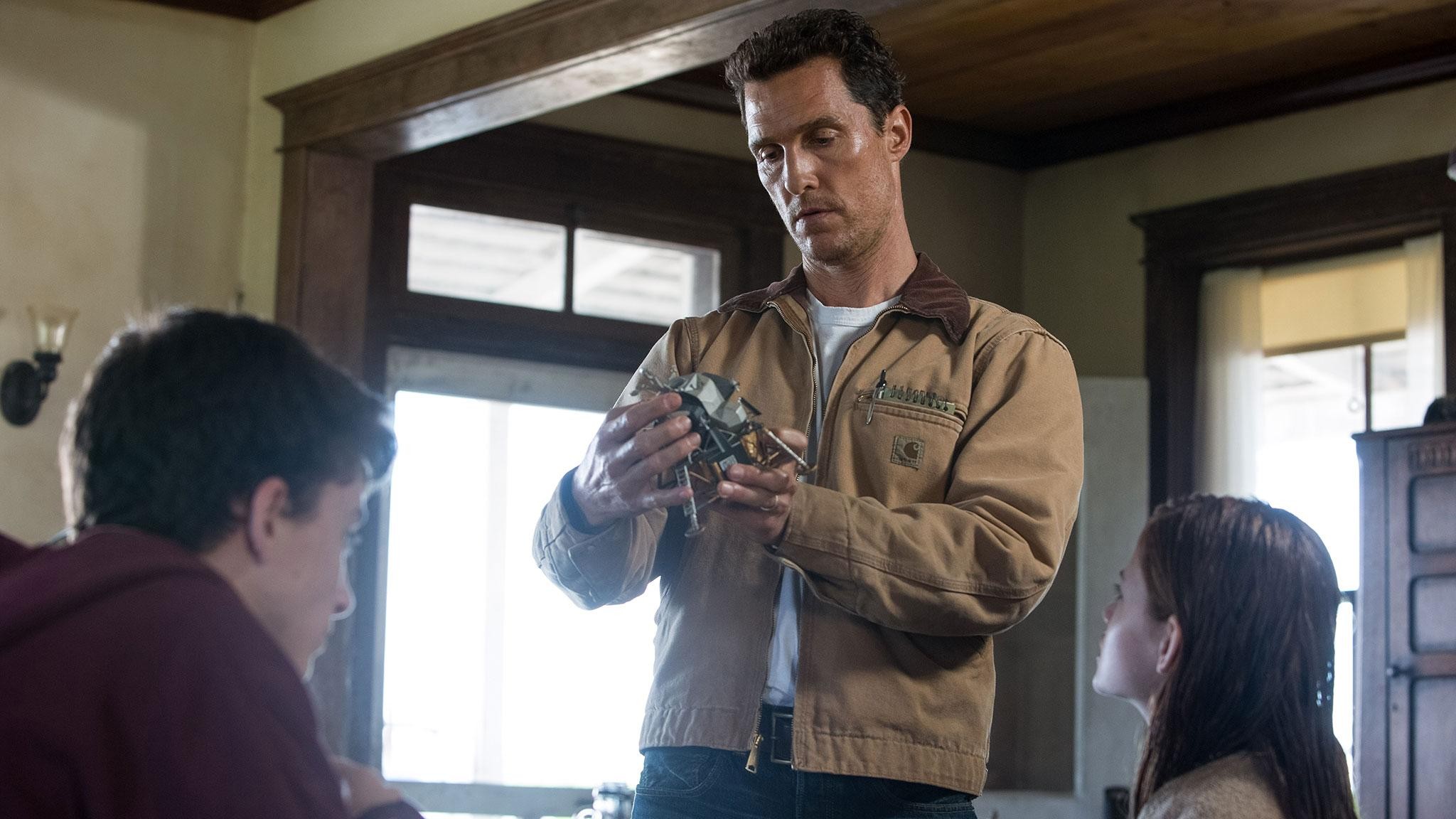
bones card

Okay. That’s it. I’m raising the red card on an issue I’ve been grumbling about—at least privately—for several years now.

To mix my sports metaphors, I am calling a double dabbling penalty on the television series Bones, which I am just catching up on via Netflix. (Spoilers coming if you’re not up to Season 9.)

bones team

I love procedural programs, and as a certified science geek, I particularly like forensic series such as Bones and CSI. If you want to piss me off really quickly, however, I recommend you start a story line involving a serial killer.

Now that may sound counter-intuitive, but I find most serial killer story lines to be incredibly lazy and highly repetitive. More often than not, the episode structure and format are completely blown apart and rather than being about solving a crime, the episodes devolve into a personal vendetta, where the lead investigator—cop or forensic scientist—goes off the rails and alienates his or her team for a few episodes (or season).

“Don’t you get it? He’s taunting me, testing me, letting me know he’s always one step ahead of me.”

Yes. We know this. So let’s move on and get back to solving crimes (aka puzzles). You know, the reason I watch your ruddy show.

Watching a procedural series turn into a psychological drama is like watching a pretty actor try to take on a meaningful meaty role. It’s typically painful to watch and not what I purchased. You’re reneged on our unspoken agreement.

[NOTE: Dexter is held outside as that always was a series about a serial killer hunting down serial killers.]

Csiepisodebuilttokill2

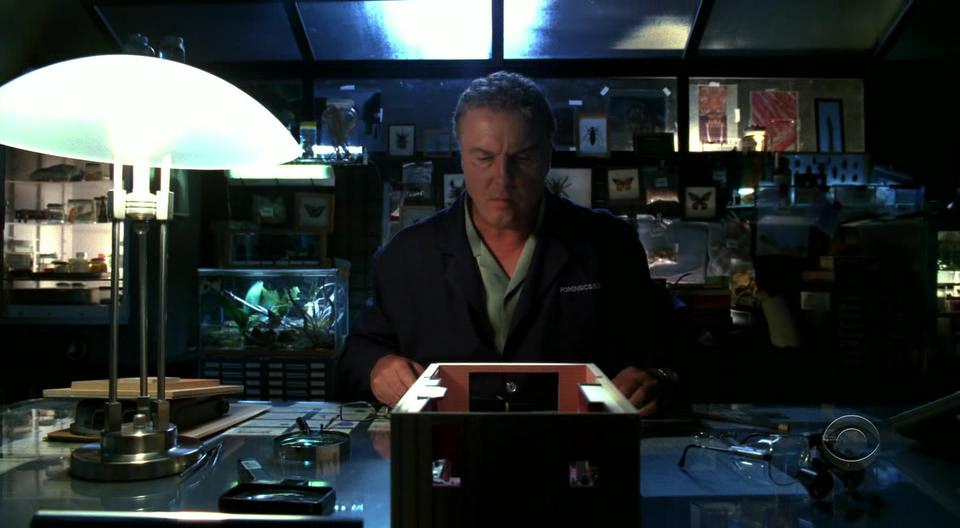
Up until recently, I’d believed that this was just an annoyance I would have to live through. God, how I struggled with Grissom’s Miniature Killer. But Bones just escalated that annoyance to a new level, which is why I raise the red card and call for an ejection…

(Last chance to avoid spoilers.)

…for Bones has used a serial killer to introduce a second serial killer.

Seriously? A serial serial killer?

It’s not bad enough that I had to watch a season or so of Christopher Pelant torment the Jeffersonian team, only to have him torment Bones herself with news that several unsolved murders are connected and that her negligence has allowed a serial killer (The Ghost Killer) to go unchallenged. And all just 24 hours before Pelant is killed by Booth, leaving everyone but Bones questioning if he was just lying to drive her nuts.

bones-ghost-in-the-killer-01

So now, as a fan of the show, I conceivably get to sit through yet another season of the Jeffersonian team getting torn apart by this second serial killer. Can you tell how excited I am?

Remember when Fonzie jumped the shark? Well, Bones just jumped not one, but two (so far only two) serial killers.

As an open note to television writers and showrunners, when you’ve run out of things to say, stop talking. End the series. Take your bows and move on.

I will keep watching Bones, if only because I’m an idiot and have invested 8.5 years of my life to these people. Also, I know there is a significant death coming in early Season 10, not yet on Netflix Canada.

We’ll have to see who outlasts whom, but I know which of us is on life-support.

tv-bones-autopsy-cast-poster-AVAsp7018

No parity in parody

Parody

Mel Brooks is a god! Carl Reiner is a god! Carol Burnett is a god! Mike Myers is a really funny Toronto boy, who flew pretty close to the sun. (He may yet be a god, but he has to get back on his feet.)

And among their many talents, these people share the amazingly delicate talent of creating parody…a talent I have yet to seriously attempt beyond the scale of sketch comedy.

Delicate talent? Seriously attempt? Isn’t parody just a matter of picking a genre and inserting dirty jokes and/or completely ham-fisting its various tropes in the mathematical assumption:

Absurd + Puns + Dirty = Funny

I increasingly understand why people think this as I watch more of the recent fare of parodic films that appear to have taken this equation to heart.

Last night, for example, I watched Paranormal Whacktivity, a sexed up romp through the found-footage haunted-home segment that includes films such as Paranormal Activity and Blair Witch. This film was horrific, but not in a good way…nor was it particularly funny or sexy. And it wasn’t very good as a parody because it didn’t even stick to its genre, mixing Paranormal Activity with Ghostbusters, which both involve spirits but are hardly cinematic siblings.

It was useful, however, to my understanding of parody.

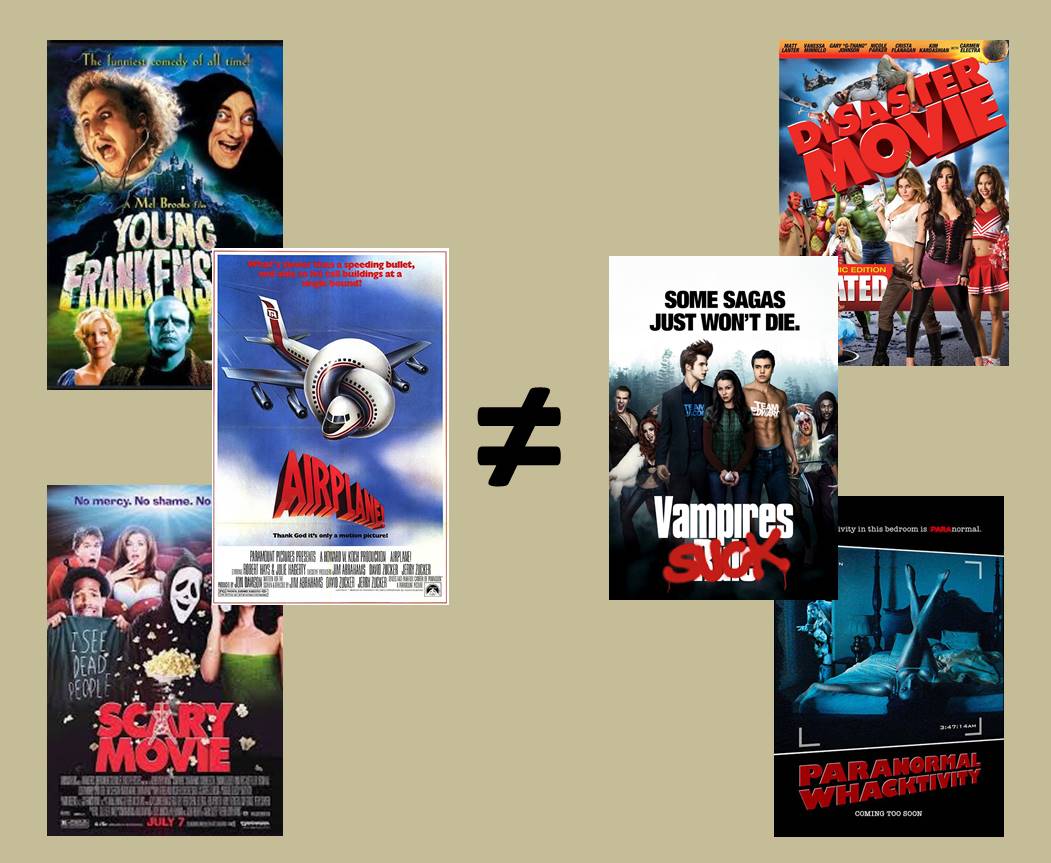
When I compare Blazing Saddles, Airplane, Dead Men Don’t Wear Plaid, and Austin Powers: International Man of Mystery to Disaster Movie, Not Another Teen Movie, and Breaking Wind, I realize that the truly classic parodies have something that the new ones don’t: a strong central story.

Somewhere in the evolution of parody films, the movies became less about story and more about ripping off as many genre clichés as possible, offering no firmer links between these scenes than bad jokes, fart noises or perky breasts.

Blazing Saddles wasn’t about taking a bunch of classic scenes from Westerns and simply linking them. It was more about taking iconic characters from the Westerns and creating a classic, if twisted, story. The sheriff abandoned by the town folk, the washed up gunslinger, the evil cattle rustler, the crooked politician.

Similarly with Shrek; although this film has such a strong central story that I’m not sure whether I should even include it in a list of parodies. Yes, it played up almost every fairy tale gimmick, but the story really didn’t model itself on any given style or pre-existing story.

Dead Men Don’t Wear Plaid is another odd case. With a strong through story led by Steve Martin and Rachel Ward (directed by Carl Reiner), it takes parody to a whole new level by incorporating actual scenes from noir films within the scenes with live actors. Thus, Martin’s character may find himself playing across from Barbara Stanwyck or Edward G. Robinson. Now, that is great film writing and editing.

Interestingly, the Wayans’ brothers first entry into this genre—Scary Movie—offers another lesson about parodies: the challenge of dipping into the same well too often.

Although horror/slasher movies are not to my personal tastes, I thought the first one or two films of this series were particularly well done. But as the series continued, picking on more films from within the horror/slasher genre, it started to become a parody of itself. The jokes were no longer fresh. All the best tropes had been used up in the first two movies and so the later films just seemed to be running in place.

Six Star Wars films, one Spaceballs. That works. (NOTE: Spaceballs is one of my least favourite Mel Brooks movies, much to the chagrin of many friends.)

Even the much stronger series of Austin Powers and Police Squad films showed this sense of comedic fatigue.

The original film is a surprise. The first sequel may be enjoyable. Anything after that is milking a dead cow.

I have no doubt that bad parodies will continue to be made…if nothing else, they seem to require little writing and typically have poor production values, and are therefore inexpensive.

My hope, however, is that another Mel Brooks, Keenan Ivory Wayans or Mike Myers comes along to raise us from these creative and comedic doldrums. (NOTE: At present, my money is on Keegan-Michael Key and Jordan Peele, who have the comedic talent and the Hollywood clout to do it right.)


A few personal favourites (hyperlinked to trailer or favourite scene, where available):

Dead Men Don’t Wear Plaid

Airplane

The Cheap Detective

Austin Powers: International Man of Mystery

Hot Shots (not so much the sequel)

Rustler’s Rhapsody

Shrek

Scary Movie

Blazing Saddles

Silent Movie (I may be only person who likes this one)

Young Frankenstein (all time favourite)


You have the write to know

Write

I write about writing. I’ve seen dozens of blogs that do the same and suspect there are hundreds if not thousands more blogs about writing I have yet to find.

I routinely visit web sites dedicated to writing, reading amazing posts from amazing (and some not so amazing) writers. And I have two bookshelves dedicated to various aspects of writing, from dictionaries and tomes on prose to bound witticisms and opinions on the minutiae of character, plot and the perfect turn of joke.

I have taken classes on sketch comedy, screenwriting and story editing, and have listened in on dozens of podcasts and teleconferences given by the kings and queens of screenwriting—the latest given by Robert McKee. And I have recently started going to writing conferences, bending and rubbing elbows with writers established and in the birthing process.

Conference

All of this information and guidance has been invaluable to helping me understand my craft. But for all those thousands of hours of effort, I’m really not sure that any of it has helped me be a better writer.

In truth, I think there are only really two things you need to do to be a better writer:

  1. Write
  2. Share what you’ve written

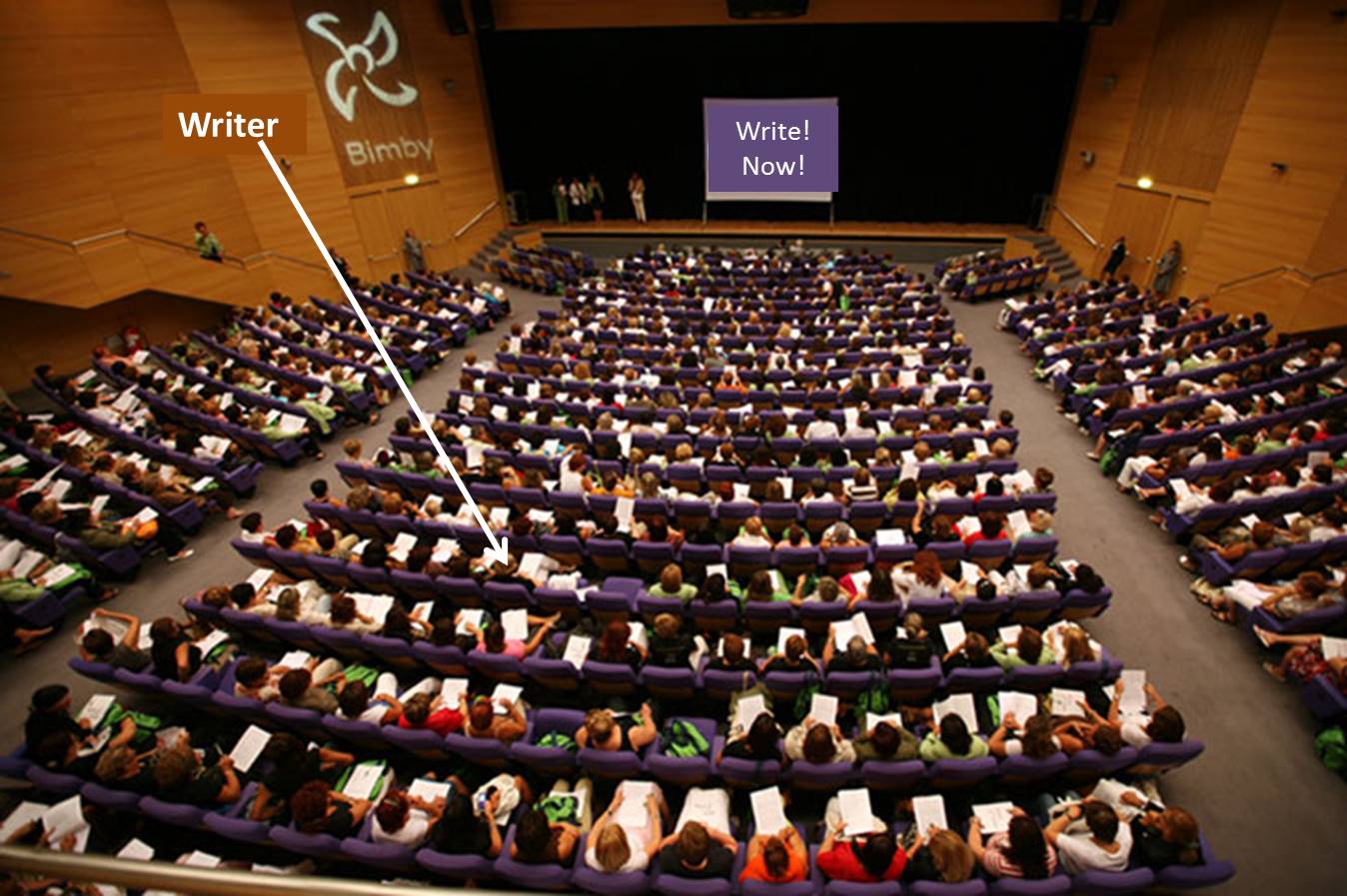
Unless you’re willing to write, write some more, write yet again, and then when your body has given up the ghost with exhaustion, write again, you will never get better. All of the academic training and guidance in the world will not make you a better writer if you are not willing to write.

Leonid_Pasternak_001

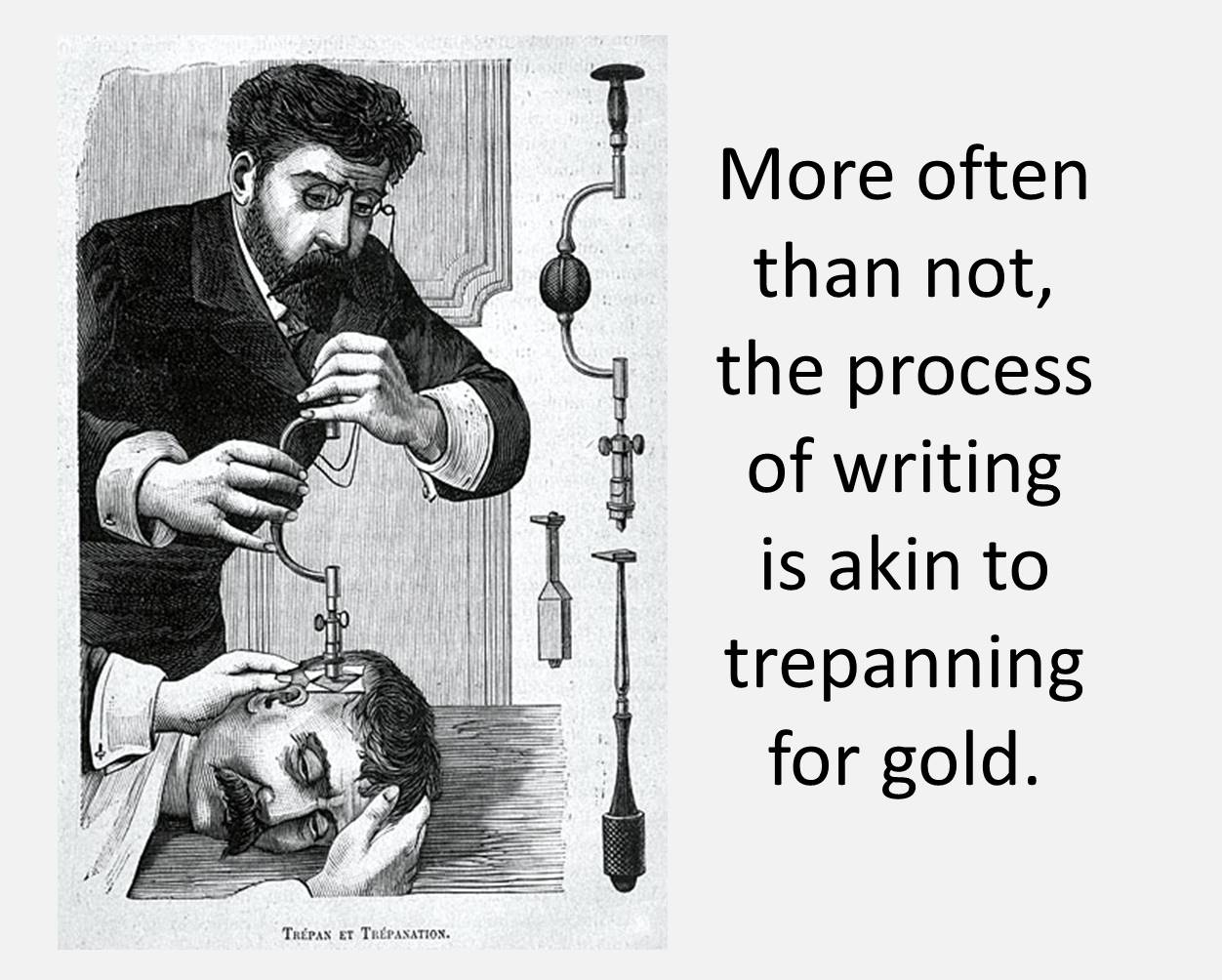
Writing can be like literally shoving fingers into brain to extract words

But writing is a very insular process, so it is equally important that you share what you have written…with literally anyone: your mom, your partner, your dog, the guy on the subway, the squirrel at the park.

How does the other party respond to your work? Are you communicating well? Do they see, hear, taste, what you see, hear, taste?

I am not asking do they like what you wrote. Personal tastes are just that. Rather, you want to know do they respond to what you’ve written…good, bad or ugly.

Oh, and I was only being half-facetious about the dog and squirrel…try it. You’ll be amazed at what happens.

Because most animals can’t read—I blame the current education models—you’ll be forced to read your work to them…the minute your work moves from visual to aural, a different part of your brain opens up and you hear whether you are affected by your work. Invaluable.

Love the internet for this stuff..."woman talking to squirrel"

Love the internet for this stuff…”woman talking to squirrel”

So read all you want, whether online or in those ancient paper constructs we call books. Attend conferences, lectures, podcasts and classes. I applaud your effort, your drive.

But I reiterate…there are only really two things you need to do to be a better writer:

  1. Write
  2. Share what you’ve written

Good luck.

The Voices gets a hearing (a review)

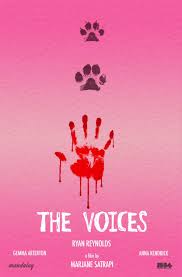
poster

Not one to generally participate in the Toronto International Film Festival, it was a rare evening in which I found myself standing in a rush line to see a movie, but a friend of mine wanted to see the latest Ryan Reynolds film called The Voices. This is not your typical Ryan Reynolds film.

Reynolds is Jerry Hickfang, a good-natured if skittish guy who works in the shipping department of a bathroom fixtures company in Milton, the derelict remains of a town in Nowhere, USA. Jerry is a nice guy, who lives above a derelict bowling alley with his dog Bosco and cat Mr. Whiskers. And of course, Jerry has the hots for office cupcake Fiona, a misplaced Brit with a craving for bigger things, played by Gemma Arterton. For her part, Fiona finds Jerry a little creepy, but is not above using his puppy lust to get a lift during a rain storm.

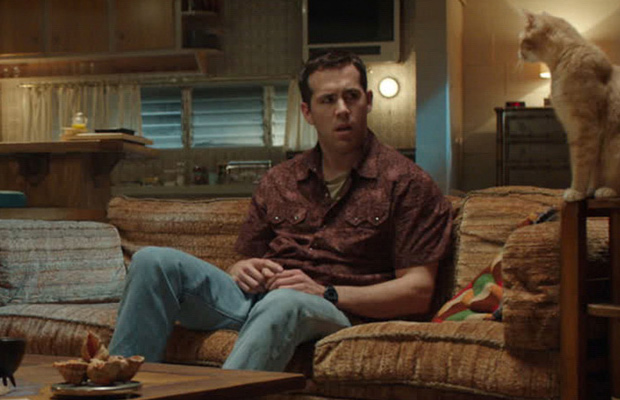
Jerry Hickfang (Ryan Reynolds) struggles to understand Mr. Whiskers' advice

Jerry Hickfang (Ryan Reynolds) struggles to understand Mr. Whiskers’ advice

Oh, and the other thing you probably need to know about Jerry is that he is in court-appointed psychiatric treatment, isn’t really good about taking his meds, and has a family history of hearing voices, but that’s not something he likes to talk about.

So far, so harmless. But after a literal run-in with a deer who begs Jerry to finish him off, the blood-letting never really stops and the rest of the movie becomes a giant slip-and-slide of mostly implied blood and offal.

So, The Voices is a thriller…and a drama…and a comedy…and a farce. You squirm in revulsion (never really reaches horror) as often as you LOL.

Director Marjane Satrapi (who brought us Persepolis) attended the screening and describes the story as completely fucked up. She said she was mesmerized by the screenplay and desperately wanted to meet the man who penned it to see what messed up human could conceptualize such a story. So she was surprised when she met Michael R Perry, a tall normal-looking fellow.

Marjane Satrapi

Marjane Satrapi

As Perry explained, he wanted to look at the life of someone of multiple personality disorder from their perspective rather than society’s. And in that, he succeeded.

With Satrapi’s help, the two clearly crafted the oddly idyllic yet troubled world within Jerry’s mind, giving the audience only the briefest glimpse of how the rest of the world saw things. With Jerry, it was all perfect love and butterflies. To the rest of us, it was squalor and pain.

Where the story fell down for me was in explaining why everything went wrong so suddenly. In writing circles, we talk about “Why today?” Why does your story begin today, at this moment, and not 6 weeks ago or 5 months from now? In this case, what was the event that caused Jerry to go from lovable schmuck to… Some might suggest it was the deer accident, but even Mr. Whiskers called that bullshit

The other place I felt let down was that the conflict never escalated, it merely accumulated. Rather than find interesting ways for Jerry’s mania to manifest itself, the writer simply repeated the same event over and over, as though each of the characters voluntarily walked into a wood chipper.

And I don’t know if the ending was presented as written or was something that blossomed out of Satrapi’s mind, but it was lazy and bordered on the ludicrous. It was a bad after-taste on a film that had merits.

Ryan Reynolds, Gemma Arterton, Anna Kendrick

Ryan Reynolds, Gemma Arterton, Anna Kendrick

On the plus side, Ryan Reynolds was amazing to watch…this was not the charming goofball romantic comedy, although Jerry was sadly charming when he wasn’t obviously tortured by his snarky brogue-spewing cat. (NOTE: Bosco and Mr. Whiskers easily have the funniest lines in this film.)

Gemma Arterton’s Fiona was a delight. She was delicious to watch as the voluptuous vixen whose biggest fear in life is being bored. Problem solved!

Anna Kendrick (Up in the Air), as tier-two love interest Lisa (see, the writer even repeated this beat), was largely wasted. Her character was pretty two-dimensional. As nice girl looking for a nice guy, her function was to have Jerry explain his condition to the audience (exposition disguised as opening up).

The Voices is definitely worth seeing, if only for what it attempts to do. I can’t help feeling, however, that if they had rewritten the screenplay a few more times, they would have achieved their goals much better than this.

My recommend (and that of my friend) is that this is a Cheapie Tuesday movie (or whatever your local half-price day is).


PS I was unable to find a trailer for this movie, so I offer the following interview with Satrapi at Sundance London…I will warn you, however, that it does include a lot more info about the plot than I gave above.

Creation (a poem)

Hand-writing-on-paper-with-pen1

A river is born

As the ball rolls,

Moisture captured

In upper strata,

Bleeding to layers below.

Impressions made;

Streams carved;

The universe is marked

By passing thought.

From irrigated channels,

Ideas unsaid find root.

Worlds are created.

Worlds are changed.

And life takes new meaning,

If only for a moment,

Until the ball rolls again

In fields yet untilled.

The episode that never existed

The episode that never existed

Besotted Voce – A few (hundred) words on character voice

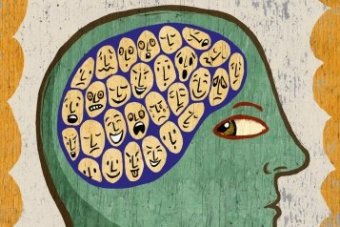
Voices-graphic-2

No matter with whom you speak, to an outside observer, the two of you sound different.

I’m not talking about the pitch or timber of your voices—although those likely are different—but rather those other factors that make your speech distinct: cadence, word choice, sentence structure, etc.

For five years, I worked as an editor and writer on a couple magazines in Washington, DC, and over that time, I found that I could tell which of my workmates wrote which articles without looking at their bylines…even without our names, the pieces had our fingerprints all over them.

How Mark Lesney opened an article was very different from the way Nancy McGuire would.

Mike Felton explained his thesis very differently from David Filmore.

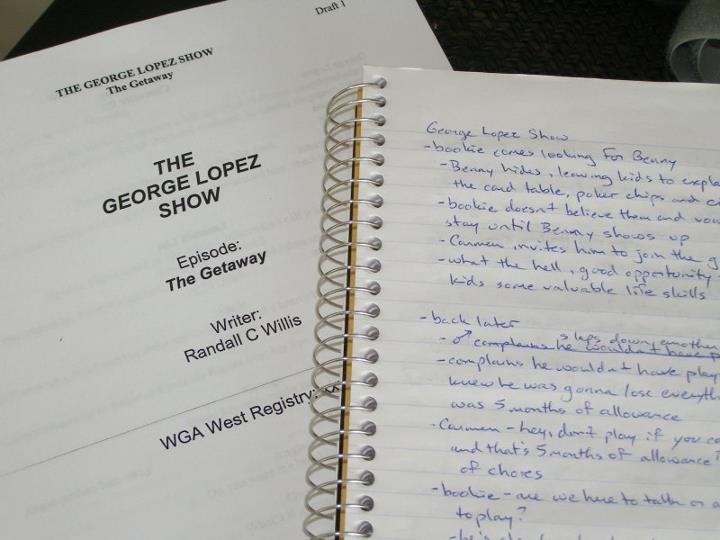
And the two Randys were polar opposites in sentence construction: Mr. Frey being pithy, while Mr. Willis would wax poetically at the drop of a proverbial hat.

Some might argue that these differences reflect variations in style, but I believe the situation is less superficial than style. Instead, it reflects who we are as individuals; our personalities, our experiences, our beliefs, and our feelings both emotional and physical. We speak/write as the people we are at that particular moment. I as me and you as you (this sentence screams for a “Goo-goo goo-jube”).

Ideally, this same variety of voice should occur in the fictional characters we create, whether for screenplays, novels, short stories, sketches or whatever.

With all but the shortest lines of dialogue, a reader or listener should be able to tell which lines correspond to the same speaker even in the absence of any overt identifying marks such as the character’s name.

A simple example: Despite achieving the same goal in response to another person, the following lines say them differently:

“You’re nuts.”

“You are insane.”

“You’re one crazy motherfucker.”

“That, sir, is the most ridiculous thing I have ever heard.”

* silent stare *

With these five lines, we see differences in:

  • Relative status (e.g., tone)
  • Degrees of personal control (e.g., length, use of contractions)
  • Emotional state (e.g., length, word choice)
  • Possibly educational or social background (e.g., vocabulary, use of jargon)

It can be a challenge for one mind (the writer’s) to create several distinct voices. It is a form of consciously willed multiple personality disorder. Thus, early drafts of a literary work may sound flat because too many of the characters are speaking with the writer’s voice rather than their own.

In theory, this is an easy thing to fix during revisions. Simply take the sentence and knowing what you do about your character—his or her emotional and psychological state, status, social and educational background, life experiences, physical challenges—make the line more accurately reflect how the character would speak.

One complicating factor is that a seemingly simple change in response by one character may elicit a change in the response of the dialogue partner(s). I am likely to respond very differently if presented with any of the five reactions above. And thus, the writer has triggered a change-reaction that reverberates through the scene.

A second complicating factor is that the change in dialogue may also need to be paralleled with a change in physical action. A high-status character is more apt to be purposeful in her actions and responses, whereas a low-status character may be more physically erratic or perhaps flinching in his response. And again, the change-reaction echoes through the scene.

This may sound daunting. It isn’t…but it is a lot of work.

The trick is becoming comfortable with the many voices you need as a writer. We all start with our own voice, the omnipotent godhead that creates the fictional universe; but the trick comes in developing the skills to inhabit other bodies, other souls as you create other characters and then being able to shift back and forth as required without going insane (well, not fully insane, at any rate).

My best advice to any writer who struggles with this is not to take yet another writing class, but rather to take an improv class or several. Despite the terror that this advice may elicit in some (most?) of you, I can think of no better way of understanding—and more importantly, exercising—the differences between different characters.

You’ll quickly find improv is not about funny; rather it is about truth. And once you’re comfortable with experiencing the truth of a character, the rest of this is much less daunting.


As seems to be a routine now, today’s post was prompted by the amazing words of Marsha Mason and the Why The Face blog she posted earlier today.

PS The magazines from my Washington days were Modern Drug Discovery and Today’s Chemist At Work (because Today’s Chemist in the Boudoir was already taken).

Too many voices (spoil the screenplay)

Superfluous

Congratulations! You have just outlined your next screenplay. Or maybe you’ve written “Fade Out”. That’s quite an accomplishment and you should be proud of yourself.

Go ahead. Take a moment to luxuriate. I can wait.

Okay, now I need you to kill one of your characters…or two…or maybe even three.

What? Oh, I know you’re not writing a thriller, but murder will be good for you. And even if you are writing a thriller, you’ll feel better after you pull the plug on certain characters.

Having written a few screenplays and having read 50X more, one common thread I find is that writers (me included) create too many characters, some of which are completely unnecessary.

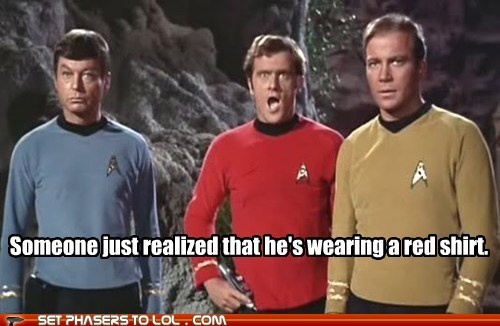
Now, I’m not talking about the red-shirted cannon-fodder that fills the background…the cab driver, the concierge, waiter, ex-boyfriend, whatever. No, I’m talking about those characters just below the protagonist, antagonist, side kick/mentor/love-interest who help move your characters through a plot point (or several) and then disappear completely.

red shirts

Let me give you an example from a murder thriller collecting dust on my hard drive…The Children of San Miani.

In my story, a journalist provides a young detective with just enough information to introduce her to the lead suspect, a victim’s rights advocate with a major reason to want the first murder victim dead.

In reviewing my first draft, I realized that the moment the journalist connected the detective and the advocate, he completely disappeared from the story. He became superfluous to (story) need, so I simply stopped talking about him.

This begged the question: Did I need the journalist character at all?

With very little thought, I quickly realized I could accomplish all of the journalist’s plot points without the journalist, either by ascribing his actions to other main characters or to the story itself. And poof, he was gone.

The result was a story that was that much tighter. A story that was a bit less confusing and yet still maintained the mystery I needed for the thriller.

Look at your story. Focus on those second-tier characters.

Are there some that don’t make it to the end of your story; that simply trigger or drive a scene or two forward?

Can those triggers or drives be handled by another character in your story, maybe a main character? Or perhaps those actions can extend the life of another secondary character who just plops into your story from the ether?

In some cases, the answer may be no; that in the grand scheme of things, this character is vital if temporary.

Fine. Keep the character. You are the best judge of what is needed for your story. But I’ll bet at least one character can go.

1248-left4dead-no-mercy-wallpaper-wallchan-1280x960

Show no mercy. Cut the strings. Release the Kraken. (Oops, sorry. Wrong movie.)

Don’t smother your screenplay. By eliminating the unnecessary, people will better understand and appreciate your story more quickly.

And when you may only get one read (if that), the easier you make it on your audience, the better.

(Images are property of owners and are used here without permission, and may be completely superfluous.)

Convince readers to take a leap of faith, instead of a flying leap

Don’t let him know, but this is actually a really interesting (and surprisingly useful) post from my friend Ed Slickson…

…his name is what? What did I say? Oh, whatever!

Ned's Blog's avatarNed's Blog

image Welcome to Ned’s Nickel’s Worth on Writing, when I share writing wisdom gained through 15 years as a newspaper columnist — or as my editor calls it, “Reasons I have a cardiologist.”

But enough accolades!

As I’m sure all of you remember, the last NWOW was about the importance of honesty in all genres of writing…

Fine, no one remembers.

At least you’re honest.

In that post, I talked about how writing must ring true with readers for them to become emotionally invested. This is particularly important when it comes to fiction, where you are often asking readers to suspend their disbelief and buy into something — such as an eccentric character, over-the-top situation or random reference to the new iPad6® in hopes of getting a free one — that requires a leap of faith. I this case, your reader is making a “leap” over reality because they have…

View original post 1,250 more words