Write, not right
Engage me, don’t yell at me
While on LinkedIn earlier today, an acquaintance posted the following image that has been circulating lately; an image humourously designed to explain social media.

Look at me!
What this also highlights, however, is our complete lack of understanding when it comes to social media…that it has to be social.
Well, it doesn’t have to be social. Plenty of examples on the Internet (probably some written by me) where an individual or company has used social media to scream out their own message, not bothering to wait for a response or worried whether they are engaging the individuals on the other end. Just one giant game of: Look at me! Aren’t I clever? Love me!
Again, I recognize my own culpability in this. I too can be accused of approaching social media like a dog barking at a window, with little or no concern about those at whom I am barking. I do my best to have a point and always enjoy engagement.
Social media should be about engaging and building a community of which you and I are just one member. It should be more about listening than talking. It’s about starting a conversation, not a speech.
Thus, I offer the following revision of the white board presentation above.

Look at us!
In social media, everyone can hear you scream…but how many of us are listening to what you are screaming?
(Of course, this could all be high-handed holier-than-thou BS…in which case, I expect you to hold me to account. Go ahead, prove me right!)
Hoar-ror Show

The silence screamed
As unyielding steel
Violated the ground.
Frozen corpses flung
To cadaverous skies,
Plummeting anew
O’er sacrificed brethren;
Unwelcomed freefall
Not insult enough
To be ignored
By violent injury.
Territory reclaimed,
Only to await
New fodder,
New victims.
Winter, it seems,
Is getting to me.
(Image is property of owner and is used here without permission…the horror…the horror.)
Screenwriting, not choreography

In her weekly blog Why The Face, my friend Marsha Mason (more “Hey, there!” than Goodbye Girl) hits briefly on two topics of particular angst in new screenwriters: camera directions and over-written action sequences.
For me, both of these come down to the same issue: the screenwriter’s need to choreograph his or her story so that the reader “sees” the movie as the screenwriter “sees” it.
Below, with permission, I have reproduced Marsha’s original post and my comments on it.
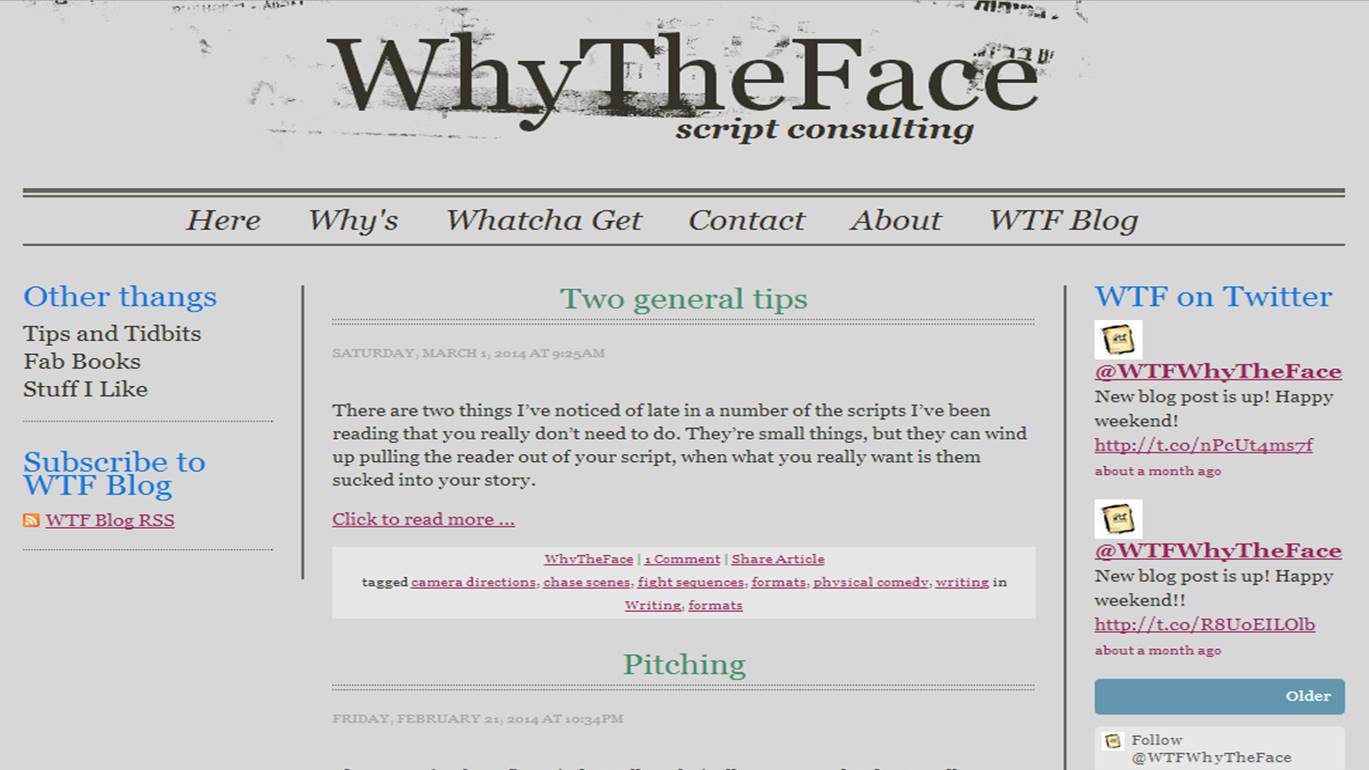
There are two things I’ve noticed of late in a number of the scripts I’ve been reading that you really don’t need to do. They’re small things, but they can wind up pulling the reader out of your script, when what you really want is them sucked into your story.
1) Camera directions: leave them out. When someone falls in love with your script, the director that attaches to it will be the one to figure out what camera angles they’ll use and when.
And…
2) Detailed descriptions of fight sequences/car chases/long physical comedy bits: once someone falls in love with your script, there will be stunt choreographers, fight directors, and your star actor/comedian, people whose specialty it is to design these sequences for the production, based on the needs/wants of the director/producer/star.
A better idea is to describe the feeling and the tone so the reader knows what you’re aiming for, rather than going on for a page or more. Ie “An epic car chase ensues. More Seth Rogen behind the wheel than Al Unser Jr., it goes for blocks, barely missing nuns and orphaned children.”
Essence of, then right back into your story.
My comments:
Couldn’t agree more. Too many people feel they have to direct their screenplay to ensure the reader “sees” what they “saw” in writing it.
In a few screenplays I read recently, the writer went to great lengths to choreograph fight scenes, offering the minutiae of balletic movements.
“Raising his knee, he blocks X’s kick, and then twirls to chop X across the back of the neck. Stunned by the blow, X falls forward but recovers quickly enough to tuck and roll back to his feet. Etc. Etc. Etc.”
A fight sequence should have a sense of energy, urgency. These are people struggling. You want that to play out emotionally. You want the reader to break out in a sweat, his or her pulse elevating while reading the scene.
Instead, you slow down the reading with lengthy descriptions. The reader has to wade through line after line of description.
As Marsha describes, you can offer the fight in broader strokes to elicit feeling or tone.
Alternatively, you can present a sequence in short, staccato phrases and sentences. It is like having 20 hockey players firing pucks at you, at will. You become powerless in the onslaught, never precisely sure from where the next shot is coming.
Because the descriptions are short, they take little time for the reader to absorb before he or she moves onto the next one. Each line comes faster and faster, until the reader finds him or herself in the fight.
And then suddenly, it is over and the reader is left drained, but exhilarated.
In action sequences, less is more.
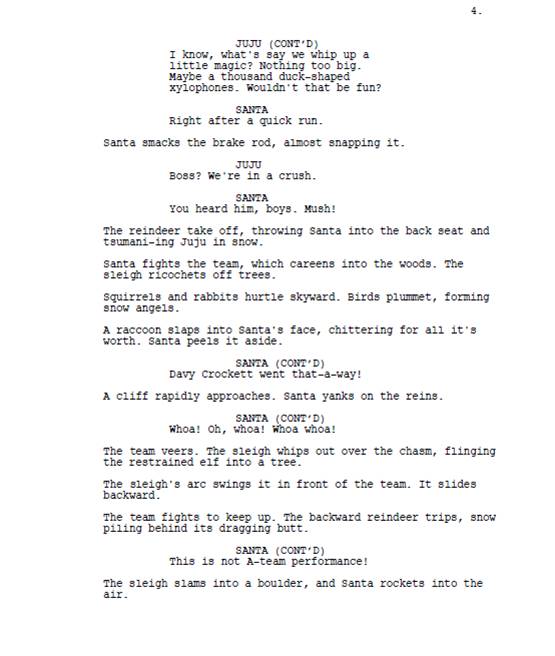
(Note: The above sequence is from my latest screenplay The Naughty List, a holiday-themed film for adults. Think The Santa Clause meets Good Morning, Vietnam.)
Writing “Line by Line”
Do you want to be a writer but don’t have any ideas?
Are you afraid of looking like a fool?
Don’t have time to complete a project?
Then check out the blog “Line by Line”, a project to create a story one line at a time by anyone who wants to contribute.
No money down! No payments ever! No long-term commitments! No sense, at all!
At “Line by Line”, you’ll read sentences like:
“Without realizing I was doing so, my hand reached out for the vial, and Dorgon hesitated before finally releasing it to me, nervously licking his eyelid.”
and
“Instead, I pulled myself to my feet using his adam’s apple for leverage and pushing his face into the floor, such that I finally had the upper hand.”
Check it out!
This innovative new idea for building a story, line by line, day by day, was hatched by Ionia Martin and Julian Froment.
Photographer misses hockey game
One of the challenges of bringing my camera to Toronto Marlies games (farm team of the Toronto Maple Leafs) is that I barely get to see the hockey game. I am so focused on trying to get interesting pictures, that 99% of what’s happening on the ice eludes me.
The good news is that I get some really interesting shots. The better news is that the team offers a game highlight reel so I can catch up later.
This album represents only some of the best photos of the 477 shots I took (Marlies only took 31 in the game)…more are available on my Facebook page, where most of my fellow Marlies fans reside.


-

- Seriously, they said “Hey, take our picture!” so I did





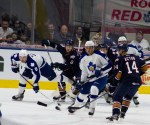






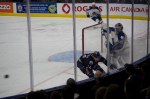



(SPOILER ALERT: The Marlies took the game 4-1 over the Oklahoma City Barons, farm team of the Edmonton Oilers.)
Words

Words.
They flow so easily from your lips.
Momentary sounds of normalcy
That hold no meaning.
They change nothing,
They hide the sepsis
That slowly builds,
Pressing ever harder
Into our every morning.
I’m no better.
Eyes wrinkle in amusement,
Thoughts emerge, wrapped in softness,
Trying to hide the harshness
That lies beneath, barely hidden.
Cold feelings disguised in warm notes.
And all I can think
As I stare across the table;
The only true feeling inside
Is a solitary echo:
I can’t do this anymore.
(Image is property of owner and is used here without permission.)
Antisocial Media : A thought process
An interesting thought on the distinction between online and on-planet socialization

I’ve been thinking a lot lately about how many people the average person “knows” in the digital age. This post is not really so much an opinion as it is a question posed to everyone who makes use of social media, be that blogging, Facebook, Twitter, or the various other platforms out there. Do you think that we are more social or less social than we used to be thanks to technology?
What does the word social really mean? You can find plenty of definitions for it in the dictionary and plenty of different forms. The one we will use here comes from the Mirriam-Webster Dictionary. so•cial /adjective:
2. Marked by or passed in pleasant companionship with friends or associates. <An active social life>
I have met some of my very best friends (and Julian, sweet Englishman that he is) through blogging. I know these people now as “real people”…
View original post 400 more words
Jerk
CORRECTION: Earlier today we posted a comment where we recommended you “Jerk your cock liberally”…
We of course meant to inform you that you should “Jerk your chicken liberally”…
We regret our error and would like to apologize for any West Indies-themed dinner parties we may have inadvertently ruined.
Rule breakers
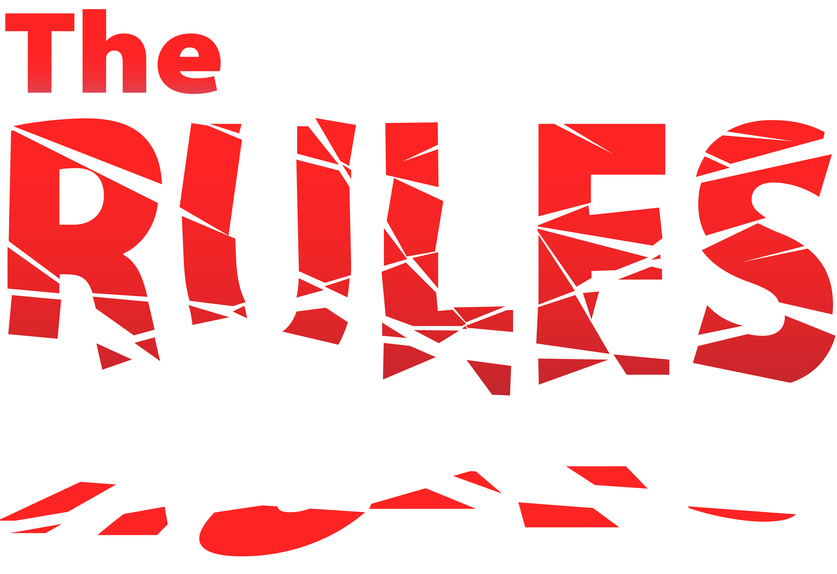
Oil and water do not mix because, well, they are oil and water. This is a rule. We made a cliché out of it, so it must be a rule.
And yet, it is not a rule.
Oil and water can mix. You just have to screw around with it by adding another component to the mix…an emulsifier. True, this isn’t the same kind of mixture as blue Kool-Aid plus red Kool-Aid makes purple Kool-Aid, but the colloidal suspension of oil droplets in water is still a mixture.
So what about combining oil painting with water colour painting? Anathema, you say. They are two distinct media, you cry.
So what, I respond.
Because we’ve never seen it done (or at least, I haven’t), doesn’t mean that it cannot be.
Each medium offers its own strengths and limitations, and magnificent works have been created with either. Is there a way, however, to enhance those strengths, moderate those limitations by combining the media within a single work?
Every day, new rules are created, new schools of thought founded that try to define a panoply of Art forms. This is good, as these institutions form the parameters in which new Artists learn and understand their craft.
Can you imagine the panic of being told to go make art and being given nothing to do so: no instruction, no media, no resources?
And yet, those very institutions can strait-jacket the unwary and the unthinking, as rules become commandments rather than guidelines. When any attempt to step outside of the school is med with derision, contempt and blinkered exclusion.
The very congresses and champions established to support the growth and evolution of Art can easily become the prison wardens of that Art, confining aberrant Artists in an attempt to petrify the one true form.
(By the way: The same is true for Science, where journals and textbooks are rife with examples of explorers being squashed for daring to suggest something that didn’t fit within scientific canon.)
It would be naïve and harmful to suggest that rules should not only be broken, they should be shattered. If you wrote a novel using numbers rather than letters, you might find a very small audience for your work and little understanding from peers. There is much to be said, however, for grazing, nicking or wounding the rules.
Rules should be constantly questioned, viciously challenged if Art is to evolve. Without such a challenge to the nucleotides that comprise our genetic material, we would not exist and the planet would be lifeless.
But just as we demand mutation and adaptation to facilitate Artistic evolution, so must we accept the other half of the Darwinian equation. Only those most fit to survive will. The majority of mutations and adaptations will be for naught and that Art will perish.
It is a harsh reality, but look at what it has wrought in just 40,000 years since humans first applied colour to walls.
All this to say, break some rules. Test the limits. It is your evolutionary destiny as an Artist.

(Images are property of owners and are used here without permission and against the rules.)
 createdbyrcw