I know I wood

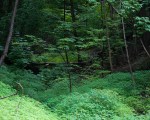
Another lovely morning and another traipse through a nearby ravine, checking out the flora and fauna (as well as a few protists, dirt and water).

Feel this, would you?

I used to stare at this poster trying to gauge what I felt...sometimes it worked, sometimes not

I used to stare at this poster trying to gauge what I felt…sometimes it worked, sometimes not

I have to admit I find it difficult to write characters. No create them, but to actually make them come alive on the page.

To develop a truly realistic character, you need to be able to give a sense of his or her emotional state, and this is where the wheels tend to fall off for me.

For most of my life, you see, I have focused on facts, not feelings. I might even go so far as to say I have completely shut feelings out of my life—or at least as completely as possible without (yet) ending up in prison as a socio- or psychopath. Thus, I have been ill-equipped to deal with the myriad emotions that form the human condition.

If I look or think back to the writing of my youth, I seemed to be able to manage moral outrage and on occasion, actual rage, but any other emotions, no matter to what extreme, came across as flat. And forget any of the subtle shades in between. I did not do subtlety.

About the only character I could develop was the noble stoic who was a tad self-involved. Hmmm. Seems familiar somehow.

Lacking experience with these various emotions, how could I hope to bring them to my characters?

I’ve never believed emotions were something you could study in the traditional sense.

If I want to understand a polar landscape, I can go online or check a variety of books. Determine the behaviour of a jet that loses one engine? I’m sure there’s a Wiki for that. But emotions, by their very nature, preclude such an academic approach.

Ah, but what about other books and movies?

Good in theory, but without a personal foundation, you run the risk of simply reproducing Glenn Close’s interactions with the rabbit or Peter Lorre’s fear of Moroccan Nazis.

No, to be able to realistically reproduce emotions in my characters, I needed to have experienced them to some extent in my life. Call it Method Writing, if you wish.

Luckily, for a variety of reasons having nothing to do with screenwriting, I have been accessing my emotional centre over the last couple of years. Through a challenging process of self-examination and “coaching”, I have started to feel—allowed myself to feel—emotions like sadness, irritation, pleasure, enthusiasm, boredom and the like. And the impact in my writing has been immediate, if continuing to develop.

When my character is angry, I find myself getting angry. When my character feels loss, I can remember when. Ecstasy? I’m all over it (the emotion, not the chemical).

And I’m not the only one who notices this. As friends, colleagues and classmates read my material, I sense they too experience the emotional rainbow. And sometimes they introduce feelings I never envisioned for a scene.

This isn’t a threat to what I wrote. It is a bonus prize I receive for paying attention and sharing, for they have found something in my words that I did not see or did not know I was channeling.

Maybe it’s gold. Maybe it’s lead. But always, it is valuable.

Like my characters, I am still a work in progress, but at least I feel like I’m progressing.

(Image is property of its owner and is used here without permission. I don’t know how I feel about that.)

Anybody home?

The house was dark, which made Helen worry all the more. As long as she could remember, her neighbours kept at least one light on in the house.

“You never know when someone will show up for a visit,” Jackie would explain. “Would hate for them to think they’re not welcome.”

The funny thing was, Helen never saw any visitors at the Jarrols. Maybe that’s why the house always seemed to drip in melancholy.

Helen took the first step on to the porch, making sure not to lean on the railing that more than once abandoned poor Ned to the garden below. Jackie finally planted decorative cabbage just to cushion the blow.

Each step felt spongier than the next as Helen ascended. She wasn’t sure if it was the wood or her trepidation, the silence of the house growing more oppressive the closer she got.

Helen didn’t bother with the doorbell, it never worked, but instead rapped heavily on the door before turning the handle.

“It’s just Helen,” she called into the darkness, the weak light of blinded windows helping her make out the living room. “Jackie? Ned?”

Her words hung in the air, the warmth of her breath buoyant in a house unnaturally cold.

Helen hesitated at the door, afraid to proceed but worried about her neighbours. She really wished Sarah was with her right now, but she wouldn’t be home until tomorrow. Helen was on her own.

“Hello,” Jackie’s voice called from the kitchen.

“Jackie, it’s—“

“We’re not home right now, but if you leave a message, Neddy and I will get right back to you.”

Ned had long ago turned off the phone ringer because it always startled Jackie, who had a weak heart. Helen actually thought it was because Ned hated talking on the phone.

Helen searched the main floor, but the Jarrols were nowhere to be found. Upstairs it was.

As though pulling off a bandage, Helen vaulted the stairs to the second floor, but her hand froze as it came to rest on the bedroom door handle.

Knocking would have been respectful, but Helen just turned the knob and pushed. The door showed no resistance.

Jackie and Ned lay next to each other on the bed, eyes closed. Jackie was under the covers, hair bound in that all-too-familiar brown kerchief, while Ned was atop the covers.

Helen didn’t call out. She didn’t even check them. It was just like Ned to turn the heat off first. He wouldn’t do anything to hurt the potential resale value of the house.

How to accept your inner idiot

Because we all know we have one

Tracy's avatarThe HeSo Project

Recently, a dear friend confided in me that he feels stupid and way over his head whenever he talks to people who are in the field he wants to switch into. This is mostly because he doesn’t know all the jargon or references yet. Here are two tips I gave him:

1. Write down the words and references you don’t know.The first time I told someone I wanted to be a writer, she started listing all of her favorite authors and asking me what I thought of them. I didn’t know a single one of them, and I felt like a fraud who had just been caught. Since that day, I always carry around a notebook (now I use the Keep It app on my phone), and when someone mentions an author I don’t know, I simply write it down and tell them that I will check it out…

View original post 182 more words

Plant one on me

While I am addicted to the kingdom Animalia, I must admit to an expanding appreciation for plants.

There is a certain elegant simplicity at their most superficial that masks a magnificent complexity within. While typically more stationary than most animals, aside from the odd breeze, these biologic wonders seem to be more than capable of a vivacity that borders on personality.

I appreciate that I am romanticizing them, but how can you look at the following images and not think that there is something going on. And it’s not the photographer’s talent. They are spectacular, I just captured the spectacle.

Do you see what I see?

How can you NOT want to describe this place?

How can you NOT want to describe this place?

Now that I have worked on several screenplays, which I have shared with a number of friends and fellow writers, I have come to a conclusion: I am a novelist.

Fret not, fellow travellers. I say this not to suggest I will cease to write screenplays but more in recognition of an inherent weakness in my screenplays, or perhaps more accurately, in myself. I am addicted to narrative.

The problem is I instinctively write what I see, even when I only see it with my mind’s eye. If I were a painter, I would own brushes that only had one or two hairs. The concept of a paint roller would be anathema.

Nothing in a scene is unimportant to me. I see people, things, phenomena in terms of metaphor, although I do my best to avoid poetry.

I cannot simply write: The boat bobbed wildly on the waves. (Even writing that line now was taxing to me.)

Instead, I’m inclined to write: The battle-weary skiff, a patchwork of wood and fibreglass, tossed helplessly on the ocean swells, each wave of its own purpose, refusing to work together toward anything resembling a current.

The former is what is happening. The latter is how I envision it. To me, everything is a character in a story—an antagonist, an ally, a victim—and as such has its own story arc, however small.

I also want to make sure that my reader “sees” the movie I would like to make—the challenge of a pictorial and aural medium presented literally. I want the reader to “feel” the scene before the first word of dialogue is spoken, both to establish the mood of the scene and give a sense of how the line is said.

Unfortunately, in my zeal to be informative, I instead become onerous or tedious. My screenplay becomes a challenge to read as long tracts of narrative slow the story to a crawl. Instead of making it easier to read my manuscript, I’ve made it more challenging and less desirable.

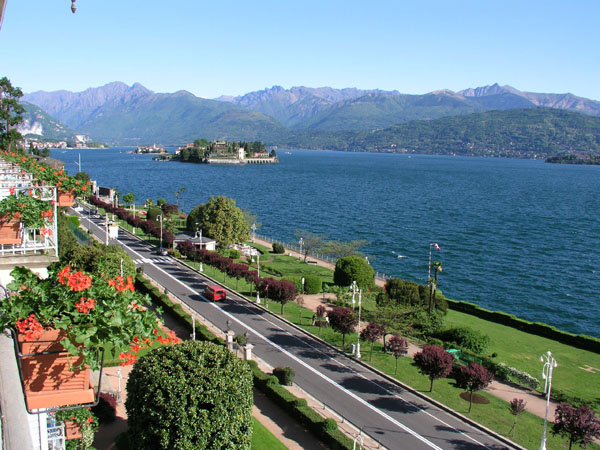
I was once accused of writing a travelogue of Northern Italy in a screenplay. Oh, what I had written was beautiful and made some people dream of travelling to the region—Lago Maggiore—but 90% of what I had written was completely unnecessary to the telling of the story.

So, what to do?

As of this moment, my writing process is my writing process, and I believe that any attempt to significantly change it would simply increase my challenges in writing at all. No, better to have written a first draft badly than to have never written.

Instead, I have chosen to rely on this little miracle I have discovered. They call it Draft Two. This will be my chance to go through my screenplay with a harsh eraser, and remove all of the lines or description that is not absolutely necessary to tell my story or to explain a character’s behaviour.

Sure, this may necessitate some rewriting of dialogue so that I don’t end up with mile-long verbal tracts. But in all likelihood, these speeches were too long and in desperate need of shortening.

One step at a time, though, for today, I continue to write Draft One of my screen-novel.

(Image is property of owner and is used here without permission, but plenty of description if you read my screenplay.)

The Upside of Down

As I examined the photos I took the other day walking the waterfront of Toronto’s east end, I realized that much of my world was apparently upside-down. See for yourself.