The word was “Thirsty”

The result of another writing exercise…and the slow recognition that almost everyone I write about is seriously messed from by previous relationships. Ah, hindsight.

“Thirsty?” Jim asked, as he watched Phil throw back yet another pint of beer without coming up for a breath.

“L’il bit,” was all Phil would say as he signaled the bartender for another round.

Jim had seen Phil drink before, but there was something different tonight; something desperate about the way Phil was pounding them back that reminded Jim of a man who was trying to drown himself 12 ounces at a time.

“Something you wanna talk about?” he asked, as he watched Phil connect the sweat rings left on the bar by the humid glasses; a massive game of connect-the-dots with no picture in sight.

Phil just sat there, head down, slightly slumped forward. The fact that his eyes were open was Jim’s only clue that he hadn’t fallen asleep; that and the random ministrations of a finger on autopilot, running across the bar.

Without Jim realizing it had happened, two more pints had suddenly shown up on the bar, bubbles rising skyward to form a frothy blanket across the top of the glass. Jim looked at his own mostly full glass and realized that he was falling seriously behind. Over the sound of his own gulping, he thought he heard Phil say something.

He looked over to see Phil staring at him with very weary eyes. Jim shuddered. Phil was only two years older than his own 42 years, but right now, he had the eyes of someone twice as old; someone who had been run over by life and was too tired to hide it.

“She called today,” said a voice that seemed to come from nowhere. “She called the office.”

Without explanation, Jim knew that “she” was Phil’s ex-wife Jacklyn; a wraith who liked to appear every so often to throw Phil off kilter. It wasn’t anything malicious, mind you. It was just that neither of them had ever really accepted that they were divorced. Phil and Jacklyn were proof that no matter how much two people love each other, no matter how much you live for the other’s company, that is still no guarantee of a successful marriage.

“How is she?” Jim asked, as much to fill the void as out of interest.

“Dunno,” Phil replied, between mouthfuls of beer. “I was out.”

A new low, Jim thought. Phil hadn’t even spoken to her and he was in a state. This didn’t bode well for the rest of the evening.

Beautiful sadness was the first thing I thought when I lined up this shot (Tofino)

Beautiful sadness was the first thing I thought when I lined up this shot (Tofino)

Sloppy Seconds™

Do you have trouble coming up with original ideas? Do you think you suck because your ideas blow?

Well, worry no more. Let me introduce you to Sloppy Seconds™, the concept that’ll put spunk back into your body.

Sloppy Seconds™ is all about taking what somebody else started and going one step further for a bigger finish. It’s about taking the worry out of satisfying those opening urges and putting all of your focus on the climax. Ideas that will send a chill down everyone’s spine and get them crying out for more.

How can I enjoy Sloppy Seconds™, you ask? Well, let’s get the ball rolling.

You know that feeling when something is on the tip of your tongue, but you can’t quite put your finger on it? Well, let somebody else swallow the responsibility of getting things started. Let them put it out there and once it’s on display, grab hold of it, take it all the way in, and make it yours by adding that special little something you have inside you.

If you do that, you’ll find everyone leaves satisfied, and if you go at it long enough, perhaps even sated.

And who knows? When you’re done with it, someone else may come along and make it theirs with a sloppy third. The more people who pile on, typically, the better it gets and the more fun everyone has.

So, the next time you find yourself frustrated, blocked, unable to get things started, give Sloppy Seconds™ a try. Your hands may get tired, but you’ll have a smile on your face.

Sloppy Seconds™: Coming to a location near you.

Image

BTW: This is talking about brainstorming…you know, starting with someone else’s creative idea and then adding your own personal spin to get a story started. I’m not sure what you were thinking about.

The phrase was “club members”

(The results of another writing exercise…and this time, it’s a complete story! Woohoo!)

Club members. Sid couldn’t believe it, but it was true. The sign on the door read “club members”.

“They can’t possibly get away with that,” he complained to his sister, who sat quietly, fumbling absent-mindedly with the window latch.

“Jessica, you’re not listening to me,” he said impatiently. She sighed, adjusted herself and rolled her head languidly to face him.

“I’m not not listening to you, Sid,” she replied, as much an exhalation as exhortation. “I’m not paying attention to you. It’s totally different.”

She then went back to fumbling with the door, smacking on yet another piece of stale Double Bubble as he stared silently back at her.

The moment’s silence, however, was broken suddenly with a “fuck you” that apparently came out of Sid’s mouth based on the change in Jessica’s demeanor.

“Look,” she said angrily, “I didn’t ask you to come on this stupid little outing. You asked me, if you remember. The only reason I’m sitting in this car is because this sounded more interesting than ‘O.C.’ reruns. And so far, I was wrong.”

“You said you’d help me with my civics assignment,” he protested.

“I will, but moral outrage in a beat up Toyota Corolla does not a civics assignment make,” she replied sarcastically. “If you don’t get something on paper, Mrs. Berkowitz will have your ass.”

And before he could finish the movement, she added, “And pointing at the front gate of the country club and spouting on about the downtrodden masses, excluded from the perks of society, shunned by the elite, and…and…” She was at a loss, but never for long. “And kicked to the curb by uber right-wing industrial fat-cats cum 21st century royalty is going to get you nowhere.”

“But wealth is the new fascism,” he cried.

“Bullshit.”

They sat quietly again, letting the echoes of their exchange die quietly in the luxurious folds of the polyester fibers that comprised Sid’s faux Guernsey seat covers. His right hand flailed as though waiting for his mouth to make a stunning riposte and struck the steering wheel whenever it realized that his tongue was determined to remain silent. Jessica peripherally watched him conduct the silent symphony before trying to engage him one more time.

“What I’m trying to say is that almost everyone in your class is going to write the same bloody paper you’re thinking about,” she said, slowly and calmly. “And the rest of your class is just too damned retarded to know what to write at all. Do you want a good mark in this class?”

“Yeah.”

“And more importantly, do you want to knock Berkowitz on her smug Yiddish ass?”

That got a smile out of him.

“Then pull a Swift on her,” she said, conspiratorially.

“A what?”

“Not what; who. Jonathan Swift.,” she responded. But when the penny still hadn’t dropped, she added, “Eat the fucking poor.”

Okay, Sid thought, now she might as well have had antlers.

Jessica rubbed her forehead in frustration. “If you want to stand out in a crowd, go the other way. If everyone else is going to bitch about the evils of the elite, you should celebrate them.”

Oh my god, they weren’t antlers, they were horns—devil’s horns. And the smile on her face just kept getting bigger. It made him uncomfortable.

“In fact, you might go as far as to argue that the poor should be happy to serve the elite for the good of everyone.”

There was no air. Sid couldn’t breathe. Somebody had hooked the car up to a vacuum pump and he was asphyxiating.

Finally, he mustered enough breath to blurt: “Are you fucking high?”

“What?” she replied, her smile belying the innocence of her tone.

“I can’t do that. What about the downtrodden?”

“Who do you think trods on them, you silly bugger?” she asked. “Well, okay, not you and me—not directly, anyhow—but Dad does. He’s a corporate lawyer, for Christ’s sake.”

It was getting warm, too. Warm and airless. That’s it! He was in Hell. Was that sulfur? He thought he could smell sulfur.

Sid just started shaking his head, and the more Jessica spoke, the more violent the shaking became.

“We’re rich, Sid,” she mocked. “Not lower middle class. Not middle class. Not even upper middle class. We are rich. We are richer than a 20-pound box of Nanaimo bars.”

He couldn’t take it anymore. He had to make her stop.

“No, I’m not rich,” he yelled. “Maybe you’re rich, but not me. I shun all worldly goods.”

Jessica snorted derisively and smiled. It was her turn to shake her head.

“Shun worldly goods?” she chided. “Oh sure, you dress like a street person and drive the worst beater in the school parking lot, but I would hardly call you a Buddhist monk. You—we—live in a very nice house, eating very nice food, and get a very nice allowance. Try another one, Gollum.”

Pitch clogged his lungs. Brimstone burned his flesh. And fire blinded his eyes. Hell consumed him until he thought he’d started talking in tongues. It was gibberish to his ears, but it was definitely coming out of his mouth.

“Alright, you win,” he spewed and then slumped in his seat. He had succumbed. “I hate the poor. They smell, and they’re lazy.”

“Whoa, tiger, slow down a little. I’m not pushing genocide here. I’m just saying we’re not poor.” Jessica waited a moment for Sid to calm down. “So take advantage of that. Use our connections to write the most controversial paper Berkowitz will ever grade. Be the anti-Marx.”

Something flickered in Sid’s mind as he returned his gaze to the sign on the door. Club members.

“Wealthy people own the companies where poor people find employment,” he whispered to himself. “And without jobs, they’d starve.”

The flicker took hold.

“And rich people pay a lot of taxes, which help support the social safety net.”

“And most of them don’t even use the services,” Jessica added, fanning the flame. “They go to the U.S. for their healthcare and don’t receive a penny in government subsidies, leaving their share for the poor.”

It all began to crystallize for Sid. It made so much sense. He had a purpose in life.

Later that day, he went down to City Hall to register as the founding member of the Republican Party of Canada. A scant eight years before the invasion…but that’s another story.


Thoughts on thinking

Thinking is over-rated. And by that, I am not espousing advocacy for unthinking, so much as non-thinking or as it is known in some circles, doing.

Think before you speak is an admonishment often heard (or at least by me) and perhaps there is some wisdom in this. More on that in a future post.

But I worry that too often, people think before they write and for many, thinking means never writing. These individuals become so encumbered by or enamoured of their thoughts that they are unable to commit anything to paper.

To me, writing or any other form of creation is a spiritual thing. I personally don’t feel that I create so much as simply channel or act as conduit for creativity itself—the good, the bad and the ugly. I bring into being that which was no so moments earlier. Thus, my pretentious tagline of “Seer of the invisible, scribe of the unwritten”.

I worry that people spend way too much time mulling things over, trying to come up with every angle and waiting until they find the perfect angle. Pen hovers over paper. Fingers hover over keyboard. And nothing happens as the writer becomes paralyzed in thought.

As I’ve written before, I set a destination, but I revel in the journey. I let the road dictate my next step and feel that I discover more wondrous things than I could ever have pre-conceived.

Sure, the road can lead me to a cliff or into a wall that I cannot surmount, but what of it? If I have discovered one thing in my life, it is that the return journey from a place is so much more than simply the backsides of things you saw on the forward journey. Perspectives change and so therefore does the story your journey provides.

Take the thinking out of your writing and see what happens. Sit at a table with your laptop or notepad and write down the name of the first thing you see. Let that be the first word in whatever follows, no matter how short or nonsensical that might be.

The story will tell its story. You don’t have to.

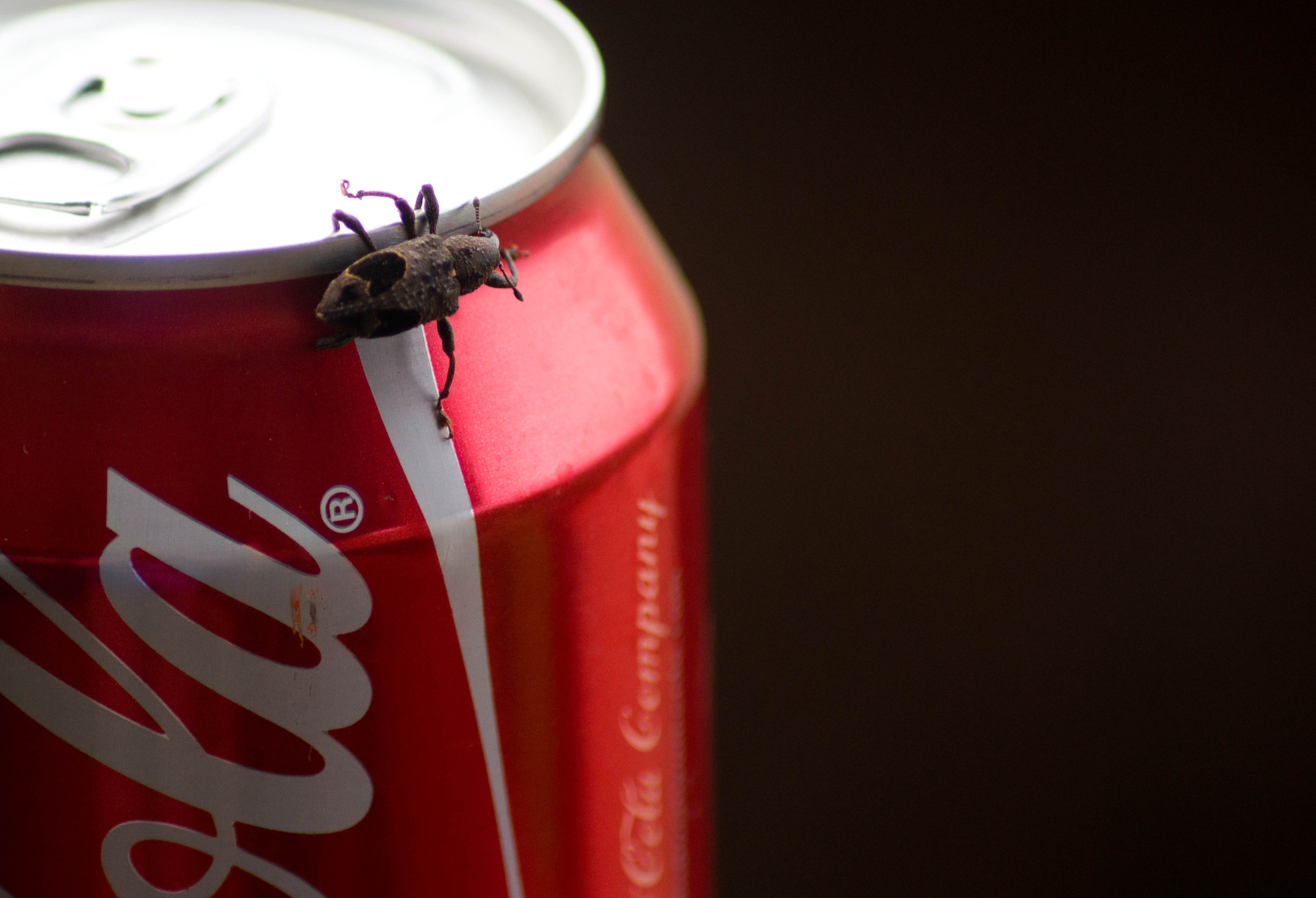
(I don’t know what’s on your table, but this was on mine!)

Image

Shoot where the goalie isn’t

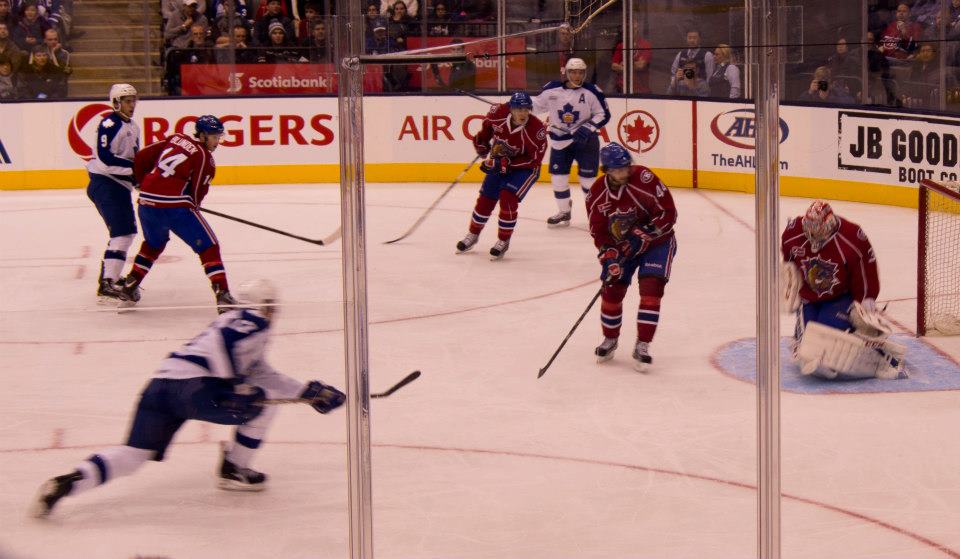
I’ve spent a lot of time in ice rinks watching beer-league and kids hockey and one thing that has amazed me is how often players will shoot the puck into the goalie’s chest. We all know that the object of the game is to get the puck past the goalie, but for whatever reason, our shot is drawn to the goalie rather than to the net. It is as though the goalie secretly inserted a small metal bar in the puck before the game and is now wearing a strong magnet under his or her pads.

Image


(American Hockey League; Toronto Marlies vs. Hamilton Bulldogs)

I’ve also decided that on a typical office trash can, the rim of the can generates a gravitational well. I say this because, no matter how often I throw a wad of paper into the can, from whatever angle or distance, I am more likely to hit the rim of the can than I am to sink the shot or miss completely. Something must bend space because if you look at the volume of the universe taken up by the rim and compare that to the rest of the frickin’ universe, it doesn’t make sense that I would hit the rim so often.

Of course, another explanation for both of these phenomena is that humans have an instinctive fetish for what we can see; that we are unconsciously drawn to the tangible to the detriment of the intangible.

The reason I wax on about this is because I believe what is true for trash cans and hockey games is also true for creativity.

After rehearsals for a sketch comedy show for which I write, I was drinking with some of the actors and one of them asked me how I came up the ideas for my sketches. How did I take a relatively mundane scenario and find just the right moment and way to skew it to elicit humour?

For me, I said, it’s about perspective and being able to ignore the hard edges of reality to see relationships no one else has bothered to see.

Image


(Photo taken in Barbados)

Too many of us get hung up on what we see, what sits before us in all its light-reflecting, retina-stimulating glory. We see reality and get stuck on that being simply what is. Reality just is. There’s nothing else other than it.

Sitting across from her, I described the wide-eyed reality I saw.

In the foreground was sugar packets, salt and pepper shakers, the table, my beer glass, her beer glass. Slightly behind that was her, the barely restrained frenzy of her hair, her facial expression, the curve of her neck, shoulders and arms, her clothes. Behind her, a table of four animated people sharing a night out (won’t go into details) and behind them, a window onto a busy Toronto street; sidewalks, pedestrians, traffic, storefronts.

I then squinted my eyes and all those hard edges faded away to be replaced with a visual melange. I could not tell where my friend ended and the woman behind her started. Vague shapes of pedestrians blebbed out of her head, like animated thoughts or alter-egos escaping into the night.

Image


(Photo of a fountain on Toronto’s Canadian National Exhibition grounds)

My perspective had changed, so my reality had changed. I no longer saw a goalie blocking my shot or a trash can rim siphoning wads of paper from the vaster universe.

However it is accomplished, I think this is what separates open creatives from the rest of humanity, and by creatives, I mean not just artists (writers, painters, photographers, etc) but also entrepreneurs and technology innovators. They understand the lowercase nature of realities rather than Reality.

The altered perspectives are there for anyone to see—and everyone’s perspectives are going to be different—but it is the creatives who choose to look for them. We can see where the goalie isn’t and choose to shoot there.

Image

(The Toronto Marlies beat the Hamilton Bulldogs at Toronto’s Air Canada Centre)


Words in other people’s mouths

I’m not an actor. I cannot act. Actually, that’s not exactly true.

I am an extreme introvert who has learned to live (and thrive) within an extremely extroverted world, so I can technically act aka hide my true identity behind a false façade.

But what I mean by acting is the theatrical form. Give me lines to memorize and my brain fries in mere seconds. I can say the line, I can emote or I can move my body across the stage…ask me to do any two of those at the same time, however, and we have issues.

I can do improvisation. I love improvisation.

The thrill of trying not to anticipate what your stage partners are going to do but instead simply react to what they have done and add to the reality of the situation is an adrenaline high of which I cannot get enough.

And the typical improv audience is a forgiving lot because they know you’re making this up before their very eyes. In fact, they will actually ask you how you prepare for an improv show and sit amazed when you tell them that you arrive at the venue slightly earlier than they did.

But even improv has its self-imposed pressures, because at the end of the day, you have to respond to your colleagues and say or do something. A couple of years ago, however, I found a work-around for that.

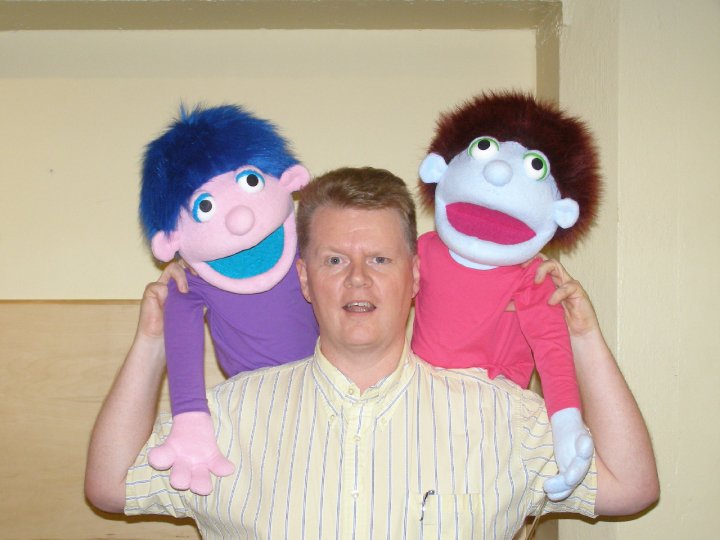
A friend of mine introduced me to puppetry improv. In this case, we put Henson-style puppets onto our hands and created amazing scenes with characters that didn’t exist until mere seconds ago.

It was magical.

Image

The minor act of picking up a puppet and letting it do the talking gave me enough distance that I was free to think and do anything I wanted without fear of recrimination. People stopped watching me and immediately followed the puppet. Whatever the puppet said was funny or poignant or shocking. Even saying nothing spoke volumes.

And if I thought improv audiences were generous, oh my God! Puppets can get away with murder! There are no taboos.

Which brings me to writing.

As it was with the puppet, so it is with writing characters for screenplays, stage plays or novels. I have the freedom to write anything, to say anything, because ultimately the words are the responsibility of the characters I create.

Maybe this is a sign of a need for medication, but when I write a character, I hear his, her or its voice in my head. Change the character and the voice changes.

By moving the focus off of me—my skills or lack thereof, my insecurities, my knowledge—I free myself up to pursue something bigger.

Or at least that’s what I’m telling myself. It seems to be working for me.

My muse is a bastard

Okay, that’s not really fair, but it is fair to say that my muse and I have not always had a great relationship.

I have abandonment issues. I won’t deny it. I am working through them. But my muse has not been a lot of help in this department. For decades, I have sought inspiration in my writing and my muse has let me down. He was more “mute” than “muse”.

Image

For years, my pen has hovered over my notebooks, tantalizing close to writing, but ink doesn’t transfer. My fingers have hovered over computer keys, ever so close to making physical and spiritual contact, but the flashing black line in my Word document taps its virtual foot in anticipation of ideas yet to flow.

And even more frustrating, my muse can be a right royal inspiration tease—giving me glimpses of ideas that simply turn into moments of premature  ideation, leaving me feeling used as I clean my laptop.

What I realized recently, however, as that my muse isn’t my muse. He is, in fact, a muse—the irony of that phrasing is not lost on me.

Image

Inspiration isn’t something that comes to me. I have to go out and get it. Hunt it down. Leash it and bring it home. And in keeping with good psycho-eco-social practices, release it back into the wild when I am done.

Here I thought I had become so bloody advanced because I had an opposable thumb and personality that worked in clever union to produce written works of a certain majesty (more often than not, Ethelred the Unready, but majesty nonetheless).

Instead, I find I am still the hunter-gatherer of history. Leaving the comforts of home to find sustenance in the wilds of the universe or less melodramatically, a park bench watching people, the zoo watching animals watch people, a coffee shop watching the level of coffee in my cup recede.

Slowly, I am becoming a better hunter-gatherer. The threshold does not seem so high. I can generally snatch a muse without doing too much damage to it or myself.

Oh, it still doesn’t want to get caught, but what that means is I have to change my position slightly. ALL muses are bastards.

Image


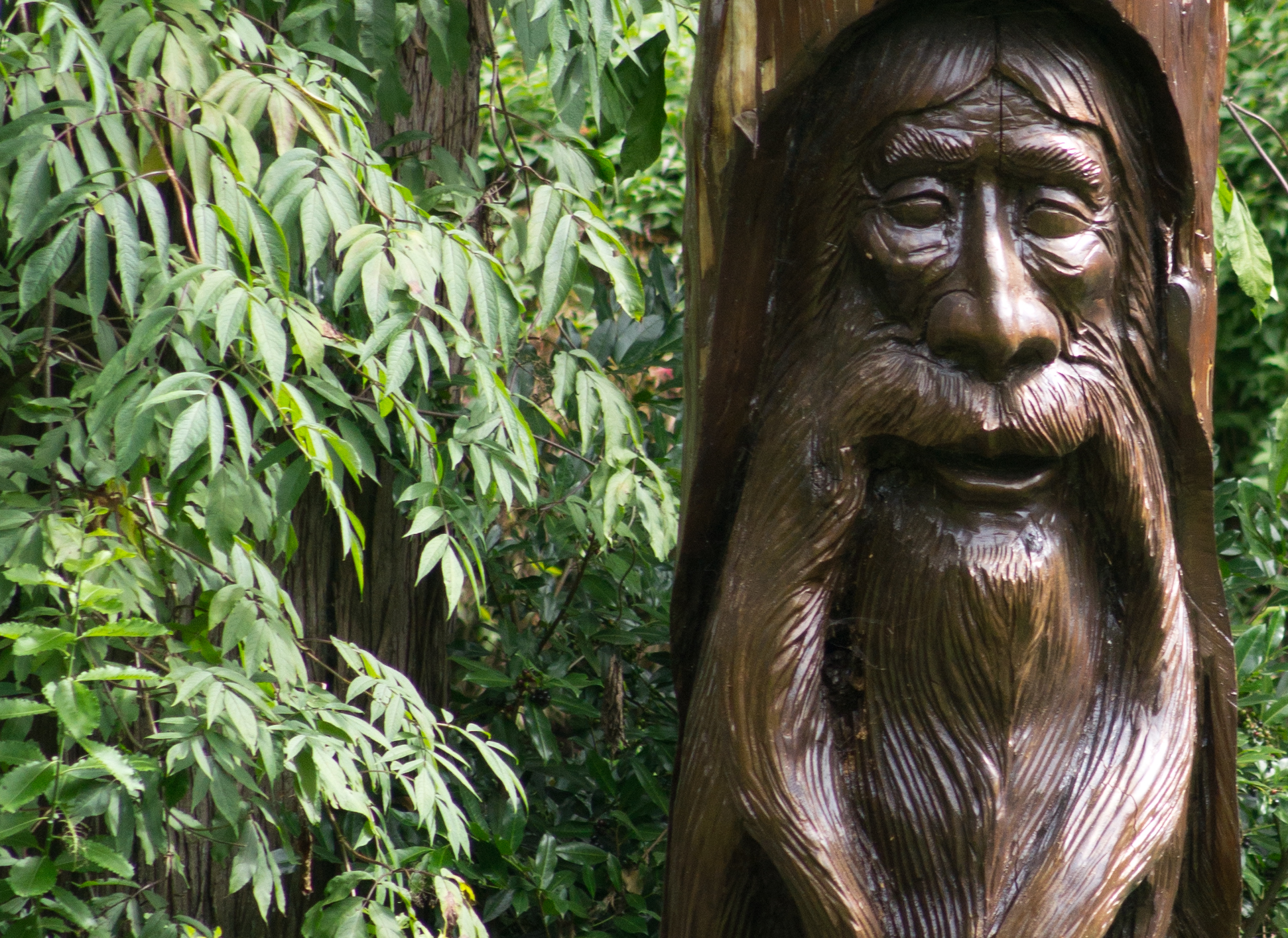
(Photos taken at Minter Gardens outside of Chilliwack, BC. An amazing place to hunt muses!)