My Creative Journey – Part One

What follows are a few thoughts on why I write…the moments in my life that led me to embrace my passion. It is an incredibly personal story and I hope it doesn’t make anyone uncomfortable, but rather helps them reflect on why they embrace their own passions.

Image

I need to be creative on my terms.

When I was younger, it was all about acquiring knowledge and being recognized for having acquired that knowledge. In hindsight, I’m not exactly sure what I was planning to do with that knowledge.

In some respects, it was about solving a puzzle, which could range from how does this alarm clock work to how does the universe work. On another level, I think it was about control. Knowing how the universe worked meant knowing that there was a broader sense of organization out there; that the laws of physics and mathematics still held even when my own life seemed in constant flux. The subtle irony of entropy only occurred later.

But it was also about control in the sense that I couldn’t be expected to come up with answers, with solutions, until I had all the information I needed to make that decision. The aggravating reality of that method of control is it only works when you’re the one asking the questions. Nobody else is willing to wait until I have all of the info I need.

At the same time, I needed the safety of analysis and knowledge, I’ve also had a need to be creative. A need that has only recently blossomed as a regular part of my life.

When I was young, I was constantly creating new worlds through my stories. First, as play scenarios and then as the written word. I constantly developed short stories that took me in a million directions. Again, this might have been an attempt at control.

When I wrote, I was the master of my universe. I was the one who decided who lived and who died, who was allied and who was the enemy. I was the protagonist and the antagonist.

It was in 1977, as I started high school, that I first noticed the strength of my writing. That summer, my life changed with the release of Star Wars. So deeply effected was I by the characters and the story, that I immediately went home and started working on the sequel. My version took a very different turn than George Lucas’s—although there were some subplot overlaps—but over the next few weeks, I hand wrote 400 pages of dialogue.

I shared the script with my Grade 9 English teacher, who was impressed with the volume if not the content (my words, not hers). It was in her class that I first realized the power of my words to still and disturb an audience.

On day, Ms. Philp gave us a writing assignment that started with the sentence “I couldn’t believe it when I heard that sound.” It was supposed to be an in-class assignment, but I was onto something and asked if I could take it home to finish it. I guess she sensed something—that this was important to me—and she said yes. While I didn’t finish the story, I did hand her several pages the next day.

After reading the story herself, she decided to read it to the class. Whereas most people had written stories about funny sounds, spooky sounds or weird sounds, I had written about a man who comes upon a murder in an alleyway, first by the sound of bone and sinew breaking, and then by sight. I wrote about the fear and indecision in the witness’s heart as the murderer sees him and he flees for his life.

As Ms. Philp read the story aloud, there was silence in the room—a room of 14 and 15 year olds. No one said a word until she was done reading. It was magical for me.

I wish I could say that there was a rousing round of applause at the end and that this was the day that I decided to become a professional writer. There was no round of applause—although my class seemed to appreciate my story—and Ms. Philp continued to be supportive of my efforts, but there was no effort to foster this creative desire in a young boy struggling to define his world.

The opportunity was there. Everything was laid out for someone to recognize, but nobody tapped into it. Writing continued to be a strange little quirk of my life. I guess it was just easier to find ways to support my interest in science and history by buying me more books, taking me to the Science Centre.

What do you do for a budding writer? Get him a pen and a notebook? Buy him a typewriter?

Eventually, someone did buy me a typewriter—a vehicle to do my homework. But it quickly became the vehicle for my creative outlet, much to my mother’s chagrin. The muse hits me when I have time to be alone with my thoughts. When my day isn’t cluttered with requests for attention and responsibilities. Unfortunately, in my childhood home, those times only tended to occur when my family was asleep.

Routinely, my mother would yell down from her bedroom for me to stop wailing away at the keys. Loudly pounding them into submission. Watching the letter hammers get stuck because the thoughts occurred to me and be translated through my fingertips faster than the typewriter could accommodate. She wanted to be supportive, but not at the cost of a good night’s sleep.

It took no time at all before I had an incredible portfolio of work—half-finished thoughts, short stories—but they languished unread by anyone other than me. I had given voice to the creative urges in my soul but no one heard that voice. It was the proverbial tree in a forest. With no one to even acknowledge the existence of my efforts, did they really exist.

Where was my mentor to guide me through this process? Someone to help me hone my voice. To make my stories better. To help me get my voice heard.

To be continued…

Thinking outside the balks

Image

If you’re reading this blog post, then you’re probably something like me—that wasn’t meant as an insult—and you’re looking for opportunities to express your true creative self.

Unfortunately, whenever you visit the Want Ads looking for employment, you are met with hundreds of ads all touting their desire for an outside-of-the-box thinker and yet doing so in the most boring way. Talk about making a bad first impression.

So here is my call to all companies: If you want outside-of-the-box thinkers, don’t approach them from inside the box.

Boxes scare creatives because boxes are scary. In hockey, it’s the penalty box. In mythology, it was Pandora’s box—okay, technically jar, but let’s not dwell on semantics. The Boxer rebellion. Boxing Day shopping. Johann Sebastian Box. You get the idea.

To some extent, I blame Human Resource departments, whose job it is to protect the company from legal repercussions rather than actually identify resourceful humans. But senior managers are also to blame, as the majority of them hold their jobs by propping up the walls of their box—often with the corpses of the peons below them.

Several years ago, as Creative Director of a medical advertising agency, I had the opportunity to hire a medical writer.

Now, I am nuts. And the job of medical copywriter in Canada is nuts, because the regulations in Canada are nuts. And working for me is nuts. So when I wanted to hire someone, I needed candidates who were…well…nuts.

Below is an excerpt from the ad I posted on a variety of web-based job sites to get just the right candidate:

We have needs (many of them in fact). But today our biggest need is for a full-time Scientific and Medical Writer to help us create amazingly compelling advertising for our healthcare clients…. 

What type of person are you?

You’ve always been smart—annoyingly so, if we talk to your siblings. You’re just as comfortable talking to a doctor, as you are an artist. You’re always looking for new ways to do things—especially mundane things. You not only dream up big ideas, you can also figure out how to execute them. You are able to convince others to buy into your ideas. You find yesterday’s successes to be today’s challenges. You don’t like taking “no” for an answer. You really want to re-write this ad and send it back to us. And you’ve never met an acronym you didn’t like, including PAAB, RRR, CME, ASC, BID, PM, PI, and ASAP.
Here are some must-haves:
Science degree (BSc. minimum, but dazzle us if you don’t)
Ability to distill clinical data into amazing copy (other distillation expertise will be considered)
Knowledge of the pharmaceutical industry (aside from your medicine cabinet)
A sense of humour in stressful situations.
Nice-to-haves: Did we mention the sense of humour?

Think your skills meet our needs? Then startle us with your creativity. Forward your resume (boring), 3 writing samples (better), and anything else we may find entertaining (don’t worry, we’re easily entertained) to:

I got some amazingly milquetoast applicants, but I also got some incredibly creative applicants and eventually hired an amazingly brilliant writer—who may be reading this and the Canadian market is too small not to constantly ass-kiss.

Like attracts like. So if it looks like you wrote your job ad with a pencil shoved firmly up your backside, you’re not likely to attract the kinds of candidates who think outside of the box. They’re more likely to be outside of your league.

You need to show that creative thinking already flourishes within your company because damned few creatives are willing to be the first and possibly only person who thinks creatively. Without the right amount and type of bullshit, we wither and die in such environments.

Spare the box, hire the creative genius.


PS The job boards to which I posted included:


(Image is property of Robert Mann Packaging and is used her without permission.)

Success Stories

Image

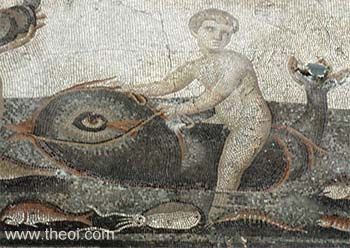
About 10 years ago, I had the opportunity to attend a science writers’ workshop outside Boston. In one of the sessions, the speaker spoke on the risks of anecdotal evidence using the following example:

Dolphins are highly intelligent mammals, but also seem to have an inherent sense of humanity (for lack of a better word) as evidenced by the number of stories where dolphins have saved the lives of stranded sailors and fishermen by pushing them toward shore.

Unfortunately, there is a problem with this conclusion based on this evidence, which I will address later in this post.


In learning the craft of my arts—whether business/marketing, science writing or screenwriting—I have relied on various authors to teach me the benefits of specific approaches. And one of the most popular ways to describe these benefits is through the use of success stories.

My most recent read was The Element: How Finding Your Passion Changes Everything by Ken Robinson, a quite enjoyable book that ties nicely with my current thinking on my Art. (Nothing like rationalizing your own opinions with support from books you know to agree with you—but that’s another blog post.)

As Malcolm Gladwell so deftly does for business endeavours, Robinson weaves his discussion of the cross-over point between talent and passion with numerous success stories, most of which take the form of:

  • Young person faces adversity when she goes against the norm
  • Struggling to find her way, she is marginalized by the local community and authorities
  • Through personal tenacity and/or the support and guidance of a mentor, she blossoms in her Art
  • She is now worth bajillions of dollars and/or helps gazillions of people/animals

Who is Robinson talking about? Paul McCartney, Arianna Huffington, Richard Branson, and several others less famous.

These stories are inspiring and uplifting. Everybody enjoys an “against all odds” story.

Tell the same anecdote about a farm boy on Tatooine and you have Star Wars. An addled boxer in Philadelphia, you have Rocky. An addled boxer in New York, you have Raging Bull. Another addled boxer in New York, you have Cinderella Man. Anyways…

One thing that bothers me about these stories, however, is that they establish a linear relationship between individuality and success (which I can buy) at a success rate of approximately 100% (where it all falls down).

What about the individuals who followed a parallel process and didn’t become Paul McCartney, Richard Branson or Arianna Huffington? Who bucked the trend, stood up for themselves and were run over by society?

Failure is an option, friends. It shouldn’t be glossed over. You can theoretically do everything right and still not achieve the success you were looking for.

Again, I agree with the theses these (wow, that’s an odd juxtaposition) books describe—that following our individual strengths/talents/passions and relying on inner fortitude rather than simply conforming to society’s will is our best chance at happiness as individuals—but I balk at anything that smacks of guarantees or promotes unrealistic expectations of success.

Where is the balance? Where are the cautionary tales?

I don’t think any of the authors set out to perpetrate a scam. They’re not trying to pull the wool over anyone’s eyes or sell you snake oil. They’re truly trying to inspire people with feel-good stories, which is commendable. Their audiences, however, are typically so full of hope, so looking for a beacon, that they are apt to see these anecdotes through rouge-hued specs and so mistake proof-of-possibility for proof-of-concept.

It’s a case of reader be aspirational but realistic. Your efforts may not work the first time through, but that doesn’t mean you shouldn’t keep trying.


And the problem with the dolphin anecdote:

We will almost never hear about the times the dolphins pushed the stranded sea-farers further out to sea rather than to shore, because those people probably drowned. Thus, the anecdotal evidence is skewed in favour of success stories.

(Image is the property of its owner and is used here without permission.)

I am always right (motivation)

Image

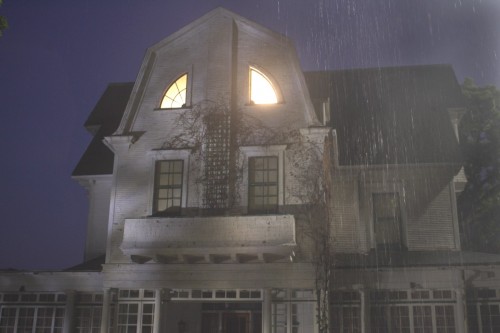
If I move into a beautiful New England home with my beautiful family and on our first night, the walls run red with blood and a disconnected voice cries “Get out!”, I go to a hotel and move the next day.

I do not search for an explanation (or at least not that night). I do not instinctively head for the dusty attic, the dank dark basement or that rather nasty looking shed under the menacing weeping willow in the darkest corner of the back yard.

So when I read about characters doing just that in a novel or screenplay or watch actors do it at the movies, I find myself thinking they deserve whatever comes next because they are idiots. What the hell motivated them to have that stupid response? Out of the gate, I disconnect from the character.

Now, despite the title of this blog post, I am not suggesting that only my instincts should be followed in screenplays, novels, etc.—these would be damned short stories if everyone did—but rather it is a call to writers to help me, as a reader or viewer, understand why the character behaved the way he or she did. Until I do, I cannot really bond with the character.

This isn’t easy, but it is necessary.

Whenever a character responds to something or takes an action, you have to ask yourself, why did he or she do that? And over the course of your story, are all of that character’s choices consistent with his or her personal journey from before your story’s opening to its conclusion?

And as if that isn’t difficult enough, you then have to ask yourself, have I written the story in such a way that the audience can see the logic of the choices, even if only in hindsight?

This last point is crucial, because as writers, we often know or understand things about our characters that never make it to the page. Thus, while everything may seem completely consistent and logical to us, it may still be confusing to our audience, who is not privy to the machinations within the head of the writer god.

At the same time, you never want to spell it out for the audience, because then story reading or watching becomes too passive an exercise and the audience doesn’t engage. You need to feed your audience just enough information that it can begin to make inferences about your characters’ behaviours and so become connected with your characters.

The good news is that this is unlikely to happen in your first draft or at best, will happen in drips and drabs.

As you develop your story past draft one, you will find moments of inconsistency or more likely, your trusted readers and advisers will find inconsistencies. Take those in and mull them over. Odds are, fixing those issues will not require a major refocus of your story…just a heavy-brush rewrite. And your story will improve.

So if the walls run red with blood, a disconnected voice cries “Get out!” and your protagonist doesn’t, I better understand why.

Image

(Images are the property of the owners and are used here without permission.)

First d(r)aft

Three days. I have three days to come up with another 10 pages from my latest screenplay for a reading and critique in my screenwriting class. And I have nothing.

Well, that’s not technically true. I have something. I have the architecture of my screenplay written out…I know where I want to go and what steps I need to take, broadly speaking, to get there.

But those are just a series of incomplete sentences that barely fill a page. I need 10 pages of a screenplay. I need narrative (not too much, as is my wont) and dialogue, and yet everything I write right now reads like crap. Absolute, utter drivel.

Welcome to the first draft.

I love to brainstorm and come up with new ideas. Ideas for new screenplays. Ideas for scenes within those screenplays.

Brainstorming is exciting. Everything is possible, so I am at my most creative. Nothing comes off the table, and every idea leads to several others.

I love to plan. I like to arrange those ideas into a semblance of order…it is quite literally the assembly of a puzzle. What if I moved this scene from the first part of Act II to just before the climax? How does that change the story?

But at some point, I have to stop brainstorming and planning. I have to start writing. I have to take those incomplete sentences and turn them into coherent scenes of people interacting with people—directly and indirectly—to accomplish goals and thwart those of others.

And even that description of the process sounds interesting. But then I begin typing and my words take on the feel and smell of two-week old cod.

Image

If the mom character was any stiffer, you could iron shirts on her. Why not just have the son respond “Oh yeah!” and euthanize all of your creative ambitions?

You want the boat captain to do what? Even the most psychotic of fishermen wouldn’t contemplate that idiotic move! What was your research: old Popeye cartoons?

You suck! You suck! You suck!

Okay. Feel better now? Had your little tantrum. Your little pity party. Ready to move forward? Take a deep breath.

This is your first draft, and it’s gonna suck. That’s what first drafts do. But it’s the first draft that sucks, not you.

The idea is still sound. Story improvements you can’t see right now will arise in the workshopping process. The dialogue can be massaged and the narrative edited…in your second draft. You can move some of the scenes around to enhance the conflict…in your third draft.

The only thing about what you are doing today that is anywhere near a final draft is the name of the screenwriting software. [NOTE TO FINAL DRAFT: Give some thought to changing the name of your software. Too much pressure for some of us to handle.]

You’ll be fine. Your story will be fine.

Just start typing…

Sunny Toronto – Part Four – Random

And then there are those photos that just refuse to be categorized in any way.

Enjoy.

Death by a Thousand Meetings

Committee (n): 1) a group of individuals specializing in irreversible creativity vivisection; 2) last known location of a good idea. See also: elephant’s graveyard.

Perhaps the greatest challenge facing anyone creating art is less the generation of new ideas and more the knowledge that at some point, you will have to release your art to an awaiting world; aka, relinquish control.

Now, we can (and have) discuss the illusion of control at any phase of the creative process, but there is no denying that if you want your art to be appreciated by others, you will have to pass your newborn into someone else’s hands…or worse, someseveral else’s hands.

For writing—my predominant area of interest—that moment can come quite early in the creative process, whereas for other art forms, such as sculpture or painting, it may appear quite a bit later (please correct me, if I under- or misstate things).

You must respect your art. You must protect your art. But you must also realize that if you intend to share your art, and perhaps even make money from it, you must be somewhat flexible with your art. When you bring it to the world, it ceases to be all about you.

A teacher once suggested that upon completing a play, Shakespeare merely became another critic of the work. His opinions on meaning and significance within the play were simply one more voice and held no more sway than those of any other critic. I don’t know that I agree—what self-respecting writer would?—but I see the point.

When I write a screenplay, I need dissenting and diverging voices to ensure that I am not leaving things out or glossing over important plot or character points that are clear in my head. At the same time, I must be sure that my vision is protected, lest I start writing someone else’s screenplay.

I understand, however, that if I want to turn this screenplay into a movie or television episode, I will have to relinquish some of the control to the hands of studio executives, producers, directors, actors, directors of photography, sound teams, and in all likelihood, the third cousin of the guy who runs the craft services table. I have to be comfortable with the idea that each of these people wants to (actually, must) contribute in some way to the final product to give them a sense of ownership. They too are artists.

I am struggling at this stage with several television projects I have been developing. I have a computer filled with TV series concepts and/or pilot scripts, and I am trying to decide with what production companies to share my babies. Like Smeagol, I stroke my precious and have a rampant distrust of everyone.

How do I know the company I choose shares my vision, will protect my baby, isn’t just a group of ravenous Orcs? I don’t. I can’t, ahead of time.

What helps is watching fellow writers who rabidly protect their newborns at a much earlier stage in development. Who in a reading group, spew buckets of foamy spittle while savagely defending the use of the word “vivisection”, or primal scream that their protagonist’s motivations are obvious to anyone with half a brain.

I am doing the same thing with my projects, only at a later stage and mostly in my head (and possibly with just half a brain). Just as they have to learn to let go or at least lighten up, so do I.

In writing this post, I am coming to realize that my art is in the writing of the screenplay, not in the making of movies or television. Thus, when the screenplay is ready to move on, I must let it go and hope it flourishes…even if I am not ready to let it go. The art must grow and breathe, regardless of my personal reluctance and fears.

Committees are still evil…you will never get me to say otherwise…but unless I am willing to do everything on my own, which would not do justice to my babies, committees are a necessary evil and less dangerous to my babies’ successes than on overbearing, overprotective parent.


For a humourous take on the evils of meetings, please also see the recent blog post by Ben’s Bitter Blog: Meeting Bitterness.

Use the Force NOT the force

Earlier this evening, I had dinner with a lovely friend of mine (yay). Eventually—like 3 minutes in—we got around to discussing our blogs, and my friend starting talking about feeling the pressure to post. Not that any of her followers had specifically requested she post, but rather that she felt like she was letting down the side by not posting.

I understand this feeling at quite a personal level, as I spent most of my life feeling like I had to act lest I let down the side. Eventually, though, I realized this was something I was doing to myself and not something that was being imposed on me by outside forces (or at least not most of the time). Those in my life who were going to be dissatisfied if I didn’t act were probably going to be dissatisfied if I did act.

As my friend discussed her blog, she felt there were nights when she would sit in front of her computer with nothing to say and yet the page was blank and she hadn’t posted in a few days. Should she force herself to post something or should she just remain mute until she had something to say?

From my perspective, we blog for ourselves not others—this was a conversation many moons ago with my friend—and so the decision to post should be based on whether we feel the desire or personal need to post, an internal urge to channel whatever thoughts or emotions or essence bubbles within us awaiting expression.

I think it’s that honesty with ourselves, serving our own deeper need to share, that attracts and sustains followers. People are smart. They can see when you’re pressing out blog content like so much blood from a stone…if not on your first post, then on subsequent ones.

I talk a lot about our Art and how my personal art channels through me like something from the ether, whether I’m talking about writing or photography. I am a lightning rod through which the spirits anchor themselves—make that mean whatever you would like it to mean. That’s why I think the metaphor of the Force is so strong (okay, now I’m starting to channel George Lucas).

You cannot force your Art. It will happen when it is ready to happen…when you are ready for it to happen.

You must practice it, of course, while waiting for inspiration to take you to new levels, much as a hockey player practices skating and shooting drills in anticipation of the game when he or she won’t have time to think about those mechanical actions.

Perhaps you can practice on your blog, but I have yet to read a blog that suggests people are practicing. To this point in my reading, our blogs are our Art…or at least, part of our Art.

I know this is true for me, and I am confident this is the case for my friend. Thus, any attempt on her part to force a post will be a lie—to followers, more importantly to her Art, and most importantly to herself. She deserves better than that.

Consciously unconscious

When a writer is on her game, when she has found a creative groove, she writes at two levels.

At the conscious level, she weaves the stories of her various characters and environments into a literary carpet of amazing delicacy. She understands the work won’t be flawless when she’s done, but she knows and is comfortable in the belief that she can surgically pull the extraneous threads later.

This is a beautiful thing. But an even more dazzling spectacle is happening at the unconscious level.

This is the level at which the writer’s subconscious creates delicate near-invisible tendrils of connections between characters and themselves, their surroundings and other characters. It is at this level that amazing nuance and metaphor is added to a story. Without the harsh distractions of planning and plotting (both very important, mind you), the subconscious is free to perform magic that we may not recognize or appreciate until much later in the creative process.

One way you witness this is when you realize that conscious concerns you had before sitting down to write have been miraculously addressed, as though story-writing elves snuck onto our computers overnight.

Interestingly, this is one reason why it’s important to have other people read your stuff. They will see things you cannot. In some cases, it is because of what they bring to the table—their personal biases and experiences. But more importantly, it is because they aren’t encumbered by your blinders.

Other readers see your work more clearly because they are untainted with what comes before and after, whether on the page or in your head.

I witnessed and shared this personally in two reading group sessions where my fellow writers created incredible metaphors that deeply informed their lead characters. Yet, when pressed directly as to whether they were conscious of those decisions, both were the most shocked people in the room.

Both demurred that the incidences were quite accidental, but whereas I might agree that they were unintentional, I don’t believe they were in any way accidental.

We make choices for a reason (or several) even when we don’t know what those reasons are. The truth is our truth no matter how ignorant we may remain to what that truth is. We cannot help but splay that truth across our pages.

To some extent, I think creative harmony lay in not caring what those reasons are. For if we try to dissect them, I fear we run the risk of killing them. It is enough, I think, to let our subconscious guide us while we work consciously.

Let the magic within you happen. Your work will be the better for it.

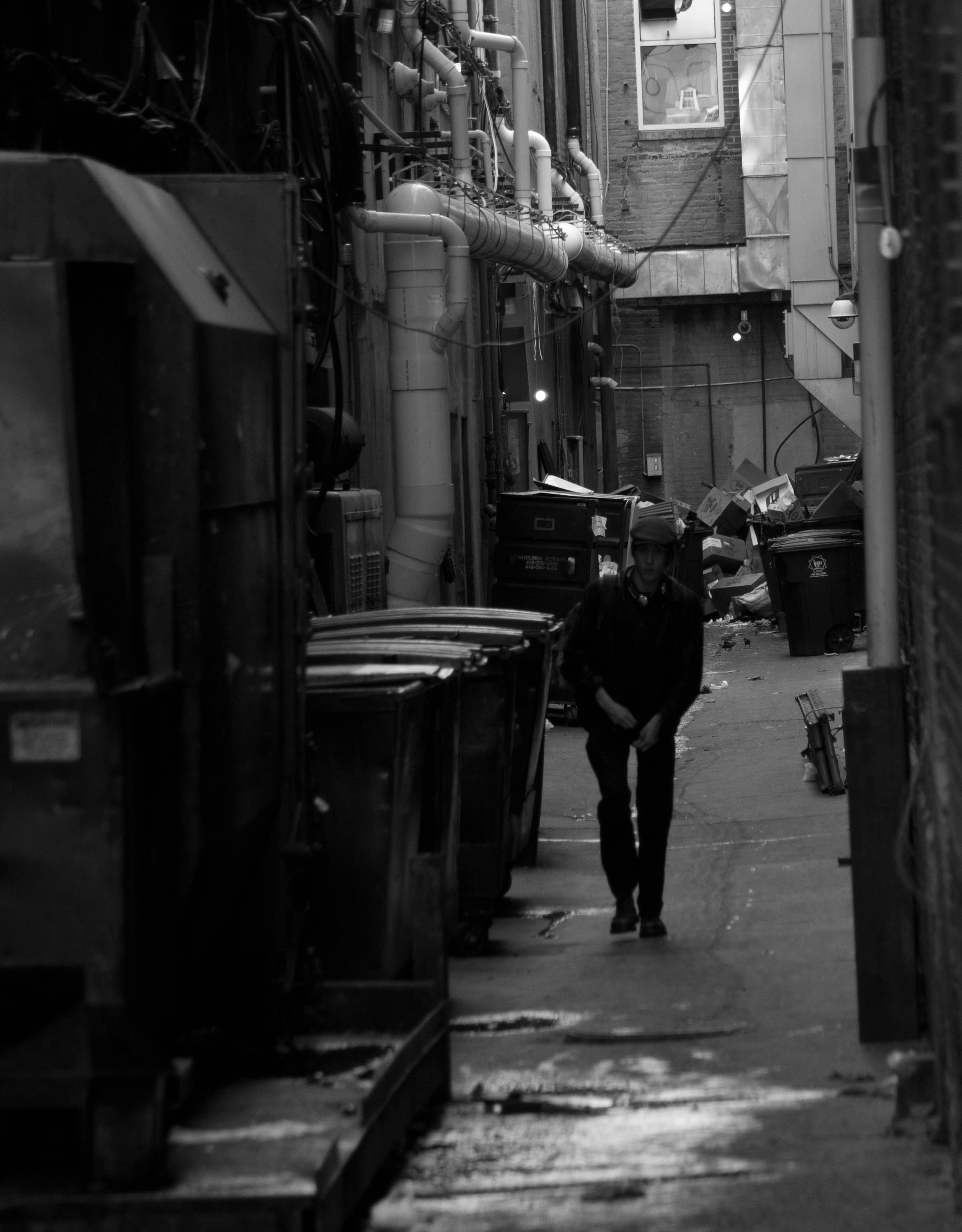
I never intended to take a photo of someone urinating in a Washington, DC alley way, but am tickled I did...especially as he realizes he's been caught

I never intended to take a photo of someone urinating in a Washington, DC alley way, but am tickled I did… especially as he realizes he’s been caught

Sunshine Award

Well, aren’t I the lucky fellow?

Image

I have been nominated for the Sunshine Award by fellow blogger Kira Lyn Blue, a self-describe overanalyzer, ninja squirrel wrangler and urban fantasy author. On that last one, I’m not sure if that means city-dweller who writes stories of the fantastic or if she writes stories about urban fantasy’s like clean air, functional infrastructure, no traffic and mayors who govern rather than politic.

Based on her request for more pics and poetry, it would seem that Kira Lyn is a fan of my less pedantic offerings, which is completely acceptable to me. In fact, because my photography and poetry is more of an artistic endeavour, I am highly flattered that she has asked for more.

And, if I understand correctly, the award is recognition for those who positively and creatively inspire other bloggers, so I am doubly humbled by the honour she has bestowed on me.

So, apparently the rules of the game include: posting the logo (lovely it is); linking to my nominator; answering 10 questions (see below); nominating 10 others (including links and comments) and informing them they have been nominated (see further below).

I give you these fifteen—oy—TEN, ten commandments, I mean questions:

Favourite colour: Orange…Hallowe’en is the bomb!

Favourite animal: Ferret…because I think I identify with an animal that can be extremely smart and stupid at the same time.

Favourite number: 13…anything that irrationally unnerves people is incredibly sexy to me.

Favourite non-alcoholic drink: Coffee…although I’ve seen plenty of alcoholics drink it, so I don’t know if it counts.

Favourite alcoholic drink: Beer…preferably porters or stouts.

Facebook or Twitter: Twitter…would have said FB, but liking the discipline involved in 140 characters, only a third of whom are funny

My passions: Humour, love, being…not to be all flower-child, but it took a long time for this answer not to be Nutella (which still runs a close 4th)

Giving or receiving gifts: Always giving…but not above receiving.

Favourite city: Montreal…sorry to my home of Toronto, but we stick-up-the-ass Ontarians need to learn how to relax and stop destroying our frickin’ heritage.

Favourite TV shows: Your Show of Shows, The Black Adder (series), House (the early seasons)

And now for something completely boorish…bloggish!:

Storiesbyfrancis – this woman has a beautiful soul and constantly makes me smile

Drawings, Paintings and Other Art – amazingly delicate artwork that lets the viewer bring their own thoughts to the table

Leanne Cole Photography – stunning architectural photos

Ned’s Blog – Unnervingly amusing and would have been a competitor in a previous life (the bastard!)

Julian Froment’s Blog – his zeal for reading and writing is infectious

Licht Years – incredibly delicate and uplifting photography

Abandoned Kansai – photographing the echoed lives of dead places

Pondering It All – poetry of great simplicity and yet incredible depth

Victoriously – a beautiful woman bravely sharing her personal demons with the world

Honeydobliss – 3 young women pre-emptively taking on midlife crises to do it right the first time(s)