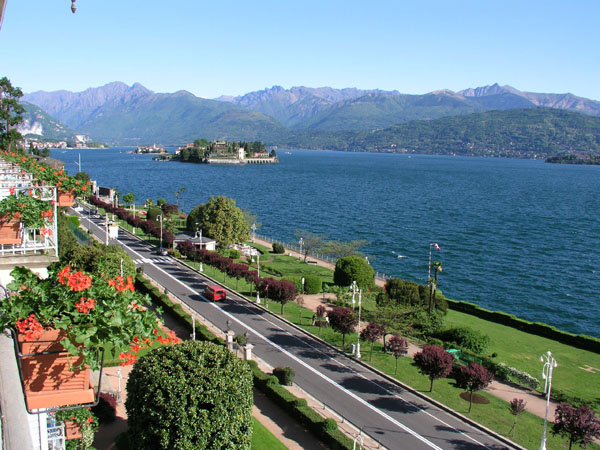
How can you NOT want to describe this place?
Now that I have worked on several screenplays, which I have shared with a number of friends and fellow writers, I have come to a conclusion: I am a novelist.
Fret not, fellow travellers. I say this not to suggest I will cease to write screenplays but more in recognition of an inherent weakness in my screenplays, or perhaps more accurately, in myself. I am addicted to narrative.
The problem is I instinctively write what I see, even when I only see it with my mind’s eye. If I were a painter, I would own brushes that only had one or two hairs. The concept of a paint roller would be anathema.
Nothing in a scene is unimportant to me. I see people, things, phenomena in terms of metaphor, although I do my best to avoid poetry.
I cannot simply write: The boat bobbed wildly on the waves. (Even writing that line now was taxing to me.)
Instead, I’m inclined to write: The battle-weary skiff, a patchwork of wood and fibreglass, tossed helplessly on the ocean swells, each wave of its own purpose, refusing to work together toward anything resembling a current.
The former is what is happening. The latter is how I envision it. To me, everything is a character in a story—an antagonist, an ally, a victim—and as such has its own story arc, however small.
I also want to make sure that my reader “sees” the movie I would like to make—the challenge of a pictorial and aural medium presented literally. I want the reader to “feel” the scene before the first word of dialogue is spoken, both to establish the mood of the scene and give a sense of how the line is said.
Unfortunately, in my zeal to be informative, I instead become onerous or tedious. My screenplay becomes a challenge to read as long tracts of narrative slow the story to a crawl. Instead of making it easier to read my manuscript, I’ve made it more challenging and less desirable.
I was once accused of writing a travelogue of Northern Italy in a screenplay. Oh, what I had written was beautiful and made some people dream of travelling to the region—Lago Maggiore—but 90% of what I had written was completely unnecessary to the telling of the story.
So, what to do?
As of this moment, my writing process is my writing process, and I believe that any attempt to significantly change it would simply increase my challenges in writing at all. No, better to have written a first draft badly than to have never written.
Instead, I have chosen to rely on this little miracle I have discovered. They call it Draft Two. This will be my chance to go through my screenplay with a harsh eraser, and remove all of the lines or description that is not absolutely necessary to tell my story or to explain a character’s behaviour.
Sure, this may necessitate some rewriting of dialogue so that I don’t end up with mile-long verbal tracts. But in all likelihood, these speeches were too long and in desperate need of shortening.
One step at a time, though, for today, I continue to write Draft One of my screen-novel.
(Image is property of owner and is used here without permission, but plenty of description if you read my screenplay.)

 createdbyrcw