Pearls of Writing Wisdom – a review

pearls-cover

There is something inside you constantly threatening to explode; an urgent feeling that simply refuses to be ignored. It keeps you from focusing on conversations. It keeps you from sleeping. It tears at the very fabric of your existence.

Now, unless you have recently ordered the taco salad at Chipotle or travelled interstellar space with Sigourney Weaver, these symptoms suggest you might be a writer.

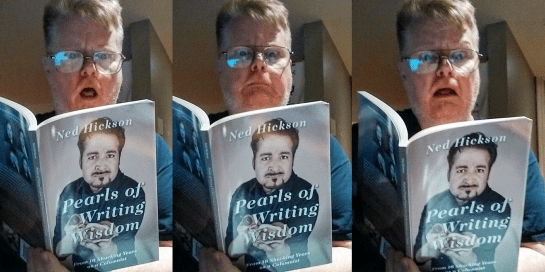
Ned Hickson knows these feelings well, and recounts some of his own experiences in his latest book Pearls of Writing Wisdom: From 16 Shucking Years as a Columnist.

In many ways, the book is a writer’s version of that dreaded conversation between a child and loving parent/teacher about sex…and it’s just as awkward.

In his own nervously jovial way, Ned tries to encourage writers to explore their budding bodies of work and yet caution them about the challenges that lie ahead without scaring (or scarring) them into creative celibacy.

Without photos or illustrations, Ned routinely contextualizes the lessons he is giving with self-deprecating anecdotes—like that time he walked around a mall for four hours before someone mentioned his participle was dangling. The point being (I think) to highlight that even with these personal failings, he still managed to fool people into reading (and paying for) his stuff.

Given the subtitle, I originally expected this book to be a chronicle of things he’d learned in his day job with Oregon’s Siuslaw News, a newspaper for which he is Editor and writes a syndicated humor column.
Nedwork

Ned offers insights on sex…I mean, writing

Instead, I found a book that covered all aspects of writing from understanding the inherent urges to the mechanics of satisfying wordplay to dealing with the social and legal ramifications of your actions…hunh, this really is about sex.

And speaking of sex, Ned’s book isn’t very long (97 pages) but what he accomplishes in those short, floppy pages is quite effective in nurturing new talent, as well as reminding those of us sliding into senescence why we write.

Whether you are a writer or know someone wanting to act on those urges, I highly recommend Pearls of Writing Wisdom as a way to bolster courage and encourage good practices, and maybe laugh a little.


P.S. If Sigourney Weaver happens to read this review, I would happily risk alien infestation to meet you at the Chipotle of your choosing.

sig

See also:

Humor at the Speed of Life (Ned’s blog)

Humor at the Speed of Life (Ned’s other book)

Port Hole Books (Ned’s publisher)

Blood and name calling

He ain’t half heavy, he’s my half-brother – The Adopted Hollies

If you haven’t got a penny, then half a penny’ll do. If you haven’t got a ha’ penny, then God bless you. – some British thing (not the Hollies)

I read an article this weekend that described the murder of a man by his half-brother. Normally, I don’t read these kinds of stories, but I was drawn to this one because of the phrase half-brother, which made me wonder why this phrase was still in common use.

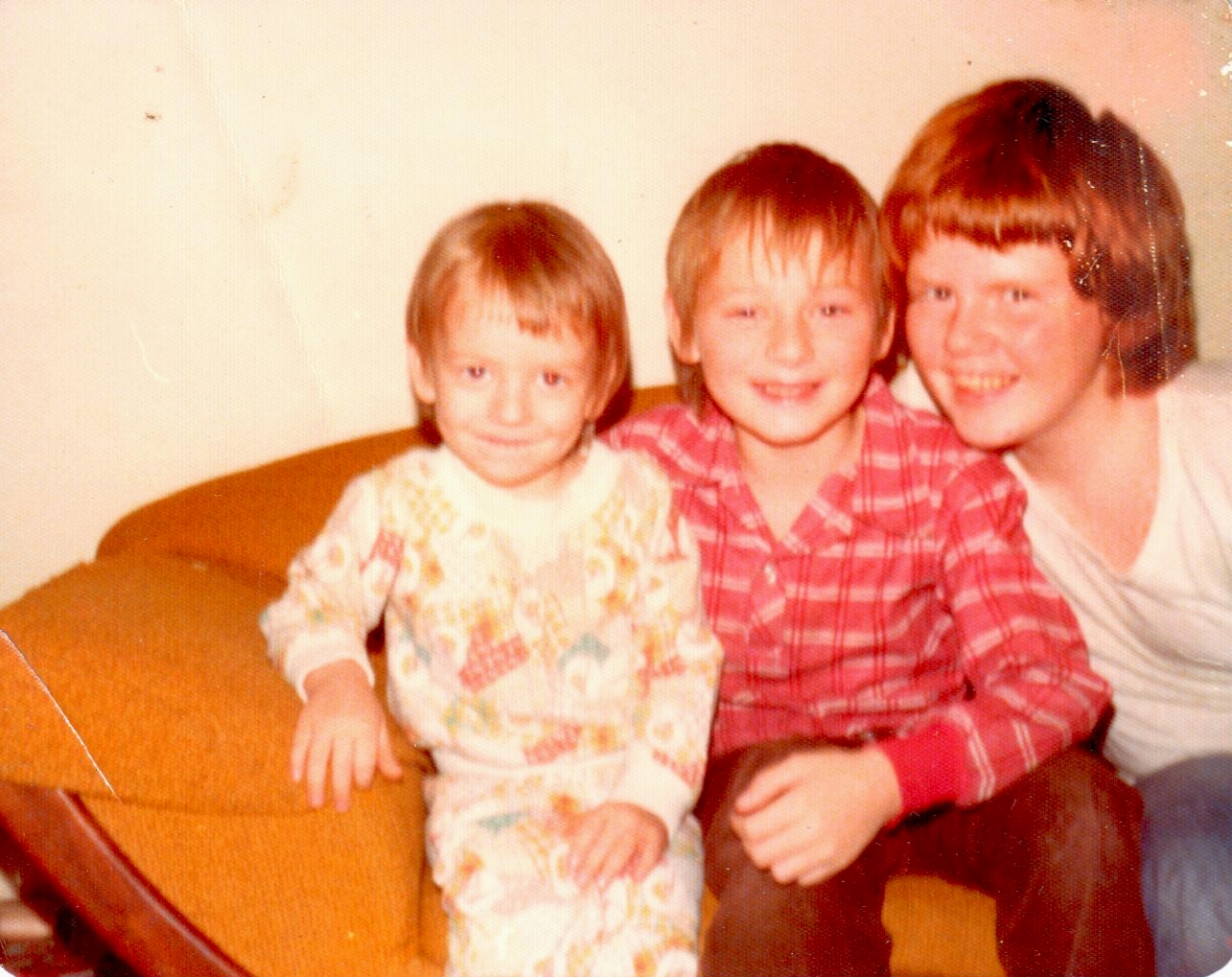
What the hell is a half brother? (Shawn, Scott, me)

What the hell is a half brother? (Shawn, Scott, me)

I appreciate that historically there may have been a reason to keep track of who one’s siblings were from a legacy perspective. Family homes and farms (and for the wealthy, estates) possibly hung in the balance when Dad died…although I question how often this was a concern. And no self-respecting Shakespearean comedy or drama would be complete without an evil half-brother. But why now?

To quote the Bard:

What’s in a name? that which we call a rose

By any other name would smell as sweet;

Likewise, to quote Merriam-Webster:

Blood (n): the fluid that circulates in the heart, arteries, capillaries, and veins of a vertebrate animal carrying nourishment and oxygen to and bringing away waste products from all parts of the body.

So again, I ask why the fixation on a surname and the concept of blood ties?

The last time blood ties mattered

The last time blood ties mattered

I never knew my father—not something I take personally; just a fact—and so I have no particular attachment to my last name aside from convenience and familiarity. I feel no compunction to continue the family name. Other people have the surname of Willis…let them continue it if they want.

And my brothers and I only share one common parent—our mom—and so have different surnames. Does this make them any less my brothers, however, than a pair of siblings who shared the genetic legacy of the same pair of parents (pairents)? Not for me (you’d have to ask them their perspectives on this).

For the famous, an argument can be made that sharing DNA somehow opens doors from one generation to the next: Ken Griffey Jr., Drew Barrymore, Robert Downey Jr., Robert Kennedy Jr., Paris Hilton.

Not sure how that last one works

Not sure how that last one works

But in most of those cases, sustained success comes from inherent talent and drive, not simply DNA. (I still don’t understand why Paris Hilton is famous.) Likewise, for every case of possible nepotistic success, there are hundreds or thousands of cases of success despite lineage (no disrespect to parents anywhere).

Perhaps I am the anomaly on this, but I simply don’t understand the importance of the nomenclature to who I am as an individual or how I respond to a family member versus a close non-genetically linked person (aka friend).

Agah, Nicholas and Marsha are my siblings despite the lack of genetic links

Agah, Nicholas and Marsha are my siblings despite the lack of genetic links

Scott and Shawn are my brothers more for our shared experiences than because of any genetic connection, much as Agah and Nicholas are my brothers and Marsha my sister for our shared affection and experiences.

Call me Ishmael, for all I care…if we are good friends, you have likely called me worse.

In the meantime, I’ll use my bloodlines to circulate oxygen to tissues and white cells to fight infection.

Brothers...no half-measures

Brothers…no half-measures

My preferred quote:

We few, we happy few, we band of brothers;
For he to-day that sheds his blood with me
Shall be my brother; be he ne’er so vile,
This day shall gentle his condition:

Taking aim

Sunset on Mauna Kea

I aimed for the mountain top, but found only sky.

I aimed for the clouds, but found only air.

I aimed for the moon, but found only coldness.

I aimed for the stars, but found only emptiness.

Head bowed in sadness, I finally looked around,

To find a universe of wonder lying at my feet.

Stargazing on Mauna Kea

Journey, not destination

In the last couple of weeks, I have spoken with many friends about the concept of happiness as it pertains to life’s pursuits, which has forced me to give thought to my past experiences and the reasons why happiness eluded me for so long in my life. The following is the sum of my thoughts.

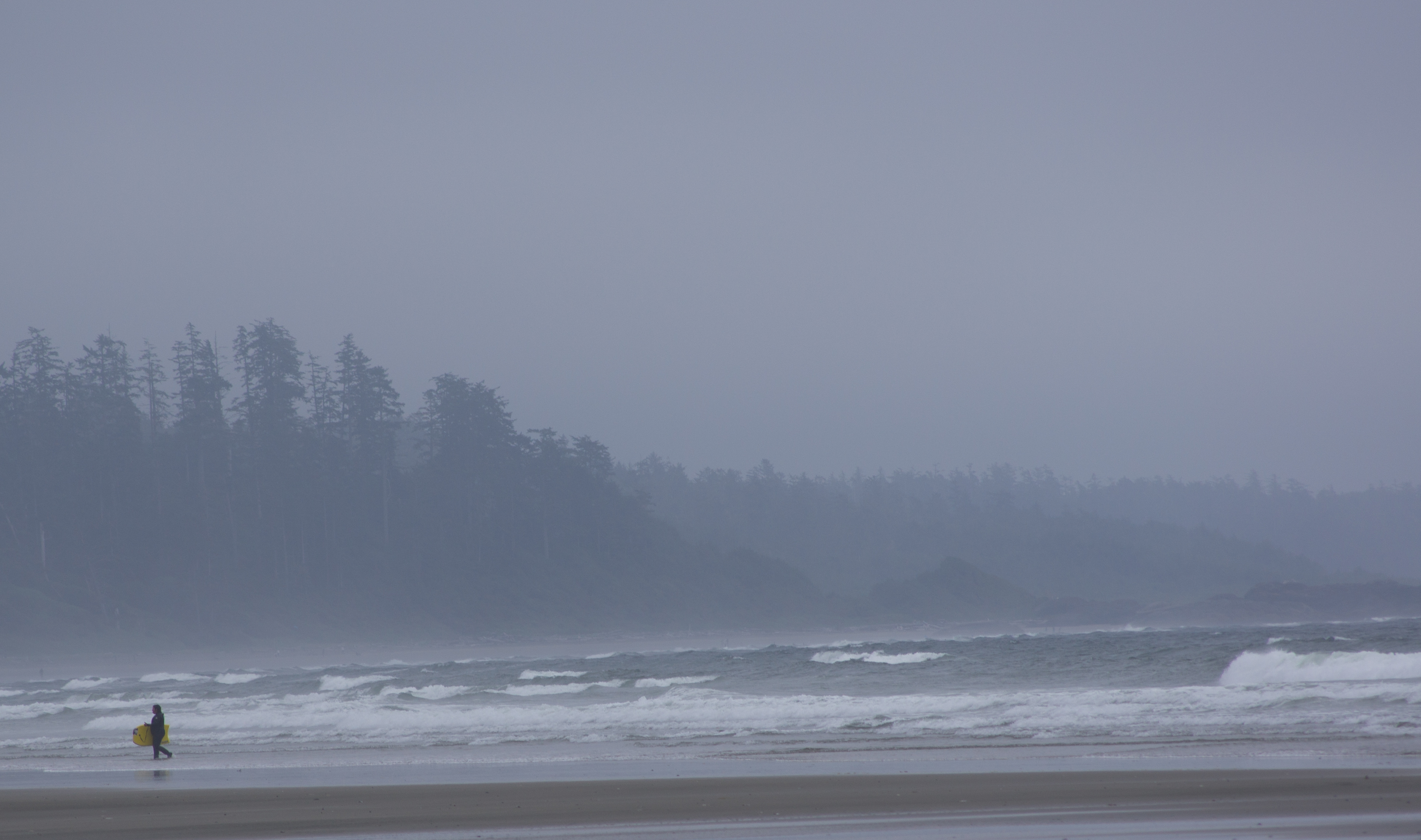
A surfer finds joy on a blustery day in Tofino, BC

A surfer finds joy on a blustery day in Tofino, BC

Life is not about destinations. Or perhaps I should argue that a happy or satisfying life cannot be about destinations, because destinations are temporary at best and completely illusory in truth.

We have been taught that it is important to set goals, to aim for a destination, and to a limited extent, I agree. Where I struggle, however, is in the assumption, the programming that suggests the goal will bring happiness, that at your destination, you can rest.

For most of us, this sets up a couple of problems.

If we do not succeed in achieving our goal or reaching our destination, then not only have we failed, but more insidiously, we see ourselves as failures.

But even in those situations where we achieve our goal, arrive at our destination, we are faced with the daunting and disheartening revelation of “Now what?”

In Costa Rica, when you finish exploring the jungle, there is still the mountain to climb

In Costa Rica, when you finish exploring the jungle, there is still the mountain to climb

For despite the momentary glow of success, we cannot rest. We must seek the next goal, identify the next destination. And the cycle repeats, ensuring that for all but the rarest of us, we will fail, we are failures.

Part of the challenge is that for many people, the idea of a goal or destination presupposes that we are not sufficient in the now, that our lives are incomplete and would somehow be better over there.

We don’t make enough money. We are alone. We have not achieved the heights for which we are destined. We—as we are today—are not good enough.

It is good to push boundaries. It is good to strive.

And while those two statements may sound contradictory to the questions I raise above, to what I have decried, I don’t think they are.

Pushing. Striving. These are actions, not endpoints. And that makes all the difference in the world.

A goal or a destination, a predetermined endpoint, is fine, but only in so far as it gets you moving in a direction. After that, it is meaningless.

Life is in the movement. It is in the process. It is in the journey, regardless of where that journey takes you.

Destinations and goals give us opportunities to shift the direction of that journey, but they are not the point of or the reason for the journey.

We are like photons in the universe of our lives. Without movement, a photon has no mass. When we cease to move, we cease to exist.

It is our movement that gives us life, and our interactions during that journey that gives that life meaning.

Feel free to set a direction, but be prepared for and welcome the changes that come along the way, for it is in that journey that we will truly live and ultimately find happiness.

It is enough to experience the world; you do not need to conquer it (Montezuma, Costa Rica)

It is enough to experience the world; you do not need to conquer it (Montezuma, Costa Rica)

An example from my life:

Early in my writing career, I worked for a magazine in Washington, DC. Every year, my boss and I would set goals for the next 12 months; e.g., 3 features, 10 department articles, 20 short pieces. And being a little Type A, I would accomplish my benchmark within 3 months. At the end of the 12 months, I might have tripled or quadrupled the expected output.

I would demand a promotion, and I would be told no…there were apparently other factors not included in my annual goals before I could be promoted. This pissed me off.

But surprisingly, even when I received the promotion, it was not enough. I needed the next one. I set the goals and again, felt held back despite achieving the goals.

And very quickly, the job I loved, the job I practically ran toward every morning in anticipation, became a leaden weight. I ceased to write for the love of writing. I was miserable.

In hindsight, I can see now how much I learned on that job—not the least of which was “office politics”—but at the time, all I could see was failure. It was the journey that helped shaped the man I am today, not the endpoints. I might have been happier had I realized that then.


The following video is a rather clever summation of my thoughts. Thanks to my friend Agah for pointing me to it!

Failure is not an option…it’s a skill

Fear-of-failure

I used to be terrified of failure. If I couldn’t know that I would succeed at something, I would put it off and potentially never do it.

And this was true in all aspects of life.

Driving. Dancing. Playing musical instruments. Talking to girls and later women. Athletics.

I became the best I could at one or two things—the things for which I seemed to have a natural aptitude—to avoid having to worry about being asked to do any of a thousand other things.

To me, failure was not an option. (I could spend months discussing why, but I won’t…at least, not here).

It has taken me a long time, but I have finally realized that I was only half right.

failure_success

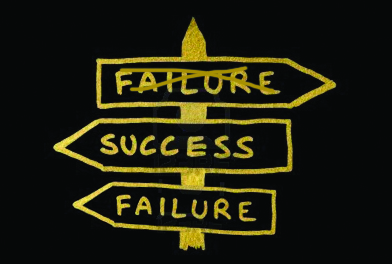
Failure is not an option…it is an imperative.

It is a skill that I must practice time and time again in all aspects of life.

At its simplest, if I succeeded at everything to which I turned my hand, I would stop doing it.

I succeeded. I achieved my goal. What more could I hope to accomplish? Everything after that is pure redundancy and repetition.

When harnessed, however, failure and imperfection can be that thing that drives me forward, when purely creative urges do not.

ziglar

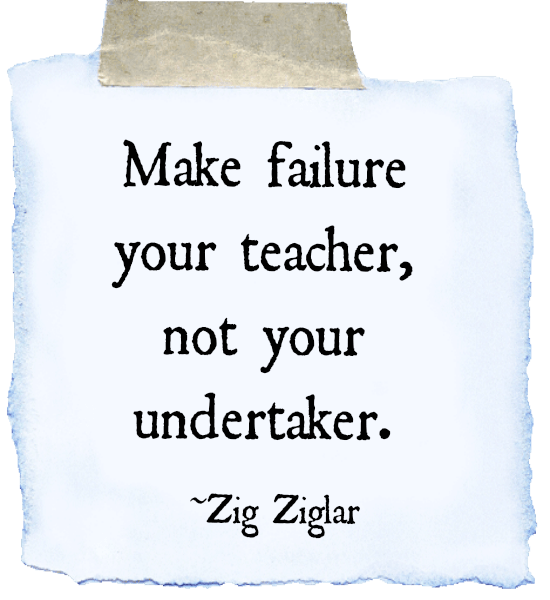
Failure is my teacher. Failure is my drill sergeant and mentor. And yes, failure can be my devil.

Perfection is an illusion and is therefore unattainable. This means that even at our zenith, we have failed. So what?

Even if we do not strive for perfection, but for an attainable, measurable goal, we are likely to fail if for no other reason than once we have achieved that goal, we instinctively move the goal posts. Our best is always a thing of the past and acts as a goad for us to do better.

Herein also lays the further challenge of failure in Art. There typically is no real metric other than external opinion. Rare is the individual who targets using 7.83% magenta in his next painting.

coyote

Wile E. Coyote is about the only artist I know who can actively test the realism of his Art. He has achieved his goal if the Roadrunner runs into the cliff wall painted to look like a tunnel. Ironically, his downfall was the hyperrealism he achieved such that the painting actually became a tunnel. In succeeding, he found failure.

Where I used to fear failure, I now embrace it. I use it to stretch myself and my skills. I use it as a lesson plan.

Failure-is-not-falling-down-but-refusing-to-get-up

But for this to work, I must envision failure as something internal and self-defined rather than something external and based on the opinions of others. There lies madness.

Yes, I rely on feedback garnered from others to determine my degree of success, but I do not allow others to define that success.

It is my Art. I define it and in doing so, define myself. And to do that, I must fail and fail again.

failure-and-success

(Images are property of owners and are used here without permission, which may be an epic failure on my part.)