When Gods evolve

In the beginning, God created the heaven and the earth.

And the earth was without form, and void; and darkness was upon the face of the deep. And the Spirit of God moved upon the face of the waters.

And God said, Let there be light: and there was light.

Genesis; 1; i-iii

Ancient of Days

Ancient of Days (William Blake)

I know the feeling.

I am the Creator and the Destroyer. I am Fate pulling the strings of Destiny. I am Existence itself. The Void remains until I choose to illuminate it.

A tad full of myself? Perhaps.

But it comes with the territory, because I am a writer.

Despite all present evidence to the contrary, I am an introvert; and as a child, I tended to avoid contact with others out of fear of injury and a touch of self-loathing.

My escape from this fear was my imagination and the worlds I created.

Where the world around me was filled with questions, uncertainty, chaos, the worlds of my mind were clean, certain, orderly. Good was good. Bad was bad…and even bad was good given time and understanding.

And over all of it, I was God.

The world didn’t exist until I put pen to paper, and just as quickly, it blinked out of existence when I lifted that pen.

I am no longer that child—well, perhaps a less fearful child.

The world in which I live is coloured with all shades. It has texture. It has flavour. And while it still has chaos and uncertainty, I am better able to embrace that chaos, to find freedom in uncertainty.

Likewise, the worlds I create have become more nuanced. Nothing is either good or bad, but instead is delicate and needful.

And over all of it, I am God. But even Gods evolve.
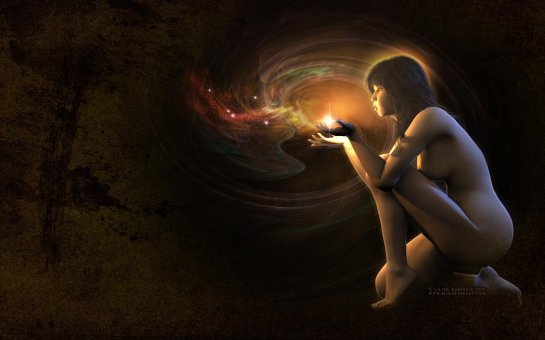
God Creating The Universe

God Creating the Universe (Layne Karkruff)

Where once I enslaved my worlds to my control, I am now more apt to offer degrees of freedom, to allow my worlds to ride the wave of existence.

I completely reserve the right to rain fire and brimstone, but am more likely to use a gentle hand with my charges. What were once caricatures are now sentient beings with a full range of emotions and thoughts, prone to mistake and capable of wonder.

And perhaps, in allowing my worlds to move beyond me, I achieve true Godhead. For as much as I no longer define their existence, they no longer define mine, and I am free to be me.

Ehyeh asher ehyeh.

I am that I am.


Fears and tears

solitude-and-leadership

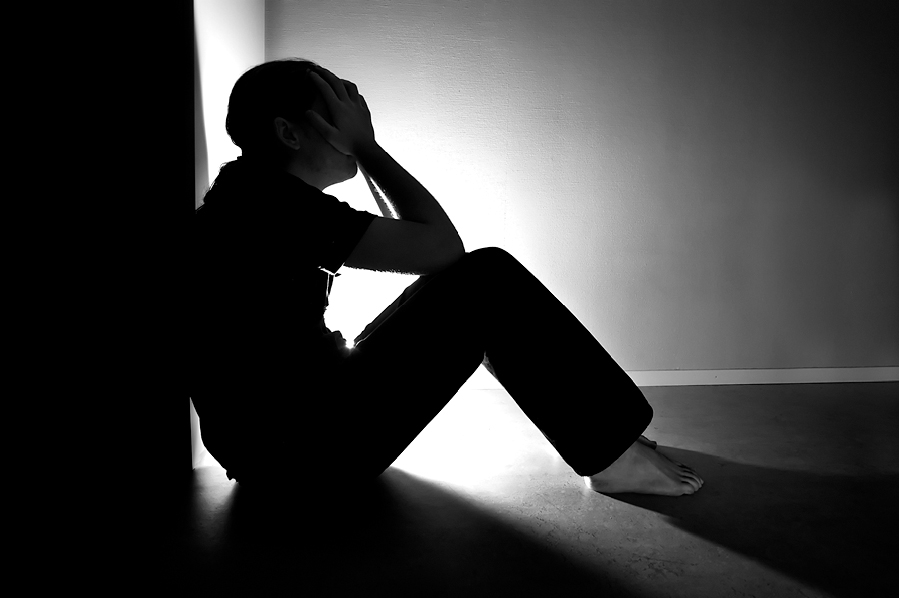
Tears come unbidden, unwelcome,

Blurring my vision,

But refusing to fall.

It’s the wind.

It’s a cold.

It’s allergies.

Anything but sadness,

Anger, frustration.

Throat clenches;

Chest tightens;

But the scream

Will not come;

Restricted in my lungs,

Blocked by still sealed lips.

So much pain;

So much sorrow.

The pulse quickens.

The mind races.

But legs remain static.

I run away

By running inward;

Afraid to cry

For fear of never stopping.

My silence deafens me;

Acrid saline blinds me;

Anguish deadens my soul;

And yet, I feel it all.

All victims, all loved

SCMP 14NOV15 NS CANDLE1  EDW_5399A.JPG

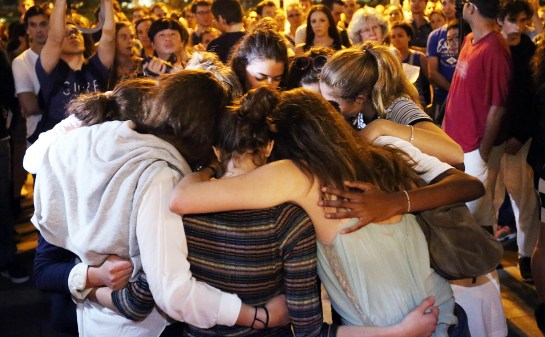
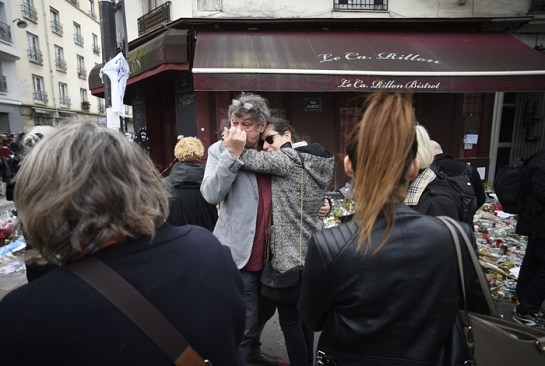
Participants observe a minute of silence during a vigil honoring the victims of the Paris attacks at Sun Yat Sen Memorial Park in Sai Ying Pun. 14NOV15

In the days since the attacks on Paris, I have watched my social media streams explode in two directions.

The one includes demonstrations of support for the victims. Messages of love and commiseration. Prayers for a peaceful future. Shared tears of loss, both physical and spiritual.

But while these messages may represent the majority in my social circle, there are others that I find disturbing. Others that by their tone and content seem all the larger.

I have been surprised and dismayed by the venoms of hate and anger that blots my timelines. Friends and family spewing abhorrent messages against Islam, against innocent refugees, against anyone who does not look or sound like them.

And although I am not the target of these comments—my timeline merely one poster board on which these messages are painted—they cause me pain. They trigger anger and even fear within me.  I want to lash out, to attack.

But I cannot.

These are not discussions of logic that can be ameliorated by a well-considered series of facts. And lashing out would accomplish nothing. Spewing venom on top of venom only makes the world more toxic.

Instead, I must respond with love.

At the same that I extend my arms to embrace my like-minded friends suffering in the aftermath of the insanity, so too must I embrace those who I feel are piling on to the tragedy, exacerbating the fear, the hate, the pain.

They too are uneasy and uncertain about the future. They too are confused and frightened about the prospect of these events unfolding again and closer to home. They too need comforting and a renewed sense of security.

While the words these people write and speak may be abhorrent to me, they themselves are not. And difficult as it may be at times, in the face of my own pain and fear, I must always remember that.

And so, I open my arms to everyone, and will myself take solace in the return embrace.

I truly believe that this is the only way.

Peace and love to you all.

4967

The most dangerous F word

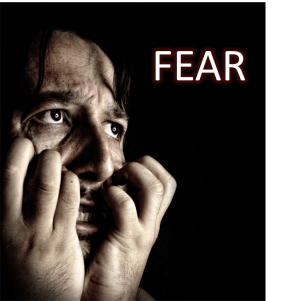
Fear

Hate is fear rationalized. Hate is fear acted upon.

Hate is the belief that fear is finite; that if I bestow some of my fear on you, I am unburdened.

But that is a lie.

Fear isn’t of this universe. It doesn’t live by the E=mc2 paradigm. Fear has limitless potential for growth.

Any more than I can relieve myself of a pestilence by giving it to you, my fear remains and may even grow when I pass it along.

Surely a little fear is okay, keeps us from stepping off cliffs or traveling dark paths.

Fallacy.

Fear doesn’t keep us safe. Knowledge does.

Vista

Knowledge keeps you from stepping off the cliff. Fear keeps you from seeing the spectacular view.

Knowledge removes darkness from the alley. Fear keeps you from seizing new opportunities, from discovering new paths.

Fear doesn’t come into existence of its own accord but like a virus, is passed from person to person.

The newborn infant has no fear until startled by a parental “No”, the opening dose of fear.

infection

We do not naturally fear others until given a reason. And rarely is that reason the other we have chosen to fear, because fear rarely approaches face on.

Fear is the demon that eats us from inside, a parasite that controls our minds for its own perpetuation.

But what is worse, what makes it so insidious, is that fear is easy, demanding little of us other than that we close our senses to the truth.

And it is the facility with which so many of us are willing to do this that makes fear the most dangerous F word.

Burden

Fight to stay positive

despair

I try to stay positive;

I try to stay upbeat,

As I watch cities aflame

And walls crumble earthward,

Whether through acts of Man

Or through acts of Nature;

Man destroying man,

Betraying them,

Slaying them,

Playing them,

For personal advance

Or simply fear of change.

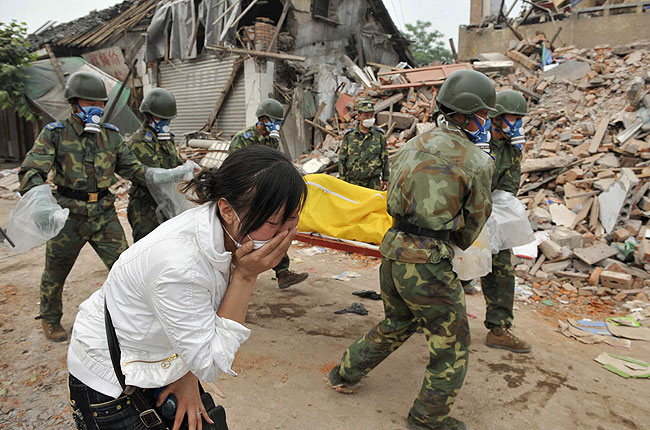
 earthquake

I try to stay positive;

I try to stay upbeat,

As I hear voices raised,

Weapons of metal, wood, stone,

Wielded in white-knuckled fury;

The bastions of knowledge,

A cultural cudgel used to

Oppress them,

Compress them,

Divest them

Of their worldly goods,

Lives covetously shattered.

 APTOPIX Suspect Dies Baltimore

I try to stay positive;

I try to stay upbeat

As I watch Nature be raped,

Shorelines and shorebirds

Tarred for their feathers;

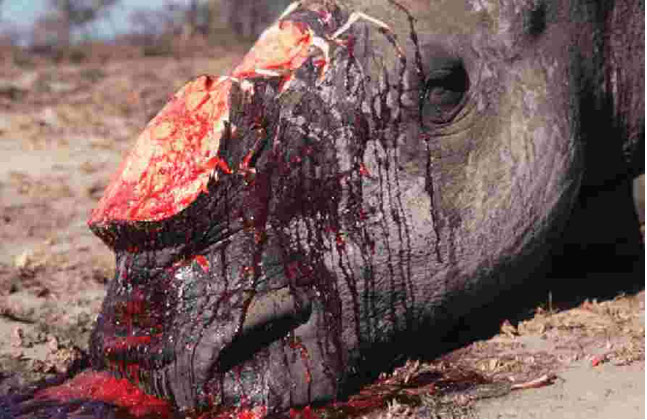
Ivory affectations shorn

From faces yet breathing;

Air given cancerous substance,

Stilling them,

Killing them,

Willing them

To the precipice of extinction,

Silent hillsides the new norm.

 rhino with no horne

I try to stay positive;

I try to stay upbeat,

Hope my only option

In a world angry and mad.

We must heed the cries,

Must all feel the pain,

Must all see the anguish,

Lest the sweet sleep of death

Numb our senses forever.

And we must stay positive,

We must all stay upbeat.

anguish_zps775f09d74

You are your own inspiration

An actor friend recently expressed “I don’t wanna” about leaving town for an upcoming gig. I assumed it was less about fearing the gig and more about leaving home, but I wanted to let her know it wasn’t about wanna or even hafta.

Enjoy.

dream

Anger after Robin William’s passing

robin_williams_01

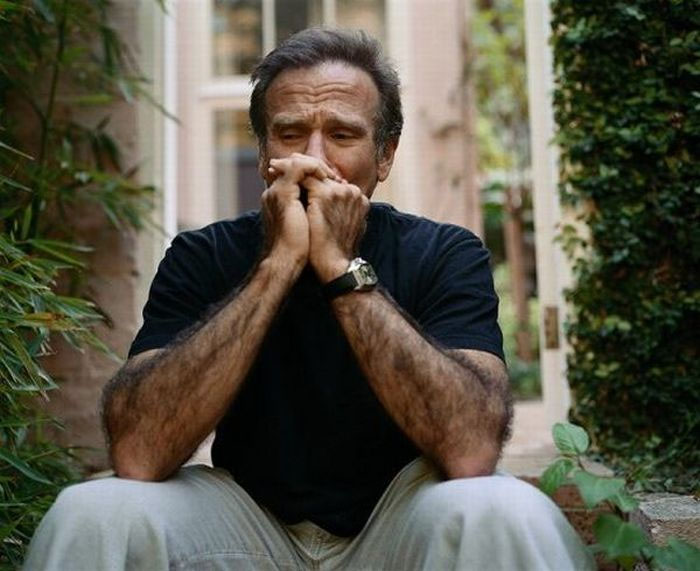
A couple of days have passed since Robin William’s death and although I still cannot accept the truth of it, I have somewhat resigned myself to that truth.

Shortly after the event, as I watched the public response, I found myself getting upset. The following post, written the night of his passing, explains those feelings. If you read on, please read all of the post as I don’t want to hear anyone’s comments unless they have read all that I have to say below. 


I’m angry. I’m angry at all of the people who want to turn my grief into some sort of life lesson.

The death of Robin Williams from depression isn’t a parable, it’s not a morality play, it doesn’t serve a purpose; so stop throwing literature and comments about depression and the availability of help at me.

This is a man who made millions laugh. A man who struggled throughout his life with demons and who worked with and around those demons to make beautiful art. A man who had loved ones and raised children.

A man who touched my heart and mind and soul. A man who taught me that it was okay to misbehave, to act out. That to be frenetic could also be to be focused. That you can love and be livid with the world and its people at the same time.

And now that man is gone, and I want to mourn. I want to wallow in my memories of the joy and tears that he brought to my life. I want to remember the man.

I don’t want to rationalize his passing. I don’t want to find meaning in his death. I don’t want to learn a lesson.

I want to grieve, to storm, to wail, to laugh, to love.

But I am not the only one in mourning.

I know the people who post information about depression and mental health, who list hotlines and web sites, are doing that as part of their grieving process. They are doing what they have to do to process Robin’s death.

They are doing what is right for them as I am doing what is right for me. Pain is a self-centred thing.

Perhaps in a day…or two…or ten, I will be able to see their side a little better, but for now, I just want to hurt…and remember…and smile.

In the meantime, forgive me if I snarl.

Is writing Art?

Questions you are unlikely to ever hear:

  • How close to the edge of the canvas can I apply acrylic paint?
  • If I’m sculpting the bust of Zeus, at what moment should I work on his nose?
  • Is it okay to drum the body of an acoustic guitar with my fingers rather than pluck the strings?

Painting. Sculpture. Music. Three of the myriad art forms where practitioners typically acquire some degree of training, and then step away from that training to develop  their own style.

Art comes where the rules end

Art comes where the rules end

Questions you can fully expect to hear:

  • In a 90-page screenplay, on what page should the inciting incident occur?
  • In a poem, should I complete a thought within a line or break it up into two or more lines?
  • Can I describe more than one character’s point-of-view within a scene in my novel?

Writing.

Every day, billions of people across the planet write. Post-It notes. Shopping lists. Emails. Love letters. And perhaps because of this ubiquity—perhaps because writing is rivaled only by speech as a form of expression—the world tends to view writing in a different category from all of the other arts, assuming people see it as an art form at all.

Everybody writes, so how special can it be

Everybody writes, so how special can it be

Obviously, there are better writers and worse writers, but more often than not, that reality is viewed as difference in skill, not art or craftsmanship. It is as though the world believes that if we all applied ourselves a little more, we could all write a great novel or play.

If asked, I am confident few would think that the only difference between them and Mozart, Yo-Yo Ma or the guy playing bassoon in the subway (my friend Jeff Burke) was time in.

Certainly, most acknowledge the greatness of Shakespeare, Dickens, Moliere, Hemingway (forgive my Western bias), but those are seen as rare exceptions to the norm.

Art comes where the rules end

Art comes where the rules end

People will buy paintings on the roadside. You will sometimes stop and listen to a musician in the park. But how many of us will stop and buy a novel or collection of poems anywhere other than the bookstore or online?

And sadly, this sense that pretty much anyone can be a writer pervades the writing community itself in insidious ways, and is particularly debilitating to new writer artists timidly trying to develop their craft.

Unlike almost any other art form, to my eye, writers get hung up in the right way to do things, as suggested by the questions above. As an example, this post was prompted by similar questions raised by a novelist blogger I follow.

It is okay to emulate aspects of others’ writings, to follow certain conventions of grammar and syntax. But at the end of the day, you have to ask yourself why you write; because it is a passion within you or to please the universe?

“Write the way you want to write,” was my advice to her questions on acceptable style (my italics). “As your colleagues suggested, this is just your style and will either be liked or not liked by your readers.”

“Never be afraid to be yourself…your readers will respect that in you,” I concluded, “and anyone who doesn’t is frankly not your reader.”

No one questions the difference between the skill of painting a house and the art of painting a landscape. Why should the same not be true for writing a Tweet and writing a poem?

Writing is an Art Form, to answer the title question, and you—the writer—are an Artist.

Learn from those who have come before and who practice now, but be brave and divine your own path.

On Second Thought

Do you think?

Why do we give our second thoughts so much more sway than our firsts? What is so magical about the second thought that makes it more believable, more honest, more sensible?

I had second thoughts about writing this simply because it was prompted by a conversation with a friend who is struggling with a dilemma. Would my friend be upset I was talking about him or her? Making light of his or her dilemma? Sharing secrets that weren’t mine?

I can deal with that.

Rare is the person who completely trusts his gut; who goes with the first thought that comes into his head. To the outside world, such a person is often considered rash or impulsive, perhaps even flighty. Rarely is he described as definitive or confident.

Second thought, in contrast, is seen as considered, rational, reasoned…well, thoughtful (or thought full).

The Senate of Canada’s Parliament has oft been described as the chamber of sober second thought, as though the House of Commons is populated by ADHD-riddled chickens, prone to explode at the slightest provocation.

(The realities of the Canadian Parliamentary system are fodder for a different blog post.)

The concept of sobriety does point to one of the benefits of second thought. The decision not to pursue flights of drunken fancy such as driving home after drinking too much rather than take a taxi. But while this points to the benefits of second thought, it also points to its source: Fear.

We have and listen to second thoughts because we are afraid. We are afraid that our first thought was ill-considered (rash) and might result in failure. And because we don’t want to take responsibility for that failure, we build a rationale for our alternative thoughts, thus making ourselves more confident in our decision.

The harsh truth, however, is that no matter what our final decision, there is always a risk of failure, perhaps catastrophic. The Titanic and Hindenburg were well-considered ventures based on sound and common practices. It was the unforeseen (if not unforeseeable) incidences that doomed the exercises.

To a greater or lesser extent, gut instincts and reactions are You unencumbered by rules and conventions. They represent the way you view the world and yourself without the censorship of social pressures. Thus, I believe, they more accurately represent your goals and desires, and ultimately what will make you happy.

Now, this is not a belief that was reasoned on the basis of careful study. If nothing else, that would defeat my argument. It does, however come from a lifetime of observing others and myself.

I have no reason to lie to myself when under my own control, in the absence of other influences—chemical or human. Thus, my gut instinct is my truth.

This doesn’t mean that I have to follow it—there may be extenuating circumstances to go another way—but I should never deny the instinct.

In denying it, I will never have the opportunity to build faith in it, and ultimately, second thought is a lack of faith in myself.

confident