Indirect influences

Image

I naturally speak with one voice. If pressed, I can speak with a second, more professional voice; the one that presents concepts to advertising clients or interviews corporate executives for a magazine. But most of the time, I speak with one voice that uses a vocabulary and attitude established over my many decades of life.

I think this is largely the case for everyone, which is why it is not surprising that people tend to write stories with a series characters that can largely sound the same. The protagonist is typically quite distinct. The antagonist is often distinct. But after that, I don’t know that I could tell who was speaking if I didn’t read the names.

These secondary characters, by their very nature, are not our focus as writers, so they tend to have the least developed back stories even in our heads. Other than age or gender, what makes the paperboy different from the local sheriff from the school teacher?

The same thing that makes you different from me. Our experiences, past and present.

One of the tricks for informing a character that I learned in improv was to endow a character with a trait that only you as the performer knew, and ideally a trait that had absolutely nothing to do with the scene that was developing.

In one exercise, I decided that my character had a bad right ankle, so that every time I took a step, my ankle would cause me pain. I didn’t hobble or verbally express the pain with either an “Ow” or “Would you slow down, my ankle hurts”.

The pain was expressed, however, in how my character responded to his environment and the other characters in the scene. What might have been a middle-of-the-road character suddenly became a terse character, someone in a hurry to get things over with, quick to anger or frustrate, less apt to engage in activities.

The bonus aspect of the exercise, for me, was that my fellow improv performers quickly got and responded to my character, but when pressed, could not exactly say why I behaved as I did.

Now change that ankle pain to a foot orgasm (read about it this week online) and see where that character would go (probably jogging).

The sore ankle had no impact on what role the character played in the scene, but more in HOW that character performed that role. And this made the character stand out from all of the others.

I go back to this exercise often, when I find myself creating secondary or tertiary characters that aren’t differentiated from the background. A little something to make them stand out, however briefly, in their scene.

If you find yourself stuck, give it a shot. What could it hurt, other than possibly your ankle?

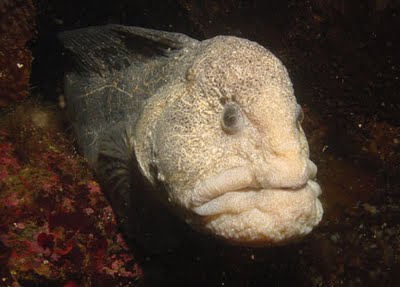
(Image is property of owners and is used here without permission, because it makes me happy/indifferent/snarky/hot.)

Jonathan Winters on YouTube

Just a sampling of the man’s genius

Jonathan Winters roasts Johnny Carson

Jonathan Winters on the Jack Paar Show – The Stick

Jonathan Winters as an Airline Pilot

Jonathan Winters on the Jack Paar Show – stand up

Jonathan Winters with Art Carney

It’s a Mad, Mad, Mad, Mad World

Image

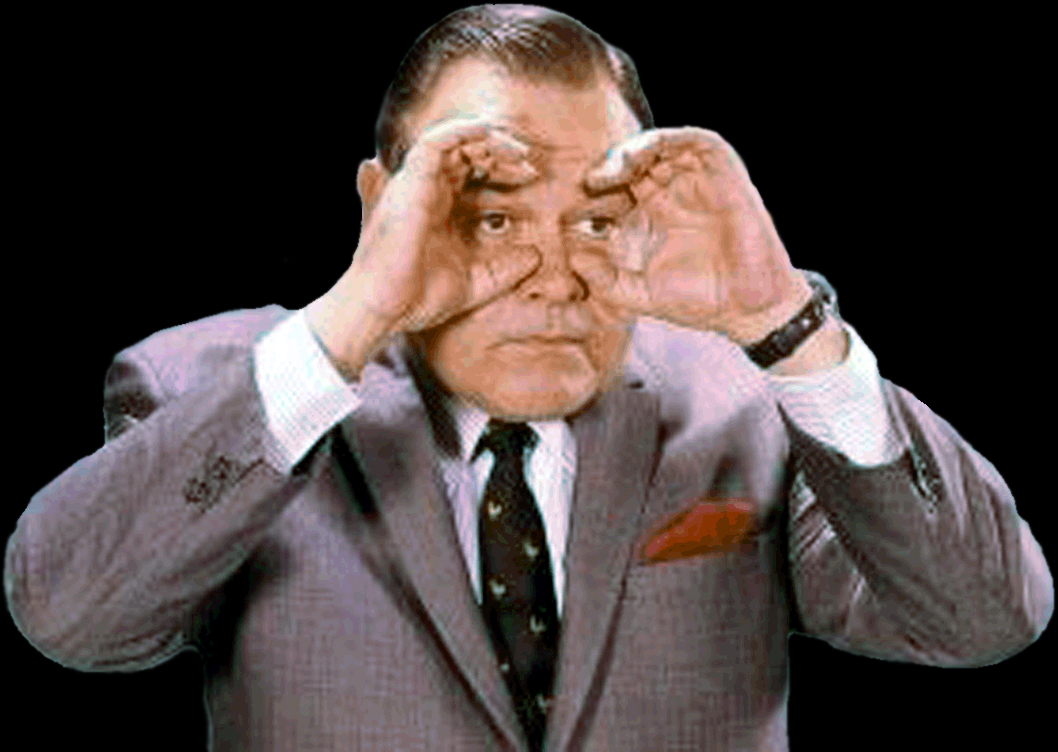
(image used without permission)

Jonathan Winters

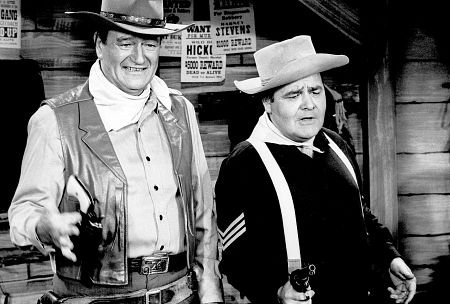
Jonathan Winters cameo Jonathan Winters John Wayne Jonathan Winters and Muppets

A giant passed away yesterday; a man of unsurpassed talent the likes of whom may never be seen again.

Other people practice improv. Jonathan Winters was improv and so much more.

The man could literally make me wet my pants with laughter. He could not be stopped once he hit his stride, which was usually on his second step, and the more you threw at him, the funnier he became.

He wasn’t funny for the sake of being outrageous, as so many improv people can be. He said things. Implied things. Made you think long after you stopped laughing, but without being on-the-nose or preachy. Every character he created was someone you knew, you’d met, you’d watched.

He made everyone around him try harder, to raise their game, whether he intended it or not.

In a famous Letterman interview, Winters and Robin Williams began to play. You want to see love? Look at the expression on Williams’ face. That is love, adoration, worship, friendship and a ship-load of other emotions all balled into one irrepressible face.

Winters had his demons, as most comedic and artistic talents do, but those demons made his talent that much bigger.

I love you Jonathan Winters for the joy you brought to my life. And as with Robin Williams, I too wanted to and still will do better, strive higher, reach further for having had you in my life, if only through a television or movie screen. I want to make you proud, even if you never knew I existed.

I will miss you.

(these images are used without permission)

The 12 Steps of Improvisational Screenplay Writing

Step 1. Write “FADE IN”

Step 2. Write a location, starting with “INT.” or “EXT.”

Step 3. Write a time of day after your location

Step 4. In two lines, write a description of that location as you see it in your mind’s eye

Step 5. Write down the name of a character.

Step 6. In a line, write a description of that character.

Step 7. In a line or two, write a description of what that character is doing at the location.

Step 8. Write the name of something with which that character is interacting, be it a person, object or something more ephemeral.

Step 9. In a line, write a description of that thing with which the character is interacting.

Step 10. In the middle of the page, write the name of your first character.

Step 11. Below that name, write an emotionally charged statement that this character says about the thing with which he or she is interacting, the nature of the interaction, or a total non-sequitur to confuse the hell out of people.

Step 12. In writing, rationalize these choices for the next 95 pages.

(I never said I’d help you make a movie, just a screenplay)

Words in other people’s mouths

I’m not an actor. I cannot act. Actually, that’s not exactly true.

I am an extreme introvert who has learned to live (and thrive) within an extremely extroverted world, so I can technically act aka hide my true identity behind a false façade.

But what I mean by acting is the theatrical form. Give me lines to memorize and my brain fries in mere seconds. I can say the line, I can emote or I can move my body across the stage…ask me to do any two of those at the same time, however, and we have issues.

I can do improvisation. I love improvisation.

The thrill of trying not to anticipate what your stage partners are going to do but instead simply react to what they have done and add to the reality of the situation is an adrenaline high of which I cannot get enough.

And the typical improv audience is a forgiving lot because they know you’re making this up before their very eyes. In fact, they will actually ask you how you prepare for an improv show and sit amazed when you tell them that you arrive at the venue slightly earlier than they did.

But even improv has its self-imposed pressures, because at the end of the day, you have to respond to your colleagues and say or do something. A couple of years ago, however, I found a work-around for that.

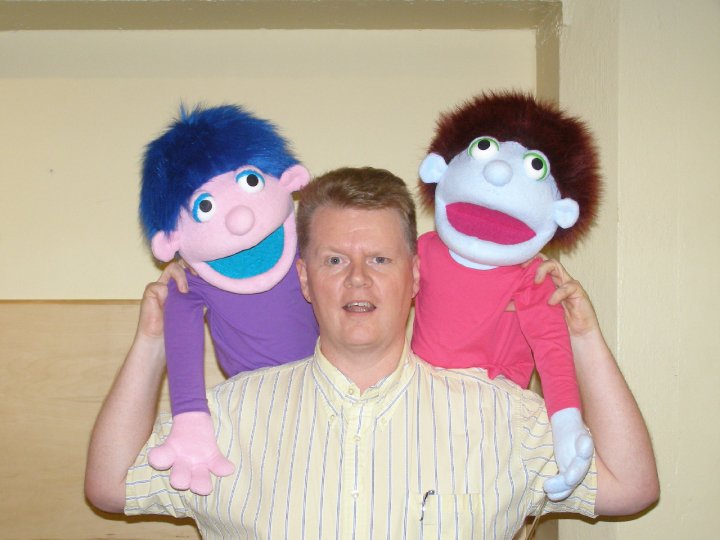
A friend of mine introduced me to puppetry improv. In this case, we put Henson-style puppets onto our hands and created amazing scenes with characters that didn’t exist until mere seconds ago.

It was magical.

Image

The minor act of picking up a puppet and letting it do the talking gave me enough distance that I was free to think and do anything I wanted without fear of recrimination. People stopped watching me and immediately followed the puppet. Whatever the puppet said was funny or poignant or shocking. Even saying nothing spoke volumes.

And if I thought improv audiences were generous, oh my God! Puppets can get away with murder! There are no taboos.

Which brings me to writing.

As it was with the puppet, so it is with writing characters for screenplays, stage plays or novels. I have the freedom to write anything, to say anything, because ultimately the words are the responsibility of the characters I create.

Maybe this is a sign of a need for medication, but when I write a character, I hear his, her or its voice in my head. Change the character and the voice changes.

By moving the focus off of me—my skills or lack thereof, my insecurities, my knowledge—I free myself up to pursue something bigger.

Or at least that’s what I’m telling myself. It seems to be working for me.