Our story so far…

Bradbury

It’s been roughly two years since I stepped off the ledge of the normal world and into the free fall of who I am…and perhaps it is not surprising that I am still discovering who that is.


For the uninitiated, a brief recap:

After spending the better part of my adult life as a scientist, magazine writer, communications manager and ad copywriter/creative director, I realized I wasn’t happy. Adding fuel to that fire was the death of my beloved grandmother and of my marriage (thankfully not an acrimonious separation). But where I might have let these events take me to darker depths, I realized that I had never been freer in my life…and the freedom felt good.

Thus, with nothing to hold onto and therefore nothing to lose, I stepped into the abyss of uncertainty and am pursuing my life as a storyteller. And nicely, two years in, I am starting to see dividends.


After taking screenwriting classes for a while, I now feel confident that I know what I am doing and have no problem trusting my instincts when it comes to storytelling. I’m good at this.

My latest and possibly most commercial screenplay to date, The Naughty List, awaits external validation in 4 different screenplay competitions. (I may be good at this, but my name is hardly renown at this point.)

My first screenplay Tank’s has slowly climbed its way up the “charts” of screenplay competitions over the past year, and after being a Second Rounder at the Austin Film Festival, it took top prize in the Nashville Film Festival as Best Animated Feature Screenplay.

SomeTV!, the sketch comedy show that I co-wrote, is in front of cameras, and I am told by our Producer/God-head that the initial cuts look amazing. You’ll see the footage as soon as I can send you to it.

Eye of the Beholder, the novel I am co-writing with Agah Bahari—based on the real events of his life in Iran—is starting to write itself (a wonderful moment for a writer) and already has anticipatory buzz in New York entertainment circles.

Eye of the Beholder

I wrote a short children’s book, Butch Goes To Work, that teaches children about working dogs and the abilities of people with disabilities. It is currently seeking a publisher.

Really, really slowly (sorry Kevin Scott), I am co-writing a comedy album in the understanding that what doesn’t lend itself to YouTube is perfect fodder for iTunes!

I almost signed an agreement to develop a screenplay treatment of a mystery novel, and even though this project didn’t come to fruition, I will continue to work with the novelist on future projects.

And I am in the process of taking my new life to the next level by moving to Los Angeles. When the move will take place is still a question.

I am grateful to the folks involved in the magazine and advertising work that continues to pay my bills. And I am over-the-top grateful to all of my friends, family and other supporters who applaud my journey at every turn.

I am a storyteller. I tell stories. And I have never been happier.

PS I don’t know if Bradbury actually said the quote at the front of this piece, but he or whomever was right.


Finding inspiration

Inspiration

Where do you find inspiration? What causes one moment to pass completely unnoticed and another to trigger a flurry of activity?

Truth be told, I don’t think inspiration comes from outside but rather from within. The exact same moment viewed at different times by the exact same individual may result in completely different responses depending on the openness of the individual to inspiration.

When you are open to inspiration, you witness and experience life through a completely different lens, one that sees connections and patterns between events and objects that do not necessarily exist in the forms themselves.

The priests sitting in the bar become a foil for the man trying to pick up women. The dog urinating on a building becomes the unwitting initiator of the death of 275 people in an office tower. The crows on the telephone lines become dark angels surveilling the land, awaiting the arrival of a malevolent spirit.

The irony of inspiration coming from within, however, is that it is something you cannot really will into existence. You can easily sit for hours with pen poised over paper, awaiting inspiration’s wafting arrival, only to realize that days have gone by without result. And trying to force your way through artistic constipation only seems to worsen the situation as you strain against the blockage by forcing invisible connections. Rarely, if ever, will inspiration make itself known to you in this way.

All you can really do is till the soil in which inspiration will implant itself and hopefully germinate. Rather than clear away all distraction, you may find it better to envelope yourself in distraction. By allowing the mental and spiritual noise to flow over, under and through you, you remove the hard edges of the real world and let the boundaries criss-cross in chaotic flux, searching for new patterns that your mind’s eye can mark.

It may also be helpful to engage your mind in someone else’s art, whether of the same medium as yours or no, but remembering to also give your mind permission to wander.

There is no exam at the end of the novel you’re reading. No request to reproduce the painting you are viewing. No critical essay to argue once the concerto has ceased.

So let yourself go and let yourself respond—consciously and viscerally—to the art. Let a word, image or note ricochet through your mind until it attaches itself to an earlier thought or feeling. Don’t try to define or even understand the clusters that form but rather observe them until the need to create takes hold.

Inspiration is about the initial amount of discovery, not the final product. An ephemeral spirit, inspiration is likely to dissipate at your first attempt to put a leash on it. You cannot present inspiration with a road map and expect it to clear the path ahead. Rather, you must follow inspiration as it meanders, bearing witness to the miracles it triggers.

Where do you find inspiration?

Everywhere and anywhere, when you are ready to let it be seen.

The dignity of characters

Defiance

Every human has an inherent nobility and dignity, and it is only in the limits of that dignity that people differ. Some people (the snots) hold themselves to a very high standard, while others (the goofs) appear significantly more relaxed in their approaches to life.

Even within an individual, there may exist multiple levels of dignity befitting the person’s roles or functions throughout the day. As a corporate executive, she may hold herself tightly constrained to maintain her air of authority, while as a doting mother, she may release her inner child for a game of tag.

And yet, even with the role-playing variations of life, each of us has an underlying threshold across we are hard-pressed to pass.

What is true for people is true for the characters we create, or at least should be, I believe. And it is in finding that central sense of dignity that we truly begin to understand these characters.

It is pivotal to their thoughts, actions, words and silences. It is also critical to how they view the world and how the world responds to them.

The goofiest, the most nebbish and most loathsome of characters has a line they will not cross, which writers exploit by presenting each one with a crisis. And while the writer and reader may think of that line as representing different things to different characters—for example, a move from light to dark for the good guys and dark to light for the bad guys—it is important to view the line from the character’s perspectives and aspirations.

Thus, the line is always a move from my light to my dark, my good to my bad, my right to my wrong. To approach it any other way would weaken and potentially two-dimensionalize the character’s resistance to change.

Scar from The Lion King completely believed in the truth and the righteousness of what he was doing. He understood that his actions flew in the face of tradition, but truly believed he was acting for the greater good.

Likewise, the anti-hero Edmond Dantès of the Count of Monte Cristo felt completely justified in his criminal actions because he was removing men worse than himself.

In both cases, as I have said elsewhere, each character was the protagonist of his own story.

In the end, society consumed Scar when he reached his line (i.e., bow to his nephew Simba) and he refused to cross it, and almost consumed Edmond Dantès until he released his anger and found peace.

Regardless of how prominent or fleeting a character, they all have their dignity, and although we may not explore all equally—lest we never complete our works—an awareness of that line will make for amazingly richer and more memorable characters, and thereby, better stories.

Tired

Some interesting recent blog posts on character:

Caroline Norrington’s Get to Know Your Character: 15 Minute Character Development Prompter

Persikore’s Context Matters

Richard Ellis Preston Jr.’s Character Development: Finding a Friend for Life

Just a Tasmanian’s Character Development series: ProtagonistAntagonistSidekick/Supporting characters

Weep not

Blue moon

Weep not, my love.

Release the sadness

That encumbers your heart,

Holding you earthbound

When you should soar.

Deny the anger

That blots your visage,

Shading your eyes

Where once smiles did dance.

You are beautiful

Of body and of spirit.

The world sings

Of your graces and charms.

Hear the song.

Feel the dance.

Rejoice in warmth

And weep no more,

For you are love.

A matter of character

Method improv taken a tad too far

Method improv taken a tad too far

When we create stories, we try to come up with truly amazing characters; characters that will resonate in our audience’s memory, long after they’ve finished with our story. Unfortunately, what usually happens is we end up with characters that flatten on the page, becoming two-dimensional versions of our goal. The character may flare momentarily when their plot becomes particularly exciting, but for the most part, they are lifeless and have no depth.

Like subtext in our dialogue, so much that makes a character real has nothing to do with what they are saying or doing. It’s the intangibles, the subtleties that inform their speech and actions.

Would Darth Vader, for example, have been nearly as imposing without the emphysema? What would you think of Forrest Gump without his omnipresent blankness?

Years ago, in an improv class, we did an exercise in character when the instructor told us to endow our character with some physical attribute, but not to share that attribute with others, whether verbally or by incorporating it into the scene. Let the attribute impact your character and see what happens was the request.

I decided that my character’s left foot caused him excruciating pain every time he took a step. As the scene unfolded and my character found it necessary to move, I found that my sentences grew shorter, more clipped, and my patience with people wore thin. Requests to come look at this or hand me that were met with general reluctance and irritation. Everything about my character screamed leave me alone.

I did not wince when I walked. I did not massage my foot while seated. I did my level best to give no outward sense of what was wrong.

When the instructor surveyed the other students, both within the scene and watching, about what our various attributes were, none of us really knew. All they could say was that my character was very angry and a bit of an asshole.

When told I had an extremely painful foot, it was obvious. And please realize, I am NOT an actor. This was not about my Oscar-worthy performance.

But it does show that by making a very small choice about a character, a choice that has nothing to do with plot, you can significantly inform that character and how he or she interacts with others and his or her environment.

When I worked on my first screenplay, I looked for something that affirmed how cool a customer my antagonist was. I wanted something subtle that would indicate he had the ultimate confidence in himself and his manifest destiny. Something that said I have all the time in the world because the world will wait for me.

It was my last point that settled it for me. My character would never use contractions in his speech. From his perspective, every word he uttered was important, was specifically chosen for maximum impact and so why would he remove any of the letters. And because his destiny was your destiny, you would sit patiently and absorb everything he had to say, no matter how long it took.

Now the average reader or movie goer may never consciously notice this, but for many, they’ll experience the malevolent calm of the character.

And perhaps more importantly, as with the sore foot in the previous example, the contraction-free speech informed how I wrote the character. It forced me to slow down as I wrote his dialogue, to consider each and every word he spoke, to ensure they fit the creature I had created. Ironically, that I the writer served him the way he would expect to be served.

Based on the reader feedback to date, it is working.

Look at the characters you’ve created and ask yourself what physical tic, affectation or neurosis informs their lives. If you can’t identify one, can you introduce one to increase the depth of the character or heighten his or her reactions?

Even if it only helps you to better understand and write your character, the exercise will have been worth it.

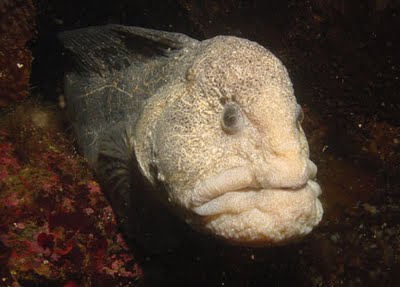
(Images are property of owners and are used here without permission, because I didn’t eel like asking.)

Too cool for fish school

Too cool for fish school

Falling in love…again?

Keep your story options open

Keep your story options open

So beautiful. The fullness. The curves. You make me smile. I want to be with you forever. You’re perfect. I love you.

This is the greatest paragraph ever written. The most beautiful dialogue ever conceived. A scene that will be remembered for eternity.

Many of the posts I’ve written have been about cutting yourself some slack, about overcoming the inner demons of doubt. Giving yourself permission to fail. That perfection isn’t your goal.

Well, now we need to remember that not only is perfection not your goal, it is not even possible. There is always room for improvement, so please don’t ever fall in love with your work.

When creating a new work—a novel, screenplay, whatever—it is important to leave yourself as many options as possible, to keep all of the doors open until you reach a combination that works best for you.

Too often, however, writers jump into their work, pursuing the idea that offered the first blush of love. In their zeal to express that love, they put on blinders to other possibilities. Perhaps it is a pure love, but I’m confident for a few of us, it’s also probably fear of never finding another love.

And once we express that love, we are loathe to question it, even when presented with another option. This is the only way the scene can be written. This is the best way to achieve the point of the scene. Everything else is weaker.

Maybe you’re right, once or twice in a work (or career), but rare are those moments. So let me recommend something scandalous.

Start seeing other options.

I’m not asking you to fall in love with them or to fall out of love with your original idea, but infidelity can be healthy. It may even make you appreciate your first love all the more. (Why do I suddenly feel like Silvio Berlusconi?)

Just dip your toe in the water, if this idea makes you nervous.

If your lovers currently meet in a restaurant, explore what would happen if they met in a post office, a house of mirrors, a sanitorium.

Too much too soon?

Then change the type of restaurant. How would your scene change if they were at an expensive restaurant, McDonalds, a hot dog cart, on a picnic?

Try this with any and every aspect of your story, and do it as early as possible. The longer you work on a project, developing its specifics, the harder it will be to change any aspect of it beyond cosmetic editing.

That path you see to your goal may be less of a path and more of a cavernous rut you’ve worn by running over the same idea time and again. Wait too long and you don’t see anything else. You can’t see beyond its limits.

Don’t let that happen to the concept that you love and more importantly, to the creative spirit you continue to nurture. It may be painful. You may have to walk away from the one you love, but trust me, you will fall in love again. I promise.

(The image is property of the owner and is used optioned here without permission.)

Something from nothing

“I don’t know what to write about.”

It is the clarion call of procrastinators worldwide.

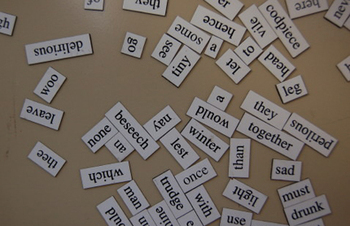
There is this pervasive belief that if you are not writing about something then you are not really writing. As though words have no power, no authority unless they are tied to some portentous subject. Free association, it would appear, is not free. And yet, ironically enough, nowhere is this written. It is a myth.

It is just as valid to write about nothing as it is to write about something. To make no conjectures, to postulate no theories, to hold no opinions aside from the personally pleasing juxtaposition of two or more words.

Just as people can speak forever and yet say nothing of lasting import, so too can people wax jibberish and yet speak volumes.

In painting, we can view both delicately rendered images of nature in all its glory (my personal favourite is Robert Bateman) or the seeming chaotic void of splatter on canvas. Both are art, but speak to different tastes and preferences. Why too cannot words, which are merely the medium that in and of themselves hold little meaning?

Write about nothing. Tap into your inner anarchist, your inner artist, to express yourself in splashes of verbiage that may mean little in isolation but so much more in toto.

Embrace the freedom and release the fear that comes from working without a destination or plan. Fill the void with noise of your soul and spirit, only to discover the noise is in fact a song the tune of which you don’t yet recognize.

I think you’ll find that in writing about nothing, you will find something, and you will stand amazed.

Nothing is rarely nothing

Nothing is rarely nothing

I had no idea

Ideas are everywhere, but they don't always look like ideas

Ideas are everywhere, but they don’t always look like ideas

“How the heck did you come up with that?”

It’s a common question I get when talking about my latest ideas, and for years, my answer was a resounding “I dunno…just came to me.”

To a limited extent, the response is correct, but it suggests the process of ideation is much more passive or deus ex machina than it really is.

Ideas surround me, as they do you. They are in the nouns, verbs, adjectives and adverbs that make up our moment-by-moment reality. They are in the streetcar in which I presently ride, the streets down which I presently travel.

In the dark-haired beauty two rows before me who is fixated on adjusting her hair rather than close the window through which the hair-mussing breeze blows. And in the armada of free-range humans who occupy the parkette we just passed, proving themselves houseless rather than homeless.

The challenge for many would-be writers is that these are starting points for ideas rather than fully fledged stories or subjects. These are the writers who wish to be reporters or chroniclers rather than explorers.

Think instead of these idea kernels as pieces of clay, as something that can be moulded into any of a thousand other shapes. Take the kernel and play with it for a while. Give yourself a chance to see what it feels like, smells like, sounds like, tastes like.

Twist it. Turn parts of it over. Reverse its halves.

What is something were feasting on Toronto’s homeless? Imagine a mobile service that will do your hair and makeup while you commute to work. What if a terrorist planted a bomb on a streetcar and it had to travel no slower than 50 mph? Or an aesthetician to the deceased in From Hair to Eternity.

All of these are probably bad ideas, but the ideas have evolved.

Twist it again. Mould it again. Press it onto something else, like so much Silly Putty, and see what sticks.

Keep the good. Set aside the bad. But keep working it until something you really like begins to show itself.

You have no idea the wonders you will discover.

Not quite dead – an update

Hey folks,

For those of you who may be wondering, did he lose all of his fingers in a fire, the answer is no, I just haven’t really had the capacity or inspiration to write much of late.

Between a beautiful week in Victoria (as evidenced by the photographs) to a serious chest cold (worst vacation souvenir EVAR!) to moving to a new apartment, I just haven’t had the brain space to put pen to paper (I’m old fashioned that way) for anything more than my screenwriting homework.

I am, however, a writer at the chromosomal level, and so I fully expect to be back in full verbosity in the near future, when I will continue to astound (?), inspire (?), inflame (?) and amuse (??) you.

Until then, I wish you well and say “Ooh, look, it’s a bee!”


New neighbourhood

ImageImage