
Because working on one novel at a time wasn’t enough, already!
National Novel Writing Month…NaNoWriMo…ugh…here I go.
Because working on one novel at a time wasn’t enough, already!
National Novel Writing Month…NaNoWriMo…ugh…here I go.
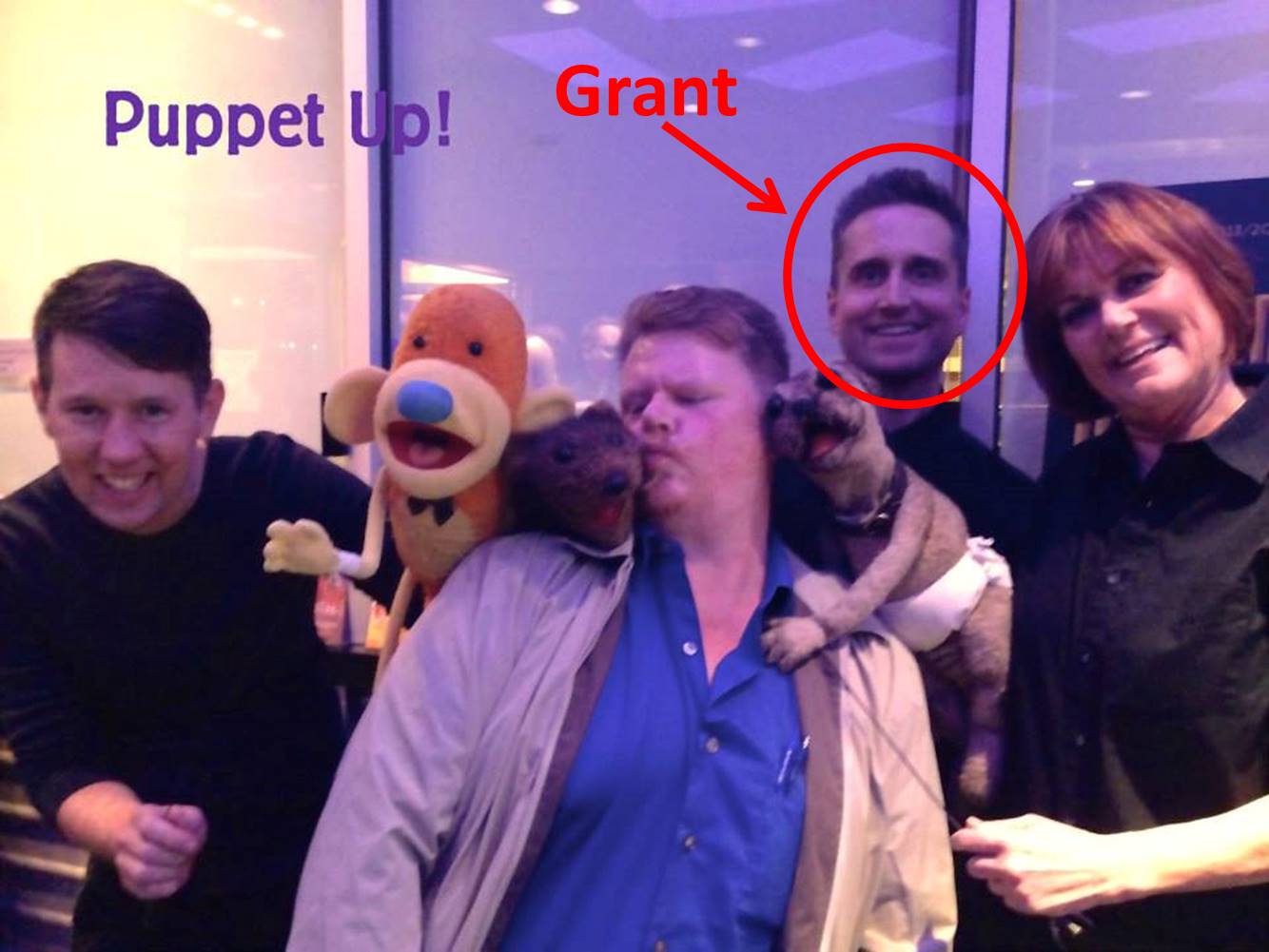
The wonderful Grant and his weasel buddy join me for a post-show photo (also shown Peggy Etra and Brian Clark).
Grant Baciocco is an amazingly talented actor and puppeteer I had the good fortune to meet online and then in person when he came to Toronto with the improv puppetry show PuppetUp! (about which I have raved extensively elsewhere).
Well, aside from his amazing talent, he also has a wonderful creative spirit, both in the sense of what he creates and how he tries to inspire others to be open to their own inner creative spirit. To this latter point, he has a wonderful blog Grantblog: Ruminations & Pomposity that I heartily recommend.
At the beginning of each week, he posts Creative Mondays and today was no exception. Today he talked about “A job you hate”, which I excerpt below:
For years after college, about ten in fact, I worked as a substitute teacher. It was an okay job, certainly flexible enough and I was making money, but by the end of those ten years I was starting to burn out because it was not the job I wanted to be doing. I was good at it and several times I was told I should get my teaching credential because I was such a good teacher. But deep inside of me I could feel a darkness building up because I was doing a job I absolutely hated.
The moment I made the decision to stop subbing and focus on The Radio Adventures of Dr. Floyd, it felt like a weight was instantly lifted from my chest. I attempted, for the millionth time, to lose weight and it was actually working (lost 80 pounds). I was just a million times happier than I was when I was subbing. And guess what? I became more creative! This was the creative boom era for Dr. Floyd, because I was doing something I love.
Grant’s is a lesson too many of us learn very late in life (NOTE: I did not say “too late in life”…it is NEVER too late).
In my case, I was fortunate enough to have a series of occupations I loved for a period…scientist, science writer, media relations, advertising copywriter…but with each, I stayed in the occupation long after I had fallen out of love with the choice. I had to be a certain amount of miserable before I was brave enough to jump.
But two years ago, I completely jumped ship to pursue my true love: story telling (screenplays, novel, sketches, short stories). I’m still not making money off any of this, so I live on freelance magazine writing and ad copywriting. But to Tiffany’s point, it is what I do to eat and sleep under a roof.
If you are fortunate to know your passion—it can take time to figure out what it is—then you must make it happen to find happiness (hunh, “happen” and “happiness”…so similar).
And if you haven’t fully defined your passion yet, go with your gut until you do. Explore the universe of opportunities, until you do. You may not end up the financially richest person on the planet, but you’ll definitely be one of the spiritually richest.
If you don’t want to take it from me, then take it from Grant. Find your happiness and pursue it with everything you have. Despite appearances, you really do have nothing to lose and everything to gain.
You can follow Grant on Twitter: @ToasterBoy

Friends and family hate walking up hills with me. I have no idea how they feel about the flat regions, but definitely the hills they hate. And it’s not that they are out of shape. To the contrary, I am the excessively shaped one…and I’m lazy.
Thus, when I reach the bottom of a hill, I want to get the climb over with as quickly as possible…I power my way up the hill, leaving them to trot along or simply do their own thing and catch up with me.
But the biggest challenge, once they catch up, is that they then have to wait for me to recover from my exertion. In my zeal to get to the top, I completely ignore the fact that the trip is not over once I reach the top…I leave nothing in my tank for the rest of the trip.
I’ve done the same whenever I’ve decided to change my shape with exercise or diet. I start out incredibly aggressively…not holds barred. And for a week or two, my goals are not only met, they are surpassed. I am incredible. I am a GOD! I am also exhausted and sore…and I slowly stop my program.
And as if this behaviour wasn’t already annoying enough, I find I also have a tendency to take the same attitude in my writing.
Prepare my work area. Cogitate on what I want to do. Research. Procrastinate. And then, WRITE LIKE THERE IS NO TOMORROW BECAUSE I REALLY WANT TO GET THIS DONE THIS WEEK OR AT LEAST GET AS FAR AS I CAN GET BECAUSE NEXT WEEK…
At the end of the process, whether it is a hundred pages of a novel, another feature article for a magazine, an outline and beat sheet for a new screenplay, I am exhausted and my brain hurts. The creative wheels come off (or wobble severely), and I lay up for a couple of days accomplishing nothing, except possibly another thousand games of Solitaire.
My ultimate goal is still way over there. Whether it is within sight or not, I can’t do anything about it because I am doubled over with my hands resting on my knees wondering why my (creative) lungs have shrivelled to the size of grapes.
I can drive a car by flooring the accelerator for 30 seconds and then releasing it until the car crawls to a stop, only to repeat the cycle again and again. I can. But the car will like it about as much as the other drivers and police. And whether due to a destroyed transmission or arrest, I will lose the car.
As I reminded myself on Twitter this past week, I am not writing a novel today. Rather, I am writing a scene, a paragraph, a sentence. But I am writing.
The top of the hill is not my destination, but rather is a way-station along the journey, a landmark I will pass. And for all I know—because despite my best efforts, omniscience has not yet occurred—the hill may be the most interesting and/or important part of the journey. The upward grade itself may hold the answer to the whole damned project
So here’s to my best efforts to ease into the next hill and enjoy the scenery along the way. I’ll reach my destination eventually and who knows, I might actually enjoy the trip (or at least, not drop of a coronary).

(Images are property of owners and used here with no destination in sight.)

It’s been roughly two years since I stepped off the ledge of the normal world and into the free fall of who I am…and perhaps it is not surprising that I am still discovering who that is.
For the uninitiated, a brief recap:
After spending the better part of my adult life as a scientist, magazine writer, communications manager and ad copywriter/creative director, I realized I wasn’t happy. Adding fuel to that fire was the death of my beloved grandmother and of my marriage (thankfully not an acrimonious separation). But where I might have let these events take me to darker depths, I realized that I had never been freer in my life…and the freedom felt good.
Thus, with nothing to hold onto and therefore nothing to lose, I stepped into the abyss of uncertainty and am pursuing my life as a storyteller. And nicely, two years in, I am starting to see dividends.
After taking screenwriting classes for a while, I now feel confident that I know what I am doing and have no problem trusting my instincts when it comes to storytelling. I’m good at this.
My latest and possibly most commercial screenplay to date, The Naughty List, awaits external validation in 4 different screenplay competitions. (I may be good at this, but my name is hardly renown at this point.)
My first screenplay Tank’s has slowly climbed its way up the “charts” of screenplay competitions over the past year, and after being a Second Rounder at the Austin Film Festival, it took top prize in the Nashville Film Festival as Best Animated Feature Screenplay.
SomeTV!, the sketch comedy show that I co-wrote, is in front of cameras, and I am told by our Producer/God-head that the initial cuts look amazing. You’ll see the footage as soon as I can send you to it.
Eye of the Beholder, the novel I am co-writing with Agah Bahari—based on the real events of his life in Iran—is starting to write itself (a wonderful moment for a writer) and already has anticipatory buzz in New York entertainment circles.

I wrote a short children’s book, Butch Goes To Work, that teaches children about working dogs and the abilities of people with disabilities. It is currently seeking a publisher.
Really, really slowly (sorry Kevin Scott), I am co-writing a comedy album in the understanding that what doesn’t lend itself to YouTube is perfect fodder for iTunes!
I almost signed an agreement to develop a screenplay treatment of a mystery novel, and even though this project didn’t come to fruition, I will continue to work with the novelist on future projects.
And I am in the process of taking my new life to the next level by moving to Los Angeles. When the move will take place is still a question.
I am grateful to the folks involved in the magazine and advertising work that continues to pay my bills. And I am over-the-top grateful to all of my friends, family and other supporters who applaud my journey at every turn.
I am a storyteller. I tell stories. And I have never been happier.
PS I don’t know if Bradbury actually said the quote at the front of this piece, but he or whomever was right.
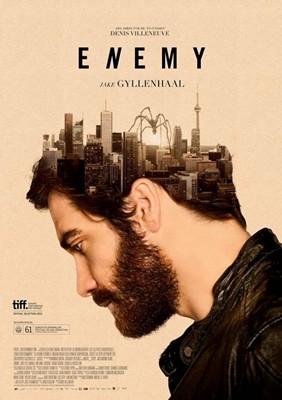
So, it was $5-Tuesday yesterday at the Carlton Cinema in Toronto and a friend invited me to see a movie called Enemy, starring Jake Gyllenhaal. Like any weary movie-goer, I immediately jumped online to look at the trailer and thought, “Hmmm, weird, but interesting”.
I was half right. The movie was weird.
At this point, I should probably say “SPOILER ALERT”, but truth be told, I am not sure that if I laid out every event that occurred in this movie, you would know what was happening. I sat through it and I don’t know what happened.
As the trailer indicates, the movie is about a man who is dissatisfied with his life—never explains why, he just is—and is merely going through the motions of living until one day when he realizes that his exact doppelganger lives in town.
Terrified at this revelation—never explains why, he just is—he is nonetheless drawn to his twin and after jumping through a series of over-complicated hoops, he meets the twin. At which point, he second-guesses his decision and it is his twin’s turn to go neurotic—never explains why, he just does.
As you may have guessed from my above repetition of “never explains why”, my greatest issue with this movie is unclear character motivation. Perhaps it says more about me and my life history, but I have no idea why any of these characters acts as extremely as they do.
I am confident that it is part of the artistic conceit of the piece that at numerous moment are you fully sure which Jake Gyllenhaal character you are watching onscreen. The challenge with this is that the emotional rollercoaster of each of the characters is such that from cut-to-cut within the same scene, I am never sure which Jake Gyllenhaal character I am watching. I ended up watching the characters’ clothing rather than the actor’s face to try to follow the story.
And the motivations of the secondary characters are just as muddy for me, although at least here, we have different actors and so don’t have the Gyllenhaal rabbit hole with which to contend. Like a faucet tap, the emotions of these characters change with a flick—questioning in one moment, horny in the next, and angry in the third, and all in the span of 30-45 seconds.
A definite statement of who I am, I spent much of the movie trying to predict the reveal of the story based on the clues or purely on conjecture.
Twins separated at birth? Time travel with a glitch? Parallel universes collide? Psychotic episode of one man leading two lives?
No SPOILER ALERT to say none of these came to fruition, but that still doesn’t mean that any of them may not be true. Hell, all of them might be true. I don’t know.
And any hope of a conclusion is muddied by a massive metaphor that scurries through this movie—I won’t tell you what it is—and yet offers no satisfying explanation.
Enemy is described everywhere as a thriller. I’d be more inclined to call it a puzzler…and even that may be too lofty. Head-scratcher and headache-giver might be more accurate.
As I read up on the movie to write this, I learned the film won Canadian Screen Awards (our Oscar) for Best Director and Best Supporting Actress, and was nominated for Best Film. I find that disturbing.
The film was based on the 2002 novel The Double (O Homem Duplicado), by Portuguese author José Saramango. Part of me wants to find the novel to see if it is any clearer than the movie, but as of this moment, a bigger part of me just wants to walk away from this entire episode in my life.
Previous posts about characters in writing and film:
Just Tell The Story – Austin Film Festival
I Am Always Right (Motivation)

A new way to write?
So, it would appear that somewhen in the recent past, I made a transition in my writing. As I was working with a friend and colleague the other day on a novel we’re writing, I realized that something significant had changed.
I no longer write in words. I now write in pictures.
This is not to say that I have become an animator or that my writing implement of choice is a paint brush or crayon (nothing wrong with those choices) but rather that when I imagine a scene in my head, I no longer think to describe it in words but literally as visuals.
This may not sound like much to you, but for me—who has long held myself to be a wordsmith, first and foremost—it is huge.
For quite some time, I have been taking screenwriting classes, and the one comment that has been made consistently throughout that time is that I write like a novelist. I have mentioned before my affinity for narrative and my need to describe a scene to within a literal inch of its setting. Well, it would appear that in trying to break myself of the verbosity, I have swung all the way into pictures, leaving words in my dust.
For the case in point, I was trying to describe to my colleague how we might open the novel at the end of our story and then transition from one event at the end to a metaphorically similar point at the beginning of the story, which all sounded great until I tried to put that down on paper.
I managed to cobble together some verbiage that roughly describes what I saw, but I know it will take some time to effectively capture the visual in words…time I am more than happy to put in. But it rocked me to realize that I no longer saw things the same way.
Oh, my God. You don’t think… Nah, couldn’t be. I’m still working on being a writer.
Dear God, please don’t tell me, I’m thinking about become a… ugh, I can’t say it… a… a… director!
Anyone have a beret and megaphone I could borrow?

(Images are property of owners and used here without permission because that is Legal’s problem.)
Whenever someone asks me to review their writing, I try to be thorough and look at it from many levels. Yesterday, we looked at how I approach writing from the 30,000- and 5,000-foot levels. Below, we dig deeper.

The view from 1,000 feet: Now that I’ve identified the major structural and thematic issues and determined there is a reason to keep reading, I go back to the beginning and really start to peel things apart.
If I have a thing for character—and I do—I might follow an individual character through the story to see if I can reverse engineer the writer’s profile of that character. I am making this sound much more formal than it really is. Basically, what do I know about the character and are his or her actions and reactions consistent with that knowledge given: (a) where that character is now in the story; and (b) where he or she is trying to get or accomplish?
From the plot perspective, I begin to look at individual scenes and ask if the interplay between characters makes sense for their relationship and respective goals within the scene. For that matter, does each character in a scene have a clear goal?
How have the characters within the scene changed from one end of it to the other? Did one start with the upper hand and that power shift somewhere through the scene to the other character? This last point is not a necessity, but is merely one way a scene can experience reversal.
Likewise, is the scene clear with one predominant purpose or has the writer tried to accomplish too much too quickly, muddying the scene and leaving the reader uncertain as to what refers to what?
At a slightly broader level, how do the scenes play against each other? Are there smooth or logical segues from one scene to another, and if not, does the hard plot swing work? Does the scene in question set up a future one or pay off a previous one, and has it done this job effectively?

The view from 200 feet: Now I really start to get into the weeds, looking at paragraphs and individual lines. From the narrative perspective, does the reader have all the information he or she needs to make sense of the story? Does the scenery or environment serve almost as another character at this point, representing a source of conflict or support for your characters? Again, this last point isn’t necessary, but can be quite effective such as in movies like The Perfect Storm.
Alternatively, has the writer massively over-written the narrative, demonstrating his or her superhuman vocabulary and/or visual imagination at the expense of the story and poor befuddled reader? As a personal aside, this is my greatest sin as a writer…but then you probably already knew that. Can I recommend any broad strokes edits (not copy edits) to help reduce the clutter and maintain the flow for the reader?
If it’s a screenplay, does the writer interrupt the reader too often with small directorial nods to the actors? For example, during a particularly heated scene of dialogue between the protagonist and antagonist, is the writer constantly reminding the actors to furrow their brows or shrug? I try to determine whether these narrative directions are absolutely necessary to get the idea of the scene across.
The problem here is that the regular intrusion of direction takes the reader out of the moment, disrupting the story and the emotional power of the characters. The senses, if only at the mental level, are forced to trip back and forth between things like subtle movements and emotive energy. Thus, in even the most action- or tension-packed scenes, too much narrative can sap the energy of the scene such that the read becomes plodding. By removing these superfluous lines, the reading speeds up and the energy of the scene is renewed.
This brings us to dialogue, which is easily my greatest challenge in screenwriting. I think novel writing gives you a bit more leeway with dialogue but I am less familiar with the medium from a writing perspective.
When I review dialogue, I try to sense how natural the dialogue feels…perhaps even reading it aloud, if I am not certain. Are these sentences that real characters would say and are the lines apt for the character who is saying them? From what I have surmised about the character, would he or she use those particular words in that way or to that purpose? Is the character saying exactly what he or she is thinking (on-the-nose) or is there some sense of subtext, whether known to the character or not?
Similarly, is the dialogue as tight as it could be, saying only what needs to be said and in the best way? Now, please note, I did not say or mean to imply in the shortest way, with the fewest words. People rarely keep their sentences to a minimum, but rather when caught up in the heat of the moment, tend to spew a bit more than necessary. There is a cadence to an individual’s speech patterns, so each of the characters should have their own cadences.
In a conversation between two or more characters, is the subject and banter clear or am I left with some uncertainty about what line corresponds as a response to what previous line or thought. To map it out somewhat mathematically, it might read something like A then A’, B then B’, C then C’, etc., rather than ABC then A’, D then B’C’, etc., where each of the letters and its prime counterpart represent a thought and its response or reaction. By the same token, however, I have to be alert and sensitive to cases where it is perfectly natural for that character to blurt out a series of thoughts and the resulting confusion may be consistent with the plot.

Splashdown: Only once all of that has been settled, do I get to the cosmetic aspects of story review. This is where I might recommend copy edits and what have you to ensure the screenplay or novel is clean. This can include looking for stylistic inconsistencies (e.g., capitalization) or spelling errors. Personally, this part bores the hell out of me and I know that for every error or inconsistency I find, I have missed two or three others. As a courtesy, however, I will point out those that I do find and hope someone else catches the rest.
I find that by the time we reach splashdown, writers either love me or hate me…and I am okay with that. Although I prefer the former, I understand the latter and don’t take it personally. Putting your work out there for critique and possible criticism is difficult and not just a little nerve wracking. I applaud anyone who does that almost as hard as I applaud them for having written in the first place.
I just hope that, at the end of the day, I have helped the writer improve his or her work.
(Images are the property of their owners and are used here without permission because it’s more impactful.)

Every time I read something, I find something I never found before. Thus, when someone has built up the nerve to ask me to read something he or she has written, I try to read it in several waves, each one moving deeper and deeper into the details of the subject or story.

The view at 30,000 feet: Particularly if it is a complex narrative, such as a novel or screenplay, I try to make my first read an uncritical one. This may sound counterintuitive to the requested task, but until I’ve read something from front to back, I don’t feel as if I have sufficient information to be critical.
A thought or comment made at first read may be rendered moot or significantly larger one, ten, fifty or a hundred pages later. I need context to see what the writer is trying to accomplish before I know what is working or what isn’t.
If possible, I will remove all writing implements from my pockets and move somewhere completely isolated so that I can give the piece my full attention. If I become immersed in the work, absorbed by the story and characters, then I know less work is needed, and I can drill to the deepest, most detailed level of comment quickly.
If, however, I find myself drifting from the story, or worse, struggling to move from page to page or scene to scene, then I know there are larger structural or thematic issues at play. Things that potentially make detailed feedback moot upon rewrite.
If you can’t resist using a pen at this stage, try just adding an asterisk next to the line of interest for a quick reminder later. Attention to details breeds attention to details, and you’re apt to miss the bigger picture.

The view from 5,000 feet: In the second read, I try to focus my attentions on the larger structural and thematic questions that arose in the first read. By being familiar with the story and knowing who is whom, I am less likely to need to flip backward through the pages to remind myself how I got here.
More importantly, I know where the writer is trying to go with the plot and characters, which should make it easier to identify bumps or inconsistencies along the way.
These moments typically take the form of a quick shuffling of pages to see if I’ve missed something or if two pages have stuck together. In my head, if not aloud, I find myself using phrases like “Wait. What…?” and “Hold it. I thought…”
If I did my first read well, I may remember struggling at this point in the story, and if it’s big enough, having to force myself to move on. Alternatively, I didn’t bump the first time through but now that I know the full story, this scene or moment has become a problem. What made perfect sense an hour or two ago has now become confusing. Regardless, it is a moment that has to be recognized, understood and adjusted.
Most writers in my experience have the greatest problem with notes at this stage because it often cuts to the core of their story and changes her can have a significant impact on the direction of the story. In some cases, this is where the writer might find out the story doesn’t work and needs a complete overhaul.
New writers, in particular, may either completely refute the notes to avoid being so fundamentally “off base” or simply give up the piece because they feel incapable of sacrificing all that hard work, ironically enough, and trying to rescue what was working.
At this stage, I’m asking pretty broad questions. Do I understand why this story is happening (why today)? Do I clearly see who is playing what role in the narrative (e.g., protagonist, antagonist, etc) and how they interrelate?
Can I recognize the plot and subplots, and do they make sense? How do they relate and am I seeing a coherent theme? Is there any conflict in the story and does it rise in scale or intensity as the story moves forward?
Part Two: In the next section, we will continue our journey into the depths of how I review stories with complex narratives, rapidly approaching ground level.
(The images are the property of their respective owners and are used here without permission because they’re beneath me.)
Keep your story options open
So beautiful. The fullness. The curves. You make me smile. I want to be with you forever. You’re perfect. I love you.
This is the greatest paragraph ever written. The most beautiful dialogue ever conceived. A scene that will be remembered for eternity.
Many of the posts I’ve written have been about cutting yourself some slack, about overcoming the inner demons of doubt. Giving yourself permission to fail. That perfection isn’t your goal.
Well, now we need to remember that not only is perfection not your goal, it is not even possible. There is always room for improvement, so please don’t ever fall in love with your work.
When creating a new work—a novel, screenplay, whatever—it is important to leave yourself as many options as possible, to keep all of the doors open until you reach a combination that works best for you.
Too often, however, writers jump into their work, pursuing the idea that offered the first blush of love. In their zeal to express that love, they put on blinders to other possibilities. Perhaps it is a pure love, but I’m confident for a few of us, it’s also probably fear of never finding another love.
And once we express that love, we are loathe to question it, even when presented with another option. This is the only way the scene can be written. This is the best way to achieve the point of the scene. Everything else is weaker.
Maybe you’re right, once or twice in a work (or career), but rare are those moments. So let me recommend something scandalous.
Start seeing other options.
I’m not asking you to fall in love with them or to fall out of love with your original idea, but infidelity can be healthy. It may even make you appreciate your first love all the more. (Why do I suddenly feel like Silvio Berlusconi?)
Just dip your toe in the water, if this idea makes you nervous.
If your lovers currently meet in a restaurant, explore what would happen if they met in a post office, a house of mirrors, a sanitorium.
Too much too soon?
Then change the type of restaurant. How would your scene change if they were at an expensive restaurant, McDonalds, a hot dog cart, on a picnic?
Try this with any and every aspect of your story, and do it as early as possible. The longer you work on a project, developing its specifics, the harder it will be to change any aspect of it beyond cosmetic editing.
That path you see to your goal may be less of a path and more of a cavernous rut you’ve worn by running over the same idea time and again. Wait too long and you don’t see anything else. You can’t see beyond its limits.
Don’t let that happen to the concept that you love and more importantly, to the creative spirit you continue to nurture. It may be painful. You may have to walk away from the one you love, but trust me, you will fall in love again. I promise.
(The image is property of the owner and is used optioned here without permission.)
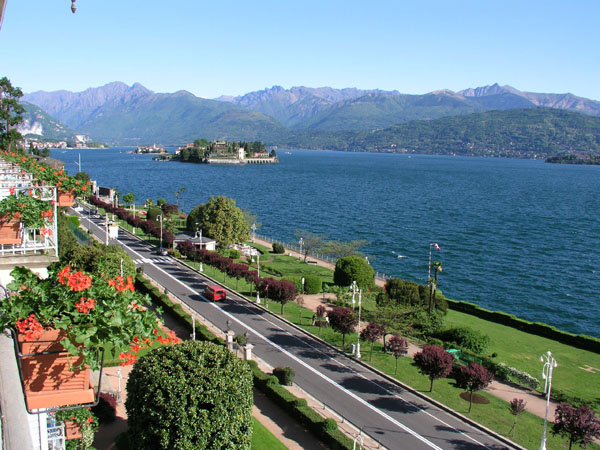
How can you NOT want to describe this place?
Now that I have worked on several screenplays, which I have shared with a number of friends and fellow writers, I have come to a conclusion: I am a novelist.
Fret not, fellow travellers. I say this not to suggest I will cease to write screenplays but more in recognition of an inherent weakness in my screenplays, or perhaps more accurately, in myself. I am addicted to narrative.
The problem is I instinctively write what I see, even when I only see it with my mind’s eye. If I were a painter, I would own brushes that only had one or two hairs. The concept of a paint roller would be anathema.
Nothing in a scene is unimportant to me. I see people, things, phenomena in terms of metaphor, although I do my best to avoid poetry.
I cannot simply write: The boat bobbed wildly on the waves. (Even writing that line now was taxing to me.)
Instead, I’m inclined to write: The battle-weary skiff, a patchwork of wood and fibreglass, tossed helplessly on the ocean swells, each wave of its own purpose, refusing to work together toward anything resembling a current.
The former is what is happening. The latter is how I envision it. To me, everything is a character in a story—an antagonist, an ally, a victim—and as such has its own story arc, however small.
I also want to make sure that my reader “sees” the movie I would like to make—the challenge of a pictorial and aural medium presented literally. I want the reader to “feel” the scene before the first word of dialogue is spoken, both to establish the mood of the scene and give a sense of how the line is said.
Unfortunately, in my zeal to be informative, I instead become onerous or tedious. My screenplay becomes a challenge to read as long tracts of narrative slow the story to a crawl. Instead of making it easier to read my manuscript, I’ve made it more challenging and less desirable.
I was once accused of writing a travelogue of Northern Italy in a screenplay. Oh, what I had written was beautiful and made some people dream of travelling to the region—Lago Maggiore—but 90% of what I had written was completely unnecessary to the telling of the story.
So, what to do?
As of this moment, my writing process is my writing process, and I believe that any attempt to significantly change it would simply increase my challenges in writing at all. No, better to have written a first draft badly than to have never written.
Instead, I have chosen to rely on this little miracle I have discovered. They call it Draft Two. This will be my chance to go through my screenplay with a harsh eraser, and remove all of the lines or description that is not absolutely necessary to tell my story or to explain a character’s behaviour.
Sure, this may necessitate some rewriting of dialogue so that I don’t end up with mile-long verbal tracts. But in all likelihood, these speeches were too long and in desperate need of shortening.
One step at a time, though, for today, I continue to write Draft One of my screen-novel.
(Image is property of owner and is used here without permission, but plenty of description if you read my screenplay.)
PIECES OF ME...
Mother, Nehiyaw, Metis, & Itisahwâkan - career communicator. This is my collection of opinions, stories, and the occasional rise to, or fall from, challenge. In other words, it's my party, I can fun if I want to. Artwork by aaronpaquette.net
Life at any age can be amazing! We only need to grab hold & experience it!
The internet web log of Michael Cedarwood. I used to be a stripper. Now I'm a writer.
Thoughts on creativity, Pharma and whatnot
Mindfulness, Philosophy, Spirituality, Meditation, Awareness, Religion, Nature Photography
Living for Happiness
A perspective from the other side of the hockey ocean
Romance Author
Author of Kritsotopoula, Girl of Kritsa and Rodanthe's Gift
Our opinions don't stink!
Rantings and Ravings on all things Screenwriting and Movies
My Elicits, an Inception... Learning to Live in Perfection
 createdbyrcw