Trench – A short story (Part Two)

trench2

(Click here for Part One)

At the sound of distant splashing, Francis opened his eyes. His face had slowly deformed the mud until it almost seemed a mask in which he might have suffocated. Trying to turn his head, he winced. Somewhere in the night, it seemed, his bones and muscles had fused to become an almost immobile mass.

Slowly, painfully, he pulled his arms to his chest and pushed himself up onto his knees. His body wanted to scream but his instincts said he needed to remain silent.

His world was a grey cloud. As it often did, a heavy morning fog had settled into the trenches, blurring the lines of reality and imagination, preventing the senses from reaching more than a half-dozen feet in any direction. The light said it was day, but that was where his universe stopped.

The splash sounded again, closer. Francis had seconds to debate friend or foe. He opted for safety, launching himself across the gap to the other side of the trench, burying himself behind the remnants of crates. Silence was key.

German voices pierced the fog. At least he assumed they were German. He knew Welsh and English, but just enough of the words sounded familiar to suggest he wasn’t hearing French.

His heart was ready to explode and he willed his breathing to calm, the rapid exhalations forming eddies in the fog that he was sure would give away his position.

From the mists, two boys in German uniforms emerged, poking their rifles into the detritus that lined the trench, presumably looking for food or ammo. They plodded through the puddles, secure in each other’s company, unaware of the din they created.

One soldier cried out and attacked the side of the trench.

His compatriot turned to find him tugging at the buried corpse. Placing his rifle to one side, he joined the other and between the two of them, they pulled the dead soldier out, the mud protesting their invasion with a loud sucking noise.

The first soldier reached inside the dead man’s great coat, feeling around blindly until his hand lighted on his quarry. Smiling at his partner, he extracted a sodden square of leather, teasing apart its folds and sliding out military script. His partner, meanwhile, was filling his pockets with items from the dead man’s kit.

Francis watched the vultures loot the corpse, his mind racing to comprehend the incomprehensible. This was one of their own.

He was as surprised as the German soldiers when the chest of one caved in at the bullet wound. The recoil of his rifle telling Francis that he had pulled the trigger.

By the time the unwounded soldier figured things out and was rising to his feet, he too found himself with a bullet in the chest. He gaped at Francis, who slowly emerged from his hiding place, and his eyes rolled into his head as he fell to his knees and then face down in the mud.

Francis shook, bracing himself against the crates lest he too collapse into the puddle. The dead soldiers—the men he had killed—lay at his feet. Francis tried to feel anguish at his crime. He tried to feel joy at his survival. He felt nothing.

Not cold. Not wet. Not even numb. His world had closed in on him, smothering him.

This was the first time Francis had fired in battle, all previous conflicts amounting to little more than scurrying from trench to trench, fox hole to fox hole, keeping you head low lest it be removed. The first time Francis had taken a human life, and yet he was intrigued that he felt no different than had he just slaughtered a hog for its meat or put down a rabid dog.

Francis dragged the soldiers onto their drowned comrade, laying their rifles next to them. He then stood silently, scanning the air for any sound, the splash of footsteps racing to the rifle shots. He heard nothing.

He pulled aside the coat of one soldier to find a filthy uniform underneath, not just torn in places but the material actually rotting away. A photo dangled precariously from the soldier’s pocket. He retrieved it and saw a youth, the soldier, standing in front of a portly woman near a well. He wondered if this was the boy’s mother. Flipping it over, the back was inscribed with German.

Without knowing why, Francis pocketed the photo and rose to his feet. As he lifted and flipped over the soldier’s military kit, he was startled by the rumble of artillery in the mists far ahead. The line had apparently moved in the night. Time to rejoin his unit.

Shouldering the German kit and his rifle, Francis stepped over the fallen soldiers, picked his way past the puddles and dissolved into the mists.

*****

Two months ago, while organizing my grandmother’s things after her funeral, I found an ancient, moth-eaten bag in her attic. Opening it, I discovered a German bible and a mixture of English and German war rations, as well as a photograph of a boy and his mother.

The back was inscribed in German, which I asked a neighbour to translate for me.

“Be safe, my beloved boy, and come home soon. Mama.”

No name. No date. Just a message of love and worry.

That my great-grandfather had his kit and photo suggested the boy did not make it home and his mother’s heart broke.

I keep the photo with me as a constant reminder of the sacrifices made on both sides. Sacrifices that let me lead the life I do.

I will never forget that.


Please note: This story is a fiction, although my great-grandfather Francis Sowden did serve in the first World War.

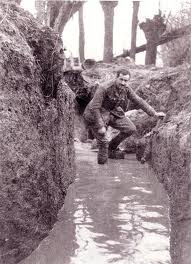
(Image is property of owner and is used here without permission, but utmost respect and reverence.)

Indirect influences

Image

I naturally speak with one voice. If pressed, I can speak with a second, more professional voice; the one that presents concepts to advertising clients or interviews corporate executives for a magazine. But most of the time, I speak with one voice that uses a vocabulary and attitude established over my many decades of life.

I think this is largely the case for everyone, which is why it is not surprising that people tend to write stories with a series characters that can largely sound the same. The protagonist is typically quite distinct. The antagonist is often distinct. But after that, I don’t know that I could tell who was speaking if I didn’t read the names.

These secondary characters, by their very nature, are not our focus as writers, so they tend to have the least developed back stories even in our heads. Other than age or gender, what makes the paperboy different from the local sheriff from the school teacher?

The same thing that makes you different from me. Our experiences, past and present.

One of the tricks for informing a character that I learned in improv was to endow a character with a trait that only you as the performer knew, and ideally a trait that had absolutely nothing to do with the scene that was developing.

In one exercise, I decided that my character had a bad right ankle, so that every time I took a step, my ankle would cause me pain. I didn’t hobble or verbally express the pain with either an “Ow” or “Would you slow down, my ankle hurts”.

The pain was expressed, however, in how my character responded to his environment and the other characters in the scene. What might have been a middle-of-the-road character suddenly became a terse character, someone in a hurry to get things over with, quick to anger or frustrate, less apt to engage in activities.

The bonus aspect of the exercise, for me, was that my fellow improv performers quickly got and responded to my character, but when pressed, could not exactly say why I behaved as I did.

Now change that ankle pain to a foot orgasm (read about it this week online) and see where that character would go (probably jogging).

The sore ankle had no impact on what role the character played in the scene, but more in HOW that character performed that role. And this made the character stand out from all of the others.

I go back to this exercise often, when I find myself creating secondary or tertiary characters that aren’t differentiated from the background. A little something to make them stand out, however briefly, in their scene.

If you find yourself stuck, give it a shot. What could it hurt, other than possibly your ankle?

(Image is property of owners and is used here without permission, because it makes me happy/indifferent/snarky/hot.)

Seven words

Seven words

The lifespan of a conversation never had

Pain unrecognized invalidated

Anger unexpressed unbearable

Disappointment ingrained unappeased

Sadness unutterable unrelenting

Despair intolerable unfathomable

Acceptance impossible unreachable

Hope unthinkable unrealistic

I am sorry that I hurt you

Seven words

Image

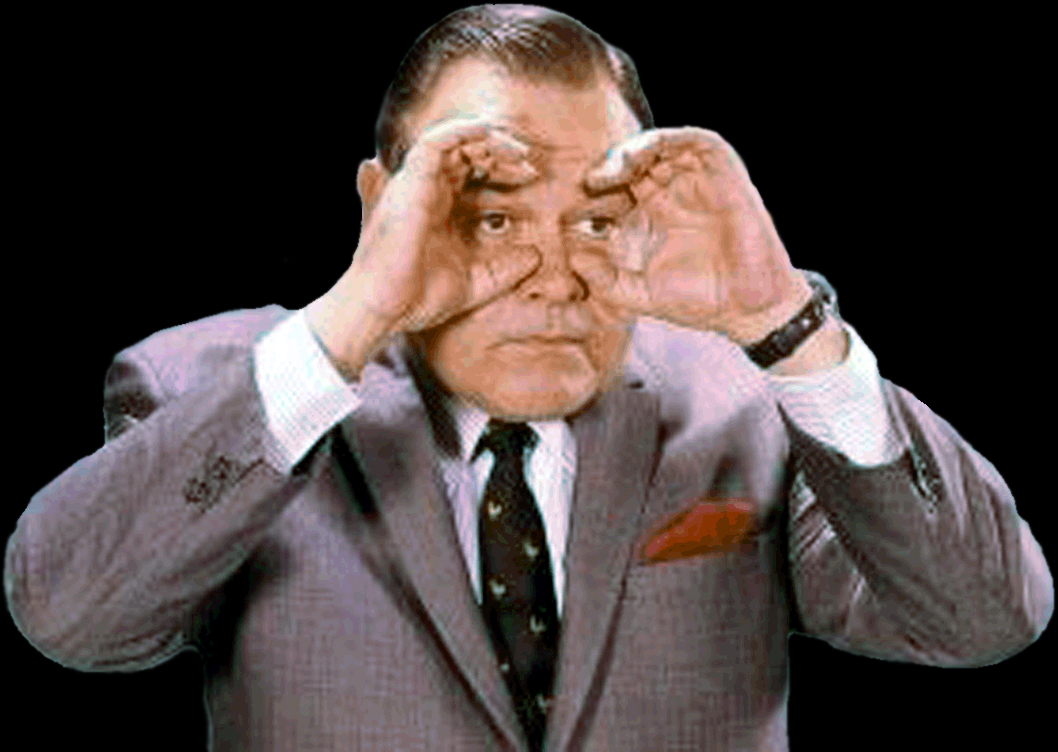
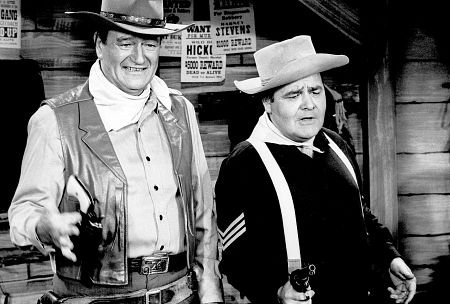
Jonathan Winters

Jonathan Winters cameo Jonathan Winters John Wayne Jonathan Winters and Muppets

A giant passed away yesterday; a man of unsurpassed talent the likes of whom may never be seen again.

Other people practice improv. Jonathan Winters was improv and so much more.

The man could literally make me wet my pants with laughter. He could not be stopped once he hit his stride, which was usually on his second step, and the more you threw at him, the funnier he became.

He wasn’t funny for the sake of being outrageous, as so many improv people can be. He said things. Implied things. Made you think long after you stopped laughing, but without being on-the-nose or preachy. Every character he created was someone you knew, you’d met, you’d watched.

He made everyone around him try harder, to raise their game, whether he intended it or not.

In a famous Letterman interview, Winters and Robin Williams began to play. You want to see love? Look at the expression on Williams’ face. That is love, adoration, worship, friendship and a ship-load of other emotions all balled into one irrepressible face.

Winters had his demons, as most comedic and artistic talents do, but those demons made his talent that much bigger.

I love you Jonathan Winters for the joy you brought to my life. And as with Robin Williams, I too wanted to and still will do better, strive higher, reach further for having had you in my life, if only through a television or movie screen. I want to make you proud, even if you never knew I existed.

I will miss you.

(these images are used without permission)

The phone call

Warble

Mounting tension, anxiety

Warble

Movement, lifting, listening

Enquiry

Commentary

Fire, pain

Denial

Heat, anger, accusation

Denial, response, anger

Profanity, wrath, threats

Pain, ire, disappointment

Accusation, fire

Denial, frustration

Heat, threat

A slam, a sob

Warble

Exhaustion

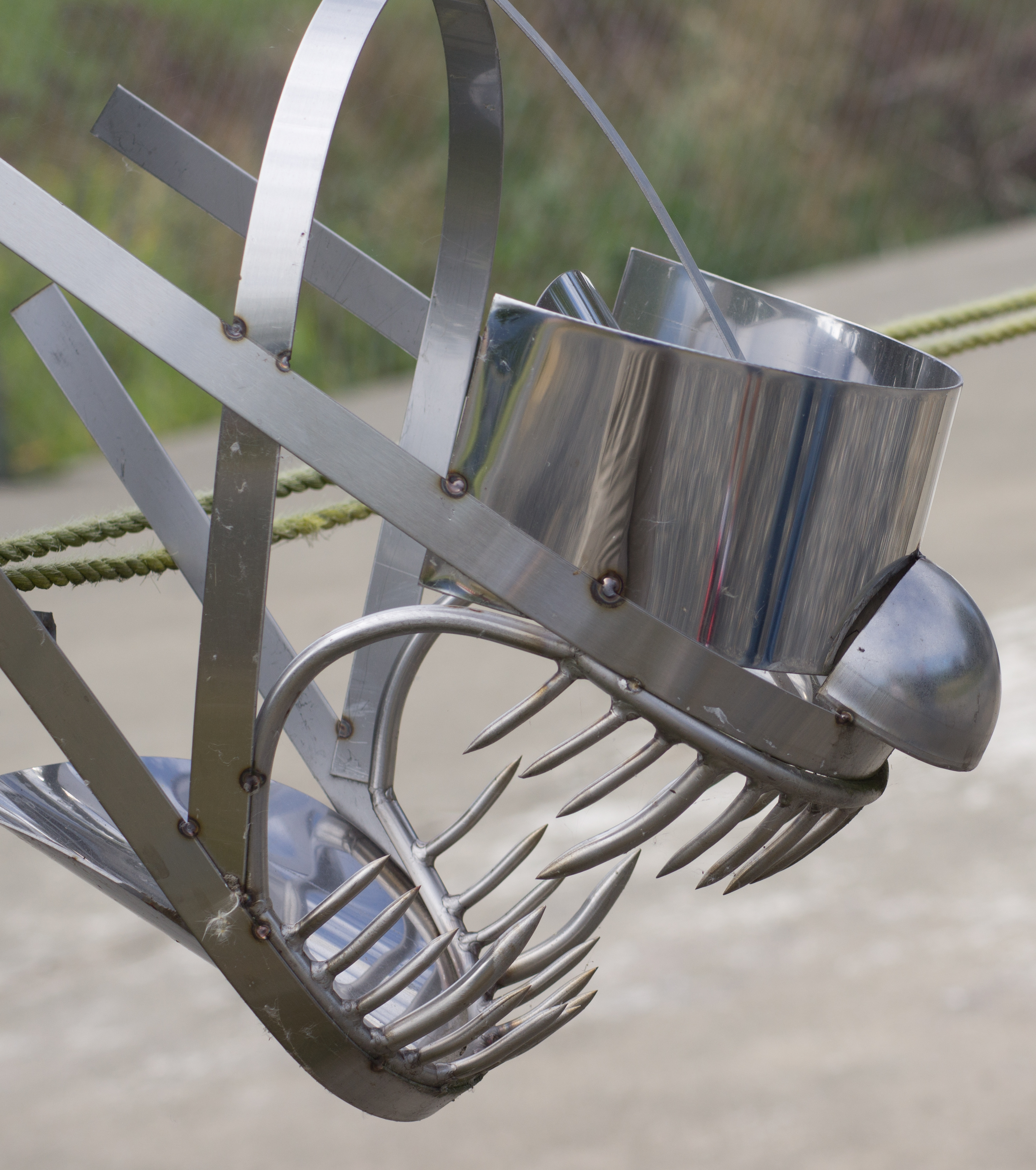
A macabre mask captures the anger and pain I overheard in the phone call. (Created by an incredible metal-working artist in Chilliwack, BC)

A macabre mask captures the anger and pain I overheard in the phone call. (Created by an incredible metal-working artist in Chilliwack, BC)

The word was “Thirsty”

The result of another writing exercise…and the slow recognition that almost everyone I write about is seriously messed from by previous relationships. Ah, hindsight.

“Thirsty?” Jim asked, as he watched Phil throw back yet another pint of beer without coming up for a breath.

“L’il bit,” was all Phil would say as he signaled the bartender for another round.

Jim had seen Phil drink before, but there was something different tonight; something desperate about the way Phil was pounding them back that reminded Jim of a man who was trying to drown himself 12 ounces at a time.

“Something you wanna talk about?” he asked, as he watched Phil connect the sweat rings left on the bar by the humid glasses; a massive game of connect-the-dots with no picture in sight.

Phil just sat there, head down, slightly slumped forward. The fact that his eyes were open was Jim’s only clue that he hadn’t fallen asleep; that and the random ministrations of a finger on autopilot, running across the bar.

Without Jim realizing it had happened, two more pints had suddenly shown up on the bar, bubbles rising skyward to form a frothy blanket across the top of the glass. Jim looked at his own mostly full glass and realized that he was falling seriously behind. Over the sound of his own gulping, he thought he heard Phil say something.

He looked over to see Phil staring at him with very weary eyes. Jim shuddered. Phil was only two years older than his own 42 years, but right now, he had the eyes of someone twice as old; someone who had been run over by life and was too tired to hide it.

“She called today,” said a voice that seemed to come from nowhere. “She called the office.”

Without explanation, Jim knew that “she” was Phil’s ex-wife Jacklyn; a wraith who liked to appear every so often to throw Phil off kilter. It wasn’t anything malicious, mind you. It was just that neither of them had ever really accepted that they were divorced. Phil and Jacklyn were proof that no matter how much two people love each other, no matter how much you live for the other’s company, that is still no guarantee of a successful marriage.

“How is she?” Jim asked, as much to fill the void as out of interest.

“Dunno,” Phil replied, between mouthfuls of beer. “I was out.”

A new low, Jim thought. Phil hadn’t even spoken to her and he was in a state. This didn’t bode well for the rest of the evening.

Beautiful sadness was the first thing I thought when I lined up this shot (Tofino)

Beautiful sadness was the first thing I thought when I lined up this shot (Tofino)