Day at the Beach – Feathers

So, despite some early morning rain, Sunday ended up being a beautiful hot day in Toronto. And where better to spend such a day than wandering the boardwalk along Lake Ontario in the east end of the city.

At first, I wondered where the hell everyone was…the beach was almost deserted. Had traffic and construction finally gotten the better of everyone? And then it dawned on me: World Cup!

The day got that much more beautiful.

I’ll have another set of photos tomorrow, but here are some images of the birds that came out to play. Not all are technically wonderful photos…mostly a sign of how bright it was, how far off the birds were and/or how much I still have to learn about using my camera.

Nonetheless, I hope you enjoy.

See also: Day at the Beach – Not Feathers

Back to the Aquarium – Everybody Else

And after the sharks, the jelly fish, the rays and the reef, there is all of the other amazing animals at Ripley’s Aquarium of Canada in Toronto.

See also: Shark Tank, Jelly Fish & Friends, Reef Madness and Call Me Ray

Back to the Aquarium – Call me Ray

Aside from the shark tank, rays also have their own tanks where they rule the roost at Ripley’s Aquarium of Canada in Toronto.

See also: Shark Tank, Jelly Fish & Friends and Reef Madness

Back to the Aquarium – Reef madness

For its sheer variety of creatures and its rainbow mosaic of colours, the coral reef displays are high on my list when visiting the Ripley’s Aquarium of Canada in Toronto.

See also: Shark Tank and Jelly Fish & Friends

Back to the Aquarium – Jelly fish and friends

After having fun with the sharks at Ripley’s Aquarium of Canada in Toronto, we moved onto the jelly fish exhibit!

See also: Shark tank

Back to the Aquarium – Shark Tank

Last Friday, I took my wonderful friend Victoria to the Ripley’s Aquarium of Canada in Toronto, her first time there and my second. And of course, I had my camera along (which means I can only suspect Victoria was there, my face buried in my camera as it was).

Today’s pics are of the tunnel through the shark tank. Other photos will appear over the next several days.

PS I welcome you to check out Victoria’s blog: Victoriously.

Victoria Day fire works

Monday, May 19th was Victoria Day in Canada, a chance to celebrate the birthday of the sovereign in charge when Canada was founded.

But more importantly, it’s fire cracker day to kids across the country (we also shoot fire works on July 1st, Canada Day).

Having moved to the Beaches neighbourhood last summer, it suddenly dawned on me that they annually hold a fire works display down the beach from me. At 10 pm, with the first boom that eked through my window, I grabbed my camera and headed outside.

All in all, the photos aren’t too bad, but I will definitely have my tripod with me on July 1st to get steadier photos (one is particularly funky).


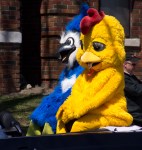
Christ on a float?

Okay, so this post was a few weeks in coming, but a few weeks ago, my neighbourhood hosted an Easter parade. Unfortunately, I didn’t know this was going to happen, so I only managed to get shots of the end of the parade.

This was my first Easter parade, so you can only imagine my disappointment when I got to the end and (SPOILER ALERT) it completely lacked a float dedicated to Jesus Christ.

No crucifixion. No stone-covered cave. No ethereal presence floating above a float.

Clearly, the Godling has a thing or two to learn about marketing from Santa Claus.

Enemy—The movie with the meta title

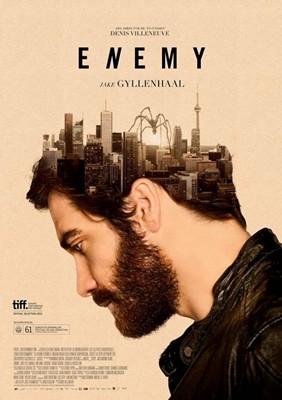
Enemy

So, it was $5-Tuesday yesterday at the Carlton Cinema in Toronto and a friend invited me to see a movie called Enemy, starring Jake Gyllenhaal. Like any weary movie-goer, I immediately jumped online to look at the trailer and thought, “Hmmm, weird, but interesting”.

I was half right. The movie was weird.

At this point, I should probably say “SPOILER ALERT”, but truth be told, I am not sure that if I laid out every event that occurred in this movie, you would know what was happening. I sat through it and I don’t know what happened.

As the trailer indicates, the movie is about a man who is dissatisfied with his life—never explains why, he just is—and is merely going through the motions of living until one day when he realizes that his exact doppelganger lives in town.

Terrified at this revelation—never explains why, he just is—he is nonetheless drawn to his twin and after jumping through a series of over-complicated hoops, he meets the twin. At which point, he second-guesses his decision and it is his twin’s turn to go neurotic—never explains why, he just does.

As you may have guessed from my above repetition of “never explains why”, my greatest issue with this movie is unclear character motivation. Perhaps it says more about me and my life history, but I have no idea why any of these characters acts as extremely as they do.

I am confident that it is part of the artistic conceit of the piece that at numerous moment are you fully sure which Jake Gyllenhaal character you are watching onscreen. The challenge with this is that the emotional rollercoaster of each of the characters is such that from cut-to-cut within the same scene, I am never sure which Jake Gyllenhaal character I am watching. I ended up watching the characters’ clothing rather than the actor’s face to try to follow the story.

And the motivations of the secondary characters are just as muddy for me, although at least here, we have different actors and so don’t have the Gyllenhaal rabbit hole with which to contend. Like a faucet tap, the emotions of these characters change with a flick—questioning in one moment, horny in the next, and angry in the third, and all in the span of 30-45 seconds.

A definite statement of who I am, I spent much of the movie trying to predict the reveal of the story based on the clues or purely on conjecture.

Twins separated at birth? Time travel with a glitch? Parallel universes collide? Psychotic episode of one man leading two lives?

No SPOILER ALERT to say none of these came to fruition, but that still doesn’t mean that any of them may not be true. Hell, all of them might be true. I don’t know.

And any hope of a conclusion is muddied by a massive metaphor that scurries through this movie—I won’t tell you what it is—and yet offers no satisfying explanation.

Enemy is described everywhere as a thriller. I’d be more inclined to call it a puzzler…and even that may be too lofty. Head-scratcher and headache-giver might be more accurate.

As I read up on the movie to write this, I learned the film won Canadian Screen Awards (our Oscar) for Best Director and Best Supporting Actress, and was nominated for Best Film. I find that disturbing.

The film was based on the 2002 novel The Double (O Homem Duplicado), by Portuguese author José Saramango. Part of me wants to find the novel to see if it is any clearer than the movie, but as of this moment, a bigger part of me just wants to walk away from this entire episode in my life.


Previous posts about characters in writing and film:

Just Tell The Story – Austin Film Festival

The Dignity of Characters

A Matter of Character

Can You Relate?

I Am Always Right (Motivation)

Dara Marks at Toronto Screenwriting Conference 2013

Unpacking Baggage (Part One)

Unpacking Baggage (Part Two)

Re: Rewrites (Part Two)—Toronto Screenwriting Conference 2014

Chitlik_2

In Part One of this post, we examined Paul Chitlik’s approach to reviewing the structural elements of a story, including the idea that a screenplay is actually comprised of four stories: The plot-based Main Story, the relationship-led Emotional Story, the protagonist’s internal Personal Growth Story, and the humanizing Antagonist’s Story.


Dissecting character

To truly understand your main characters, Chitlik recommends building something of a character profile that you can use as a steady reference while examining how the character acts and speaks within the screenplay. This is critical, Chitlik says, because often when you start writing a screenplay, you really don’t know your main characters and as you write, they will become more defined.

For assistance and more insights, Chitlik highly recommends Lajos Egri’s book The Art of Dramatic Writing.


Protagonist

Physiology – develop a sense of what your character looks like even if you don’t incorporate it into your story (something beyond “tall man in his mid-20s”)

Sociology – imbue the character with a social history: family life, school, jobs, etc.

Psychology – how does your character think and respond to his or her environment? Here is where the personal flaw comes to the fore

How is the character reflected in his/her dialogue? – in how he sounds, the word and grammar he uses, and how he acts

What is your character’s defining line? – Think Dirty Harry, a battle-weary cop with a strong moral center who is begging the criminal to make him shoot “Go ahead, make my day.”


Antagonist

Physiology

Sociology

Psychology

Human quality – what makes your antagonist more than a 2-D character? Why should we empathize with him or her?

How is the character reflected in his or her dialogue?

What is the antagonist’s defining line? – Think Terminator and “I’ll be back.”


Dissecting the screenplay itself

Chitlik then lifts his view slightly higher from the page, offering ways to dissect the screenplay in a more technical manner from its content to the paper itself.


Seeing the Scene

Each scene has all 7 of the structural elements of your story, so be sure you can identify them, although be aware that some elements may not occur within the lines of the scene but rather are implied or referenced within the lines.

Does the scene have any/enough/appropriate conflict? Chitlik finds conflict to be the #1 problem of new writers, which leads us to a discussion of goals

He is adamant that every character within a scene must have his or her own goal, however prominent or minimal to the plot. The conflict, he suggests, comes from the points at which these goals thwart or oppose each other.

Also, look at the emotions of the characters within the scene. Do you maintain them throughout the scene or when they change, do they change when something acts to cause the change?

And for emphasis, re-examine the conflict of the scene.


Looking for Cuts

Chitlik suggests he has never read a screenplay that couldn’t benefit from cutting about 10%.

He suggests you start by looking for scenes that lack conflict, don’t move the story forward (treading water) or fail to illuminate one or more characters in some manner.

Either eliminate these scenes or find some way to incorporate the missing ingredient.

Then look to cut off the heads and tails of scenes, starting later or ending earlier. An example he gives for the tails is leaving the scene when the final challenge arises or is issued, and he points at the work of David E. Kelley in this regard. The resolution of the challenge, he argues, can easily be worked out by the audience through the start or context of a subsequent scene. You don’t have to always spell things out.


Presently Presentable

This is the challenge of first impressions. Chitlik gives the example of a former student who sent him a screenplay she wrote and on the title page, she misspelled her own name. This, he says, did not bode well for what was to be found inside.

Chitlik describes this as the Mercedes Benz theory of script presentation. If you are going to spend $100K on a new Benz and you are presented with two cars—one that is absolutely beautiful and immaculate and one that is dinged up and dirty—which one would you choose to spend your money on?

Look at the pages of your screenplay and ask yourself how much of the page is black and how much white. Before looking at a single word, readers will be repelled by heavy screenplays with long descriptive sections or heavy dialogue. Find ways to break this up to leave more white space on the page.

Chitlik’s other cautions are: Spelling, Punctuation and Grammar.


The Rewrite Plan

Chitlik’s plan is straightforward and iterative:

  1. Write a biography of the protagonist in his/her own words/language
  2. Write a biography of the antagonist in his/her own words/language
  3. Reread the screenplay, making notes on the above topics
  4. Create a new beat sheet of the screenplay, adding new scenes that help your story play out and cutting old ones that don’t work or aren’t necessary
  5. Write new pages and rewrite old ones from the beginning
  6. Go back to Step 3

If it sounds like a lot of work, it is, but Chitlik promises that with each iterative run, the work gets easier and the outcome improves.


tsc-logo