Crunchies, High Park, Toronto

And of course, what would a photography trip of mine be without a survey of all the things that crunch at Toronto’s High Park.

See also:

Grenadier Pond, High Park, Toronto

Gardens & Zoo, High Park, Toronto

Gardens and Zoo, High Park, Toronto

Aside from the more natural wilderness of Grenadier Pond, High Park is also home to beautiful gardens and a small zoo of various hoofed animals.

See also:

Grenadier Pond, High Park, Toronto

The Voices gets a hearing (a review)

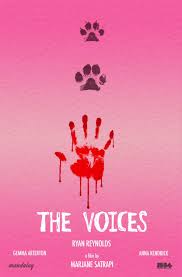
poster

Not one to generally participate in the Toronto International Film Festival, it was a rare evening in which I found myself standing in a rush line to see a movie, but a friend of mine wanted to see the latest Ryan Reynolds film called The Voices. This is not your typical Ryan Reynolds film.

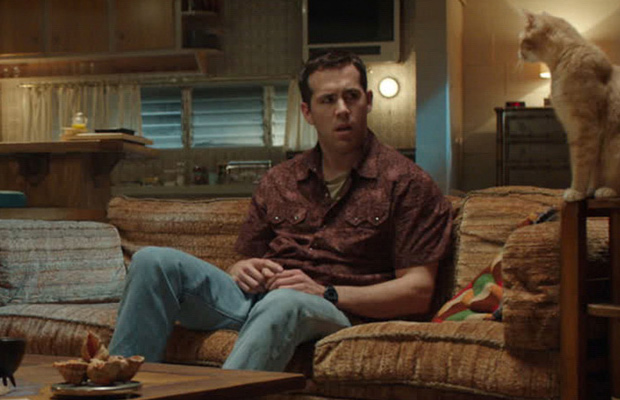
Reynolds is Jerry Hickfang, a good-natured if skittish guy who works in the shipping department of a bathroom fixtures company in Milton, the derelict remains of a town in Nowhere, USA. Jerry is a nice guy, who lives above a derelict bowling alley with his dog Bosco and cat Mr. Whiskers. And of course, Jerry has the hots for office cupcake Fiona, a misplaced Brit with a craving for bigger things, played by Gemma Arterton. For her part, Fiona finds Jerry a little creepy, but is not above using his puppy lust to get a lift during a rain storm.

Jerry Hickfang (Ryan Reynolds) struggles to understand Mr. Whiskers' advice

Jerry Hickfang (Ryan Reynolds) struggles to understand Mr. Whiskers’ advice

Oh, and the other thing you probably need to know about Jerry is that he is in court-appointed psychiatric treatment, isn’t really good about taking his meds, and has a family history of hearing voices, but that’s not something he likes to talk about.

So far, so harmless. But after a literal run-in with a deer who begs Jerry to finish him off, the blood-letting never really stops and the rest of the movie becomes a giant slip-and-slide of mostly implied blood and offal.

So, The Voices is a thriller…and a drama…and a comedy…and a farce. You squirm in revulsion (never really reaches horror) as often as you LOL.

Director Marjane Satrapi (who brought us Persepolis) attended the screening and describes the story as completely fucked up. She said she was mesmerized by the screenplay and desperately wanted to meet the man who penned it to see what messed up human could conceptualize such a story. So she was surprised when she met Michael R Perry, a tall normal-looking fellow.

Marjane Satrapi

Marjane Satrapi

As Perry explained, he wanted to look at the life of someone of multiple personality disorder from their perspective rather than society’s. And in that, he succeeded.

With Satrapi’s help, the two clearly crafted the oddly idyllic yet troubled world within Jerry’s mind, giving the audience only the briefest glimpse of how the rest of the world saw things. With Jerry, it was all perfect love and butterflies. To the rest of us, it was squalor and pain.

Where the story fell down for me was in explaining why everything went wrong so suddenly. In writing circles, we talk about “Why today?” Why does your story begin today, at this moment, and not 6 weeks ago or 5 months from now? In this case, what was the event that caused Jerry to go from lovable schmuck to… Some might suggest it was the deer accident, but even Mr. Whiskers called that bullshit

The other place I felt let down was that the conflict never escalated, it merely accumulated. Rather than find interesting ways for Jerry’s mania to manifest itself, the writer simply repeated the same event over and over, as though each of the characters voluntarily walked into a wood chipper.

And I don’t know if the ending was presented as written or was something that blossomed out of Satrapi’s mind, but it was lazy and bordered on the ludicrous. It was a bad after-taste on a film that had merits.

Ryan Reynolds, Gemma Arterton, Anna Kendrick

Ryan Reynolds, Gemma Arterton, Anna Kendrick

On the plus side, Ryan Reynolds was amazing to watch…this was not the charming goofball romantic comedy, although Jerry was sadly charming when he wasn’t obviously tortured by his snarky brogue-spewing cat. (NOTE: Bosco and Mr. Whiskers easily have the funniest lines in this film.)

Gemma Arterton’s Fiona was a delight. She was delicious to watch as the voluptuous vixen whose biggest fear in life is being bored. Problem solved!

Anna Kendrick (Up in the Air), as tier-two love interest Lisa (see, the writer even repeated this beat), was largely wasted. Her character was pretty two-dimensional. As nice girl looking for a nice guy, her function was to have Jerry explain his condition to the audience (exposition disguised as opening up).

The Voices is definitely worth seeing, if only for what it attempts to do. I can’t help feeling, however, that if they had rewritten the screenplay a few more times, they would have achieved their goals much better than this.

My recommend (and that of my friend) is that this is a Cheapie Tuesday movie (or whatever your local half-price day is).


PS I was unable to find a trailer for this movie, so I offer the following interview with Satrapi at Sundance London…I will warn you, however, that it does include a lot more info about the plot than I gave above.

Grenadier Pond, High Park, Toronto

As the last days of summer plummet into autumn in Toronto, I decided to make a pilgrimage across town to High Park, a vast wooded acreage (hectarage?) in the city’s West end. Where I expected to wander the woods, however, I ended up spending almost all of my time along the shores of Grenadier Pond.

For a little of the mythology of Grenadier Pond (and those pesky invading Americans), there’s a nice piece in the Toronto Standard.

Creation (a poem)

Hand-writing-on-paper-with-pen1

A river is born

As the ball rolls,

Moisture captured

In upper strata,

Bleeding to layers below.

Impressions made;

Streams carved;

The universe is marked

By passing thought.

From irrigated channels,

Ideas unsaid find root.

Worlds are created.

Worlds are changed.

And life takes new meaning,

If only for a moment,

Until the ball rolls again

In fields yet untilled.

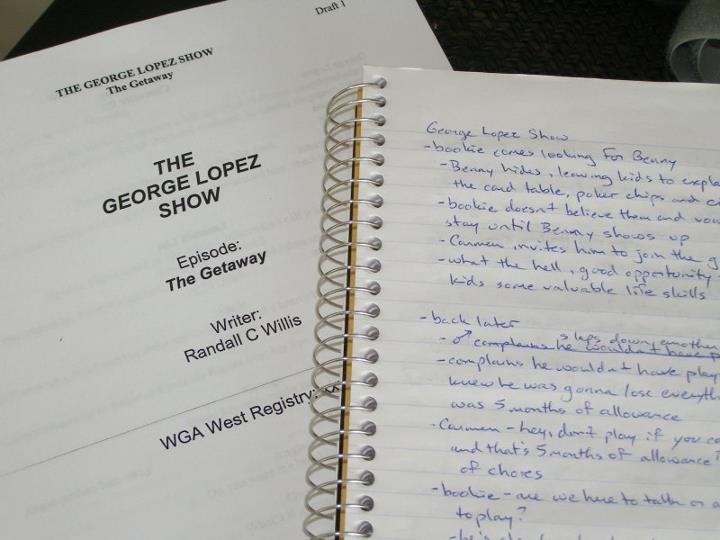
The episode that never existed

The episode that never existed

The job you hate is killing your creative spirit

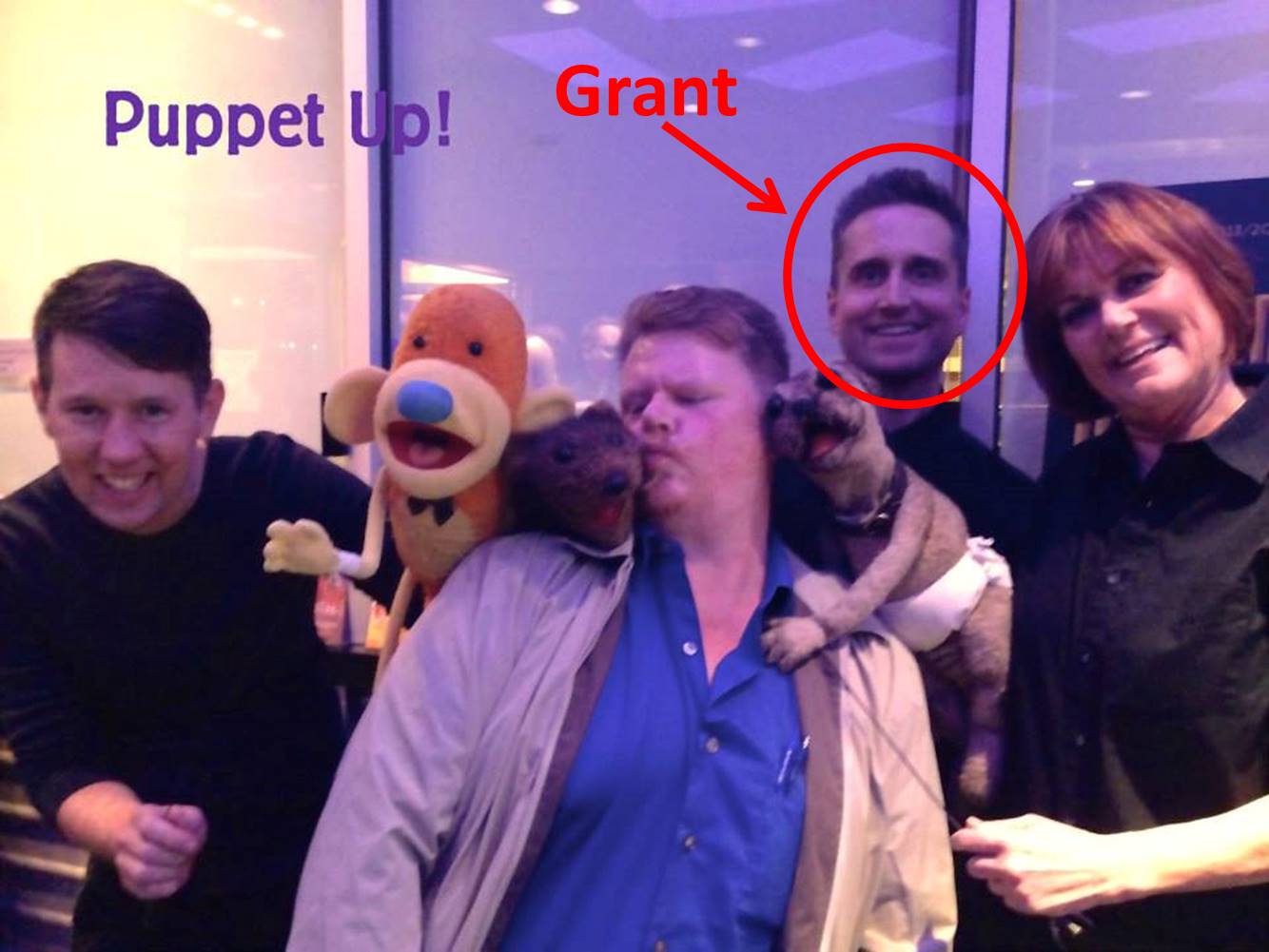
The wonderful Grant and his weasel buddy join me for a post-show photo (also shown Peggy Etra and Brian Clark).

The wonderful Grant and his weasel buddy join me for a post-show photo (also shown Peggy Etra and Brian Clark).

Grant Baciocco is an amazingly talented actor and puppeteer I had the good fortune to meet online and then in person when he came to Toronto with the improv puppetry show PuppetUp! (about which I have raved extensively elsewhere).

Well, aside from his amazing talent, he also has a wonderful creative spirit, both in the sense of what he creates and how he tries to inspire others to be open to their own inner creative spirit. To this latter point, he has a wonderful blog Grantblog: Ruminations & Pomposity that I heartily recommend.

At the beginning of each week, he posts Creative Mondays and today was no exception. Today he talked about “A job you hate”, which I excerpt below:

For years after college, about ten in fact, I worked as a substitute teacher.  It was an okay job, certainly flexible enough and I was making money, but by the end of those ten years I was starting to burn out because it was not the job I wanted to be doing.  I was good at it and several times I was told I should get my teaching credential because I was such a good teacher.  But deep inside of me I could feel a darkness building up because I was doing a job I absolutely hated.

The moment I made the decision to stop subbing and focus on The Radio Adventures of Dr. Floyd, it felt like a weight was instantly lifted from my chest.  I attempted, for the millionth time, to lose weight and it was actually working (lost 80 pounds).  I was just a million times happier than I was when I was subbing.  And guess what?  I became more creative!  This was the creative boom era for Dr. Floyd, because I was doing something I love.

Grant’s is a lesson too many of us learn very late in life (NOTE: I did not say “too late in life”…it is NEVER too late).

In my case, I was fortunate enough to have a series of occupations I loved for a period…scientist, science writer, media relations, advertising copywriter…but with each, I stayed in the occupation long after I had fallen out of love with the choice. I had to be a certain amount of miserable before I was brave enough to jump.

But two years ago, I completely jumped ship to pursue my true love: story telling (screenplays, novel, sketches, short stories). I’m still not making money off any of this, so I live on freelance magazine writing and ad copywriting. But to Tiffany’s point, it is what I do to eat and sleep under a roof.

If you are fortunate to know your passion—it can take time to figure out what it is—then you must make it happen to find happiness (hunh, “happen” and “happiness”…so similar).

And if you haven’t fully defined your passion yet, go with your gut until you do. Explore the universe of opportunities, until you do. You may not end up the financially richest person on the planet, but you’ll definitely be one of the spiritually richest.

If you don’t want to take it from me, then take it from Grant. Find your happiness and pursue it with everything you have. Despite appearances, you really do have nothing to lose and everything to gain.


You can follow Grant on Twitter: @ToasterBoy

Ten books that influenced my life

There is a thing going around Facebook these days—electronic chain mail, really—where friends invite each other to list the 10 books that have stuck with them through life. Thanks (??) to my friend Nancy for inviting me to participate.

shakespeare1

The Complete Works of William Shakespeare

Since my first introduction to the works of the Bard in Grade 9 (Merchant of Venice) through my many pilgrimages to The Stratford Festival in Southern Ontario, I have been entranced. No matter what is going on in my life, I find solace and refuge in the pages of the Master’s folio. Favourite play: Henry V. My lone tattoo: Julius Caesar V.v.73.

His life was gentle, and the elements

So mix’d in him that Nature might stand up

And say to all the world ‘This was a man!’

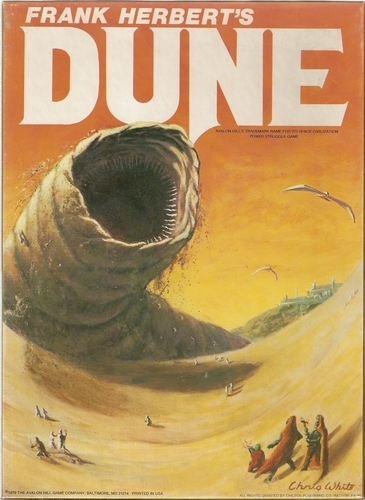
dune_cover

DuneFrank Herbert

For such a short book—and particularly within such a long series—this is a novel I return to on a regular basis. The story is woven so tightly and yet offers mythic proportions. The language is at once simple and profound…and incredibly quotable. Every time I read the story, I find a new interpretation.

I must not fear. Fear is the mind-killer. Fear is the little-death that brings total obliteration. I will face my fear. I will permit it to pass over me and through me. And when it has gone past, I will turn the inner eye to see its path. Where the fear has gone, there will be nothing. Only I will remain.

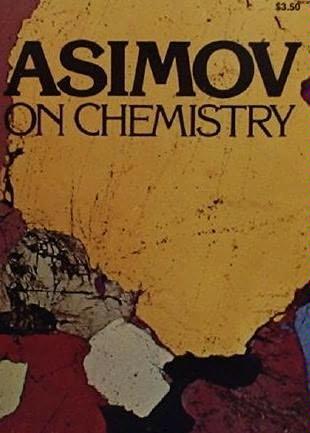
asimov

Asimov on ChemistryIsaac Asimov

To a budding geek, this book and the next on my list were manna from heaven. Although I was a fan of Asimov’s fiction, I found a home in his look at various subjects in science (and eventually theatre and religion). He explained the universe to me in a way that no one else could and gave me the tools to extend that learning to others (whether they wanted to hear it or not).

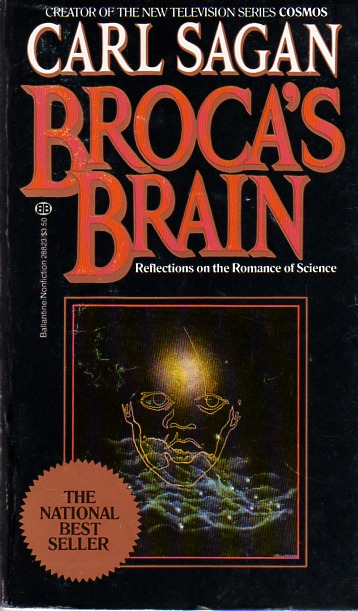
Broca

Broca’s BrainCarl Sagan

While Cosmos was the book (and television series) that everyone else was talking about, this was the book that first grabbed my attention. Like Asimov, Sagan had a way of contextualizing science that few others have mastered, offering not just a series of facts, but the stories of the people behind those facts, including the dearly departed Paul Broca. Asimov and Sagan likely influenced my decision to move into science writing.

Wolf

Never Cry WolfFarley Mowat

If not for my abhorrence of discomfort, I would be living on the Canadian tundra today, studying and communing with the wolves. That’s how powerful this book was to me. Many criticize Mowat for fabricating many elements of his non-fiction and particularly in this story, but I don’t really care because he grabbed a young mind (mine) and transported me into the minds of the wolves he studied for the Canadian government. To see these creatures as more than just vicious wild dogs was life-changing.

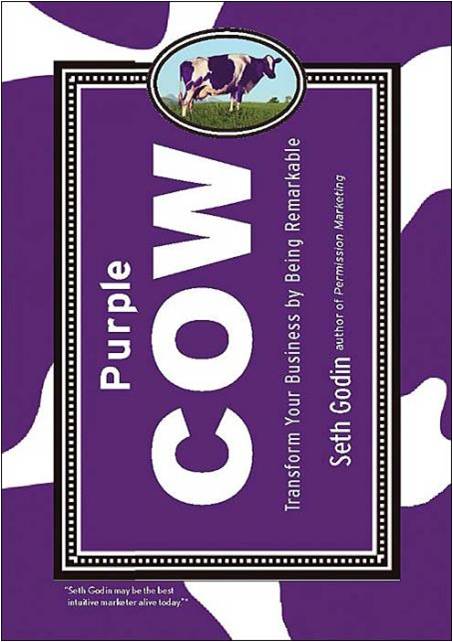
purple-cow

Purple CowSeth Godin

Drive past enough farm fields filled with cows and eventually you cease to see them. Drive past a purple cow, however, and you stop. In short, the premise of a book of blog entries that challenges the reader to skew their view of the world with an eye to drawing the attention of your audience. Less an epiphany than a confirmation of what I already believed, Purple Cow told me there was merit in my mania.

Natural

Popular Natural HistoryRev. J.G. Wood

Published in 1885 (my edition), the content of this book is not only dated (it includes a discussion of the dodo), it is often outright wrong. But it holds a special place in my heart because I received it from my great-grandmother and it initiated my fascination with antiquarian books, something that continues to this day despite my inability to financially support it. These books—particularly the non-fiction—open a portal into another time and another way of thinking, much as the rest of my book collection will in 100 years.

????????????????????????????????????????????????

The Love You MakePeter Brown & Steven Gaines

The murder of John Lennon in 1980 took what was a passing awareness of The Beatles and turned it into an obsession for me. I had heard the music, I had seen the movies, but I was completely unaware of their context. Thus, the biography of the Fab Four, written by insider Peter Brown (…called to say, you can make it okay, you can get married in Gibraltar, near Spain), blew the lid off my ignorance, pouring kerosene on a flame that has not died in the intervening 34 years.

Elements_of_Style_cover

The Elements of Style – Strunk & White

As a writer and editorialist (I will not call myself a journalist…different craft), you might suspect that this book is close to my heart because it helped me become a better writer. And you would be DEAD WRONG. Just the opposite, in fact.

Instead, this book informed me that my new Editor had absolutely no respect for my writing nor that of my writer/editor colleagues. In our first staff meeting, she cheerfully told us she was looking to make some changes in our magazine and then gave us each a gift of this book. In my eyes, it was tantamount to handing Dostoyevsky a first-grade reading primer and suggesting he rewrite Crime & Punishment in the format of Mr. Whiskers (no self-aggrandizing hyperbole intended). I moved on.

Etymology

Chambers Dictionary of Etymology – Robert K Barnhart (Ed.)

As a word-jockey, history-buff and all-around geek, I can never be sure if my wife’s gift of an etymology book was a reward or a well-disguised pun-ishment (the hyphen should give you a clue as to why she would punish me). Regardless, the book has served me well as I endeavour to sculpt language to fit my needs, crossing words at their roots to develop new varietals that colour an otherwise mundane existence.

Besotted Voce – A few (hundred) words on character voice

Voices-graphic-2

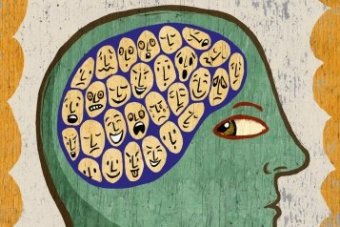
No matter with whom you speak, to an outside observer, the two of you sound different.

I’m not talking about the pitch or timber of your voices—although those likely are different—but rather those other factors that make your speech distinct: cadence, word choice, sentence structure, etc.

For five years, I worked as an editor and writer on a couple magazines in Washington, DC, and over that time, I found that I could tell which of my workmates wrote which articles without looking at their bylines…even without our names, the pieces had our fingerprints all over them.

How Mark Lesney opened an article was very different from the way Nancy McGuire would.

Mike Felton explained his thesis very differently from David Filmore.

And the two Randys were polar opposites in sentence construction: Mr. Frey being pithy, while Mr. Willis would wax poetically at the drop of a proverbial hat.

Some might argue that these differences reflect variations in style, but I believe the situation is less superficial than style. Instead, it reflects who we are as individuals; our personalities, our experiences, our beliefs, and our feelings both emotional and physical. We speak/write as the people we are at that particular moment. I as me and you as you (this sentence screams for a “Goo-goo goo-jube”).

Ideally, this same variety of voice should occur in the fictional characters we create, whether for screenplays, novels, short stories, sketches or whatever.

With all but the shortest lines of dialogue, a reader or listener should be able to tell which lines correspond to the same speaker even in the absence of any overt identifying marks such as the character’s name.

A simple example: Despite achieving the same goal in response to another person, the following lines say them differently:

“You’re nuts.”

“You are insane.”

“You’re one crazy motherfucker.”

“That, sir, is the most ridiculous thing I have ever heard.”

* silent stare *

With these five lines, we see differences in:

  • Relative status (e.g., tone)
  • Degrees of personal control (e.g., length, use of contractions)
  • Emotional state (e.g., length, word choice)
  • Possibly educational or social background (e.g., vocabulary, use of jargon)

It can be a challenge for one mind (the writer’s) to create several distinct voices. It is a form of consciously willed multiple personality disorder. Thus, early drafts of a literary work may sound flat because too many of the characters are speaking with the writer’s voice rather than their own.

In theory, this is an easy thing to fix during revisions. Simply take the sentence and knowing what you do about your character—his or her emotional and psychological state, status, social and educational background, life experiences, physical challenges—make the line more accurately reflect how the character would speak.

One complicating factor is that a seemingly simple change in response by one character may elicit a change in the response of the dialogue partner(s). I am likely to respond very differently if presented with any of the five reactions above. And thus, the writer has triggered a change-reaction that reverberates through the scene.

A second complicating factor is that the change in dialogue may also need to be paralleled with a change in physical action. A high-status character is more apt to be purposeful in her actions and responses, whereas a low-status character may be more physically erratic or perhaps flinching in his response. And again, the change-reaction echoes through the scene.

This may sound daunting. It isn’t…but it is a lot of work.

The trick is becoming comfortable with the many voices you need as a writer. We all start with our own voice, the omnipotent godhead that creates the fictional universe; but the trick comes in developing the skills to inhabit other bodies, other souls as you create other characters and then being able to shift back and forth as required without going insane (well, not fully insane, at any rate).

My best advice to any writer who struggles with this is not to take yet another writing class, but rather to take an improv class or several. Despite the terror that this advice may elicit in some (most?) of you, I can think of no better way of understanding—and more importantly, exercising—the differences between different characters.

You’ll quickly find improv is not about funny; rather it is about truth. And once you’re comfortable with experiencing the truth of a character, the rest of this is much less daunting.


As seems to be a routine now, today’s post was prompted by the amazing words of Marsha Mason and the Why The Face blog she posted earlier today.

PS The magazines from my Washington days were Modern Drug Discovery and Today’s Chemist At Work (because Today’s Chemist in the Boudoir was already taken).