Impractical joke

pie-in-face

Believe it or not, for several years, I worked in a hospital research lab. (Won’t mention which Toronto hospital lest people stop taking their sick children there.)

What I hadn’t realized until one fateful day was that not only was I a pretty good biochemist, but I was also a damned fine engineer…when motivated.

And what better motivation than a plate of whipped cream to the face. Really, the old pie-in-the-face chestnut.

And the chortling culprit was a friend who worked across the hall. (I won’t name names because Andy, who was still quite green then, is now a medical practitioner.)

We laughed. Boy, I sure look silly. You got me. And now…you must die (of embarrassment)!

Doing my best MacGuyver, I set to work.

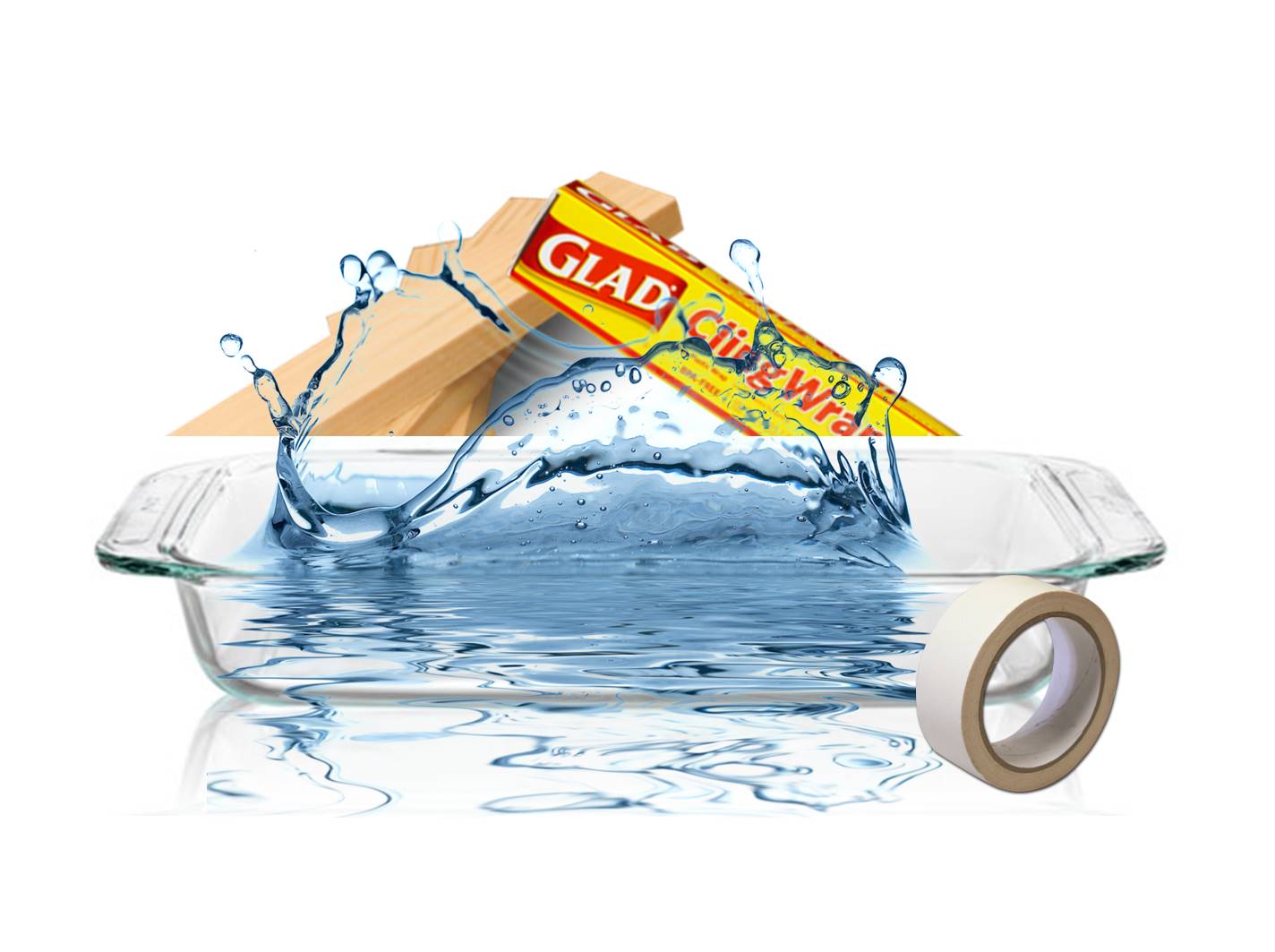
Pyrex baking dish? Check.

Cling film? Check.

Wood block? Check.

Masking tape? Check.

Water? Double check.

Tools

The plan was simple. Convince A.G. that he had a research paper we needed in his desk drawer, which we had booby trapped with a tray of water.

When he opens the drawer, AHA!

Oh wait, the tray will slide backwards.

Support the tray in the drawer so it doesn’t slide, and AHA!

Nuts, even if he pulls the drawer forward, Conservation of Momentum says the water will slosh the other way.

Cover most of the tray with cling wrap so the water has nowhere to go and sloshes back all the more forcefully, and then AHA!

Oh but why would he sit down to open the drawer…they slide so easily.

Stick masking tape under the upper rim of the drawer so he has to yank it open, and then… (Aha, right?)

Yes, Aha.

AHA!

To avoid suspicion, I had a mutual friend ask Andy for the paper…he sat at his desk and tugged the drawer, but it was stuck. Sitting at the desk, he pulled harder and yanked the drawer open. And was hit with a wall of water that completely drenched his lower half.

AVENGED!

He wandered the halls looking like the Lusitania went down in his pants.

It may all be quite silly to you, but to this day, this represents my greatest engineering feat…something that, for me, rivals the Pyramids of Egypt and those irritating metal ring puzzles.

Booby trap

(This silly memory prompted by yesterday’s post by Ned Hickson about his fake poo…you think it’s easy being this juvenile?)

Convince readers to take a leap of faith, instead of a flying leap

Don’t let him know, but this is actually a really interesting (and surprisingly useful) post from my friend Ed Slickson…

…his name is what? What did I say? Oh, whatever!

Ned's Blog's avatarNed's Blog

image Welcome to Ned’s Nickel’s Worth on Writing, when I share writing wisdom gained through 15 years as a newspaper columnist — or as my editor calls it, “Reasons I have a cardiologist.”

But enough accolades!

As I’m sure all of you remember, the last NWOW was about the importance of honesty in all genres of writing…

Fine, no one remembers.

At least you’re honest.

In that post, I talked about how writing must ring true with readers for them to become emotionally invested. This is particularly important when it comes to fiction, where you are often asking readers to suspend their disbelief and buy into something — such as an eccentric character, over-the-top situation or random reference to the new iPad6® in hopes of getting a free one — that requires a leap of faith. I this case, your reader is making a “leap” over reality because they have…

View original post 1,250 more words

Much Review About Nothing

http://prettycleverfilms.com/movie-reviews/modern-times/review-much-ado-about-nothing-2013

There is a certain degree of irony in this review of Joss Whedon’s Much Ado About Nothing which is just that; the reviewer complains at length about the bare-bones nature of the production and the lack of interpretation over mere presentation (i.e., modern dress without modern sensibilities).

I seriously doubt the reviewer would have had quite the same issues with the setting simplicity if this had been a staged production rather than a filmed production, and it is important to remember that Shakespeare’s plays were written for the stage, not the screen.

As to modern interpretation and sensibilities, I largely think this is impossible without a complete rewrite of the play into another project all-together and most particularly in the case of the comedies. Take, for example, the movie 10 Things I Hate About You as a modern interpretation of The Taming of the Shrew.

The tragedies so better lend themselves to simple modern reinvention by simply changing the uniforms of the many and varied soldiery or political figures. As an example, I give you House of Cards, which to me is a retelling of Richard III with a soupcon of Othello for flavour.

And let’s face it, Much Ado About Nothing is one of the more frivolous and playful of Shakespeare’s comedies…it is play for the sake of play. It offers no deep meaning but instead centres on the silliness of love; a topic that will remain universal for all time.

Which brings me to the biggest challenge I have with this review.

The reviewer seems to assume that Whedon meant for this to be anything more than a lark…but Whedon being Whedon, a lark that he filmed with very good friends who happen to be very good actors.

I know as little as the reviewer, but I have every reason to believe the choice of modern dress was simply the reality of not having racks of Renaissance costumes lying around the house. The choice of black & white cinematography was perhaps an homage to the screwball comedies of yesteryear, of which this play is truly one and possibly the most yester of yesteryears.

As you can probably tell, I liked the movie…I had few expectations other than laughter and those were met. I also liked Kenneth Branagh’s version, which really only differed in multiple sets, colour film and period costume.


How I Met Your Series Finale

tv-set-with-a-broken-screen-81240769

Earlier today, my friend Marsha Mason posted her weekly blog on Why The Face. This week, Marsha chose to focus on series finales of television programs, picking up on the How I Met Your Mother phenomenon now that the teeth-gnashing and hair-pulling have died down.

Marsha considered this outpouring from the perspective of the magnanimous response of the show’s creators. An excerpt of her blog post:

And while they did what they felt they needed to do to bring their story to its completion, there was no way they were going to tell their audience that any of their feelings were wrong.

A beautiful way to look at the uproar.

But of course, Marsha’s post also made me think about the challenges of writing a series finale (damn you, Marsha, you made me think again).

I truly feel for showrunners who are faced with this task. It is a daunting task made that much more difficult by a dedicated audience, who for the most part can only be disappointed.

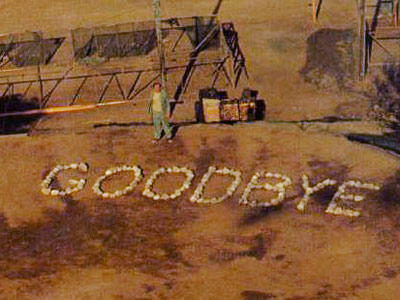
For me, the best series finales were done by shows like The Fugitive and M*A*S*H, where luckily, the writers had a hard end point in their story, i.e., the capture of the real killer and the end of the Korean conflict, respectively. In these cases, the resolutions between characters was more obvious (not to give the sense that the episodes would have been easy to write or weren’t written well). Similarly, The West Wing had the end of Bartlett’s 8-yr term and the inauguration of the new POTUS.

Mash-Goodbye_l

For other shows, the challenge is that the lives of the characters typically continue beyond the finale, if only in their fantasy worlds. From their perspectives, this isn’t the end of their lives; it’s Tuesday.

Thus, writers are forced to pencil in a flurry of seemingly arbitrary events to explain why the characters are parting ways or moving on, and typically, this means leaving a lot of unresolved questions for the audience. Closure is impossible when nothing is truly closing.

Take, for example, the end of The Sopranos…the family sits down to dinner in a restaurant…fade to black. After years of a series filled with violence that would make Titus Andronicus blush, the pure normality of this ending was almost a let down, and yet, rang as a true moment in human lives.

sopranos_final_scene_1

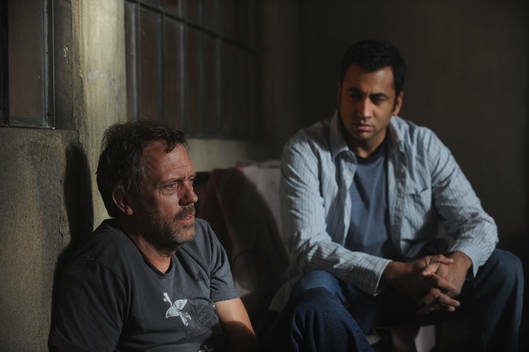
The alternative is to go big, such as the ludicrous ending of my beloved series House. The final 20 minutes or so looks like it was written by a group of pubescent boys hopped up on 24 consecutive hours of Grand Theft Auto. For god’s sake, it’s Gregory House…you couldn’t have him die of something he and his team couldn’t diagnose in time, only to have a letter arrive a week later from House showing he knew the diagnosis months ago?

houseandkutnerburning

Of course, the biggest complication is likely that most series have run out of steam well before they are given the opportunity for a series finale. All of the really great opportunities to end the series have long passed, the characters have little left to say to each other and it is only the blood-from-a-stone networks and die-hard fans who keep applying the paddles to the moribund concept. I give you the finale of Seinfeld. For this reason, I really do not look forward to the series finale of The Big Bang Theory.

TelevisionSeinfeldFinale

(I feel an admonition from Lee Aronsohn coming on.)

In these cases, better the mercy killing of cancellation than the sad wheeze of life-support equipment.

(Images are property of owners and are used here without permission…finale!)

You never “no”

Because my mother refuses to throw anything away, but prefers to store it in a drawer or cupboard until I come for a visit, I was reminded this past trip to BC about a phase in my writing career that kind of occurred sideways.

Several years ago, I was in desperate need of a job (wow, some things never change). So desperate, in fact, that I decided to take a flyer on and leverage my background in science writing and magazine editing for a job as editor of a manufacturing automation industry trade magazine published by CLB Media.

It should be noted, I knew and to this day know nothing about manufacturing. But I can write and I can edit and I have a good idea for design. I also have a fondness for money.

It was obvious throughout the interview with the magazine’s Publisher and Director of Sales & Marketing that I could write and knew magazines well, but that if I got the job, I would have to scramble to understand the issues and lingo of a completely alien industry. They were kind, but it was obvious the job and I were not a match.

When I finally got home, I was in the middle of discussing the interview with my wife when I received a phone call from the company VP, Publishing who said my interviewers had mentioned me and that the company had a medical humour magazine (Stitches) and companion consumer pub (Stitches for Patients) that were in need of a new editor. Would I be interested in talking to him and its Publisher the next day.

Uh, yeah!

The job didn’t last very long–the magazines had been in a steady decline for years before they found me and never recovered sufficiently to keep operating–but it was a great experience, and not only allowed me to write nerdy medical comedy but also allowed me to eventually add the title Associate Publisher to my resume.

And all because I was desperate enough to apply for a job for which I had few qualifications but showed general competence and a willingness to listen and learn.

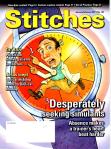
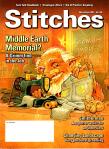
I offer the covers of my first three issues of each magazine below (thanks mom).  The insane covers are the work of the amazing illustrator Max Licht under the direction of the equally amazing Art Director Graham Jeffrey.

New trend in grad gifts has parents going for bust

Frightened fathers of the world unite (or invite me to your daughter’s graduation ceremony)

Ned's Blog's avatarNed's Blog

image After reading about how the parents of LuLu Diaz gave their daughter $6,000 breast implants for her high school graduation gift, I couldn’t help but be shocked by the idea of a father agreeing to anything that would make his teenaged daughter more enticing to teenaged boys. As luck would have it, I actually spent several years in my teens. Because of this I can tell you there are many teenaged boys who still haven’t made it past the “breast” portion of this column. Sadly, some may never finish reading it because, in order to break them out of their current hypnotic spell, it will become necessary for a close friend or family member to light them on fire.

Let’s face it: This is the nature of most men until the aging process inspires a level of physical maturity that dethrones sex as the main motivator. While there is no…

View original post 544 more words

The Race: A Celtic Legend (sort of)

Two great chieftains stand at odds, menacingly snarling at each other, mighty armies at their backs. The only thing separating them is a simple Celtic druid.

“I am the first son of Glamorgan, who was first son of Dafydd, who was first son of Griffold, so the kingdom is mine to rule,” bellows Dafydd of the Mountain, raising his might sword above his head in challenge.
3c7b0a5ce88509b57f74d5f1a519c380

Llewellyn of the Glen merely spits at Dafydd’s feet in disgust.

“Dogs, every one of you,” he snarls. “I am the first son of Blundewey, who was first son of Varus, who was first son of Glendoch. I am the rightful ruler!”

Dafydd drops into a fighting stance, causing Llewellyn to swing his axe.

“Enough,” cries the druid, slowly rising to his feet. “We cannot have our lands torn apart by yet another war.”

The two chieftains slowly lower their weapons as the druid passes between them and walks to the edge of a cliff. With great ceremony, he points across the waters toward a small island on which stands a great castle.

castle

“The sea brings us great wealth, but it also makes us vulnerable to attacks from across the waves,” the druid intones. “The great ruler of this land must therefore not only be a mighty warrior on land, but also a true master of the seas.”

“That is I,” spouts Dafydd.

“I am the master of the sea,” scoffs Llewellyn.

“The sea shall decide who is best,” replies the druid. “The succession shall be decided with a race. The first to touch the shores of that island shall rule over all.”

The two chieftains grunt their ascent and turn their armies in opposite directions toward the pebbled beach at the base of the cliff.

tintagel

Resting against the shore, two great ships swallow up the dwindling sunlight. One ship is jet black and sports a great dragon that snarls at the waves. The other is blood red with a horse that flails its anxious hooves into the surf.

The clansmen climb into their great ships, taking up their oars, brethren at their sterns ready to push them into the raging waters.

All noise stops, even the breeze, as the druid takes up his position and raises his arms to the sky.

“Let the gods of sea and air bless your efforts and deliver this land its rightful king,” the druid declares before violently dropping his arms to his sides.

With a mighty grunt and the hiss of resistant pebbles, the two teams push against the ships, forcing them into and over the arguing waves.

In each ship, the warriors pull mightily at the oars, the whine of the oar locks providing counter stroke to the rhythmic grunts of the rowers. The sea fights back, but the dragon and horse cannot be denied and slice their way through the offending currents.

stbrendanboat

At first, the race is even, both armies in deadly earnest to claim the crown for their sovereign, but bit by bit, Llewellyn’s boat begins to pull ahead.

“Harder, you demons,” Dafydd cries to his men. “Pull harder or suffer the fires that Llewellyn has planned for your wives and children.”

Dafydd’s men strain harder against the oars, but the dragon continues to press onward, seeming to clip the tops of the waves sent against it.

“Give me your sword,” Dafydd orders one of his warriors.

“You cannot reach him with a sword,” the warrior cries, handing over his weapon.

celtic_sword_la_tene_iron_age_forged_swords_b

“I don’t have to reach Llewellyn,” Dafydd bellows, raising the sword above his head. “I have to reach the island.”

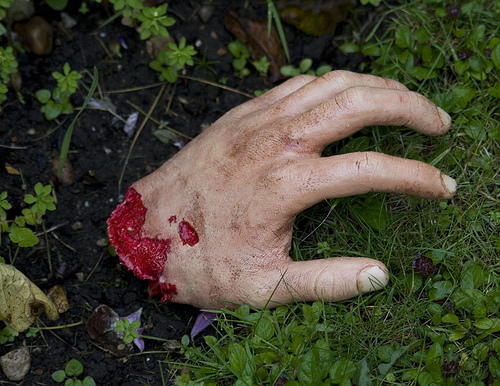
With that, he brings the sword crashing down onto the railing next to him, where but moments ago, his hand rested. CHOP!

Dafydd roars as his life blood spews across the deck and his severed hand cartwheels around his feet.

Stabbing the sword into the floor between him and his warrior, Dafydd quickly snatches up his hand and cocks his arm for a mighty throw.

“The druid said it,” he yells into the wind. “The first to touch the shores of that island shall rule over all.”

With all of his might, Dafydd throws his severed hand forward, watching it arc over Llewellyn’s boat on which it rains blood, toward the island. Everyone behind him rises to their feet to see the fleshy ballista arc…arc…arc…and…

SPLASH! Into the water a good 30 feet from shore.

Everyone on Dafydd’s boat is crest-fallen, as blood gushes from his open wrist onto the deck. Clenching his remaining fist in anger, Dafydd turns to his warrior.

“The other hand!”

“What?” the warrior cocks his head.
hand

“Cut off my other hand and throw it,” Dafydd commands.

“I’m not going to cut off your other hand,” the warrior complains. “How will you hold a sword or feed yourself?”

“When I am king, others will defend and feed me.”

“I don’t know,” the warrior whines. “Should we put it to a vote? Everybody raise a hand-”

Dafydd grasps at the warrior’s vest but really only knocks him to one side.

“Cut off my other hand or I will cut you in half right here!”

The warrior looks at him as if asking “really”. Dafydd just holds his fist against the railing and nods at the sword.

The warrior raises the sword above his head and…

“Nothing will stop me,” Dafydd declares through gritted teeth.

CHOP!

Dafydd screams into the night as the warrior grabs the hand and throws it for all he’s worth.

SPLASH! It doesn’t even travel 30 feet from the boat.

Dafydd stares at the warrior, eyes unbelieving what has just happened.

“Nothing will stop me,” he repeats, “except a warrior that throws like a girl!”

Resigned to his fate and starting to feel the effects of the blood loss, Dafydd slumps against the deck.

“I guess that’s it then,” he sighs to no one. “Llewellyn will be-“

“You could touch the island with your foot,” the warrior thinks out loud, slowly reaching for the sword.

foot

“I am not giving up my-“

CHOP!

“Aaaaaaaah!”

SPLASH! The foot quickly sinks and resurfaces to float against the nearby hand.

Through a haze of agony, Dafydd looks up to find the warrior approaching with the sword. With his arm stumps and one good leg, he backs toward the rowers.

“No, no, no!”

CHOP!

“Aaaaaah!”

SPLASH! Another foot.

The night is filled with the cacophony of CHOP! Screams! SPLASH! as shins, legs, forearms take flight one after another, only to fall short.

In the distance, Llewellyn’s men puke over the side of their boat as it slowly fills up with blood and human tissue, their puke coursing streams between the severed body parts.

A soldier on the battlements of the castle, however, sees a fuzzy round ballista finally strike the shore, rolling up the beach and coming to rest against a bolder.

Face contorted in perpetual agony, a small rivulet of blood makes its way from the hairline of Dafydd’s decapitated head. As the blood reaches his right eye, the eyes suddenly fling open and look around.

Macbeth

“I did it!” Dafydd cries into the night. “I won! I won! I am the king of-“

He is suddenly distracted.

“Oh, shit.”

A raccoon grabs Dafydd’s head and drags it down the beach.

And thus began the reign of Llewellyn the Fully Assembled.

(Images are property of owners and are used here without permission because the druid said it was okay.)

And that’s the (mostly) truth – my new bio

Okay, so my producer for SomeTV!, the sketch comedy insanity currently in production in Toronto, asked me to provide him a short bio for the group’s web site.

Keeping in mind the sheer brilliance/stupidity of what we are attempting, I sent him this:

A born story-teller and punster, Randall told his first knock-knock joke in the Obstetrics Department of a Toronto hospital at the ripe old age of today. His early comedic repertoire consisted of poop jokes, fart jokes and snot jokes, but on learning that Vaudeville was dead, he learned how to write. After several failed attempts at living other people’s lives (scientist, journalist, press agent, ad man), he has more recently focused his energy on sketch comedy and screenwriting. In 2014, Randall won the Nashville Film Festival award for Best Animated Feature for his screenplay Tank’s. His influences are caffeine, Mel Brooks, sleep deprivation and human frailty.

Would love to hear your thoughts!

Randy (the one in the middle)

Image

Talking Comedy—Toronto Screenwriting Conference 2014

(L to R): Jeff Biederman, Katie Ford, Joseph Raso, Andrew Clark

(L to R): Jeff Biederman, Katie Ford, Joseph Raso, Andrew Clark

This past weekend, TSC2014 convened a panel of sitcom showrunners entitled Comedy Is A Funny Business, where the panelists discussed various aspects of developing comedy for Canadian television.

The panel was comprised of Jeff Biederman (showrunner for Spun Out), Joseph Raso (showrunner for Seed) and Katie Ford (showrunner for Working the Engels), and was moderated by Andrew Clark, Director of Humber College’s Comedy Writing and Performance Program.


How do you know you or something is funny?

From Raso’s perspective, most people who want to write comedy typically have good comedic sense, and that it is important to trust your own instincts on what is funny. The rest of the writing process comes down to mechanics. Ford added that it is often about what you watched as a kid, the shows you grew up with.

Biederman mentioned that he had taken improv and stand-up comedy classes several years earlier, but had never really enjoyed them. He still wanted to be associated with comedy, however, so he gravitated to comedy television. Ford is an advocate of such classes, however, as she feels it gives the writer a sense of what you are up against. And Raso echoed those sentiments suggesting it also makes sure that you give actors solid material with which to work.


Can you discuss the seeming renaissance of sitcoms in Canada?

According to Raso, it is important to have a solid premise or conceit for a show, a distinct way to describe the core idea, because simply having ideas for individual episodes won’t cut it. One of the challenges for Canadian sitcoms, he warns, however, is that it is so hard to get networks to see beyond the first year—one and done, as he describes it—which has doomed many shows in the past. For most shows, the first season is difficult as the show hasn’t yet managed an identity or found its audience.

For writers, Biederman adds, this can be a big challenge as it can take a while for a new writer to break through, and there are not a lot of places to build the necessary skills or unique voice needed to be successful.


Can you describe the pitching process?

For Biederman, it is about going in with a story. Rather than try to tell jokes or act things out, he prefers to focus on why this show, what is particularly interesting about this premise. And if you already have a spec pilot script, all the better, because it helps the creator and writer maintain his or her power in the conversation and gives the network something more definitive to look at.

For Ford, it is about walking in with your logline, introducing a sense of theme, outlining a typical episode and then describing the characters. But perhaps most importantly, letting people see your passion for the project and how you connect with the subject matter.

Raso couldn’t agree more. For him, the personal angle is key.

Ford also suggests that it is vital you engage the executive you are pitching because he, she or they are your first audience.


Can you talk about the writers’ room?

Biederman describes the mix as people sharing responsibility for the final product, more as partners than anything in a hierarchical sense. He even brings in outsiders to punch-up the script (e.g., jokes). He describes the room as ruthless but welcoming and admits that it’s not always easy to be in the room or to run it.

Ford agrees, suggesting that it is a collaborative environment, but is by no means a creative free-for-all. Her job is to listen for the voices that add to the show. Raso, meanwhile suggests that the hardest part of the job for him is that he has to say no a lot, but despite that difficulty, it is vital that the room start off with real, honest and open discussion.

Biederman suggests that table reads with the actors can be invaluable to the writers but that they don’t always happen. Scripts for a multi-camera show can change 50 or 60 times over the course of a week, Ford adds, limiting the usefulness of table reads. And single-camera shows tend to work on tighter timelines, so again table reads are not always possible.


So, how does a new writer get into the room?

Biederman suggests starting as a script coordinator rather than try to get in with samples of your writing. The job will give the novice writer invaluable production experience. Ford agrees, suggesting that her own script coordinator kept things together on her show.

Ford also suggests that new writers need to be heard, to get their voice out there by whatever mechanism they can find, whether Twitter feeds, blogs, anything. It’s about demonstrating your strengths and your personality to show you’d be a good fit for the room.

According to Biederman, the make-up of the room has steadily changed over the years. It’s not just television writers, but also stand-up comedians and performers who bring unique voices into the mix.

The biggest place he sees new writers fail is in not sending their work when he offers to look at it. The fear of it being not quite perfect kills a lot of opportunities. Just send the work, he says.


Spec script or spec pilot?

Both Raso and Ford were adamant that they much prefer to read original work over spec scripts. According to Ford, they’re just not interested in reading yet another Big Bang Theory spec or whatever show is popular. She finds it much harder to get a sense of a writer’s unique voice by looking at a script that is trying to be someone else’s voice.

tsc-logo

On Second Thought

Do you think?

Why do we give our second thoughts so much more sway than our firsts? What is so magical about the second thought that makes it more believable, more honest, more sensible?

I had second thoughts about writing this simply because it was prompted by a conversation with a friend who is struggling with a dilemma. Would my friend be upset I was talking about him or her? Making light of his or her dilemma? Sharing secrets that weren’t mine?

I can deal with that.

Rare is the person who completely trusts his gut; who goes with the first thought that comes into his head. To the outside world, such a person is often considered rash or impulsive, perhaps even flighty. Rarely is he described as definitive or confident.

Second thought, in contrast, is seen as considered, rational, reasoned…well, thoughtful (or thought full).

The Senate of Canada’s Parliament has oft been described as the chamber of sober second thought, as though the House of Commons is populated by ADHD-riddled chickens, prone to explode at the slightest provocation.

(The realities of the Canadian Parliamentary system are fodder for a different blog post.)

The concept of sobriety does point to one of the benefits of second thought. The decision not to pursue flights of drunken fancy such as driving home after drinking too much rather than take a taxi. But while this points to the benefits of second thought, it also points to its source: Fear.

We have and listen to second thoughts because we are afraid. We are afraid that our first thought was ill-considered (rash) and might result in failure. And because we don’t want to take responsibility for that failure, we build a rationale for our alternative thoughts, thus making ourselves more confident in our decision.

The harsh truth, however, is that no matter what our final decision, there is always a risk of failure, perhaps catastrophic. The Titanic and Hindenburg were well-considered ventures based on sound and common practices. It was the unforeseen (if not unforeseeable) incidences that doomed the exercises.

To a greater or lesser extent, gut instincts and reactions are You unencumbered by rules and conventions. They represent the way you view the world and yourself without the censorship of social pressures. Thus, I believe, they more accurately represent your goals and desires, and ultimately what will make you happy.

Now, this is not a belief that was reasoned on the basis of careful study. If nothing else, that would defeat my argument. It does, however come from a lifetime of observing others and myself.

I have no reason to lie to myself when under my own control, in the absence of other influences—chemical or human. Thus, my gut instinct is my truth.

This doesn’t mean that I have to follow it—there may be extenuating circumstances to go another way—but I should never deny the instinct.

In denying it, I will never have the opportunity to build faith in it, and ultimately, second thought is a lack of faith in myself.

confident