You won’t like this

Many of us spend our lives trying to figure out how to do only the things we like, only the things that feel good, while leaving all of the other stuff behind us. An entire industry—retirement planning—has been built on the belief that if we can put up with the stuff we don’t want to do for a bit, then we can spend the rest of our days comfortably doing only the things we want to do.

Thus, what I’m about to ask you may sound crazy or counter-intuitive.

Have you given any thought to doing something you don’t like?

We read books that match our world view of the way things should be. We see movies and watch television shows that fit comfortable patterns. We hang out with friends and in places that work with our vision for ourselves. But with all due respect to those things and people, these choices limit us.

I’ve read a variety of business books over the years, and I found a number of authors who I think are pretty intelligent, so I read everything they produce. But what dawned on me a couple of years ago was that rather than simply expanding my understanding of how things worked, most of these books really just helped rationalize what I already felt to be true—or at least what I felt ought to be true. (I’m looking at you, Seth Godin.)

I first noticed the inverted reasoning when I read a book entitled Be Unreasonable by Paul Lemberg. His basic thesis was that companies run into trouble because they only do things that would be considered reasonable or expected by their peers and their customers. This behaviour, he holds, severely curtails progress and practically kills innovation.

It is the old “madness is doing the same thing over and over again and expecting a different result” scenario.

His response was to be unreasonable, to do the unexpected, to pretend the box doesn’t even exist. He was quite forthright in his demands on his readers to change their habits, demanding we make specific changes in our behaviours, which I will not go into here.

In principle, I agreed with him, but when it came to actually doing these things, I balked. The things he wanted us to do were completely unreasonable. Ahhh. And there it was. His thesis, slapping me upside the head, or perhaps more accurately, holding the mirror of smug superiority to my face.

Most of what I did was within the normal boundaries of my work or family life. And when I did step outside of those bounds—much to the angst of my bosses or family—my actions were still within the bounds of my personal beliefs, and were thus still limited.

In the years since, I have tried to be more unreasonable as a way of expanding my universe, even if it makes me terribly uncomfortable or those around me nervous. On the macro scale, I quit my job to try to become a working screenwriter…still an effort in progress. At a more micro level, though, I have explored new foods, lifestyles, arts and communities.

Image Dance class, hunh.

I recently watched Anime—Japanese cartoon—for the first time. Don’t see the appeal, but I’m willing to try a few more to see if I can understand the art form better. I listen to a broader selection of music and speak with a broader assortment of people to see what makes them tick and understand how they view the same world in which we both live.

So, I ask you to try doing something unreasonable with your life, however large or small.

If you like rock music, take in a live opera performance.

Gather a few coworkers together and brainstorm the hell out of a work problem…and then present your ideas to someone senior in the management chain.

Rather than go on that golfing weekend, run guns with Somali pirates across the Gulf of Aden (okay, I can’t advocate that one with a clear conscience).

Just because you’re dead certain you don’t like something still doesn’t guarantee you won’t or that you can’t do it. And in doing it—whether you liked it or not—you will have opened up another space in your universe and may find ways to expand your Art.
Approaches not panaceas

Image

As I said in Birth of a Reader, I am addicted to books. But even with my addiction, I must admit that every now and again, I wish there were no books on writing and most specific to me, screenwriting.

I say this not because the books available are particularly badly written, but more because they are well written by the author but often poorly understood by the reader; readers who more often than not are looking for the One True Way to screenplay writing.

The same is true in business books. If you tell me your favourite business author, I can tell you how—and possibly what—you think.

Seth Godin. Philip Kotler. Clayton Christensen. John C. Maxwell. Each of these authors has their own approach to various aspects of business, and the more you engage with each, the more your mind thinks in those directions. (It is probably more that they help you rationalize where you were going anyways.)

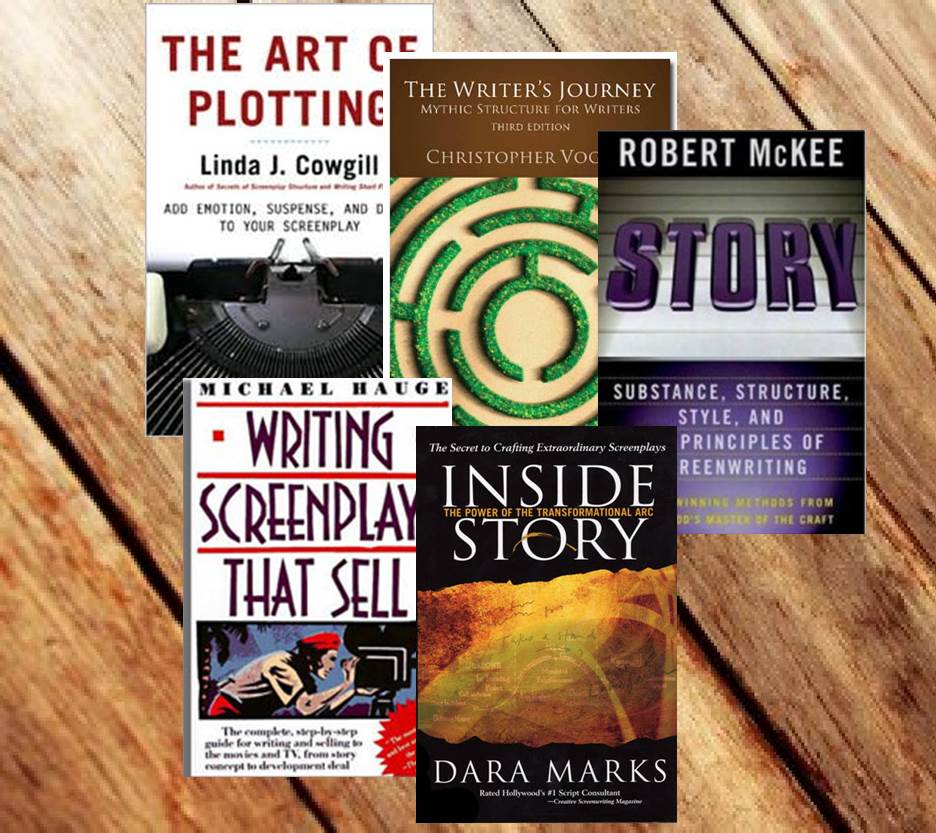
Linda Cowgill. Chris Vogler. Robert McKee. Michael Hague. Paul Joseph Gulino. Dara Marks. Each of these authors also has a trigger onto which student after student latches, like a remora on a shark, looking for their next artistic meal. Each offers an approach to screenplay writing that he or she found particularly useful.

Unfortunately, too many students miss the point that these are approaches or ways of thinking about screenwriting and not road maps to success. Each book offers one or more lessons that a writer can incorporate into his or her work today to make it better, but none of them are the One True Way.

In fact, too close a focus on any one author and you will never find Your True Way.

Too much focus on Dara Marks’ Inside Story and you will find yourself in a tailspin about Theme, as you struggle to force-fit your characters’ actions and dialogue around a theme that may or may not be true to your story.

If you find yourself able to quote Chris Vogler’s The Writer’s Journey, you’re likely describing your characters in terms of mythic archetypes a la Joseph Campbell and drawing parallels with The Wizard of Oz and Star Wars.

I’m not saying that novice writers should avoid these authors. I am simply saying that each should be approached cautiously as the novice writer—or seasoned writer, for that matter—can’t hope to achieve everything these authors discuss. The authors have the luxury of looking at a screenplay as a completed item and so discuss aspects and approaches for which you and/or your screenplay may not yet be ready. There is a reason that you will still find many of these books on the shelves of seasoned screenwriters…because they continue to find new lessons in old books as they develop their craft.

The authors and their tomes are more like a screenwriting buffet, offering you a variety of flavours that hopefully provide nourishment, but can also cause artistic indigestion.

So, sorry folks. The books offer no clues as to the One True Way. It doesn’t exist. And like everyone that came before you and will likely come after, you will continue to struggle as you search for Your True Way.

PS I own and have read books by all of the authors discussed here (and in Book larnin’), and every time I reread them, I find something new to apply to my screenwriting—including, interestingly enough, from the business writers.

One Person Too Many

Image

As another Toronto Fringe season approaches, I am reminded of the myriad one-person shows that infest these festivals. While these shows not universally bad and I applaud the bravery of the one-person, I must admit I tend to avoid them because when they are bad, they are interminable.

For me to attend a one-person show, I generally have to know and love the one person or know and love the material (e.g., a one-person show of Shakespeare soliloquys).

With a more-than-one-person show, the odds of me finding something to hold my attention increase dramatically. One or more actors may be worth following. The banter may be crisp. The scenery might be interesting.

With a one-person show, however, I really only have the actor and the material (sets are typically minimal to non-existent), so if I’m not enjoying either of those, then I’m screwed for 45-60 minutes.

Now, contrary to everything I have just said, I really enjoyed the last three one-person shows I saw at Toronto Fringe: Christine Aziz’s ELLAmentary, Jen Gallant’s Visa Called This Morning and a piece by Jerry Schaefer, all of whom I know from the Toronto comedy community.

Well, time to schedule another festival worth of plays—friends first.

(Photo is property of Toronto Fringe and is used here without permission.)

Penny Penniston at Toronto Screenwriting Conference 2013

Not Just Talk: How Writers Think About Dialogue

Image

Many people come to screenwriting because they have a good instinct for dialogue, but it is important to look beyond the instinct and understand the theory behind dialogue. If nothing else, this understanding is useful in helping the writer communicate with other artists so that you can articulate why you wrote a specific line a certain way, rather than simply standing there scratching your head saying “I dunno”.

Dialogue vs. conversation: Most people think writing dialogue is easy, Penniston says, because they are under the delusion that dialogue and conversation are the same thing. They are not. In comparing words to the keys of a piano, she loudly showed that conversation is noisy and discordant, while dialogue is musical, it is precise and crafted, it presents voices and themes.

Dialogue gives clear direction to the artist interpreting it, but it also gives the artist a chance to interpret the words in his or her own way, to show off his or her talents.

Like music, you have to develop something of a muscle memory for dialogue through repetition; however, understanding the theory behind dialogue will allow you to step back and analyze your writing with a certain distance.

Using visual cues, Penniston suggested that your story is much like an aerial shot of the Grand Canyon, with long, sweeping turns and deeper and shallower canyons. Dialogue, however, is more like someone kayaking through white water, experiencing the eddies and whorls of the currents and avoiding the rocks where possible.

Forces: Characters, she says, are very lazy. If left to their own devices, they won’t do anything. We need to get them to move and we do that by applying a force on them, which in physics has both a direction and magnitude. You can use physical forces, evolutionary forces (e.g., against death or for sex), cultural or societal forces (e.g., need to conform), or psychological forces (e.g., need for love or respect).

And these forces should be defined in very specific ways, again offering a sense of direction and magnitude. The strongest of all the forces on a character will drive your scene, but she stresses, the other forces are still important. This landscape of forces, she says, is the character’s situation in a scene.

Text and subtext: You want to be sure you put your characters in interesting situations with a network of multiple forces pushing and pulling your characters in different directions. You should always feel that your dialogue is adjusting and moving as these forces shift in strength and direction. A good line of dialogue, she says, manifests the sum of all of the forces acting on the character at a particular moment (e.g., personal baggage, setting, other characters).

In text, only one force acts on your character. In subtext, however, more than one thing is happening at one time. Subtext, she warns, is not the result of something being left unsaid but rather that so many things are trying to be said, but aren’t. It can manifest itself as an odd word choice given the superficial context or self-interruption and rephrasing.

When the forces converge and cancel each other out, she suggests, the character remains silent, unable to communicate anything. The character will look static, but he or she is not. It is a moment of paralysis (in physics, potential energy). And the line after a lengthy silence can be very interesting, she argues, because it is the first sign of which of the forces won. At the same time, she warns that we should look for lengthy pauses within our screenplays that do nothing for the scene or the drama. Those pauses aren’t based on reactions to forces.

Story beats: For Penniston, a story beat transitions when the balance of forces in a scene shifts, and for as a writer, you want to be very clear about the point at which this shift occurs. You should be able to point to the specific line in a scene.

Memorable lines, she says, come when the tension of a beat breaks. She harkens back to the Rule of Threes, suggesting the scene beat should occur in three steps: establish the tension, heighten the tension, and break the tension.

And wonderfully, she suggests, with change, you get an opportunity for surprise, such as the punchline of a joke. These lines can’t come out of left field, however. They must fit the context of the scene, but they can still be unexpected.

Writer Tricks: Create interesting situations in which your scene plays out. Pick a discordant place, person or circumstance. And avoid beat repetition. A specific combination of forces should never occur twice or you’ve just gone back to a previous beat and eliminated the reasons for everything that occurred between them.

Find interesting things within your situation. Add and/or explore details within your scene. Assign random elements and figure out how to make those elements work within your scene. Get insights from others and look for opportune moments to create truly memorable lines that encapsulate your character or the situation.

Tell your story as clearly but as efficiently as possible to avoid distractions. Only add narrative if it is revelatory or adds something new, and don’t direct. Although, she says, if you’re writing for studio readers, you may want to err on the side of too much narrative to make sure your story gets across.

(Aside from being a professor at Northwestern University, Penniston is also a playwright and author of the book: Talk the Talk: A Dialogue Workshop for Scriptwriters)

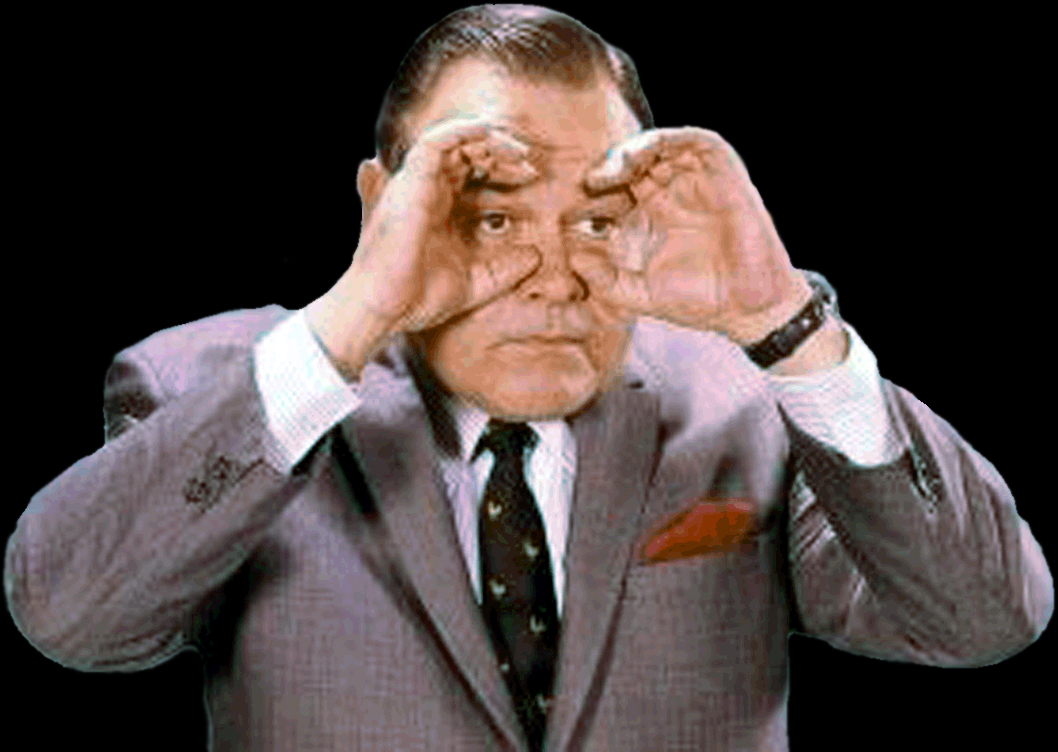
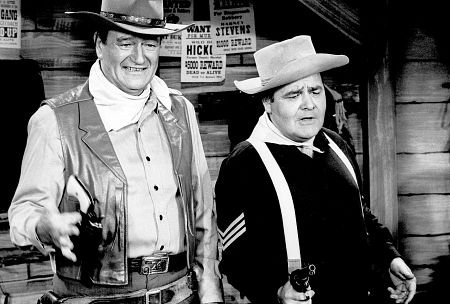
Jonathan Winters

Jonathan Winters cameo Jonathan Winters John Wayne Jonathan Winters and Muppets

A giant passed away yesterday; a man of unsurpassed talent the likes of whom may never be seen again.

Other people practice improv. Jonathan Winters was improv and so much more.

The man could literally make me wet my pants with laughter. He could not be stopped once he hit his stride, which was usually on his second step, and the more you threw at him, the funnier he became.

He wasn’t funny for the sake of being outrageous, as so many improv people can be. He said things. Implied things. Made you think long after you stopped laughing, but without being on-the-nose or preachy. Every character he created was someone you knew, you’d met, you’d watched.

He made everyone around him try harder, to raise their game, whether he intended it or not.

In a famous Letterman interview, Winters and Robin Williams began to play. You want to see love? Look at the expression on Williams’ face. That is love, adoration, worship, friendship and a ship-load of other emotions all balled into one irrepressible face.

Winters had his demons, as most comedic and artistic talents do, but those demons made his talent that much bigger.

I love you Jonathan Winters for the joy you brought to my life. And as with Robin Williams, I too wanted to and still will do better, strive higher, reach further for having had you in my life, if only through a television or movie screen. I want to make you proud, even if you never knew I existed.

I will miss you.

(these images are used without permission)

Dara Marks at Toronto Screenwriting Conference 2013

Engaging the Feminine Heroic

Dara Marks

In a follow-up to her very popular Transformational Arc talk of previous years, Dara Marks took us through another aspect of character development, something she calls the feminine heroic. A counterpart to the well known hero’s journey, the feminine heroic completes the hero’s character and thus is not necessarily tied simply to female heroes. Rather, it encapsulates the feminine side of everyone’s natures.

Transformational Arc

She explains, as writers, we are constantly trying to understand the narrative in which we are living, but we experience that narrative from a very personal perspective. Thus, in her canonical transformational arc, there is both an outer realm, where external forces act upon the hero, and an inner realm, the more personal influences. We grow, she says, only in relationship to demands on us to grow, and the external realm stimulates the internal reckoning.

The union of the feminine and masculine brings about wholeness in the character. It is a combination of the masculine spirit, which represents all that we can be, and the feminine soul, the deepness of our authentic self. Marks offers the example of a tree, which may reach toward the sky, but is only as strong as the root system that provides it nutrients.

Everything we are in life is what comes from deep within ourselves.

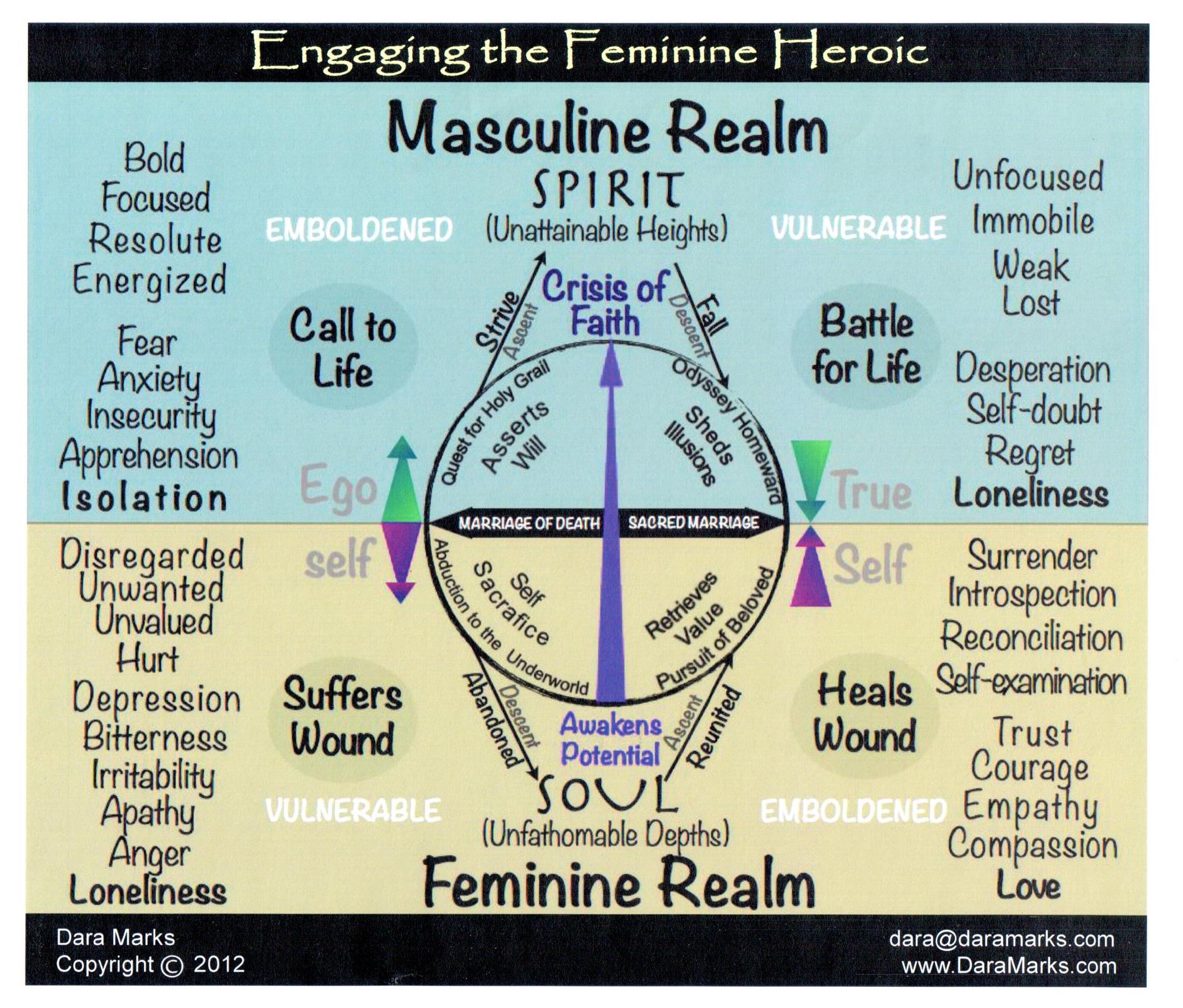
Marks presented this relatively complicated diagram that illustrated the hero’s external and internal journey (and in many ways, reflects our own journey through counseling or life itself). To the left, we find the Ego Self, where the onus is on my aspirations and beliefs of me. To the right is the True Self, which is understood after reflection and denotes my understanding of myself in the universe.

The union of the masculine and feminine sides of a character creates a wholeness

The union of the masculine and feminine sides of a character creates a wholeness

Ego Self: All early development, even that of a child, relies very heavily on the development of the Ego, a sense of will and determination. We believe that we’re in charge, despite all evidence to the contrary.

So if we start the journey in the Ego Self realm, we can look at the External or Masculine side and the Internal or Feminine side of ourselves.

Masculine Ego: In the top left quadrant, we have the Call to Life, the external mission that demands we strive or ascend to a greater level. We assert the force of our will on the universe. This area therefore is associated with a youthful and energetic quality. We have to move forward. We cannot let fear hold us back. To do this, we must sacrifice our feminine side, pushing those feelings down, or we cannot move forward.

Marks suggests that the tragedy of Hamlet was that he couldn’t get beyond his feminine side when he needed to move forward. She also gives the very literal example of Agamemnon, who was forced to sacrifice his daughter Iphigenia before the Greek ships would be allowed to voyage to Troy.

Feminine Ego: In the lower left quadrant of the diagram, we see the influence the masculine decision has on the feminine ego. We suffer a wound because part of us is no longer valued. We are literally abandoning a key part of our self and this will have a lingering effect. While we appear invincible externally, we are very vulnerable internally.

Thus, the feminine side needs to be rescued by the proverbial knight on a white charger. Marks is quick to point out that this is no time for political correctness as at this stage in our development, we just don’t have the internal skills to rescue ourselves.

She goes back to Greek myth to show how this works, focusing on the story of Demeter and her daughter Persephone, the latter of whom was abducted to the underworld by Hades to become his wife. Demeter was distraught at the loss of her daughter and journeyed to the underworld to bring her back to the surface.

The underworld experience may be difficult, but it is educational and we need to journey through it to come out more whole in the next stage.

Marriage of Death: The combination of the masculine and feminine ego is what Marks calls the Marriage of Death. Anytime we strive to become something new, it means the death to other aspects of our being. We just can’t strive at all things at the same time. But this marriage is not designed to last.

As Marks points out, the problem with striving is that it is doomed to failure. We can’t be rich enough, strong enough, famous enough, whatever enough. And it is at the moment of realization that our dreams are doomed that we have a Crisis of Faith (masculine side), which leads to an Awakening of Potential (feminine side). We move closer to the discovery of our true self, the right hand side of the diagram.

Masculine True Self: As the masculine ego passes through its crisis of faith, it suffers a fall from the unattainable heights, which converts the Call to Life into a Battle for Life. For self-renewal, it is essential that our delusions and illusions are shed during this descent, such as the belief that we are in control of our lives. And thus, at this stage, it is the masculine self that needs rescuing.

Marks offers the example of Odysseus (a popular subject at TSC this year) and the knowledge that his journey home was his great undoing as he loses more and more of his ego self (including his ships, crew, etc). The second half of his journey is literally the journey homeward toward his true self.

Feminine True Self: And who rescues the masculine true self? As the masculine side becomes more vulnerable, the feminine side becomes emboldened. We heal our wounds and reunite, turning pain and suffering into love and creativity.

The way out of our self-imposed purgatory is through compassion. We have to hear the story and then feel and acknowledge the pain. And it is only when the pain is given voice that it can move back from the underworld into life.

Marks exemplifies this aspect with the myth of Inanna and Erishkegal (which I do not know as well and so simply provide a link).

Sacred Marriage/True Self: It is at this point, through the sacred marriage of the masculine and feminine that we finally achieve the true self.

NOTE: All images and illustrations are property and copyright of Dara Marks and are used here without permission.

Glen Mazzara at Toronto Screenwriting Conference 2013

The Odyssey of Writing

Image

In his opening presentation to the TSC, Mazzara recounted the story of The Odyssey and used it as a metaphor for his own journey as a writer, comparing the setbacks and challenges experienced by Odysseus to his own.

As Mazzara explains, the story of Odysseus’s return home after the Trojan War is a story of changing winds. Such is the case with writers. When we decide to become writers, we have a lot of anxiety blowing in our heads. They can drive you insane. And bad news; those winds don’t go away, no matter how successful you become as a writer.

That anxiety permeates every scene you write. And once you start working with others, those people add to the confusion in your head.

Writers constantly look for validation, he says, they look for love. In this way, actors and writers have much in common as both groups are looking to receive love and adoration. The big difference is that writers know they’ll never get it, whereas actors maintain the delusion.

The chaos in writers’ heads also sets them at odds with the rest of the film and television industry, which is designed to run under more control. Thus a snarky relationship develops, with people in the industry constantly putting down or belittling writers and diminishing their works. The example he cites is the discussion of whether Shakespeare wrote his plays or it was a British lord with absolutely no record of having written a single literary word.

Mazzara says you simply have to get into a space where you are purely working on the work for the sake of the work. You have to learn to live with the anxiety.


He then looked at the concept of hubris and ego. In recounting the story of Odysseus blinding the Cyclops, he noted that as long as Odysseus remained “Nobody”, he was safe and managed to escape the island. It wasn’t until he stood on the prow of his escaping ship and proclaimed that it was Odysseus who blinded the Cyclops that things really went to hell.

When we write, Mazzara says, we have to remove our ego. We are only the steward of the story. The story wants to be told and we are merely the instrument by which this happens. And when working in groups, we have to be generous with each other and avoid taking credit.

He suggests that there is a tendency to try to manage our anxiety by taking the credit for work we have done or to which we have contributed, but we have to avoid this at all costs.


Mazzara then gets to the part of The Odyssey where Odysseus reaches Ithaca but finds his home invaded by suitors for his wife. Disguised as a beggar, he sets up a challenge that whomever can string Odysseus’s bow and fire an arrow through a series of axe heads will win the hand of Penelope. After all others have failed, the ridiculed beggar is given the opportunity and despite not being known for his strength, Odysseus strings the bow, makes the shot and then slaughters his disrespectful competitors.

All this to say that writing is about sticking to your strengths and doing it your own way. Mazzara showed loose sheets of foolscap on which he hand wrote his presentation because that’s the way he writes, by hand, on paper. When he tries to write on the computer, he finds himself editing his material and reworking lines as he writes them. On paper though, he can let the writing flow and works his way through the material in his head. However it works for you, he says, be sure you stay in the moment, stay in the story.

We all feel anxiety about conforming to how others do things. He is adamant that we have to fight this urge. As he describes it, it was a lonely journey for him to see that his method of writing works despite being antithetical to the way Hollywood works. Writing, he says, needs to be effortless.

As far as writing as part of a group in a writers’ room, he makes the comparison to a musical group heading into a recording studio, where everyone makes a contribution to the final product. Change one of the players or eliminate one component and the final product is different.


And finally, he says, there is a moment when you get your shit together and you know you can make it work. That is the moment you’ve come home.


In the Q&A, when asked about the bloody slaughter and carnage phase of The Odyssey, Mazzara said that was the editing phase of screenwriting, when the sheets are covered with red ink and look like they’ve been dipped in blood. In fact, he said, to lighten the blow on other writers, he refuses to use a red pen.

Toronto Screenwriting Conference – Day Two Highlights

Personal highlights or take-aways from Day Two of the Toronto Screenwriting Conference:

tsc-logo

Darlene Hunt – Masterclass (creator, showrunner for Showtime’s The Big C)

Take your time responding to questions: When someone is asking you about a specific line or scene, whether in meeting on or set, give yourself time to think about it, because you may not remember exactly why you wrote that scene that way. At the same time, even if you can explain why you went that way, make sure you remain open to new interpretations or new ideas that may work better.

Bob Kushell—Anatomy of a Pilot (creator of BBC series Way to Go)

Pilots suck: All pilots suck to one extent or another and he explains why using the analogy of an approaching tornado. You’re living your life when suddenly you hear that a tornado is coming. Quickly, you run into the storm shelter with several other people and try to prepare for the coming storm. At the same time, as each of you goes about your tasks, you remind one of the people about that time she ran over your cat, which is why you don’t like her. But hey, you love the fact that another individual’s here despite those awkward feelings after that drunken fling at the cottage. Oh, but you still need to prepare for the coming tornado.

Within an ever-shortening time span (now around 21 minutes), you need to fill in useless backstory that everyone in the show should know (it’s their backstory) and still manage to tell a coherent plot that somehow illustrates the show’s premise.

Penny Penniston—Not Just Talk: How Writers Think About Dialogue (professor at Northwestern University)

Dialogue is not conversation: If words were keys on a piano keyboard, then the difference between conversation and dialogue is the difference between noise and music. Dialogue is precise and crafted, gives voice and describes themes. It gives clear direction to the artists interpreting it and a chance for them to show off. And like learning to play music, learning to craft dialogue takes practice to develop muscle memory, but at the same time, understanding the theory behind dialogue will allow you to step back from your work and find the good and bad things about it.

Aaron Korsh – Masterclass (creator and showrunner of USA Network’s Suits)

Understand your scene’s goal: Reading a scene out loud can be very helpful when it comes to determining if it’s working, as some scenes may read well, but something goes wrong when it becomes audible. And if the scene isn’t working, it’s often because you haven’t really established what the scene’s dynamic or purpose is.

Toronto Screenwriting Conference – Day One Highlights

Image

I am hoping to a more complete write-up shortly about the sessions I attended at the Toronto Screenwriting Conference this weekend, but here are some personal highlights/insights from today’s sessions.

Glen Mazzara – The Odyssey of Writing (former show runner for The Walking Dead)

Be your own writer: Mazzara shared his earliest experiences in starting as a writer and he said that in the early days of his career, he tried to write things that he thought screenplay readers wanted to see, but that ultimately, this was a failing approach. In his eyes, you have to write topics that reflect and come from you. Things that represent who you are and in what you are interested.

Making sense of your characters: He also offered an interesting tip on how to make sure the emotional/story arcs of your characters make sense. He suggested approaching it like an actor, whom he says is only interested in and therefore reads his own lines. Move through your screenplay, tracking only one character at a time—ignoring all others—and see if their progress makes sense. Are they angry in one scene and suddenly laughing in the next? Does that make sense? It’ll also allow you to tighten up their dialogue, he says. You then do this for each character in your screenplay to ensure each tracks correctly.

Dara Marks – Engaging the Feminine Heroic (renowned Hollywood script doctor)

Too often, we only explore how a character responds to outside forces (masculine heroic). For a character to be whole, Marks says, we must also examine what is happening within a character (feminine heroic).

At the beginning of a story, the character receives the external call to life and responds by striving for a goal. But to do this, she says, the character must sacrifice other aspects of themselves that will slow or stop their progress. This sacrifice is not without a cost and the internal psyche suffers a wound because part of it is no longer valued.

Unfortunately, the problem with striving is that it is doomed to failure—we can’t ever achieve enough of our goal. A crisis of faith occurs in the masculine self, that triggers an awakening of potential in the feminine self—internal fortitude.

Externally, the character falls as the call to life becomes a battle for life as its illusions are shattered, and when the outer self becomes vulnerable the internal self is emboldened and can heal the wounds, turning pain and suffering into creativity and love.

Thus, it is the sacred marriage of the internal and external selves that allows the character to discover its true self.

David Hudgens – Breakdown of the One-Hour Drama (showrunner of Parenthood)

On receiving notes: The most important thing about receiving notes on your screenplay is understanding what’s the note behind the note. The note itself is often directed at something that may be relatively minor, but in its essence, it speaks to a deeper issue in the writing. Look for that essence.

Beau Willimon – Masterclass (co-creator of Netflix’s House of Cards)

Writing screenplays ≠ making movies: It is entirely possible to have a good career writing screenplays for movies without ever getting any of your movies made. It’s a numbers game, as studios constantly contract out for hundreds of screenplays, hoping that at least one of them will turn into a profitable movie, but they can’t afford to make all of the movies to find out.

Book larnin’

Last week, one of my fellow bloggers expressed interest in screenwriting and wondered if I could recommend any good books to help him navigate this format of storytelling, and I promised to do it in a future blog post…well, guess what?

To be honest, my first piece of advice to anyone interested in getting into screenwriting would be to simply tell your story in whatever format comes easiest to you. Because, as I’ve said in a previous post, the most important thing is story. No matter how well formatted your screenplay, if your story doesn’t work, it doesn’t work.

Okay, that soap box being out of the way, my next advice is to take a class in screenwriting, because no matter how much you think you’ll write, there is nothing like the pressure of a deadline for 10 more pages to keep you motivated. And ultimately, until you’ve heard your pages read out loud, you have no idea if you’re getting your thoughts across or using the right words.

So now, on to books. There are few really good books to tell you what a script should look like, so I recommend you simply try to get your hands on several different scripts, whether film or television (although pick your preferred medium, because there are differences in presentation). There are several places on the Internet where you can get free scripts (and when I remember what they are, I will tell you), but for those with a couple of bucks to spare, I highly recommend Planet MegaMall for their breadth of scripts that you can purchase rather cheaply.

No one book will give you everything you need, so I recommend sitting in a bookstore and perusing as many books as possible to see which one fulfills some unconscious need today. Then, repeat the process several weeks later, because your unconscious needs will have changed.

For the best understanding of story as a whole, you can’t go wrong with Chris Vogler’s The Writer’s Journey. Using mythic structure, Vogler breaks down story into its key components and then contextualizes those concepts using popular movies. Knowing almost nothing about screenwriting, I wrote my first screenplay using these elements as a template.

To get more into the structure and execution of screenplays and plots, then Linda Cowgill’s The Art of Plotting is very good. Written very approachably, Cowgill goes through the fundamentals of a good plot (e.g., conflict, character, action) and helps you understand where your story may be faltering or be improved.

A little more into character and how character changes through the screenplay, Dara Marks’ Inside Story helps you understand the concept of theme, which will lead you to better understand the motivations of your characters. In a similar vein is Stanley Williams’ The Moral Premise, which examines how opposing forces within and between your characters will move them forward in your story and more importantly, make them much richer.

Somewhere between individual scenes and broader acts of a screenplay are sequences, which one of my instructors described as being equivalent to book chapters where a single idea is explored before moving to the next one. Paul Joseph Gulino’s Screenwriting: The Sequence Approach is your guide here, helping you pull your scenes together into the right order.

And the chief poobah of screenwriting books is Robert McKee’s Story. I was actually afraid of getting this book for quite some time as people warned me that reading it too early would make me too intimidated to keep writing. I can see where they were going, but it’s not that McKee’s writing is difficult to follow, it’s more that he talks about a huge variety of topics. Suddenly, you realize how many balls you’re juggling when you’re writing a screenplay.

Ellen Sandler’s The TV Writer’s Handbook is a great step-by-step, but you have to do the exercises to make it worth it. Pamela Douglas’s Writing The TV Drama Series is a little dated but still gives a fantastic overview of hour-long programs, spending the bulk of its time on how to break down and analyze a program, before it gets into actually writing an episode.

Scott Sedita’s The Eight Characters of Comedy is an interesting analysis of comedic archetypes in sitcoms. Written more from an actor’s perspective, it still offers valuable insights to the writer trying to understand or create characters. And finally, Peter Desberg and Jeffrey Davis’s Show Me The Funny offers amazing insights into how the minds of comedy writers work, but even more importantly, shows you that no two people will develop the same story from the same premise…so don’t sweat starting with cliché ideas.

That’s a lot for a first kick…I hope you find something in here to get you started.