Is AI art Art? Who cares.

As someone who works and recreates in the Arts, I have struggled to make sense of the current conversations about the roles or sins of artificial intelligence in the creative arts, however you might personally define those.

Like many in my fields, I have worried that AI tools were going to pick my pocket or put me out of work. And I have worried about the dumbing down, the dilution, the commoditization of the Arts.

What a load of egotistical bollocks on my part!

As I said, I work and play in the creative arts. For me, that involves writing pretty much anything that can be written, live storytelling, and improvisation, and I dabble in filmmaking, drawing, and even singing. And I consume most of the creative arts in one way or another.

But is any of this Art, deserving of the capital A? I’m not sure that I care.

I enjoy what I enjoy and don’t what I don’t. I hope the same is true for you. If our choices overlap, great. If our choices completely conflict, great. I am just happy you have found things that make you happy.

At the risk of offending the artists I follow, I suspect that The Establishment – that mysterious arbiter of acceptable tastes – would call most of what I like pedestrian – as if there’s something wrong with walking – or outright trash.

I read thrillers and Shakespeare. I follow and own prints and paintings by street artists. I love The Three Stooges and The Flying Circus. And my musical tastes range from Gregorian Chants and Bizet to The Monkees and Ray Stevens (YouTube “The Streak”).

For its part, can anything I create be described as Art? Again, I am not sure that I care about the uppercase A or that I am truly in a place to judge.

Some of my writing has been brilliant, says me and, on occasion, others. Most of my writing has been serviceable, passable, or utilitarian. And quite a bit of my writing has been weak, bad or downright embarrassing. (I leave your opinions of this piece to you.)

I enjoy my live storytelling and improv, but not every story or set comes off or is received as I might hope. The same is true for my other artistic efforts.

And most of the planet’s population will never experience any of it. (Thank you for experiencing this.)

So, what does my creative resume have to do with AI?

Two things: One, the concept of “big A” Art is hubris of the highest order and exclusionary. And two, the artistic merit of anything is a personal decision rather than something with tangible metrics.

Art evolves with every passing generation because tastes evolve with every passing generation. In some ways, Mozart was the Ray Stevens of his era and The Abduction from the Seraglio is his Gitarzan, a piece of music considered frivolous by “those who know” and yet highly successful in its time.

Charles Dickens and Arthur Conan Doyle were newspaper serialists long before their works were considered classic literature. And most famous crime and science fiction writers published chapbooks – aka “cheap” books or pulp fiction – before they became known as Masters of their genres.

AI, like the printing press, is simply a tool that facilitates the production of creative arts on a scale not previously imaginable. Whether the output of that production is “good” rests soundly in the eyes and ears of the beholders, just as communities once warned of the sins of comic books and English translations of The Bible.

I do not actively use AI tools in my creative arts – I even avoid the AI results of a Google search – not because I think AI is evil but because I have not found a use-case for AI. The typical reasons most use AI, it seems, actually serve to replace the steps that I find make my creative artistry most enjoyable.

That said, I appreciate that not everyone thrills at the sight of a blank page like I do. Not everyone has the same confidence in their passions or themselves that I have developed. I meet many of these people when I teach a screenwriting class or improvised writing workshop. And I personally know the hesitation of self-doubt in attempting creative arts I consider outside my natural skillset.

If AI tools serve as a gateway for self-expression for these souls, I am all for it, and I will support and encourage them just as I would support and encourage those who choose to experiment and risk failure under their own steam.

And if AI tools are used to mass-produce materials – aka Content – to be consumed by the seemingly bottomless pit of the online world, so be it. People, including possibly me, who want it, will consume it. And maybe it will whet consumers’ appetites for creative arts produced by humans. Maybe even for mine.

Although there remain environmental and intellectual property factors to consider in choosing to use AI tools, the artistic (or Artistic) merits and values of what it produces seem trivial and egocentric to me.

Over my lifetime, I have consumed trillions of words by seasoned and novice writers. I have seen pens, pencils, and keyboards used to stunning effect, in both the positive and negative sense. I expect no different of the words generated by AI tools.

I wish any creator, any artist using any tool much joy in the creative process, whatever theirs might be. And I look forward to making up my own mind on their end product, however it came to be, no capital A required.
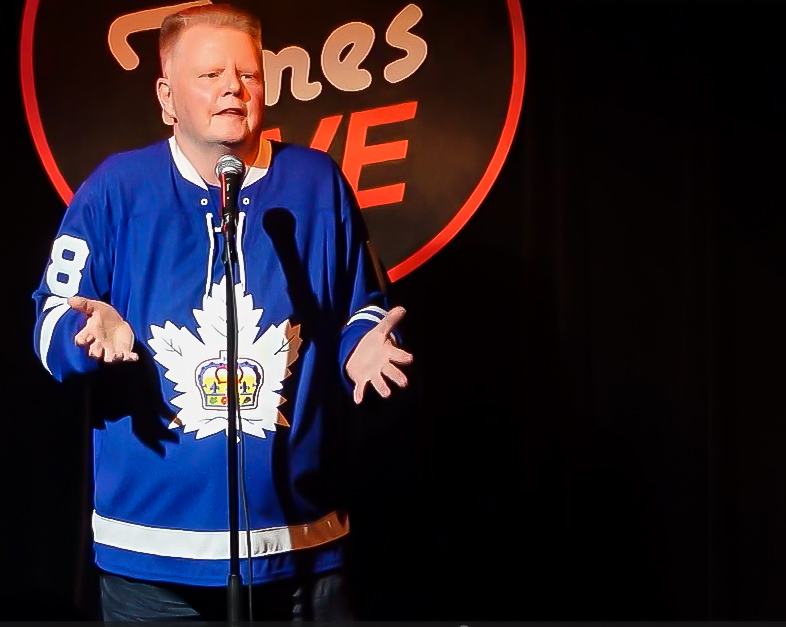
Who is this guy?

An award-winning screenwriter and filmmaker, Randall C Willis has told stories his entire life, writing for every medium, but has recently caught fire live on-stage. He describes himself as a story evangelist, a practice that he preaches as a screenwriting instructor at George Brown Polytechnic. In January, Randall launched the workshop Out of Our Minds and Onto the Page, which fosters freewheeling creativity and spontaneous storytelling using improv games and writing sprints. And through his company So, What’s Your Story?, he helps storytellers of all media to find their voices and explore their ideas.

Randall has told stories across Toronto, grateful to take the spotlight at Funny Bone, Listen to This, Page to Stage, Tales Toronto, The Yarn, Tight Five, and Replay Storytelling.
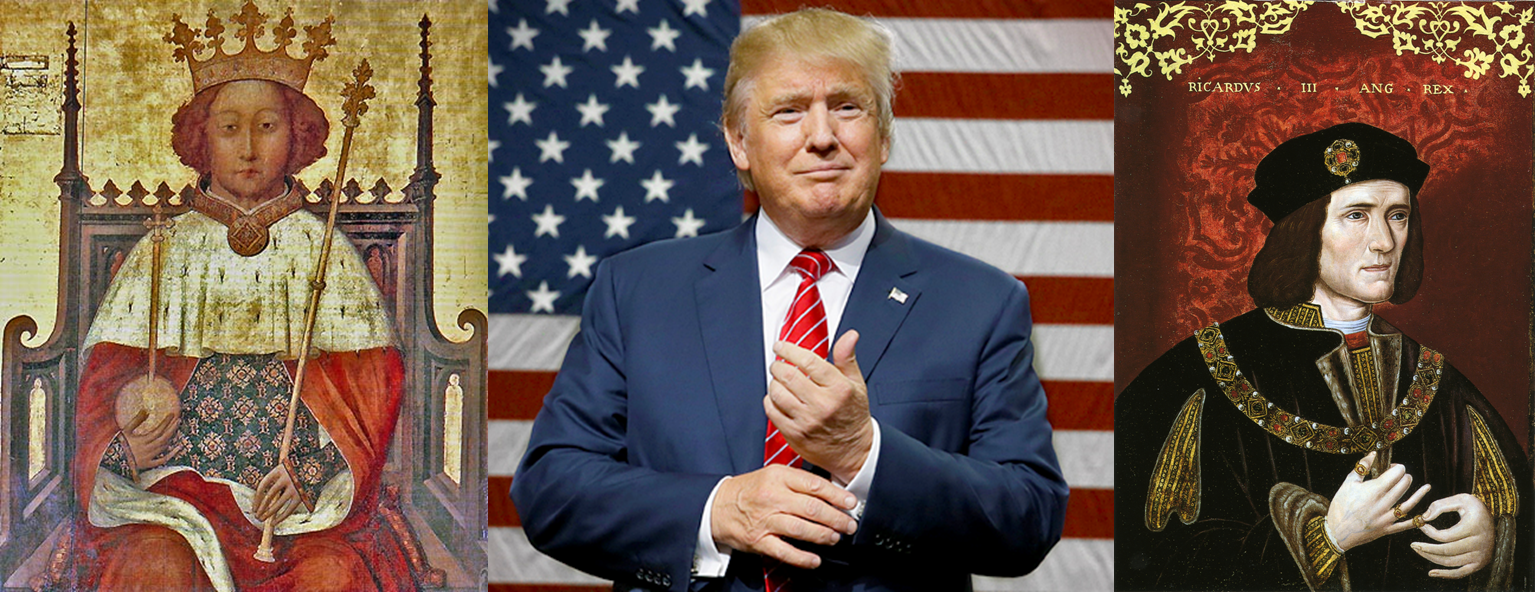
Shakespeare suggests Trump is a Dick

rdr

In the New York Times Sunday Review this weekend, Harvard’s Stephen Greenblatt wrote an opinion piece entitled Shakespeare Explains the 2016 Election in which he draws parallels between the events surrounding the rise of Richard III and Donald J. Trump. Quite fascinating.

For me, the crux of his analogy is summed in one paragraph:

Shakespeare brilliantly shows all of these types of enablers working together in the climactic scene of this ascent. The scene — anomalously enough in a society that was a hereditary monarchy but oddly timely for ourselves — is an election. Unlike Macbeth (which introduced into the English language the word “assassination”), Richard III does not depict a violent seizure of power. Instead there is the soliciting of popular votes, complete with a fraudulent display of religious piety, the slandering of opponents and a grossly exaggerated threat to national security.

I can definitely see the point Greenblatt is making and there are strong parallels in the story, but I think he missed the mark on the personalities of the leaders in question.

Rather than Richard III as a model for Trump, I would have gone with Richard II.

[SPOILER ALERT]

The great fall and ultimate execution of Richard II was very much the result of his debilitating belief in his own divinity and his completely disconnection from the lives and needs of real people, including those closest to him. In short, he didn’t understand politics and simply felt everyone should get in line because he was the voice and arm of God.

For every man that Bolingbroke hath press’d
To lift shrewd steel against our golden crown,
God for his Richard hath in heavenly pay
A glorious angel: then, if angels fight,
Weak men must fall, for heaven still guards the right.

Richard II; Act III, sc. ii.

He was also surrounded by sycophantic parasites who fed Richard’s ego and grew bloated on everyone’s desire to serve the King. They were ultimately destroyed by this bloat and the belief that they too had divine protection, as though the crown served as an umbrella.

It was Richard II’s blinkered existence and unbridled self-aggrandizement that kept him from seeing the dangers that lie ahead, and the simple solutions that would have averted disaster. If he merely acknowledged the just requests of the exiled Henry of Bolingbroke (eventually, SPOILER ALERT, Henry IV) for his family titles, Richard would have retained the man’s fealty and love, and thus would have kept his throne.

For me, Richard III was too aware of his limitations and was therefore much more manipulative than I believe either Richard II or Donald Trump feel they need to be.

And therefore, since I cannot prove a lover,
To entertain these fair well-spoken days,
I am determined to prove a villain
And hate the idle pleasures of these days.
Plots have I laid, inductions dangerous,
By drunken prophecies, libels and dreams,
To set my brother Clarence and the king
In deadly hate the one against the other

Richard III; Act I, sc. i.

For Donald, as for the second Richard, what is the need for manipulation when you speak with God’s voice and rule with His hand?

See also:

Richard II (play)

Richard III (play)

…but I know what I like

Congratulations! You’ve landed a paid writing gig. Finally, all of that hard work and practice is going to pay off.

Mind you, unless the person paying you to develop a screenplay, marketing campaign, novel, whatever, is simply giving away his or her money out of some form of altruistic zealotry gone mad, the benefactor is likely to want to participate in the project, to take some degree of ownership, and therefore to weigh in…with notes.

So, you’ve just received your first batch of notes.

And amazingly, they are relatively minor and/or completely in sync with concerns you had about the work and so give you further impetus to make the changes you kind of knew needed to be made.

But seriously, folks. These notes don’t make any sense. The note-giver clearly didn’t understand the nature of the project he or she assigned you. To make most or any of these changes would be to seriously weaken or outright destroy the project.

Now, what the hell do you do?

shock

Step 1: Curse.

Yes, feel free to curse the gods for this tedious torture of your creative soul. How dare these mere mortals give you notes? The audacity to think they could contribute to this work of Art, when the very notes they provide merely highlight their ignorance.

I don’t have a problem with hosting a pity party of one (or a few close friends). The key is keeping the party short, particularly when working to deadline.

You are an Artist, and Art requires Ego and a degree of Hubris. Without hubris, how would any of us ever have the cahones to show our work to others?

The reality, however, is that we have chosen to work for others, so…

unimpressed

Step 2: Set aside your ego and re-read.

Put a tea-cosy on your vision for a moment and really try to understand the notes you have been given. I’ve heard it said often: What is the note within the notes?

I have found that people often can’t identify or vocalize what they specifically find troubling in a piece of Art. But rather than simply give you no notes, they try to identify things that may have some bearing on their issues…the operative word there being “may”.

If you stand back a little further and ignore the specific requests, can you see something in common between the notes, a greater theme or need from the note-givers?

Do your best to step out of your shoes and into his or hers. A change in perspective may give you a greater insight as to the real challenge the note-giver is facing with your work. You’re the writer; you have one need. A director or a marketing manager will have different needs and perspectives. Respect that.

It is possible, however, that you will still be uncertain (or clueless) as to what to do next. In that case…

what

Step 3: Ask questions/seek clarity.

Acknowledging the note-giver’s concerns or comments is not the same as accepting them. It does, however, give him or her a sense that you respect them and are trying to maintain a collaborative relationship. I cannot begin tell you how much this means to people and pays off in the long run.

Offer your interpretation of the issues to confirm you see things the same way as the note-giver. If you do, brilliant. You can now offer alternatives to the less palatable requests that may satisfy the note-giver’s misgivings.

If you don’t, brilliant. Now, you have the opportunity to gain insights into the note-giver’s perspectives. This will allow you to brainstorm new approaches that will satisfy both parties.

You may also find that many of the requested changes are not a high priority for the note-giver or were merely suggestions of things you could do. For all the opinions people offer throughout their lives, most individuals are incapable of giving effective notes and thus, demands, suggestions and brain farts all look alike to the person receiving them. This holds for the Artist, as well. Don’t allow your and their ignorance to drive you crazy.

So, now that you either have an understanding with the note-giver or realize you are working with a control-obsessed ego-maniacal asshole (it happens)…

gotcha

Step 4: Make your changes or rollover.

What you now do with these notes hinges on a cost-benefit analysis.

Are there ways you can bring greater clarity to the story you have written that will address the needs without either incorporating the specific requests or significantly altering your vision of the story?

If yes, then you have not only improved the work, but you’ve established a wonderful rapport with the note-giver that will likely lead to future opportunities for collaboration.

If not, you need to ask what your goal is for this particular project.

If it is your magnum opus, then feel free to stick your heels in and refuse to make the requested changes, but in the knowledge that you may very well be fired and find it difficult to get work in the future. The note-giver and community may respect your stance and in the final analysis, acknowledge you were correct in your refusal, but it doesn’t happen a lot.

If, however, this project is the first step toward a longer term relationship with the note-giver and/or the hiring community, then go back to Step 2 and think harder as to how to make this work to everyone’s advantage. The onus is on you to do your best work within the framework you are given.

In this latter situation, of course, another alternative is simply to rollover and acquiesce to the requested changes. It is completely possible that the note-giver is right and you simply could not see the problems because your ego was in the way (aka you were too close to the project).

On the flipside, of course, if the note-giver was wrong, you may carry the burden of his or her errors and so find future work with that individual unlikely but then why would you want to work with that asshole again. Or, he or she could step up and take ownership of the error, in which case, you may have found a partner who will trust your instincts more the next time.

Getting notes is never easy, but it’s going to happen whenever you leave your Artistic cave. How you deal with them will have a significant impact on how often you get paid to do your thing.

Glen Mazzara at Toronto Screenwriting Conference 2013

The Odyssey of Writing

Image

In his opening presentation to the TSC, Mazzara recounted the story of The Odyssey and used it as a metaphor for his own journey as a writer, comparing the setbacks and challenges experienced by Odysseus to his own.

As Mazzara explains, the story of Odysseus’s return home after the Trojan War is a story of changing winds. Such is the case with writers. When we decide to become writers, we have a lot of anxiety blowing in our heads. They can drive you insane. And bad news; those winds don’t go away, no matter how successful you become as a writer.

That anxiety permeates every scene you write. And once you start working with others, those people add to the confusion in your head.

Writers constantly look for validation, he says, they look for love. In this way, actors and writers have much in common as both groups are looking to receive love and adoration. The big difference is that writers know they’ll never get it, whereas actors maintain the delusion.

The chaos in writers’ heads also sets them at odds with the rest of the film and television industry, which is designed to run under more control. Thus a snarky relationship develops, with people in the industry constantly putting down or belittling writers and diminishing their works. The example he cites is the discussion of whether Shakespeare wrote his plays or it was a British lord with absolutely no record of having written a single literary word.

Mazzara says you simply have to get into a space where you are purely working on the work for the sake of the work. You have to learn to live with the anxiety.


He then looked at the concept of hubris and ego. In recounting the story of Odysseus blinding the Cyclops, he noted that as long as Odysseus remained “Nobody”, he was safe and managed to escape the island. It wasn’t until he stood on the prow of his escaping ship and proclaimed that it was Odysseus who blinded the Cyclops that things really went to hell.

When we write, Mazzara says, we have to remove our ego. We are only the steward of the story. The story wants to be told and we are merely the instrument by which this happens. And when working in groups, we have to be generous with each other and avoid taking credit.

He suggests that there is a tendency to try to manage our anxiety by taking the credit for work we have done or to which we have contributed, but we have to avoid this at all costs.


Mazzara then gets to the part of The Odyssey where Odysseus reaches Ithaca but finds his home invaded by suitors for his wife. Disguised as a beggar, he sets up a challenge that whomever can string Odysseus’s bow and fire an arrow through a series of axe heads will win the hand of Penelope. After all others have failed, the ridiculed beggar is given the opportunity and despite not being known for his strength, Odysseus strings the bow, makes the shot and then slaughters his disrespectful competitors.

All this to say that writing is about sticking to your strengths and doing it your own way. Mazzara showed loose sheets of foolscap on which he hand wrote his presentation because that’s the way he writes, by hand, on paper. When he tries to write on the computer, he finds himself editing his material and reworking lines as he writes them. On paper though, he can let the writing flow and works his way through the material in his head. However it works for you, he says, be sure you stay in the moment, stay in the story.

We all feel anxiety about conforming to how others do things. He is adamant that we have to fight this urge. As he describes it, it was a lonely journey for him to see that his method of writing works despite being antithetical to the way Hollywood works. Writing, he says, needs to be effortless.

As far as writing as part of a group in a writers’ room, he makes the comparison to a musical group heading into a recording studio, where everyone makes a contribution to the final product. Change one of the players or eliminate one component and the final product is different.


And finally, he says, there is a moment when you get your shit together and you know you can make it work. That is the moment you’ve come home.


In the Q&A, when asked about the bloody slaughter and carnage phase of The Odyssey, Mazzara said that was the editing phase of screenwriting, when the sheets are covered with red ink and look like they’ve been dipped in blood. In fact, he said, to lighten the blow on other writers, he refuses to use a red pen.