The first day of school can be a pretty scary time; learning all new rules, meeting so many kids, and finding out which teachers are the mean ones. And as Ms. X (Debra Hale) shows us in Legs Crossed Hands On Your Lap, it can be harder on the teachers than the kids. Her story opened its Toronto Fringe run today at the Tarragon Theatre Extraspace.
Legs Crossed Hands On Your Lap follows a year in the life of new teacher Ms. X as she tries to figure out students and adults alike. The result is a heart-felt and often funny tribute to the second oldest profession. Or as playwright Yael Sirlin describes it, an open love letter to teachers.
Although Hale carries the bulk of the dialogue on stage, she is given amazing support by Jamillah Ross and Stevie Jay, who from my seat, seemed to be having the bulk of the fun on stage. Playing anything from teachers to students, principals to parents, Ross and Jay are a whirlwind of strange voices and oddball body language. And as cute as their child characters were, it was their portrayals of control-freak teachers that seemed to generate the most laughs from the audience.
Stevie Jay has some issues with teacher Debra Hale and fellow student Jamillah Ross
The play isn’t simply Kids Say the Darndest Things Live, however. In a couple of places, the tone took a darker turn as the actors dealt with more serious issues like bullying. This was where the opportunity for a teacher to touch a student’s life took centre stage.
Those moments aside, as Fringe fare goes, Legs Crossed Hands On Your Lap felt pretty light. It likely won’t make you re-examine your life or challenge your thoughts on art.
But then I don’t think that was the intention of the piece. Instead, it is here to entertain and to celebrate teachers with all of their foibles. And in this, I felt it totally succeeded as a highly enjoyable hour of smiles and laughter.
Writer/performer Nancy Eng takes us inside a NYC massage parlor
I generally don’t like one-person shows. Because the onus is on one actor to relate a story, often without much more than narration, I find myself wishing I could just read the play. Thus, I headed to theSt. Vladimir Theatre to see the Toronto Fringe premier of The Women of Tu-Na House with some trepidation.
The one thing that gave me hope going in was that writer/actorNancy Eng had created a show in which she played a half-dozen characters. Thus, I hoped, there would likely be one or several characters I could latch onto. Sadly, it didn’t work out that way.
The Women of Tu-Na House practice a traditional Chinese massage technique at a New York massage parlour. As we learn through a series of vignettes, each woman ended up here under very different circumstances, and several of the women decided there was money to be made by offering additional services.
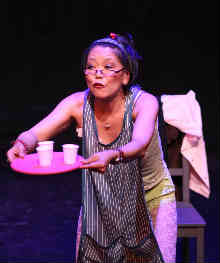
The tea server who was once a man
Interestingly, in the show’s program, Eng is quick to state that the women made their choices willingly and feel no shame in their actions. And yet, despite asserting that these women aren’t victims, at least half of the monologues tell stories of victimization, whether by husbands, home towns or customers.
But that aside, for me, the biggest challenge of the performance was Eng’s inability to inhabit the characters she portrayed. Although she told each character’s story—with some difficulty, as she routinely stumbled her lines—it never felt like she became those women. Try as she might, it was always Nancy Eng on stage and a bad French accent, for example, wasn’t about to change that.
The performance was also let down by a faulty sound system. Every time Eng changed character, the lights would go down and she would change costume. While this happened, the next character would explain her origin story in voice over. Unfortunately, the sound system kept garbling the voice over so that by the time the lights came up, I had no idea who Eng was portraying.
The host for happy endings
Seemingly recognizing the premiere’s challenges, she apologized to the audience during the curtain call for her rough voice and allergy issues. Even she, it seemed, felt that tonight’s performance wasn’t up to code.
The show has played to raves at other festivals; for example, it won Best of Solo at Hollywood Fringe. And I definitely thought there were some poignant and funny moments during the performance. I can only hope that the theatre and Eng manage to pull things together for the rest of the Toronto Fringe run.
When all else is stripped away, only truth remains
“Being naked and too honest makes you predictable and maudlin,” chided one of the characters early in OverTime, which premiered tonight at the Robert Gill Theatre for the Toronto Fringe Festival. And for the next 85 minutes or so, the cast proved the exact opposite was true.
In some ways, watching OverTime was like redecorating a home, peeling back the decades of paint one layer at a time. As each coat is removed, you uncover the laughter and tears of that moment in time. And once the last layer is gone and the history is revealed, all that’s left is the truth.
It is only as the play deepens that we learn that truth is what retired school teacher Carla (Elva Mai Hoover) feared most when she uttered that line to her protégé Darby (Timothy Eckmier). As Carla mentored Darby to become the next great playwright, she argued that mystery must be maintained.
Truth was also the motivation behind the other plotline of the play as young blogger and photographer Jewel (Andrea Brown) struggles to pull her father Linus (Tufford Kennedy) out of the safe environs of the hockey rink. A successful coach on the outside, Linus is a wreck inside, and Jewel wants to ease that burden.
Mentor Carla (Elva Mai Hoover) advises protégé Darby (Timothy Eckmier)
OverTime playwright Romeo Ciolfi did an amazing job weaving these two story lines together. With each passing moment, it felt like another layer of paint was removed to reveal a bit more of the truth. And at least for me, the story was anything but predictable.
Sure, I felt Ciolfi could get a little heavy-handed with the metaphors. I would not have been surprised, on occasion to have seen a surtitle card reading “Metaphor here”, but I never felt they detracted from the increasingly tightly woven story.
What impressed me even more, however, was how the same layered revelations arose from each of the characters. With each passing moment, the characters became deeper and darker. Part of this richness was the writing, but I also credit the cast.
Daughter Jewel (Andrea Brown) struggles to help her father Linus (Tufford Kennedy)
Rarely do I praise an entire cast of a production, but I could not find fault with any of the performances. And no single actor deserves loftier praise than any other. To me, this was an ensemble performance. Remove any one of these actors and I don’t think this play would have been as good.
As with the play, there were times when impassioned performance became overwrought melodrama, but I largely felt these moments were the exception. These actors and their descent into raw truth had me mesmerized for 90 minutes, and I found myself praying we would go into overtime.
Without hesitation, I would watch this performance again and again, just to make sure I didn’t miss anything.
When you first walk into the Randolph Centre for the Performing Arts’ Annex Theatre, you are struck by a musty darkness. One deep breath and you could be forgiven for thinking you’d mistakenly walked into a derelict used-book store.
Tonight was a little different though. Although the smell was still there, the stage was not barren. Rather, it was populated by a half-naked DJ, pumping the jams in high heels and a gold lame mask, ready to celebrate Big Love. And that’s when the party started.
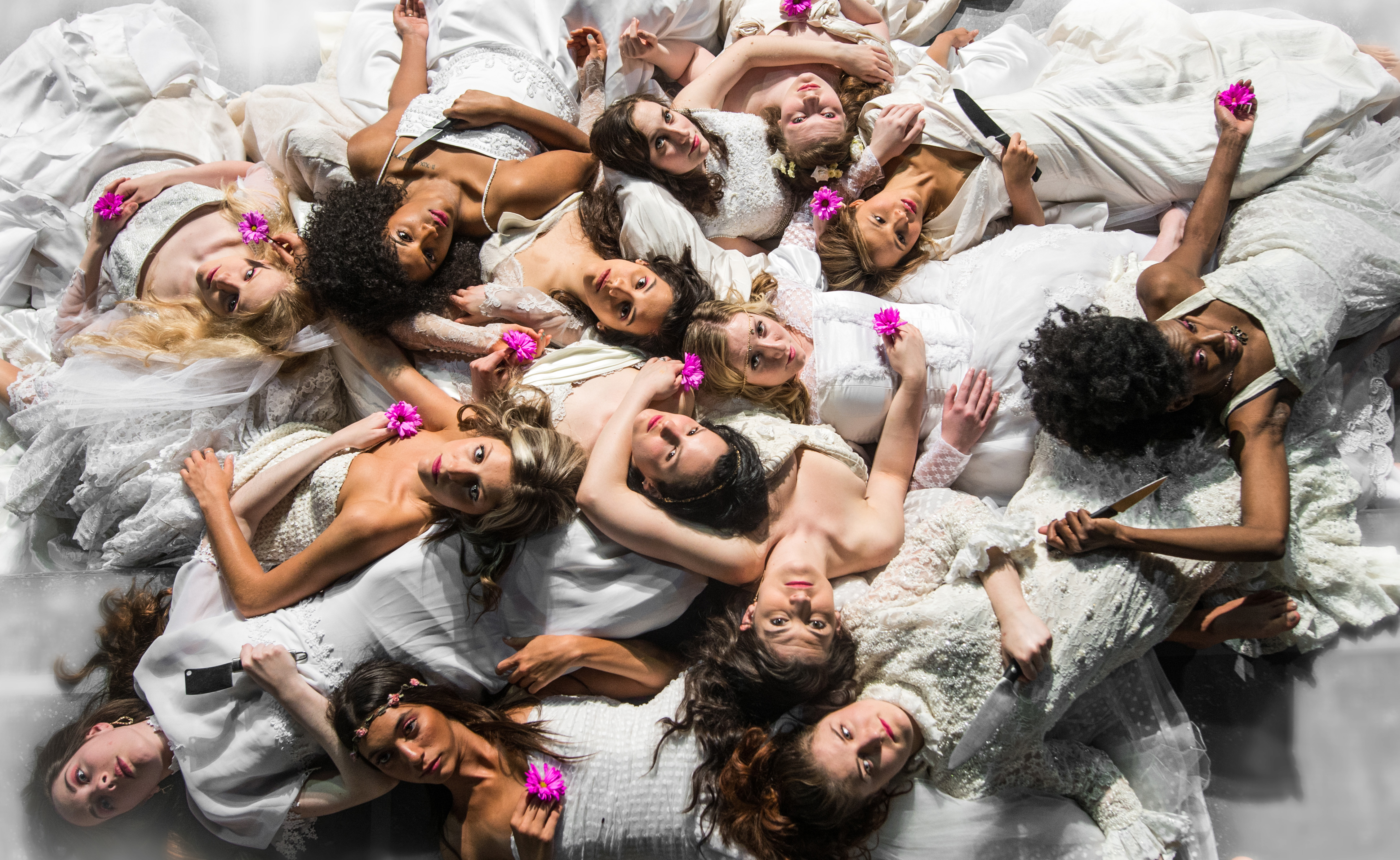
Big Love tells the story of 50 reluctant brides, who escape to Italy to avoid marriage to 50 cousins. As they try to talk their way into an estate, the cousins arrive to claim their women. The battle of wills–both within and between the camps–has begun.
As someone who likes a lot of story in my drama, this very much felt like a 20-minute play stretched out over 70 minutes. The other 50 minutes? Long-winded soliloquies about sex, gender and conflicting agendas for the hard-of-thinking.
50 brides for 50 cousins
There was a moment, however, when I thought the playwright (Charles L. Mee) might reach for something more than a steroidal rendition of Seven Brides for Seven Brothers. A couple times, the speeches floated to the plight of refugees and women pushed to the edge, abandoned by their families, communities and countries.
For that fleeting moment, I wondered if the mass marriage was a metaphor for a larger message about slavery and subjugation. I walked away disappointed in this regard.
That being said, the actors’ performances were generally quite good. In particular, I tip my fedora to Matt Lacas (Piero) who I felt did a wonderful job as the perpetual salesman and host, stuck between the warring camps and knowing no one could ever be happy.
I also greatly enjoyed Rosie Callaghan (Olympia) who I felt gave a scintillating performance as a young woman struggling with a personal civil war of self-identification versus the need to be loved.
The choreography feels like a work in progress, however, the many numbers feeling slightly or grossly out of step. And although the women seemed to move smoothly enough, I saw little synchrony in the men’s numbers.
And then the unexplained flinging of bodies to the ground completely baffled me. I can only hope it was a metaphor for something, but goodness knows.
What I thought the actors lacked in coordination, however, I felt they more than made up for in vocal skills. Each of the handful of songs felt like a masterpiece in harmonies, most sung acapella. For me, these were the magical moments in the performance and left me wishing the entire play had been set to music.
Had Big Love been even a third shorter, I might have enjoyed it. But I didn’t feel my dissatisfaction was for lack of effort on the parts of the performers. This fell squarely on the shoulders of the playwright and director.
Case in point was the play’s ending, which felt like a complete cop-out.
Big disappointment
[Adapted from a review that originally appeared in Mooney on Theatre.]
Before you even step into the theatre, you know that the producers understand the challenge they’ve set for themselves.
“We’re doing the whole thing (deaths and all), but in a light-hearted way,” reads a sign outside the theatre. “Everyone who dies gets a very silly ghost sheet and continue to comment on the action! (It’s not too scary.)”
And as far as I’m concerned, they deliver on their promise. From the moment the lights come up to the second they finally drop, the puppeteers put everything they have into entertaining their audience.
Whether it’s one of the characters, or the erstwhile hosts Shakes and Zip (pictured above), somebody always steps forward to help the kids understand what’s going on. And they do it without ever coming across as teacher-y, or at least, not for very long without a heavy dose of silliness hard on its heels.
What does the “to be or not to be” speech mean? Why does Hamlet’s mom not clue in to what’s going on? It’s all explained, gently and sweetly, to the kids without ever being condescending.
And nicely, the cast knows that their audience extends well beyond the 6- to 10-year-olds. Throughout the play, there are jokes for all ages and references from popular events and news items from last week, last year and last century.
This appears to be a very good decision, because about 85% of the capacity premiere crowd was well beyond puberty.
Having spent some time as a puppeteer, I didn’t think the puppetry technique was particularly solid, but I’m pretty sure I was the only one who cared. It didn’t seem to stop the wall-to-wall smiles and laughter that held the audience from start to finish.
I thought all of the performances were quite strong, but the show was absolutely stolen—if laughter volume is any indication—by Shakes/Polonius. Even in death, this character managed laughs that literally stopped the show.
Earlier today, I had the opportunity to see the latest Pixar movie Inside Out in the company of one of the film’s writers and its story supervisor Josh Cooley (a very nice man). And aside from receiving a lovely lecture about story development at the famed animation house, the connection afforded me an opportunity to appreciate the movie much more than I did on simple viewing.
To briefly bring everyone up to speed, Inside Out tells the story of the emotions that rattle around inside the mind of 11-year-old Riley as she struggles with a move across the country. Although we are introduced to 5 main emotions in Riley Headquarters (get it?)—Joy, Sadness, Anger, Disgust and Fear—there is no mistaking that Joy is numero uno in this space.
Joy (voiced by Amy Poehler) sucks the oxygen out of any room she’s in and proves that even the best intentioned of assholes is still an asshole. Her goal in life is to make every moment of Riley’s life a happy one and is not worried about shoving aside the others (ever so happily) to ensure that.
But where Joy has developed a respectful détente with Anger (Lewis Black), Disgust (Mindy Kaling) and Fear (Bill Hader), she firmly but gently has no use for Sadness (Phyllis Smith), practically ostracising the poor creature to the periphery.
With the upset of the move from Minnesota to San Francisco, though, Sadness seems to want to be more involved and in a fracas with Joy, the two get sucked out of headquarters and into the long-term storage hinterlands of Riley’s brain.
At this point, the story basically turns into the Odyssey as the two emotions struggle to return home before Riley falls completely apart at the hands of the others. (To say much more would be to offer spoilers.)
Joy and Sadness wander the hinterlands of long-term memories
The challenge I had was in trying to figure out exactly at whom Pixar was targeting the movie.
Superficially, this is a pure kids movie (ages 6 to 10, maybe), unlike many previous Pixar concoctions, which had elements for both kids and adults. Inside Out doesn’t have the depth of Toy Story or The Incredibles to truly speak to adults, much as the most mature 11-year-old isn’t ready for the adult world.
I’m not saying there aren’t adult-focused jokes interspersed throughout the film, but rather exactly that. They are interspersed, like small granules of sugar designed to feed the parents accompanying the kids to the theatre.
Up talked about loss and aging
There is no real adult storyline to this film to touch adults as there was in Up or Wall-E. Instead, the film has sweet, adorable moments of baby bums and first goals that might tug at a parent’s heartstrings but never engage the soul.
But as a friend suggested, it is not strictly a kids flick either because it touches on esoteric aspects of the psyche that kids that age would never be able to comprehend, such as abstract thought and the concept of forgotten memories. The problem is these aspects are more conversations of the mind and not the soul. So even here, the adult is largely passed over unless they have an interest in neurology and psychology.
Wall-E dealt with issues of love and environmental destruction
And as a writer, perhaps the biggest sin with Inside Out is there is no sense of what’s at stake.
Sure, Joy is losing her cool as she fights to get back to headquarters. For her, Riley having a down moment is a disaster.
And Sadness isn’t exactly having a picnic as she is routinely sideswiped or ignored by Joy in their efforts to get home. If anything, she increasingly takes the blame for everything onto herself.
But what’s at stake? What if they don’t get back to headquarters?
Does someone die? Is life no longer worth living?
I don’t know because that was never a question on the table. And without stakes, I find it difficult to root for the hero.
And this challenge is made all the more difficult by the fact that the hero (Joy) is also the villain, albeit passively. She is truly her own worst enemy, and so I quickly find myself irritated by her with no great concerns about the outcome.
The six hour conversation and lesson with Cooley helped me see a lot more of what the writers, animators, editors, directors and producers were trying to accomplish. And that did help me understand the movie better. The thing is, few others were going to get this kind of help.
The movie will do well at the box office. Of that I have no doubt. It is a wonderful vivid distraction for young kids.
But it won’t have the staying power of Pixar’s earlier efforts and likely won’t be spoken of again in a few years other than in possibly hushed whispers.
Good guys not only finish last, but they also end up in tears, sitting in abandoned hallways, facing a life devoid of love ones.
Or at least that’s the moral of the movie Whiplash, which tells the story of a young jazz drummer (Andrew Neiman, played by Miles Teller) attending a prestigious music school in New York. Neiman’s lone dream is to become the next Buddy Rich.
(Warning: The following contains teasers of spoilers…tried my best.)
While practicing late one night, Neiman finds he is being observed by Terrence Fletcher (played by JK Simmons), the god-like instructor of the school’s top band, which has won both national and international acclaim. The interaction doesn’t go well.
But the erstwhile Svengali sees something in Neiman and eventually invites him to join his class, which is where the student begins to see the master less as a dedicated and willful but nurturing teacher and more as the manipulative, malevolent force striving for an unreachable ideal.
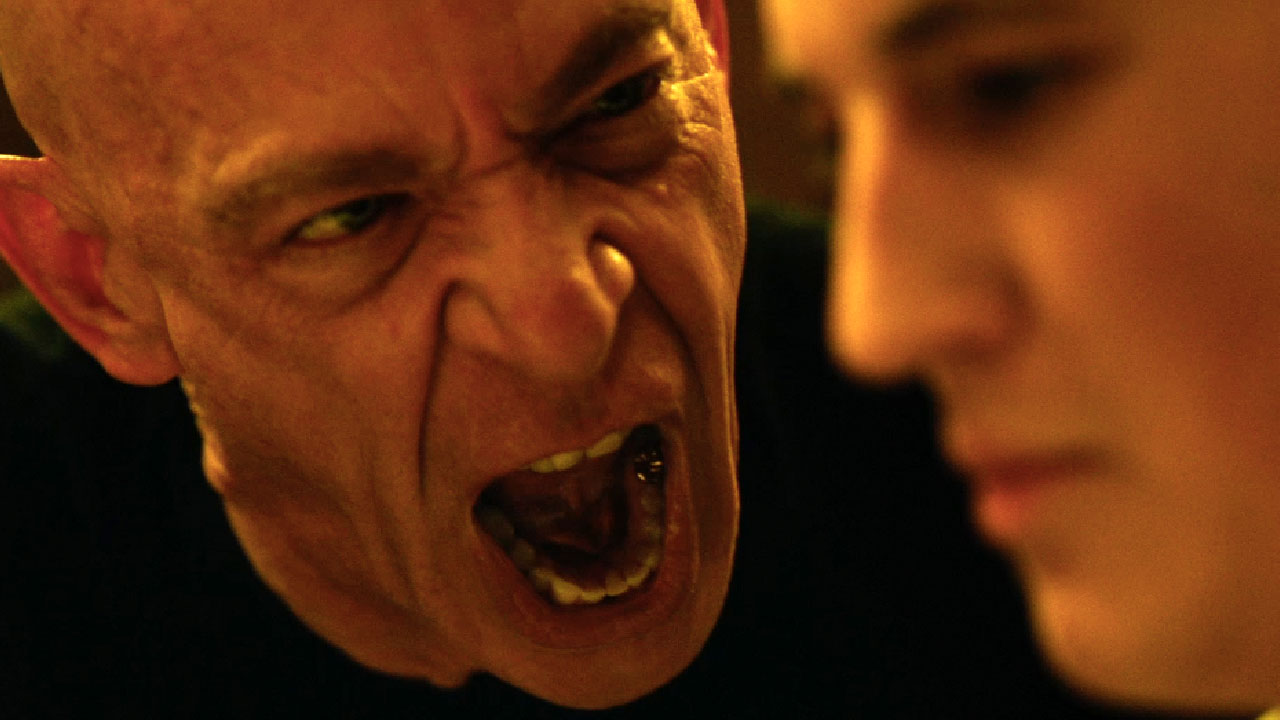
Perfection or death is Fletcher’s creed, and if you’re not willing to kill yourself over your failings, he is willing and eager to do it for you. You are using up valuable oxygen.
The beast will be satisfied (JK Simmons, Miles Teller)
Even in the face of this unending physical and emotional torture, which includes an airborne chair, however, Neiman is willing to sacrifice everything to become the Charlie Parker of the drums. And that sacrifice extends to his budding romance as well as his family.
Nothing will stand in the way
But even that is not enough for Fletcher and we watch Neiman self-immolate while the monster emotionally fiddles with everyone’s lives. Unsatisfied with Neiman’s ashes, however, the master lures the student back with a siren song of greatness in a move that only the audience can see is designed to destroy Neiman yet again.
Perfection is everything (Miles Teller)
But just when Satan achieves his final triumph, he is surprised to learn that his fallen Angel has learned a few things. And this is the ultimate Fall of Man of which we hear in poetry.
The final moments of the film are like watching Luke Skywalker take Darth Vader’s offered hand on the catwalks of Cloud City and unite to rule the Empire, destroying both the Emperor and the Rebellion in one moment.
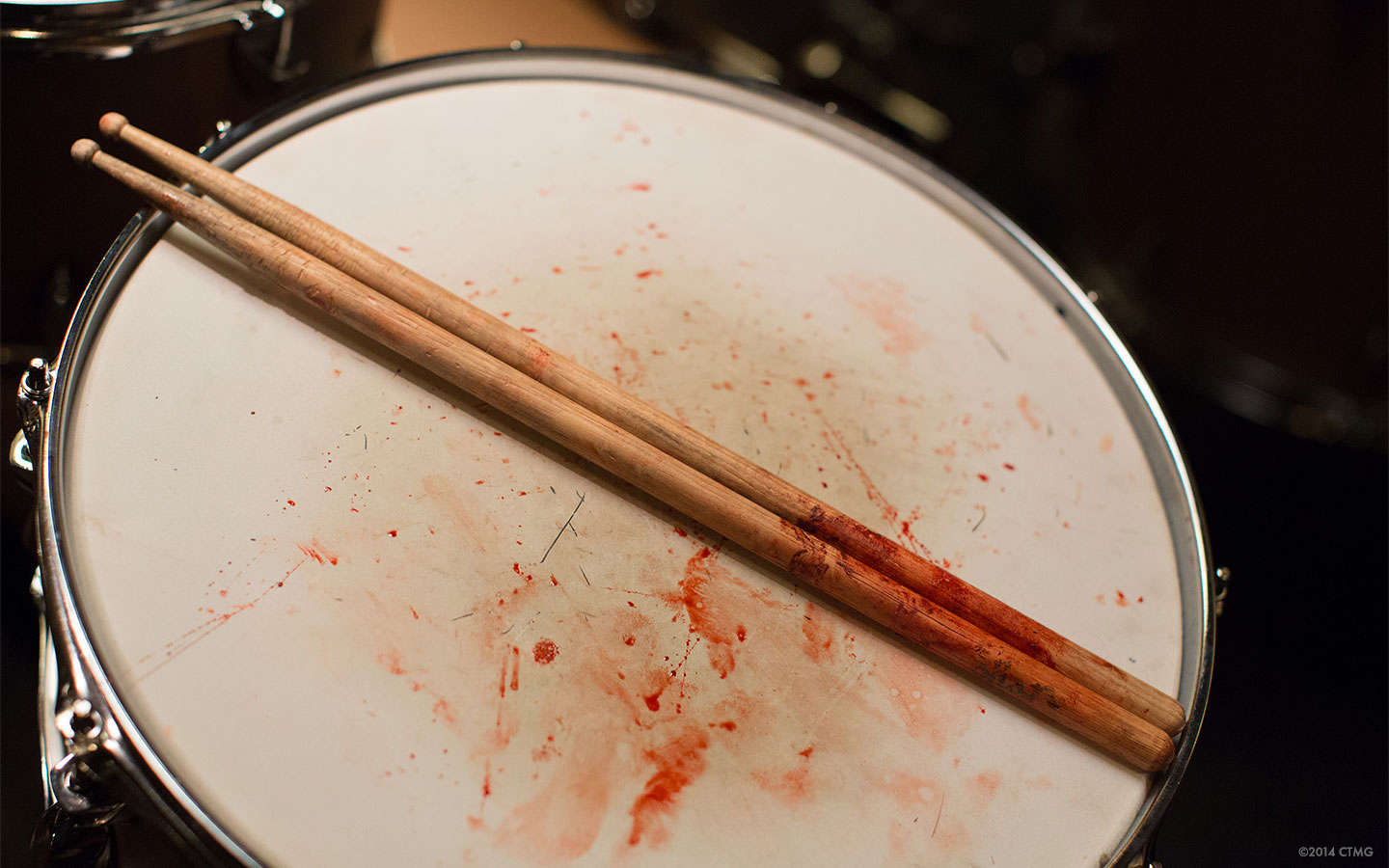
Throughout the film, the heart palpitates until threatening to arrest from the crushing weight of the increasingly up-tempo music (think frenzied, not dancing) and Fletcher’s relentless pounding on Neiman’s soul. By the end of the movie, you will be exhausted and sated by the ecstasy of what has been achieved.
It will only be later, in the calm aftermath of normal life, that you will begin to understand the dreadful cost of that achievement, not just for Neiman but also for humanity.
If the documentary Blackfish drove people away from marine parks, it wouldn’t surprise me if Whiplash drove parents away from music schools.
Simmons won Oscar, BAFTA, Golden Globe & SAG
Simmons won the Academy Award for Best Supporting Actor (and Golden Globe, BAFTA and SAG) for his performance as Fletcher, although as crucial to the story as his role was, it could be argued he was a co-lead. And although I admit to not seeing the films of any other performers in this Oscar category, I am surprised the award was given to Simmons.
The man’s performance was quite good—he played Fletcher so malevolently, I would probably take a swing at Simmons if I saw him—but it didn’t feel like the character required a lot of the veteran actor aside from pushing the portrayal beyond anyone’s comfort zone.
Where the film definitely deserved its Oscar and BAFTA wins was for sound. The music was amazing and despite being constantly interrupted, it still managed to deliver its power and its physical toll on mere flesh and blood. Each piece became its own rush toward a climax that never arrived, pushing you until your body screamed for catharsis and was instead met with a cut to the next scene. (Editing was pretty impressive.)
Again, however, despite all of these wonderful facets, it was the moral Fall of Man in the face of all this magnificent music that bothered me. For if nothing else, it made me question the purity of artistic expression and whether it was worth the exorbitant cost of another human soul.
The moment of our greatest achievement, writer/director Damien Chazelle tells us, is also the moment of our greatest loss. I find that sad.
I hate writer Erin Whitney for little fault of her own aside from the gaping wound that she has rent into my soul with the opening lines of her Huffington Post piece announcing the release of the latest trailer for Macbeth, as performed by Michael Fassbender.
“Imagine Game of Thrones with Michael Fassbender speaking Shakespearean. Then you’ve got Macbeth.”
Her approach is entirely justified for a generation(s) that did not grow up on the works of William Shakespeare but instead find themselves immersed in the worlds of George RR Martin and the like.
But it is in pointing out this sad fact—sad to me, at least—that Ms. Whitney has earned my enmity. With all due respect to Mr. Martin, it is his works that should be defined in Shakespearean terms, even if only from a chronological perspective (taste is personal).
[I would also argue that a better parallel is made with either the British or American versions of House of Cards, but that is beside the point.]
Frank & Claire Underwood are Lord and Lady Macbeth
Please do not take my condemnation and enmity personally, Ms. Whitney. It is not entirely your fault that you tripped this social and literary landmine.
If, however, I might make one recommendation: Get thee to a Shakespearean festival!
* * * * * * * * * * *
Some North American Shakespearean festivals (not a comprehensive list):
Watched Rashida Jones‘ documentary Hot Girls Wanted about the amateur porn industry and can honestly say I have no idea what I think of it.
Part of the challenge is I have no idea what the point of it was other than to document the experiences of several young women (18-25 y) as they approach and experience the lifestyle. We can argue day and night about whether the lack of an overt agenda or POV is a good thing, but to my mind, it presented the women as neither victims nor empowered…simply as women who made a choice.
To be blunt: These women chose to go to Fuck Camp to make money and escape home.
It is interesting to watch the impact of their decisions on their lives and particularly their relationships with families and boyfriends. And I had to laugh at the irony of one woman who was clear in her rationale about her decision until it came to talking to her father about it.
And I must admit that I was surprised at how cavalier (my biased standards, not theirs) the women were about what they were doing, the potential hazards of the situations they found themselves in, and any thoughts as to how this might impact future life decisions beyond the 3-6 months they made money (not a typo…a woman’s “marketability” typically only lasts 3-6 months).
One of the few images I’m willing to show
Over its 82-minute span, the documentary drags a little in places and often covers the same ground, no doubt to reinforce some of the more graphic elements. And it is graphic, stopping short of showing the actual sexual acts, but giving you enough of the rest (e.g., nudity, bondage, choking, vomiting) to bring across the essence of what these women are doing.
And in the end, the take-away is whatever you take away from this story.
No matter what your opinion going in, this will only reinforce that opinion. It doesn’t seem to be aimed at making you change your mind about the merits or evils of this industry. The same woman who feels exploited in one scene expresses a sense of empowerment in the next, and in some cases, about the same act.
Adult women making adult decisions about the adult industry. Good or bad is for you to decide for yourself.
Mother, Nehiyaw, Metis, & Itisahwâkan - career communicator. This is my collection of opinions, stories, and the occasional rise to, or fall from, challenge. In other words, it's my party, I can fun if I want to. Artwork by aaronpaquette.net










 createdbyrcw