So, I just discovered there is something called Decembeard, a charitable campaign to raise funds for colorectal cancer (presumably to fight it rather than promote it).
Decembeard follows tightly on the heels (chins?) of Movember and its promotion of awareness of prostate cancer.
As I have reported elsewhere, the women were not to be outdone and I know one of the founders of Julyna, a campaign to bushwhack cervical cancer. (At least this one is anatomically related in the geographic sense.)
So, how many more of these can we do?
Pituary – Arm pit macramé to promote conditions of the pituitary gland
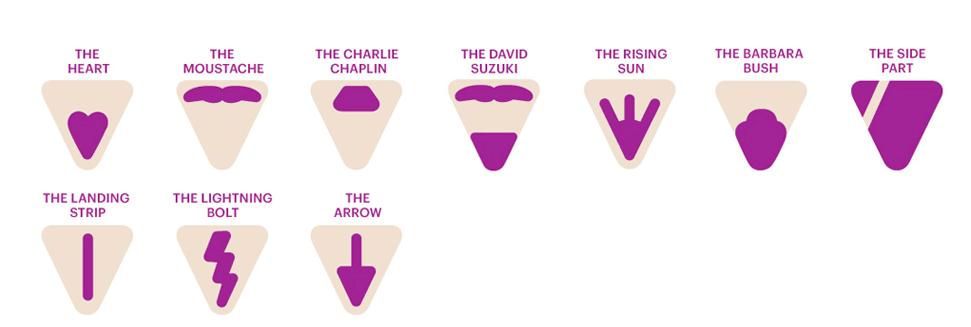
Fepubeary – Growing the short ‘n’ curlies to raise awareness about deforestation
Partch – Creatively parting all of your body hair to promote the wax industry
Earpril – Wild and wooley ear hair in support of local symphonies
Might – Strength training just because bathing suit season is upon us and we’re tired of looking at that
Stoone – Heavy colonic bombardment to promote awareness of illegal dumping
Julyna
Ah-ah-ahgust – High volume nasal ejections to support diseases of the immune system
Septumber – Full-frontal snoring to raise awareness about sleep disorders
Proctober – Sort of Hands Across America’s rectum to promote taxation reform
As some of you know, I am a hockey fan and season ticket holder for the AHL Toronto Marlies, farm team for the Toronto Maple Leafs.
Every once in a while, I decide to completely ignore the hockey game by bringing my camera with me, searching for those great shots that I can ask the players to autograph.
Now, this would be a hell of a lot easier if I had more skill with my camera (need to take that class) or perhaps the right lens. But until the time that either or both of those happen, I present you with some of the closer ones from last night’s game against the Grand Rapids Griffins (farm team of the Detroit Red Wings).
Christopher Gibson prepares for a shot from the point
Sniper Josh Leivo gets his game-face on during warm-up
Tom Nilsson looks to make a play in his zone
Lindsay Hamilton has some crazy eyes during a fan game
This year, I participated in my second NaNoWriMo (national novel writing month) competition, although the word competition is a bit of a misnomer but love-fest sounds a bit Sixties.
The last time, about three years ago, I got about a week into it before the realities of life interfered and everything stalled. This year was different.
While the realities of life have generally been pretty easy on me, I did have two solid weeks of distractions in the middle of November (yay, paying distractions) and still managed to reach the goal of 50,000 words by my birthday near the middle of the month (and while on the road).
Unfortunately, because I have never met a 50,000-word story that couldn’t actually be 200,000 words, I am not yet at the end of my story or my novel and so continued to type actively for most of the rest of the month to finish the competition/love-fest/creative circle-jerk just shy of 81,000 words.
I want to pat myself on the back for getting this far (and eventually, I will) but the problem is that having gotten this far, I want to reach the end of the novel, and so on December 1st, 2014, I begin what can best be described as Mo’NaNoWriMo.
And if I’m still not finished by New Year’s Eve, then I shall welcome in the New Year singing:
MoNaNo, MoNaNo, MoNaNo!
Thanks to all of my friends who have been so supportive throughout this process…especially those of you who have no idea what I am doing or why.
Let all y’all know how it goes!
Synopsis
At the height of its power, the Minoan civilization ruled the Mediterranean Sea, establishing trading colonies throughout the region and venturing into the dangerous waters of the Atlantic. But unknown to its rulers and priests, the Earth itself was planning an end to the empire; an end that centered on the tiny colony of Thera, the present-day island of Santorini.
The story Thera bears witness to this cataclysmic end through the eyes of a young Mycenaean boy Patroclus, taken from his simple village on the coast of Greece as unwilling tribute and slave into the Minoan court. Patroclus quickly learns the machinations that hold the Minoan world together, but just as he recognizes his opportunity for escape, his world is threatened by Nessa, his Minoan Master’s daughter who sees something special in him.
The clash of cultures takes second stage, however, as the world itself begins to change shape. Only Patroclus seems to be aware of the scale of the omens, adding urgency to his survival plans and conflict over how to deal with Nessa.
I am a troglodyte…a knuckle-dragging, mouth-breathing dinosaur who will shortly find myself extinct for my inability to evolve with the world in which I live. You see, I like to read books.
So, what’s wrong with that, you may ask, lots of people read books. I have several dozen on my e-reader.
There’s the rub. I did not say novels, plays, short stories, historical or scientific treatises—all of which I do enjoy. Rather I said “books”. Those folded paper constructions across which are scribbled black serif or sans serif typefaces and maybe a few photos or illustrations.
This past week in Toronto, yet another bookstore (brick & morter, not Xena warrior princess type) met its demise. The self-described World’s Biggest Bookstore was a staple in downtown Toronto, a place to visit when you were trying to kill some time or perhaps even to purchase books, magazines, school supplies or those kitschy little items that no one ever thought they wanted but can’t seem to live without.
This past spring, about a dozen blocks away from the WBB, another bookstore met its demise and is in the process of becoming a craft store (because what erudite urbanite doesn’t want more Styrofoam cones and sewing notions?).
The reasons for these closures are many and varied, although the loudest one in downtown Toronto is the cost of renting or owning the space. Why house 10,000 hard and soft copies of books when you can house just as many Torontonians in roughly the same space?
I know there are other bookstores in Toronto. My concern is for how much longer.
They came for the mom’n’pop shops, and I said nothing.
They came for the specialty stores, and I looked the other way.
Then they came for the big box stores, and I was forced to buy an e-reader.
Despite the number of items I have purchased from e-tailers like Amazon and Indigo, there is still nothing better to me than the tangible feel of a book in my hands. There is a vibe in books that I cannot get electronically, unless I wet my fingers first, but that’s more of a shock than a vibe.
I am a junkie for second-hand bookstores.
I love that musty smell that I am confident is a mould infection waiting to take root in my olfactory or pulmonary system. The crick of a book spine as you fold it back for the first time (my own spine makes a similar noise in the morning).
And the gentle signs of previous love, whether a notation from giver to receiver, random dog-ears suggesting the previous owner had ADHD or the odd tacky material sticking several pages together that we are all best not to think too much about.
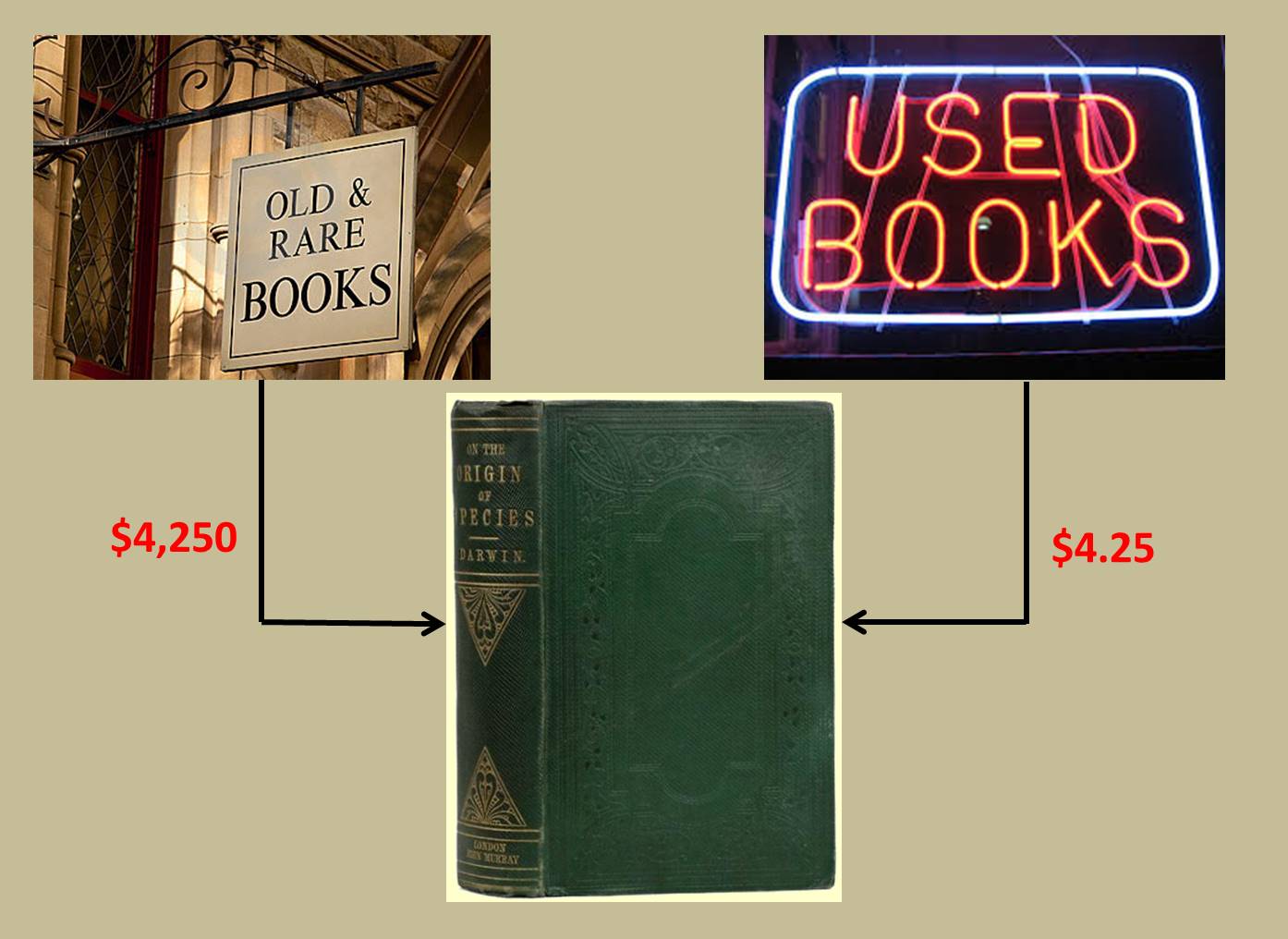
As a side note: I find it ironic that I will pay $20 to $50 for a book in an antiquarian bookstore that I wouldn’t spend more than $3 on in a second-hand store. Apparently, signage works.
I watch people in airports and on buses scrolling through their e-readers and wonder, where is the fun in that?
Don’t you miss the excitement of flipping ahead to determine whether you can stay awake long enough to reach the next chapter break? Or anxiously getting to the bottom of the page only to realize that the sentence finishes on the next page (don’t judge me, I live alone)?
Or knowing that in the coming apocalypse, you’ll be able to keep a fire going for several days? You try cooking squirrel over a burning e-reader and see how far that gets you.
(Note to self: Buy extra reading glasses. Learn the lessons Burgess Meredith did not.)
But alas, I am a vanishing breed and like the thunder lizards that came before me, I will have to make way for those annoying little rodents that scurry around under desks and floors and through the walls…yes, the guys from I.T.
But until that day comes, I shall continue to hunker in my apartment, surrounded by my beloved paper friends and learn a bit more about modern squirrel trapping techniques.
Writer. Director. Lead performer. Possibly the most critical functions in defining how well a movie will do, and often one individual will play more than one role with varying degrees of success. But when a single person plays all three, look out.
For some reason, the movie that results from the triple play rarely seems to work in my experience. And 2013’s Fading Gigolo falls right into that category. (Citizen Kane is one of the few successes I can think of.)
The triple play of Hollywood stalwart John Turturro, Fading Gigolo tells the story of two friends, second-hand bookstore owner Murray (Woody Allen) and florist Fioravante (Turturro), who are both going through some financially tight times. So when Murray’s dermatologist (Sharon Stone) suggests she and her girlfriend (Sofia Vergara) are considering a ménage á trois, Murray immediately thinks about his good looking buddy and suddenly it is American Gigolo for the middle-aged.
Boobs and bums but no climax (Stone, Vergara)
Oh, and all of this happens in the first two minutes of the movie.
One after another, Murray lines up customers for Fioravante, whose kicked-puppy facial expressions and old-world charm sweep the women off their feet and money out of their wallet. To his credit, Fioravante feels some guilt over taking advantage of the lonely women, but he gets past that with the help of Murray’s nebbish logic.
Life becomes more complicated, however, when he meets the widowed Hassidic Jew Avigal (Vanessa Paradis) and in helping her come out of her shell, finds himself developing feelings for the woman.
Fioravante helps draw Avigal out of herself (Turturro, Paradis)
When I first saw the trailer for this movie, I thought it would be a beautifully sweet film about human relationships with the comedic backdrop of Woody Allen as a pimp. And to be sure, there are moments of beauty in the film. But only moments.
Unfortunately, there are no moments of conflict in the film. Nothing against which the characters can really push and grow, with the exception of Avigal, and so the movie feels like the emptiest of emotional calories. You feel good while it is in front of you, but the minute a scene is over, you don’t remember a single moment of it.
Woody Allen still has it, although somewhat sparingly, and there were moments in the story reminiscent of his characters in Bananas or Sleeper, but in some respects, he has just become an older caricature of those characters. Sharon Stone has one or two moments where you can see some vulnerability in her character, but those dissolve pretty quickly. And Sofia Vergara is simply boobs with an accent, as with every role I have ever seen her perform.
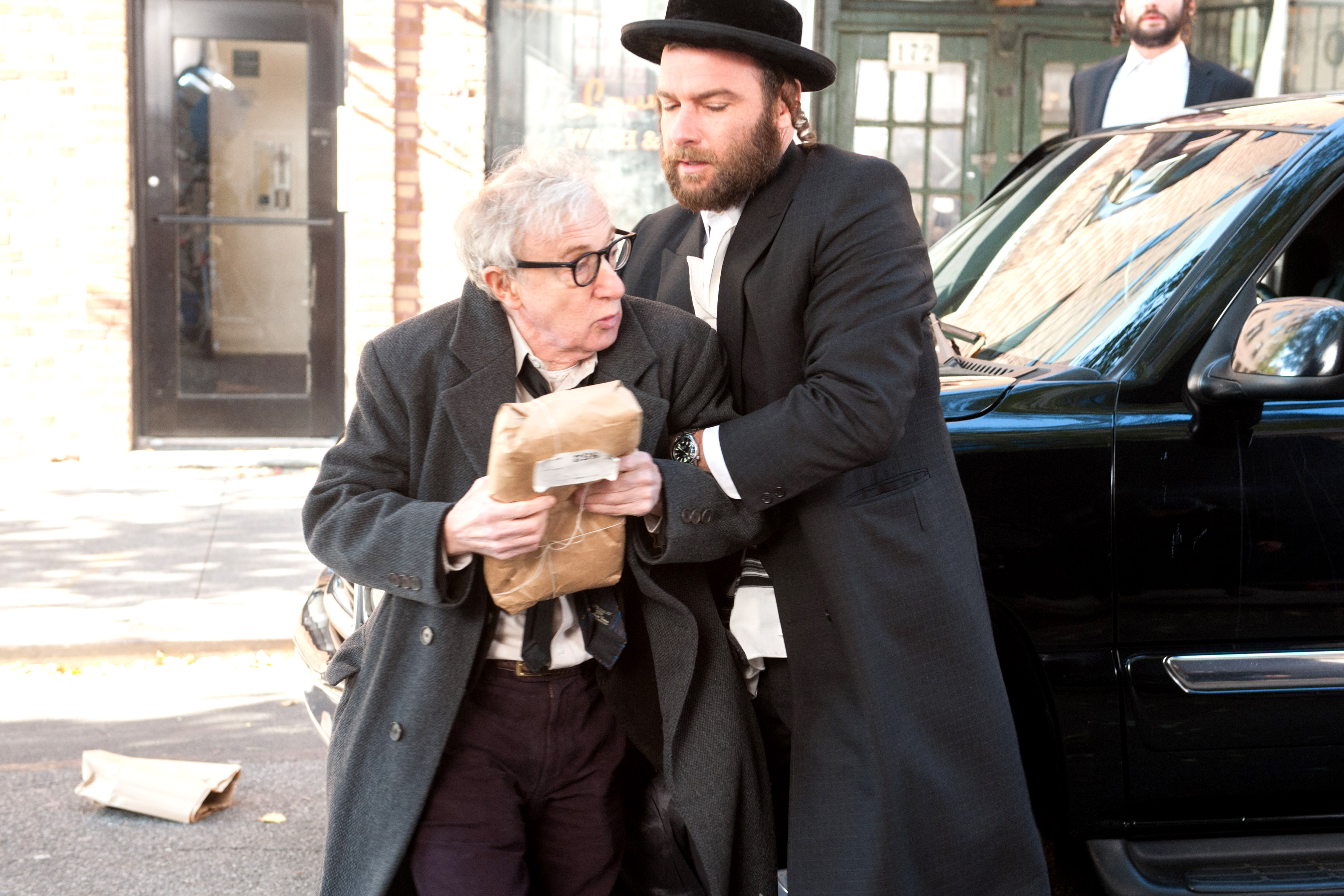
A little Hassidic slapstick (Allen, Liev Schrieber)
As mentioned earlier, Vanessa Paradis’ Avigal is the only character with an arc in this story, the only character who is transformed, and the actress does a pretty good job with a relatively straightforward character. Unfortunately, against a backdrop of nothing characters, I can’t tell if she did a good job or just a less bad job.
But again, all of my irritation is focused on Turturro and his failings. Fioravante is a sweet man but has all the internal conflict of Michael Landon’s angel character Highway to Heaven, i.e., too good to be true.
As a writer, Turturro missed every opportunity to enrich a flat screenplay. In the writing vernacular, there was no inciting incident (the reason to become a prostitute is weak), no turning points, no crisis and no climax except in the sexual sense.
And because the writer Turturro seemed satisfied with the screenplay, the director Turturro had nothing to offer to improve a moribund story comprised of high-fructose corn syrup.
So much talent. Such a beautiful concept. Such potential for humour and pathos.
I love good satire. I am a massive fan of Monty Python’s Flying Circus, The Daily Show, The Colbert Report and early seasons of This Hour Has 22 Minutes. I’ve always thought that satire was a wonderful way to point out the foibles of some aspect of society and thereby elicit change in that behaviour or belief.
The Merriam-Webster Concise Encyclopedia defines satire as:
“Artistic form in which human or individual vices, folly, abuses, or shortcomings are held up to censure by means of ridicule, derision, burlesque, irony, or other methods, sometimes with an intent to bring about improvement.”
But a recent video posted by a friend on Facebook has caused me to question the idea that satire can lead to real change. The video was a short piece performed by recently deceased Mike Nichols and Elaine May that mockingly celebrated the mediocrity of television.
The piece was performed in 1959…55 years ago…and yet I wonder if the piece isn’t more salient now in the multichannel, multivehicle universe.
Listen to the audience. They’re eating it up. They know it’s true and yet so few of them likely did anything to reduce the mediocrity of television.
Has The Colbert Report done anything to cut into the viewing audience of Bill O’Reilly? Or The Daily Show seriously impacted the rhetoric spewing out of Fox News?
After the first couple seasons of ambushing politicians on Parliament Hill with their satirical antics and challenges, 22 Minutes suffered through a period where politicians practically ambushed the performers. To be seen to be able to take a joke was good for political business, thus neutering the whole point of the satire.
In contrast, there was a recent piece on John Oliver’s Last Week Tonight about the Miss America scholarship program that showed the pageant was exaggerating in its claim to be the largest provider of scholarships to women. When it turned out that despite the bogus claim, Miss America still did provide scholarships to more women than several other pro-women organizations, those organizations stepped up their game. But such tit-for-tat examples are rare.
So, the question becomes, is satire anything more than entertainment for a group of common-thinking people who feel otherwise powerless? Has it ever been anything more than that?
I’m going to spend some time looking for examples where satire can be linked to social change, and I welcome input from anyone. So, please throw in your thoughts and come on back to see where I’ve landed.
And, even if I decide it really is simply a form of entertainment, I will likely continue to enjoy it as I would any other art form for which I have a fondness.
But I’ll be interested to see what I come up with.
I don’t know if it is that I have become numb to the harshness of world events shown on the news or that the movies I watch have inured me to violence, but I must say that I found the movie Rosewater didn’t hit me as hard as I expected.
For those of you who haven’t heard, Rosewater is Jon Stewart’s film adaptation of the book Then They Came For Me by Maziar Bahari, a journalist who was imprisoned and tortured in Iran for 4 months largely for filming the protests that arose after the re-election of Mahmoud Ahmadinejad in 2009. The protests were the result of an election that was almost certainly rigged to re-elect the incumbent and Supreme Leader favourite over more moderate candidate Mir-Hossein Mousavi.
Aside from the scenes that set up who Bahari is and how he came to be covering the Iranian election for Newsweek, leaving his pregnant wife behind, the film largely examines the relationship that develops between Bahari and his lead interrogator, a man who treats himself with a cologne of rosewater (thus the movie title) and is dealing with his own issues within the infrastructure of Evin Prison and the actual job itself.
This is where the movie excels. It rather even-handedly portrays a man who has little interest in being a martyr for a cause, as his father and sister had effectively become before him, and balances this against a delusional system that sees itself as protecting Iran’s Islamic State from the evils of outsiders and yet, at an individual level, struggles with the fact that it will inevitably lose. The interrogator is not a monster, but ultimately is a man who wants something better and yet feels incapable of achieving it. Thus, he plays the role he is assigned.
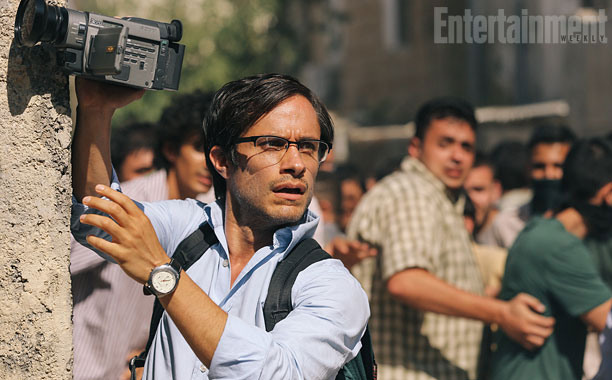
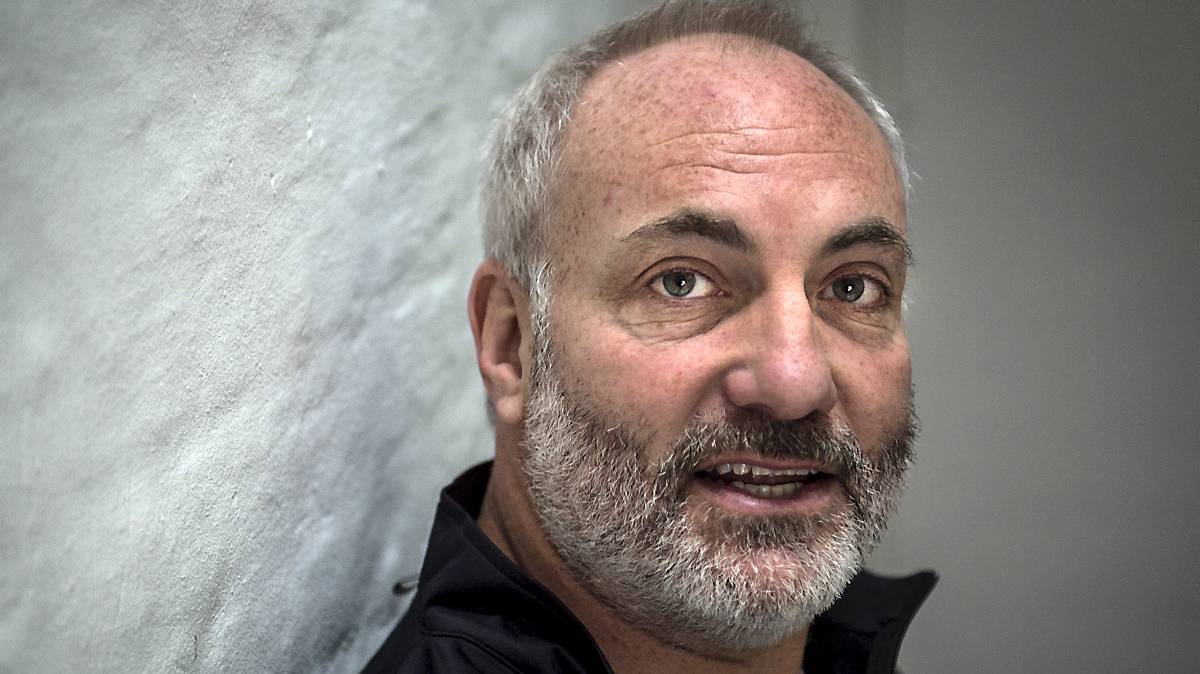
The relationship and struggles between these two men—Gael Garcia Bernal as Bahari and Kim Bodnia as the interrogator—is worth the price of admission alone, and in my opinion, Bodnia magnificently plays the more interesting of the two characters. As the movie itself alludes, Bahari was tortured of body while the interrogator was tortured of soul.
The horrified journalist (Gael Garcia Bernal)
The tortured interrogator (Kim Bodnia)
But that’s where I ultimately found the film wanting.
Although the movie gave us snippets of what a traditional interrogation looked like with harsh beatings and the resulting bruises on other prisoners, with the exception of one scene, we never truly saw how Bahari was tortured aside from solitary confinement (of which I by no means wish to underplay the significance). Thus, I never really felt like I was emotionally drawn into the peril Bahari was legitimately facing—potentially, his death. It remained all too abstract and cerebral.
To look at this issue from the other side, I am truly pleased that Stewart didn’t go down the road of over-dramatizing the violence, as this could easily have become a horror film. I just think there was room in the middle to bring me a little further into the peril.
Another complicating factor for my viewing was that I was watching this film next to my good friend and writing partner Agah Bahari, who is nephew to the man being assaulted onscreen. For his sake, I am grateful the portrayal of violence was not more heavy handed as I cannot imagine the impact such scenes would have.
Rosewater tells a very important story on many levels and despite being based on events from five years ago, remains significant today given the continued efforts at reform within Iran and its outward resistance to Western influences, as well as its horrible record of imprisoned and tortured political dissidents and journalists.
For such a dramatic story, the acting was incredibly even and bordered on inspiring, never becoming melodramatic. It had some amazingly beautiful moments of introspection mediated by the ghosts of the past, and again, the crisis of the interrogator was palpable and poignant. There is even a segment of outright laughter, incredible as that may be to believe given the subject matter.
Stewart did an amazing job with his directorial debut, providing us with a beautifully balanced presentation of completely polar events. I just wish it had stimulated my gut as much as it stimulated my mind.
I look forward to reading the book, simply to see what was altered and to learn more about Bahari’s thoughts and feelings in retrospect.
One of these people is a “serious journalist” (Wendy Mesley; Jon Stewart)
As I practice the art of writing (e.g., novels, screenplays), I pay my bills by writing for the pharmaceutical trade publication DDNews. I consider myself more of an essayist and commentator more than a journalist, mainly because I have too much respect for journalists and the tightrope they walk balancing the need to produce a story and discover a story.
With that respect, however, comes a certain level of expectation, and in too many high-profile cases, those expectations are not being met.
The most recent case for me (and the prompt for this post) was an interview between CBC journalist and anchor Wendy Mesley and film director and host of The Daily Show Jon Stewart, who appeared on CBC’s The National on November 14.
The interview used as evidence Bahari worked with spies (Jason Jones, Maziar Bahari)
Ostensibly, the interview was meant to discuss Stewart’s new movie Rosewater (trailer at bottom) and the events that led to the incarceration of journalist Maziar Bahari in Iran, the interrogation of whom involved video of Bahari’s discussions with a The Daily Show correspondent Jason Jones.
Ironically, the interview became an attempted interrogation of Stewart on his culpability in Bahari’s incarceration and torture, and the broader question of satire feeding the flames of fanaticism.
To his credit, while dismissing the questions as ridiculous, Stewart responded to them with logic and tried to look at the bigger picture. Mesley, however, could not be shaken from her belief that there must be guilt and culpability.
This is where I take issue.
Although I believe it is important for a journalist to know what she wants to talk about when interviewing someone, I also believe it is beholden on the journalist to let the conversation happen and see where it goes.
When I interview someone for one of my news articles, I start with a list of questions based on my research of the topic and the person/organization being interviewed. Going in, I have an agenda.
But when the interview starts, most of those questions fall by the wayside and are replaced by bigger, more important discussions that I didn’t foresee. In short, I listen to what the interviewee has to tell me and then adjust the conversation.
I completely understand that if someone is being evasive on a topic, a journalist may want to harder press a specific topic or series of questions, but in the Stewart interview, there was no evasion. He simply did not give the answers Mesley wanted, and she refused to accept them, as she is wont on many pieces throughout her years with the CBC.
Delightfully, toward the end of their conversation, Stewart called her on this, accusing her of not believing anything he said. She clearly did not do her homework on him, because she was uncomfortable with his challenge.
Sadly, this meant that the interview became about the interview and not the subjects that might have been vastly more interesting and were decidedly more important: political fanaticism, satire as a weapon, the erosion of journalism (ironically), human endurance.
An opportunity for insightful exchange was largely missed (Stewart did his best to talk about these things).
For anyone who thinks you might be interviewed at some point in your lifetime, study Stewart’s approach to this interview and any other.
For anyone who thinks you might become a journalist, study Mesley’s approach to this interview and pull a Costanza…do the opposite.
There are too many important issues to be discussed in the news to have the conversation high-jacked by a faulty agenda.
In the meantime, if Mesley wants to be an editorialist or commentator, do so. The CBC has several (e.g., Rex Murphy).
PS Some might argue that because I work for a trade publication, my questions are apt to be softball as the publication’s agenda is to suck up to the industry. One: I call bullshit. And two: read my stuff.
Happier times well after the events of Rosewater (Jason Jones, Maziar Bahari)
Mother, Nehiyaw, Metis, & Itisahwâkan - career communicator. This is my collection of opinions, stories, and the occasional rise to, or fall from, challenge. In other words, it's my party, I can fun if I want to. Artwork by aaronpaquette.net