One Person Too Many

Image

As another Toronto Fringe season approaches, I am reminded of the myriad one-person shows that infest these festivals. While these shows not universally bad and I applaud the bravery of the one-person, I must admit I tend to avoid them because when they are bad, they are interminable.

For me to attend a one-person show, I generally have to know and love the one person or know and love the material (e.g., a one-person show of Shakespeare soliloquys).

With a more-than-one-person show, the odds of me finding something to hold my attention increase dramatically. One or more actors may be worth following. The banter may be crisp. The scenery might be interesting.

With a one-person show, however, I really only have the actor and the material (sets are typically minimal to non-existent), so if I’m not enjoying either of those, then I’m screwed for 45-60 minutes.

Now, contrary to everything I have just said, I really enjoyed the last three one-person shows I saw at Toronto Fringe: Christine Aziz’s ELLAmentary, Jen Gallant’s Visa Called This Morning and a piece by Jerry Schaefer, all of whom I know from the Toronto comedy community.

Well, time to schedule another festival worth of plays—friends first.

(Photo is property of Toronto Fringe and is used here without permission.)

Dialogue v Narrative

Image

Yesterday, my friend Marsha posted a short piece on her blog—Why the Face (WTF)—where she discussed her challenges in writing narrative/action for a scene and how she found scene writing to be so much easier if she started the dialogue.

“On its own, free of formatting and figuring out what characters are doing physically,” she wrote, “it lets me really get into what these people are actually saying to each other.”

When I read this, I thought, what a fascinating approach as mine is the complete opposite.

When I start a scene, I can go on ad nauseum about the setting and what the characters are doing or how they are behaving, but I find actually expressing the characters in dialogue to be daunting. When I do start writing dialogue, I find that I am writing exactly what my characters are thinking (on-the-nose) or that their emotions and motivations are incredibly superficial.

When I describe a character’s behaviour, however, his or her emotions surface more slowly through unconscious tics. The tensions that I intone in my mind’s eye then inform the word choice when I start to write his or her dialogue. It is as though I have to psych myself into the character’s body before I can express his or her desires and impulses to the fullest.

What makes this ironic is that while discussing this with Leela, another friend, she reminded me of the days when I first started writing sketch comedy, and all I could seem to manage were a series of “talking-head” sketches. At that time, action was unimportant to me as I felt the only way to bring my point across was through words.

On paper, my sketches could be very engaging, whereas on stage, they were significantly less so. Thus, I needed to learn the power of the unspoken word. Apparently, the pendulum has swung full tilt and I am now in the process of finding a happy medium. (No wonder writing is so tiring.)

Ultimately, like a good Oreo cookie, the best screenwriting comes from the combination of solid narrative (icing) and solid dialogue (cookie), so I am glad Marsha has my back and I have hers.

I am always right (motivation)

Image

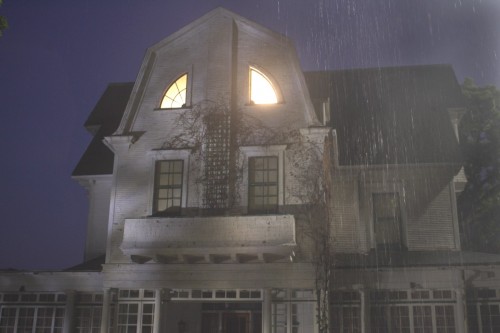
If I move into a beautiful New England home with my beautiful family and on our first night, the walls run red with blood and a disconnected voice cries “Get out!”, I go to a hotel and move the next day.

I do not search for an explanation (or at least not that night). I do not instinctively head for the dusty attic, the dank dark basement or that rather nasty looking shed under the menacing weeping willow in the darkest corner of the back yard.

So when I read about characters doing just that in a novel or screenplay or watch actors do it at the movies, I find myself thinking they deserve whatever comes next because they are idiots. What the hell motivated them to have that stupid response? Out of the gate, I disconnect from the character.

Now, despite the title of this blog post, I am not suggesting that only my instincts should be followed in screenplays, novels, etc.—these would be damned short stories if everyone did—but rather it is a call to writers to help me, as a reader or viewer, understand why the character behaved the way he or she did. Until I do, I cannot really bond with the character.

This isn’t easy, but it is necessary.

Whenever a character responds to something or takes an action, you have to ask yourself, why did he or she do that? And over the course of your story, are all of that character’s choices consistent with his or her personal journey from before your story’s opening to its conclusion?

And as if that isn’t difficult enough, you then have to ask yourself, have I written the story in such a way that the audience can see the logic of the choices, even if only in hindsight?

This last point is crucial, because as writers, we often know or understand things about our characters that never make it to the page. Thus, while everything may seem completely consistent and logical to us, it may still be confusing to our audience, who is not privy to the machinations within the head of the writer god.

At the same time, you never want to spell it out for the audience, because then story reading or watching becomes too passive an exercise and the audience doesn’t engage. You need to feed your audience just enough information that it can begin to make inferences about your characters’ behaviours and so become connected with your characters.

The good news is that this is unlikely to happen in your first draft or at best, will happen in drips and drabs.

As you develop your story past draft one, you will find moments of inconsistency or more likely, your trusted readers and advisers will find inconsistencies. Take those in and mull them over. Odds are, fixing those issues will not require a major refocus of your story…just a heavy-brush rewrite. And your story will improve.

So if the walls run red with blood, a disconnected voice cries “Get out!” and your protagonist doesn’t, I better understand why.

Image

(Images are the property of the owners and are used here without permission.)

It’s a meme!

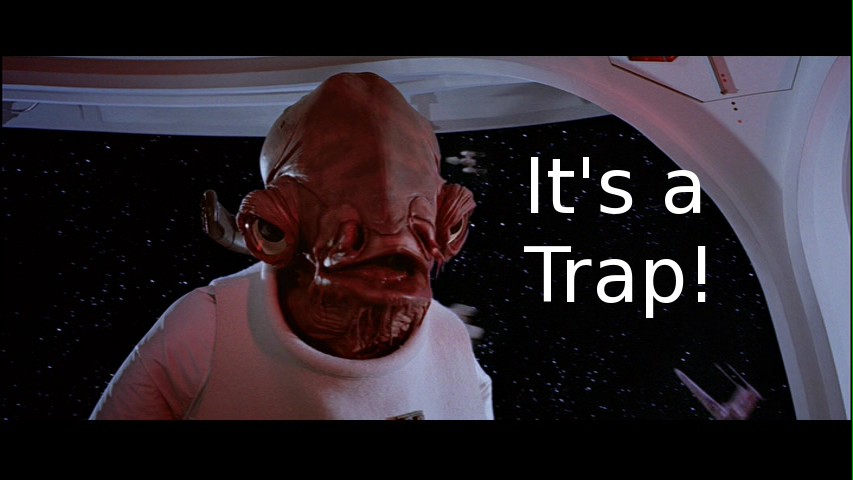
You never know what will take the internet by storm, only that every intellectual eddy has the chance of becoming a hurricane of the ludicrous. Case in point, the myriad variations on Star Wars’ General Ackbar and his sudden realization that “It’s a trap!”

Image

In the interests of short-cutting this process, I have tried to come up with a definitive list of variations of this meme for future use by one and all.

PS By the very nature of stating “definitive list”, you will immediately come up with others, so please feel free to add.

(I suck at graphic design, so I have not attempted to mock up any of the General Akbar memes I list below.)

It’s the clap! – Dr. F. Ackbar, family doctor

Use the flap! – Henry Ackbar, frustrated dog owner

There’s an app! – Simon Ackbar, computer nerd

Here’s your Pap! – Dr. G. Ackbar, gynecologist

Cut the crap! – Jodie Ackbar, frustrated wife

Mind the gap! – Eddie Ackbar, metro/subway driver

I played Hap! – Willie Ackbar, unemployed actor

Touch your lap?! – Candy Ackbar, stripper

Read the map! – Sir Edmund Ackbar, adventurer

Need a nap! – Old man Ackbar, old man

Want the wrap?! – Tootie Ackbar, waitress

Suck the sap! – Angus McAckbar, maple sugerer

Lick the strap! – Mistress Ackbar, dominatrix

Dis ma rap! – Big Daddy Ackbar, home boy

What’s on tap?! – Jessie Ackbar, Ackbarfly

Shut yer yap! – James Cagney Ackbar, mobster

It’s a snap! – Fast Eddie Ackbar, informercial host

Take a slap! – Jacques Acqbar, hockey coach

Please don’t….ZAP – the late Ensign Freddie Ackbar, red-shirted Starfleet cadet

Buffalo

Image

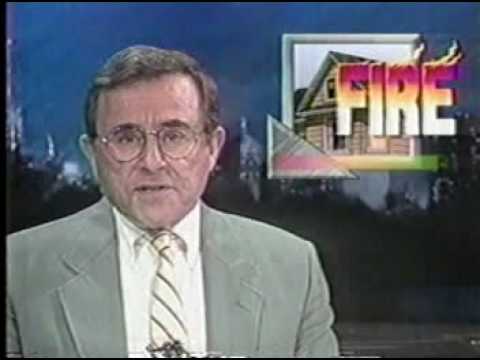
When I was a kid, there was a TV station in Buffalo that would start its evening news with a public service announcement:

“It’s 11 o’clock. Do you know where your children are?”

I always thought it a little odd. Were Buffalo parents really that bad that they had no idea where their kids were at 11 pm?

I imagined some fat, hairy father in a sleeveless undershirt, chugging a beer and waiting for the news.

“It’s 11 o’clock. Do you know where your children are?”

“Why? What’s the little bugger done now?”

Or a dowdy housewife, cleaning up the dinner dishes, suddenly thinking to herself:

“Oh shit! I left Billy on the mechanical horse at Wegman’s!”

“It’s 11 o’clock. Do you know where your children are?”

All these parents sitting home watching TV while thousands of kids run loose on the streets of Buffalo—taunting the homeless, looting Toys’R’Us.

“Oh my god! They’ve set fire to North Tonawanda!”

“It’s 11 o’clock. Do you know where your children are?”

They don’t start the news with that anymore. Do you think some guy at the TV station came into work one night and said: “Screw ‘em. They’re your kids. If you don’t care where they are, why should I?”

Of course, I guess the final joke is on us what with Alzheimers and all that.

“It’s 11 o’clock. Do you know where your father has wandered off to?”

Fitting a pitch

Image

The line has been drawn in the sand. I’ve painted myself into a corner. It’s time to s#!t or get off the pot. [Insert other cliché expression indicating you’re stalling and we all know it.]

It is time for me to start pitching my television show ideas to production companies. No more fine tuning. No more market analysis. Get out there and sell, boy.

I was at an information session over the weekend where a Head of Development for a local production company was talking to new comedy writers (and me) about what producers are looking for in new sitcom pitches, and perhaps just as importantly, what they do not want to see.

Much of what he had to tell me was very familiar, but one factoid took me quite by surprise and shook me off the procrastination horse. Nobody, it seems, wants to see your pilot script (at least not in Canada).

They haven’t got time to wade through it and really just want to know three simple facts:

  • What’s your story idea?
  • How expensive will it be to make?
  • Can we sell it in the U.S. or in Europe?

And all of this, the producer assures us, can be handled in no more than 3 pages and for some, ideally in one.

What’s your story idea? Tell me about the scenario, the characters and what I can expect to see in a typically episode.

How expensive will it be to make? One or a couple of sets works in Canada…multiple location shoots gets expensive.

Can we sell it abroad? Make it Canadian enough to get government tax incentives but not so Canadian that Americans and Europeans won’t want it. Broad and universal is the name of the game.

No pilot script? Too many changes after everyone has had their hands in your concept…although, if you have one, you can use it as a sample of your writing.

Oh.

Hunh.

Well.

Suddenly, I have gone from having one sitcom ready to pitch to producers to three sitcoms, two animated kids programs, one anthology series (think Quantum Leap) and two educational/lifestyle programs. [This is aside from the sketch comedy show on which I am a writer, but is someone else’s puppy to pitch.]

Time to figure out what production companies develop shows similar to mine and arrange some meetings. Time to make this career leap pay some bills.

Wish me luck (and please check in every now and again to keep me honest).

(Photo used without permission from the delightful blog Picnics in the Park.)

Flight paths

Having spent a fair amount of time in airports, I have seen plenty of jets, but airborne behemoths still impress me, so recent trips to Washington, DC and British Columbia added new flavours to my fascination.