Sunshine Award

Well, aren’t I the lucky fellow?

Image

I have been nominated for the Sunshine Award by fellow blogger Kira Lyn Blue, a self-describe overanalyzer, ninja squirrel wrangler and urban fantasy author. On that last one, I’m not sure if that means city-dweller who writes stories of the fantastic or if she writes stories about urban fantasy’s like clean air, functional infrastructure, no traffic and mayors who govern rather than politic.

Based on her request for more pics and poetry, it would seem that Kira Lyn is a fan of my less pedantic offerings, which is completely acceptable to me. In fact, because my photography and poetry is more of an artistic endeavour, I am highly flattered that she has asked for more.

And, if I understand correctly, the award is recognition for those who positively and creatively inspire other bloggers, so I am doubly humbled by the honour she has bestowed on me.

So, apparently the rules of the game include: posting the logo (lovely it is); linking to my nominator; answering 10 questions (see below); nominating 10 others (including links and comments) and informing them they have been nominated (see further below).

I give you these fifteen—oy—TEN, ten commandments, I mean questions:

Favourite colour: Orange…Hallowe’en is the bomb!

Favourite animal: Ferret…because I think I identify with an animal that can be extremely smart and stupid at the same time.

Favourite number: 13…anything that irrationally unnerves people is incredibly sexy to me.

Favourite non-alcoholic drink: Coffee…although I’ve seen plenty of alcoholics drink it, so I don’t know if it counts.

Favourite alcoholic drink: Beer…preferably porters or stouts.

Facebook or Twitter: Twitter…would have said FB, but liking the discipline involved in 140 characters, only a third of whom are funny

My passions: Humour, love, being…not to be all flower-child, but it took a long time for this answer not to be Nutella (which still runs a close 4th)

Giving or receiving gifts: Always giving…but not above receiving.

Favourite city: Montreal…sorry to my home of Toronto, but we stick-up-the-ass Ontarians need to learn how to relax and stop destroying our frickin’ heritage.

Favourite TV shows: Your Show of Shows, The Black Adder (series), House (the early seasons)

And now for something completely boorish…bloggish!:

Storiesbyfrancis – this woman has a beautiful soul and constantly makes me smile

Drawings, Paintings and Other Art – amazingly delicate artwork that lets the viewer bring their own thoughts to the table

Leanne Cole Photography – stunning architectural photos

Ned’s Blog – Unnervingly amusing and would have been a competitor in a previous life (the bastard!)

Julian Froment’s Blog – his zeal for reading and writing is infectious

Licht Years – incredibly delicate and uplifting photography

Abandoned Kansai – photographing the echoed lives of dead places

Pondering It All – poetry of great simplicity and yet incredible depth

Victoriously – a beautiful woman bravely sharing her personal demons with the world

Honeydobliss – 3 young women pre-emptively taking on midlife crises to do it right the first time(s)

Two’s company, three’s a story

As I read through a lot of early-stage screenplays and stage plays (including my own), I have noticed an interesting trend: Any scene that only involves two characters is boring.

No matter what the posturing, no matter how violent or loving, no matter whom the characters are, a scene with only two characters quickly loses steam for me. The dynamic peters out, and I find a lot of writers try to overcompensate for that by simply making the characters’ gestures larger. As though they believe talking louder to someone who does not speak your language will make you any more intelligible.

I speak for the trios: Turns out there may be some behavioural psychology behind this…at least, if you’re a rock hyrax—no, no, not “Lorax”.

Last week, a research paper was published in the journal Animal Behaviour that looked at the dynamics of triad relationships between these small creatures living in the hills of Israel, and the results were fascinating.

In a dyad relationship (two individuals), the authors say, you cannot make any predictions about the future other than friends will likely remain friends and enemies will likely remain enemies. With a triad (3 individuals), however, a social power dynamic is established that can morph in any number of directions, although some directions are inherently more likely and more stable than others.

The researchers found plenty of examples of the standby relationships, such as the friend of my enemy is my enemy (+ – -) or the friend of my friend is my friend (+ + +), and found that these relationships were highly stable in that they were likely to remain unchanged from year to year for any set of three individuals.

Enemy mine: What was fascinating, however, was that the seemingly unstable and counter-intuitive state of the enemy of my enemy is my enemy (- – -) occurred a lot more often than expected by chance and that it could be quite stable from year to year. This completely flies in the face of the standard that the enemy of my enemy is my friend (- – +).

From a story perspective, however, it can make complete sense. What if all 3 of you are vying for the same objective? As one of the enemies, you have to be constantly wary that any effort to thwart one enemy will provide an advantage to the other enemy.

Friend of a friend: What was also interesting was how gender played a role in the evolution of the unstable triad the friend of my friend is my enemy (+ + -). In females, this triad tended to morph toward (+ + +), while in males, it tended toward (+ – -), suggesting the need for female cooperation in raising young and male competitiveness in breeding. Typical men, eh?

From a story perspective, though, consider the power of (+ + -). What if the friend of your friend pushed them to do something contrary to your desires? This would make them your enemy—whether you’re being altruistic or selfish. A much more interesting dynamic as you may inadvertently push your friend into making a choice between the two opposing forces.

Dynamite dynamics: Regardless of the way your scenes play out, the triad dynamic gives you so much more room to play with emotionally and socially than a dyad. At any given moment, one of the trio can switch poles and the dynamic changes. With a dyad, the sudden switching of poles better have a good rationale in your story or it won’t be believable. That brings me to my next point.

Two characters: Now, before you go out and scrub all your two-person scenes from your screenplays, novels and stage plays (because yes, my hubris states I am that influential), let me remind you I said two characters, not two people.

Environment, situation and unseen third parties can also be characters in a scene between two individuals. It is those subtextual elements that convert a vomitously dull scene into one that sizzles. The challenge is in making sure the reader/viewer knows it’s there through carefully selected word choice and narrative (NOT exposition).

Two friends meet, but one hides a secret from a previous conversation that muddies their exchange in ways unexpected by the ill-informed (- + – or + + -) (e.g., plot to every spy movie ever made).

Two men with diametrically opposed viewpoints have to set aside their differences to deal with an external threat (- – -) (e.g., Hooper’s shark to his Quint is his enemy), which turns into (- + -)).

So, when you find yourself creating a scene with only two people, ask yourself who or what is influencing this scene aside from the two people and remember to incorporate them or it into the dialogue and narrative.

As Jed Barlett said to Sam Seaborn while playing chess in a scene from West Wing, “Look at the whole board.”

Didn't want to play your silly games, anyways
Didn’t want to play your silly games, anyways

Highway 401

Snowflakes hit the windshield / Like a swarm of angry bees

And are swept away as quickly / To make room for their brethren.


Clouds of frozen heaven / Scurry across the highway;

Riders on chaotic steeds / Dancing in a winter rodeo.


The car is buffeted / By the ever-changing winds,

And Zephyr’s howling wolves / Keep back all possible speech.


Ahead in the gloom, / Angry red eyes of devils

Waiver to and fro / Across sheets of black ice.


They slide into earthly clouds / Following well-worn lines,

The desperate marks of earlier travellers / In the uncertainty of the storm.


The normally limitless universe / Is bound on this night

By the visible few feet ahead.

The pathetic beams of headlights / Are white canes for blind drivers

Reaching cautiously into the unknown.

When life interferes

It has been an incredibly slow week on the blog as far as new posts are concerned. But whereas most people slow down periodically to take care of things that distract us from our writing like work, family obligations, vacations, etc, my absence from the blog has had more to do with writing than with not writing.

The past week has been an endless series of projects, all of which require some degree of writing.

Last Thursday, I started the latest of my screenwriting classes and needed to do some final edits before bringing my pages to class to be read aloud. As well, I needed to read the works of other students to get a handle on their work and to offer insights.

Friday brought meetings with potential clients to discuss their web and marketing strategies (and a lovely Indian buffet to boot). And the afternoon was spent doing research for an upcoming article on the anniversary of the elucidation of the structure of DNA (Happy 60th Birthday, DNA!), followed by an evening at baseball (yaaaaaawn) and then drinks with my screenwriting circle. I also picked up a new medical writing freelance gig.

Saturday and Sunday were chock-a-block full of my attempts to live-Tweet two hockey games between my Toronto Marlies and the St. John’s IceCap in the American Hockey League. You want to miss half a sporting event? Try live-Tweeting a hockey game. By the time you look up from your phone, you have another incident to Tweet.

The weekend and Monday were also spent on that freelance writing gig, so I buried my head into the wonders of neuropharmacology and tried to make sense of a chimera of a slide deck, trying to tease a coherent story out of the presentation. Yes, even medical information comes in the form of a story…or at least the better ones do.

And then to rattle my brain a little, I headed back to Art & Fear; a little book on the challenges that present themselves when trying to create art (more on the book in a later post). Step One: Go, create Art. The guilt from the book was enough to make me sit in front of my laptop and churn out 3 more pages for my latest screenplay…a lovely little family drama-comedy set in Eastern Canada.

And so, my poor blog languished in neglect. No doubt, feeling unloved and forgotten.

Not so, my blog, not so.

But you will need to learn to share my attentions with others. It’s all for the best, I promise.

Lucked into a team photo with the Toronto Marlies (me=last person, second row, right)

Lucked into a team photo with the Toronto Marlies (me=last person, second row, right)

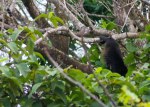
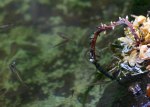
Water course

Despite our best efforts to stage life with garden ponds, nature has a way of making them her own in very short order.

I find myself enraptured by the epic stories told in such confined spaces, losing hours of my life in these mythic displays.

(These photos were taken in Montreal; Volcan Arenal, Costa Rica; Kona Kailua, Hawaii)

(Re)Learning to Swim – Art vs Technique

I love to swim. It is one of my favourite activities and one of the only forms of exercise I don’t begrudge, perhaps because I can’t tell if I’m perspiring. I am by no means athletic or proficient with it, but I enjoy doing it and have decent stamina.

Several years ago, a friend of mine decided she wanted to learn to swim. As an adult, however, she was embarrassed that she didn’t already know how, so she asked if I could help her learn the basics. Being a good friend—and not just a little bit infatuated with her—I said sure, happy to help.

A few days later, we got to the pool and I tried to break things down for her. Unfortunately, unlike many other exercises, with swimming you are in water and therefore much of the mechanics are difficult to view directly. Thus, I had to show her the mechanics above water, as though swimming to the ceiling. And that’s when everything started to fall apart.

No sooner did I begin teasing out the various movements in swimming than I realized that I was rapidly losing the ability to swim. Eventually, I just had to thrash about for a bit to remind myself how to do it.

It was unnerving.

I had been swimming (swum? swam?) for so many years that it was just something I did. It was never something I analyzed. You get in the water. You swim. It was muscle memory.

In teaching my friend to swim, I had separated the technique from the art, and for a brief few minutes, lost the art in the process.

The same can happen with writing.

In the earliest phases of our development as writers, it is important to develop a basic understanding of the mechanics of writing and story, to have someone walk us through the process. But at some point, we have to step forward and simply practice our art.

If writing is purely a mechanical exercise, then it is very dry and boring. It lacks the spirit that it needs to live. It is the difference between an animatronic deer and a biological deer. They may look very similar, but one is alive and the other is inert.

As a more seasoned writer, I have found that there will be times where I try to focus on the more mechanical, structural aspects of the stories I am writing. I want to make sure all the right elements are in the right place. But when I read the material over later, it always sounds forced, wooden, bereft of life.

In my effort to teach someone how to write properly—in this case, teach me—I have, however briefly, lost the ability to write. I have sacrificed the art for the technique.

Technique and process are vital, but they are not art. Art comes as you build the spiritual, intellectual, psychological muscle memory to allow yourself to immerse yourself unthinking into your writing and simply allow the story to flow.

As I’ve said before, story before structure. Art over technique.

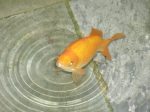
Do fish ever think about swimming? And if so, do they then sink to the bottom? (Manuel Antonio, Costa Rica)

Do fish ever think about swimming? And if so, do they then sink to the bottom? (Manuel Antonio, Costa Rica)

Art-chitecture of Washington

Washington, DC, is an odd town for a variety of reason…it is steeped in history and yet is constantly in a state of renewal as its four quadrants cycle from decay to rebirth to affluence to decadence, and the people within the town, depending on money and power, move from quadrant to quadrant accordingly.

Being the political and international heart of the US, however, means that it is also a showcase–in the museum display sense–of what the US has to offer architecturally.

I’ve tried to capture some of that here.

10 Steps to Writing a Pilot That Sells

No, no! Not that kind of pilot. Although, cute photo. (Image used without permission)

No, no! Not that kind of pilot. Although, cute photo. (Image used without permission)

1) Watch a lot of television; especially stuff you don’t like or think is bad. This will establish the belief within you that you could write something at least that bad and still get it on the air.

2) Conceptualize a show that combines one of your siblings or cousins, the second job you ever had, and a famous moment in history. Every idea after this will sound entirely plausible; and hell, this might actually work as a sitcom.

3) Conceptualize an idea that is morally offensive to you and then see if it was one of the shows in Step 1. If not, then the market is ripe for the picking.

4) Describe the absolute worst day of your life, a day when everything went wrong. Then switch one of the disastrous elements. Then, switch another element. Do this 10 more times. Season One!

If you can’t create 13 variants, your day wasn’t that bad and your life is too good for you to be writing for television. Go write greeting cards.

5) Grab a copy of Bulfinch’s Mythology and reset all of the stories in modern-day Seattle or the smallest town you’ve ever visited. Warning: Brace for complaints that it’s a rehash of Dallas or Friday Night Lights.

6) Grab a copy of Bulfinch’s Mythology and do not reset the stories. Hell, if it worked for The Borgias and The Tudors, it might work here. Call it The Olympians.

7) Start with Episode Two, because pilots suck and you’ll never want to show it to anyone. You need to know/believe your idea works.

8) No matter what your current idea is, when you go to pitch it and you think you’re losing your audience, suddenly reveal “And the protagonist is a ghost!” Vampire, werewolf and zombie are equally acceptable.

9) Stop reading advice on writing a successful pilot and just write your story, already. There is no telling why someone in a suit will get excited by your story, but I can guarantee they won’t if you’re not.

10) If all else fails, generate a top-ten list of ways to write a pilot that will sell and use it as the basis of a book you will later turn into a sitcom.

Dildo out of water

In writing, one of the tips for jazzing up your story is to put your character into an odd situation and watch how he or she deals with the new circumstances. In comedy, we call this being a “fish out of water”.

While traveling through Iceland a year ago, I got to see this on a grand scale. While wandering around a large pond in downtown Reykjavik, I was surprised to find a large dildo in the middle of the sidewalk—it was a few days after the end of Pride Week, so I could only imagine where it came from.
On Golden Dong (near the pond in Reykjavik)

On Golden Dong (near the pond in Reykjavik)

Realizing there was an opportunity here, I sat on a nearby bench and spent an amazing hour or so watching locals and tourists come upon the vulcanized penis. It was a magnificent chance to people-watch and learn about the range of emotions.

Some were disgusted. Some were anxious for their over-inquisitive children. Many were amused. Most arrived quietly and left highly animated.

I’m not sure what this says, but I seemed to be the only one who took a photo of it.

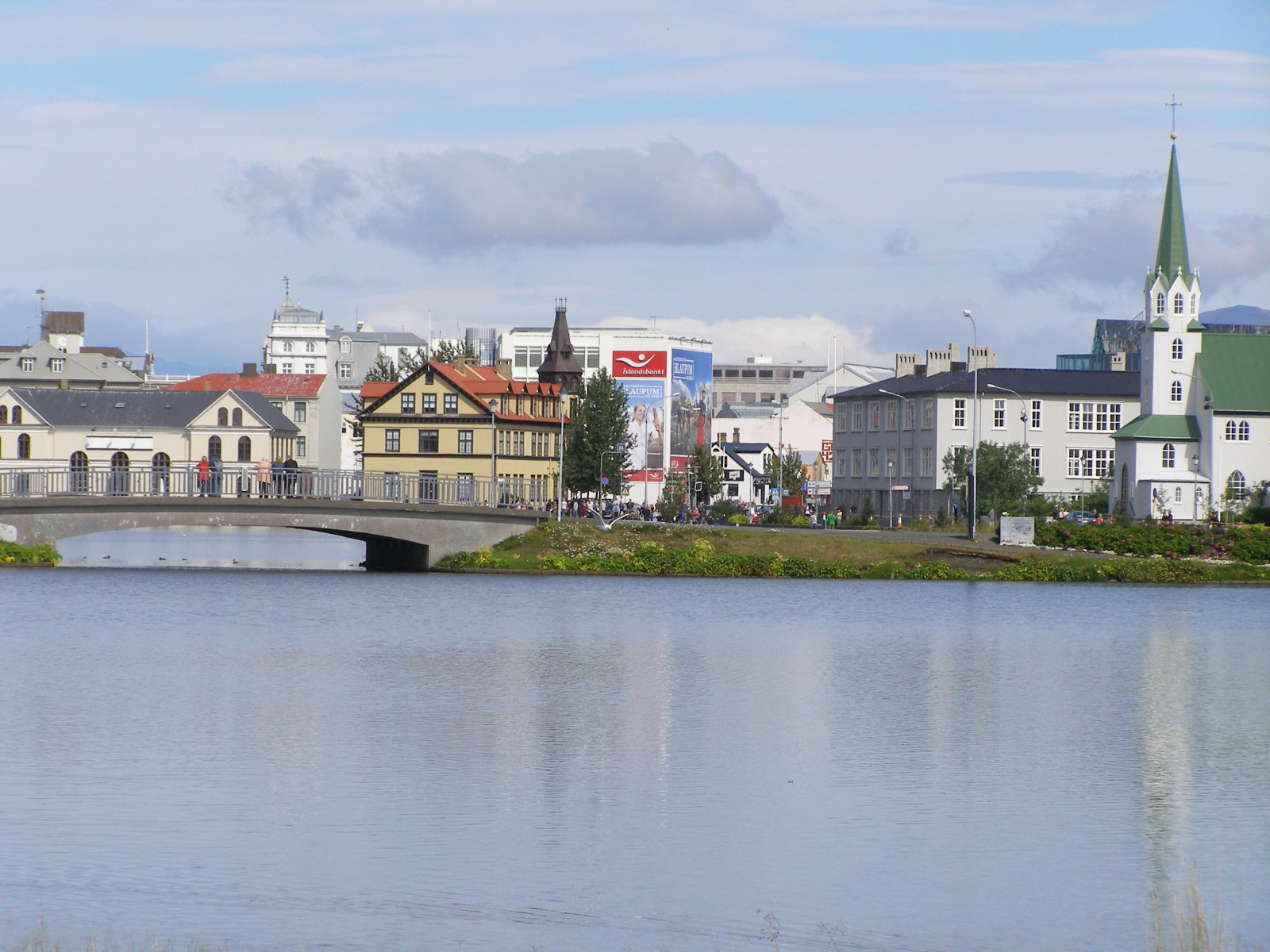
As a North American, I was not used to the beautiful simplicity of a European city (Reykjavik)

As a North American, I was not used to the beautiful simplicity of a European city (Reykjavik)

The pond in Reykjavik was a magical place to write and think

The pond in Reykjavik was a magical place to write and think

Thanks for listening

Just found out that I have 1,003 likes on my blog in just over a month, so I’d like (ha!) to thank everyone for their support and interest.

Image

And, because no good deed goes unpunished, I’d also welcome you to check out some of the other venues where you will find me spouting nonsense (gotta pay the bills, you know).

Toronto Marlies page at Maple Leafs Central – news from the American Hockey League team

Drug Discovery News – commentaries and special features

ImageImage