Write, write a song

If dictionaries defined phrases and you looked up “glutton for punishment” or “own worst enemy”, I have every confidence you would find a definition along the lines of:

(n) 1. An individual who endeavours to accomplish novel projects through the use of methods for which he or she has no training, expertise and in all likelihood, aptitude. 2. This guy.

It would then show a photo of me, both definitions being equal appropriate.

Image

As if it wasn’t daunting enough to try to write a screenplay for an animated feature-length family film, I decided it should include songs (a la Lion King or Aladdin) and then went one audacious step further to decide that I should write those songs.

I have no musical training. I don’t know anything about song writing. Heck, the only training I have as a singer involved a record player and a ruler-cum-microphone. (Note to self: Just because you can’t hear you when you wear headphones doesn’t mean that no one can hear you when you wear headphones.)

Tonight, I finally decided to sit down and write the five songs for the movie (and truthfully, that’s only because I’m procrastinating on a rewrite of a scene I hate but do not know how to fix).

The good news is I know what I want each song to cover and roughly the tone I want to establish with it. The bad news is all that stuff I talked about above.

The first song was relatively straightforward as it is a parody of an existing tune. Keep the cadence, change the words. Play the music in the background and try to sing it aloud. Not yet perfect, but it’s a start.

But now, the completely novel songs. Oh boy.

Do I have a cadence?

Why did I pick that word to try to rhyme four times?

Okay, I think I should try to change the tempo here.

Crap! Where’s my chorus?

Is it okay to switch from something Disney-esque to The Pogues?

Oops, can’t use that word…there’ll be kids in the audience.

Why, oh why, do I do these things to myself?

Week Two

Thanks again to everyone who has visited and posted over the last two weeks. Your support and comments are greatly appreciated.

After two weeks, I am excited to report I have 49 followers and my posts have garnered well over 200 likes. I have no idea what is to be expected, but this makes me pretty damned happy. (Wish I could figure out the exact number.)

Image

I am also amazed by where my viewers live, although truth be told, this is like the world’s slowest game of Risk. (For those of you who have played Risk, think about the significance of that statement.)

Image

I promise, I won’t do one of these every week…still getting over the newness of it all.


So many would-be screenwriters spend so much time focused on what they should and should not be doing from a technical, formatting level that they never actually write a story. I spent 30 minutes or more in my most recent screenwriters’ group discussing such inanities.
For this post, I say “Hallelujah!” and will now seek out part one.

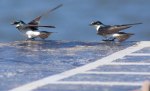
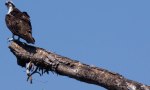
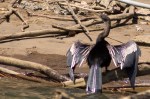
Birds of Costa Rica – Tarcoles River

Considering the Tarcoles River was filled with very hungry crocodiles, I was amazed at how relaxed the birds were as they wandered the shoreline.

(This is also my first attempt at using the Gallery format for my photos.)

Book larnin’

Last week, one of my fellow bloggers expressed interest in screenwriting and wondered if I could recommend any good books to help him navigate this format of storytelling, and I promised to do it in a future blog post…well, guess what?

To be honest, my first piece of advice to anyone interested in getting into screenwriting would be to simply tell your story in whatever format comes easiest to you. Because, as I’ve said in a previous post, the most important thing is story. No matter how well formatted your screenplay, if your story doesn’t work, it doesn’t work.

Okay, that soap box being out of the way, my next advice is to take a class in screenwriting, because no matter how much you think you’ll write, there is nothing like the pressure of a deadline for 10 more pages to keep you motivated. And ultimately, until you’ve heard your pages read out loud, you have no idea if you’re getting your thoughts across or using the right words.

So now, on to books. There are few really good books to tell you what a script should look like, so I recommend you simply try to get your hands on several different scripts, whether film or television (although pick your preferred medium, because there are differences in presentation). There are several places on the Internet where you can get free scripts (and when I remember what they are, I will tell you), but for those with a couple of bucks to spare, I highly recommend Planet MegaMall for their breadth of scripts that you can purchase rather cheaply.

No one book will give you everything you need, so I recommend sitting in a bookstore and perusing as many books as possible to see which one fulfills some unconscious need today. Then, repeat the process several weeks later, because your unconscious needs will have changed.

For the best understanding of story as a whole, you can’t go wrong with Chris Vogler’s The Writer’s Journey. Using mythic structure, Vogler breaks down story into its key components and then contextualizes those concepts using popular movies. Knowing almost nothing about screenwriting, I wrote my first screenplay using these elements as a template.

To get more into the structure and execution of screenplays and plots, then Linda Cowgill’s The Art of Plotting is very good. Written very approachably, Cowgill goes through the fundamentals of a good plot (e.g., conflict, character, action) and helps you understand where your story may be faltering or be improved.

A little more into character and how character changes through the screenplay, Dara Marks’ Inside Story helps you understand the concept of theme, which will lead you to better understand the motivations of your characters. In a similar vein is Stanley Williams’ The Moral Premise, which examines how opposing forces within and between your characters will move them forward in your story and more importantly, make them much richer.

Somewhere between individual scenes and broader acts of a screenplay are sequences, which one of my instructors described as being equivalent to book chapters where a single idea is explored before moving to the next one. Paul Joseph Gulino’s Screenwriting: The Sequence Approach is your guide here, helping you pull your scenes together into the right order.

And the chief poobah of screenwriting books is Robert McKee’s Story. I was actually afraid of getting this book for quite some time as people warned me that reading it too early would make me too intimidated to keep writing. I can see where they were going, but it’s not that McKee’s writing is difficult to follow, it’s more that he talks about a huge variety of topics. Suddenly, you realize how many balls you’re juggling when you’re writing a screenplay.

Ellen Sandler’s The TV Writer’s Handbook is a great step-by-step, but you have to do the exercises to make it worth it. Pamela Douglas’s Writing The TV Drama Series is a little dated but still gives a fantastic overview of hour-long programs, spending the bulk of its time on how to break down and analyze a program, before it gets into actually writing an episode.

Scott Sedita’s The Eight Characters of Comedy is an interesting analysis of comedic archetypes in sitcoms. Written more from an actor’s perspective, it still offers valuable insights to the writer trying to understand or create characters. And finally, Peter Desberg and Jeffrey Davis’s Show Me The Funny offers amazing insights into how the minds of comedy writers work, but even more importantly, shows you that no two people will develop the same story from the same premise…so don’t sweat starting with cliché ideas.

That’s a lot for a first kick…I hope you find something in here to get you started.

Woods you believe – British Columbia

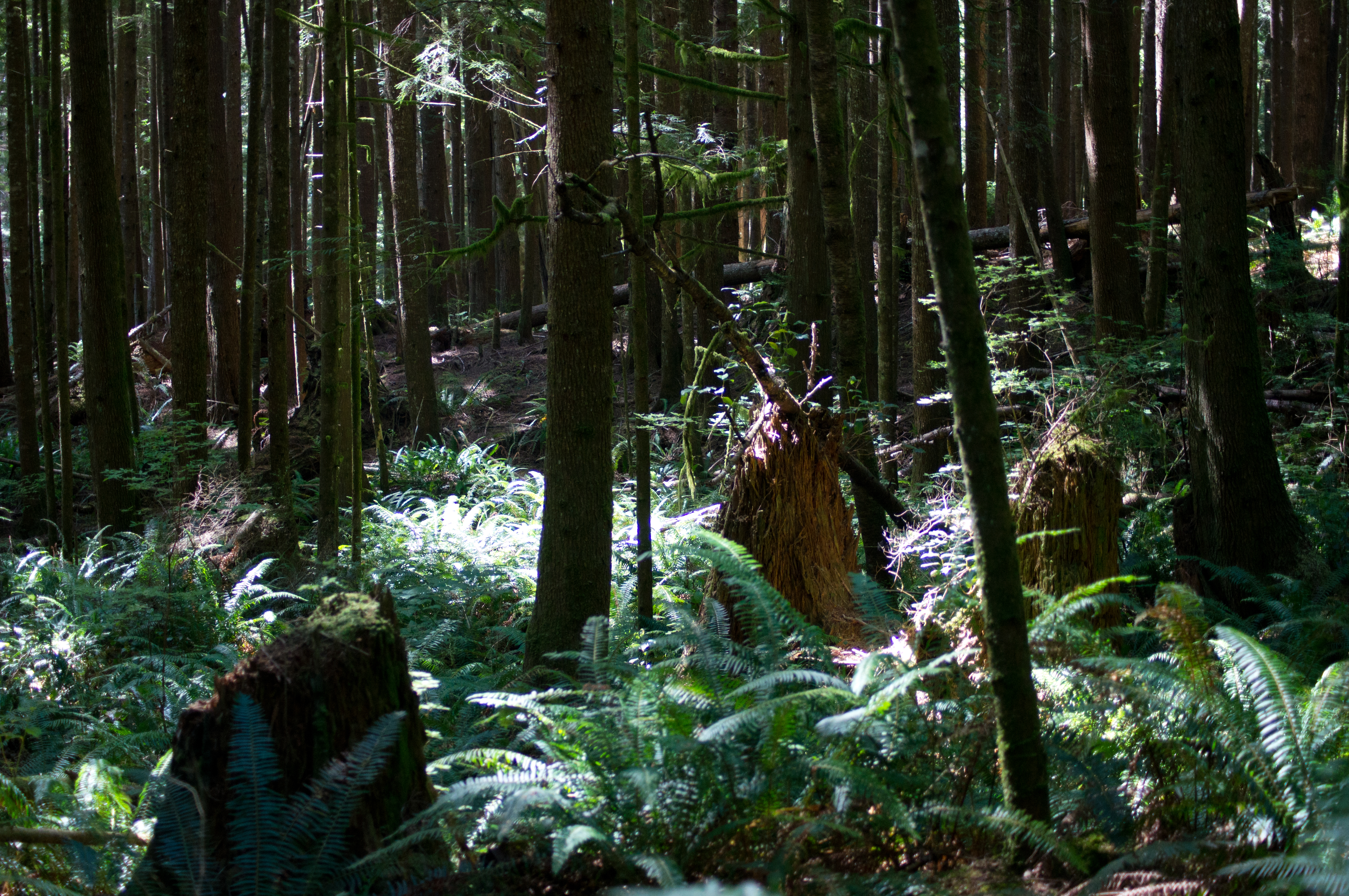
There is something amazing about the serenity of a lush forest. Even as you follow a trail through the woods with other tourists, I find everyone takes a slightly more hushed tone, as though in reverence to what is around them.

Here are some woodsy photos I took on my trip to British Columbia.

The variegation of the light and shadows, and the richness of the undergrowth take me to a place before time. (China Beach, BC)

SONY DSC


On the shoulders of giants grows the next generation. (Shannon Falls, BC)

SONY DSC


A carpet of green warms the forest floor. (Brandywine Falls, BC)

SONY DSC


Where did that elephant suddenly come from, leaping from the mountainside beneath the moss. (Brandywine Falls, BC)

SONY DSC

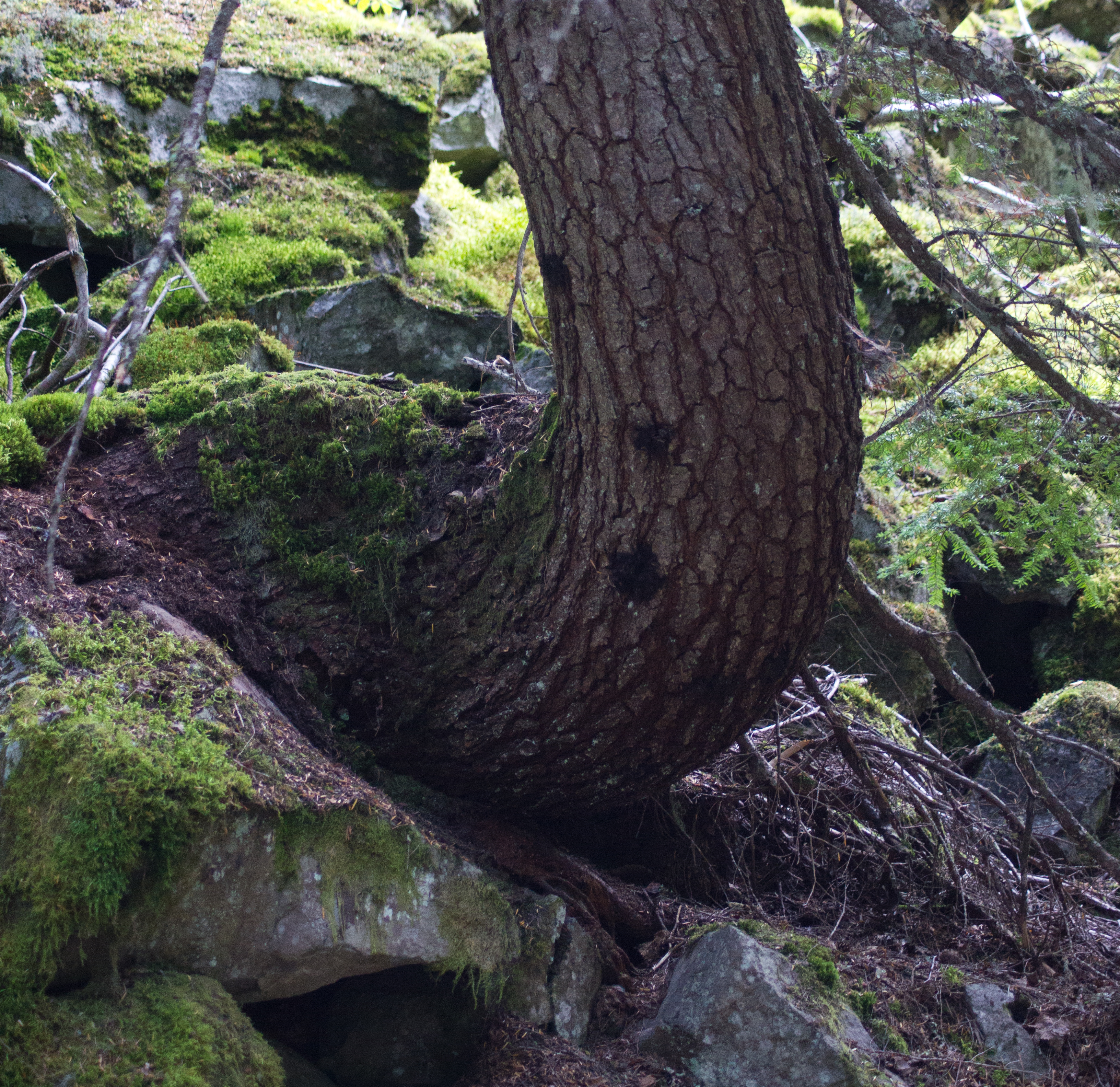
And some images express irreverence…I believe the tree on the far left is the men’s. (Chilliwack Lake, BC)

SONY DSC

The phrase was “club members”

(The results of another writing exercise…and this time, it’s a complete story! Woohoo!)

Club members. Sid couldn’t believe it, but it was true. The sign on the door read “club members”.

“They can’t possibly get away with that,” he complained to his sister, who sat quietly, fumbling absent-mindedly with the window latch.

“Jessica, you’re not listening to me,” he said impatiently. She sighed, adjusted herself and rolled her head languidly to face him.

“I’m not not listening to you, Sid,” she replied, as much an exhalation as exhortation. “I’m not paying attention to you. It’s totally different.”

She then went back to fumbling with the door, smacking on yet another piece of stale Double Bubble as he stared silently back at her.

The moment’s silence, however, was broken suddenly with a “fuck you” that apparently came out of Sid’s mouth based on the change in Jessica’s demeanor.

“Look,” she said angrily, “I didn’t ask you to come on this stupid little outing. You asked me, if you remember. The only reason I’m sitting in this car is because this sounded more interesting than ‘O.C.’ reruns. And so far, I was wrong.”

“You said you’d help me with my civics assignment,” he protested.

“I will, but moral outrage in a beat up Toyota Corolla does not a civics assignment make,” she replied sarcastically. “If you don’t get something on paper, Mrs. Berkowitz will have your ass.”

And before he could finish the movement, she added, “And pointing at the front gate of the country club and spouting on about the downtrodden masses, excluded from the perks of society, shunned by the elite, and…and…” She was at a loss, but never for long. “And kicked to the curb by uber right-wing industrial fat-cats cum 21st century royalty is going to get you nowhere.”

“But wealth is the new fascism,” he cried.

“Bullshit.”

They sat quietly again, letting the echoes of their exchange die quietly in the luxurious folds of the polyester fibers that comprised Sid’s faux Guernsey seat covers. His right hand flailed as though waiting for his mouth to make a stunning riposte and struck the steering wheel whenever it realized that his tongue was determined to remain silent. Jessica peripherally watched him conduct the silent symphony before trying to engage him one more time.

“What I’m trying to say is that almost everyone in your class is going to write the same bloody paper you’re thinking about,” she said, slowly and calmly. “And the rest of your class is just too damned retarded to know what to write at all. Do you want a good mark in this class?”

“Yeah.”

“And more importantly, do you want to knock Berkowitz on her smug Yiddish ass?”

That got a smile out of him.

“Then pull a Swift on her,” she said, conspiratorially.

“A what?”

“Not what; who. Jonathan Swift.,” she responded. But when the penny still hadn’t dropped, she added, “Eat the fucking poor.”

Okay, Sid thought, now she might as well have had antlers.

Jessica rubbed her forehead in frustration. “If you want to stand out in a crowd, go the other way. If everyone else is going to bitch about the evils of the elite, you should celebrate them.”

Oh my god, they weren’t antlers, they were horns—devil’s horns. And the smile on her face just kept getting bigger. It made him uncomfortable.

“In fact, you might go as far as to argue that the poor should be happy to serve the elite for the good of everyone.”

There was no air. Sid couldn’t breathe. Somebody had hooked the car up to a vacuum pump and he was asphyxiating.

Finally, he mustered enough breath to blurt: “Are you fucking high?”

“What?” she replied, her smile belying the innocence of her tone.

“I can’t do that. What about the downtrodden?”

“Who do you think trods on them, you silly bugger?” she asked. “Well, okay, not you and me—not directly, anyhow—but Dad does. He’s a corporate lawyer, for Christ’s sake.”

It was getting warm, too. Warm and airless. That’s it! He was in Hell. Was that sulfur? He thought he could smell sulfur.

Sid just started shaking his head, and the more Jessica spoke, the more violent the shaking became.

“We’re rich, Sid,” she mocked. “Not lower middle class. Not middle class. Not even upper middle class. We are rich. We are richer than a 20-pound box of Nanaimo bars.”

He couldn’t take it anymore. He had to make her stop.

“No, I’m not rich,” he yelled. “Maybe you’re rich, but not me. I shun all worldly goods.”

Jessica snorted derisively and smiled. It was her turn to shake her head.

“Shun worldly goods?” she chided. “Oh sure, you dress like a street person and drive the worst beater in the school parking lot, but I would hardly call you a Buddhist monk. You—we—live in a very nice house, eating very nice food, and get a very nice allowance. Try another one, Gollum.”

Pitch clogged his lungs. Brimstone burned his flesh. And fire blinded his eyes. Hell consumed him until he thought he’d started talking in tongues. It was gibberish to his ears, but it was definitely coming out of his mouth.

“Alright, you win,” he spewed and then slumped in his seat. He had succumbed. “I hate the poor. They smell, and they’re lazy.”

“Whoa, tiger, slow down a little. I’m not pushing genocide here. I’m just saying we’re not poor.” Jessica waited a moment for Sid to calm down. “So take advantage of that. Use our connections to write the most controversial paper Berkowitz will ever grade. Be the anti-Marx.”

Something flickered in Sid’s mind as he returned his gaze to the sign on the door. Club members.

“Wealthy people own the companies where poor people find employment,” he whispered to himself. “And without jobs, they’d starve.”

The flicker took hold.

“And rich people pay a lot of taxes, which help support the social safety net.”

“And most of them don’t even use the services,” Jessica added, fanning the flame. “They go to the U.S. for their healthcare and don’t receive a penny in government subsidies, leaving their share for the poor.”

It all began to crystallize for Sid. It made so much sense. He had a purpose in life.

Later that day, he went down to City Hall to register as the founding member of the Republican Party of Canada. A scant eight years before the invasion…but that’s another story.


Bees of Costa Rica

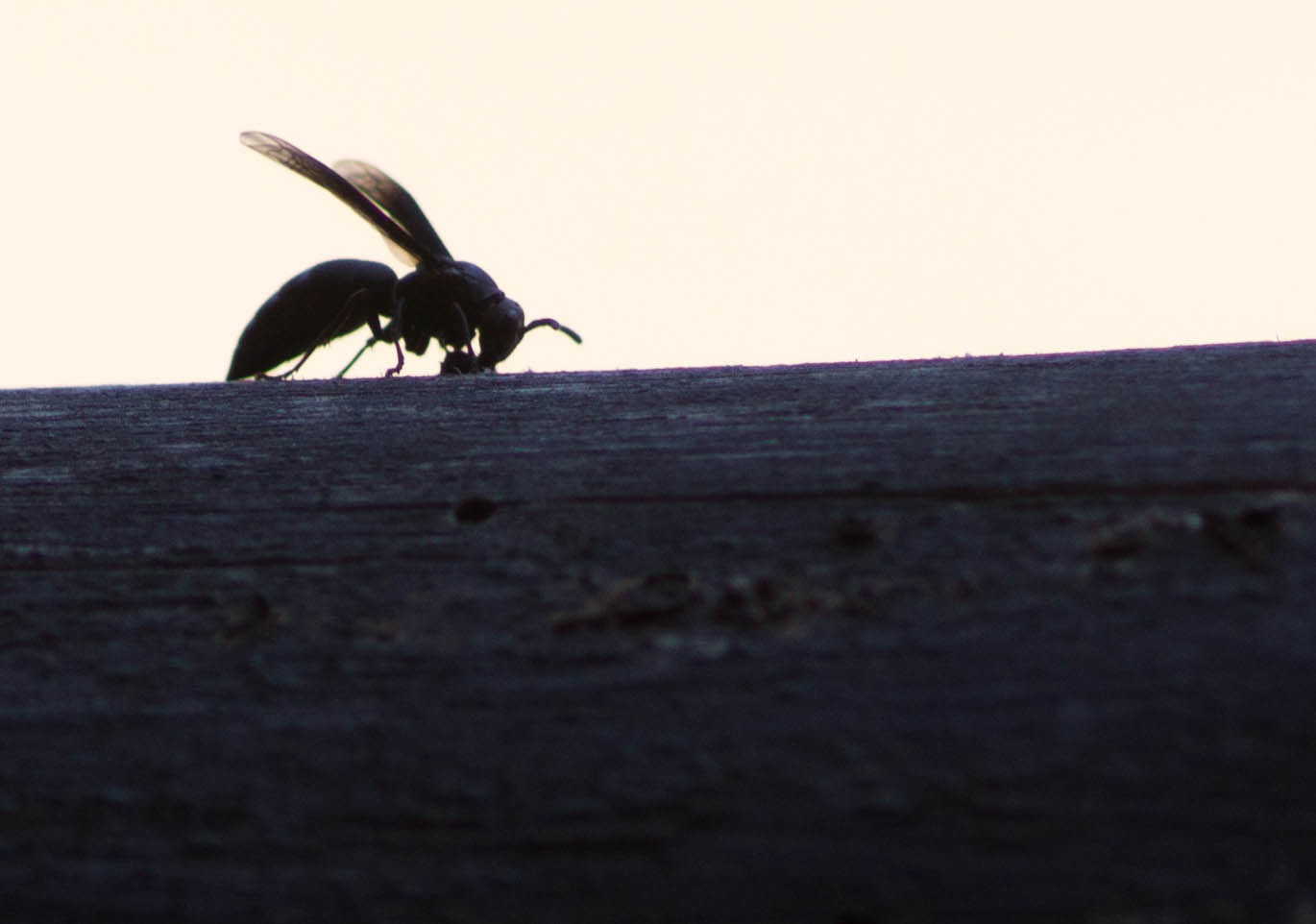
There is something about the impossibility of bees that truly grabs my attention. Their bodies are so fully compartmentalized, like beads on an invisible string, and their wings can appear so fragile and yet manage to maneuver the insect to any food source anywhere.

While waiting for my brother to return from the gift shop after our crocodile tour, I spotted this guy on the railing of the cafe. I thought the silhouette was so simple and therefore so powerful. (Tarcole River near Jaco)

Image

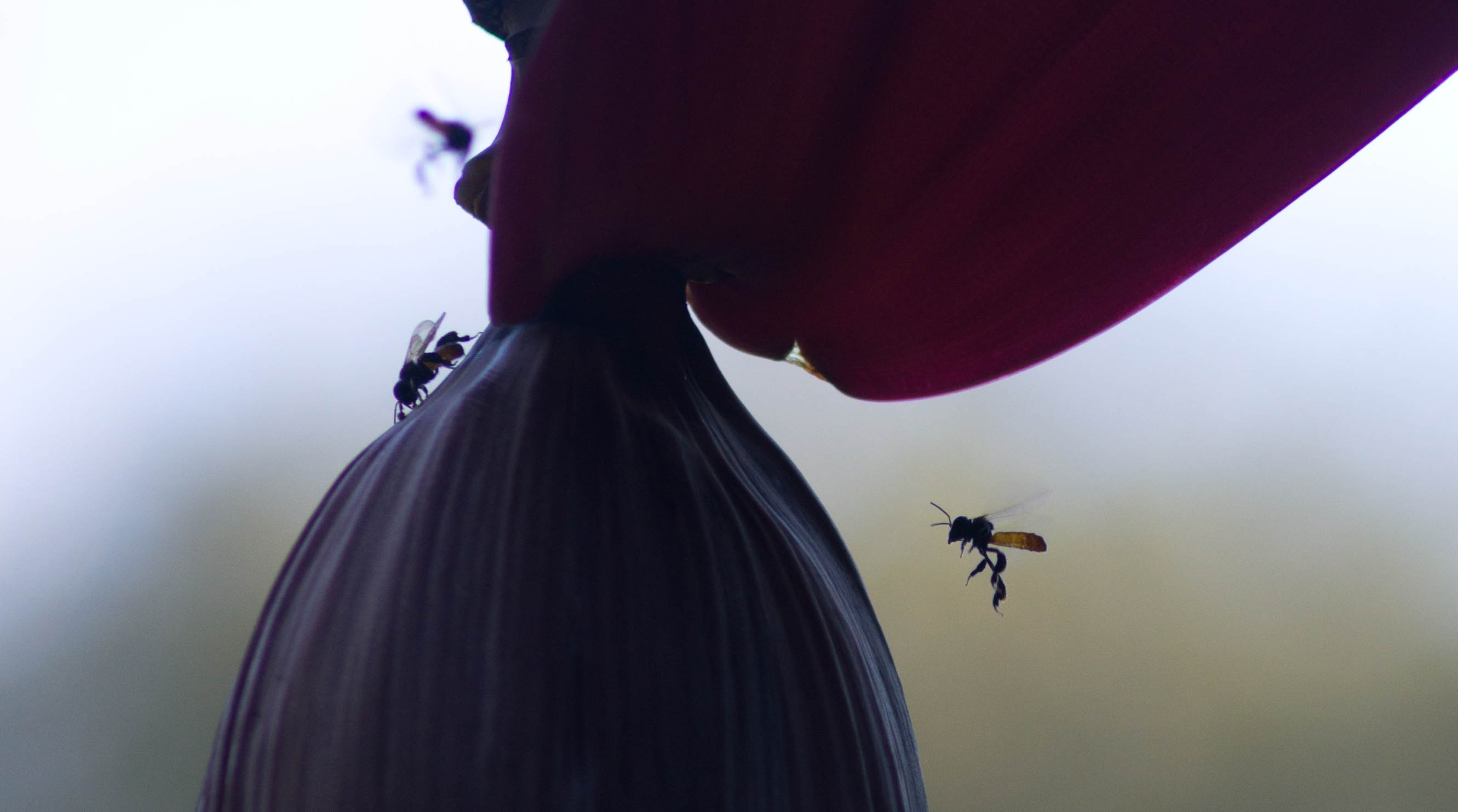
Just outside our cabana in Montezuma was a banana tree. I’d taken plenty of photos of banana flowers before, but as I approached this one, I noticed that it was like Grand Central Station.

Image

Not far from our Montezuma cabana, I spotted some activity around this yellow flowering plant. On the first image below, I love the way the bee’s feed descend, like a plane’s landing gear, although helicopter might be a more apt analogy.

ImageImage

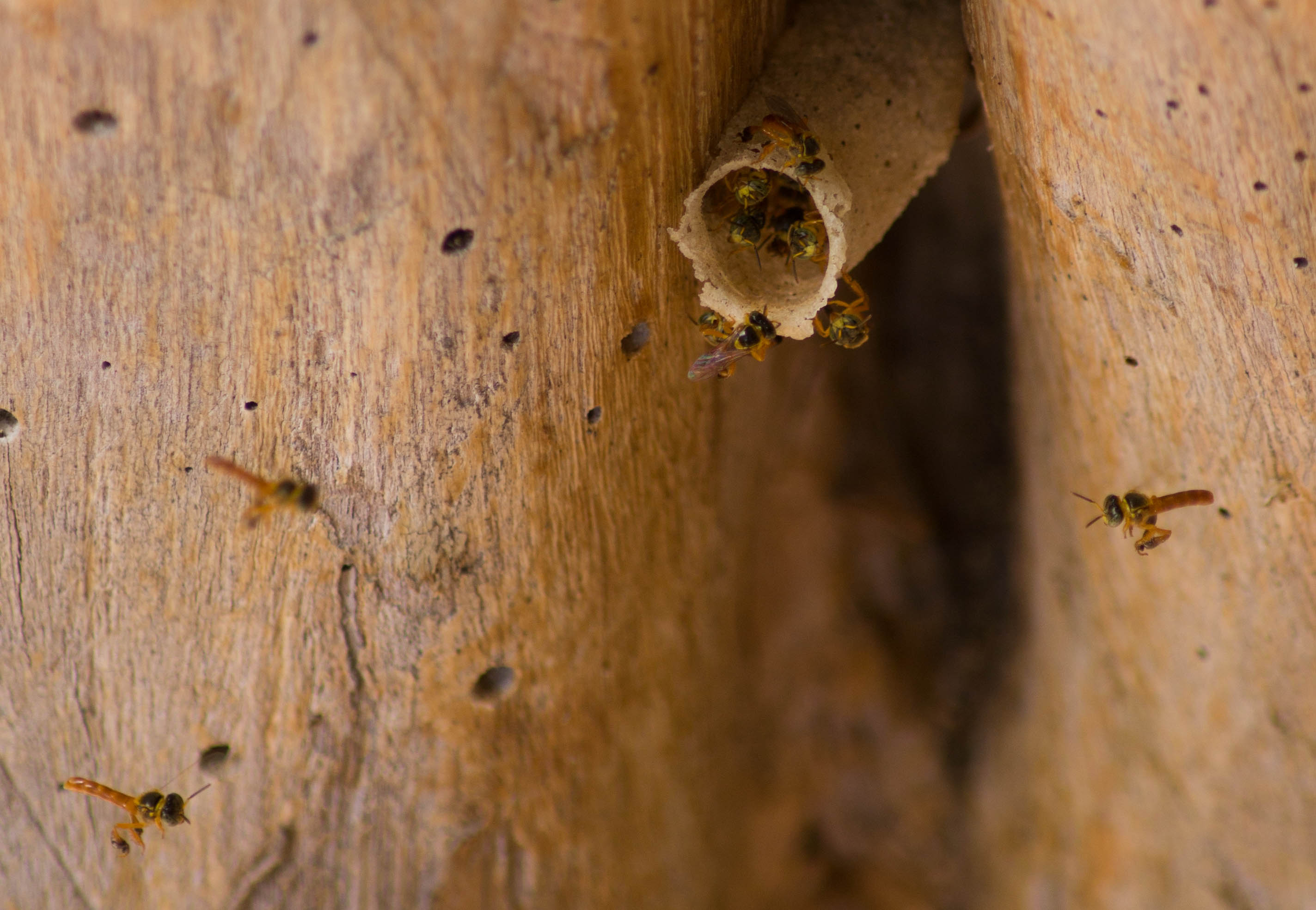
It is funny how despite the wondrous diversity of my vacation spots, I often end up taking my favourite photos within feet of the front door of my hotel or cabana. In this case, these guys had set up shop in a pillar on our front porch and I could only imagine this massive beam being filled with honey. (Playa Samara)

ImageImage

No “new”s

Where do you get your ideas? It’s a common question and my answer tends to stun people, if only for its honesty. I steal them.

I don’t plagiarize. That would be wrong. But I seriously doubt that I could tell a truly original story if I tried. It’s not that I lack faith in my abilities, but rather that I simply don’t think there are any truly original stories to tell.

Every story I develop in the future is, on some level, based on one or more stories I have read, heard or seen throughout my life. And I’m okay with that, because what makes my story mine and not those is me, my unique spin on the age-old tales.

I was in a screenwriting workshop years ago and the instructor had us do an exercise where we all watched the same scene from the movie After Hours (a brilliant piece of psychotic filmmaking if ever there was one). When the scene was over—maybe 3 minutes of Griffen Dunne and Rosana Arquette in a coffee shop at night—he had each of us write what happened next.

When we read our scenes to the class what we quickly discovered was that we had 8 different movies, one from each workshopper. Eight people working from the same starting point, 8 movies.

Everybody steals. Always have.

Shakespeare stole his plotlines. Romeo & Juliet was a total rip-off of West Side Story.

20,000 Leagues Under The Sea and Finding Nemo? Same lead character name and they were underwater.

These are not coincidences, my friends.

So cut yourself some slack. You will bring something of yourself to your re-interpretation of other stories and you will mix and match them in ways that no one else would.

Hell, Laurence Olivier, Kenneth Branagh and Mel Gibson each filmed Hamlet and none of them truly matches the play that Shakespeare wrote. They may be the same starting point, but they are not the same movie. (The links are all to the To Be or Not To Be speech)

And if you’ve given your work to someone else to critique, and the first thing they give back to you is “This is a little too much like…”, STOP READING THEIR ADVICE because most of the rest of it is likely ill-conceived or just plain stupid.

Other people have taken photos of bees on flowers, but no one took the photo I took of that particular bee on that particular flower.

If you wrote a story when you were 20 and then wrote a story with the same plot when you were 40, I can pretty much guarantee that those would end up being two very different stories.

So relax. Tell your story, no matter where it comes from. Because in the end, you will make it your story.

PS. If you want a great book that further proves this point, check out Peter Desberg and Jeffrey Davis’s Show Me The Funny. More on this book in a future post.

PPS. After Hours was a rip-off–sorry, modern day interpretation–of Homer’s The Odyssey, which was also the premise of Oh Brother, Where Are’t Thou.

Tach-ing out

I do not take drugs. Well, okay, the odd Extra Strength Tylenol. But hey, all the kids with headaches were doing it.

Anyways, it is my understanding that cocaine brings the sensation of clarity and sends your entire being into a state of overdrive. Your engine doesn’t idle. It runs at full speed and if you’re lucky, you’ll never shift it from neutral to drive or you’ll explode into a wall.

Whether it’s true or not, that’s what I feel like right now, in the creative sense.

Everything about me is running at full speed and then some. Every sense is attuned to the universe and picks up every scintilla of stimulation, translating those sensations into thought and eventually into word.

And while I embrace this period of unbridled energy, particularly after a couple of months of intellectual torpor (or at least that’s what it felt like to me), this constant revving of my creative engines has its problems.

Am I making sense? The words flow out so quickly and the paper cup overflows so easily that I don’t leave myself much time to analyze what I am writing to determine if it isn’t just the word “banana” over and over and over again. (Or the word “over”, for that matter.)

Can I finish anything? Because I find so much joy in the creative process, I worry that I jump from project to project without actually completing anything. Building the seminal moments and scenes for my next screenplay are so much more fun than actually writing 110 pages of dialogue that I am seriously running the risk of waking up two weeks from now surrounded by ideas for 68 movies, but no actual scripts.

How quickly can I become ambidextrous? I have two hands, why can’t I write in two notebooks or on two laptops at the same time? I want to believe that it would cut the noise down by 50%, but something tells me that it would just feed the monster, which would expect 4 times the output. If my toes weren’t the size of rhinoceros heads, perhaps I could up my output even further.

And even if I can finish all of the projects that are exploding out of me, how do I keep them from just hitting the bottleneck of “So, now what?” It took me years, and a very caring friend, to help me deal with the backlog of comedy sketches I wrote during my time at Toronto’s Second City Training Centre and since then.

Must pull my head out of my laptop long enough to transition some of these projects from Word and Final Draft documents into actual films and television shows. (BTW, “pull my head out of my laptop” reads a little weirder than it sounded in my head.)

Oooooh! The ideas are only 30 seconds apart! Must remember my breathing exercises.

Oh god, my creative water broke! Quick, someone get me a notebook, a pen and two Extra Strength Tylenol!