Behold, easily the best of Fringe Toronto

BtB-Subway-Poster-For-Web

I may have to give up comedy writing. Based on the sold-out sketch comedy show I saw last night at Toronto’s Monarch Tavern—part of the annual Fringe Festival—I am a flailing hack or self-deluded pretender.

Brought to us by the disturbed mind of Justin Haigh under the umbrella of Spoon vs. Hammer, Behold, the Barfly is a delightful show that is possibly the most consistently funny sketch comedy performance I have seen in ages, and if its run is limited solely to Toronto Fringe, we all lose out.

Trying not to spoil any of the sketches, let me just say that they are all really solid…even the ones that opened weak only to demonstrate that this was done on purpose. As a comedy fan and writer, I often found myself anticipating the direction of a sketch only to be surprised by a solid twist that never felt manipulative or like a bad M. Night Shyamalan moment.

The casting was amazing, each performer bringing his or her unique absurdity to the performance, and presenting the sketches with such vitality that they almost felt improvised (in the good sense). These are performers comfortable with their material, which is critical for sketch comedy.

Singer

Ned Petrie is the classical Everyman who just wants to be loved (Credit: Laura Dittman)

Ned Petrie is clearly the anchor for this show. He does one delicious take after another on the Everyman, a stoic witness to the world gone mad. Eric Miinch is the clown, doing his damnedest to break up his scene partners with ad libs that enhance rather than disrupt the scenes in which he finds himself.

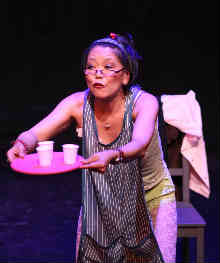
Elizabeth Anacleto is the shape-shifter, becoming whatever her role requires with mercurial fluidity even when required to shift smoothly within a single sketch. Marsha Mason—whom I should note I know personally—is a talent who can say more with a single facial expression than with the best written dialogue.

Jeff Hanson and Steve Hobbs are mesmerizing on stage, each one bringing an intensity to their performances that cannot be ignored, especially in one particularly disturbing turn by Hobbs. Kevin MacPherson and Sarah Thorpe, meanwhile, ably glue the entire construction together, the former largely coming in from left field at every turn.

If I have one criticism of the show, it is that it completely under-utilizes the amazingly talented women in the cast, the male performers generally taking the most significant roles.

As a male comedy writer, I completely understand the challenge of consciously writing female roles without looking like you’re writing female roles. It is not sufficient to simply lop the penis off a male character.

If Haigh and his team are given the opportunity to remount this show—dear comedy gods, let this be so—I would hope he takes time to tap more deeply the talents of these wonderful women.

In the meantime, if I want to keep writing comedy—because it’s all about me—I am seriously going to have to up my game.
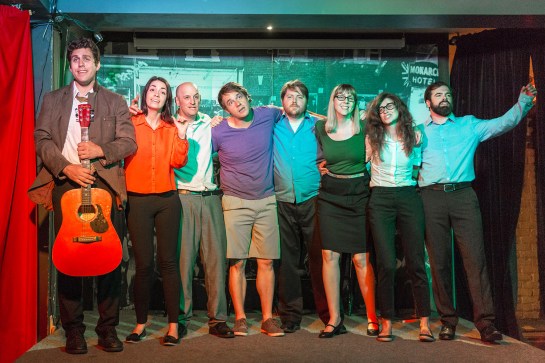
Behold, the Barfly Cast

Seamless casting: (L to R) Hobbs, Thorpe, MacPherson, Miinch, Petrie, Mason, Anacleto, Hanson (Credit: Laura Dittman)

Behold, the Barfly continues at Monarch Tavern until July 10. After that, we can only hope.

Startlingly meh: The Conjuring 2 (review)

conjuring 2 poster

I don’t really have the stomach for horror films. It’s not so much that I scare easily, but rather I am incredibly jumpy and therefore startle easily…and I don’t enjoy that sensation.

That being said, I have an idea for a horror film and decided I really needed to watch some before trying to write one. Thus, I finally acquiesced to my friends’ attempts to get me into a theatre, and last night, saw The Conjuring 2.

In many ways, including the opening scenes, this movie is a grandchild of the paranormal investigation classic The Amityville Horror. In the same timeline as that “based on” true event, a family in North London is being haunted by the spectre of an old man who is quite literally turning their lives upside down. The church sends American investigators Ed and Lorraine Warren to determine the merits of the case, only to discover it is linked to haunting visions in their own lives.

Lots of booming, thrashing and screaming ensue. Faces suddenly appear over shoulders. Bodies fly around rooms. More screaming. Demons, crucifixes and biting, oh my.

You can probably tell from that last part that I wasn’t very enthused about the movie. And to a large extent, I blame that on me more than the movie. I just don’t like horror and I don’t like being startled, which is really all this movie was: a two-hour effort to make me jump. Even at that, I think I jumped about six times and was never horrified or even mildly disturbed.

My friends were more effusive in their praise. One said it was the best horror film he had ever seen; he had never been more frightened. Others said it was a solid horror film that they quite enjoyed, although almost universally they said it wasn’t as disturbing as the original The Conjuring, which they insist I watch.

The story was pretty linear. Sceptics vs believers. Haunted, possessed child with glowing eyes and altered voices. Spectral specialists who speak wooden dialogue about God while dealing with their own demons. And underneath it all, an adorable love story between the real-life Warrens that went nowhere and added nothing to the story.

Twin warrens

Lorraine & Ed Warren: real and as portrayed by Vera Farmiga/Patrick Wilson

If you can get past the dialogue, the performances weren’t too bad. Patrick Wilson (Ed Warren) and Vera Farmiga (Lorraine Warren) do what they can with relatively two-dimensional Bible thumpers. Frances O’Connor, who played British mom Peggy Hodgson, did a very admirable job of portraying a woman who has taken about all she can from a world determined to crap on her at every turn. This could easily have been two hours of her screaming insanely, but she brought realism to the role.

But my biggest praise goes out to Madison Wolfe, who played Janet Hodgson, the young girl through whom the spectre works its evil. Half victim, half conduit, Janet’s struggles first to understand what is happening to her and then cope with feelings of abandonment as her friends and school become terrified of her (rather than the evil) are heart-breaking and play out across the young actress’s face. A true example of where a performance rises far above terrible material.

Janet

So many questions in those eyes

Unfortunately, even the stellar performances of O’Connor and Wolfe cannot save a bad movie that looks and feels like so many of its genre. That it is based on a true story—the Enfield poltergeist—doesn’t make it any more real for me; it may mean more to people wrapped up in poltergeist lore.

The slide show of the actual event participants during the closing credits, however, is an interesting touch. If nothing else, it tells me the set designers did a good job.

So, by the end of the evening, I wasn’t really any further ahead in my understanding of horror films and if this is an example of what is available, no more inclined to take in other films of this genre (or at least, sub-genre).


See also:

The Conjuring 2 fails to raise goosebumps. Bruce Demara, The Toronto Star

The demon-hunting Warrens are back in The Conjuring 2. Richard Crouse, Metro News

The Conjuring 2 is gorgeously shot and smartly conceived. Brad Wheeler, Globe & Mail


Much war, little craft

Warcraft-Movie-Banner-01

It is important to start this review of the movie Warcraft by stating: 1) I do not play video games; and 2) I like fully self-contained movies.

I went into seeing Warcraft with incredibly low expectations (perhaps unfair) and walked out having those expectations largely met and perhaps slightly exceeded.

Based on the video game series of the same name, Warcraft tells the story of Orcs determined to take over a new world because their own has died, possibly due to a malevolent force harnessed by their leader. The residents of the new world—populations of elves, mages, dwarves and humans—however, aren’t willing to lose their world…or at least the humans aren’t, and so fight back with the help of The Guardian, a wizard of immense power who lives in a tower and who is dealing with his own problems.

And while most of the movie is the playing out of this conflict, there is also an underlying mystery of what this malevolent force is, which leads to an Orc chieftain questioning the morality of the proposed genocides, and a couple of father-son/mentor-student relationships to suss out.

You may notice that in this description, I have offered no character names but rather simply archetypes. That’s because none of the characters is particularly memorable, nor is much of the movie. Perhaps if I had a greater familiarity with the game, much of this film would fall into place for me, but without that, the movie is mostly just a series of tropes with dialogue so wooden, the average porn filmmaker would be aghast.

Perhaps this is racist (specie-ist?), but I struggled to tell one Orc character from another, in part, because none of them had any personality much beyond “Hulk smash”. Thus, when an Orc would rampage into a scene, I had no emotional cues and so simply sat as a witness to events rather than being a participant. And even where I could recognize specific Orcs—the aforementioned chieftain and leader—the characters tended to be so two-dimensional (despite shelling out $20 for IMAX 3-D) that again, I was left cold.

Manly men

Three men and a movie reviewer (also a men)

The human characters weren’t a lot better. All the men look like my friend Danny, with whom I saw the movie, and women were almost non-existent. I do, however, have to give the filmmakers credit on two fronts here. First, although most of the humans were Caucasian, there were several of other ethnicities. And none of the female characters (I repeat NONE) were damsels by any measure. Each of the women, whether Orc, human or somewhere in between, were women of conviction and empowerment.

As to the plot, my biggest beef was that the writers seemed to simply drop in a device whenever they needed it to move the story forward, without any contextualization. I’d like to give you some concrete examples, but any of the major ones would, ironically, be spoilers. Suffice it to say, you are advised to check your credulity when you pick up your 3-D glasses.

Everything that occurs in this story was much better covered in Lord of the Rings, Game of Thrones, Harry Potter and Stargate…and The Ten Commandments.

But, in a strange way, that may end up being Warcraft’s saving grace as it frees the audience from having to participate in the story. Instead, you can just sit back and let the movie dance on your retinas, which is about as deep as it will go.

And this is possibly the one way in which Warcraft actually exceeded my expectations: it was visually captivating. The animation was incredibly good, with the Orc characters seemingly as real as the human actors. The fur of the giant wolves looked soft and the body movements of the griffins entirely plausible. Stylistically, I would put this movie in the realm of Avatar rather than Lord of the Rings.

WARCRAFT-Movie-2016

But back to the second point I raised at the start: self-contained movies.

Everything about Warcraft seemed to be designed to set up the myriad sequels that will be made, a trend in Hollywood blockbusters (and block-blowouts) that pisses me off. If nothing else, it shows complete disdain for the audience as it says “We really don’t care if you like the movie.”

Don’t get me wrong. I don’t have an issue with sequels and spin-offs in general. But when I go to a movie, I want to see an entire story play out, rather than have to wait for the next installment or rely on having seen the previous installment to understand the story (looking at you, Avengers).

This is one of the reasons why I am possibly the only person on the planet (this one, at least) who found The Empire Strikes Back to be lacking. It was a placeholder or bridge to The Return of the Jedi, nothing more.

Will I be back for Warcraftier: Where’s Your Messiah Now?

Not unless someone else is paying me to watch it…and for some reason, my online mahjongg isn’t working…and it’s raining or something.


See also:

Movie review: Warcraft by Danny F. Santos

Rip Van Winkle lives here

While visiting Louisiana last week, my friend Mike and I visited the Rip Van Winkle Gardens, an estate turned tourism site founded by Joseph Jefferson in 1870, in large part funded by his success in turning the story of Rip Van Winkle into a world-traveling stage play. And that’s where all references to Rip Van Winkle end.

The estate is beautiful, although the weather and time of year conspired to make the gardens a tad underwhelming. That being said, I did manage to grab a few photos.

The trip offered a bonus, however, for my friend Mike, who is into what I call “disaster porn”.

The estate abuts Lake Peigneur, the site of an incredible engineering disaster when an oil rig on the lake drilled accidentally into a salt mine. You have to watch the video below to truly appreciate the scale of the disaster.

12 Days of Gratitude – Marsha

mowsh

This is my friend Marsha (aka Mowsh), who is not only a beautiful and talented actor, she is also incredibly fun, funny and loving.

You will be hard-pressed to find someone more willing to offer a warm smile, sly wink or caring shoulder.

If you know Marsha, consider yourself lucky. If you don’t know Marsha, you should rectify that soon.

(Part One of my 12 Days of Gratitude…because the rest of the news sucks)

Bringing joy to others

I’m not a celeb-stalker generally, but I was killing time with my camera downtown when I stumbled across a crowd awaiting the arrival of movie stars (no one knew who) for the Toronto International Film Festival or TIFF.

I managed to grab a couple of shots of Dev Patel and Jeremy Irons (check out my Twitter feed), but I specifically loved this photo. If you can bring this type of joy to people in your life or to those completely peripheral to it, you have done well.

After premiering his movie, Dev Patel came back out to embrace his fans.

After premiering his movie, Dev Patel came back out to embrace his fans.

The Man from UNCLE – see it while you can (a review)

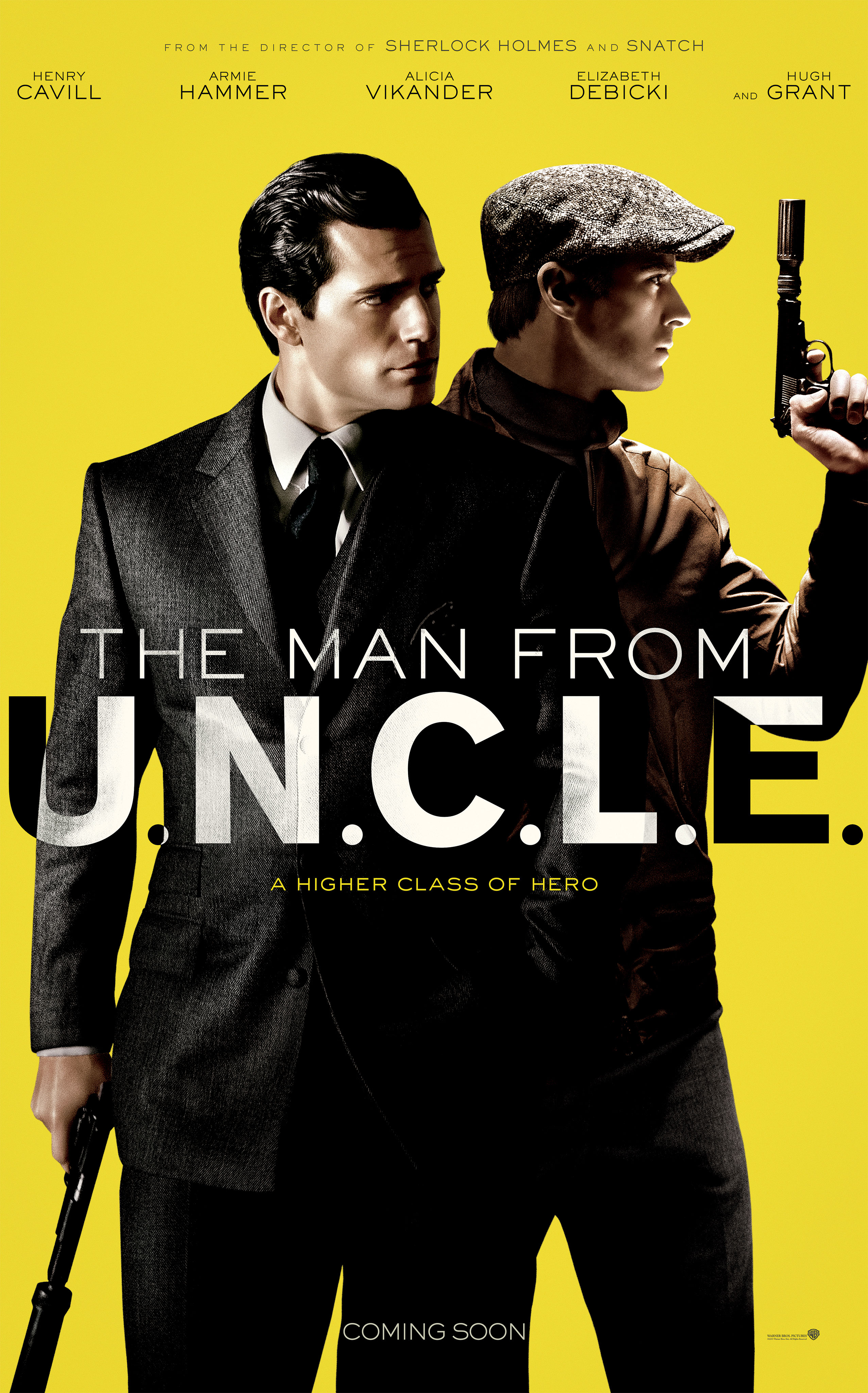
MfU poster

As a literal child of the 60s, I am barely old enough to remember the television series The Man from UNCLE, yet another show centred on Cold-War America’s fascination with the spy world. While Bond, Flint and Helm were doing their thing in theatres, The Men were joined by the likes of The Saint, I Spy, The Persuaders and Get Smart.

Unfortunately, whereas I can quote lines from Get Smart (don’t judge me) and have fond memories of The Saint, things are a little foggier when it comes to The Man from UNCLE. Thus, when I took in the newly released movie, my mind was open.

Essentially, an origin story for the UNCLE organization—United Network Command for Law and Enforcement—the movie introduces us to the two men on which the series hinged, American spy Napoleon Solo and Soviet spy Illya Kuryakin, and how they are forced to work as a team despite their complete distrust both of each other and of their own governments.

I won’t go into great detail about the plot as it really doesn’t matter—much as the plot of a typical Bond flick doesn’t matter. The only reason for the central plot conflict is to force these two guys together and watch them play “whose dick is bigger.” Really. I mean it.

Over a two hour span, I think there was maybe 30 minutes of actual story. The rest of the time was spent in a great variety of chase scenes, some of which were quite funny, or watching Solo (Henry Cavill) and Kuryakin (Armie Hammer) argue over fashion, spy gadgets and how badly the Soviet needs to get laid.

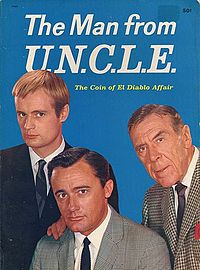
Now & Then: Chemistry is key for bickering twosome Napoleon Solo (dark hair) and Illya Kuryakin

Now & Then: Chemistry is key for bickering twosome Napoleon Solo (dark hair) and Illya Kuryakin

All of the friends who saw this movie with me had issues with this. The story wasn’t particularly engrossing and they felt like director Guy Ritchie had simply provided a light dessert; enjoyable in the moment, but offering little satisfaction.

To some extent, I agree with them. I am a fan of Ritchie’s earlier efforts with the Sherlock Holmes movies (Robert Downey, Jr., Jude Law). Here, the stories were quite rich and complicated, as one would hope with a Sherlock Holmes tale. Using this barometer, The Man from UNCLE definitely failed.

But to some extent, I think my friends missed the point (but then, I would). I don’t think Ritchie was going so much for a story that you might find in the most recent Bond films, filled with character complexities and inner conflicts, longer story arcs, generous back story.

Rather, I think Ritchie was going for the vibe and energy of that earlier generation of spy films, which were more a vehicle for the star than anything and featured much shallower stories. To me, this film was more about Dean Martin’s Matt Helm, James Coburn’s Derek Flint, and if only for the humoured banter, Roger Moore’s James Bond.

Ritchie is trying to capture a time and place, or perhaps more specifically, a style. And if we have learned anything about Guy Ritchie, in a battle between style and substance, he will always go with style. In some ways, I see him more as a painter than a director, as his primary goal seems to be a luxurious visual. Dialogue is simply a necessary evil for him.

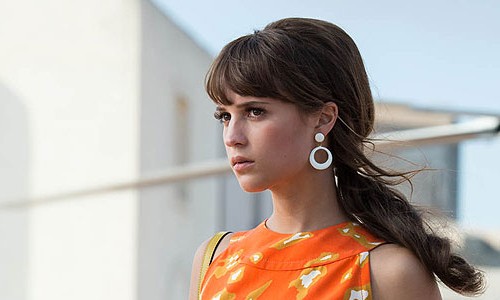
Although, this is not to say that the dialogue was a burden here. The chemistry between Cavill and Hammer is palpable, much as it was between Downey Jr. and Law. And the addition of Alicia Vikander’s character Gaby simply enriches that dance.

Alicia Vikander's Gaby complicates life for the boys

Alicia Vikander’s Gaby complicates life for the boys

She is a very capable actor and this role is perhaps the complete opposite of her performance in Ex Machina (my review). Although, you may end up questioning which role was more manipulative.

Unfortunately, Ritchie may have overestimated the power of his painter’s brush in this film if my friends and the 2/3-filled Friday night opener was any indication of how this movie is being received. This film was obviously set up to be a franchise, but as we have seen in the past, that decision doesn’t rest with the studios as much as with the audience (aka box office).

I’m hoping the movie does financially better than it looked. I’d like to see more of these movies. May have to live with reruns of the original series, instead.

200px-ManFromUNCLEbook

Other reviews of The Man from UNCLE:

The Man From U.N.C.L.E. about more than just the cool clothes: review – Peter Howell, The Toronto Star

Movie Review: The Man from U.N.C.L.E. – Danny F Santos

Close but no Clouseau

600full-the-pink-panther-poster

So, I just finished watching the 2006 reboot of The Pink Panther with Steve Martin, Kevin Kline and Jean Reno, and all I can think is nice try.

Hollywood has always loved its remakes and reboots—this is not a new phenomenon—and sometimes they pay off. For example, I particularly enjoyed the Star Trek reboot of 2009, although its follow-up remake of Wrath of Khan was a bust for me.

But I seriously believe there are a handful of quintessential films that simply cannot be remade or rebooted, and in each case, I suspect it is because the lead character was so completely defined by the actor who played him or her.

Such is the case with Inspector Clouseau.

One of these men is an imposter

One of these men is an imposter

In the 2006 reboot and its unfathomably inexplicable sequel in 2009, Clouseau was performed by Steve Martin, a man for whom I have the utmost respect as a comedian and actor. But the key term there is “performed”. Steve Martin portrayed Inspector Clouseau.

But Peter Sellers was Inspector Clouseau. He didn’t portray or perform the honoured member of the Surete, he gave birth to the man, he lived the man, he was the man.

And when the beloved actor, comedian, writer, raconteur passed away in 1980, so too should have any thought of reviving Clouseau. For all intents and purposes, Sellers’ tombstone might also have read “Here reposes Chief Inspector Jacques Clouseau”.

Sellers was that kind of an actor. He was a shape-shifter, a modern-day Proteus. Upon donning the hat, moustache and trench coat, Sellers ceased to be and Clouseau emerged.

And in giving birth to Clouseau, he launched onto the world a character that would become immortal, and thus a character who cannot simply be portrayed.

Perhaps one day, an actor will come along who can inhabit the character, be the character enough to do it justice, but I can’t think of anyone. And even if such an actor exists, someone with that kind of talent is better served giving genesis to new characters of the immortal prowess of Clouseau.

So, bless director Shawn Levy and Martin for trying, although over-trying might be more appropriate. You and the rest of the cast and crew had pretty much no chance to leave a footprint given that your predecessor left craters.

* * * * *

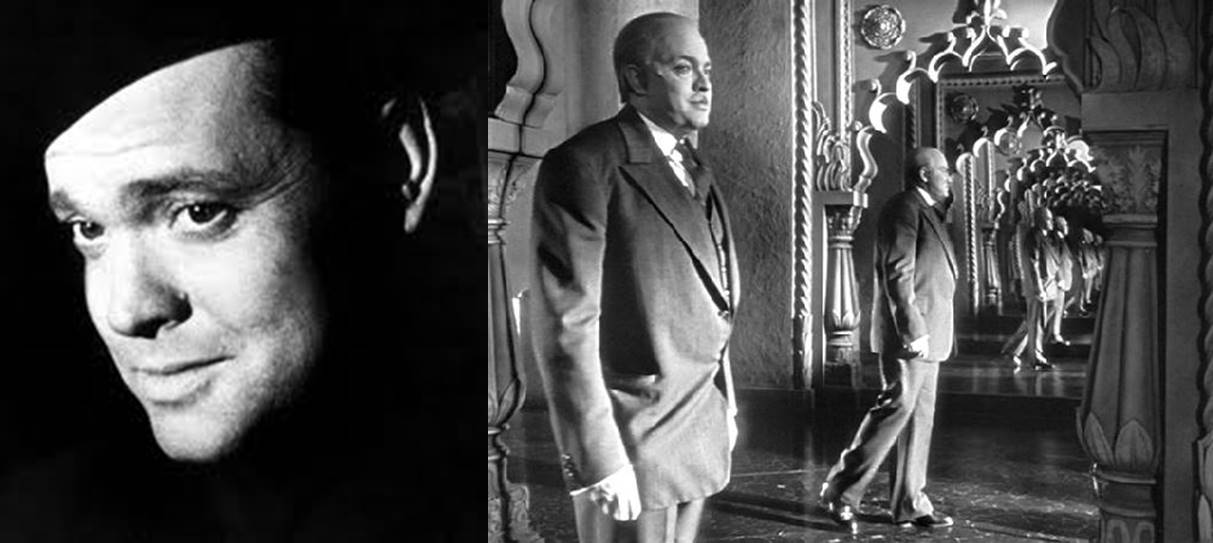
For reference, another actor I put in the unrebootable/unremakeable category is Orson Welles.

Can you imagine anyone else trying to step into the roles of Charles Foster Kane (Citizen Kane) or Harry Lime (The Third Man)? I can’t.

Harry Lime and Charles Foster Kane

Harry Lime and Charles Foster Kane

Valuable lessons in Legs Crossed Hands On Your Lap at Toronto Fringe

Teachers say the darndest things!

Teachers say the darndest things!

The first day of school can be a pretty scary time; learning all new rules, meeting so many kids, and finding out which teachers are the mean ones. And as Ms. X (Debra Hale) shows us in Legs Crossed Hands On Your Lap, it can be harder on the teachers than the kids. Her story opened its Toronto Fringe run today at the Tarragon Theatre Extraspace.

Legs Crossed Hands On Your Lap follows a year in the life of new teacher Ms. X as she tries to figure out students and adults alike. The result is a heart-felt and often funny tribute to the second oldest profession. Or as playwright Yael Sirlin describes it, an open love letter to teachers.

Although Hale carries the bulk of the dialogue on stage, she is given amazing support by Jamillah Ross and Stevie Jay, who from my seat, seemed to be having the bulk of the fun on stage. Playing anything from teachers to students, principals to parents, Ross and Jay are a whirlwind of strange voices and oddball body language. And as cute as their child characters were, it was their portrayals of control-freak teachers that seemed to generate the most laughs from the audience.

Stevie Jay has some issues with teacher Debra Hale and fellow student Jamillah Ross

Stevie Jay has some issues with teacher Debra Hale and fellow student Jamillah Ross

The play isn’t simply Kids Say the Darndest Things Live, however. In a couple of places, the tone took a darker turn as the actors dealt with more serious issues like bullying. This was where the opportunity for a teacher to touch a student’s life took centre stage.

Those moments aside, as Fringe fare goes, Legs Crossed Hands On Your Lap felt pretty light. It likely won’t make you re-examine your life or challenge your thoughts on art.

But then I don’t think that was the intention of the piece. Instead, it is here to entertain and to celebrate teachers with all of their foibles. And in this, I felt it totally succeeded as a highly enjoyable hour of smiles and laughter.

[Review first published at Mooney on Theatre.]

The Women of Tu-Na House needs some massaging (a review)

Writer/performer Nancy Eng takes us inside a NYC massage parlor

Writer/performer Nancy Eng takes us inside a NYC massage parlor

I generally don’t like one-person shows. Because the onus is on one actor to relate a story, often without much more than narration, I find myself wishing I could just read the play. Thus, I headed to theSt. Vladimir Theatre to see the Toronto Fringe premier of The Women of Tu-Na House with some trepidation.

The one thing that gave me hope going in was that writer/actorNancy Eng had created a show in which she played a half-dozen characters. Thus, I hoped, there would likely be one or several characters I could latch onto. Sadly, it didn’t work out that way.

The Women of Tu-Na House practice a traditional Chinese massage technique at a New York massage parlour. As we learn through a series of vignettes, each woman ended up here under very different circumstances, and several of the women decided there was money to be made by offering additional services.

The tea server who was once a man

The tea server who was once a man

Interestingly, in the show’s program, Eng is quick to state that the women made their choices willingly and feel no shame in their actions. And yet, despite asserting that these women aren’t victims, at least half of the monologues tell stories of victimization, whether by husbands, home towns or customers.

But that aside, for me, the biggest challenge of the performance was Eng’s inability to inhabit the characters she portrayed. Although she told each character’s story—with some difficulty, as she routinely stumbled her lines—it never felt like she became those women. Try as she might, it was always Nancy Eng on stage and a bad French accent, for example, wasn’t about to change that.

The performance was also let down by a faulty sound system. Every time Eng changed character, the lights would go down and she would change costume. While this happened, the next character would explain her origin story in voice over. Unfortunately, the sound system kept garbling the voice over so that by the time the lights came up, I had no idea who Eng was portraying.

The host for happy endings

The host for happy endings

Seemingly recognizing the premiere’s challenges, she apologized to the audience during the curtain call for her rough voice and allergy issues. Even she, it seemed, felt that tonight’s performance wasn’t up to code.

The show has played to raves at other festivals; for example, it won Best of Solo at Hollywood Fringe. And I definitely thought there were some poignant and funny moments during the performance. I can only hope that the theatre and Eng manage to pull things together for the rest of the Toronto Fringe run.

[Adapted from a review that first appeared in Mooney on Theatre.]