
Tag Archives: art
Blood red poppies

Every year, as October transitions into November, I go in search of a new red poppy pin in honour of Remembrance Day on November 11. It is a tradition in my family and across Canada to append the crimson flower to our lapel as a reminder of the bloody sacrifices made a century ago.
I also wear it to honour my great-grandfather Francis Sowden, who came home from the Great War, unlike so many others, including siblings on my great-grandmother’s side who are sadly just names without faces to me so many years later.
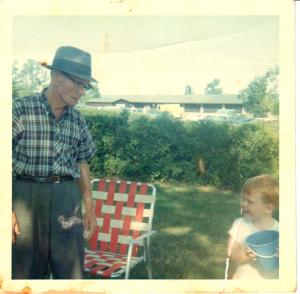
I am one of few in my generation to have known Francis Sowden.
Recently, I have heard people complain that the commemorative symbol of the poppy has been co-opted by those who want to hail it as a symbol of the glory of serving in the military, if not actually the glory of war itself. This bothers me.
I greatly thank all those who have, do and will serve in the military both in Canada and abroad, many risking their lives to keep others safe. Although I was an unthinking idiot in my youth, I have learned that these people, while frail humans, are noble titans who see conflict as a last resort.
For all that nobility, however, the poppy must remain a separate symbol.

A painting from the Royal Ontario Museum that haunts my dreams. (sadly, I cannot remember artist)
The poppy reminds us of the horrific toll of war. It is a crimson stain upon our lapels that taints us all and reminds us of the fragility of the peace that surrounds us. The bloody hue taunts our civilized smugness with a warning of how easily we can fall into the pit of violence, whether as individuals, communities or countries.
While we wear the blood red poppy to honour the fallen of World War I, we also wear it as a badge of shame that the war ever took place, and that the war to end all wars wasn’t.
This dual purpose must never be diminished. We must strive to be better.
And next year, as October transitions into November, I will go in search of a new red poppy pin in honour of Remembrance Day on November 11.
I will never forget.

A cemetery near my home reminds me of the sacrifices
Oh Muppets, where are’t thou (UPDATED)
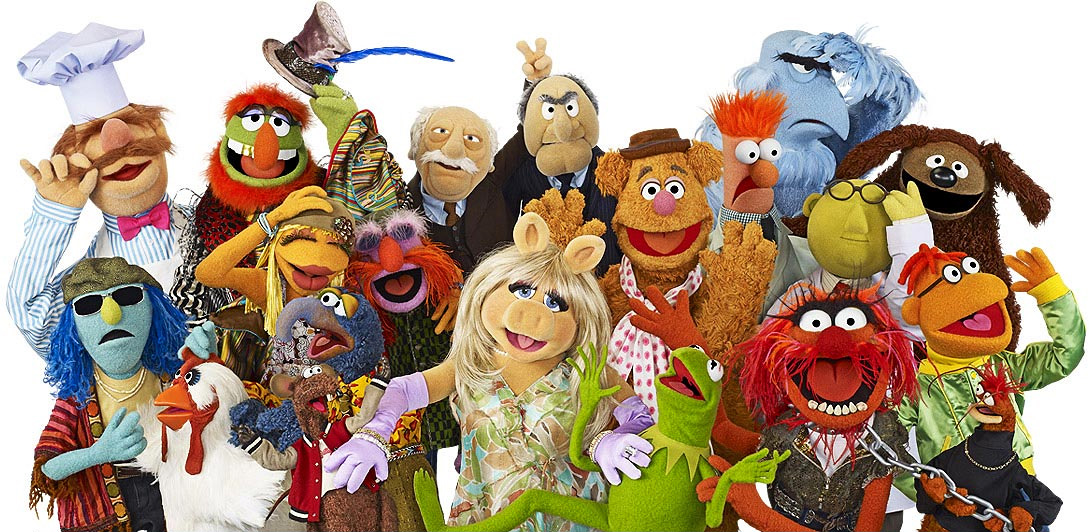
Yesterday, Deadline: Hollywood announced that Bob Kushell, co-creator and showrunner for The Muppets, would be leaving the fledgling show while Bill Prady and a new showrunner (possibly Kristin Newman) would work on retooling the ABC series that has garnered vast quantities of media and social media coverage.
As the Deadline article suggested:
“But after a highly-rated premiere, ratings dropped. The Muppets has done an OK job opening Tuesday night for ABC at 8 PM, with its numbers on par with lead-out Fresh Off The Boat, but because of its marquee title, The Muppets has been held to a different standard, so its performance has been considered somewhat disappointing, and there has been a concern about its creative direction.”
I am part of that ratings drop, for reasons I will discuss shortly, but I have several friends and associates within the puppetry community who have struggled mightily to stem the tide, lauding the show’s freshness and energy and chastising its critics. I feel bad that I have let these people down, but I feel it is for good reason.
Briefly stated: The Muppets (the TV series) is a pale, anemic shadow of the Muppets (the icons).
My biggest concern about The Muppets is that the Muppets aren’t leading the way…they are following someone else’s formula. This feels like total anathema to all of what Jim Henson was.
The current incarnation is little more than The Office but with felt-fleshed characters. Look no further than the show’s logo which is presented in the same manner as that of The Office and with an almost identical typeface. And the setting within a late-night talk show makes it a pale imitation of The Larry Sanders Show.

Although parody has long been a staple of the Henson way—consider “Veterinarian’s Hospital” and “Pigs In Space”—The Muppets is not a parody but rather is being sold as original. And ironically, while the new content is supposedly more adult, I would offer that it is not nearly as edgy as it used to be. The humour isn’t nearly as sophisticated as it was in times past. (I appreciate that it is now property of Disney.)
Case in point: References by members of Dr. Teeth and the Electric Mayhem to illicit drugs and rehab have become much more overt in the new series whereas they were only really implied previously. It is as though the showrunners don’t have faith in the audience “getting” the jokes.
“Oh, my God! Did Floyd say rehab? That’s edgy.” No. No, it’s not.
But back to the leadership discussion.
Henson and his gang were innovators. They took an ancient format—the puppet show—and brought it to heights never before imagined. They didn’t pander to their audience but rather challenged them to follow along or be left behind.
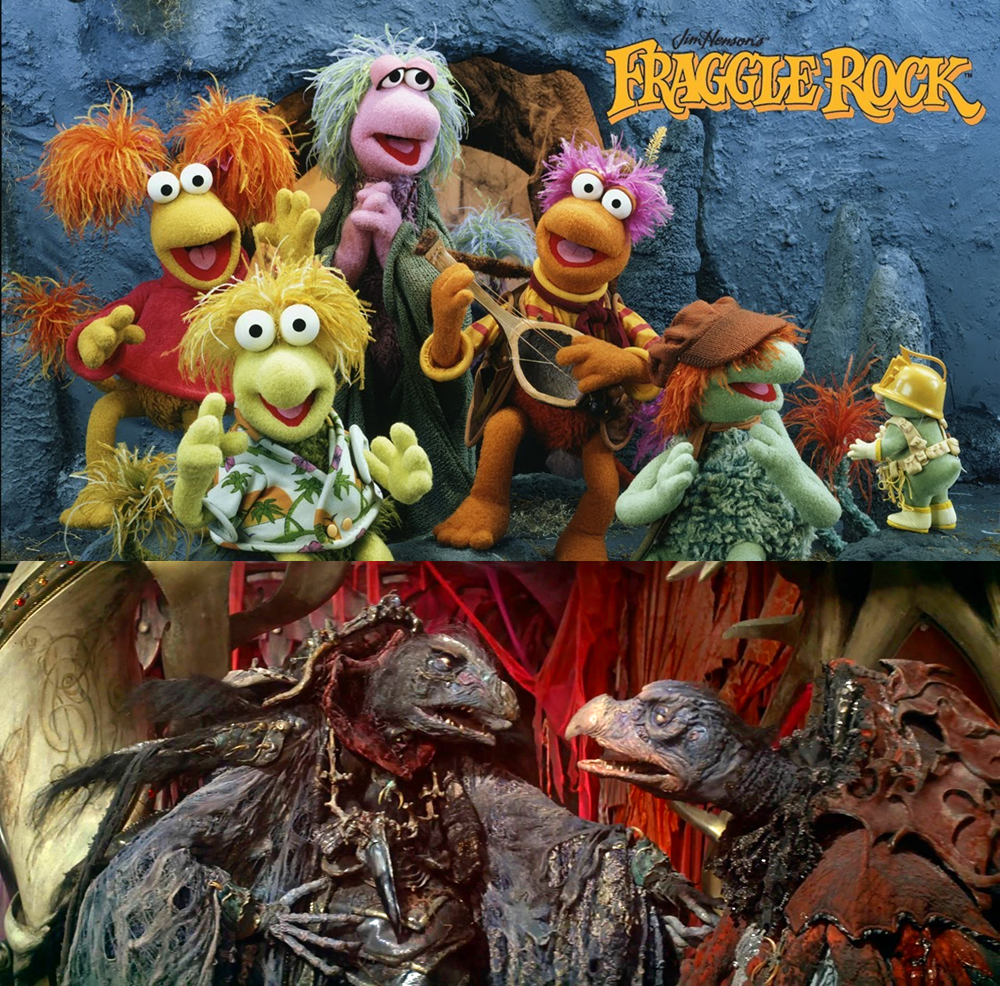
Sometimes that became wildly popular: The Muppet Show, Fraggle Rock.
Sometimes it never found a wide audience: The Dark Crystal, Muppets Tonight.
[NOTE: Dear purists, I know that Muppets are Muppets and the others are not…I am trying to make a point about innovation here, so please bear with me.]
And, as I understand it, even the now idolized The Muppet Show almost never existed for lack of interest by American networks that couldn’t see the vision and felt variety shows were on their way out—in 1976, only The Carol Burnett Show remained, Sonny & Cher and Tony Orlando & Dawn having ended a year earlier. That’s why the show was created in the U.K. under the financial benevolence of Lew Grade.
From a mechanical perspective, the artists working on The Muppets are doing an admirable job. These are incredibly skilled men and women performing a technically challenging art form that combines the illusory world of puppets and the frailties of human flesh.
But all that skill and effort is for naught without a heart and soul. And these, in my opinion, are what the current show is lacking.
Ironically, when I watch The Muppets, all I see are puppets, characters trying to entertain an audience. I don’t sense the humanity within the puppets, and it was that humanity that made the Muppets so special in the first place.
Perhaps this is just a case of old-man-itis on my part—“when I was a boy…”—but sadly, I am putting down the empty toys that The Muppets represent and mourn the (hopefully temporary) loss of old friends—the Muppets.
I wish everyone the best of luck with the reboot.
PS I love the work of Bob Kushell and Bill Prady, and place no specific criticism on anyone’s shoulders for my concerns about The Muppets. Not saying this is the case here, but sometimes talent and creativity is not enough to overcome a bad match between artist and vehicle.
See also:
Breitbart‘s “The Muppets’ Reboot: What Hollywood gets wrong about family entertainment”
Although I think the writer (Melissa Henson) has made some valid arguments about the writing of The Muppets, I think her overarching belief that this was intended as family viewing is wrong. Although these are beloved characters from film and television, this show was very much centred on an adult audience. To repeat an earlier point, calling this family entertainment would be to ascribe the same to The Office.
Dream snatcher

The other day, I engaged in the following conversation on Twitter:
Him: There are a lot of tweets directed towards aspiring filmmakers telling you to “never quit” and “follow your dreams.” That’s terrible advice.
Him: If you met some guy and he said he wanted to be a professional NBA player would you immediately suggest he follow his dreams and never quit?
Me: If that’s where his happiness is, then yes, I would. Who am I to call down his dreams? Would in fact offer to help.
Him: Attention anyone in the world who is looking for someone to help them become a professional basketball player.
Me: If you never try, how will you ever know what you might accomplish? Why live by someone else’s thoughts on what is feasible?
I understand his point.
So often, people express a desire to become something or someone without a good understanding of what it takes to do that. And in a subset of these situations, the aspiring individual isn’t willing to put in the requisite work to overcome their ignorance or skill-set shortcomings.
I’ve known several people who upon seeing how much joy writing brings me express a desire to write. And then do nothing about it. And unlike the professional NBA player quest described above, writing simply requires a computer or pen & paper. And yet, many of these people refuse to write.
But even knowing this, even if I had complete clairvoyance to a future of procrastination or frustration and agony for them, does this give me the right to tell them they shouldn’t try? I don’t feel that it does.
Despite my conversational counterpart’s sarcastic response (I assume it was sarcasm), I am happy to help anyone become a professional basketball player, if that’s what they want. I have no idea what skills I could possibly bring to that quest, but hell, we all need support to follow our dreams.

You don’t have to be an expert in a subject to help someone.
You can help them better understand what they’re attempting so they can make informed decisions. You can offer a couch or spare room if they need a safe haven. You can cook a meal or several for them when money is tight. You can cheer at their successes and offer a shoulder in times of frustration or disappointment.
And most importantly, you can let them know that success or failure—whether internal to them or measured by external yardsticks—has absolutely no impact on whether you will be there for them.
To all of my friends and to people I have yet to meet in life, pursue your dreams with everything you have, make your life choices knowing that I will be there to help you in any way I can.
And do your best to ignore the dream snatchers who think they are doing you a favour by talking you out of your dreams.

And if you’re tired of watching me live my dreams, check out the blog of a friend of mine who has started living her dream life: Pipe’s Adventure.
Screw the cat

So, you want to write a screenplay.
Maybe you’ve read some books on screenplay writing—names like Cowgill, McKee and Field dot your bookshelf. Perhaps you’ve taken some screenwriting classes whether at a local university or community centre. You may have even—saints be praised—read some screenplays.
Great. Good on you. Way to go.
Now, before you type your first letter onto a page, do yourself a huge favour and forget all of it.
Okay, don’t forget it, but definitely shelve it. Put it aside, because almost none of it is useful to you yet.
In short, you can’t handle the truth…and that’s okay.

Leave the lessons for Draft Two and onward
You’re about to write your first first draft (no accidental duplication there) and your only purpose right now is to tell a story.
Should my inciting incident happen around page 10? Doesn’t matter.
How much detail is okay in my narrative? As much as you need.
When is it okay to use voiceovers? Whenever you want.
None of what you learned really matters at this stage and is more likely to make your job harder than easier. It will become useful, later, when you’re doing rewrites—and you will do a lot of those.
But for right now, all of that information—much of which can appear and may be conflicting—is just a barrier between the blank page before you and the story you want to tell. Or perhaps more importantly, between you and the best story you can tell.
In my experience, it is a 1000X easier to fix bad structure than it is to fix a bad story. (This is not to say that any story cannot be improved.)
If you need three pages of narrative to get you to the first line of dialogue, then write three pages of narrative.
If it takes you 347 pages to tell your story, then that’s what it takes.
If you read yesterday’s pages and they sound like shit, stop reading yesterday’s pages. Keep writing until you’ve told your story.
Contrary to the name of the software package—thanks for the pressure, Final Draft—this is your first draft and it’s going to have a lot of shitty bits and pieces; they all do. I don’t know that in the history of screenwriting, anyone has ever filmed the first draft.
So write like no one is watching; because other than you, no one is. And tell the story you want to tell.
When you finally write “FADE TO BLACK” or “END” or “FIN” (pretentious move, btw), those books, blogs and lessons will still be there to help you get to drafts two, eight and fifteen.
(Please note: When I say ignore everything, I’m also including this blog post. If it is easier for you to tell your story by considering any or all structural and formatting elements, then do so.)
Blaze the trail that works for you, regardless of whether anyone has been down that trail before.

Let the cat write his or her own damned story
If a reader notices…
The Women of Tu-Na House needs some massaging (a review)
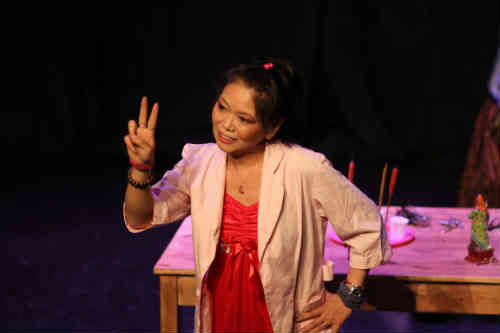
Writer/performer Nancy Eng takes us inside a NYC massage parlor
I generally don’t like one-person shows. Because the onus is on one actor to relate a story, often without much more than narration, I find myself wishing I could just read the play. Thus, I headed to theSt. Vladimir Theatre to see the Toronto Fringe premier of The Women of Tu-Na House with some trepidation.
The one thing that gave me hope going in was that writer/actorNancy Eng had created a show in which she played a half-dozen characters. Thus, I hoped, there would likely be one or several characters I could latch onto. Sadly, it didn’t work out that way.
The Women of Tu-Na House practice a traditional Chinese massage technique at a New York massage parlour. As we learn through a series of vignettes, each woman ended up here under very different circumstances, and several of the women decided there was money to be made by offering additional services.
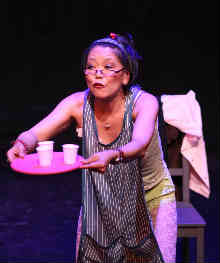
The tea server who was once a man
Interestingly, in the show’s program, Eng is quick to state that the women made their choices willingly and feel no shame in their actions. And yet, despite asserting that these women aren’t victims, at least half of the monologues tell stories of victimization, whether by husbands, home towns or customers.
But that aside, for me, the biggest challenge of the performance was Eng’s inability to inhabit the characters she portrayed. Although she told each character’s story—with some difficulty, as she routinely stumbled her lines—it never felt like she became those women. Try as she might, it was always Nancy Eng on stage and a bad French accent, for example, wasn’t about to change that.
The performance was also let down by a faulty sound system. Every time Eng changed character, the lights would go down and she would change costume. While this happened, the next character would explain her origin story in voice over. Unfortunately, the sound system kept garbling the voice over so that by the time the lights came up, I had no idea who Eng was portraying.

The host for happy endings
Seemingly recognizing the premiere’s challenges, she apologized to the audience during the curtain call for her rough voice and allergy issues. Even she, it seemed, felt that tonight’s performance wasn’t up to code.
The show has played to raves at other festivals; for example, it won Best of Solo at Hollywood Fringe. And I definitely thought there were some poignant and funny moments during the performance. I can only hope that the theatre and Eng manage to pull things together for the rest of the Toronto Fringe run.
[Adapted from a review that first appeared in Mooney on Theatre.]
OverTime finds truth under artifice (a review)

When all else is stripped away, only truth remains
“Being naked and too honest makes you predictable and maudlin,” chided one of the characters early in OverTime, which premiered tonight at the Robert Gill Theatre for the Toronto Fringe Festival. And for the next 85 minutes or so, the cast proved the exact opposite was true.
In some ways, watching OverTime was like redecorating a home, peeling back the decades of paint one layer at a time. As each coat is removed, you uncover the laughter and tears of that moment in time. And once the last layer is gone and the history is revealed, all that’s left is the truth.
It is only as the play deepens that we learn that truth is what retired school teacher Carla (Elva Mai Hoover) feared most when she uttered that line to her protégé Darby (Timothy Eckmier). As Carla mentored Darby to become the next great playwright, she argued that mystery must be maintained.
Truth was also the motivation behind the other plotline of the play as young blogger and photographer Jewel (Andrea Brown) struggles to pull her father Linus (Tufford Kennedy) out of the safe environs of the hockey rink. A successful coach on the outside, Linus is a wreck inside, and Jewel wants to ease that burden.

Mentor Carla (Elva Mai Hoover) advises protégé Darby (Timothy Eckmier)
OverTime playwright Romeo Ciolfi did an amazing job weaving these two story lines together. With each passing moment, it felt like another layer of paint was removed to reveal a bit more of the truth. And at least for me, the story was anything but predictable.
Sure, I felt Ciolfi could get a little heavy-handed with the metaphors. I would not have been surprised, on occasion to have seen a surtitle card reading “Metaphor here”, but I never felt they detracted from the increasingly tightly woven story.
What impressed me even more, however, was how the same layered revelations arose from each of the characters. With each passing moment, the characters became deeper and darker. Part of this richness was the writing, but I also credit the cast.

Daughter Jewel (Andrea Brown) struggles to help her father Linus (Tufford Kennedy)
Rarely do I praise an entire cast of a production, but I could not find fault with any of the performances. And no single actor deserves loftier praise than any other. To me, this was an ensemble performance. Remove any one of these actors and I don’t think this play would have been as good.
As with the play, there were times when impassioned performance became overwrought melodrama, but I largely felt these moments were the exception. These actors and their descent into raw truth had me mesmerized for 90 minutes, and I found myself praying we would go into overtime.
Without hesitation, I would watch this performance again and again, just to make sure I didn’t miss anything.
[Adapted from a review that first appeared in Mooney on Theatre.]
Big Love a big challenge at Toronto Fringe

When you first walk into the Randolph Centre for the Performing Arts’ Annex Theatre, you are struck by a musty darkness. One deep breath and you could be forgiven for thinking you’d mistakenly walked into a derelict used-book store.
Tonight was a little different though. Although the smell was still there, the stage was not barren. Rather, it was populated by a half-naked DJ, pumping the jams in high heels and a gold lame mask, ready to celebrate Big Love. And that’s when the party started.
Big Love tells the story of 50 reluctant brides, who escape to Italy to avoid marriage to 50 cousins. As they try to talk their way into an estate, the cousins arrive to claim their women. The battle of wills–both within and between the camps–has begun.
As someone who likes a lot of story in my drama, this very much felt like a 20-minute play stretched out over 70 minutes. The other 50 minutes? Long-winded soliloquies about sex, gender and conflicting agendas for the hard-of-thinking.
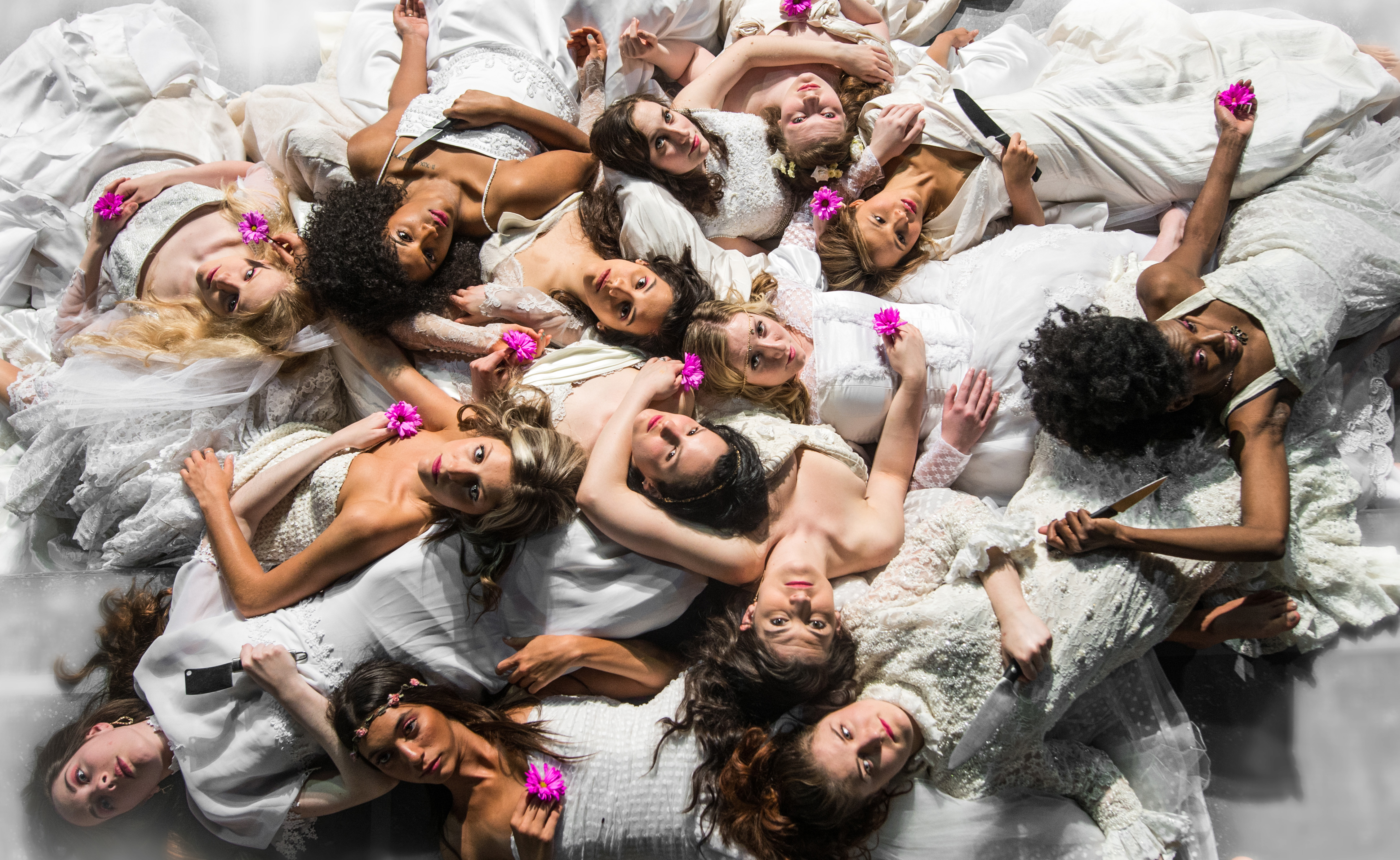
50 brides for 50 cousins
There was a moment, however, when I thought the playwright (Charles L. Mee) might reach for something more than a steroidal rendition of Seven Brides for Seven Brothers. A couple times, the speeches floated to the plight of refugees and women pushed to the edge, abandoned by their families, communities and countries.
For that fleeting moment, I wondered if the mass marriage was a metaphor for a larger message about slavery and subjugation. I walked away disappointed in this regard.
That being said, the actors’ performances were generally quite good. In particular, I tip my fedora to Matt Lacas (Piero) who I felt did a wonderful job as the perpetual salesman and host, stuck between the warring camps and knowing no one could ever be happy.
I also greatly enjoyed Rosie Callaghan (Olympia) who I felt gave a scintillating performance as a young woman struggling with a personal civil war of self-identification versus the need to be loved.
The choreography feels like a work in progress, however, the many numbers feeling slightly or grossly out of step. And although the women seemed to move smoothly enough, I saw little synchrony in the men’s numbers.
And then the unexplained flinging of bodies to the ground completely baffled me. I can only hope it was a metaphor for something, but goodness knows.
What I thought the actors lacked in coordination, however, I felt they more than made up for in vocal skills. Each of the handful of songs felt like a masterpiece in harmonies, most sung acapella. For me, these were the magical moments in the performance and left me wishing the entire play had been set to music.
Had Big Love been even a third shorter, I might have enjoyed it. But I didn’t feel my dissatisfaction was for lack of effort on the parts of the performers. This fell squarely on the shoulders of the playwright and director.
Case in point was the play’s ending, which felt like a complete cop-out.

Big disappointment
[Adapted from a review that originally appeared in Mooney on Theatre.]
Whiplash and soul crushing (a review)

Good guys not only finish last, but they also end up in tears, sitting in abandoned hallways, facing a life devoid of love ones.
Or at least that’s the moral of the movie Whiplash, which tells the story of a young jazz drummer (Andrew Neiman, played by Miles Teller) attending a prestigious music school in New York. Neiman’s lone dream is to become the next Buddy Rich.
(Warning: The following contains teasers of spoilers…tried my best.)
While practicing late one night, Neiman finds he is being observed by Terrence Fletcher (played by JK Simmons), the god-like instructor of the school’s top band, which has won both national and international acclaim. The interaction doesn’t go well.
But the erstwhile Svengali sees something in Neiman and eventually invites him to join his class, which is where the student begins to see the master less as a dedicated and willful but nurturing teacher and more as the manipulative, malevolent force striving for an unreachable ideal.
Perfection or death is Fletcher’s creed, and if you’re not willing to kill yourself over your failings, he is willing and eager to do it for you. You are using up valuable oxygen.
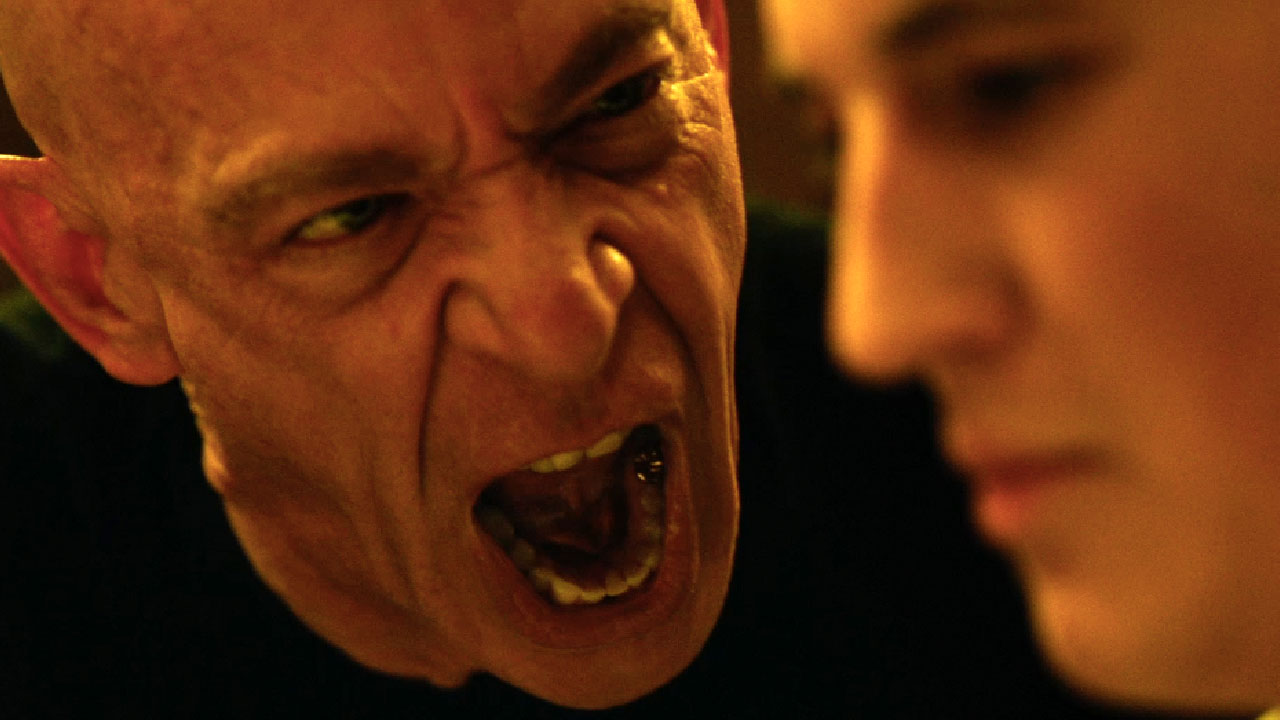
The beast will be satisfied (JK Simmons, Miles Teller)
Even in the face of this unending physical and emotional torture, which includes an airborne chair, however, Neiman is willing to sacrifice everything to become the Charlie Parker of the drums. And that sacrifice extends to his budding romance as well as his family.
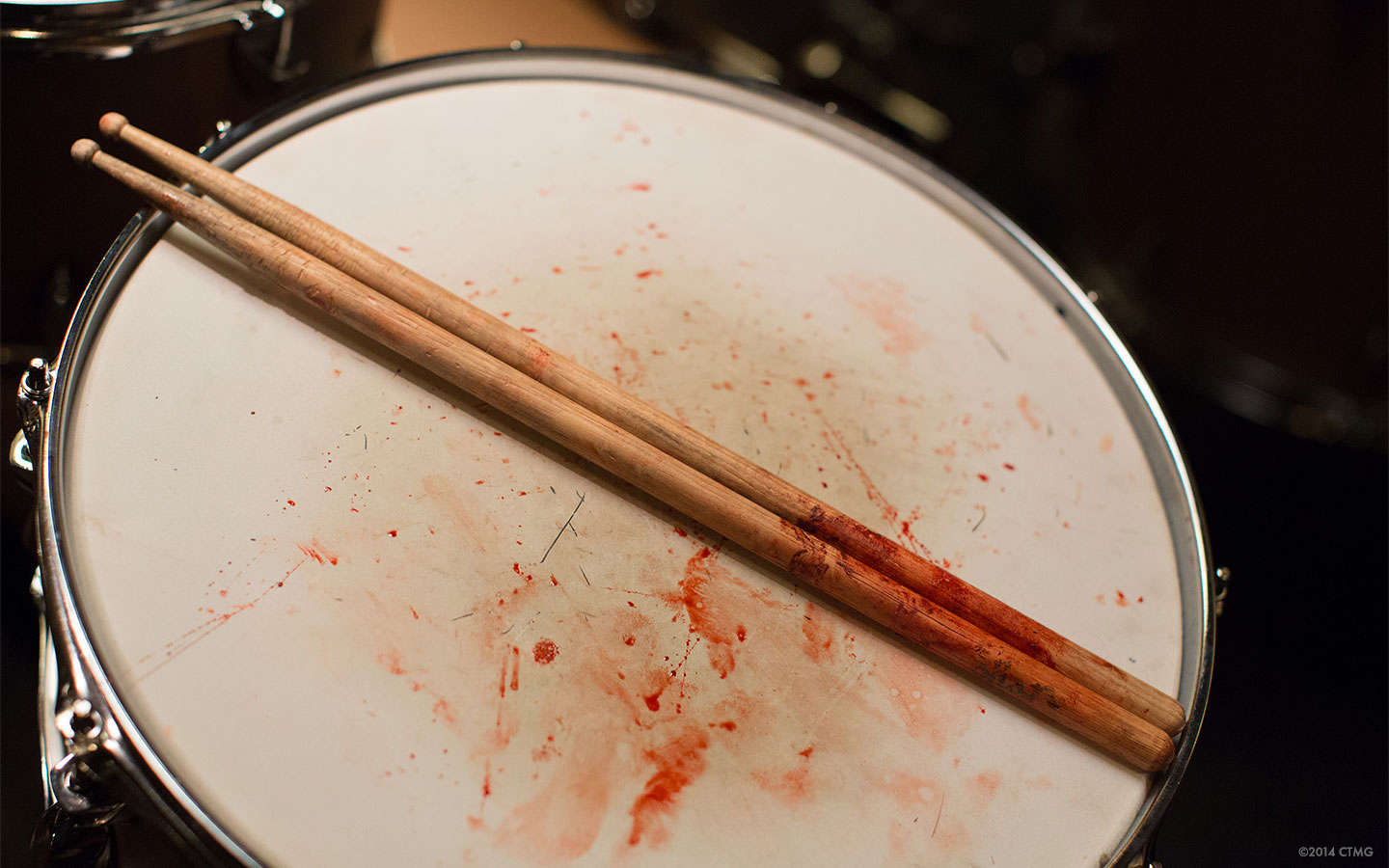
Nothing will stand in the way
But even that is not enough for Fletcher and we watch Neiman self-immolate while the monster emotionally fiddles with everyone’s lives. Unsatisfied with Neiman’s ashes, however, the master lures the student back with a siren song of greatness in a move that only the audience can see is designed to destroy Neiman yet again.

Perfection is everything (Miles Teller)
But just when Satan achieves his final triumph, he is surprised to learn that his fallen Angel has learned a few things. And this is the ultimate Fall of Man of which we hear in poetry.
The final moments of the film are like watching Luke Skywalker take Darth Vader’s offered hand on the catwalks of Cloud City and unite to rule the Empire, destroying both the Emperor and the Rebellion in one moment.
Throughout the film, the heart palpitates until threatening to arrest from the crushing weight of the increasingly up-tempo music (think frenzied, not dancing) and Fletcher’s relentless pounding on Neiman’s soul. By the end of the movie, you will be exhausted and sated by the ecstasy of what has been achieved.
It will only be later, in the calm aftermath of normal life, that you will begin to understand the dreadful cost of that achievement, not just for Neiman but also for humanity.
If the documentary Blackfish drove people away from marine parks, it wouldn’t surprise me if Whiplash drove parents away from music schools.

Simmons won Oscar, BAFTA, Golden Globe & SAG
Simmons won the Academy Award for Best Supporting Actor (and Golden Globe, BAFTA and SAG) for his performance as Fletcher, although as crucial to the story as his role was, it could be argued he was a co-lead. And although I admit to not seeing the films of any other performers in this Oscar category, I am surprised the award was given to Simmons.
The man’s performance was quite good—he played Fletcher so malevolently, I would probably take a swing at Simmons if I saw him—but it didn’t feel like the character required a lot of the veteran actor aside from pushing the portrayal beyond anyone’s comfort zone.
Where the film definitely deserved its Oscar and BAFTA wins was for sound. The music was amazing and despite being constantly interrupted, it still managed to deliver its power and its physical toll on mere flesh and blood. Each piece became its own rush toward a climax that never arrived, pushing you until your body screamed for catharsis and was instead met with a cut to the next scene. (Editing was pretty impressive.)
Again, however, despite all of these wonderful facets, it was the moral Fall of Man in the face of all this magnificent music that bothered me. For if nothing else, it made me question the purity of artistic expression and whether it was worth the exorbitant cost of another human soul.
The moment of our greatest achievement, writer/director Damien Chazelle tells us, is also the moment of our greatest loss. I find that sad.
 createdbyrcw