Tag Archives: art
Anger after Robin William’s passing
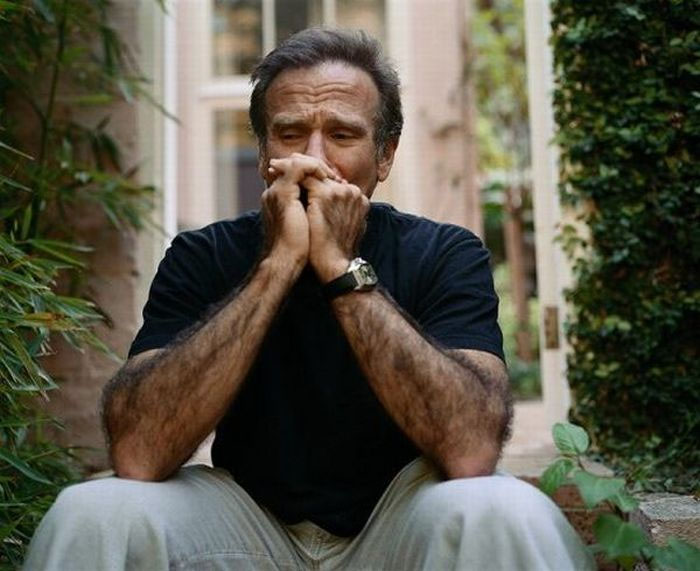
A couple of days have passed since Robin William’s death and although I still cannot accept the truth of it, I have somewhat resigned myself to that truth.
Shortly after the event, as I watched the public response, I found myself getting upset. The following post, written the night of his passing, explains those feelings. If you read on, please read all of the post as I don’t want to hear anyone’s comments unless they have read all that I have to say below.
I’m angry. I’m angry at all of the people who want to turn my grief into some sort of life lesson.
The death of Robin Williams from depression isn’t a parable, it’s not a morality play, it doesn’t serve a purpose; so stop throwing literature and comments about depression and the availability of help at me.
This is a man who made millions laugh. A man who struggled throughout his life with demons and who worked with and around those demons to make beautiful art. A man who had loved ones and raised children.
A man who touched my heart and mind and soul. A man who taught me that it was okay to misbehave, to act out. That to be frenetic could also be to be focused. That you can love and be livid with the world and its people at the same time.
And now that man is gone, and I want to mourn. I want to wallow in my memories of the joy and tears that he brought to my life. I want to remember the man.
I don’t want to rationalize his passing. I don’t want to find meaning in his death. I don’t want to learn a lesson.
I want to grieve, to storm, to wail, to laugh, to love.
But I am not the only one in mourning.
I know the people who post information about depression and mental health, who list hotlines and web sites, are doing that as part of their grieving process. They are doing what they have to do to process Robin’s death.
They are doing what is right for them as I am doing what is right for me. Pain is a self-centred thing.
Perhaps in a day…or two…or ten, I will be able to see their side a little better, but for now, I just want to hurt…and remember…and smile.
In the meantime, forgive me if I snarl.
500
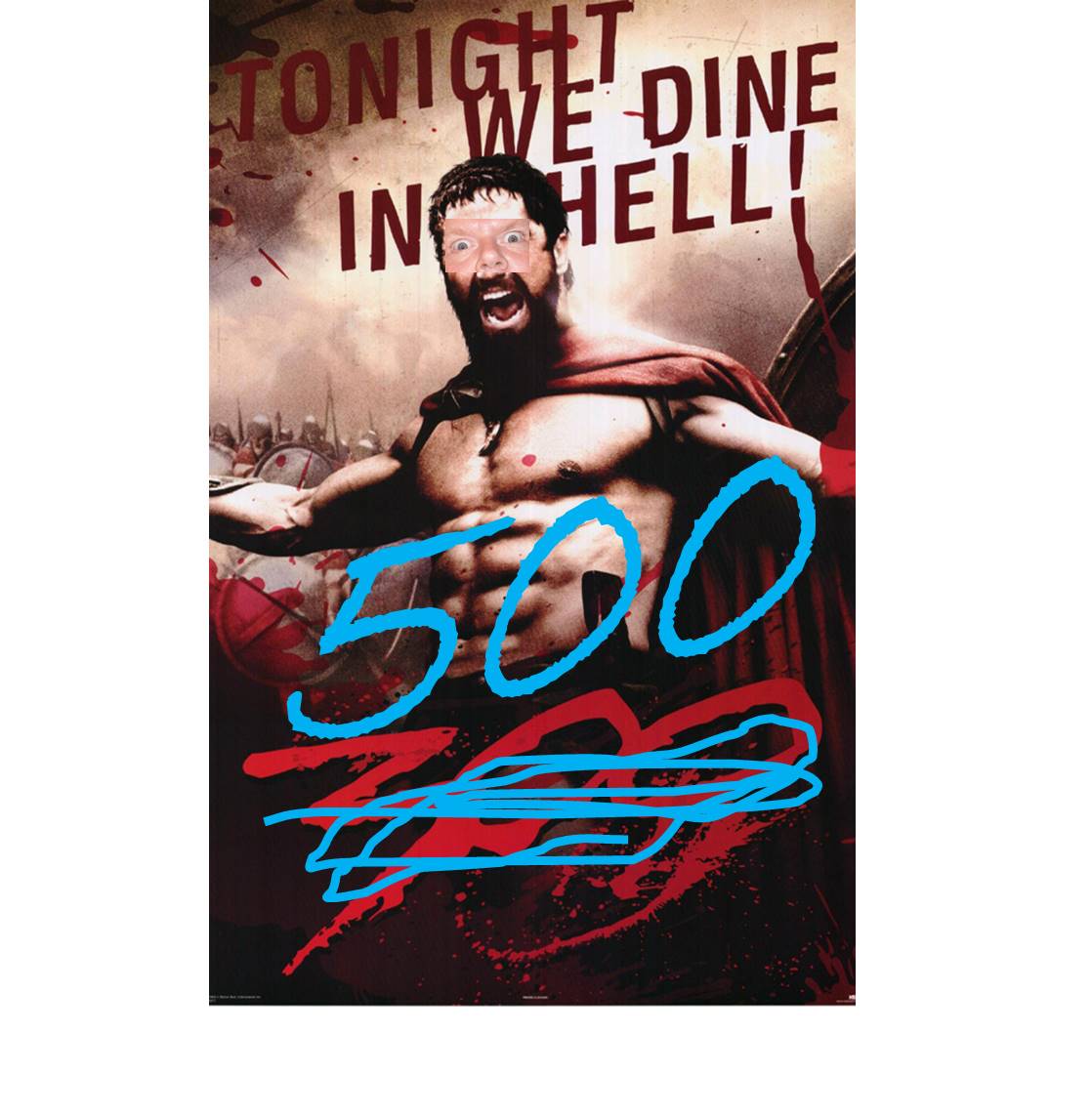
So I have hit the milestone blog post: 500.
For some of you, who have followed me from the earliest days, you are no doubt thinking: “500? Really? Seems like 5,000.” For those of you relatively new to the wonder that is my blog, please note closely the previous statement.
I dithered over what to write for my 500th post, and have decided I’m going to talk about you…well, some of you.
I “follow” quite a few blogs…I read many fewer…and I seek out even fewer. I’m sorry for those I don’t visit more regularly…hours in a day and all that. It’s some of that last group, I want to highlight here…those glorious few who make me stop whenever I see they’ve posted something new.

The paintings that this woman creates and the themes she explores by mixing media and mixing subject-matter blow me away. Rare is the image that doesn’t elicit some emotion in me. Hers is a style I have seen nowhere else and is worth exploring.
To read Jack’s blog is to have no clear idea as to who Jack is, and I mean that as a compliment. Jack takes on any subject it seems, but always in a thought-provoking and welcoming way that makes you want to contribute with a comment. His latest topics have been: monotasking, Veronica Mars, infectious pandemic readiness and phone addiction.
As the title suggests, Steph Snow is a no-holds-barred writer who likes to talk (or rant) about writing. With generous dollops of humour, she discusses the creative fortunes and practices that torture her soul on a seemingly daily basis. Misery truly does like company.


Readful Things Blog/Julian Froment’s Blog
I list these two blogs together because they are both discussions of the written word—e.g., reviews of books and authors, discussions of book marketing—and because the bloggers (Ionia Martin & Julian Froment) are beautifully connected at the soul (I don’t ask questions about any other forms of connections). Amazing people whose love for words is only surmounted by their love for each other.
As a photo-hobbiest, I deeply appreciate the craft and skills that other photographers bring to the world. In this case, however, Schelley and I seem to share a greater fascination for the minute rather than the panoramic, as suggested by her regular feature “What is it?” where you only see an aspect of an object and are left guessing as to what that object is.
If I couldn’t have my life, I would want Ron’s. A world traveller and freelance journalist, Ron is an amazing photographer, capturing incredible aspects of life in the many places he has visited. I particular enjoy his collections of people photos, often taken at a festival or gathering, which are incredibly natural and inviting.

Ned Hickson is not right in the head. And that’s what I love about him. A journalist in the Pacific Northwest and volunteer firefighter (or latex-coat fetishist…can’t really tell), Ned brings an irreverent sense of humour to everything he writes, earning him several accolades including his own NSA file. Ned also has a book to his credit, which I believe he has to return to the library next Tuesday.
More a collective than a personal blog, Curnblog offers amazing insights into all things film, whether examining an individual film or genre from angles such as sociology, creativity or cinematography. Predominantly the work of James Curnow, the blog is like having your own little film school where you can access new and unusual topics on a weekly basis without the pressure of essays, theses or exams.
There are so many other blogs to which I would like to direct you, but I am happy that you made it this far down the page. Perhaps for my 1000th blog post!
My gratitude for your patience and enduring interest.

Writing the prose angelic
If nothing else, using interviews in my magazine writing has given me a new respect for choir leaders.
The art is to harmoniously fuse voices that are roughly singing the same song and make it sound like the synchronized beat of angels’ wings.

A multitude of the heavenly host, praising God and saying “Glory to God in the Highest” Luke 2:13-14
Is writing Art?
Questions you are unlikely to ever hear:
- How close to the edge of the canvas can I apply acrylic paint?
- If I’m sculpting the bust of Zeus, at what moment should I work on his nose?
- Is it okay to drum the body of an acoustic guitar with my fingers rather than pluck the strings?
Painting. Sculpture. Music. Three of the myriad art forms where practitioners typically acquire some degree of training, and then step away from that training to develop their own style.

Art comes where the rules end
Questions you can fully expect to hear:
- In a 90-page screenplay, on what page should the inciting incident occur?
- In a poem, should I complete a thought within a line or break it up into two or more lines?
- Can I describe more than one character’s point-of-view within a scene in my novel?
Writing.
Every day, billions of people across the planet write. Post-It notes. Shopping lists. Emails. Love letters. And perhaps because of this ubiquity—perhaps because writing is rivaled only by speech as a form of expression—the world tends to view writing in a different category from all of the other arts, assuming people see it as an art form at all.

Everybody writes, so how special can it be
Obviously, there are better writers and worse writers, but more often than not, that reality is viewed as difference in skill, not art or craftsmanship. It is as though the world believes that if we all applied ourselves a little more, we could all write a great novel or play.
If asked, I am confident few would think that the only difference between them and Mozart, Yo-Yo Ma or the guy playing bassoon in the subway (my friend Jeff Burke) was time in.
Certainly, most acknowledge the greatness of Shakespeare, Dickens, Moliere, Hemingway (forgive my Western bias), but those are seen as rare exceptions to the norm.

Art comes where the rules end
People will buy paintings on the roadside. You will sometimes stop and listen to a musician in the park. But how many of us will stop and buy a novel or collection of poems anywhere other than the bookstore or online?
And sadly, this sense that pretty much anyone can be a writer pervades the writing community itself in insidious ways, and is particularly debilitating to new writer artists timidly trying to develop their craft.
Unlike almost any other art form, to my eye, writers get hung up in the right way to do things, as suggested by the questions above. As an example, this post was prompted by similar questions raised by a novelist blogger I follow.
It is okay to emulate aspects of others’ writings, to follow certain conventions of grammar and syntax. But at the end of the day, you have to ask yourself why you write; because it is a passion within you or to please the universe?
“Write the way you want to write,” was my advice to her questions on acceptable style (my italics). “As your colleagues suggested, this is just your style and will either be liked or not liked by your readers.”
“Never be afraid to be yourself…your readers will respect that in you,” I concluded, “and anyone who doesn’t is frankly not your reader.”
No one questions the difference between the skill of painting a house and the art of painting a landscape. Why should the same not be true for writing a Tweet and writing a poem?
Writing is an Art Form, to answer the title question, and you—the writer—are an Artist.
Learn from those who have come before and who practice now, but be brave and divine your own path.
I don’t hate movies!
This may sound like an unimportant statement, but as a newly minted screenwriter, I was starting to worry that I seemed to dislike every movie I watched in theatres or via Netflix.
Now, I must admit that I have spent much of my life as a hypercritical asshole, a picker of nits most egregious, so it perhaps came as no surprise that a movie had to be pretty solid to impress me…but when you go through dozens of movies and find all of them meh, you start to worry. Or at least, I did.
You see, I slowly began to doubt my own understanding of what makes for a good film, or more importantly to me, a good story. And as someone who has decided to be a professional storyteller that is a worrisome doubt to have.

Movies that I have found lacking despite their acclaim
The recent fare that I had heard wonderful reviews of or that had won awards:
- Blue Jasmine – good performance by Cate Blanchett in a completely forgettable movie
- The East – incredibly slow melodrama in which none of the characters was note-worthy and a moral dilemma on which the screenwriter and director refuse to take a position
- Life of Pi – hated the book, bored by the movie…would have been more likeable as a Disney flick
- Vicky Cristina Barcelona – boring people with no ties to the real world (like a need for money) screwing
- Noah – missed opportunity to explore the more interesting character of Tubal-Cain
- Dom Hemingway – a wonderful portrait of the eponymous character, a terribly flawed story (my thoughts)
- Enemy – 2014 Cdn Screen Award as Best Picture, thief of 90 minutes of my life (my thoughts)
I have many colleagues who will defend some or all of these movies to the hilt and yet I found each of them somewhere between seriously flawed and downright insulting.
Clearly, I was the problem. In my zeal to craft my own stories, I had become myopic on what a good story is, what good characters are.
And then I watched The Boy In The Striped Pajamas.
Wow. I was blown away, not just by the subject matter, but by the story itself, the unique perspective and the richly drawn characters.
Sure, there were one or two small moments where I tilted my head askew, but they did not linger. Nor did they snowball in my consciousness as they were few and far between.

Movies that have renewed my faith in storytelling
Last night, I watched The Reader.
Not as blown away, but still enthralled. Rich characters, slow revelations, palpable conflict both within and without.
I don’t hate movies.
I have no time for movies that fail…and more importantly, I aspire to and am inspired by movies that succeed.
Doubts remain, but thankfully, they have diminished.
…but I know what I like
Congratulations! You’ve landed a paid writing gig. Finally, all of that hard work and practice is going to pay off.
Mind you, unless the person paying you to develop a screenplay, marketing campaign, novel, whatever, is simply giving away his or her money out of some form of altruistic zealotry gone mad, the benefactor is likely to want to participate in the project, to take some degree of ownership, and therefore to weigh in…with notes.
So, you’ve just received your first batch of notes.
And amazingly, they are relatively minor and/or completely in sync with concerns you had about the work and so give you further impetus to make the changes you kind of knew needed to be made.
But seriously, folks. These notes don’t make any sense. The note-giver clearly didn’t understand the nature of the project he or she assigned you. To make most or any of these changes would be to seriously weaken or outright destroy the project.
Now, what the hell do you do?

Step 1: Curse.
Yes, feel free to curse the gods for this tedious torture of your creative soul. How dare these mere mortals give you notes? The audacity to think they could contribute to this work of Art, when the very notes they provide merely highlight their ignorance.
I don’t have a problem with hosting a pity party of one (or a few close friends). The key is keeping the party short, particularly when working to deadline.
You are an Artist, and Art requires Ego and a degree of Hubris. Without hubris, how would any of us ever have the cahones to show our work to others?
The reality, however, is that we have chosen to work for others, so…

Step 2: Set aside your ego and re-read.
Put a tea-cosy on your vision for a moment and really try to understand the notes you have been given. I’ve heard it said often: What is the note within the notes?
I have found that people often can’t identify or vocalize what they specifically find troubling in a piece of Art. But rather than simply give you no notes, they try to identify things that may have some bearing on their issues…the operative word there being “may”.
If you stand back a little further and ignore the specific requests, can you see something in common between the notes, a greater theme or need from the note-givers?
Do your best to step out of your shoes and into his or hers. A change in perspective may give you a greater insight as to the real challenge the note-giver is facing with your work. You’re the writer; you have one need. A director or a marketing manager will have different needs and perspectives. Respect that.
It is possible, however, that you will still be uncertain (or clueless) as to what to do next. In that case…

Step 3: Ask questions/seek clarity.
Acknowledging the note-giver’s concerns or comments is not the same as accepting them. It does, however, give him or her a sense that you respect them and are trying to maintain a collaborative relationship. I cannot begin tell you how much this means to people and pays off in the long run.
Offer your interpretation of the issues to confirm you see things the same way as the note-giver. If you do, brilliant. You can now offer alternatives to the less palatable requests that may satisfy the note-giver’s misgivings.
If you don’t, brilliant. Now, you have the opportunity to gain insights into the note-giver’s perspectives. This will allow you to brainstorm new approaches that will satisfy both parties.
You may also find that many of the requested changes are not a high priority for the note-giver or were merely suggestions of things you could do. For all the opinions people offer throughout their lives, most individuals are incapable of giving effective notes and thus, demands, suggestions and brain farts all look alike to the person receiving them. This holds for the Artist, as well. Don’t allow your and their ignorance to drive you crazy.
So, now that you either have an understanding with the note-giver or realize you are working with a control-obsessed ego-maniacal asshole (it happens)…

Step 4: Make your changes or rollover.
What you now do with these notes hinges on a cost-benefit analysis.
Are there ways you can bring greater clarity to the story you have written that will address the needs without either incorporating the specific requests or significantly altering your vision of the story?
If yes, then you have not only improved the work, but you’ve established a wonderful rapport with the note-giver that will likely lead to future opportunities for collaboration.
If not, you need to ask what your goal is for this particular project.
If it is your magnum opus, then feel free to stick your heels in and refuse to make the requested changes, but in the knowledge that you may very well be fired and find it difficult to get work in the future. The note-giver and community may respect your stance and in the final analysis, acknowledge you were correct in your refusal, but it doesn’t happen a lot.
If, however, this project is the first step toward a longer term relationship with the note-giver and/or the hiring community, then go back to Step 2 and think harder as to how to make this work to everyone’s advantage. The onus is on you to do your best work within the framework you are given.
In this latter situation, of course, another alternative is simply to rollover and acquiesce to the requested changes. It is completely possible that the note-giver is right and you simply could not see the problems because your ego was in the way (aka you were too close to the project).
On the flipside, of course, if the note-giver was wrong, you may carry the burden of his or her errors and so find future work with that individual unlikely but then why would you want to work with that asshole again. Or, he or she could step up and take ownership of the error, in which case, you may have found a partner who will trust your instincts more the next time.
Getting notes is never easy, but it’s going to happen whenever you leave your Artistic cave. How you deal with them will have a significant impact on how often you get paid to do your thing.
Canadian Film Day: Hoorah or who cares?
Via my social media outlets, I discovered that today is Canadian Film Day (presumably only in Canada).
Oh Canada, our home and native film industry… (although not necessarily native in the sense of indigenous peoples).
The discovery caused me to pause, as I realized that it has never mattered to me that a film is Canadian…only that it is good, entertaining, thought-provoking.
As an artist who is Canadian, I almost feel guilty that this is the case. And as a friend of several writers, directors, performers, etc, who live and work in Canada, I am embarrassed to say that I am not sure I can name 5 films that I know with any confidence are Canadian.
My attempt: Black Christmas, Exotica, The Sweet Hereafter, Decline of the American Empire, Scanners (honesty check: of this list, I have only seen Black Christmas)
Don’t get me wrong; I don’t have a problem with having a Canadian Film Day to celebrate my nation’s achievements. I think it’s great to pat our collective selves on the backs every once in a while.

I guess my bigger question is does it really matter if a movie is Canadian or not, whether from an artistic or audience perspective?
When an industry is in its infancy, it needs to be protected and nurtured, but much as with the Canadian music industry, I think the Canadian film industry is well beyond its infancy. It doesn’t need training wheels. We shouldn’t be coddling it out of some odd sense of nationalism. It is more than capable of competing (and does) with the big boys and girls of the world.
This country has played incubator to world-renowned directors, writers, performers and production companies, and these people and groups became world-renowned by competing in the world. By setting the bar high and achieving even more.
My fear with art-via-nationalism is hearing the phrase “You know, for a Canadian film, this is pretty good.”
I worry that in blindly supporting the Canadian film industry simply because it is Canadian, we won’t push ourselves as hard. That we will be willing to settle for good enough for a Canadian film. That mediocrity will reign, punctuated here and there with islands of brilliance.
As some of you know, I am cowriter of a sketch comedy show–SomeTV!–currently in production in Toronto. One of our mandates as a writing team was that we are NOT writing a Canadian sketch show, regardless of all of the writers being Canadian and residing in Canada for initial broadcast in Canada.
Sure, the show will have Canadian sensibilities given the Canadian writing and acting, but we’re targeting a global stage with this project.
Likewise, none of my film screenplays are targeted as Canadian. Nor all but one of my teleplay concepts (the one revolves around Canada’s Parliamentary system).
Sure, many of them are set in Canada, but that is more an artifact of my knowledge base and personal experiences than anything else. Any of the Canadian locations could be swapped for American or British locations with only a few modifications to the story.
I’m not trying to write The Great Canadian Story. I’m trying to write The Great Story, which may or may not feature Canada and its people.
I wish every movie to do well, even the ones I don’t particularly like. I want all of the artists involved to find personal satisfaction and achieve greatness. I want audiences to be entertained and money to flow.
And maybe this is biting the hand that feeds me (when and if it ever decides to feed me), but I don’t particularly care if those movies, artists, audiences and money are Canadian.

PS: I am a strong advocate of any organization that supports the development of new artists who push the envelope in storytelling. Again, though, I advocate these organization whether Canadian or other.
My screenplays:
Tank’s: Animated musical feature, female co-lead; Winner of Best Animated Feature Screenplay at 2014 Nashville Film Festival
An impulsive adolescent fish, ripped from his Amazonian home, struggles to find his place in the world of a pet shop, complicated by feelings for an idealistic, privileged fish and the iron-fisted rule of a villainous eel. A story that proves even a fish in water can be a fish out of water.
Captain Pete: Humourous family drama, female lead, set in Eastern Canada
To reconnect with her increasingly distant son, 35-year-old divorcee Billy tries to protect her son’s pirate-hunting lunatic friend from himself and an intolerant town, and in the process, may help both him and herself reconnect with the world.
The Children of San Miani: Murder thriller, female lead, set in Northern Italy and Canada
A crusading young Turin police officer must partner with a Vatican officer and faces Vatican interference as she tries to prevent another murder linked to a 35-year-old child abuse mystery, and in the process, faces the demons of her own Catholic upbringing.
The Naughty List: Dark adult comedy, holiday-themed
After a near-fatal accident, Santa vows to make amends to the Naughty kids, but when he learns two of them—now warlords—are racing toward war on Christmas Day, he drops everything to intervene as only he can, with catastrophic results.
Becoming the Mole

Life used to be one giant game of Whack-A-Mole, the arcade game where you stand above a series of holes with a mallet or bat and try to smack moles as they arise randomly. In my case, however, those moles were work assignments, social responsibilities and general life requirements.
Just as I would deal with one call for my attention, it seemed two or three others would raise their ugly heads. Distracted and disoriented, I would reach for one task only to watch it recede and yet others arrive.
As a 60-second challenge in an arcade or amusement park, the game can be quite fun; a way to exercise your peripheral vision and reflexes.
As a lifestyle choice, however, it was exhausting.
A change—well chronicled in this blog—took place a couple of years ago, and my approach to Whack-A-Mole changed with it.
I still play the game, but now the moles are of my choosing. I know where the next mole will arise because I put it there.
A novel writing episode. A hockey game to attend. A poem to create. A book chapter to read. Words to cross in a puzzle. All of my choosing.
Movies to attend with friends. Colleagues to meet in a pub. Media on which to socialize. I can say yes…and I can say no.
As I learned to give up control of my life, I also made sure I gave up any over-arching sense of responsibility for the happiness or satisfaction of others. I do my best to fulfill my commitments, but I make sure I understand where my commitments end.
The result? I have never been more in control of my life.

Ironically, in my divestment of control came an unexpected freedom that has manifested itself as a muse that comes unbidden. I do not search or wait for the muse; she sits with me constantly. An earnest voice who insists on being heard.
I have become the mole. Now, it is my turn to pop up in other people’s lives—hopefully welcomed—to offer exciting new creative opportunities.
A new sketch or monologue. A book that needs illustration. An idea for a video. An invitation to photograph animals at the aquarium.
Go ahead. Gimme a whack!
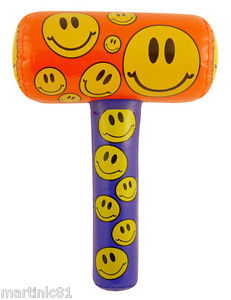
(Images are property of owners and are used here without permission, but I thought I’d take a whack at it.)
I Hear You

“I hear you,” she screams,
Her voice echoing in the silence
Of a disquieted mind.
Fists pound temples
As temptation reigns
In paper-wrapped glass.
The sins of a thousand years
Await release, gnawing
At the bars built
To keep the world out
And the furies within.
Breath rasps, the belly of the snake
Drawing sinewy strength
From the still-warm sands
Of memory and desire.
Head sags, body slumps,
Blood slows, anguish grows.
Write, Sisyphus, write.

(Images are property of owners, and are used here without permission…I heard you.)
 createdbyrcw