Writing for puppets

Monty meets Muppets!

Monty meets Muppets!

As some of you may know, I am one of the comedy writers for a sketch show called SomeTV!, which is currently in production in Toronto. As our godhead Nic likes to describe it, the show takes the no-sacred-cows approach of Monty Python’s Flying Circus and combines it with the playful anarchy of The Muppet Show (no hubris here, eh?).

Now, for some, that may sound like the greatest writing gig ever. Those some have clearly never written for puppets.

Human actors—or as we call them, Fleshies—can be tricky enough to deal with. Prone to completely misunderstanding the point of a scene or sketch, they tend to have difficulty learning lines that make no sense to them.

Luckily, their natural insecurity, despite the outward facing ego, means that they can be molded into subservience, if only in two- to five-minute chunks, the longest most are willing to go without checking their make-up or cell phones for calls from their managers.

At their core, Fleshies are the rhesus monkeys of the performance world, clinging to each other for some semblance of affection but ultimately willing to give that up for warmth and sustenance.

Not so puppet actors, aka the Felts or Felties.

Flesh v Felt

These are the apex predators of the performance world and should always be treated as such. Sure, they look cute and cuddly, with their giant heads, bulging eyes and disarming colours, but that’s exactly what they want you to think.

You don’t write for Felties so much as start a sentence that is perpetually interrupted with ideas or lines the bastards think are smarter, funnier, crazier.

Fleshies forget their lines because they’re not too bright…Felties “forget” because they are malicious egotists.

Adding to the challenge is the near-impossibility of figuring out a Feltie. He, she or it is the poster-child for multiple personality disorder.

You think you’re writing a scene for a young Spanish girl, when out of nowhere a tall Jovian Codswadder shows up to take the scene in an entirely new direction. (To this day, the only thing I know about Codswadders is they come from Jupiter, where given the crushing gravity, their height makes no sense.)
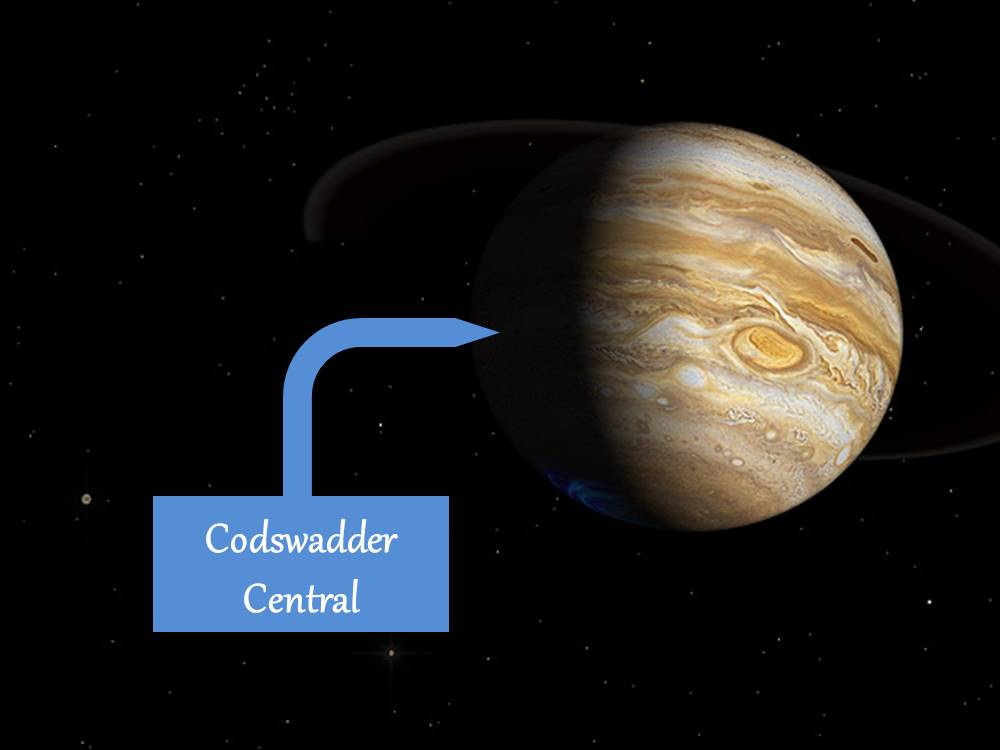
Not the home of young Spanish girls

NOT the home of young Spanish girls

It’s like dealing with someone with hyperactive comedic Tourettes, and trust me, I’ve taken enough improv classes in Toronto to know what that looks like.

Felties are also astoundingly lazy creatures. Sure, they look frenetic on the television screens, but in reality, these buggers will literally not lift a finger without someone doing it for them. Our show has an entire team of Feltie fluffers whose entire job is to see to the every-last needs of these freaks. We’re talking major OCD: obsessive-compulsive demands.

Trust me, the dictionary writers of the world have the concept of “puppet master” completely backwards.
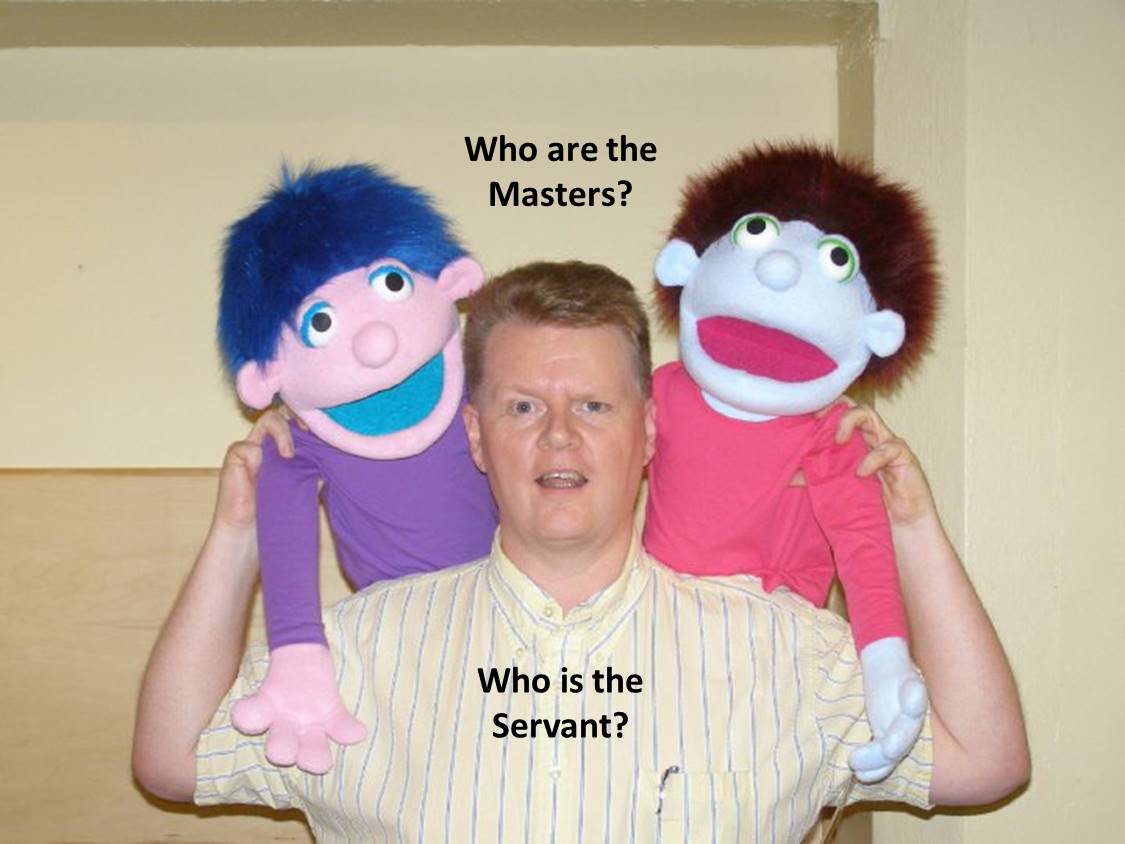
Masterclass

To be fair, the Felties do sometimes come up with lines that are funnier than the stuff I wrote. But on the flip side, they get away with lines that no intelligent Fleshie could ever hope to pull off.

This has two impacts: 1) the Feltie doesn’t have to try very hard to get a laugh, and 2) they can be as crude, rude and insulting as they want, knowing everyone just thinks “awwww, how cute”.

There’s a reason you don’t hear a lot of puppet radio programs…the shit they come up with is repugnant.
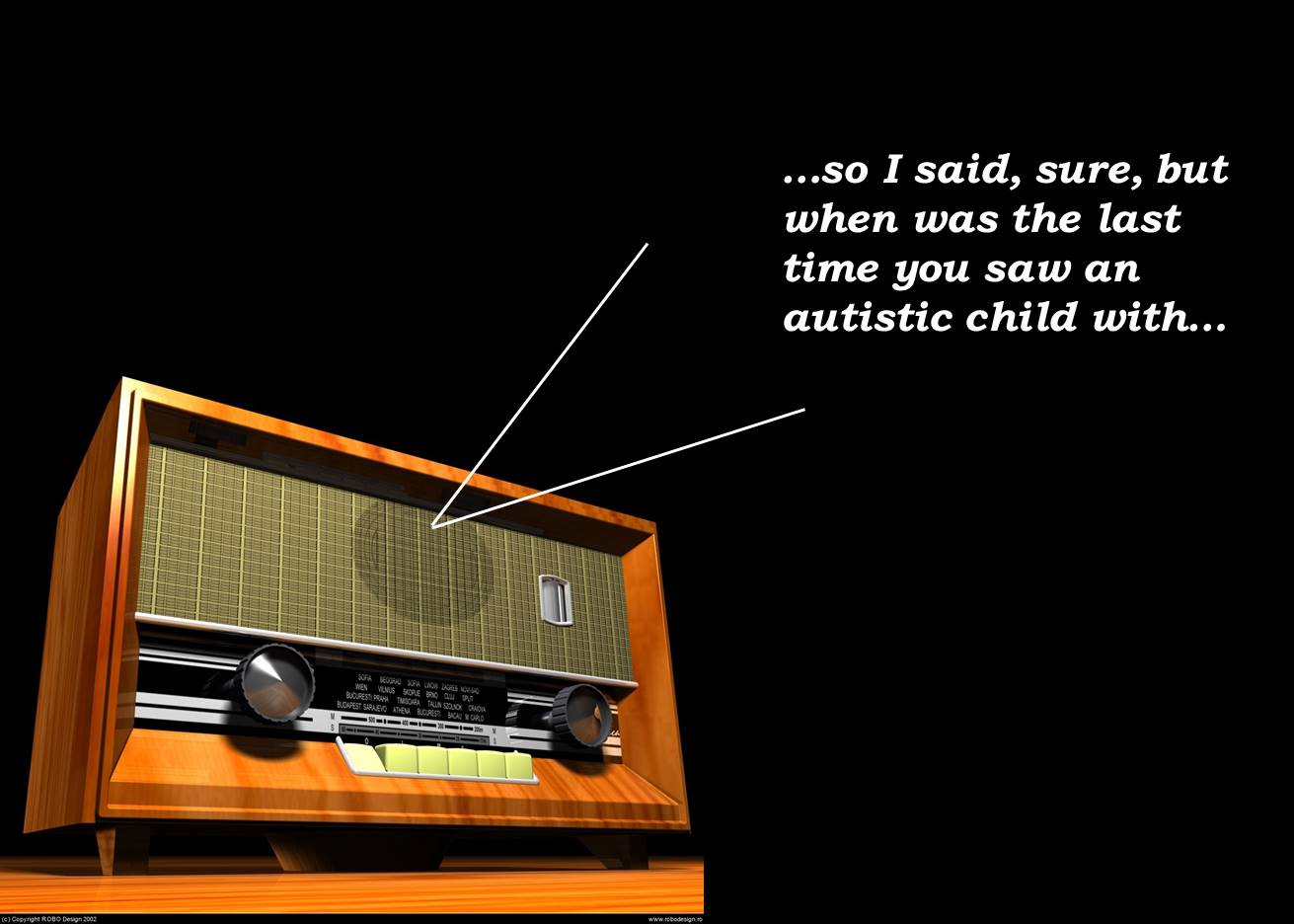
NPR = Nasty Puppet Radio

NPR = Nasty Puppet Radio

So, why do I stay? Why do I continue to write for these self-glorified hand-warmers?

Most days, I don’t know.

But then the rent comes due and I realize that my best chances at succeeding as a “comedy writer” is to have my words (or some semblance thereof) come out of a Feltie’s mouth…and those lint-sucking leeches know it, too.


SomeTV! is being produced by Lemon Productions Inc.

Like us on Facebook: SomeTV!Lemon Productions Inc.

Follow us on Twitter: @SomeTVNews
No

Not yet

I love what I do.

I love writing. I love coming up with new ideas to write. I love helping other people put their ideas into words and then into action.

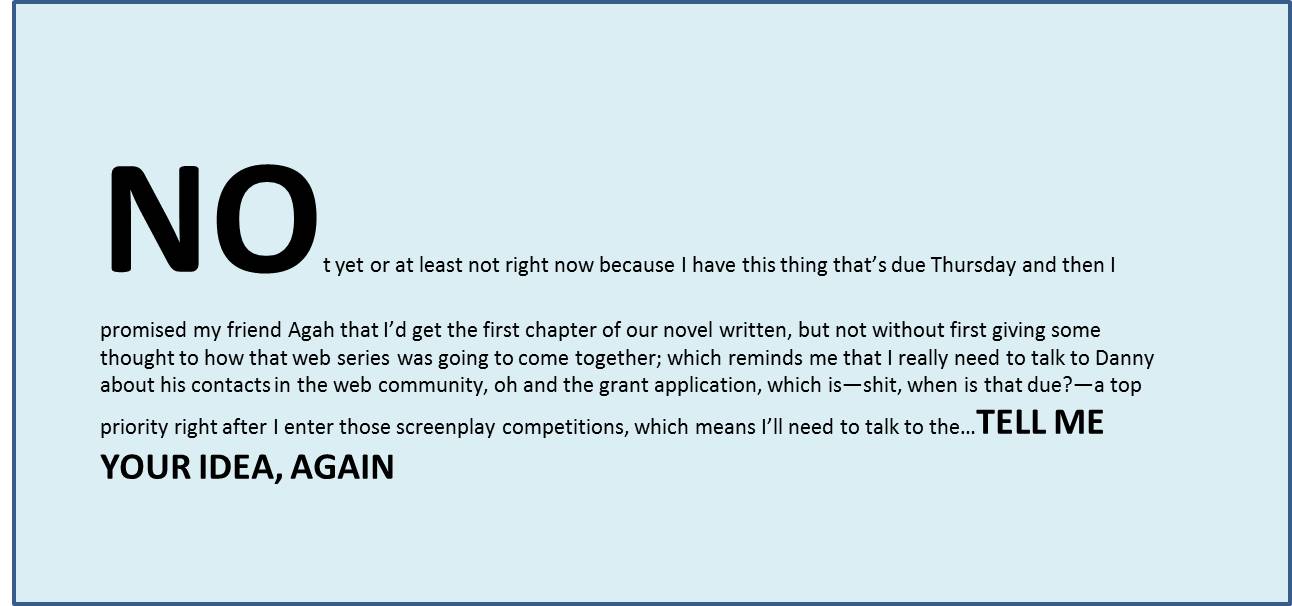
This is why I struggle with one of the shorter words in the English language: No.

Hello, my name is Randy, and I am addicted to new projects.

There was a time when my inability to tell people no stemmed from my fear of letting them down. Or more accurately, my fear of them never asking again and my value as a person being reduced to zero.

Not so now, luckily. Now, I find my value internally. I am, therefore I have value.

Interestingly, though, I still struggle to say no. But now, it’s a curse of enthusiasm and confidence, now fear and self-loathing.

And to complicate things further, that same enthusiasm and confidence attracts people who are more timid in one or both. People with ideas but lack voice, or with voice but lack means.

I am glad that they see me as a vector through which to explore and advance their visions. At the same time, I have to remember that my bandwidth is limited. It is less the hours in a day and more the daily ration of creative energy that limits me.

(BTW, this is why I don’t upbraid myself for spending hours on the computer or playing Solitaire. That is my period of recharge.)

At some point, I have to limit my involvement in others’ works. I have to save enough space for my paying gigs, lest I be hungry and homeless, and for my creative projects, lest I be frustrated and unhappy.

I have to say “No”.

You recently published a book and want to turn it into a screenplay? Great!

You’ve got an idea for a comedy sketch event? Fantastic!

I came up with another great concept for a movie? Congratulations! (Yes, even I drain my batteries.)

I’m not saying I won’t help, but don’t take it personally if I limit my involvement. It is not a reflection on you or your idea but rather on me and my limitations.

Today, I can work with you. Tomorrow, I may only be able to listen to you. The next day, I may not even be able to do that.

Oh, and I’ll do my best to recognize and respect those same boundaries in your life.

No doesn’t mean your idea sucks. No doesn’t mean I never want to work with you. No simply means I can’t, not right now, no matter how much I might want to. There are shades of No.

I can’t because I already have plenty on my plate. I can’t because I have to keep myself a priority. I can’t simply because I can’t.

But I wish you all the best in your efforts.

Yellow sub no2

In a slightly unrelated brain fart, the concept of No reminded me of one of my favourite revelations from the movie Yellow Submarine, the animated Beatles film.

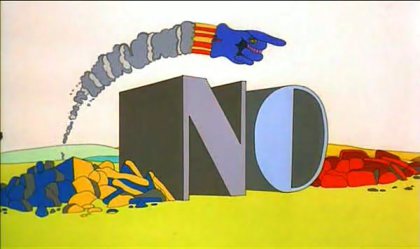
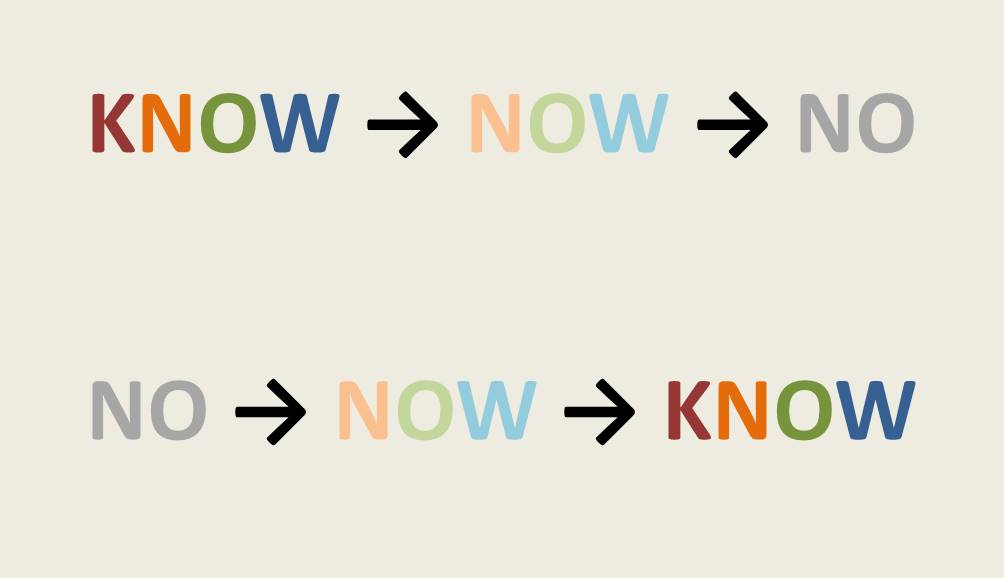
Early in the film, as the forces of evil are over-taking Pepperland, a ballistic glove called Glove chases people and smashes things with his giant fist, including the letters in the giant Technicolor word “KNOW”. First, he smashes the K to make the word “NOW”. He then smashes the W to make the word “NO”, which becomes black-and-white.

Late in the movie, when the Beatles—disguised as Sgt. Pepper’s Lonely Hearts Club Band—lead the people’s revolt to reclaim their land, the smashed letters reverse and become colour again.

What surprised me was that having watched the film at least a dozen times before, it wasn’t until late in my “adulthood” that I realized the message embedded within the two events.

No pic


Consider my mind blown!

Rule breakers

Broken Rules Falls to Chaos Anarchy Pieces

Oil and water do not mix because, well, they are oil and water. This is a rule. We made a cliché out of it, so it must be a rule.

And yet, it is not a rule.

Oil and water can mix. You just have to screw around with it by adding another component to the mix…an emulsifier. True, this isn’t the same kind of mixture as blue Kool-Aid plus red Kool-Aid makes purple Kool-Aid, but the colloidal suspension of oil droplets in water is still a mixture.

So what about combining oil painting with water colour painting? Anathema, you say. They are two distinct media, you cry.

So what, I respond.

Because we’ve never seen it done (or at least, I haven’t), doesn’t mean that it cannot be.

Each medium offers its own strengths and limitations, and magnificent works have been created with either. Is there a way, however, to enhance those strengths, moderate those limitations by combining the media within a single work?

Every day, new rules are created, new schools of thought founded that try to define a panoply of Art forms. This is good, as these institutions form the parameters in which new Artists learn and understand their craft.

Can you imagine the panic of being told to go make art and being given nothing to do so: no instruction, no media, no resources?

And yet, those very institutions can strait-jacket the unwary and the unthinking, as rules become commandments rather than guidelines. When any attempt to step outside of the school is med with derision, contempt and blinkered exclusion.

The very congresses and champions established to support the growth and evolution of Art can easily become the prison wardens of that Art, confining aberrant Artists in an attempt to petrify the one true form.

(By the way: The same is true for Science, where journals and textbooks are rife with examples of explorers being squashed for daring to suggest something that didn’t fit within scientific canon.)

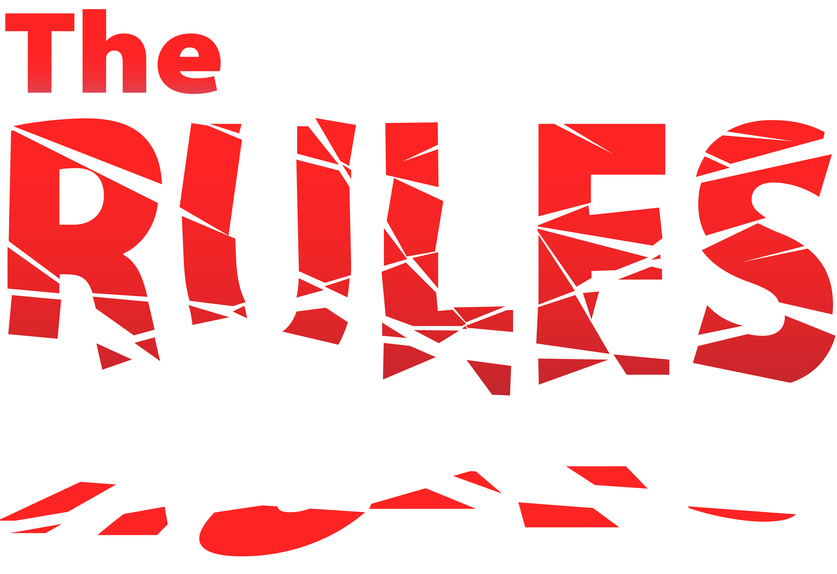
It would be naïve and harmful to suggest that rules should not only be broken, they should be shattered. If you wrote a novel using numbers rather than letters, you might find a very small audience for your work and little understanding from peers. There is much to be said, however, for grazing, nicking or wounding the rules.

Rules should be constantly questioned, viciously challenged if Art is to evolve. Without such a challenge to the nucleotides that comprise our genetic material, we would not exist and the planet would be lifeless.

But just as we demand mutation and adaptation to facilitate Artistic evolution, so must we accept the other half of the Darwinian equation. Only those most fit to survive will. The majority of mutations and adaptations will be for naught and that Art will perish.

It is a harsh reality, but look at what it has wrought in just 40,000 years since humans first applied colour to walls.

All this to say, break some rules. Test the limits. It is your evolutionary destiny as an Artist.

Break-the-Rules-e1331912129855

(Images are property of owners and are used here without permission and against the rules.)

Failure is not an option…it’s a skill

Fear-of-failure

I used to be terrified of failure. If I couldn’t know that I would succeed at something, I would put it off and potentially never do it.

And this was true in all aspects of life.

Driving. Dancing. Playing musical instruments. Talking to girls and later women. Athletics.

I became the best I could at one or two things—the things for which I seemed to have a natural aptitude—to avoid having to worry about being asked to do any of a thousand other things.

To me, failure was not an option. (I could spend months discussing why, but I won’t…at least, not here).

It has taken me a long time, but I have finally realized that I was only half right.

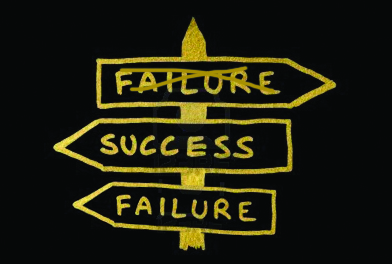
failure_success

Failure is not an option…it is an imperative.

It is a skill that I must practice time and time again in all aspects of life.

At its simplest, if I succeeded at everything to which I turned my hand, I would stop doing it.

I succeeded. I achieved my goal. What more could I hope to accomplish? Everything after that is pure redundancy and repetition.

When harnessed, however, failure and imperfection can be that thing that drives me forward, when purely creative urges do not.

ziglar

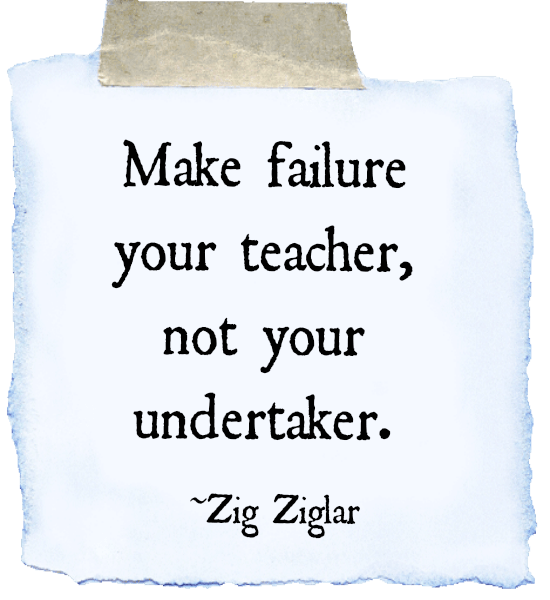
Failure is my teacher. Failure is my drill sergeant and mentor. And yes, failure can be my devil.

Perfection is an illusion and is therefore unattainable. This means that even at our zenith, we have failed. So what?

Even if we do not strive for perfection, but for an attainable, measurable goal, we are likely to fail if for no other reason than once we have achieved that goal, we instinctively move the goal posts. Our best is always a thing of the past and acts as a goad for us to do better.

Herein also lays the further challenge of failure in Art. There typically is no real metric other than external opinion. Rare is the individual who targets using 7.83% magenta in his next painting.

coyote

Wile E. Coyote is about the only artist I know who can actively test the realism of his Art. He has achieved his goal if the Roadrunner runs into the cliff wall painted to look like a tunnel. Ironically, his downfall was the hyperrealism he achieved such that the painting actually became a tunnel. In succeeding, he found failure.

Where I used to fear failure, I now embrace it. I use it to stretch myself and my skills. I use it as a lesson plan.

Failure-is-not-falling-down-but-refusing-to-get-up

But for this to work, I must envision failure as something internal and self-defined rather than something external and based on the opinions of others. There lies madness.

Yes, I rely on feedback garnered from others to determine my degree of success, but I do not allow others to define that success.

It is my Art. I define it and in doing so, define myself. And to do that, I must fail and fail again.

failure-and-success

(Images are property of owners and are used here without permission, which may be an epic failure on my part.)

Faces of the ROM

I have been on a face kick of late, watching sculptures, paintings, images for signs of life and personality. My recent trip to the Royal Ontario Museum was no different.

Finding inspiration

Inspiration

Where do you find inspiration? What causes one moment to pass completely unnoticed and another to trigger a flurry of activity?

Truth be told, I don’t think inspiration comes from outside but rather from within. The exact same moment viewed at different times by the exact same individual may result in completely different responses depending on the openness of the individual to inspiration.

When you are open to inspiration, you witness and experience life through a completely different lens, one that sees connections and patterns between events and objects that do not necessarily exist in the forms themselves.

The priests sitting in the bar become a foil for the man trying to pick up women. The dog urinating on a building becomes the unwitting initiator of the death of 275 people in an office tower. The crows on the telephone lines become dark angels surveilling the land, awaiting the arrival of a malevolent spirit.

The irony of inspiration coming from within, however, is that it is something you cannot really will into existence. You can easily sit for hours with pen poised over paper, awaiting inspiration’s wafting arrival, only to realize that days have gone by without result. And trying to force your way through artistic constipation only seems to worsen the situation as you strain against the blockage by forcing invisible connections. Rarely, if ever, will inspiration make itself known to you in this way.

All you can really do is till the soil in which inspiration will implant itself and hopefully germinate. Rather than clear away all distraction, you may find it better to envelope yourself in distraction. By allowing the mental and spiritual noise to flow over, under and through you, you remove the hard edges of the real world and let the boundaries criss-cross in chaotic flux, searching for new patterns that your mind’s eye can mark.

It may also be helpful to engage your mind in someone else’s art, whether of the same medium as yours or no, but remembering to also give your mind permission to wander.

There is no exam at the end of the novel you’re reading. No request to reproduce the painting you are viewing. No critical essay to argue once the concerto has ceased.

So let yourself go and let yourself respond—consciously and viscerally—to the art. Let a word, image or note ricochet through your mind until it attaches itself to an earlier thought or feeling. Don’t try to define or even understand the clusters that form but rather observe them until the need to create takes hold.

Inspiration is about the initial amount of discovery, not the final product. An ephemeral spirit, inspiration is likely to dissipate at your first attempt to put a leash on it. You cannot present inspiration with a road map and expect it to clear the path ahead. Rather, you must follow inspiration as it meanders, bearing witness to the miracles it triggers.

Where do you find inspiration?

Everywhere and anywhere, when you are ready to let it be seen.

Finding the Critical Sweet Spot – Part Two

Available now stamp

In the last post, we talked about the challenge of finding someone to critique your work in a way that was actionable; someone who was neither too hard nor too soft on you. Below, we continue the conversation by address the need for that person to be available for ongoing discussion and the limitations of options like coverage services.

Availability: A lot of screenwriters rely on coverage services to get feedback on their screenplays and there are a number of reputable organizations and readers out there.

The challenge, I find, with these services is that they tend to be unidirectional and/or very brief. You send your work, you receive a written report, you may receive an oral report—which allows you to ask questions—but ultimately, it’s “here you go”.

You can get more, you can have follow-up, but it’ll cost more.

As well, I think you really miss out on improving your own skills, knowledge and understanding of story through the critiquing of the work of others.

I also worry that the use of a professional service when your work and skill sets are at a nascent level is largely a waste of their time and your money. The feedback you receive will likely be so broad, so sweeping that it could easily overwhelm you. As well, any minor change you make at one stage is liable to make any of the remaining feedback moot.

Better, I think, that you find someone who is also trying to grow their skills, who understands and shares your needs and fragility. They want and need your help as much as you want and need theirs, and so you’ll be more apt to make time for each other.

Again, it is about building a relationship of trust.

Transient state: Unfortunately, no two people develop at the same rate, and even if you find yourself in a trusting artistic relationship, you will likely find that one of you is ready to move forward faster than the other. It happens in all facets of life.

As your Art develops, you will find that your needs change, and that the partner that got you to one stage of development cannot get you to the next one. It is time to bow to your partner and move on to the next one.

If you’re lucky, both of you recognize this and move on without acrimony. Not everyone is lucky. But for your Art to flourish, the move is necessary.

I wish I could tell you that there is an easy way to make the transition, but in my experience, it is like the end of a marriage and the need to start dating again. The footwork is shaky and the verbiage is awkward, but you won’t die of embarrassment.

The key is to remember why you’re doing this, why it is important to you, and then to simply move forward.

You’ll be okay.


Coverage services I have used or have had recommended to me:

Marsha Mason at Why The Face

Terry Zinner at A Film Writer

Scriptapalooza Coverage

(Image is property of owner and is used here without permission because it was available now)

Finding the Critical Sweet Spot – Part One

threebears

One of the biggest challenges I have faced in developing my writing was in finding the right people to critique my work. Classes have helped, as I’ve come across some wonderful instructors, but otherwise, finding people who (a) gave me actionable feedback and (b) were available for ongoing discussion has been tricky.

Actionable feedback: To really move your Art forward, you need outside opinions, but those opinions need to be of the variety that helps you see not only what works and what doesn’t, but also how to understand both and push the work further.

Although praise like “I loved it” is nice and criticism like “I just didn’t feel it” can be crushing, neither helps you develop your Art because neither offers you specifics. This is typically a sign of someone who is not near your skill level and cannot articulate their thoughts (not meant as a criticism of the person offering feedback).

Likewise, you don’t necessarily benefit from a critique of someone way above your skill level. Through no fault of their own, these individuals are likely to take certain information for granted and provide feedback you cannot work with because you don’t understand it and/or that overwhelms you in terms of sheer volume. This, I believe, is why so few experts in any discipline are good teachers of that discipline. We all simply forget what it’s like not to know or know how to apply “the basics”.

Instead, we need to find someone who is roughly at the same skill level as ourselves and ideally, who suffers different weaknesses or challenges than ourselves. In such a situation, a symbiotic relationship can form.

These are the people who will recognize and help you see what is working while at the same time, point out the problem areas and offer insights (or commiseration) on how to address the issues.

Such a meeting of equals will also help ensure that one of you doesn’t feel like you’re doing all the heavy lifting in the relationship and getting very little in return. This is critical in building a relationship of trust, particularly when both of you are making yourself vulnerable in exposing your Art, untested.

In the next post, we’ll look at the availability question and then wrap up with a brief discussion of the transience of it all.

(Image is property of owner and is used here without permission…how sweet)

Not for nothing – REQUEST FOR HELP

ssnolan3

How do you write about nothing?

I know how to not write. In fact, I was very good at that in the past, but gratefully not writing is no longer much of an option for me.

I’m not talking about not writing, however. Instead, I am talking about writing scenes where superficially nothing happens, where a character walks through the mundane actions of life. What they are doing is unimportant to them, a robotic response to an overwhelming thought or scenario. There is an astronomic exchange of information and yet no words are spoken.

In a novel or short story, you can have an inner dialogue, revealing the character’s thoughts, but in a film, you have only silence. Sure, there’s always the trusty voiceover, but I personally think that unless the character is recalling a past statement, voiceovers are a crutch. And a voiceover weakens a scene when you compare it with silence.

Think of the last time you were faced with silence in response to something you said or did. Think of the dis-ease (yes, that’s where “disease” comes from) you experienced as you tried to figure out what the other party was thinking. In many of those situations, I bet that shouting would have been preferable to silence.

In an improv class I took—I am sorry that this is my version of “This one time, in band camp…”—we were doing a status exercise wherein one character would try to take status away from the other one, proving themselves superior through statement or action. While many student pairs would do their best to out-pompous, out-preen or out-bravado each other, I took a different tack. I went completely silent.

No matter what my partner said or did, I faced him stoically or indifferently, deigning to give him the merest glance on occasion while going about my activities. And the louder or larger he got, the less I minded or acknowledged him. The more he talked, the weaker he appeared.

Silence is powerful. And even if the silence is due to idiocy, it comes across as thoughtfulness.

Think of scenes in movies where a character has chosen to deal with a problem by thinking about it. With a good actor, you can see all the thoughts as they play out in his or her mind. The body, the face, the eyes tell you all you need to know about the emotional swells washing through the actor. A single word breaks that tension and weakens the moment. As a storyteller, why would you ever give that up?

Which brings me back to my original question: How do you write nothing?

Perhaps I am delving too far into the domains of the director and actor, but there has to be a way to ensure both those artists know what you, the writer, intend. But I’ll be damned if I know how.

So, I open the question to you, my fellow artists.

What do you do, what have you learned, what have you seen that tells you how to write nothing and yet convey a world of thought and feeling?

Please share your thoughts here as I can’t be the only one who wants to know.

Stealtown

On Toronto's Bay Street, the streets are paved with souls

On Toronto’s Bay Street, the streets are paved with souls

A thousand spires of concrete and glass

Etch their signatures into the clouds,

Holiest of shrines to commerce and wealth.

A soulless furnace of misspent energy

Or engines of tomorrow’s successes?

Streets bathed in shadow that hides

The scurrying shells of men and women,

Wan caricatures of the human spirit,

Decorated and dedicated to jobs

That pay their bills but rob their souls.

Where are the sounds of Life

In this chthonic chamber of horrors?

Who sings the songs of individuality?

Originality and free thought flit

From corner to corner, shadow to shadow,

Fearful of the crushing boots of conformity;

Chirruping into the noisy silence in hope

They are not alone.