Fitting a pitch

Image

The line has been drawn in the sand. I’ve painted myself into a corner. It’s time to s#!t or get off the pot. [Insert other cliché expression indicating you’re stalling and we all know it.]

It is time for me to start pitching my television show ideas to production companies. No more fine tuning. No more market analysis. Get out there and sell, boy.

I was at an information session over the weekend where a Head of Development for a local production company was talking to new comedy writers (and me) about what producers are looking for in new sitcom pitches, and perhaps just as importantly, what they do not want to see.

Much of what he had to tell me was very familiar, but one factoid took me quite by surprise and shook me off the procrastination horse. Nobody, it seems, wants to see your pilot script (at least not in Canada).

They haven’t got time to wade through it and really just want to know three simple facts:

  • What’s your story idea?
  • How expensive will it be to make?
  • Can we sell it in the U.S. or in Europe?

And all of this, the producer assures us, can be handled in no more than 3 pages and for some, ideally in one.

What’s your story idea? Tell me about the scenario, the characters and what I can expect to see in a typically episode.

How expensive will it be to make? One or a couple of sets works in Canada…multiple location shoots gets expensive.

Can we sell it abroad? Make it Canadian enough to get government tax incentives but not so Canadian that Americans and Europeans won’t want it. Broad and universal is the name of the game.

No pilot script? Too many changes after everyone has had their hands in your concept…although, if you have one, you can use it as a sample of your writing.

Oh.

Hunh.

Well.

Suddenly, I have gone from having one sitcom ready to pitch to producers to three sitcoms, two animated kids programs, one anthology series (think Quantum Leap) and two educational/lifestyle programs. [This is aside from the sketch comedy show on which I am a writer, but is someone else’s puppy to pitch.]

Time to figure out what production companies develop shows similar to mine and arrange some meetings. Time to make this career leap pay some bills.

Wish me luck (and please check in every now and again to keep me honest).

(Photo used without permission from the delightful blog Picnics in the Park.)

Dildo out of water

In writing, one of the tips for jazzing up your story is to put your character into an odd situation and watch how he or she deals with the new circumstances. In comedy, we call this being a “fish out of water”.

While traveling through Iceland a year ago, I got to see this on a grand scale. While wandering around a large pond in downtown Reykjavik, I was surprised to find a large dildo in the middle of the sidewalk—it was a few days after the end of Pride Week, so I could only imagine where it came from.

On Golden Dong (near the pond in Reykjavik)

On Golden Dong (near the pond in Reykjavik)

Realizing there was an opportunity here, I sat on a nearby bench and spent an amazing hour or so watching locals and tourists come upon the vulcanized penis. It was a magnificent chance to people-watch and learn about the range of emotions.

Some were disgusted. Some were anxious for their over-inquisitive children. Many were amused. Most arrived quietly and left highly animated.

I’m not sure what this says, but I seemed to be the only one who took a photo of it.

As a North American, I was not used to the beautiful simplicity of a European city (Reykjavik)

As a North American, I was not used to the beautiful simplicity of a European city (Reykjavik)

The pond in Reykjavik was a magical place to write and think

The pond in Reykjavik was a magical place to write and think

Jonathan Winters on YouTube

Just a sampling of the man’s genius

Jonathan Winters roasts Johnny Carson

Jonathan Winters on the Jack Paar Show – The Stick

Jonathan Winters as an Airline Pilot

Jonathan Winters on the Jack Paar Show – stand up

Jonathan Winters with Art Carney

It’s a Mad, Mad, Mad, Mad World

Image

(image used without permission)

Jonathan Winters

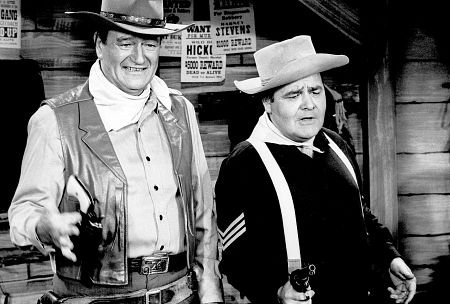
Jonathan Winters cameo Jonathan Winters John Wayne Jonathan Winters and Muppets

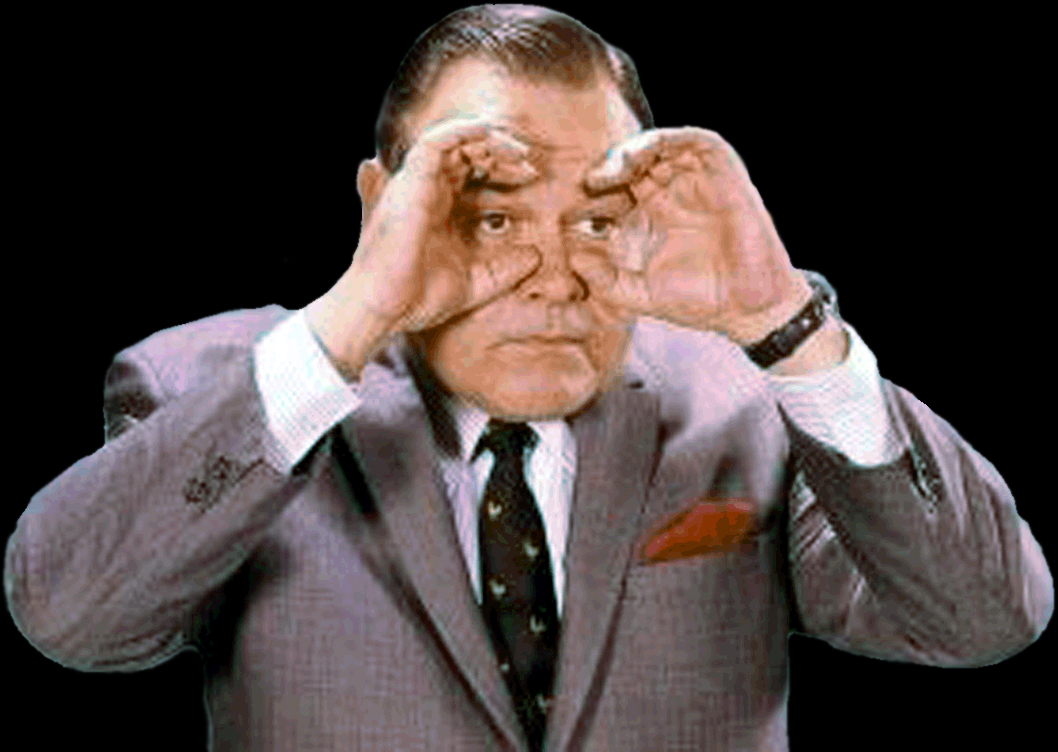
A giant passed away yesterday; a man of unsurpassed talent the likes of whom may never be seen again.

Other people practice improv. Jonathan Winters was improv and so much more.

The man could literally make me wet my pants with laughter. He could not be stopped once he hit his stride, which was usually on his second step, and the more you threw at him, the funnier he became.

He wasn’t funny for the sake of being outrageous, as so many improv people can be. He said things. Implied things. Made you think long after you stopped laughing, but without being on-the-nose or preachy. Every character he created was someone you knew, you’d met, you’d watched.

He made everyone around him try harder, to raise their game, whether he intended it or not.

In a famous Letterman interview, Winters and Robin Williams began to play. You want to see love? Look at the expression on Williams’ face. That is love, adoration, worship, friendship and a ship-load of other emotions all balled into one irrepressible face.

Winters had his demons, as most comedic and artistic talents do, but those demons made his talent that much bigger.

I love you Jonathan Winters for the joy you brought to my life. And as with Robin Williams, I too wanted to and still will do better, strive higher, reach further for having had you in my life, if only through a television or movie screen. I want to make you proud, even if you never knew I existed.

I will miss you.

(these images are used without permission)

Book larnin’

Last week, one of my fellow bloggers expressed interest in screenwriting and wondered if I could recommend any good books to help him navigate this format of storytelling, and I promised to do it in a future blog post…well, guess what?

To be honest, my first piece of advice to anyone interested in getting into screenwriting would be to simply tell your story in whatever format comes easiest to you. Because, as I’ve said in a previous post, the most important thing is story. No matter how well formatted your screenplay, if your story doesn’t work, it doesn’t work.

Okay, that soap box being out of the way, my next advice is to take a class in screenwriting, because no matter how much you think you’ll write, there is nothing like the pressure of a deadline for 10 more pages to keep you motivated. And ultimately, until you’ve heard your pages read out loud, you have no idea if you’re getting your thoughts across or using the right words.

So now, on to books. There are few really good books to tell you what a script should look like, so I recommend you simply try to get your hands on several different scripts, whether film or television (although pick your preferred medium, because there are differences in presentation). There are several places on the Internet where you can get free scripts (and when I remember what they are, I will tell you), but for those with a couple of bucks to spare, I highly recommend Planet MegaMall for their breadth of scripts that you can purchase rather cheaply.

No one book will give you everything you need, so I recommend sitting in a bookstore and perusing as many books as possible to see which one fulfills some unconscious need today. Then, repeat the process several weeks later, because your unconscious needs will have changed.

For the best understanding of story as a whole, you can’t go wrong with Chris Vogler’s The Writer’s Journey. Using mythic structure, Vogler breaks down story into its key components and then contextualizes those concepts using popular movies. Knowing almost nothing about screenwriting, I wrote my first screenplay using these elements as a template.

To get more into the structure and execution of screenplays and plots, then Linda Cowgill’s The Art of Plotting is very good. Written very approachably, Cowgill goes through the fundamentals of a good plot (e.g., conflict, character, action) and helps you understand where your story may be faltering or be improved.

A little more into character and how character changes through the screenplay, Dara Marks’ Inside Story helps you understand the concept of theme, which will lead you to better understand the motivations of your characters. In a similar vein is Stanley Williams’ The Moral Premise, which examines how opposing forces within and between your characters will move them forward in your story and more importantly, make them much richer.

Somewhere between individual scenes and broader acts of a screenplay are sequences, which one of my instructors described as being equivalent to book chapters where a single idea is explored before moving to the next one. Paul Joseph Gulino’s Screenwriting: The Sequence Approach is your guide here, helping you pull your scenes together into the right order.

And the chief poobah of screenwriting books is Robert McKee’s Story. I was actually afraid of getting this book for quite some time as people warned me that reading it too early would make me too intimidated to keep writing. I can see where they were going, but it’s not that McKee’s writing is difficult to follow, it’s more that he talks about a huge variety of topics. Suddenly, you realize how many balls you’re juggling when you’re writing a screenplay.

Ellen Sandler’s The TV Writer’s Handbook is a great step-by-step, but you have to do the exercises to make it worth it. Pamela Douglas’s Writing The TV Drama Series is a little dated but still gives a fantastic overview of hour-long programs, spending the bulk of its time on how to break down and analyze a program, before it gets into actually writing an episode.

Scott Sedita’s The Eight Characters of Comedy is an interesting analysis of comedic archetypes in sitcoms. Written more from an actor’s perspective, it still offers valuable insights to the writer trying to understand or create characters. And finally, Peter Desberg and Jeffrey Davis’s Show Me The Funny offers amazing insights into how the minds of comedy writers work, but even more importantly, shows you that no two people will develop the same story from the same premise…so don’t sweat starting with cliché ideas.

That’s a lot for a first kick…I hope you find something in here to get you started.

Shoot where the goalie isn’t

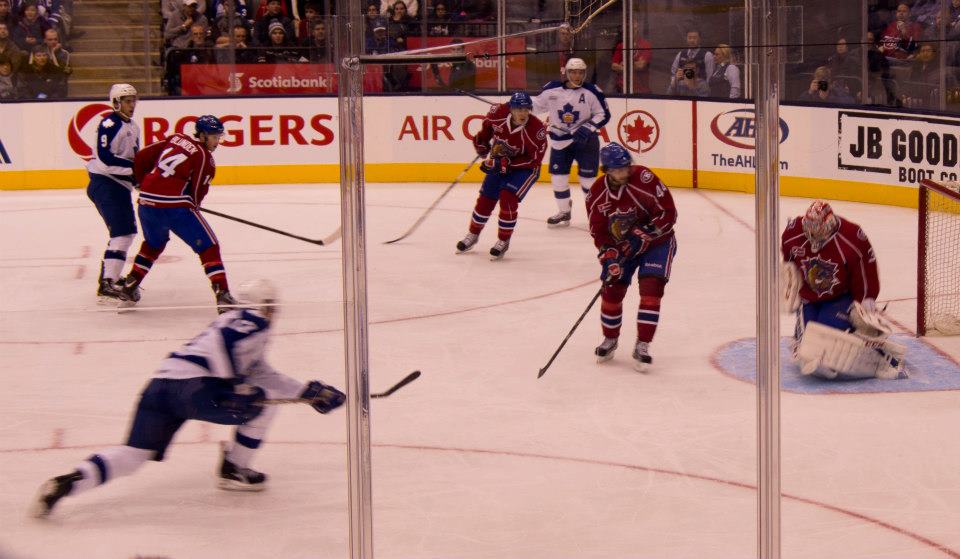
I’ve spent a lot of time in ice rinks watching beer-league and kids hockey and one thing that has amazed me is how often players will shoot the puck into the goalie’s chest. We all know that the object of the game is to get the puck past the goalie, but for whatever reason, our shot is drawn to the goalie rather than to the net. It is as though the goalie secretly inserted a small metal bar in the puck before the game and is now wearing a strong magnet under his or her pads.

Image


(American Hockey League; Toronto Marlies vs. Hamilton Bulldogs)

I’ve also decided that on a typical office trash can, the rim of the can generates a gravitational well. I say this because, no matter how often I throw a wad of paper into the can, from whatever angle or distance, I am more likely to hit the rim of the can than I am to sink the shot or miss completely. Something must bend space because if you look at the volume of the universe taken up by the rim and compare that to the rest of the frickin’ universe, it doesn’t make sense that I would hit the rim so often.

Of course, another explanation for both of these phenomena is that humans have an instinctive fetish for what we can see; that we are unconsciously drawn to the tangible to the detriment of the intangible.

The reason I wax on about this is because I believe what is true for trash cans and hockey games is also true for creativity.

After rehearsals for a sketch comedy show for which I write, I was drinking with some of the actors and one of them asked me how I came up the ideas for my sketches. How did I take a relatively mundane scenario and find just the right moment and way to skew it to elicit humour?

For me, I said, it’s about perspective and being able to ignore the hard edges of reality to see relationships no one else has bothered to see.

Image


(Photo taken in Barbados)

Too many of us get hung up on what we see, what sits before us in all its light-reflecting, retina-stimulating glory. We see reality and get stuck on that being simply what is. Reality just is. There’s nothing else other than it.

Sitting across from her, I described the wide-eyed reality I saw.

In the foreground was sugar packets, salt and pepper shakers, the table, my beer glass, her beer glass. Slightly behind that was her, the barely restrained frenzy of her hair, her facial expression, the curve of her neck, shoulders and arms, her clothes. Behind her, a table of four animated people sharing a night out (won’t go into details) and behind them, a window onto a busy Toronto street; sidewalks, pedestrians, traffic, storefronts.

I then squinted my eyes and all those hard edges faded away to be replaced with a visual melange. I could not tell where my friend ended and the woman behind her started. Vague shapes of pedestrians blebbed out of her head, like animated thoughts or alter-egos escaping into the night.

Image


(Photo of a fountain on Toronto’s Canadian National Exhibition grounds)

My perspective had changed, so my reality had changed. I no longer saw a goalie blocking my shot or a trash can rim siphoning wads of paper from the vaster universe.

However it is accomplished, I think this is what separates open creatives from the rest of humanity, and by creatives, I mean not just artists (writers, painters, photographers, etc) but also entrepreneurs and technology innovators. They understand the lowercase nature of realities rather than Reality.

The altered perspectives are there for anyone to see—and everyone’s perspectives are going to be different—but it is the creatives who choose to look for them. We can see where the goalie isn’t and choose to shoot there.

Image

(The Toronto Marlies beat the Hamilton Bulldogs at Toronto’s Air Canada Centre)


Words in other people’s mouths

I’m not an actor. I cannot act. Actually, that’s not exactly true.

I am an extreme introvert who has learned to live (and thrive) within an extremely extroverted world, so I can technically act aka hide my true identity behind a false façade.

But what I mean by acting is the theatrical form. Give me lines to memorize and my brain fries in mere seconds. I can say the line, I can emote or I can move my body across the stage…ask me to do any two of those at the same time, however, and we have issues.

I can do improvisation. I love improvisation.

The thrill of trying not to anticipate what your stage partners are going to do but instead simply react to what they have done and add to the reality of the situation is an adrenaline high of which I cannot get enough.

And the typical improv audience is a forgiving lot because they know you’re making this up before their very eyes. In fact, they will actually ask you how you prepare for an improv show and sit amazed when you tell them that you arrive at the venue slightly earlier than they did.

But even improv has its self-imposed pressures, because at the end of the day, you have to respond to your colleagues and say or do something. A couple of years ago, however, I found a work-around for that.

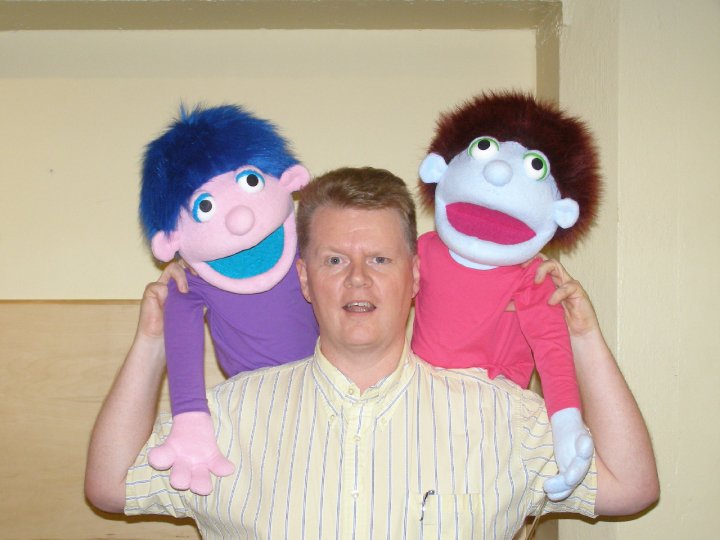
A friend of mine introduced me to puppetry improv. In this case, we put Henson-style puppets onto our hands and created amazing scenes with characters that didn’t exist until mere seconds ago.

It was magical.

Image

The minor act of picking up a puppet and letting it do the talking gave me enough distance that I was free to think and do anything I wanted without fear of recrimination. People stopped watching me and immediately followed the puppet. Whatever the puppet said was funny or poignant or shocking. Even saying nothing spoke volumes.

And if I thought improv audiences were generous, oh my God! Puppets can get away with murder! There are no taboos.

Which brings me to writing.

As it was with the puppet, so it is with writing characters for screenplays, stage plays or novels. I have the freedom to write anything, to say anything, because ultimately the words are the responsibility of the characters I create.

Maybe this is a sign of a need for medication, but when I write a character, I hear his, her or its voice in my head. Change the character and the voice changes.

By moving the focus off of me—my skills or lack thereof, my insecurities, my knowledge—I free myself up to pursue something bigger.

Or at least that’s what I’m telling myself. It seems to be working for me.

Who is this guy?

Without putting too fine a point on it, I have been trying to discover the answer to this question for almost 50 years and I don’t feel that I’m any closer to an answer.Image

I’m a writer. I’m a photographer. I’m a creator. I’m a distiller.

I write comedy. I write tragedy. I write technical. I write lyrical.

I photograph nature. I photograph society. I photograph the concrete. I photograph the abstract.

I think. I feel. I fulfill. I surprise.

And tomorrow, I will do it all over again.

When I am gone

When I am gone to join the dead,

I only hope it will be said

That I was quick if but with tongue

And from each word I too much wrung

A meaning lost or malaprop

If by the speaker a hint did drop

About something that was not said

But close enough to turn them red.

With words did play and contradiction

To turn your fact into my fiction,

And from one end of what you spoke

Would I reword to make the joke.

But whether you bethought it funny

Or at most insipid pun, I

Cared not truly if you laughed

Nor bothered if you thought me daft

But smiling delved at my own leisure

For another verbal treasure

But when I’m gone, and games have ended,

Please check with those I have offended,

For as it seems to be my lot,

I was much more than likely shot.Image