Thanks for listening

Just found out that I have 1,003 likes on my blog in just over a month, so I’d like (ha!) to thank everyone for their support and interest.

Image

And, because no good deed goes unpunished, I’d also welcome you to check out some of the other venues where you will find me spouting nonsense (gotta pay the bills, you know).

Toronto Marlies page at Maple Leafs Central – news from the American Hockey League team

Drug Discovery News – commentaries and special features

ImageImage

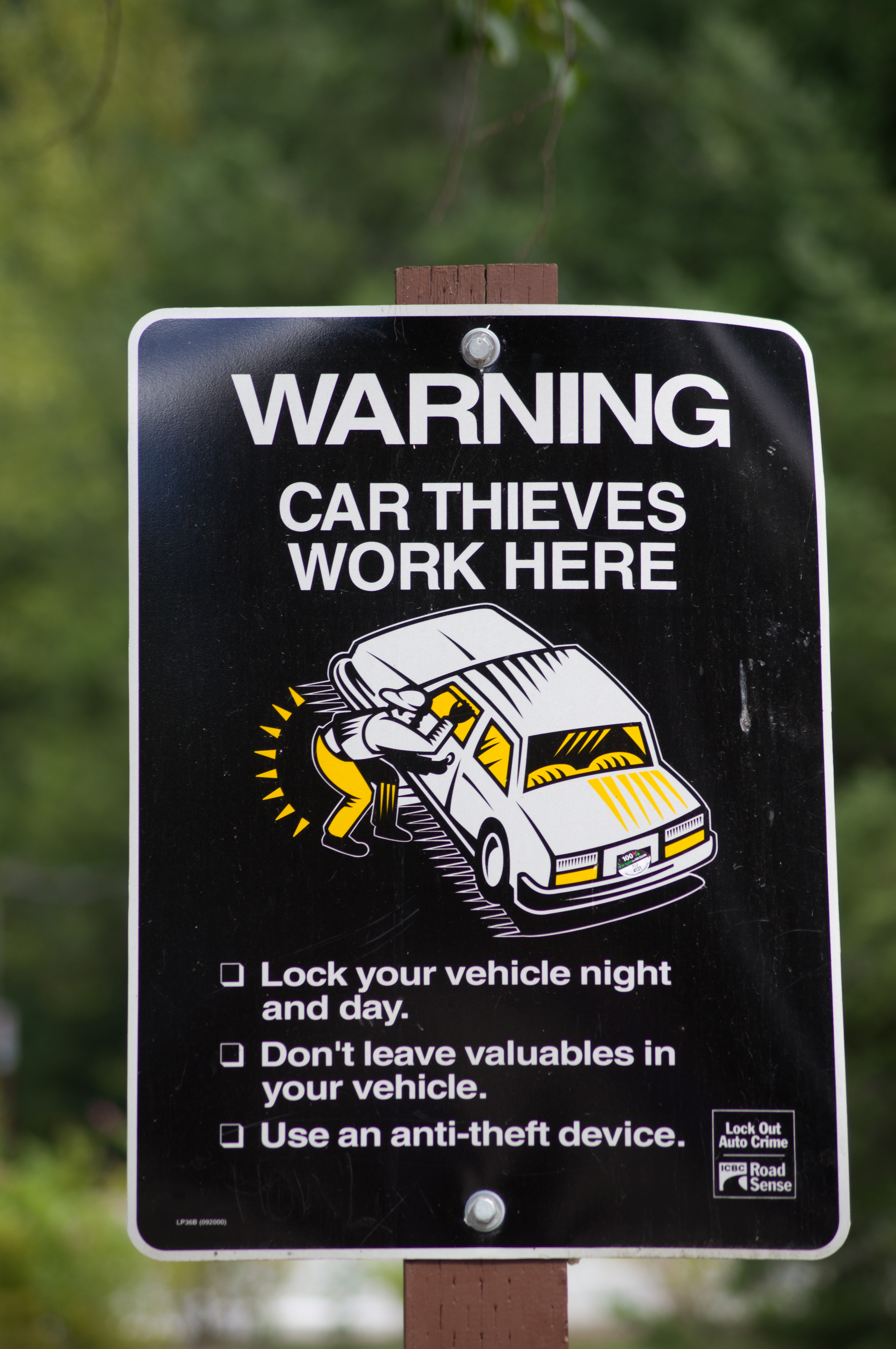
Covering your ass-ets

So often, when I start a new series of classes or attend a conference on screenwriting, I hear the same refrain: How can I register my stuff so no one steals my ideas?

And, as logic would dictate, the question always comes from the most junior writers in the room, if they have yet to write at all.

There is no denying that the universe is a dangerous place. Global climate change necessitates we choose higher floors in a high-rise to ensure our laptops are not flooded by rising sea levels. I always write with my back to the wall so that people in the condos across the street can’t take telephoto shots of what I’m writing. And whenever I publicly speak the word “tadpole”, I actually mean screenplay…likewise, “garlic”, “symbiont” and “purse” for protagonist, antagonist and onomatopoeia. (Don’t bother memorizing those; I have already changed them.)

All in an effort to make sure that no one steals my ideas. They are mine. I created them. They are owned by me. (Much as with Miss Ann Elk’s theory about the brontosaurus.)

Ah, but wait a tic. Just a mo’. Hold your horses and tell them that you love them.

I forgot one teensy little thing.  A bit of a fly in the old ointment. You see: YOU CAN’T PROTECT IDEAS!

1) I defy you to actually show me a completely new idea, and not just something old that you’ve redecorated.

2) The idea is not the important bit…it’s what you do with the idea. Give 12 people the same idea and you will end up with 12 very different stories.

3) There is every reason to believe that your idea is shit. No offense intended. Most of my ideas are shit. That’s how you find the truly brilliant ones, by moving the shit out of the way so the good ones are more visible. (See also: Miss Ann Elk’s theory about the brontosaurus.)

I applaud you for having ideas, shit or otherwise, because it’s not easy to do and is a valuable first step in your art. But not until you’ve completed your story, however, do you have something to protect.

You have completed your story, haven’t you? If your idea was solid, then you should be anxious to tell the story. If your idea is good, I want to hear your story. Seriously. No kidding. We need more good stories.

The story—not the idea—is where you will shine as an artist. The story tells me everything about you. It puts multiple facets of your personality and belief system on display and says: Hey universe! Here I am!

That, my friends, is worth protecting. That is what you register somewhere so that no one can tell exactly your story without your permission.

Once you’ve reached that point, I then recommend:

Writers’ Guild of America – West (web site is easier to use than the East chapter)

Writers Guild of Canada

The organizations have a reciprocal agreement, so registry with one is sufficient for both the United States and Canada.

Unfortunately, I only know of these two organizations, so if anyone wants to contribute others in Europe, Asia or anywhere else, please do.

Yes, you want to protect your assets, but you’ll be a lot better off putting your energies into creating assets that are worth protecting.

Fort Knox isn’t meant to be a kitty litter box.

A strange jobs program in British Columbia. (Whistler)

A strange jobs program in British Columbia. (Whistler)

Write…as rain

I write.

I write because I love playing with words.

I write because my head will explode if I don’t.

I write to explore ideas.

I write because I’m interested in a lot of stuff.

I write because I’m a narcissist.

I write because the stories flow through me.

I write because I’m funny (some of the time).

I write because I have thoughts worth expressing.

I write because the blank page beckons.

I write to release my pain.

I write to share my joy.

I write to add beauty to the world.

I write to keep moving.

I write to share the magnificent visions I see.

I write to exorcise and exercise the voices.

I write to play.

I write because I am a writer.


Why do you?

Behind fences

As you may have noticed, I like to take the mundane in life and move it in a whole new direction, exploring avenues that are not obvious at first blush.

Such was the case with a series of scenarios that I photographed recently in Alexandria, Virginia, and Washington, DC.

The word was “lemon”

A short piece written at a local Flash Fiction show.

That old beater my dad kept in the barn hadn’t run in all the years that I could remember, but it made a hell of a playground for the kids in the neighbourhood.

One day, it was the Batmobile, screaming out of the Batcave as the Caped Crusader and his gender-neutral sidekick were off to feel all funny down there at the sight of a leather-clad Catwoman.

Other times, it was Sir Francis Drake’s Golden Hind, plying the English Channel looking for Spanish galleons or sliding on the breeze through the Caribbean, searching for buccaneer plunder.

But most of the time, it was just my dad’s old beater, sitting there year after year, slowly filling up with mouse droppings or owl scat.

I remember one summer—I was about six—when my dad and grandfather tried to get the old car running. I learned a whole new language that summer, although it was about four years later before I found out that motherfuckingsonofabitchdickwadcrankbitch wasn’t one word.

That was the summer that we found out that cats like to crawl under the hood of a car and nap on the motor. You wouldn’t think it would be hard to get cat fur out of a fan belt, but you’d be wrong. Mom never really liked Mr. Wiggles anyway.

That was also the summer that dad went away. Whenever I would ask my mom about it, she would just cry, and my grandmother would try to distract me with cookies. So now, not only do I not know what happened to my father, but I am also a 300-pound diabetic.

Maybe that’s why I kept the car, as a reminder of the man I never got to know. Mom just shakes her head and my wife wonders why I don’t get rid of that old lemon. I dunno. Maybe they’re right.

All I know is that sometimes I’ll go out late at night to sit in the car and if I’m really still, I can still hear the sounds of the wind rippling in the sails and the sailors pulling on the rigging. You know, I never noticed how much my dad looks like Sir Francis Drake.

Drake protects the shores of Toronto from marauding pirates

Drake protects the shores of Toronto from marauding pirates

Writer’s Block-ed – Part Two

In Part One, I discussed the idea that the only difference between creatives and non-creatives or people who are blocked is a psyche filter that has become clogged; a filter that sits between thoughts generated deep within and expression of those thoughts to the outside world.

Below, I offer some thoughts on what I have found effective in unclogging that filter.

Step over it or go around it. Nowhere is it written that you must solve this problem right now. Depending on the nature of the project in which you find yourself stuck, is there an opportunity to simply mark a placeholder for where you’re stuck and move to the next part? Personally, in any creative endeavour, forward momentum is key and once lost is hard to regain. It’s easier to push a car that is already rolling than to get one rolling. A number of my manuscripts contain notes to myself along the lines of [something exciting happens here].

Likewise, for a written work, don’t feel like you have to solve all of the plot details early on. I had one screenplay that required my protagonist be in disguise. I had no idea how to do this logically, but proceeded as though it would come to me later…and it did. If you’re in a good space, the spirits will guide you and you will find your answers. But you have to be open to those answers.

Walk away. For most of us, these are very personal projects the only deadlines for which we hold internally. So, screw the deadline. Walk away from the project for a bit. Go see a movie. Read a book. Listen to music. Go for a run.

The longer you focus on the problem, the more inflamed it becomes until it becomes a creative cancer. Let it rest. Give the rest of your brain something to do. Let it do the heavy lifting for a bit. You may just find that the rest of the brain has ideas your creative centre wasn’t able to deal with and those ideas may just sneak past the filter (so have a notebook in your pocket, just in case).

Move to another project. I think a mistake a lot of new writers make is only having one project, as that blows the importance of the project way out of proportion. At any given moment, I have at least a dozen different creative projects on the go, at various levels of completion. That way, the minute I see the first signs of boredom or frustration with a project, I can move to another one to maintain my personal forward momentum. Perhaps the one thing that clogs a filter quickest is creative fallowness as lack of movement breeds insecurity.

The nice thing about working on multiple projects is that the creative act on one project often stimulates the creative response on another. You may have your answer to project one; you may not just be able to see it until you work on project two. Which leads me to…

Try another creative activity. Creativity breeds creativity. For me, photography stimulates writing (I suspect it works the other way, too). When I’m taking pictures, I am focused on the task at hand, the object on the other side of my lens, but because I am a storyteller, part of my brain is applying context to that image. You may have seen examples of this in some of my other blog posts. It allows me to visually tap into other emotions and contexts not previously obvious in my mind and those may inform my writing dilemma.

The key is to actively engage your brain. If you want to do something more passive like reading a book, as suggested earlier, try reading it aloud. Forcing yourself to actually engage with the written material will stimulate different parts of your brain, including your auditory centres. Responding to the movie screen, however, will likely get you thrown out of the theatre.

Hang with other creatives. First off, I don’t think there is anything inherently wrong with a pity party. It can be good to commiserate and share war stories from the trenches. It helps us to understand that we are not alone and that there is another side to the current blockage. And who better to help you with that than fellow members of the society.

Likewise, simply sharing your dilemma opens the floor to multiple brains with filters at various stages of clogging. Hopefully, around the table, there is enough creative force to blow the walls of those filter pores and clear things out. Yes, it’s your project, but you don’t have to do it alone.

If you think screaming at the gods will help break your writer's block, give it a go! (Photo taken in Hope, BC, ironically enough)

If you think screaming at the gods will help break your writer’s block, give it a go! (Photo taken in Hope, BC, ironically enough)

Writer’s Block-ed – Part One

Anyone who has stared at a blank page or screen and been incapable of adding words to it understands the living nightmare that is writer’s block. The whiteness of the sheets or the blinking of the cursor mocks you as you struggle before it, desirous of wondrous expression but incapacitated and mute. You feel incapable, devoid of ideas, and worry that your creative ju-ju will never return.

But are we correct in feeling this way? What is writer’s block?

To my mind, the only difference between creatives and non-creatives is a willingness to create. We all have it within us; it is just that some of us move unbridled to the fore while others linger back. It is as though there is a psyche membrane or filter that separates us, or perhaps, to be more granular, it separates thought from expression.

Think of any filter in your house. The air filter in your car, for example. The filter keeps particulate matter—dust, dirt, debris—from damaging your engine while still allowing air to reach the combustion cylinders that convert fuel to power. When that filter gets clogged, however, less air can reach the cylinders and therefore the car underperforms or does not run at all.

I think the psyche filter works similarly but with a twist. In creatives (and likely in children), the filter is clear and wide open, allowing thoughts generated deep within to pass through freely and find expression in the outside world.

In non-creatives and people experiencing writer’s block, it is less that the pores of the filter have become clogged, so much as the pores have shrunk to microscopic size—a self-clogging filter, if you will. This prevents almost all of the generated thought from reaching the surface to be expressed.

You are generating ideas, but for whatever reason, your filter is keeping you from letting them free.

Alternatively, the filter works more like the car filter in that your psyche requires stimulating input to convert brain energy to creative power. In creatives, the filter lets in everything (or a large part of everything), whereas in non-creatives, again, the pores are too small to let anything more than the rudimentary information needed for survival enter and so the creative engine stalls.

In either case, the capacity to generate thought and to express those thoughts is the same in both groups of people. It is the nature of the filter that distinguishes us.

I wish I could present you with the secret answer for unblocking that filter when it becomes troublesome, but the working mechanisms of each filter are unique, yours attuned to your psyche.

In Part Two, I’ll offer some thoughts on what I have found effective in dealing with a clogged filter. They don’t always work, but by having multiple outlets, I hedge my bets that something will work.

The following gallery explores colour at one of my favourite buildings in Montreal, the Palais des Congres.

The match

As I strolled through the streets of Washington, DC, I came across this amazing sculpture, although to call it simply a sculpture or statue was to short-change the artist.

Before my eyes (and the lens of my camera) a small scene played out despite the participants’ inanimacy.

(Yes, I make words up. I’m a writer, it’s what I do. Same relationship as intimate to intimacy.)

Sloppy Seconds™

Do you have trouble coming up with original ideas? Do you think you suck because your ideas blow?

Well, worry no more. Let me introduce you to Sloppy Seconds™, the concept that’ll put spunk back into your body.

Sloppy Seconds™ is all about taking what somebody else started and going one step further for a bigger finish. It’s about taking the worry out of satisfying those opening urges and putting all of your focus on the climax. Ideas that will send a chill down everyone’s spine and get them crying out for more.

How can I enjoy Sloppy Seconds™, you ask? Well, let’s get the ball rolling.

You know that feeling when something is on the tip of your tongue, but you can’t quite put your finger on it? Well, let somebody else swallow the responsibility of getting things started. Let them put it out there and once it’s on display, grab hold of it, take it all the way in, and make it yours by adding that special little something you have inside you.

If you do that, you’ll find everyone leaves satisfied, and if you go at it long enough, perhaps even sated.

And who knows? When you’re done with it, someone else may come along and make it theirs with a sloppy third. The more people who pile on, typically, the better it gets and the more fun everyone has.

So, the next time you find yourself frustrated, blocked, unable to get things started, give Sloppy Seconds™ a try. Your hands may get tired, but you’ll have a smile on your face.

Sloppy Seconds™: Coming to a location near you.

Image

BTW: This is talking about brainstorming…you know, starting with someone else’s creative idea and then adding your own personal spin to get a story started. I’m not sure what you were thinking about.

Unpacking baggage – Part Two

In Part One, I discussed the idea that to understand any characters you create and to make them more alive to your audience, you need to understand their baggage, the emotional and psychological events of their past that informs/moulds their behaviours and responses today. Today, I want to talk about making sure you let your audience in on the cosmic joke.

A couple years ago, I wrote a pilot episode for a new sitcom that I was developing—and still am; oh producers, where are’t thou?—and I asked my long suffering wife to read the teleplay.

My concern, I explained, was that of the four main characters, I didn’t feel I had a handle on three. The protagonist I nailed—knew him inside and out—but the other three seemed a little superficial. I wanted a second opinion, though, in case I was just being hard on myself.

Upon reading the script, she asked me a question. [SIDEBAR: Keep all friends who ask questions before offering opinions.]

Which of the four characters did I think I was most like? The protagonist, hands down. She smiled.

Based on her single reading without any background information, she proceeded to describe the other three characters in the script. And nailed them! She matched almost perfectly what I had had in mind for them.

But as was her wont—never in a malicious way—she then burst my bubble by telling me that she had almost no clue as to who the protagonist was, other than he was very similar to me. Without the benefit of 10 years of marriage, the protagonist was a black box. A name followed by narrative action or dialogue.

We walked through scenes and I explained motivations. My explanations made sense to her, but they weren’t on the page. My protagonist was so close to me that it never occurred to me that things weren’t obvious.

More recently, I’ve had the pleasure of reading other people’s developing screenplays, and very often, one of the problems I find as a reader is that I don’t have a clear vision of a character’s motivations in a scene. Why did they do what they did, say what they said?

One fellow student in particular I pressed for explanations about some characters in her otherwise amazing script (which horrified the bejeezus out of me btw). She waxed eloquent on her characters’ motivations and histories, offering amazing little vignettes from their pasts that helped explain why her characters were now behaving as they were.

But it wasn’t on the page!

Before I go further, this is NOT a call for more flashbacks (or cowbells). I am addicted to flashbacks, so I understand their power. Please avoid unless it is really there to move your plot along and not just a underhanded form of exposition designed to keep you from having to learn how to write subtext.

My recommendation to my friend, and something I will do on occasion, is to actually write out those vignettes, full narrative and dialogue, but only for myself and not for inclusion with the screenplay. Don’t just think about them, though. Actively write them out. For it is the act of writing that you will find the emotion of the scene, and it is that emotion that will provide the subtext of your screenplay.

That emotion will inform your dialogue and narrative word choice. That emotion will mould the flow and cadence of your dialogue (e.g., short, terse response vs. raving diatribe). It will also help inform how other characters will respond.

As I have experienced, having this information in my head makes it an intellectual exercise, with all of the cold aloofness that goes with it. But putting it on paper forces you to acknowledge and release those demons. It activates your lizard brain, as another friend of mine liked to call it. It is more visceral, more real.

It also has the added benefit of giving you something back to which you can refer when working on the story after six months of doing something else.

When someone reads your work or an actor performs it, you want to make it as easy as possible for them to get your characters, to understand the turmoil in which your characters function. Except at the highest levels of your story, do not ask your audience to think. It takes them out of the story.

You want them to feel the anger; the amusement; the sadness. If your protagonist is being oppressed, you want your audience to feel angry at the mistreatment, frustrated by the inability to change what is happening, and vindicated/exhilarated when your protagonist triumphs.

They can think on the way home from the theatre or after they close the back cover of the book.

If it is not on the page, none of this will happen. You audience will not engage and your story will suffer.

Sure, it sounds like extra work—it is!—but you’ve already invested this much time and effort on your story. Do you really want to risk that being all for nought because you’re the only one who gets why this story is important?

Who is this man and what is he thinking? What is he waiting for? If he looked at me, would I see boredom, anger, fear, joy?

Image

(Taken in Tofino, British Columbia.)