Dildo out of water

In writing, one of the tips for jazzing up your story is to put your character into an odd situation and watch how he or she deals with the new circumstances. In comedy, we call this being a “fish out of water”.

While traveling through Iceland a year ago, I got to see this on a grand scale. While wandering around a large pond in downtown Reykjavik, I was surprised to find a large dildo in the middle of the sidewalk—it was a few days after the end of Pride Week, so I could only imagine where it came from.

On Golden Dong (near the pond in Reykjavik)

On Golden Dong (near the pond in Reykjavik)

Realizing there was an opportunity here, I sat on a nearby bench and spent an amazing hour or so watching locals and tourists come upon the vulcanized penis. It was a magnificent chance to people-watch and learn about the range of emotions.

Some were disgusted. Some were anxious for their over-inquisitive children. Many were amused. Most arrived quietly and left highly animated.

I’m not sure what this says, but I seemed to be the only one who took a photo of it.

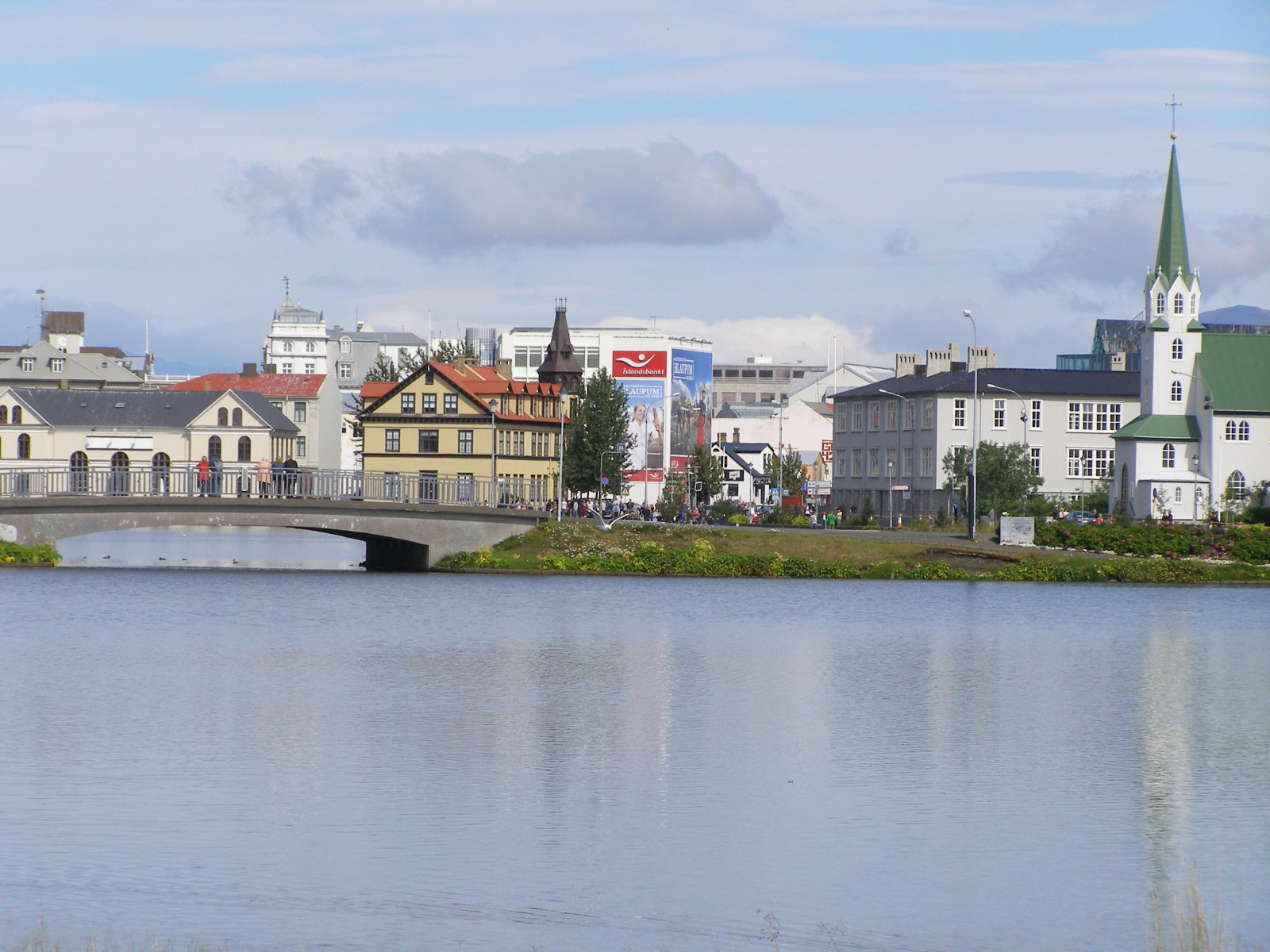
As a North American, I was not used to the beautiful simplicity of a European city (Reykjavik)

As a North American, I was not used to the beautiful simplicity of a European city (Reykjavik)

The pond in Reykjavik was a magical place to write and think

The pond in Reykjavik was a magical place to write and think

Maps quest

In another life, I could have been a cartographer. I simply love maps.

Road maps. Old maps. Topographical maps. Biological maps. I love maps.

It is probably truer to say that I love visual information presentation, but let’s stick with maps.

Image

As a kid, I remember staring at maps that came out of the National Geographic or in my books and literally tracing the courses of rivers with my fingers, trying to understand what their winding patters told me about the lands through which they passed.

I would look at maps in history books, and see how topographical features literally and figuratively changed the course of civilization. There are several reasons, for example, why Montreal sits where it does, but most of them are geographical.

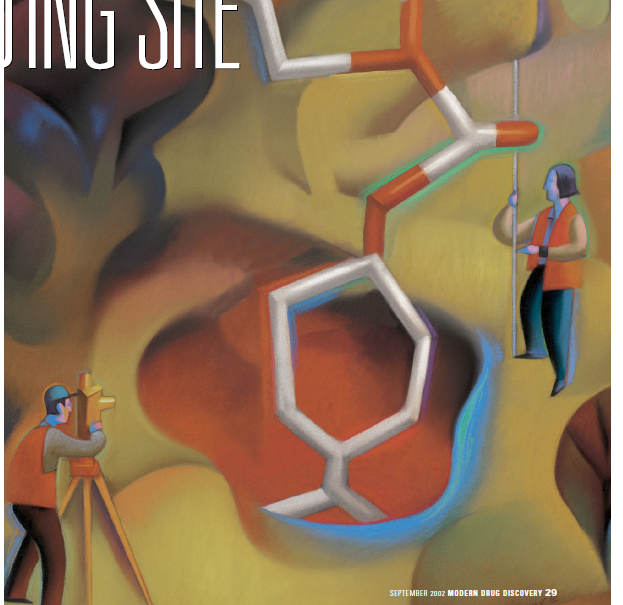
(Magazine art for my article on efforts to understand how proteins bind drug molecules.)

Image

Later in my life, I would draw maps—at first geographical, but later biological. The biochemical mechanisms that cells and organs use to communicate, to rejuvenate, to function are maps unto themselves, each criss-crossing with others, offering alternate routes to the same destination. The latter point is why diseases like cancer are so hard to treat.

Maps allow me to take journeys, but not just in the physical sense of providing direction. They also give a factual tether to my fantastical imaginings. I can go places I may never visit, understand things unfathomable, while pouring over a map.

And map systems like Google Street View have added to those imaginings. Often, when I write, I will visit the setting of my story on Google Street View to help me paint a more vivid picture of the location. Sometimes this makes my narrative sound more like a travel brochure, but that’s my fault and can easily be handled with editing. The important thing is that the reader gets the essence of what I’m trying to convey.

(Lake Maggiore in northern Italy. Setting for the climax of my murder thriller screenplay)

Image

My writing itself is a map. Like Google Street View, I am only giving the reader what fits within a specific frame, in essence guiding the reader. But at the same time, I cannot control what the reader thinks or how the reader feels as he or she journeys through my word jungles.

Just as with my childhood adventures of following rivers and mountain chains, the reader is free to layer his or her own imaginings on top of mine. And so, I have written not just one story, but hundreds or thousands.

Hunh?

I guess I became a cartographer, after all.

(Overview of my neighbourhood in downtown Toronto.)

Image

Write…as rain

I write.

I write because I love playing with words.

I write because my head will explode if I don’t.

I write to explore ideas.

I write because I’m interested in a lot of stuff.

I write because I’m a narcissist.

I write because the stories flow through me.

I write because I’m funny (some of the time).

I write because I have thoughts worth expressing.

I write because the blank page beckons.

I write to release my pain.

I write to share my joy.

I write to add beauty to the world.

I write to keep moving.

I write to share the magnificent visions I see.

I write to exorcise and exercise the voices.

I write to play.

I write because I am a writer.


Why do you?

Doubt

I have doubt.

Not in my skills, thank goodness, or the belief that with the right guidance, I can improve them steadily, but I have doubt.

I have doubt that I will find the right people to see the merits of those skills and help me to convert them into something meaningful. A video, a television program, a film, a novel, a photo exhibit. Something that I can share with all the world. Something that will touch the souls of others as the gestation and creation of the work has touched mine.

I have doubt that I can hold on to my new fantasy life and that reality, oh harsh reality, won’t poke its head into the mix and throw me back to where I was. That I will need to find resources to live, and that the need will draw me away from my art. Perhaps irreparably tearing me from it and setting me back upon the course I once journeyed of discontent and pain.

I have doubt that I won’t continue to find supporters and friends—my oh so wonderful friends—who will hold my hand on this journey. Who will provide a tether to keep me connected and yet free enough not to anchor me to the world.

I have doubt about what is around the next corner. About the shadows in the darkness. About the approaching ground in my free fall through life.

I have doubt.

But I will not let that change what I am doing. I cannot allow my doubt to prevent me from living the life I have finally discovered.

If around the corner is an oncoming train, in the shadows lay a vicious monster, and on the approaching ground shards of glass, I will not allow doubt to slow or still me.

I may not succeed in achieving my goals, but in overcoming my doubt, I will have succeeded in my journey. And for that, I will be eternally grateful and find peace.

Behind fences

As you may have noticed, I like to take the mundane in life and move it in a whole new direction, exploring avenues that are not obvious at first blush.

Such was the case with a series of scenarios that I photographed recently in Alexandria, Virginia, and Washington, DC.

Hero of a Thousand Voices

I hear dead people.

I also hear living people, imaginary people and people who aren’t even people.

I am a writer, and I am highly confused.

Since quitting my day job to commit full-time to writing, I have found the voices that run rampant through my head have amplified, in volume and seemingly in number.

Before I quit, the anxieties and activities of daily living dampened the voices, shoved them to the periphery, surely as a functioning if not coping mechanism.

Now, without those distractions, the voices push outward, stretching their muscles after years of confinement, exploring their new world with the glee of a four-year-old on a steady diet of Coco Puffs. And here I sit, trying to control or harness them, sticking my pinky in a fire hose opened to maximum flood.

I have so many stories to tell, to record, to witness. But as soon as I sit down to transcribe one, a dozen others poke their heads out of the ground; conceptual prairie dogs wondering if the coast is clear.

I’ve always believed that creativity breeds creativity. I am experiencing that in spades, these days.

I will admit that after so many years of holding it back, part of me wants to let the voices flow unchecked. I want to stand at the foot of the waterfall and let the deluge wash over me, cleansing the grime of repressed enthusiasm from my soul.

But at some point, in some way, I still have to function in this universe. I want to recount these stories to someone, and for them to be intelligible, I have to direct my journey through the eddies that buffet me.

I hear voices. And I struggle with how to deal with them all.

At times, the onslaught of voices is one more wave than I can handle. (Photo taken at Carilla Beach, Costa Rica)

At times, the onslaught of voices is one more wave than I can handle. (Photo taken at Carilla Beach, Costa Rica)

Writer’s Block-ed – Part Two

In Part One, I discussed the idea that the only difference between creatives and non-creatives or people who are blocked is a psyche filter that has become clogged; a filter that sits between thoughts generated deep within and expression of those thoughts to the outside world.

Below, I offer some thoughts on what I have found effective in unclogging that filter.

Step over it or go around it. Nowhere is it written that you must solve this problem right now. Depending on the nature of the project in which you find yourself stuck, is there an opportunity to simply mark a placeholder for where you’re stuck and move to the next part? Personally, in any creative endeavour, forward momentum is key and once lost is hard to regain. It’s easier to push a car that is already rolling than to get one rolling. A number of my manuscripts contain notes to myself along the lines of [something exciting happens here].

Likewise, for a written work, don’t feel like you have to solve all of the plot details early on. I had one screenplay that required my protagonist be in disguise. I had no idea how to do this logically, but proceeded as though it would come to me later…and it did. If you’re in a good space, the spirits will guide you and you will find your answers. But you have to be open to those answers.

Walk away. For most of us, these are very personal projects the only deadlines for which we hold internally. So, screw the deadline. Walk away from the project for a bit. Go see a movie. Read a book. Listen to music. Go for a run.

The longer you focus on the problem, the more inflamed it becomes until it becomes a creative cancer. Let it rest. Give the rest of your brain something to do. Let it do the heavy lifting for a bit. You may just find that the rest of the brain has ideas your creative centre wasn’t able to deal with and those ideas may just sneak past the filter (so have a notebook in your pocket, just in case).

Move to another project. I think a mistake a lot of new writers make is only having one project, as that blows the importance of the project way out of proportion. At any given moment, I have at least a dozen different creative projects on the go, at various levels of completion. That way, the minute I see the first signs of boredom or frustration with a project, I can move to another one to maintain my personal forward momentum. Perhaps the one thing that clogs a filter quickest is creative fallowness as lack of movement breeds insecurity.

The nice thing about working on multiple projects is that the creative act on one project often stimulates the creative response on another. You may have your answer to project one; you may not just be able to see it until you work on project two. Which leads me to…

Try another creative activity. Creativity breeds creativity. For me, photography stimulates writing (I suspect it works the other way, too). When I’m taking pictures, I am focused on the task at hand, the object on the other side of my lens, but because I am a storyteller, part of my brain is applying context to that image. You may have seen examples of this in some of my other blog posts. It allows me to visually tap into other emotions and contexts not previously obvious in my mind and those may inform my writing dilemma.

The key is to actively engage your brain. If you want to do something more passive like reading a book, as suggested earlier, try reading it aloud. Forcing yourself to actually engage with the written material will stimulate different parts of your brain, including your auditory centres. Responding to the movie screen, however, will likely get you thrown out of the theatre.

Hang with other creatives. First off, I don’t think there is anything inherently wrong with a pity party. It can be good to commiserate and share war stories from the trenches. It helps us to understand that we are not alone and that there is another side to the current blockage. And who better to help you with that than fellow members of the society.

Likewise, simply sharing your dilemma opens the floor to multiple brains with filters at various stages of clogging. Hopefully, around the table, there is enough creative force to blow the walls of those filter pores and clear things out. Yes, it’s your project, but you don’t have to do it alone.

If you think screaming at the gods will help break your writer's block, give it a go! (Photo taken in Hope, BC, ironically enough)

If you think screaming at the gods will help break your writer’s block, give it a go! (Photo taken in Hope, BC, ironically enough)

Writer’s Block-ed – Part One

Anyone who has stared at a blank page or screen and been incapable of adding words to it understands the living nightmare that is writer’s block. The whiteness of the sheets or the blinking of the cursor mocks you as you struggle before it, desirous of wondrous expression but incapacitated and mute. You feel incapable, devoid of ideas, and worry that your creative ju-ju will never return.

But are we correct in feeling this way? What is writer’s block?

To my mind, the only difference between creatives and non-creatives is a willingness to create. We all have it within us; it is just that some of us move unbridled to the fore while others linger back. It is as though there is a psyche membrane or filter that separates us, or perhaps, to be more granular, it separates thought from expression.

Think of any filter in your house. The air filter in your car, for example. The filter keeps particulate matter—dust, dirt, debris—from damaging your engine while still allowing air to reach the combustion cylinders that convert fuel to power. When that filter gets clogged, however, less air can reach the cylinders and therefore the car underperforms or does not run at all.

I think the psyche filter works similarly but with a twist. In creatives (and likely in children), the filter is clear and wide open, allowing thoughts generated deep within to pass through freely and find expression in the outside world.

In non-creatives and people experiencing writer’s block, it is less that the pores of the filter have become clogged, so much as the pores have shrunk to microscopic size—a self-clogging filter, if you will. This prevents almost all of the generated thought from reaching the surface to be expressed.

You are generating ideas, but for whatever reason, your filter is keeping you from letting them free.

Alternatively, the filter works more like the car filter in that your psyche requires stimulating input to convert brain energy to creative power. In creatives, the filter lets in everything (or a large part of everything), whereas in non-creatives, again, the pores are too small to let anything more than the rudimentary information needed for survival enter and so the creative engine stalls.

In either case, the capacity to generate thought and to express those thoughts is the same in both groups of people. It is the nature of the filter that distinguishes us.

I wish I could present you with the secret answer for unblocking that filter when it becomes troublesome, but the working mechanisms of each filter are unique, yours attuned to your psyche.

In Part Two, I’ll offer some thoughts on what I have found effective in dealing with a clogged filter. They don’t always work, but by having multiple outlets, I hedge my bets that something will work.

The following gallery explores colour at one of my favourite buildings in Montreal, the Palais des Congres.

Sloppy Seconds™

Do you have trouble coming up with original ideas? Do you think you suck because your ideas blow?

Well, worry no more. Let me introduce you to Sloppy Seconds™, the concept that’ll put spunk back into your body.

Sloppy Seconds™ is all about taking what somebody else started and going one step further for a bigger finish. It’s about taking the worry out of satisfying those opening urges and putting all of your focus on the climax. Ideas that will send a chill down everyone’s spine and get them crying out for more.

How can I enjoy Sloppy Seconds™, you ask? Well, let’s get the ball rolling.

You know that feeling when something is on the tip of your tongue, but you can’t quite put your finger on it? Well, let somebody else swallow the responsibility of getting things started. Let them put it out there and once it’s on display, grab hold of it, take it all the way in, and make it yours by adding that special little something you have inside you.

If you do that, you’ll find everyone leaves satisfied, and if you go at it long enough, perhaps even sated.

And who knows? When you’re done with it, someone else may come along and make it theirs with a sloppy third. The more people who pile on, typically, the better it gets and the more fun everyone has.

So, the next time you find yourself frustrated, blocked, unable to get things started, give Sloppy Seconds™ a try. Your hands may get tired, but you’ll have a smile on your face.

Sloppy Seconds™: Coming to a location near you.

Image

BTW: This is talking about brainstorming…you know, starting with someone else’s creative idea and then adding your own personal spin to get a story started. I’m not sure what you were thinking about.