The job you hate is killing your creative spirit

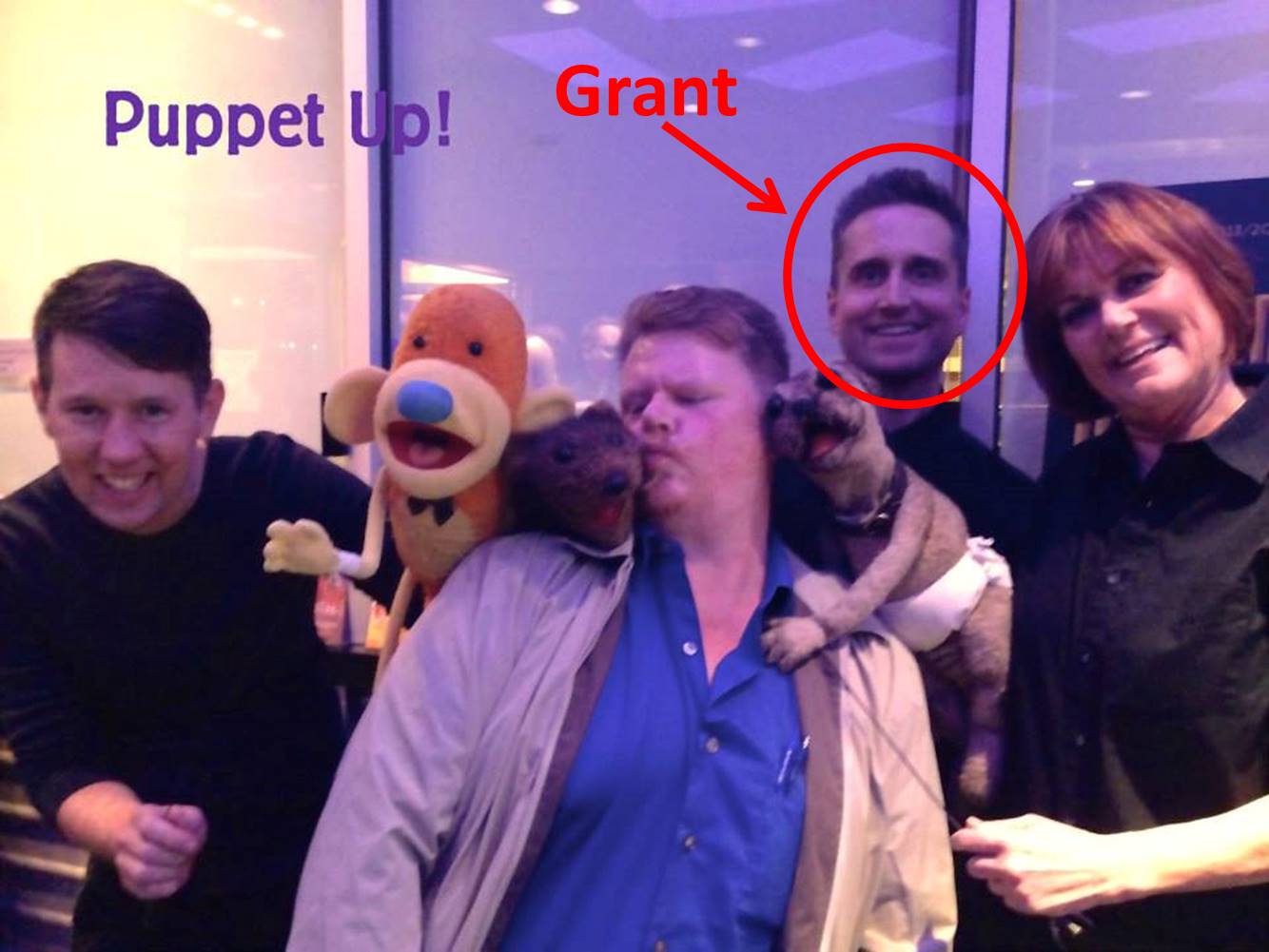
The wonderful Grant and his weasel buddy join me for a post-show photo (also shown Peggy Etra and Brian Clark).

The wonderful Grant and his weasel buddy join me for a post-show photo (also shown Peggy Etra and Brian Clark).

Grant Baciocco is an amazingly talented actor and puppeteer I had the good fortune to meet online and then in person when he came to Toronto with the improv puppetry show PuppetUp! (about which I have raved extensively elsewhere).

Well, aside from his amazing talent, he also has a wonderful creative spirit, both in the sense of what he creates and how he tries to inspire others to be open to their own inner creative spirit. To this latter point, he has a wonderful blog Grantblog: Ruminations & Pomposity that I heartily recommend.

At the beginning of each week, he posts Creative Mondays and today was no exception. Today he talked about “A job you hate”, which I excerpt below:

For years after college, about ten in fact, I worked as a substitute teacher.  It was an okay job, certainly flexible enough and I was making money, but by the end of those ten years I was starting to burn out because it was not the job I wanted to be doing.  I was good at it and several times I was told I should get my teaching credential because I was such a good teacher.  But deep inside of me I could feel a darkness building up because I was doing a job I absolutely hated.

The moment I made the decision to stop subbing and focus on The Radio Adventures of Dr. Floyd, it felt like a weight was instantly lifted from my chest.  I attempted, for the millionth time, to lose weight and it was actually working (lost 80 pounds).  I was just a million times happier than I was when I was subbing.  And guess what?  I became more creative!  This was the creative boom era for Dr. Floyd, because I was doing something I love.

Grant’s is a lesson too many of us learn very late in life (NOTE: I did not say “too late in life”…it is NEVER too late).

In my case, I was fortunate enough to have a series of occupations I loved for a period…scientist, science writer, media relations, advertising copywriter…but with each, I stayed in the occupation long after I had fallen out of love with the choice. I had to be a certain amount of miserable before I was brave enough to jump.

But two years ago, I completely jumped ship to pursue my true love: story telling (screenplays, novel, sketches, short stories). I’m still not making money off any of this, so I live on freelance magazine writing and ad copywriting. But to Tiffany’s point, it is what I do to eat and sleep under a roof.

If you are fortunate to know your passion—it can take time to figure out what it is—then you must make it happen to find happiness (hunh, “happen” and “happiness”…so similar).

And if you haven’t fully defined your passion yet, go with your gut until you do. Explore the universe of opportunities, until you do. You may not end up the financially richest person on the planet, but you’ll definitely be one of the spiritually richest.

If you don’t want to take it from me, then take it from Grant. Find your happiness and pursue it with everything you have. Despite appearances, you really do have nothing to lose and everything to gain.


You can follow Grant on Twitter: @ToasterBoy

Is writing Art?

Questions you are unlikely to ever hear:

  • How close to the edge of the canvas can I apply acrylic paint?
  • If I’m sculpting the bust of Zeus, at what moment should I work on his nose?
  • Is it okay to drum the body of an acoustic guitar with my fingers rather than pluck the strings?

Painting. Sculpture. Music. Three of the myriad art forms where practitioners typically acquire some degree of training, and then step away from that training to develop  their own style.

Art comes where the rules end

Art comes where the rules end

Questions you can fully expect to hear:

  • In a 90-page screenplay, on what page should the inciting incident occur?
  • In a poem, should I complete a thought within a line or break it up into two or more lines?
  • Can I describe more than one character’s point-of-view within a scene in my novel?

Writing.

Every day, billions of people across the planet write. Post-It notes. Shopping lists. Emails. Love letters. And perhaps because of this ubiquity—perhaps because writing is rivaled only by speech as a form of expression—the world tends to view writing in a different category from all of the other arts, assuming people see it as an art form at all.

Everybody writes, so how special can it be

Everybody writes, so how special can it be

Obviously, there are better writers and worse writers, but more often than not, that reality is viewed as difference in skill, not art or craftsmanship. It is as though the world believes that if we all applied ourselves a little more, we could all write a great novel or play.

If asked, I am confident few would think that the only difference between them and Mozart, Yo-Yo Ma or the guy playing bassoon in the subway (my friend Jeff Burke) was time in.

Certainly, most acknowledge the greatness of Shakespeare, Dickens, Moliere, Hemingway (forgive my Western bias), but those are seen as rare exceptions to the norm.

Art comes where the rules end

Art comes where the rules end

People will buy paintings on the roadside. You will sometimes stop and listen to a musician in the park. But how many of us will stop and buy a novel or collection of poems anywhere other than the bookstore or online?

And sadly, this sense that pretty much anyone can be a writer pervades the writing community itself in insidious ways, and is particularly debilitating to new writer artists timidly trying to develop their craft.

Unlike almost any other art form, to my eye, writers get hung up in the right way to do things, as suggested by the questions above. As an example, this post was prompted by similar questions raised by a novelist blogger I follow.

It is okay to emulate aspects of others’ writings, to follow certain conventions of grammar and syntax. But at the end of the day, you have to ask yourself why you write; because it is a passion within you or to please the universe?

“Write the way you want to write,” was my advice to her questions on acceptable style (my italics). “As your colleagues suggested, this is just your style and will either be liked or not liked by your readers.”

“Never be afraid to be yourself…your readers will respect that in you,” I concluded, “and anyone who doesn’t is frankly not your reader.”

No one questions the difference between the skill of painting a house and the art of painting a landscape. Why should the same not be true for writing a Tweet and writing a poem?

Writing is an Art Form, to answer the title question, and you—the writer—are an Artist.

Learn from those who have come before and who practice now, but be brave and divine your own path.

Risking it all

Risk

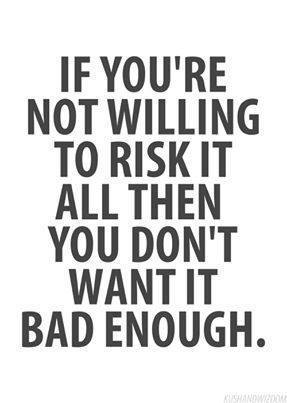
A friend of mine recently posted the above sign on her Facebook page, and I had no choice but to share it with my Facebook community (and now you). Although I find the sentiment a little negatively toned as worded, I completely agree with it.

As many of you know, I jumped off a cliff about 18 months ago, completely turning my life upside down in pursuit of the dream of being a screenwriter. To do that, I have made a large number of sacrifices to the way my life was, but in the interim, I have discovered some wonderful things—about me and my friends—that I might never have learned if I hadn’t.

Last week, I had drinks with another friend, someone who had made a similar jump to mine. Like me, he has had some wonderful times during this phase of his life, but he is also struggling with doubt and the sense that the years of effort haven’t paid off as he would have liked. Doubt is a thing I understand.

At this moment, I have no doubt or at least not about my dream. It seems as real and viable as ever. Its realization is simply a matter of time in and work on my part. I revel in these moments and wish my friend could feel the same way right now.

When doubt does creep in, however, I do my best to give it context.

The doubt: Can I afford this conference? Is this screenplay any good? Have I made a mistake? Am I a fraud?

The context: What is the alternative?

I look back at my life before I made the jump and I realize that I can’t go back to that. This is not to say that it was all miserable…I had love and support; I enjoyed aspects of my jobs; I met wonderful people. But in many ways, all of those positives were for naught back then because I was miserable.

I was living my life for other people. I based my identity on my job and what I did for other people. I was only as good, as valuable, as loved as other people told me I was, and deep inside, I truly suspected they were lying. Through no fault of theirs, I couldn’t have faith in them because I didn’t have faith in me.

So, when I finally jumped off the cliff, I realized that what I was risking was a life of well masked misery and distrust. Hardly much of a risk from my perspective.

I understand that others cannot always jump as wholeheartedly as I did. They have responsibilities that I did not have.

I have no children. My wife and I were separating for other reasons (nice to say she remains my strongest and most loving advocate and supporter). My family responsibilities had all but disappeared. My jumping would leave no one in the lurch.

So, maybe you can’t jump like I did. I’m not suggesting that it is right for everyone. But to not jump at all in pursuit of a passion is folly.

Every day you maintain the lie, whatever your personal lie is, is another day you risk it all.

It will be scary. You will have doubts. But you’re not doing anyone any favours, least of all yourself, by continuing to pursue activities, attitudes or a life that is crushing you.

I hope my friend relocates the wonder in what he is doing and continues to explore his adventure. If he will let me, I am happy to help him in any way I can.

He is a very lucky man because he is surrounded by love and support from a community of people who adore him and want him to be happy. I hope he can take energy from that. I know I do.

Sentience


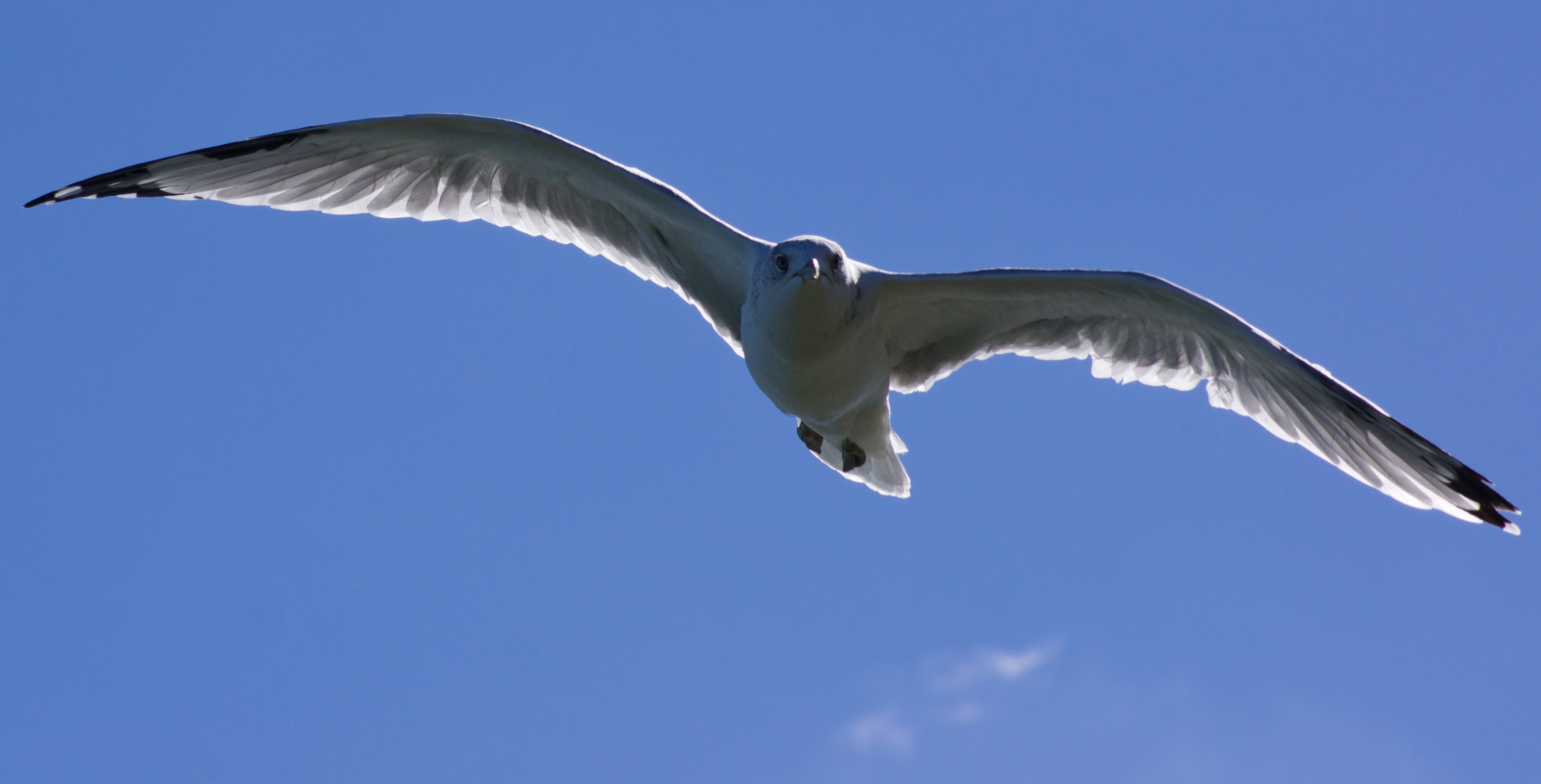
A majestic shot taken at the nearby beach.

A majestic shot taken at the nearby beach. Click on it for full effect of image.

Birds don’t think how to fly.

Fish don’t consider buoyancy.

Spiders don’t judge perspective.

Hyenas don’t debate food.

Awareness, knowledge, understanding

Are all well and good until

They become proxies for fear.

Do. Experience. Live.

10 Steps to Writing a Pilot That Sells

No, no! Not that kind of pilot. Although, cute photo. (Image used without permission)

No, no! Not that kind of pilot. Although, cute photo. (Image used without permission)

1) Watch a lot of television; especially stuff you don’t like or think is bad. This will establish the belief within you that you could write something at least that bad and still get it on the air.

2) Conceptualize a show that combines one of your siblings or cousins, the second job you ever had, and a famous moment in history. Every idea after this will sound entirely plausible; and hell, this might actually work as a sitcom.

3) Conceptualize an idea that is morally offensive to you and then see if it was one of the shows in Step 1. If not, then the market is ripe for the picking.

4) Describe the absolute worst day of your life, a day when everything went wrong. Then switch one of the disastrous elements. Then, switch another element. Do this 10 more times. Season One!

If you can’t create 13 variants, your day wasn’t that bad and your life is too good for you to be writing for television. Go write greeting cards.

5) Grab a copy of Bulfinch’s Mythology and reset all of the stories in modern-day Seattle or the smallest town you’ve ever visited. Warning: Brace for complaints that it’s a rehash of Dallas or Friday Night Lights.

6) Grab a copy of Bulfinch’s Mythology and do not reset the stories. Hell, if it worked for The Borgias and The Tudors, it might work here. Call it The Olympians.

7) Start with Episode Two, because pilots suck and you’ll never want to show it to anyone. You need to know/believe your idea works.

8) No matter what your current idea is, when you go to pitch it and you think you’re losing your audience, suddenly reveal “And the protagonist is a ghost!” Vampire, werewolf and zombie are equally acceptable.

9) Stop reading advice on writing a successful pilot and just write your story, already. There is no telling why someone in a suit will get excited by your story, but I can guarantee they won’t if you’re not.

10) If all else fails, generate a top-ten list of ways to write a pilot that will sell and use it as the basis of a book you will later turn into a sitcom.

Write…as rain

I write.

I write because I love playing with words.

I write because my head will explode if I don’t.

I write to explore ideas.

I write because I’m interested in a lot of stuff.

I write because I’m a narcissist.

I write because the stories flow through me.

I write because I’m funny (some of the time).

I write because I have thoughts worth expressing.

I write because the blank page beckons.

I write to release my pain.

I write to share my joy.

I write to add beauty to the world.

I write to keep moving.

I write to share the magnificent visions I see.

I write to exorcise and exercise the voices.

I write to play.

I write because I am a writer.


Why do you?