Behind fences

As you may have noticed, I like to take the mundane in life and move it in a whole new direction, exploring avenues that are not obvious at first blush.

Such was the case with a series of scenarios that I photographed recently in Alexandria, Virginia, and Washington, DC.

Witness

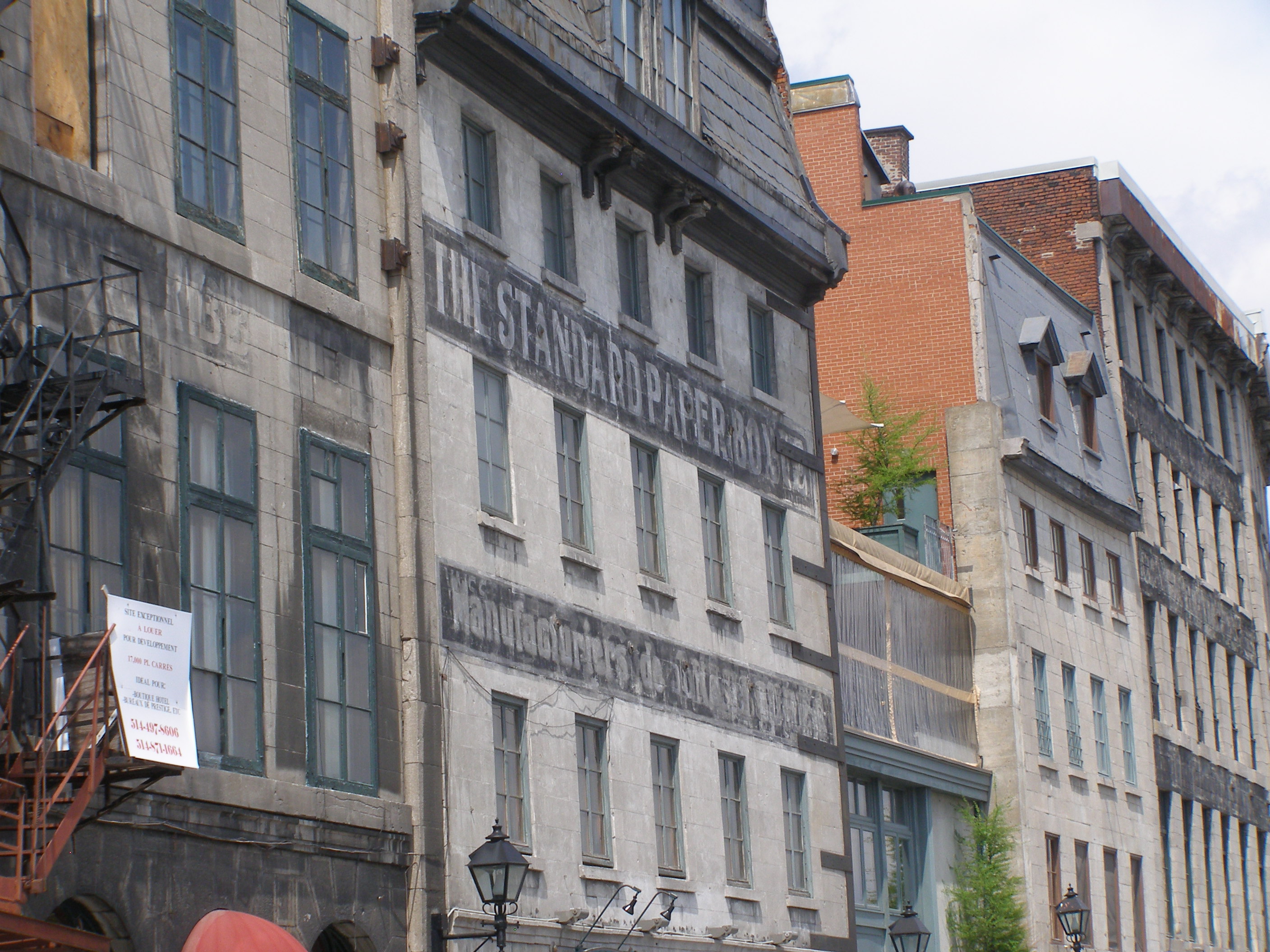
The building stands along the rue de la commune,

A sentinel on the waterfront of Montreal.

A few tourists walk by and the silence of morn

Is broken by the clack of cobblestones under the hooves

Of a horse pulling a caleche;

But the building is mute and observes.


It wears the marks of its hundred and fifty years

And hearkens back to Dickensian times.

The brick no longer white but stained

With the soot and rain of life in the city.

The windows are small, clouded irises

Through which pass the events of history.

The doors of the loading docks have been long painted shut

But the wood bears the scars of wagons poorly maneuvered.

She is a silent witness.


The wind blows ever so gently on an autumn’s morn

And the breeze passes the cracks and crevices

Of the wood and brick.

If you listen closely, you can just make out

The echoes of yesterday.

A foreman, en français, berates the workers

For being too careless with today’s papers

As they toss them into the backs of waiting wagons;

Threatening that the cost of bundles too damaged to sell

Will be deducted from their wages, mere pennies,

A meagre mouthful for the hungry families.


As your eyes scan up from the street

And you pass the windows,

You can see the signs of former residents.

Amongst the jumbled letters of words over words,

Signs painted over signs, you can still make out

The once proud letters of

Le Standard: toute la monde, tout le temps

A car drives by and the rhythmic beating

Of its wheels on the bricks echoes against the building;

Reviving the forgotten sounds of a printing press

Bringing the news to thousands of Montrealers.


Your eye continues skyward to a large bay window

On the top floor and you are startled by a reflection.

In the early morning sun, the light glints

Off dust-laden windows

And a spectre appears behind the panes.

Old Monsieur O’Toole, proprietor and publisher,

Still stands at his window, looking out over the river,

From his office and apartment above the presses.

The throb of the machines is a lullaby for the old man;

A mother’s heartbeat in the womb

Formed by the newspaper’s walls.

He smiles as he listens to the rantings of Gilles Garnier,

The foreman of the dock, remembering him

As an eager young lad who delivered the paper

For a much younger O’Toole

When Canada and The Standard were new.


These windows and this paper have been witness

To the founding of a nation,

Its history both ancient and new.

The presses have described the rhetoric of politicians,

George-Etienne, Wilfred and John A.,

Arguing the desirability of a union, a confederation.

It has announced the call to arms of Canadian boys

To fight for British guns in the fields of South Africa

And told of the death of a mighty monarch, la reine Victoria.

She has counted the bodies at Vimy Ridge

And, from these windows, has cried with joy

Of the end of the “war to end all wars”,

Only to weep at the start of the next one.

She called for calm on that infamous black Tuesday in October

And was instrumental in the programs to feed and clothe

The poor in its aftermath.


But now the building is silent,

A victim of post-war modernization;

A derelict in a sea of decay, the city fathers calling

For yet another committee to decide its fate.

A cloud crosses the sky, disturbing the light,

And O’Toole vanishes from the window.

The breeze dies and the Frankish rantings subside.

The presses have stopped and are long gone.

History proceeds.

Fading history clings tightly to the crumbling facade on Montreal's river front.

Fading history clings tightly to the crumbling facade on Montreal’s river front.
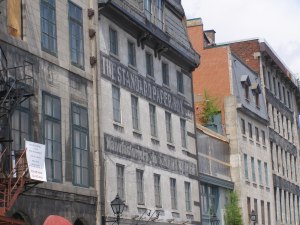
With the passage of time, Montreal's history fades into dust.

With the passage of time, Montreal’s history fades into dust.

Seascape

I sit on a rocky promontory,

Gazing over the waters of the sea.

Waves splash below me, sending a spray of water

From a sea, ill-tempered and intemperate.

Somewhere in the distance, a boat has passed

And the waves have reached the shore,

The waters angered by the disturbance.

The water reaches across the rocks

Forming pools in crevices created at an earlier time;

Eroding a little more stone to become

The sand of some far off beach.

In an endless rhythm, the waves strive

For the beach and are mercilessly drawn back.

A twig is caught in the ebb and flow

Never certain when it will get thrown

Too far up the sands or finally drawn

Into deeper waters to voyage somewhere else.


Caught in pools, between the larger rocks,

A microcosm has formed of predator and prey,

A world of colour and beauty, life and death.

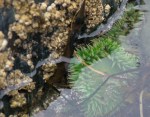
The flowery anemone, waving in the eddies,

Await their prey with numbing venom.

A small crab picks through the sand,

Scavenging for carrion from other meals past,

Crawling aside to move around a sea star.

Urchins, moving ever so slowly across the rocks,

Their spiny coverings a defence against attack.

Small fish, trapped with the last tide,

Eating plant and animal, their escape

Hours away, at the mercy of the moon.

Vertebrate and invertebrate, together,

Calling this home; for now or forever.


The sea is the beginning

And, ultimately, the end.

Have you herd?

The ground is covered with the crisp snow of January,

The wind howls its plaintive cries of winter.

The herd mill about in tight formation

Trying to stave off the cold.

Most lift their feet one at a time

As if to get brief respite from the icy tendrils;

Their flesh quivering to make blood rise

And warm their souls in the early morning darkness.

There is little communication between the members

As thought is too difficult on this cold winter’s day.

The breath of the herd forms an icy cloud above their heads,

That is quickly blown away to fall as snow in some far off land.

Their minds wander to that time so long ago,

When the sun shone brightly and the grass was green;

A time of plenty when they were warm and active.


The wind blows one icy blast, masking out all sound

Even that of their own heart beats.

With ice forming on their coats,

The herd huddles even closer,

More oblivious than ever to the world around them.

Suddenly, one of the herd lifts its head.

A whisper is faintly heard fighting against the breeze.

In response, more to their mate than to any sound,

The herd begins to waken.

The herd jostles as the sound changes

From a whisper to a call to a roar.

The herd becomes a living organism,

Changing from its dormant state to one of vitality.

As the sun peeks over the horizon, and life returns,

A clear call is heard by all:

“VIA train, eastbound for Toronto,

Now arriving on Track 2.”

Another workday begins for the people of Oakville.

Travel within and without – British Columbia

It may sound ridiculous to say, but wherever and whenever I travel, I find symbols of my inner journey, the personal transit that extends beyond airline tickets, overstuffed luggage, and souvenir shops. And it’s often not until I arrive home to look at the images within my camera, that I see the patterns.

Am I imprinting meaning where none inherently exists? Does it matter?

Whether inherent or imposed, the imagining of a pattern changes me and the pattern becomes true.

The following are a selection of images from my travels last year through British Columbia, a break before I began on the next great journey of my life, and one I take alone.

Star Gazer

I sit on my front step,

staring up at the sky,

and I see her face before mine.

The light of the waning moon

mingles with strands of her hair of pitch

and shines off the lock o’er her brow.


Her smiling eyes stare back at me

and myriad stars twinkle

in the moist dark pools.

I dive into this ocean,

the universe of my destiny,

to swim among creatures fantastical.


The warmth of her body

in the cool evening air

waves across me with its welcoming tide;

and the sweet aroma of her tropical breath

is a nectar upon which I feed;

A breath of life and love,

rejuvenating my soul.


The air is disturbed

by the rise and fall of her chest,

and scarf slides from her shoulder.

The colours of her garment

flicker briefly in the moon,

as its light passes through thin matter,

and the silence is broken

by the light shuffle of silk

against her satin flesh.


I grow drunk on her perfume;

I’m lightened by the joy of her smile,

and all the concerns of the day

melt with her touch.

She is my universe

and I shall never want.

Image

(Blue moon over Chilliwack, BC.)


When I am gone

When I am gone to join the dead,

I only hope it will be said

That I was quick if but with tongue

And from each word I too much wrung

A meaning lost or malaprop

If by the speaker a hint did drop

About something that was not said

But close enough to turn them red.

With words did play and contradiction

To turn your fact into my fiction,

And from one end of what you spoke

Would I reword to make the joke.

But whether you bethought it funny

Or at most insipid pun, I

Cared not truly if you laughed

Nor bothered if you thought me daft

But smiling delved at my own leisure

For another verbal treasure

But when I’m gone, and games have ended,

Please check with those I have offended,

For as it seems to be my lot,

I was much more than likely shot.Image