We are the stories we tell ourselves

boats

Human beings connect through story. We define our individual selves by story. We even define our universe in terms of the stories we tell ourselves.

And despite often sharing experiences with others, my understanding and interpretation of those experiences—my personal Truth—is the story that I build around those experiences.

If I see something I have never seen before, I immediately construct a story. I give it context from items around it or its location or its presence at this time of day.

And remarkably, if I came upon this same thing tomorrow rather than today, the story I construct then might be entirely different from the one I build today.

Thus, story is malleable. It lives and breathes as we take in new information from our surroundings and incorporate that information into the story, making tweaks and adjustments to ensure that everything continues to make sense.

When the story doesn’t make sense, when congruence is lost, we get upset, and in some cases, put up hostile blinders. This is when human beings lose connection.

Because story is such a personal thing, the Creative—whom I define as anyone who pursues a task with passion—is faced with an essentially insurmountable challenge: How do I share my story through myriad personal filters?

Ultimately, you cannot control how another receives and interprets your story.

abstract art

What is my story for this work? What story did the Creative intend?

Even if the Painter tells me her intent in painting a portrait or landscape, the Novelist types out in no uncertain terms precisely what he means to convey, the Musician strikes notes and chords to instill specific feelings, I can remain oblivious to those intents, consciously or un-.

This simply is; and we can only hope that it does not negatively influence the passion to create.

That passion, the drive to create, must be given voice, however; and so the Creative moves forward, doing his or her best to share (much as I am doing now in writing this).

A dedicated Creative struggles on, regardless of the insurmountable barriers, and strives to convey the most effective story he or she can, looking for ways to layer thoughts and emotions and spiritual energies onto the personal stories of others.

We practice what we know. We experiment with the unknown. We seek guidance and critical analysis.

And most importantly, we accept that we will never achieve 100% success instilling our stories in others, and yet push ourselves and our Art as if it were possible.

As Creatives, as people of passion, that is central to our stories.

*****

If you’re interested in learning how to build stories more effectively, seeking guidance for nascent projects or critical analysis of existing works, feel free to check out my website So, What’s Your Story or reach out to me here or via my Facebook page.

In the meantime, I wish you all the success in the world.

SWYS-Facebook-Cover

Whither the losers

coyote

History, we are told, is written by the victors. So, it also seems, are books about writing; although it is perhaps more accurate to say that books about writing only talk about winners.

Whether we’re talking about Star Wars, Unforgiven, Casablanca or The Wizard of Oz, almost any model of screenplay structure or character development or dialogue construction can be retrofitted to suit the film in question.

It’s like one of those mysterious illustrations that test whether you see two faces or a goblet. Once the secret is pointed out to you, it is virtually impossible to unsee.

illusions

Faces or a vase? Old woman or young?

Now, I’m not suggesting that these films or scenes or characters within aren’t good examples of the methods and approaches being promoted. Rather, because they are good examples, I question how much you can learn from them.

If you know the film well, it can be virtually impossible to imagine it any other way. And that is what the lesson should be telling you.

What happens when you don’t follow the model?

What does bad writing look like and how can you fix it?

Without that last part, learning to write well becomes the typing equivalent of being given paint, brushes, canvas and the Mona Lisa. Now, go out there and launch the new Renaissance! (The Rerenaissance?)

A couple of years ago, I had the good fortune to take a comedy writing workshop given by Steve Kaplan. Aside from providing our small group with a series of tools to not only analyze but also develop comedy—nicely captured in his wonderful book The Hidden Tools of Comedy—Steve walked us through examples of where these tools were used to great effect AND examples where they weren’t.

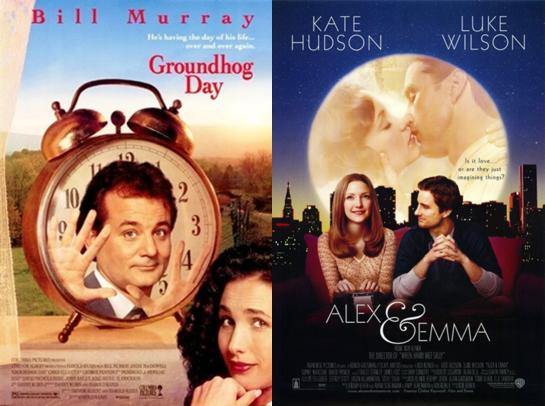
Alongside excerpts of Groundhog Day, we watched scenes from Alex & Emma. After considering the classic sitcom about nothing Seinfeld, we were inflicted with the show’s original and quite terrible pilot.

groundhog-and-emma

Like with the positive examples, you see the failures when they are pointed out to you. But the nice thing about the failures is you can ask what could have been done differently to make the idea or scene work better.

(Note: Sometimes, the answer is nothing, because it was a weak idea or poorly written.)

You may not have committed the specific sin you’re studying, but it at least gives you the opportunity to use the tools you’ve just acquired and see if you can’t make that “Elvis on crushed velvet” look more like the Mona Lisa.

elvis-lisa

And particularly for the relatively novice or untested writers, examining failures helps to keep from establishing an impossible bar of success. Rather, it suggests that whereas we always strive for greatness, mediocrity can make it to the screen, and more importantly, we do not need to (and never will) achieve gold with every piece we write.

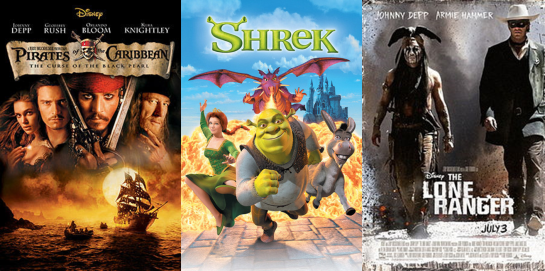
Which is good, because for every Pirates of the Caribbean and Shrek, there is a The Lone Ranger (all written in part by the wonderful and giving Terry Rossio).

rossio

See also:

The Hidden Tools of Comedy (Steve Kaplan)

On the page

typewriter_jammed-letter-keys

Frenzied creativity can keep you from getting all of your thoughts down

One challenge of being creative is that our minds often work much faster than the rest of our bodies can. Ideas can come at such a rate, our enthusiasm for a topic or story can be so intense, that we can find ourselves tripping over our words or leaving out things like nouns and verbs.

When I was much younger, I would see this challenge play out on my typewriter.

My thoughts were so frenzied and my fingers so quick that I would physically overwhelm the ability of the typewriter hammers to rise at the key stroke, strike the ribbon against the paper, and fall back into place before the next key stroke catapulted the next letter. Time and again, I would sigh in frustration as I would stop to manually separate the two letter arms that had become entangled.

But even in the absence of mechanical typing, such enthusiasm can result in conceptual clogging, where thoughts that cross your mind fail to find a home on the page.

Although this happens more in fiction than nonfiction writing, I have read examples in both situations where a writer has failed to include important information about their characters, the plot or even the settings of events. Because we see everything in our heads, because our thoughts move so quickly, we may not realize that we have failed to put this on the page.

When I write a line of dialogue for a character, for example, I hear the character’s voice in my head and I know his or her emotional state, so I hear the intonation that reflects that state.

On a good day, the same information is relayed in the words the character speaks and/or in the actions the character performs while saying those words. (On a really good day, the words spoken and the actions taken don’t exactly align, revealing subtext.)

As often as not, however, I threw down the first dialogue that came into my head or described a relatively generic action to get to the really cool moment a couple of pages from now.

Again, I heard the intonation. I know how the character is feeling. So, in my head, nothing is missing. Everything a reader needs to understand what is happening is found in the black letters that stripe the white screen or page.


Am I reading what you’re writing?

Your reader is not in your head, however. She doesn’t necessarily know how the character feels or where the story is going.

She will likely fill in those blanks with her best guess based on what she’s already read, and she might be right.

But if she’s not, if her assumptions are wrong, the moment of realization might be quite jarring, and she may have to drop back to re-read one or more passages to catch up to you.

NOTE: These moments are particularly noticeable if you have someone or a group do a cold-read of your work. The minute a reader starts the line “wrong”, you see (or hear) the potential train wreck ahead.

Any success you had in engrossing your reader and revealing your creative genius dissipates, and has to be newly won in the subsequent pages.

As the reader, if I need – or even just want – to know something to help me understand a character, relationship or scene, make sure I do. Make sure the idea or concept is on the page.

You ultimately cannot control what goes on inside the head of any reader, whether their personal perspectives or attitudes or what kind of day they’re having, but you can do as much as you can to get your idea, your story across with as few filters as possible.

You don’t necessarily have to do this with Draft One – anything you can do to ride the wave of enthusiasm and get Draft One completed takes priority.

But as you transition to Draft Two, Four or Eleven, look for opportunities to be clearer in your intent for your characters and your story.
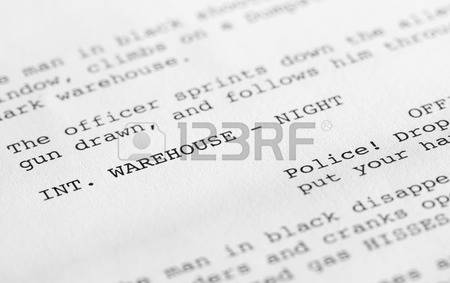
31429063-close-up-of-a-page-from-a-screenplay

Aiming for clarity

How many ways could a given line or sentence be read?

Unless you’re purposefully pulling for subtext Nirvana, try to reduce that number, if for no other reason than the number in your head is probably three to five times lower than what it actually is.

Sometimes, clarity comes in the perfectly chosen word.

“Cameron put his glass down.”

“Cameron slammed his glass down.”

“Cameron let his glass drop.”

“The glass slipped from Cameron’s hand.”

Sometimes, clarity comes with more information/words.

“Cameron put his glass down.”

“Cameron gingerly nestled the glass into its condensation ring.”

“Avoiding a fist of broken glass, Cameron lowered his drink to the table.”

Yes, you run the risk of over-writing, and it wouldn’t be the first time I’ve been accused of writing travelogues rather than setting descriptions in early drafts.

I would argue, however, that it is better to cut back something over-written than omit vital information.

And yes, for genres such as thriller or horror, you may want to avoid providing too much information for fear of ruining the suspense.

I’ll talk more about genre another time, but in the interim will suggest that while you may wish to mislead your reader, you never want to lie to them, even by omission.

Once the final reveal is made, the reader should be able to go back and see all the connecting dots. Simply leaving out an important point is a cheat, from my perspective, especially if it prevents someone from making connections.

Misdirect, fine. Leave things open to interpretation, certainly. But never lie.


Seeing what’s not there

So, how do you know what you’ve inadvertently left off the page?

Time away helps.

Once that initial energy has dissipated, put the work away for a while. Clear your head by working on something else, and only then come back to it and see if it reads like you wrote it.

Alternatively, as suggested above, have someone (or some-many) read it aloud to you while you sit completely silent – not easy. You will hear every clunk and every reinterpretation of your intent.

And sometimes, you simply cannot see it, which is where people like me come in: experienced story analysts who know the standard or common issues that arise and can not only identify where they occur in your work, but also offer insights or possible fixes.

This is feedback at a higher level than editing – although many of us instinctively edit – and the best story analysts help you find your way of telling your story, not theirs.

Because the story analyst didn’t write your story, they’ll see the gaps or holes much faster and more clearly than you will, and will help you fill those gaps, ensuring that you have left it all on the page.


So, What’s Your Story is a story analysis service designed to help anyone tell their story better, whether fiction or nonfiction, long or short, written or verbal. Even if you’re just looking for a quick sense of how well you’ve told your story, we should talk.

Story is everywhere

[First part of a weekly series related to my new story analysis service So, What’s Your Story.]

bookshelf

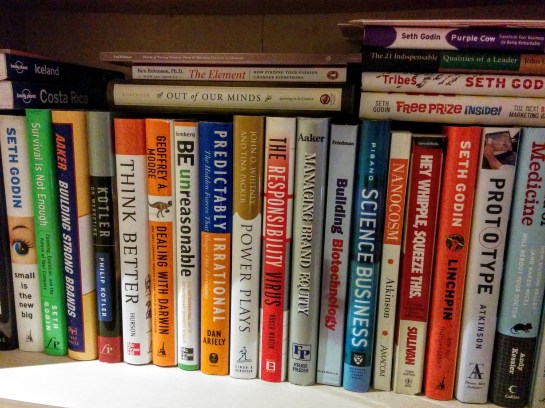
Even the most esoteric subjects have story, with all the elements of a fictional novel or screenplay…even text books about business or biochemistry or writing.

There’s no story in text books!

Yes, there is.

Only here, plot is less about action sequences and more about the interplay of the different aspects of your subject and the causes and effects that drive your theses or perspectives forward. This can be reflected in the cadence of your descriptions, as you walk the reader through your arguments, leading them to your conclusion.

Likewise, your characters are less about personalities and more a sense of the…you guessed it…characteristics of your subjects. In the broadest sense, the conflicts and synergies between the component parts or ideas of any topic are what effectively humanize the topic, providing a familiarity to the reader or viewer.

Without story, your manuscript or presentation has no narrative drive, nothing to draw the reader or viewer forward. Instead, it reads like a specification sheet or spreadsheet; a series of minimally connected facts and figures that provide information but only to the most intrepid reader.

Story is one of the reasons why you can have hundreds (thousands?) of different versions of the same facts, and how publishers and book retailers stay in business.

So, if you’re working on a nonfiction manuscript or presentation, let’s talk and see how well you are bringing your ideas to your audience.

Reach out and tell me: What’s your story?

Twitter: @createdbyrcw

Facebook: https://www.facebook.com/storyanalysis/

Website: [to come]

Lives of love and beauty – Asmara

asmara

Only thing more colourful than her hair is her personality

Asmara Bhattacharya: writer, musician, ball of energy

I don’t know how I met Asmara. I know it was while visiting Austin for the screenwriters conference and film festival, but beyond that, it just feels like this spitfire of a lady simply arrived in my life as an eternal friend. An orchestral musician, I know Asmara mostly as a prolific and amazing writer, who churns out new and stunning ideas and screenplays the way I process bacon, if in the opposite direction.

The lady is a creative and playful whirlwind of enthusiasm and polychromatic hair. One does not join Asmara in an activity or social outing, so much as get swept along in an amusing riptide of good wishes and excitement. Everyone and everything are fascinating to her, and while she is ceaselessly surrounded by friends and acquaintances, you never feel like you’re being neglected when in her company. I still haven’t figured out how she does it. She is a human social media hub, connecting people from every corner of the universe.

Thanks, Asmara, for keeping my world lively and for constantly challenging me to be a better writer, and maybe to stay up past 10pm in Austin.

See also:

Dickflicks.net (her blog)

2016 Austin Film Fest bio

Miss Sloane misses mark – review

sloane-poster

I am a sucker for politics and intrigue, shows like The West Wing and House of Cards (British & American versions) forming a regular staple of my creative diet. Thus, it was with great anticipation that I lined up to see Miss Sloane (trailer), an inside look at the cut-throat world of DC lobbyists, whom many consider the parasitic infection that Washington just cannot (and will not) shake.

Sadly, Jonathan Perera (writer of Miss Sloane) is no Aaron Sorkin or Beau Willimon. In his defence, however, it is likely that neither were Sorkin and Willimon on their first produced screenplays.

The movie follows the string-pulling machinations of Elizabeth Sloane (Jessica Chastain), an ice-water-in-her-veins win-at-all-costs lobbyist who works for one of the most powerful firms in Washington. This woman has no scruples and is willing to get behind anything that earns a paycheque and raises her status inside the Beltway. Anything, it seems, except for the gun lobby.

And when she is presented with an opportunity to make guns more appealing to women in the hopes of killing gun control legislation coming to the floor, she instead jumps ship to a boutique firm (read “poor”), run by Rudolpho Schmidt (Mark Strong), and takes up the opposing cause.

sloane-pairing

More could have been made of Strong’s moral angst over hiring nuclear weapon Chastain

Once the ball starts rolling down hill, it steamrolls over everyone in its path, and the story becomes a ballet between Sloane’s new firm and her old one, led by a very angry George Dupont (Sam Waterston) and his lead hitman Pat Conners (Michael Stuhlbarg). Until recently, Conners was Sloane’s partner in larceny. The rest of the movie is simply watching puppeteers pull strings.

Thus, this movie is a character study of people without character; a morality play completely lacking in morals.

As such, it is incredibly dark and even with its climax and moment of supposed triumph, you leave the theatre positively suicidal at the prospect that this story even starts to approximate reality.

In one way, it is fascinating to watch completely manipulative characters toss around human lives and feelings as though pieces in a game of Risk or Stratego. I think it strikes at our voyeur nature, tying in with the modern fascination in so-called reality television and amounting to little more than emotion porn. This movie could easily have been titled 50 Shades of Sloane.

sloane-puppetry

The strings may be invisible, but the puppet dances

At the same time, with no shred of humanity in these characters, it is difficult if not impossible to invest in the main combatants. At best, we mourn the cannon fodder that litters the field of combat. It is like watching a movie about the invasion of Normandy and really only being able to appreciate the kid who is killed as he steps off the landing craft.

And this is precisely where Perera’s developing skills let him down and his contrast with the current political masters is at its most notable.

Despite the sheer malevolence of Francis and Claire Underwood in House of Cards, there is a vulnerability that helps us understand their razor-clad shells. Go further back to the true master of political intrigue—William Shakespeare—and you see the frailties of the otherwise horrific Macbeth and his Lady. Or perhaps my favourite: Iago from Othello.

frailty-in-venom

Underwood, Macbeth and Iago: Human frailty lies behind the face of a monster

Despite the play’s title, Iago is the true hero of Othello. It is his story that unfolds as he manipulates all those around him, working their weaknesses and frailties against them, truly uncaring of the destructive impact his actions are likely to have on even his own future. And yet, for all the venom and disturbing glee with which Shakespeare imbues his malevolent beast, the Bard is also sure to insert short references to why Iago is so morally misshapen.

To his credit, Perera refused to go in the opposite direction and give us some long-winded sob story of a slight or wound from Sloane’s past to explain her motivations, and in fact, makes it a point, several times, to complain about just such an approach.

But in the absence of any contextualization for the character, even the climax itself comes across as academic exposition rather than revelation. At best, the climax has audacity rather than soul.

There is no moment to cheer the outcome of the story because the outcome is as soul-less as the morass that preceded it.

sloane-perils

That which cannot be controlled must be destroyed

As though sensing this, the final scenes of the movie felt like a bit of a negation of what came before, attempting to soften the edge of Sloane and the story itself. I really wish the movie had ended with the climax.

Given these character challenges, the stellar cast performed well despite being largely wasted.

Chastain does ice well, her face and mannerisms giving away little. Mark Strong was mostly missing in action, through no fault of the actor. His character simply had little to offer. And Stuhlbarg is quickly making a name for himself as malevolent toady, and for that very reason, really needs to find another role to utilize other aspects of his obvious talent.

Miss Sloane was a great idea that suffered in the execution, and I am perhaps being a bit unfair to put the onus on Perera. Director John Madden—best known for Shakespeare in Love and The Best Exotic Marigold Hotel—would have had some influence on how this story played out, and given the pre-diabetic sweetness of his other movies, this story was a surprising choice.

As an academic exercise, I would love to see what Sorkin or Willimon would do with this concept. Each would create very different movies, I think.

In the meantime, I will be interested in seeing where Perera goes next.

See also:

Chastain enlivens political thriller ‘Miss Sloane’ (Lindsay Bahr, Metronews)

Jessica Chastain dominates as a Washington power player (Nigel Smith, The Guardian)

Richard Crouse (video, CTV News)

Criminal should be more Self/less

criminal-selfless

Ryan Reynolds is a hot commodity in Hollywood, these days. Unlike so many starlets, however, they want him more for his brains than his body…quite literally.

Or at least that’s the only way I can explain why twice within a year they have tried to scramble his brains: first with that of Sir Ben Kingsley, and more recently with Kevin Costner’s.

In Criminal—recently released to Netflix (trailer)—Reynolds is CIA agent Bill Pope trying to protect a hacker called the Dutchman (Michael Pitt) who has managed to wormhole his way into the American defense system, enabling him to launch missiles at will. But before he can bring his man in, Pope is captured by the evil rich anarchist Xavier Heimdahl (Jordi Mollà) who tortures Pope to find the Dutchman.

When his CIA handlers, led by Quaker Wells (Gary Oldman), find Pope dead, they enlist the help of neuroscientist Dr. Franks (Tommy Lee Jones) to essentially transfer Pope’s memories into the world’s most cold-blooded killer Jerico Stewart (Kevin Costner), a man completely devoid of conscience.

(Did these people not see Young Frankenstein?)

costner

Give a psychopath super-spy skills and knowledge? What could go wrong?

As expected, shit goes to pieces and the hunt is on—by the CIA, Heimdahl and even the Russians—for both Jerico and the Dutchman.

Despite being an action-thriller with plenty of gore—Jerico kills and maims indiscriminately—Criminal ultimately asks philosophical questions about who we are, how we got that way and can we be redeemed.

As the movie progresses, we witness the influence of Pope’s good-guy neurological engrams on the social and moral chaos of monster Jerico. Something is wrong, Jerico explains as he grasps his head; something is seriously interrupting his thoughts and actions.

In a humorous moment, Jerico learns he is experiencing something the rest of the world calls emotions, possibly for the first time in his life. He is unimpressed.

costner-reynolds-mirror

Requisite internal conflict moment

Given the stellar cast, which also includes Gal Gadot as Pope’s grieving and confused wife, the performances are mostly passable, especially given the woodenness of the dialogue—the screenplay was written by Douglas Cook and David Weisberg, who previously penned The Rock and Double Jeopardy. This is an action film, so we shouldn’t really expect much.

To my mind—and friends disagree—the deepest performance is offered by the coldest, most heartless character Jerico, much as the same could be said for Boris Karloff’s Frankenstein and Michael Fassbender’s robot David in Prometheus. In a very dark turn, Costner embues his merciless killer with dark humour and ultimately, as Pope’s neural influences and memories kick in, a confused heart that many of us can understand.

Assuming you can leave your credulity in a drawer, the story is minimal but passable. That an action film makes any attempt to ask lofty questions is laudable.

cast

Largely wasted stellar cast who spent movie doing exactly this

Unfortunately, as I alluded at the start, Criminal suffers in comparison with another brain transfer film: Self/less, released in 2015 and also starring Ryan Reynolds (trailer).

In that film, Kingsley plays billionaire industrialist Damian Hale at the end of his life but desperate for more time. Meeting with a neuroscientist who essentially offers him immortality, Hale arranges his own “death” and has his neurological patterns transferred to Reynold’s brain, assuming a new identity as Edward Kidner. Reynold’s character volunteered for the experiment to raise money to rescue his daughter from life-threatening disease.

selfless

Requisite internal conflict moment

Again, chaos ensues as Reynold’s memories invade Kidner’s consciousness, and the neuroscientist and his mob race to capture their subject, destroying everything in their path to maintain their secret.

Like Criminal, Self/less asks questions about what defines our identity. But it delves even deeper, going into questions about one’s right to an identity and the ultimate costs of consuming another’s. And for all characters, it is a story about sacrifice.

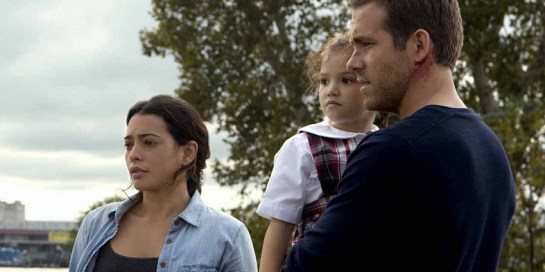
selfless-movie-natalie-martinez-jaynee-lynne-kinchen

Dead husband finds grieving widow and daughter

Given this backdrop, Criminal might have been seen as a better movie if only for what it tried to do. But on the heels of Self/less, it simply looks like a pale imitation that made a valiant, if ultimately doomed, attempt at significance.

Ironically, it reflected its own plot.

See also:

MovieReview360 w/ Shannon Leahy (YouTube)

Criminal (RogerEbert.com)

Criminal: Film Review (The Hollywood Reporter)

Kevin Costner steals the show in far-fetched but entertaining crime thriller (Deadline)

Self/less (RogerEbert.com)

Close Encounters with Arrival – a review

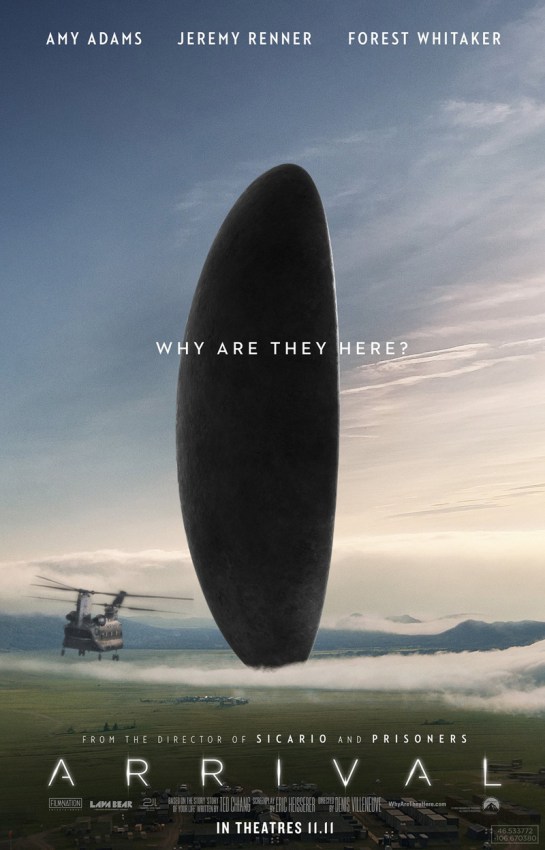
arrival-poster

Although Star Wars will remain the apex of my formative years as a young writer and dreamer, Close Encounters of the Third Kind plays a close second. At the risk of blasphemy, the latter film was significantly superior to the Lucas’ space western, offering insights into humanity and our possible place in the Universe that I couldn’t begin to fathom until later in life.

Such films are rare.

Arrival, which premiered at the Toronto International Film Festival and opened widely this week, is one of those films and is a worthy successor to Close Encounters.

Directed by Denis Villeneuve and written by Eric Heisserer, a man better known for horror films like the reboots of The Thing and A Nightmare on Elm Street, Arrival opens with the arrival of 12 alien space craft—looking a bit like fat Pringles—at strategic positions around the globe.

Almost the entire story is told from the perspectives of linguist Louise Banks (Amy Adams) and physicist Ian Donnelly (Jeremy Renner) and shows their efforts to communicate with the aliens under the watchful eye of military commander Colonel Weber (Forest Whitaker), as scientists and military commands near the other 11 craft attempt the same.

While the trio works to simply comprehend the existence of the aliens, let alone try to communicate with them, the outside world falls apart as fear and a sense of insignificance grasps at the hearts of populations being told largely nothing, feeding the paranoid darkness that resides within all of us.

Without giving key aspects of the story away, the movie deals with broad metaphysical questions about existence and time, while at the same time, providing insights into our species at both its greatest apex and deepest nadir. And at its very base, it encapsulates the importance of trust in our evolution as individuals, as a society and as a species.

arrival-adams-dreyfuss

Amy Adams channels Richard Dreyfuss in her awe at the miracle before her

This is Amy Adams’ movie, and so all of these concepts are displayed through her fears and growth. She must learn to trust her human colleagues. She must learn to trust her alien counterparts, adorably nicknamed Abbott and Costello. And most importantly of all, she must learn to trust herself despite flashes of what seems like madness.

To tie back to Close Encounters, Adams is this movie’s Richard Dreyfuss, and she embues her character with both the same manic trepidation and child-like wonder as Dreyfuss’ Roy Neary.

Renner and Whitaker, for their parts, are incredibly subdued in this film.

Renner’s Donnelly is an emotional anchor for Adams. Coming from the academic world, his tone is at once familiar and playfully combative.

arrival-duo

The photographic focus on Adams is representative of Renner’s role in this film.

Whitaker’s Weber is authoritative and yet unthreatening. He is the calm in the intellectual storm, grounding the two academics for what they are about to witness and becoming increasingly appreciative of the miracle that unfolds before him.

What I found particularly interesting about Heisserer’s story was that the antagonist of the film was Fear.

Fear of the unknown. Fear of mortality. Fear of our own insignificance. And more importantly, our deepest fear that as individuals, we simply don’t measure up.

And breaking the rules of screenwriting, this fear was not embodied in a single antagonist, but in all characters, and it was only in fleeting moments that any individual character acted upon his or her fear. And yet, as fleeting as those moments were, each was vital to the evolution of the story and the critical relationships to their next stages.

arrival-trust

Connection relies on trust

Again, these moments fed back to the question of trust, particularly in the face of betrayal.

To assure everyone that this film isn’t simply a cerebral exercise—although it is beautiful in what it does accomplish—there is also a very deep emotional thread that runs through this movie, again centering on Adams. And from the opening, it seems like this personal journey is completely disconnected from the sci-fi plot.

But as the story unfolds and we begin to explore what is possible in an infinite cosmos, we begin to realize that the external and internal journeys are one and the same. There is no distinction. The line between physical and emotional is an artifact of our choices as humans and society.

arrival-2001-close

Arrival continues the saga that started with 2001: A Space Odyssey and Close Encounters of the Third Kind

Will Arrival be to adolescent minds today what Close Encounters was to mine in 1977?

Probably not.

It is a much more adult film that its predecessor, with many fewer action sequences to engage the eye. And Villeneuve’s views and sensibilities are very different from Steven Spielberg’s.

But Arrival is the closest thing to those seminal films that we have seen in a generation or more. And for the more engaged child or adolescent, it will open a window to another plane of storytelling.

See also:

Movie Review: Arrival (Danny F. Santos)

Amy Adams supplies emotional core of alien invasion film “Arrival” (Richard Crouse, CTV News)

Amy Adams has a sublime word with alien visitors (The Guardian)

Cheadle reaches Miles Ahead – a review

MrsMiracle_DVD_Sleeve

I don’t know much about jazz other than to say that almost everyone who has ever been considered a giant in the genre spent a lot of time facing very dark demons; demons so dark as to put rock & rollers to shame. Such was the case with Miles Davis.

In a quadruple-threat performance as writer, director, producer and star, Don Cheadle has created an interesting film that touches on a brief period in the jazz icon’s life through a never-ending series of timeline jumps that takes a little bit to get into.

The main plot of Miles Ahead revolves around a Rolling Stone reporter Dave Braden (Ewan McGregor) looking to get a glimpse into Miles Davis, who five years earlier, went into seclusion to nurse his drug addiction and failing muse. Desperate for a story, Braden inadvertently allows a scheming manager of another jazz performer to steal a tape of Miles’ comeback music, sending Braden and Davis on a chase caper worthy of the Scooby Doo gang.

Interspersed throughout this caper, Cheadle and his co-writer Steven Baigelman weave flashbacks of Davis’s relationship with dancer Francis Taylor (Emayatzy Corinealdi). Through whispered voices, they seem to suggest Davis might have suffered mental illness, and they show the musician’s slide into drug addiction through pain medication taken for a degenerative hip disorder.

cheadle-mcgregor

As a director, it seems Miles Ahead is Cheadle’s attempt at creating jazz in a visual form.

Scenes bounce back and forth. Visions flit through Davis’s mind. There is almost an ad lib feel to the performances as the actors seem to react rather than perform. And yet, once the piece gets moving, it feels whole.

That said, this is but the briefest of songs in a larger repertoire that was Davis’s life, and in many ways, I wanted to understand better what was behind the great artist’s fall from grace. As such, the movie feels very light despite its heavy subject matter and in several scenes, degenerates to slapstick cops-and-robbers. As biopics go, this is not Ray or Ali.

The choppiness of the scenes and lightness of plot also means that we never really get a good sense of most of the characters or the actors’ performances.

McGregor’s Braden doesn’t act, so much as mug from scene to scene, reacting to the antics of Cheadle’s Davis and the chaos that swirls around him. In fact, the one decision he does make—trying to steal the tapes himself—is a colossal failure and about the last decision he makes.

cheadle-wife

Similarly, Corinealdi’s Taylor largely remains a mystery to the audience. A creative spirit in her own right when she first meets Davis, she quickly falls into the role of cheated-upon wife who struggles to cope with a brilliant husband who is rapidly falling apart. The arguments could easily have been lifted from Ray, and for all I know, were lifted from Get On Up, the James Brown biopic also penned by Baigelman.

For his part, Cheadle eats up the screen with his portrayal of Davis at two very different times in his life. There were times when I almost couldn’t tell you that this was the same actor in each role.

The Davis of the 1960s is Cheadle as we know him; a cool customer who possesses the room in which he stands. The fallen Davis of the 1970s, however, is an entirely different creature, prone to lash out rather than control with a stare. And full marks to the make-up team for the physical transformation into the older Davis.

two-cheadles

This movie won’t be for everyone, and in fact, I have no idea who it is for.

There isn’t enough music for the jazz fans. Not enough character depth for the serious drama fans. And it feels too dated for those interested in amusing drug-laced comedies.

And yet, it works.

And for a budget of less than half-a-million, why wouldn’t Cheadle at least try?

I’m glad he did.

See also:

Miles Ahead (Angelica Jade Bastien)

Ode to a Jazz Giant (The Guardian)

Miles Ahead (Rolling Stone)

Doctor Strange quite ordinary – a review (UPDATED)

doctor-strange-city-bending-179855

As a disclaimer, you should know that I have grown weary of comic book movies and the various universes involved. Thus, I understand if some of you stop reading here.

Are they gone? Is anyone left?

Doctor Strange is the latest entrant to the ever-expanding Marvel universe. In this origin movie, it is the story of a brilliant, ego-driven neurosurgeon (Benedict Cumberbatch) who suffers a debilitating accident that destroys his career and therefore his reason to live. In trying to regain use of his hands, he finds a mystical Eastern retreat and begins a journey into magic, multi-planed realities and lessons in humility through the guidance of the Ancient One (Tilda Swinton).

The arrival of Strange might not be totally of his choosing, however, as he reaches the retreat at a time when it is facing its greatest threat, a former student (Mads Mikkelson) who has moved to the Dark Side and wants to feed the Earth to a Dark Entity (Dormammu) that swallows universes whole. And so the battle ensues, Dark vs Light (well, mostly Light), with weapons of magic, shifting realities, and literally shifting buildings that hearken back to the movie Inception.

And this is where I struggle with this movie. There is little here that is in any way original.

For me, this is The Shadow (look back in the archives for that one) meets Inception, with a soupçon of Kung Fu Panda and Harry Potter And The Who Gives A Damn, each of which I felt were better movies than Doctor Strange.

strange-bendy-streets

From Inception to Strange with little improvement

On the plus side, Cumberbatch is perfectly suited to this role, his droll delivery of cornball one-liners perfectly pitched—a la Robert Downey, Jr.’s Tony Stark. And the visual paintings of colour, perspective and sound are insanely rich and dazzling, worthy of the best recreational pharmaceuticals (so I am told).

But that is really all that this movie has going for it: big-screen kaleidoscope and Tony Stark 1.1 (can’t even manage 2.0).

The story is pretty linear with zero twists or turns. And even with that, the writers felt they needed to explain the story every 30 minutes or so with long streams of exposition. Apparently, all of the budget was spent on special effects and so they were forced to break the “show, don’t tell” writers’ convention. These aren’t reveals; they’re explains.

And aside from Cumberbatch’s waltz through ego and bon mots, all of the performances by the supporting actors are largely wasted.

Tilda Swinton’s Ancient One couldn’t hold the chopsticks of Dustin Hoffman’s Master Shifu (Kung Fu Panda). Mads Mikkelson’s Kaecilius is totally silly-us and I don’t recall any explanation as to why he chose to leave the school and work for the Dark Side.

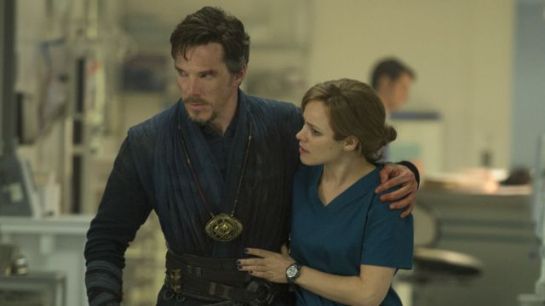
And what the hell happened to Rachel McAdams’ career? Here, she plays Strange’s estranged love interest Christine Palmer and is given nothing to do aside from roll her eyes, squeal at loud noises and apply defibrillator paddles every half-hour or so.

mcadams-strange

Sometimes, it is just about cashing the cheques (Benedict Cumberbatch, Rachel McAdams)

As my friend and Movie Review 360 partner Danny suggested (see link to his review below), origin stories are throwaways, their only job being to set up the characters for the following movies and cross-overs. I can’t disagree with him on that point…this movie should have been thrown away.

As just the latest piece in the Marvel cinematic universe, the real meat of Doctor Strange will come as he begins to interact with all of the other tight-wearing, planet-razing whackos—and stick around through the credits for the first hints of that.

So, why even bother with this movie?

Nothing in Doctor Strange was necessary for any of what follows, I am confident.

Okay…comic book fans can come back in the room!

If you’re looking for some dazzling eye candy and a few choice ripostes worthy of Tony Stark, Doctor Strange is the perfect popcorn muncher. For everyone else, check out 1994’s The Shadow…it really is better than it should be.


See also:

Movie Review: Doctor Strange (Danny F. Santos)

Lively Doctor Strange breathes new life into Marvel Universe (CTV News)

This is the champagne of Marvel movies (Global News)

Movie Review 360 (reviews Doctor Strange & Fury)