Auto(populate)bots Assemble!

robot-n-women

Reports suggest that within the next two decades, robots will take responsibility for upward of 50% of jobs currently handled by humans, who simply remain inefficient and cannot work 24 hours a day.

Already, we are seeing automation in manufacturing and order-entry kiosks in the services industry. It is assumed the next stage will involve a complete takeover of the social media industry, with timelines auto-filled by trivia and rumour bots.

This post brought to you by the Xorblat 3-11A

Photo stolen without permission from The Robot State blog.

For a legitimate discussion of such topics, check out The NeoHuman Blog.

Well-timed holiday spending tip

old-man-bench-retire

How would you like to give the greatest gift of all without emptying your bank account?

Introducing,

TIME

More than things. More than money. Time is our most valuable commodity.

The willingness to spend time with someone—or some many—is the greatest sign of their value to you.

Spend time listening to a loved one.

Spend time helping a stranger.

Spend time remembering those we have lost.

Spend time with yourself.

With no money down and no payments until EVER, show people how much you care by giving them your time.

snow

As an added bonus: For every time you give another, you get a time for yourself. That’s two times the time for one small investment of…you guessed it…TIME.

Race in writing

One race, many peoples (from mediadiversified.org)

One race, many peoples (from mediadiversified.org)

I’ve spent a few months now reading dozens of teleplays, and one thing that stood out as a new trend for me was the phrase “mixed-race” when describing a character.

“Attracted to the noise, JOANNE (27, tall, mixed-race) looks up from her laptop. A smile blossoms across her face.”

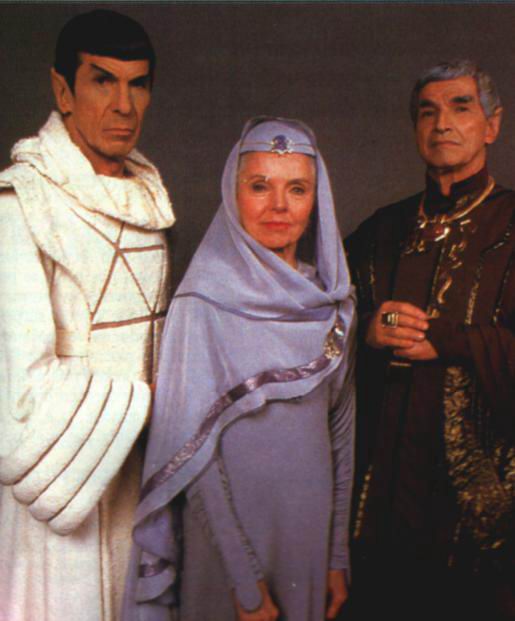
Now, lest anyone take offence, I really don’t care to what race a character is attributed. Nor do I care if the character has parentage of different races or even different species (looking at you, Spock).

Instead, what struck me was that in only one of these teleplays did the fact that the character was mixed-race in any way influence the story and/or the character’s worldview. Which begs the question:

Why mention race at all?

In a screen- or teleplay, you should only be telling me things I need to know to understand the story or interpret a character’s behaviours and attitudes. Unless being 7 feet tall means a character can do something no one else can do and the plot in some way turns on that ability, then I don’t need to know the character is 7 feet tall.

Likewise, if a character is a Korean-Italian and the only thing this fact influences is possibly his or her name, who cares? Where are the subtextual or textual influences of this genetic melange?

Spock was every bit his warring human and vulcan sides

Spock was every bit his warring human and vulcan sides

In the case of Spock, entire stories were built around the internal and sometimes external conflicts arising from his mixed heritage. He fought constantly to suppress his human side and that influenced his relationships and reactions with everyone else.

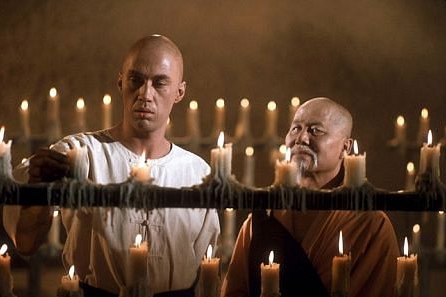
In the single teleplay I read where the character’s mixed lineage did matter, the character struggled with being treated as an outsider by both communities. Thus, in being ostracized by both cultures, she built the defence of being a rebellious loner and responded to her world thusly.

American father, Chinese mother, Kwai Chang Caine lived conflicting cultures

American father, Chinese mother, Kwai Chang Caine lived conflicting cultures

In none of the other teleplays was anything like this even remotely the case. In none of those scenarios, did the writer use the choice to inform the character. In fact, in almost every mixed-race teleplay, the writer never specified what races had been mixed.

That’s how unimportant this fact was to these writers. And there’s the real shame.

Although I don’t know what the writers intended by making their characters mixed race, I suspect it was simply to make themselves look socially conscious.

What they achieved, at least in my eyes, was the exact opposite.

Blood and name calling

He ain’t half heavy, he’s my half-brother – The Adopted Hollies

If you haven’t got a penny, then half a penny’ll do. If you haven’t got a ha’ penny, then God bless you. – some British thing (not the Hollies)

I read an article this weekend that described the murder of a man by his half-brother. Normally, I don’t read these kinds of stories, but I was drawn to this one because of the phrase half-brother, which made me wonder why this phrase was still in common use.
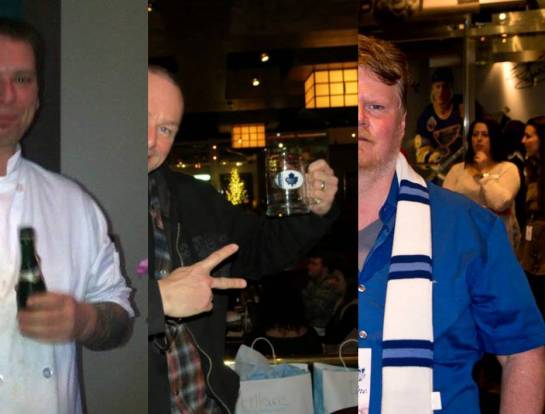
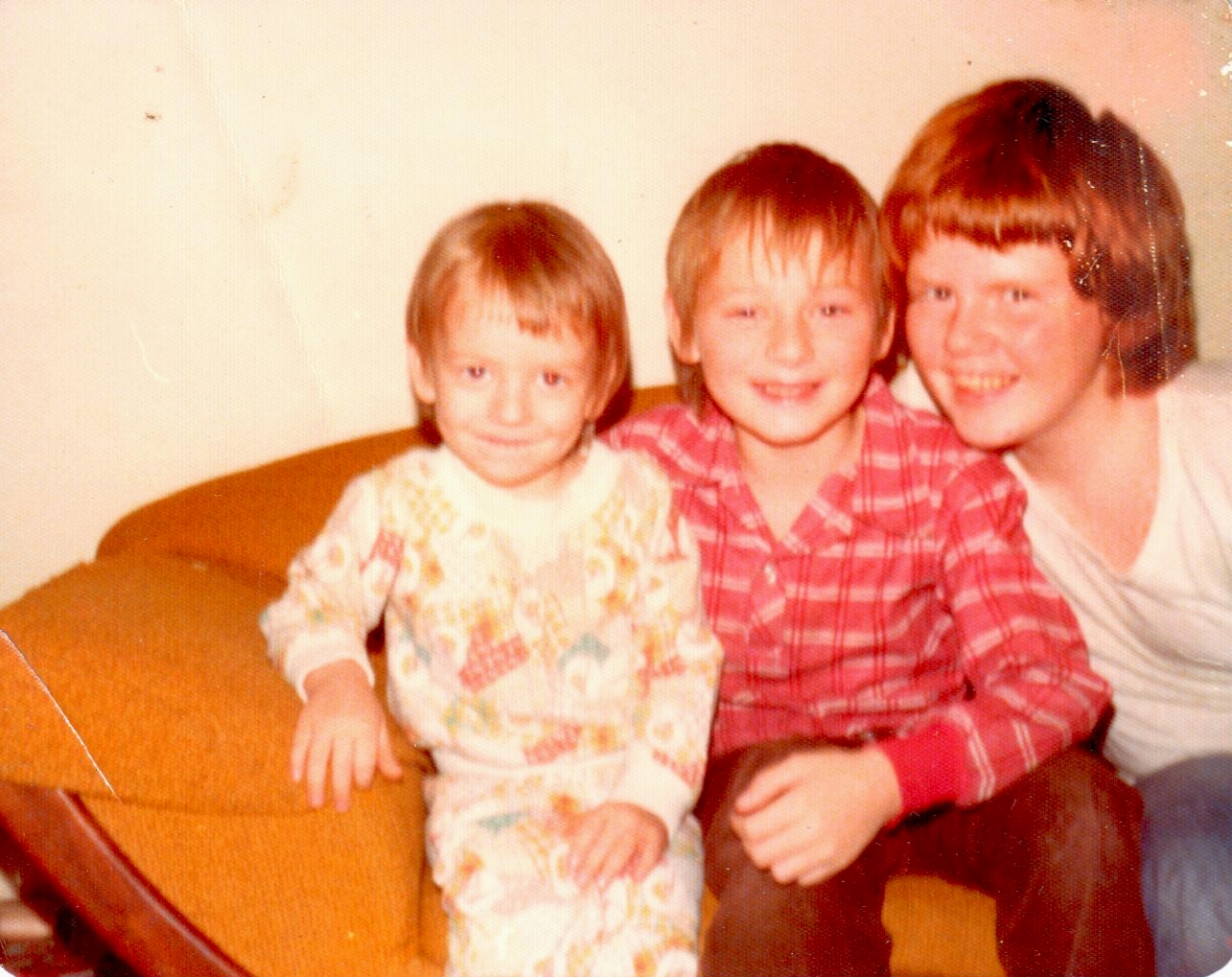
What the hell is a half brother? (Shawn, Scott, me)

What the hell is a half brother? (Shawn, Scott, me)

I appreciate that historically there may have been a reason to keep track of who one’s siblings were from a legacy perspective. Family homes and farms (and for the wealthy, estates) possibly hung in the balance when Dad died…although I question how often this was a concern. And no self-respecting Shakespearean comedy or drama would be complete without an evil half-brother. But why now?

To quote the Bard:

What’s in a name? that which we call a rose

By any other name would smell as sweet;

Likewise, to quote Merriam-Webster:

Blood (n): the fluid that circulates in the heart, arteries, capillaries, and veins of a vertebrate animal carrying nourishment and oxygen to and bringing away waste products from all parts of the body.

So again, I ask why the fixation on a surname and the concept of blood ties?
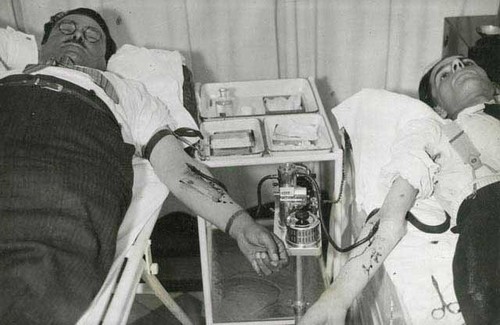
The last time blood ties mattered

The last time blood ties mattered

I never knew my father—not something I take personally; just a fact—and so I have no particular attachment to my last name aside from convenience and familiarity. I feel no compunction to continue the family name. Other people have the surname of Willis…let them continue it if they want.

And my brothers and I only share one common parent—our mom—and so have different surnames. Does this make them any less my brothers, however, than a pair of siblings who shared the genetic legacy of the same pair of parents (pairents)? Not for me (you’d have to ask them their perspectives on this).

For the famous, an argument can be made that sharing DNA somehow opens doors from one generation to the next: Ken Griffey Jr., Drew Barrymore, Robert Downey Jr., Robert Kennedy Jr., Paris Hilton.

Not sure how that last one works

Not sure how that last one works

But in most of those cases, sustained success comes from inherent talent and drive, not simply DNA. (I still don’t understand why Paris Hilton is famous.) Likewise, for every case of possible nepotistic success, there are hundreds or thousands of cases of success despite lineage (no disrespect to parents anywhere).

Perhaps I am the anomaly on this, but I simply don’t understand the importance of the nomenclature to who I am as an individual or how I respond to a family member versus a close non-genetically linked person (aka friend).

Agah, Nicholas and Marsha are my siblings despite the lack of genetic links

Agah, Nicholas and Marsha are my siblings despite the lack of genetic links

Scott and Shawn are my brothers more for our shared experiences than because of any genetic connection, much as Agah and Nicholas are my brothers and Marsha my sister for our shared affection and experiences.

Call me Ishmael, for all I care…if we are good friends, you have likely called me worse.

In the meantime, I’ll use my bloodlines to circulate oxygen to tissues and white cells to fight infection.
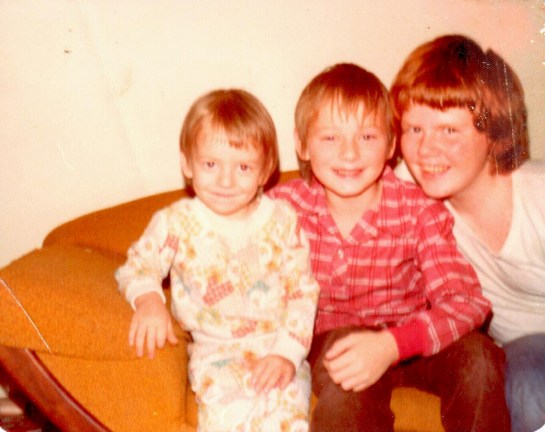
Brothers...no half-measures

Brothers…no half-measures

My preferred quote:

We few, we happy few, we band of brothers;
For he to-day that sheds his blood with me
Shall be my brother; be he ne’er so vile,
This day shall gentle his condition:

The most dangerous F word

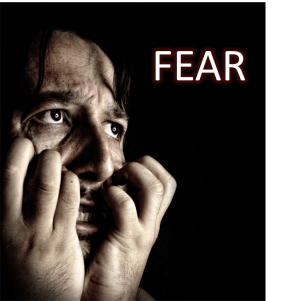
Fear

Hate is fear rationalized. Hate is fear acted upon.

Hate is the belief that fear is finite; that if I bestow some of my fear on you, I am unburdened.

But that is a lie.

Fear isn’t of this universe. It doesn’t live by the E=mc2 paradigm. Fear has limitless potential for growth.

Any more than I can relieve myself of a pestilence by giving it to you, my fear remains and may even grow when I pass it along.

Surely a little fear is okay, keeps us from stepping off cliffs or traveling dark paths.

Fallacy.

Fear doesn’t keep us safe. Knowledge does.

Vista

Knowledge keeps you from stepping off the cliff. Fear keeps you from seeing the spectacular view.

Knowledge removes darkness from the alley. Fear keeps you from seizing new opportunities, from discovering new paths.

Fear doesn’t come into existence of its own accord but like a virus, is passed from person to person.

The newborn infant has no fear until startled by a parental “No”, the opening dose of fear.

infection

We do not naturally fear others until given a reason. And rarely is that reason the other we have chosen to fear, because fear rarely approaches face on.

Fear is the demon that eats us from inside, a parasite that controls our minds for its own perpetuation.

But what is worse, what makes it so insidious, is that fear is easy, demanding little of us other than that we close our senses to the truth.

And it is the facility with which so many of us are willing to do this that makes fear the most dangerous F word.

Burden

From tampons to toilet paper

Taxi pads

As of July 1st – Canada Day – women in Canada will no longer be required to pay sales tax when purchasing feminine hygiene products such as tampons and pads. The change comes after many months of Canadians decrying the tax as gender discriminatory, as solely a tax on women (see House of Commons debate).

Having wracked my brain, I was unable to determine an equivalent male-exclusive product and so broadened my thinking to identify products that might be absolute necessities. There are no taxes on groceries, for example – family-size purchases, that is; “junk food” and “individual” purchases are taxed.

And then it struck me: toilet paper.

So yesterday, I launched a faux campaign to remove the taxes from toilet paper, and welcome you all to join what I am calling the #BowelMovement.

Tweet

Feel free to * ahem * pass this along.

TP tax

Hot Girls Wanted documentary (a review)

Hot_Girls_Wanted

Watched Rashida Jones‘ documentary Hot Girls Wanted about the amateur porn industry and can honestly say I have no idea what I think of it.

Part of the challenge is I have no idea what the point of it was other than to document the experiences of several young women (18-25 y) as they approach and experience the lifestyle. We can argue day and night about whether the lack of an overt agenda or POV is a good thing, but to my mind, it presented the women as neither victims nor empowered…simply as women who made a choice.

https://www.youtube.com/watch?v=qTkEIGsNXu4

To be blunt: These women chose to go to Fuck Camp to make money and escape home.

It is interesting to watch the impact of their decisions on their lives and particularly their relationships with families and boyfriends. And I had to laugh at the irony of one woman who was clear in her rationale about her decision until it came to talking to her father about it.

And I must admit that I was surprised at how cavalier (my biased standards, not theirs) the women were about what they were doing, the potential hazards of the situations they found themselves in, and any thoughts as to how this might impact future life decisions beyond the 3-6 months they made money (not a typo…a woman’s “marketability” typically only lasts 3-6 months).

One of the few images I'm willing to show

One of the few images I’m willing to show

Over its 82-minute span, the documentary drags a little in places and often covers the same ground, no doubt to reinforce some of the more graphic elements. And it is graphic, stopping short of showing the actual sexual acts, but giving you enough of the rest (e.g., nudity, bondage, choking, vomiting) to bring across the essence of what these women are doing.

And in the end, the take-away is whatever you take away from this story.

No matter what your opinion going in, this will only reinforce that opinion. It doesn’t seem to be aimed at making you change your mind about the merits or evils of this industry. The same woman who feels exploited in one scene expresses a sense of empowerment in the next, and in some cases, about the same act.

Adult women making adult decisions about the adult industry. Good or bad is for you to decide for yourself.

An actress and a producer discuss the documentary

An actress and a producer discuss the documentary

Thank you

Varied of tradition, but singular in purpose.

Varied of tradition, but singular of purpose.

I just walked to the grocery store without a second thought beyond wondering whether milk would be on sale or if I could get there and back before it started to rain.

Thank you.

Last night, friends and I filmed puppetry vignettes in which we satirized recent political events and social attitudes, laughing freely and openly.

Thank you.

On Saturday, I met a friend for bacon sandwiches and then walked home along the beach, smiling at kids playing in the sand and dogs excitedly greeting each other.

Thank you.

Today, my biggest concern is whether I will get off my backside and walk two blocks to change my cellphone carrier or if I’d rather just bitch about the one I am presently using.

Thank you.

My home hasn’t been destroyed. I’m not worried about my next meal. My family hasn’t been slaughtered. No one will kick in my door because I made a joke online. And you and I can completely disagree on local, national and world politics and social trends.

Thank you.

And even with all that, five “thank yous” is not nearly enough to express my gratitude to the men, women and families who have sacrificed everything so that all of the above is true.

I live in Canada. It is Memorial Day in the United States. And none of that matters. The international boundary does not make any of what I have written less true.

We may choose different days and express our feelings in different ways, yet we have but one purpose: gratitude.

Thank you.

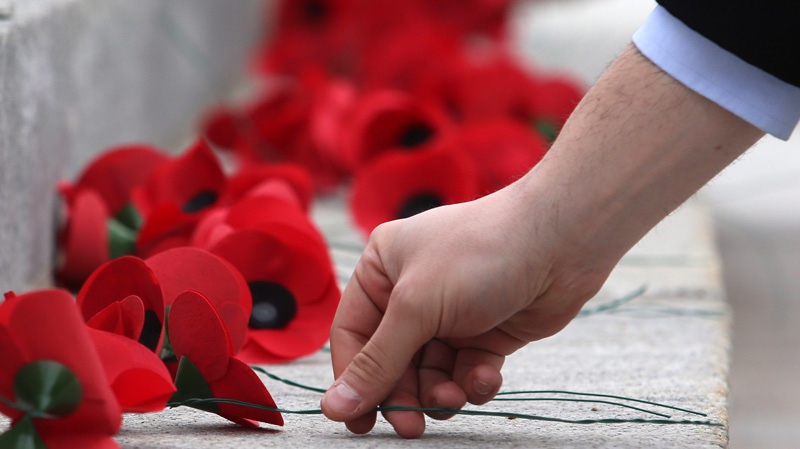
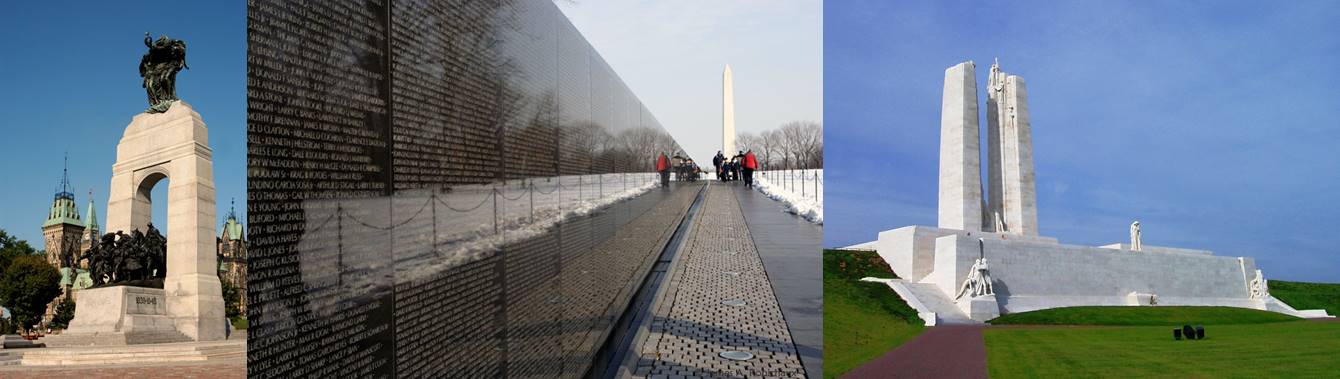
From Ottawa's Parliament Hill to Washington's National Mall to France's Vimy Ridge, we must never forget and always be grateful.

From Ottawa’s Parliament Hill to Washington’s National Mall to France’s Vimy Ridge, we must never forget and always be grateful.

Assumption of malevolence

Good

As I sat at a picnic table near the boardwalk along Lake Ontario, I watched parents pushing children in strollers, local residents walking dogs and chatting, and a squirrel accost me for my choice in sandwiches (seems he preferred nuts over chicken).

It wasn’t long, however, before the gentle peace of wind and waves was broken by an angry tone.

“Hey! Your dog left a package back here!” shouted a woman to people further along the boardwalk.

“Sorry?” came the gentle query.

“And let’s just say it’s a present I wouldn’t want to step in,” the angry woman shouted while mimicking the slide of sneaker on grass.

“He did?” the other woman questioned, turning back down the boardwalk.

“Yeah! You want to get back here and pick up after your dog,” the first woman barked. “It’s over there behind the bench.”

“I’m sorry, I didn’t see him do it.”

“Of course not! You were too busy talking to your friends,” the woman sniped as she stormed across the park to some other destination.

The dog owner reached the bench, and after a few moments of searching, bagged the offending substance and rejoined her friends.

Poop

I appreciate that dog dirt litters our parks and streets and beaches, and that the angry woman was fed up with this happening in her neighbourhood.

And based on the demeanour and response of the accused (woman, not the dog), I am confident that this was not a typical dump-and-run, but rather an innocent oversight.

Sadly, rather than assume any degree of innocence, the angry women immediately jumped to an assumption of malevolent or at least willful ignorance.

She could have approached dog owner calmly with “Excuse me, but your dog seems to have left something behind that you may not have seen.”

Instead, she attacked with a tone that suggested the dog owner herself left the steaming pile.

At least in North America, there seems to be a growing trend to assume malevolent intentions before acknowledging the possibility of innocent ignorance or unfortunate stupidity.

Are there malevolent self-centred people in the world? Certainly.

But should that be our default assumption about anyone who slights us or causes us discomfort?

If the answer is yes, then I want out of this society. It has become too angry for me and I have no desire to be victimized by it.

I wish both of the women in this story well.

Fight to stay positive

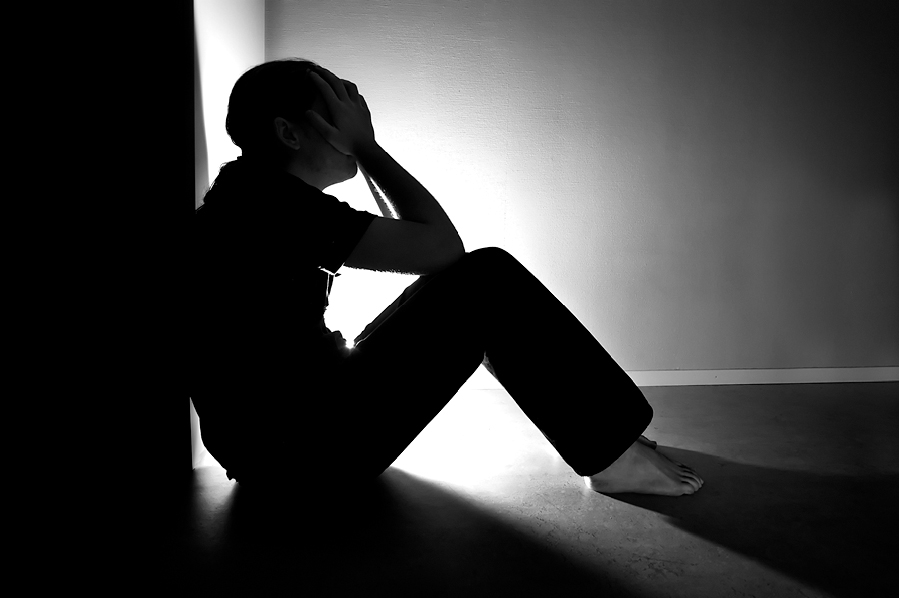
despair

I try to stay positive;

I try to stay upbeat,

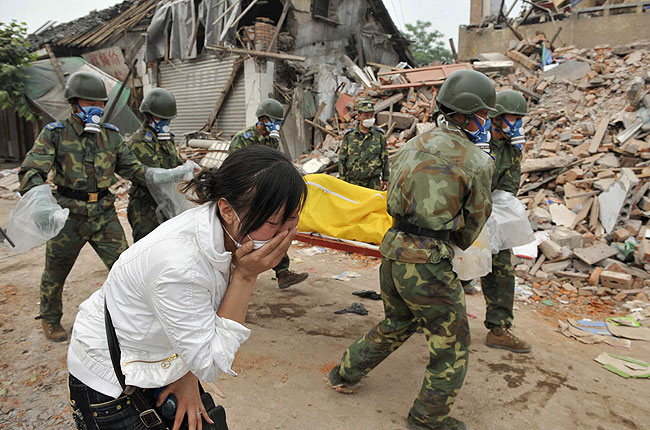
As I watch cities aflame

And walls crumble earthward,

Whether through acts of Man

Or through acts of Nature;

Man destroying man,

Betraying them,

Slaying them,

Playing them,

For personal advance

Or simply fear of change.

 earthquake

I try to stay positive;

I try to stay upbeat,

As I hear voices raised,

Weapons of metal, wood, stone,

Wielded in white-knuckled fury;

The bastions of knowledge,

A cultural cudgel used to

Oppress them,

Compress them,

Divest them

Of their worldly goods,

Lives covetously shattered.

 APTOPIX Suspect Dies Baltimore

I try to stay positive;

I try to stay upbeat

As I watch Nature be raped,

Shorelines and shorebirds

Tarred for their feathers;

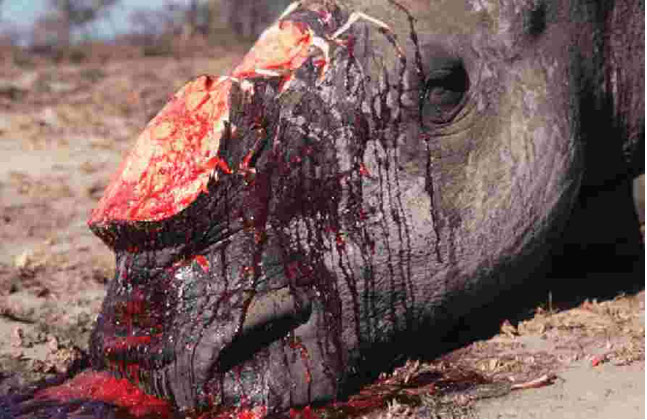
Ivory affectations shorn

From faces yet breathing;

Air given cancerous substance,

Stilling them,

Killing them,

Willing them

To the precipice of extinction,

Silent hillsides the new norm.

 rhino with no horne

I try to stay positive;

I try to stay upbeat,

Hope my only option

In a world angry and mad.

We must heed the cries,

Must all feel the pain,

Must all see the anguish,

Lest the sweet sleep of death

Numb our senses forever.

And we must stay positive,

We must all stay upbeat.

anguish_zps775f09d74