Snow drifting

(Image property of Duncan Rawlinson; http://duncan.co/tag/snowing/)

(Image property of Duncan Rawlinson; http://duncan.co/tag/snowing/)

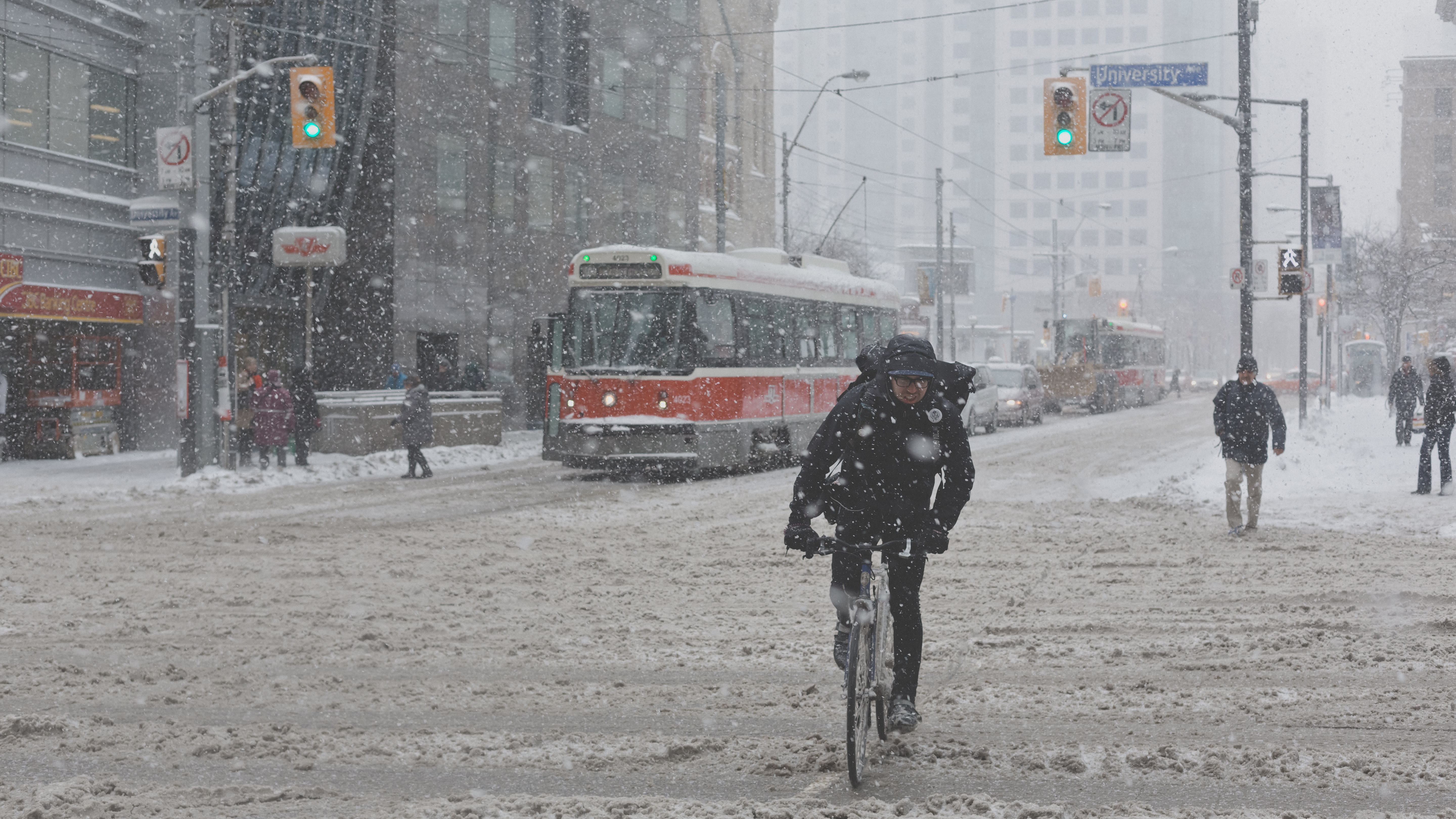
From thousands of feet, the snowflake made its way from its misty nursery to a gentle caress of Henry’s cheek, slowly melting where ice meets the dampened skin to puddle with its fallen brethren.

Henry faces the sky, his back firmly planted in the snow bank, the drift slowly cocooning him as the crystalline waters descend, tears of boreal gods.

Flakes weave with the hairs of his beard, completing the whitening that age has yet left undone, his thinning scalp protected by the few remaining threads of a toque too old to be merely ancient.

Pedestrians trundle by, eyes held askew, muttering their disapproval as they bow their heads against the wind and cold. But he remains oblivious to their stares and sneers, in a world of his own, one with the thickening storm that swaddles him.

Henry doesn’t feel the cold they feel. He doesn’t feel the wind they fight. Nor does he feel the latex-gloved hands that lift him to the gurney as an unusually cold winter claims another life.

Brothers by birth

Image

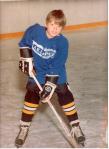
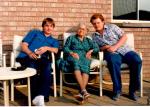
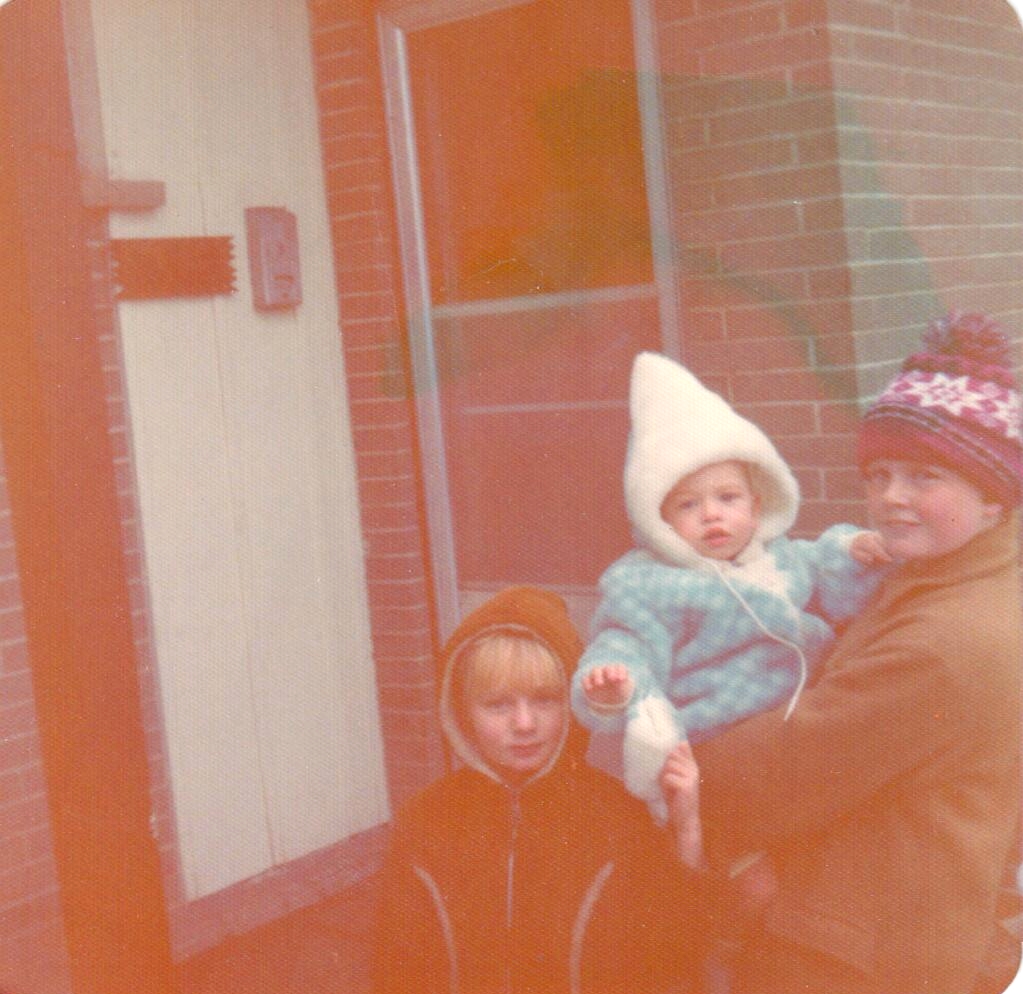
When we were young, my brothers and I were very close. The house was so small, we had little choice.

We moved a lot when we were kids, so we tended to see each other as playmates as much as anything, even though we were 5 and 5 years apart, me being the eldest. My brothers were constants in a sea of change.

At our youngest, spending time together was easy. Scott and I would use Shawn as cannon-fodder for any number of experiments, and he would respond as though it was great fun. The fact that Shawn did not die in childhood or does not suffer the after-effects of brain damage today is a testament to the strength and resiliency of the human skull.

As we got older, though, the strengths and directions of our individual personalities began to interfere with our genetic and social bond. I was the studious, overly verbose nerd. Scott was the quiet and reserved one; the observer. Shawn was the independent freedom fighter.

What were once common goals became more fractious, and as Shawn became older, he began to realize that his lot in life didn’t have to be guinea pig, and with his fiery temper, he in fact became a weapon of filial destruction. Only my decadal seniority kept him from killing Scott, who wasn’t always in my good books.

The genetic link continued to sever as we continued to age and each of us found less reason to spend time with the others. Our interests were different. Our needs were different. And our attitudes about the other two changed.

Around the time that I buggered off to college, Shawn’s rebellious streak took solid hold and he headed across the country to do his own thing. And Scott folded more into his own world.

In one way or another, we had effectively abandoned the family unit, and more important to my mother, the family unity. I can appreciate now how hard this must have been on her, but at the time, it all sounded like mom whining.

Over the next bunch of years, I think I saw Shawn twice…both weddings, one his. I saw Scott more regularly, but a lot of it felt forced as we would often meet at my mother’s place. I can only speak for me, but it felt like we were trying to maintain an illusion of what was.

There were good interactions between us. And I like to think there was still love. But there was no friendship. Genetics just wasn’t enough.

We parted company and lives. If asked, I am confident that any two thought the third was a complete asshole.

Time passes. We evolved and continue to become the men we need to be for ourselves. And from my perspective, something great has come out of that. We have been given a second chance at friendship.

As full-grown men with our own lives, interests and goals, we have chosen to welcome each other into our lives in one way or another. It is not the bond we shared in our youth, but I don’t know that any of us are too worried about that. (Shawn’s still too big and strong to let Scott and I pile drive him into the basement floor.)

The friendship I have with Shawn is different than the one I have with Scott, but both friendships are meetings of equals. One of the only bonds we seem to share as a trio, other than our familial link to our mother, is a neurological link to alcohol (damn, that’s one hell of a pub tab).

Shawn is the successful restaurateur, who is still the independent freedom fighter.

Scott is the dedicated family man, who is still the observer.

I am the raconteur, wit and writer, who is still the sexiest man in town (okay fine, the studious, overly verbose nerd).

But none of these descriptions is sufficient. We are simply the men that we are.

Shawn, Scott and I are brothers by birth, but we’re friends by choice. And that’s the way it should be.

Can you relate?

Image

I spent three days this week wandering the show floor of a conference on stem cells, interviewing scientists and corporate executives for a series of articles I am writing. As this is the first time I have met most of these people, the conversation usually starts somewhat tentative as the people try to figure out how to address my journalistic needs while fulfilling their marketing agendas. This is just the nature of such interviews.

Luckily, I have a secret that tends to break the ice a little. Early in the conversation, I try to find an opening in what they are telling me to relate a personal anecdote or observation about my own scientific training as a protein biochemist—yes, I actually used to be quite smart.

Within seconds, the interviewee’s posture changes, their voice takes on a new timber as they realize that I am a kindred spirit even if my uniform has changed. Suddenly, they know I can relate, and the conversation becomes one between friends or colleagues.

The same holds true for storytelling.

When the reader picks up your novel or short story, the viewer sits down to watch your movie, the initial engagement can be tentative as the reader tries to figure out what you’re doing, where you’re taking them. The reader holds back from completely engaging with you as they wait for that magic moment when they can relate.

No matter how fantastical or mundane your story, the reader must be able to latch onto something, to find a kindred spirit.

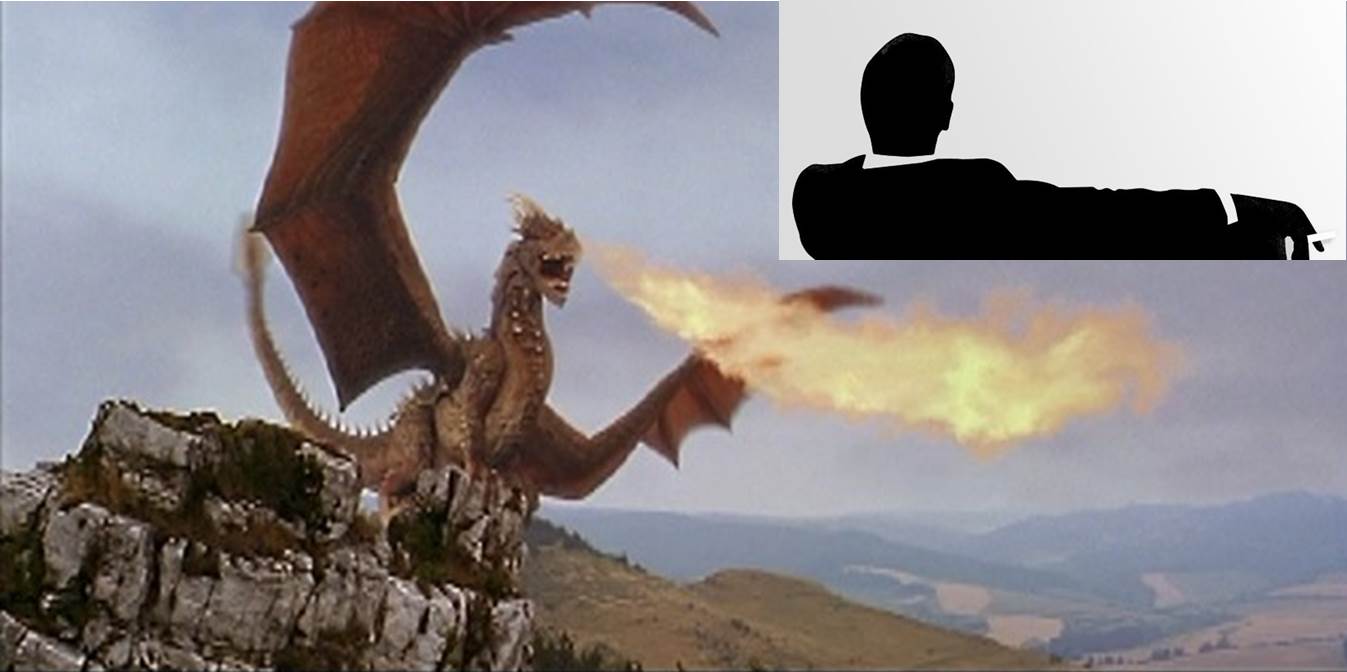
More often than not, it is your protagonist—the canonical Everyman or Everywoman—who has some visceral need to fulfill or challenge to overcome. Killing the dragon is the superficial challenge, but damned few of us have had much experience killing dragons. Most of us, however, have fought for the respect of our community or have had to overcome a fear and step forward to take control or responsibility.

Hell, readers might even relate to the dragon, as in the movie Dragonheart, where Sean Connery’s Draco finally explained that his assaults on the townsfolk were [SPOILER ALERT] his attempts to save the last dragon—him—from extinction.

In the rarest of cases, it may not be a character, but the environment to which someone relates. This is my situation with the series Mad Men. I find it difficult to relate to any of the characters and their hyper-exaggerated soap opera problems. Having spent more than five years in advertising, however, I can relate to the creative challenges within the office. I find myself getting angry or frustrated as I watch pitch meetings or client presentations because of my own baggage.

As a creator of your story, you cannot hope to know everyone who will come across your story. Thus, you cannot—nor should you—build your story to accommodate these varied experiences. You have to tell your story to tell it effectively, but you can broaden its appeal by making sure your characters (and possibly your environment) offer clear parallels to the current human experience. (If your primary audience is dogs or fish, then change the word “human” as appropriate.)

At their most basic levels, what are the human conditions that your characters express or are trying to repress (oooh, subtext)? When you get a good handle on that, you’ll have a better understanding of how relatable your story will be to your audience.

(Images are used without permission.)

Have you herd?

The ground is covered with the crisp snow of January,

The wind howls its plaintive cries of winter.

The herd mill about in tight formation

Trying to stave off the cold.

Most lift their feet one at a time

As if to get brief respite from the icy tendrils;

Their flesh quivering to make blood rise

And warm their souls in the early morning darkness.

There is little communication between the members

As thought is too difficult on this cold winter’s day.

The breath of the herd forms an icy cloud above their heads,

That is quickly blown away to fall as snow in some far off land.

Their minds wander to that time so long ago,

When the sun shone brightly and the grass was green;

A time of plenty when they were warm and active.


The wind blows one icy blast, masking out all sound

Even that of their own heart beats.

With ice forming on their coats,

The herd huddles even closer,

More oblivious than ever to the world around them.

Suddenly, one of the herd lifts its head.

A whisper is faintly heard fighting against the breeze.

In response, more to their mate than to any sound,

The herd begins to waken.

The herd jostles as the sound changes

From a whisper to a call to a roar.

The herd becomes a living organism,

Changing from its dormant state to one of vitality.

As the sun peeks over the horizon, and life returns,

A clear call is heard by all:

“VIA train, eastbound for Toronto,

Now arriving on Track 2.”

Another workday begins for the people of Oakville.

Contrasts

Every once in a while you see a sign that seems so amazing, so eye-catching, that you have to wonder if the owners could really be so oblivious to its irony.

This was one such day for me, as I wandered past a little restaurant called Social Reform.

By the way, I don’t necessarily hold myself above my condescension, walking by with my digital camera and full belly, but I do what I can to help.

Who is this guy?

Without putting too fine a point on it, I have been trying to discover the answer to this question for almost 50 years and I don’t feel that I’m any closer to an answer.Image

I’m a writer. I’m a photographer. I’m a creator. I’m a distiller.

I write comedy. I write tragedy. I write technical. I write lyrical.

I photograph nature. I photograph society. I photograph the concrete. I photograph the abstract.

I think. I feel. I fulfill. I surprise.

And tomorrow, I will do it all over again.