Music and the soul

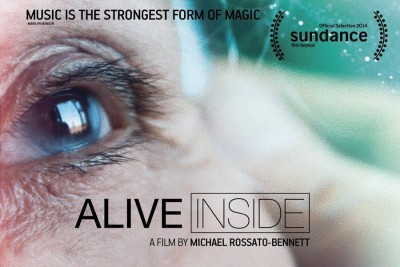
Alive Inside movie poster from the Sundance Film Festival

Alive Inside movie poster from the Sundance Film Festival

I am not a musician. I do not play an instrument, nor do I sing (not well, at least), and I do not understand how music is constructed. I do, however, like music and firmly believe that if we ever discover proof of a human soul, it will translate itself to us in the form of music.

I have, of course, no evidence to support this belief, although a recent experience at the Nashville Film Festival suggested I may be on the right track. The event was the showing of a documentary called Alive Inside: A story of memory and music.

The film, directed by Michael Rossato-Bennett, follows the story of social worker Dan Cohen who has spent the last several years bringing iPods to nursing homes across the United States. Cohen has found that even with the most neurologically shut down senior (e.g., clients with Alzheimer’s disease or other forms of dementia), revive when they music from their youth.

Director Michael Rossato-Bennett (l) and social worker Dan Cohen (r)

Director Michael Rossato-Bennett (l) and social worker Dan Cohen (r)

Slowly, as the story plays out, we are introduced to human husks that reside in these homes and palliative care centres. People who had once been husbands and wives, mothers and fathers, sons and daughters, but who have been reduced to masses of barely interactive biological matter by their medical conditions.

And yet, when the headphones are placed over their ears and music pours down thin white wires into ear buds, those husks are infused with life. Like a balloon that only shows its true form upon inflation, the inert bodies and death masks take the form and substance of the human beings they once were.
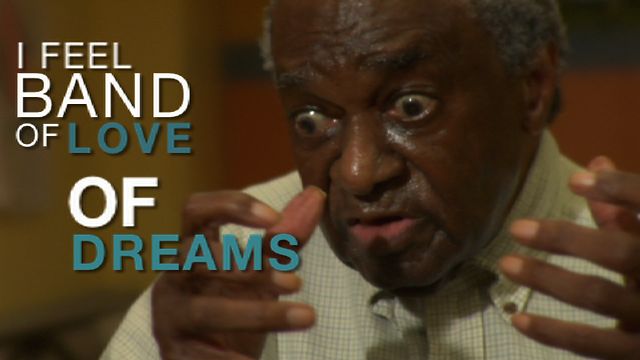
Henry comes alive again as the music reaches inside

Henry comes alive again as the music reaches inside

Eyes glow with life, spines regain flexibility, paralysis becomes movement, and disengaged spirits connect with the world. If only for a few hours, the catatonic fog lifts and a human is reborn.

The science—discussed in part with Dr. Oliver Sacks—suggests that the familiar, beloved music of the individual’s past activates that part of his or her brain as yet left untouched by disease, effectively relinking the connections between their worlds within and without. That may be true, scientifically.

What was certain to me was that the music either reignited the spark that makes us human or provided the fuel that converted a seriously diminished spark into a sputtering flame. The results were miraculous.

Even in cases where disease hadn’t erased the person’s individuality but dampened it with manic-depression or multiple sclerosis, the music seemed to quieten the internal maelstrom enough for the person to re-emerge. The woman immobile without her walker, shoved it aside to dance to Spanish guitar.

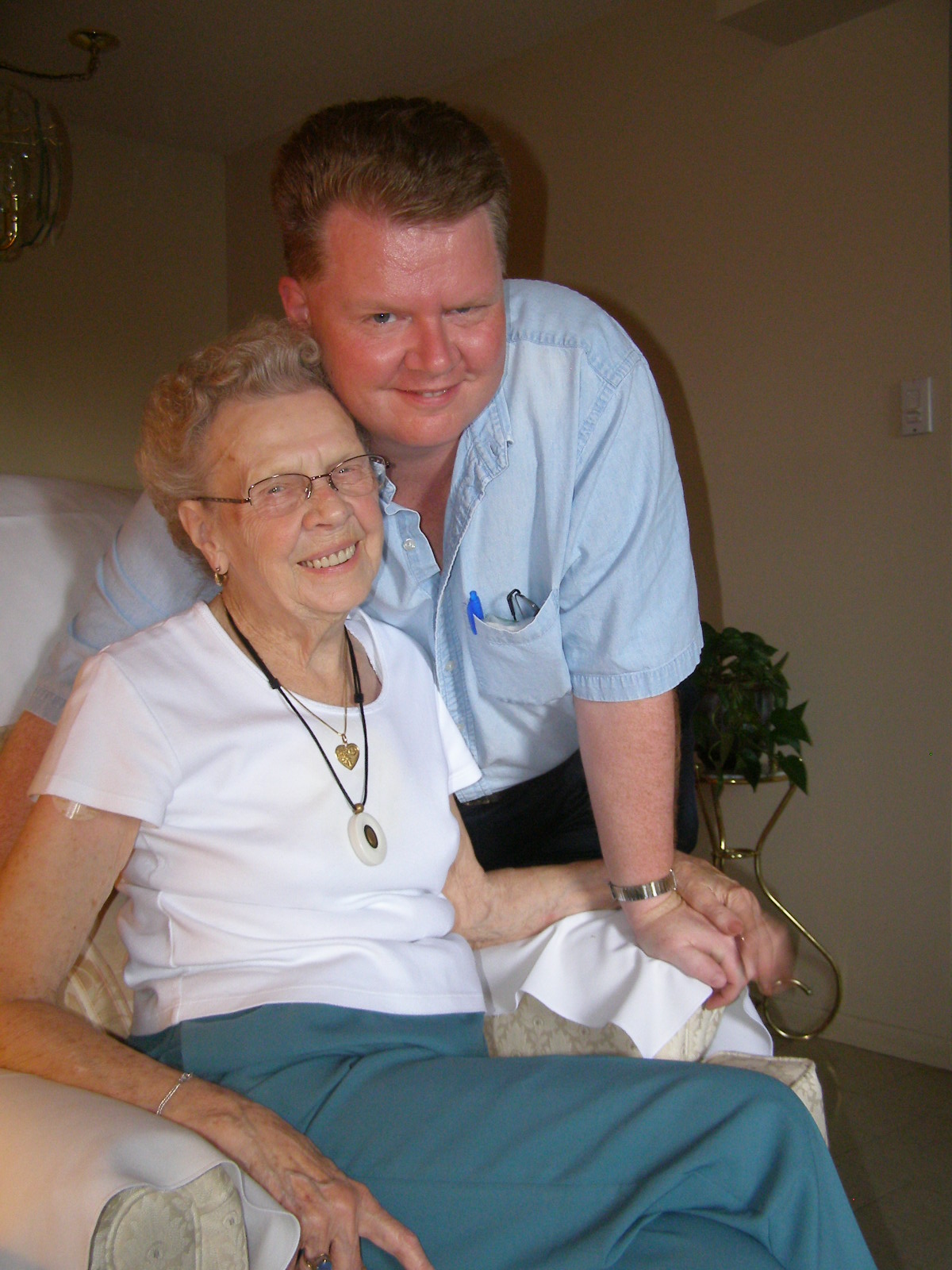
The story of Alive Inside had a personal connection for me as I immediately thought back to my now-deceased grandmother Dorothy who fortunately had maintained her mental faculties except at the very end. Her apartment, as I remember it, was constantly filled with music, her CD player rarely turned off. New CDs coming into her home every Christmas, every birthday. Elvis, Michael Buble, The Mills Brothers, Motown and light opera. She was at her most contented when listening to music.

The caregiver...

The caregiver…

...becomes the care-receiver.

…becomes the care-receiver.

But the world was completely different when she was in the hospital—a life of cardiac issues catching up with her eventually. In the anemic, lifeless wards where wonderful warriors did their best to stave off the inevitable, I could see Dorothy’s spirit wane with each passing day. Even if I didn’t always think she was physically ready, my happiest days were knowing she was going home.

When something upsets the norm, ceases to function correctly or goes completely dormant, it is easy to set it aside and forget about it. When that something is a loved one, setting them aside is never easy but it is often easier than coping with the problem. And once set aside, forgetting becomes that much easier.

Seeing that a person is still inside that morbid husk of a human, however, changes everything. Knowing that we have committed a living, breathing, connectable loved one to solitary exile becomes less palatable, less conscionable.

Music isn’t the solution. It doesn’t reverse what has happened to the person biomedically. Within minutes or hours of the music ceasing, the individual typically deflates to his or her former shell.

But we who have witnessed the transformation, we have been permanently changed because we can never see that human shell the same way ever again.

We know that shell is not lifeless, and once we know that, there is no going back.

If you get the opportunity to see Alive Inside, please do. And be sure to bring plenty of facial tissues.
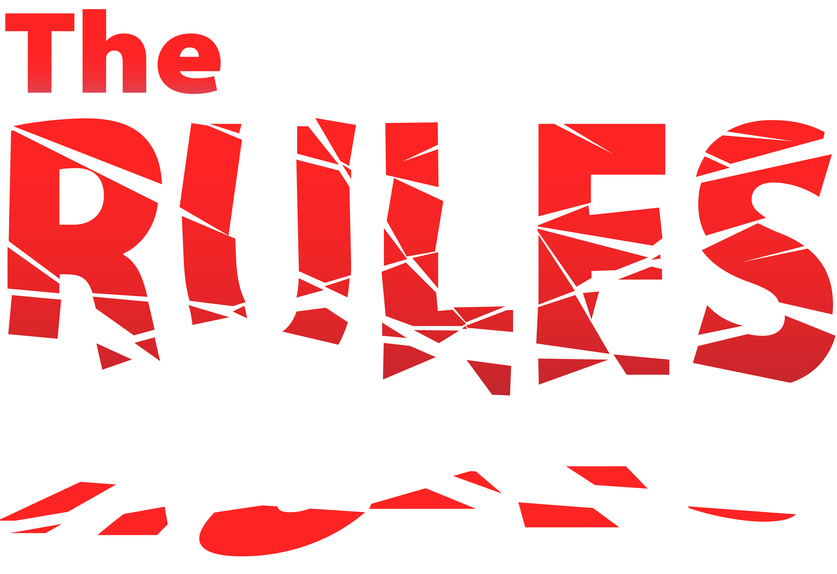
Rule breakers

Broken Rules Falls to Chaos Anarchy Pieces

Oil and water do not mix because, well, they are oil and water. This is a rule. We made a cliché out of it, so it must be a rule.

And yet, it is not a rule.

Oil and water can mix. You just have to screw around with it by adding another component to the mix…an emulsifier. True, this isn’t the same kind of mixture as blue Kool-Aid plus red Kool-Aid makes purple Kool-Aid, but the colloidal suspension of oil droplets in water is still a mixture.

So what about combining oil painting with water colour painting? Anathema, you say. They are two distinct media, you cry.

So what, I respond.

Because we’ve never seen it done (or at least, I haven’t), doesn’t mean that it cannot be.

Each medium offers its own strengths and limitations, and magnificent works have been created with either. Is there a way, however, to enhance those strengths, moderate those limitations by combining the media within a single work?

Every day, new rules are created, new schools of thought founded that try to define a panoply of Art forms. This is good, as these institutions form the parameters in which new Artists learn and understand their craft.

Can you imagine the panic of being told to go make art and being given nothing to do so: no instruction, no media, no resources?

And yet, those very institutions can strait-jacket the unwary and the unthinking, as rules become commandments rather than guidelines. When any attempt to step outside of the school is med with derision, contempt and blinkered exclusion.

The very congresses and champions established to support the growth and evolution of Art can easily become the prison wardens of that Art, confining aberrant Artists in an attempt to petrify the one true form.

(By the way: The same is true for Science, where journals and textbooks are rife with examples of explorers being squashed for daring to suggest something that didn’t fit within scientific canon.)

It would be naïve and harmful to suggest that rules should not only be broken, they should be shattered. If you wrote a novel using numbers rather than letters, you might find a very small audience for your work and little understanding from peers. There is much to be said, however, for grazing, nicking or wounding the rules.

Rules should be constantly questioned, viciously challenged if Art is to evolve. Without such a challenge to the nucleotides that comprise our genetic material, we would not exist and the planet would be lifeless.

But just as we demand mutation and adaptation to facilitate Artistic evolution, so must we accept the other half of the Darwinian equation. Only those most fit to survive will. The majority of mutations and adaptations will be for naught and that Art will perish.

It is a harsh reality, but look at what it has wrought in just 40,000 years since humans first applied colour to walls.

All this to say, break some rules. Test the limits. It is your evolutionary destiny as an Artist.

Break-the-Rules-e1331912129855

(Images are property of owners and are used here without permission and against the rules.)

Risking it all

Risk

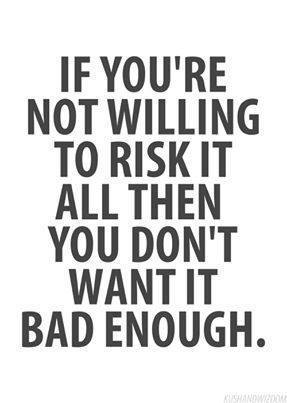
A friend of mine recently posted the above sign on her Facebook page, and I had no choice but to share it with my Facebook community (and now you). Although I find the sentiment a little negatively toned as worded, I completely agree with it.

As many of you know, I jumped off a cliff about 18 months ago, completely turning my life upside down in pursuit of the dream of being a screenwriter. To do that, I have made a large number of sacrifices to the way my life was, but in the interim, I have discovered some wonderful things—about me and my friends—that I might never have learned if I hadn’t.

Last week, I had drinks with another friend, someone who had made a similar jump to mine. Like me, he has had some wonderful times during this phase of his life, but he is also struggling with doubt and the sense that the years of effort haven’t paid off as he would have liked. Doubt is a thing I understand.

At this moment, I have no doubt or at least not about my dream. It seems as real and viable as ever. Its realization is simply a matter of time in and work on my part. I revel in these moments and wish my friend could feel the same way right now.

When doubt does creep in, however, I do my best to give it context.

The doubt: Can I afford this conference? Is this screenplay any good? Have I made a mistake? Am I a fraud?

The context: What is the alternative?

I look back at my life before I made the jump and I realize that I can’t go back to that. This is not to say that it was all miserable…I had love and support; I enjoyed aspects of my jobs; I met wonderful people. But in many ways, all of those positives were for naught back then because I was miserable.

I was living my life for other people. I based my identity on my job and what I did for other people. I was only as good, as valuable, as loved as other people told me I was, and deep inside, I truly suspected they were lying. Through no fault of theirs, I couldn’t have faith in them because I didn’t have faith in me.

So, when I finally jumped off the cliff, I realized that what I was risking was a life of well masked misery and distrust. Hardly much of a risk from my perspective.

I understand that others cannot always jump as wholeheartedly as I did. They have responsibilities that I did not have.

I have no children. My wife and I were separating for other reasons (nice to say she remains my strongest and most loving advocate and supporter). My family responsibilities had all but disappeared. My jumping would leave no one in the lurch.

So, maybe you can’t jump like I did. I’m not suggesting that it is right for everyone. But to not jump at all in pursuit of a passion is folly.

Every day you maintain the lie, whatever your personal lie is, is another day you risk it all.

It will be scary. You will have doubts. But you’re not doing anyone any favours, least of all yourself, by continuing to pursue activities, attitudes or a life that is crushing you.

I hope my friend relocates the wonder in what he is doing and continues to explore his adventure. If he will let me, I am happy to help him in any way I can.

He is a very lucky man because he is surrounded by love and support from a community of people who adore him and want him to be happy. I hope he can take energy from that. I know I do.

Sentience


A majestic shot taken at the nearby beach.

A majestic shot taken at the nearby beach. Click on it for full effect of image.

Birds don’t think how to fly.

Fish don’t consider buoyancy.

Spiders don’t judge perspective.

Hyenas don’t debate food.

Awareness, knowledge, understanding

Are all well and good until

They become proxies for fear.

Do. Experience. Live.

Safe is not safe

stepoffcliff

Yesterday, I watched the interview of Billy Crystal on The Daily Show and aside from the startling reminder of just how funny Crystal is as he approaches his 65th birthday, I was deeply effected by a story he told.

In his earliest days as a standup, he performed one night at Catch A Rising Star, where he absolutely crushed his audience—20 minutes of pure gold. And yet, when he had dinner later that night with Jack Rollins, the man who discovered Woody Allen and made him a star, Rollins was unimpressed with Crystal’s set. This drove Crystal crazy and when he finally worked up the courage to ask why, Rollins complained that Crystal had played it safe.

Crystal’s entire set, he explained, was material that he knew would be appreciated by his audience, and Rollins acknowledged it was funny. But it also left him cold, as it told him nothing about the man behind the humour. It said nothing about who Crystal was and what he thought about the world.

Never be afraid to bomb, Rollins advised Crystal, and it has been Crystal’s advice to aspiring comics ever since.

Too often, writers of all media and genres face the same challenge. With an eye to being popular (liked) and commercial, we play it safe. We don’t push ourselves, our talents, or our audiences hard enough. We hold back for fear of offending. The results are shelves of books and DVDs that are milquetoast, bland, generic, and channels that are devoid of anything stimulating.

It’s not entirely the writer’s fault. Some of us have agents and managers cautioning us before the next deal. Editors and producers “honing” and “refining” out creativity in the hope of better numbers. But we let them do this to us and to our Art. Playing it safe may get you that next deal, but will it keep the deals coming?

When your work reads like the next writer’s work, which reads like the last writer’s work, why does anyone need to choose you or your idea?

Like them or no, there is no denying the talent that went into shows like The Big Bang Theory (4 physicists and an actress?), Breaking Bad (a meth-cooking school teacher?) and The Big C (a cancer comedy?). Or the book 50 Shades of Grey (mom reads porn?). Or the movie Memento (an inside-out movie?).

None of these were safe choices. None of these was obvious. All of these made people uncomfortable.

Go to the edge with your writing. Stare down the precipice and smile.

Don’t just face your fears; laugh at them and then take a giant step forward into the unknown.

In life, safe is an illusion. In Art, it is a lie.

As an artist, the most dangerous thing you can do is play it safe.

(Image is property of owner and is used here without permission because I like to live dangerously.)

Stealtown

On Toronto's Bay Street, the streets are paved with souls

On Toronto’s Bay Street, the streets are paved with souls

A thousand spires of concrete and glass

Etch their signatures into the clouds,

Holiest of shrines to commerce and wealth.

A soulless furnace of misspent energy

Or engines of tomorrow’s successes?

Streets bathed in shadow that hides

The scurrying shells of men and women,

Wan caricatures of the human spirit,

Decorated and dedicated to jobs

That pay their bills but rob their souls.

Where are the sounds of Life

In this chthonic chamber of horrors?

Who sings the songs of individuality?

Originality and free thought flit

From corner to corner, shadow to shadow,

Fearful of the crushing boots of conformity;

Chirruping into the noisy silence in hope

They are not alone.

Falling in love…again?

Keep your story options open

Keep your story options open

So beautiful. The fullness. The curves. You make me smile. I want to be with you forever. You’re perfect. I love you.

This is the greatest paragraph ever written. The most beautiful dialogue ever conceived. A scene that will be remembered for eternity.

Many of the posts I’ve written have been about cutting yourself some slack, about overcoming the inner demons of doubt. Giving yourself permission to fail. That perfection isn’t your goal.

Well, now we need to remember that not only is perfection not your goal, it is not even possible. There is always room for improvement, so please don’t ever fall in love with your work.

When creating a new work—a novel, screenplay, whatever—it is important to leave yourself as many options as possible, to keep all of the doors open until you reach a combination that works best for you.

Too often, however, writers jump into their work, pursuing the idea that offered the first blush of love. In their zeal to express that love, they put on blinders to other possibilities. Perhaps it is a pure love, but I’m confident for a few of us, it’s also probably fear of never finding another love.

And once we express that love, we are loathe to question it, even when presented with another option. This is the only way the scene can be written. This is the best way to achieve the point of the scene. Everything else is weaker.

Maybe you’re right, once or twice in a work (or career), but rare are those moments. So let me recommend something scandalous.

Start seeing other options.

I’m not asking you to fall in love with them or to fall out of love with your original idea, but infidelity can be healthy. It may even make you appreciate your first love all the more. (Why do I suddenly feel like Silvio Berlusconi?)

Just dip your toe in the water, if this idea makes you nervous.

If your lovers currently meet in a restaurant, explore what would happen if they met in a post office, a house of mirrors, a sanitorium.

Too much too soon?

Then change the type of restaurant. How would your scene change if they were at an expensive restaurant, McDonalds, a hot dog cart, on a picnic?

Try this with any and every aspect of your story, and do it as early as possible. The longer you work on a project, developing its specifics, the harder it will be to change any aspect of it beyond cosmetic editing.

That path you see to your goal may be less of a path and more of a cavernous rut you’ve worn by running over the same idea time and again. Wait too long and you don’t see anything else. You can’t see beyond its limits.

Don’t let that happen to the concept that you love and more importantly, to the creative spirit you continue to nurture. It may be painful. You may have to walk away from the one you love, but trust me, you will fall in love again. I promise.

(The image is property of the owner and is used optioned here without permission.)

Indirect influences

Image

I naturally speak with one voice. If pressed, I can speak with a second, more professional voice; the one that presents concepts to advertising clients or interviews corporate executives for a magazine. But most of the time, I speak with one voice that uses a vocabulary and attitude established over my many decades of life.

I think this is largely the case for everyone, which is why it is not surprising that people tend to write stories with a series characters that can largely sound the same. The protagonist is typically quite distinct. The antagonist is often distinct. But after that, I don’t know that I could tell who was speaking if I didn’t read the names.

These secondary characters, by their very nature, are not our focus as writers, so they tend to have the least developed back stories even in our heads. Other than age or gender, what makes the paperboy different from the local sheriff from the school teacher?

The same thing that makes you different from me. Our experiences, past and present.

One of the tricks for informing a character that I learned in improv was to endow a character with a trait that only you as the performer knew, and ideally a trait that had absolutely nothing to do with the scene that was developing.

In one exercise, I decided that my character had a bad right ankle, so that every time I took a step, my ankle would cause me pain. I didn’t hobble or verbally express the pain with either an “Ow” or “Would you slow down, my ankle hurts”.

The pain was expressed, however, in how my character responded to his environment and the other characters in the scene. What might have been a middle-of-the-road character suddenly became a terse character, someone in a hurry to get things over with, quick to anger or frustrate, less apt to engage in activities.

The bonus aspect of the exercise, for me, was that my fellow improv performers quickly got and responded to my character, but when pressed, could not exactly say why I behaved as I did.

Now change that ankle pain to a foot orgasm (read about it this week online) and see where that character would go (probably jogging).

The sore ankle had no impact on what role the character played in the scene, but more in HOW that character performed that role. And this made the character stand out from all of the others.

I go back to this exercise often, when I find myself creating secondary or tertiary characters that aren’t differentiated from the background. A little something to make them stand out, however briefly, in their scene.

If you find yourself stuck, give it a shot. What could it hurt, other than possibly your ankle?

(Image is property of owners and is used here without permission, because it makes me happy/indifferent/snarky/hot.)

Phoenix

Image

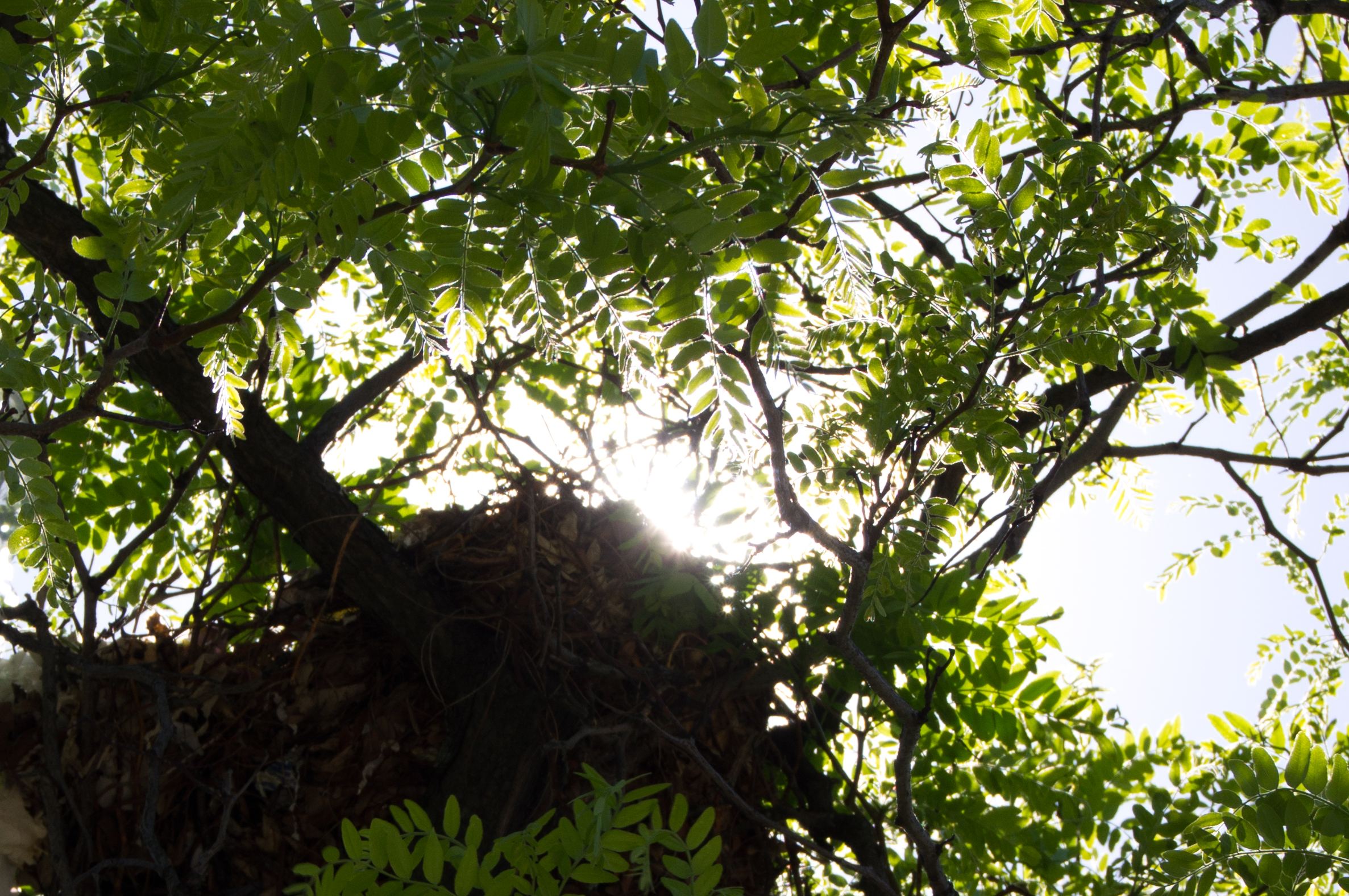
The phoenix rises,

Feet firmly planted

In death and decay,

To stretch its wings

And catch the rays

Of life-giving Phoebus.

Wind rustles quiet

Giving brazen birth

To feathered choirs

Of heavenly song.

A magic silhouette

Shadows the orb.

Earth is forgotten

In a leap of faith.

Consciously unconscious

When a writer is on her game, when she has found a creative groove, she writes at two levels.

At the conscious level, she weaves the stories of her various characters and environments into a literary carpet of amazing delicacy. She understands the work won’t be flawless when she’s done, but she knows and is comfortable in the belief that she can surgically pull the extraneous threads later.

This is a beautiful thing. But an even more dazzling spectacle is happening at the unconscious level.

This is the level at which the writer’s subconscious creates delicate near-invisible tendrils of connections between characters and themselves, their surroundings and other characters. It is at this level that amazing nuance and metaphor is added to a story. Without the harsh distractions of planning and plotting (both very important, mind you), the subconscious is free to perform magic that we may not recognize or appreciate until much later in the creative process.

One way you witness this is when you realize that conscious concerns you had before sitting down to write have been miraculously addressed, as though story-writing elves snuck onto our computers overnight.

Interestingly, this is one reason why it’s important to have other people read your stuff. They will see things you cannot. In some cases, it is because of what they bring to the table—their personal biases and experiences. But more importantly, it is because they aren’t encumbered by your blinders.

Other readers see your work more clearly because they are untainted with what comes before and after, whether on the page or in your head.

I witnessed and shared this personally in two reading group sessions where my fellow writers created incredible metaphors that deeply informed their lead characters. Yet, when pressed directly as to whether they were conscious of those decisions, both were the most shocked people in the room.

Both demurred that the incidences were quite accidental, but whereas I might agree that they were unintentional, I don’t believe they were in any way accidental.

We make choices for a reason (or several) even when we don’t know what those reasons are. The truth is our truth no matter how ignorant we may remain to what that truth is. We cannot help but splay that truth across our pages.

To some extent, I think creative harmony lay in not caring what those reasons are. For if we try to dissect them, I fear we run the risk of killing them. It is enough, I think, to let our subconscious guide us while we work consciously.

Let the magic within you happen. Your work will be the better for it.

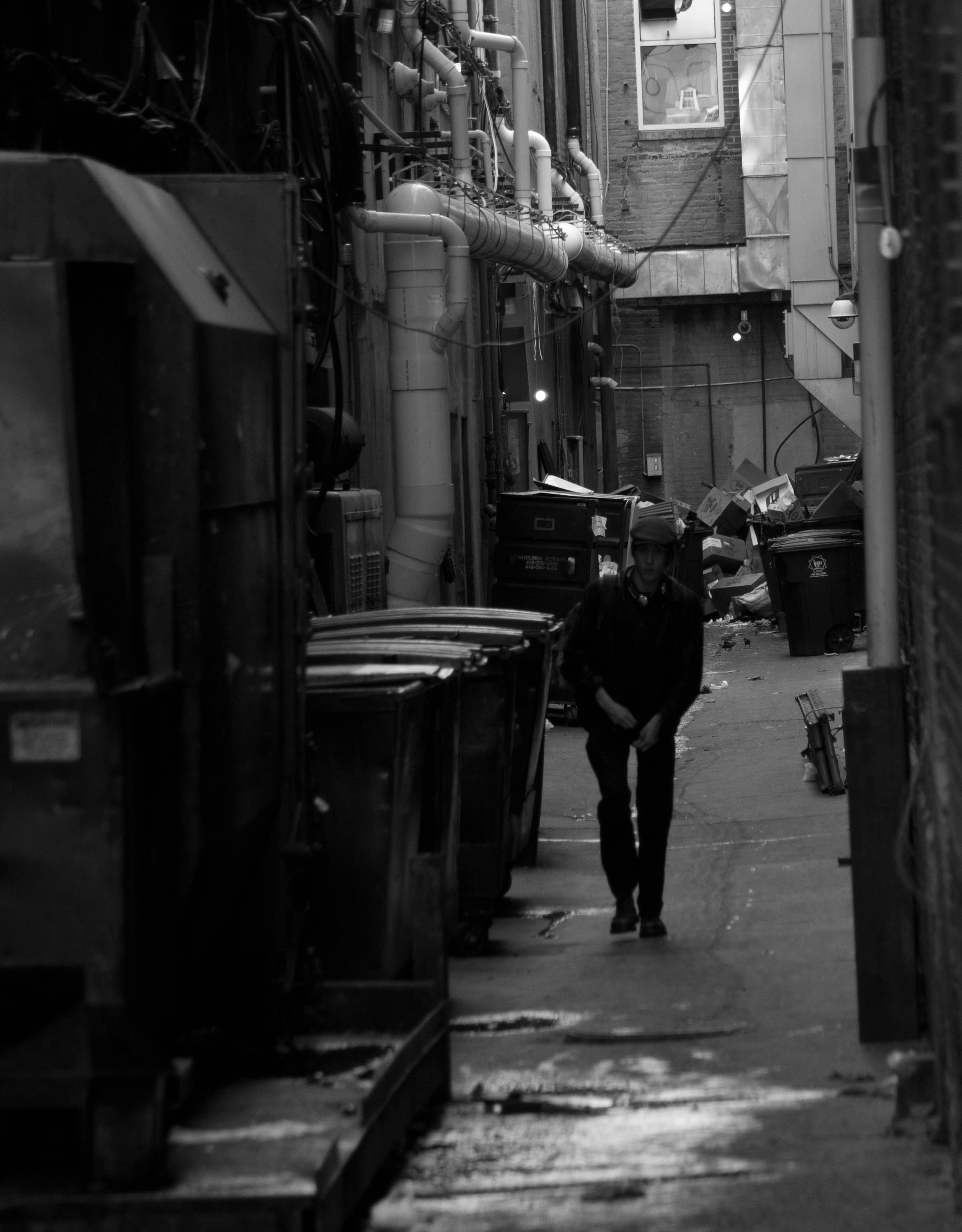
I never intended to take a photo of someone urinating in a Washington, DC alley way, but am tickled I did...especially as he realizes he's been caught

I never intended to take a photo of someone urinating in a Washington, DC alley way, but am tickled I did… especially as he realizes he’s been caught