It gets to us all – Jon Stewart

jon_stewart-chin

For many of us, programs like The Daily Show were our weekly bulwark against the insanity of clashing cultures and ideologies or against insanity itself. Regardless of your personal sociopolitical leanings, shows like this one help many of us to see that we are not going insane or losing our hearing, that the bizarre ironies of peoples’ words and actions are not just figments of our imaginations.

Cain and Abel

Cain and Abel

But where most of us simply allowed the insanity to flow over us and healed our wounds in the salve that was satirical comedy and commiseration, the world’s woes wear on the people who bring us this salve. Such, I think, was the case this week with the announcement that Jon Stewart will shortly hand the reins of The Daily Show to another.

http://www.youtube.com/watch?v=wC4u23S6Tr0

A couple of months ago, I tweeted Jon and The Daily Show to express my concern about his health, both mental and physical. Over the last several months, it seemed that each episode of the program was taking more and more out of the host, that he had to fight to maintain his composure. And he seemed to be losing that fight.

Aging sucks

Several times, his personal comments on recent events bordered on screeching rants, as though the nuanced commentaries we had witnessed for the past 17 years required too much of him. On other occasions, he almost seemed to throw his hands into the air and with a head-bobbing sigh, surrender to the madness that swirled around us all.

Jon Stewart seemed tired, and if not broken, at least seemed wounded.

And please, this is not a condemnation or expression of disappointment. The man has clearly earned his weariness and wounds. (Too Jewy to say he took on our sins?)

Nice hat...where's my chocolate?

Nice hat…where’s my chocolate?

Even the strongest metal abrades to nothingness if repeatedly and relentlessly thrown against a stone wall that seems to regenerate itself at will. For every monolith of stupidity or cruelty that The Daily Show tackled through humour, a dozen others formed behind it. And the show kept pushing.

And so, as much as he will be missed, Jon Stewart will step aside and begin the healing process, while the show will become what it will become under the guidance of another.

Tracey+Stewart+Jon+Stewart+Family+Walking

As he expressed in his announcement, the first part of that healing will likely be him reinforcing his roles as Dad and Husband. Eventually, will we see him back on stage performing stand-up (sure, we all say we’ll go to the gym)? And after that, who knows? (As long as it’s not acting…dear god, Jon, NO!)

The man has earned his rest, and we will applaud and cheer and cry as he walks out the door (and about two weeks later, we’ll start pitching screenplay ideas to you).

Coming to a theatre near you (please, please, please)

Coming to a theatre near you (please, please, please)

Be well, Jon Stewart, and thank you.

Is a Serial Serial Killer a Series Killer?

bones card

Okay. That’s it. I’m raising the red card on an issue I’ve been grumbling about—at least privately—for several years now.

To mix my sports metaphors, I am calling a double dabbling penalty on the television series Bones, which I am just catching up on via Netflix. (Spoilers coming if you’re not up to Season 9.)

bones team

I love procedural programs, and as a certified science geek, I particularly like forensic series such as Bones and CSI. If you want to piss me off really quickly, however, I recommend you start a story line involving a serial killer.

Now that may sound counter-intuitive, but I find most serial killer story lines to be incredibly lazy and highly repetitive. More often than not, the episode structure and format are completely blown apart and rather than being about solving a crime, the episodes devolve into a personal vendetta, where the lead investigator—cop or forensic scientist—goes off the rails and alienates his or her team for a few episodes (or season).

“Don’t you get it? He’s taunting me, testing me, letting me know he’s always one step ahead of me.”

Yes. We know this. So let’s move on and get back to solving crimes (aka puzzles). You know, the reason I watch your ruddy show.

Watching a procedural series turn into a psychological drama is like watching a pretty actor try to take on a meaningful meaty role. It’s typically painful to watch and not what I purchased. You’re reneged on our unspoken agreement.

[NOTE: Dexter is held outside as that always was a series about a serial killer hunting down serial killers.]

Csiepisodebuilttokill2

Up until recently, I’d believed that this was just an annoyance I would have to live through. God, how I struggled with Grissom’s Miniature Killer. But Bones just escalated that annoyance to a new level, which is why I raise the red card and call for an ejection…

(Last chance to avoid spoilers.)

…for Bones has used a serial killer to introduce a second serial killer.

Seriously? A serial serial killer?

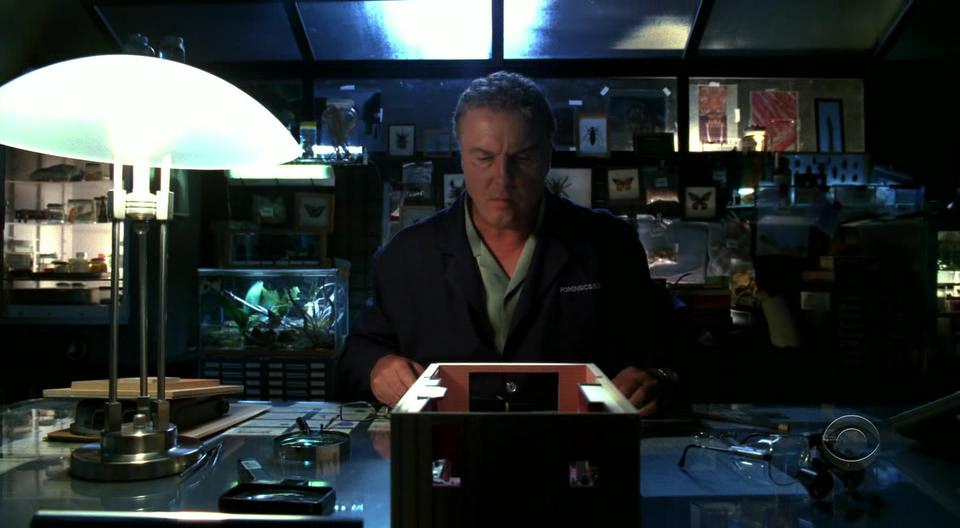
It’s not bad enough that I had to watch a season or so of Christopher Pelant torment the Jeffersonian team, only to have him torment Bones herself with news that several unsolved murders are connected and that her negligence has allowed a serial killer (The Ghost Killer) to go unchallenged. And all just 24 hours before Pelant is killed by Booth, leaving everyone but Bones questioning if he was just lying to drive her nuts.

bones-ghost-in-the-killer-01

So now, as a fan of the show, I conceivably get to sit through yet another season of the Jeffersonian team getting torn apart by this second serial killer. Can you tell how excited I am?

Remember when Fonzie jumped the shark? Well, Bones just jumped not one, but two (so far only two) serial killers.

As an open note to television writers and showrunners, when you’ve run out of things to say, stop talking. End the series. Take your bows and move on.

I will keep watching Bones, if only because I’m an idiot and have invested 8.5 years of my life to these people. Also, I know there is a significant death coming in early Season 10, not yet on Netflix Canada.

We’ll have to see who outlasts whom, but I know which of us is on life-support.

tv-bones-autopsy-cast-poster-AVAsp7018

Creation (a poem)

Hand-writing-on-paper-with-pen1

A river is born

As the ball rolls,

Moisture captured

In upper strata,

Bleeding to layers below.

Impressions made;

Streams carved;

The universe is marked

By passing thought.

From irrigated channels,

Ideas unsaid find root.

Worlds are created.

Worlds are changed.

And life takes new meaning,

If only for a moment,

Until the ball rolls again

In fields yet untilled.

The episode that never existed

The episode that never existed

BoJack-sh!t (a review)

bojack-horseman-bar-640

Unless this is a satire about satires, I don’t get the new Netflix Original Series BoJack Horseman.

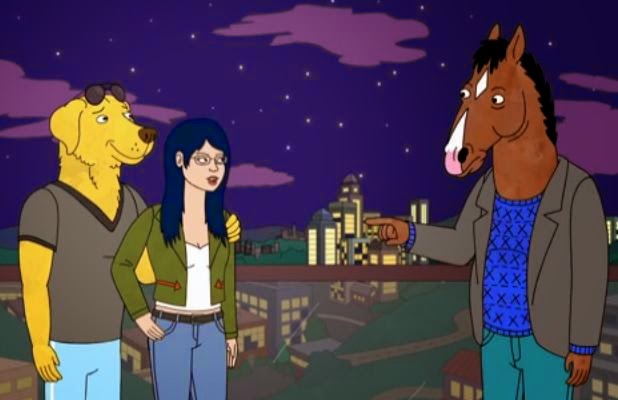
Ostensibly, the zany life of a washed up sitcom star from the 90s, who also happens to be a horse, who is trying to find meaning in a life of idle emptiness, the show is instead an endless string of really bad puns and lame jokes about anthropomorphic animals and Hollywood, punctuated with long speeches to highlight the irony of a scene or episode.

I am surprised the character giving the speech doesn’t hold up a sign reading “Ironic part” or “Satirical condemnation of status quo” just in case the audience was too stoned to realize that’s what the speech was about.

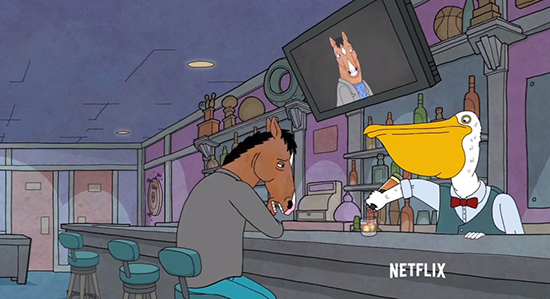
Episode 3 starts with an establishing shot of a bar called The Pelican. We then cut to BoJack sitting at the bar which is being tended by a…wait for it…pelican. Or in Episode 2, BoJack has a run-in with a Navy Seal who is a…here it comes…actual seal. Oh, and at the apex of humour, whenever BoJack’s girlfriend/agent puts him on hold, he listens to music from Cats…oh, did I mention his girlfriend/agent is a cat? Them’s the animal jokes, my friends.

pelican

There are attempts at social commentary, of course. In Episode 3, BoJack’s memoir ghost writer tries to make him feel better about a friend by claiming she was a victim of her circumstances and the pressures of society. But silly BoJack…he misunderstands this to mean that no one is responsible for their actions and that the fault universally lies with society, so he can act like a jerk and it’s not his fault. Silly BoJack.

HORSE

The voice talent is, well, talented. Alison Brie (Madmen, Community), Aaron Paul (Breaking Bad), Amy Sedaris (Strangers with Candy), Paul F. Thompkins (No You Shut Up!) and Will Arnett (everything else)…these people can act.

Show creator Raphael Bob-Waksberg is a mystery to me. An actor and writer, all I can really find out about him is he a member of a sketch comedy group called Olde English.

And the more I read about him, the more I wonder if my original comment wasn’t dead on…this may just be an amazing meta joke perpetrated by a very funny man. Or it’s just not very good.

person_11613

Because I only lose 25 minutes of my life at a go, I will continue to watch to see if it gets better…dear God, let it get better…or let me in on the divine joke of this comedy.

How I Met Your Series Finale

tv-set-with-a-broken-screen-81240769

Earlier today, my friend Marsha Mason posted her weekly blog on Why The Face. This week, Marsha chose to focus on series finales of television programs, picking up on the How I Met Your Mother phenomenon now that the teeth-gnashing and hair-pulling have died down.

Marsha considered this outpouring from the perspective of the magnanimous response of the show’s creators. An excerpt of her blog post:

And while they did what they felt they needed to do to bring their story to its completion, there was no way they were going to tell their audience that any of their feelings were wrong.

A beautiful way to look at the uproar.

But of course, Marsha’s post also made me think about the challenges of writing a series finale (damn you, Marsha, you made me think again).

I truly feel for showrunners who are faced with this task. It is a daunting task made that much more difficult by a dedicated audience, who for the most part can only be disappointed.

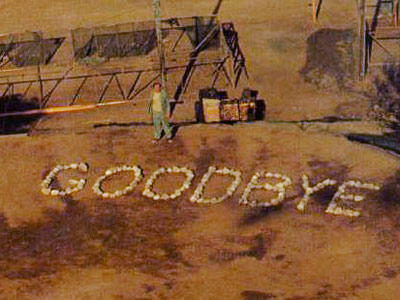
For me, the best series finales were done by shows like The Fugitive and M*A*S*H, where luckily, the writers had a hard end point in their story, i.e., the capture of the real killer and the end of the Korean conflict, respectively. In these cases, the resolutions between characters was more obvious (not to give the sense that the episodes would have been easy to write or weren’t written well). Similarly, The West Wing had the end of Bartlett’s 8-yr term and the inauguration of the new POTUS.

Mash-Goodbye_l

For other shows, the challenge is that the lives of the characters typically continue beyond the finale, if only in their fantasy worlds. From their perspectives, this isn’t the end of their lives; it’s Tuesday.

Thus, writers are forced to pencil in a flurry of seemingly arbitrary events to explain why the characters are parting ways or moving on, and typically, this means leaving a lot of unresolved questions for the audience. Closure is impossible when nothing is truly closing.

Take, for example, the end of The Sopranos…the family sits down to dinner in a restaurant…fade to black. After years of a series filled with violence that would make Titus Andronicus blush, the pure normality of this ending was almost a let down, and yet, rang as a true moment in human lives.

sopranos_final_scene_1

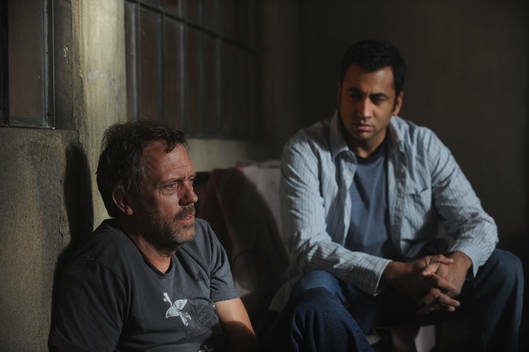
The alternative is to go big, such as the ludicrous ending of my beloved series House. The final 20 minutes or so looks like it was written by a group of pubescent boys hopped up on 24 consecutive hours of Grand Theft Auto. For god’s sake, it’s Gregory House…you couldn’t have him die of something he and his team couldn’t diagnose in time, only to have a letter arrive a week later from House showing he knew the diagnosis months ago?

houseandkutnerburning

Of course, the biggest complication is likely that most series have run out of steam well before they are given the opportunity for a series finale. All of the really great opportunities to end the series have long passed, the characters have little left to say to each other and it is only the blood-from-a-stone networks and die-hard fans who keep applying the paddles to the moribund concept. I give you the finale of Seinfeld. For this reason, I really do not look forward to the series finale of The Big Bang Theory.

TelevisionSeinfeldFinale

(I feel an admonition from Lee Aronsohn coming on.)

In these cases, better the mercy killing of cancellation than the sad wheeze of life-support equipment.

(Images are property of owners and are used here without permission…finale!)

And that’s the (mostly) truth – my new bio

Okay, so my producer for SomeTV!, the sketch comedy insanity currently in production in Toronto, asked me to provide him a short bio for the group’s web site.

Keeping in mind the sheer brilliance/stupidity of what we are attempting, I sent him this:

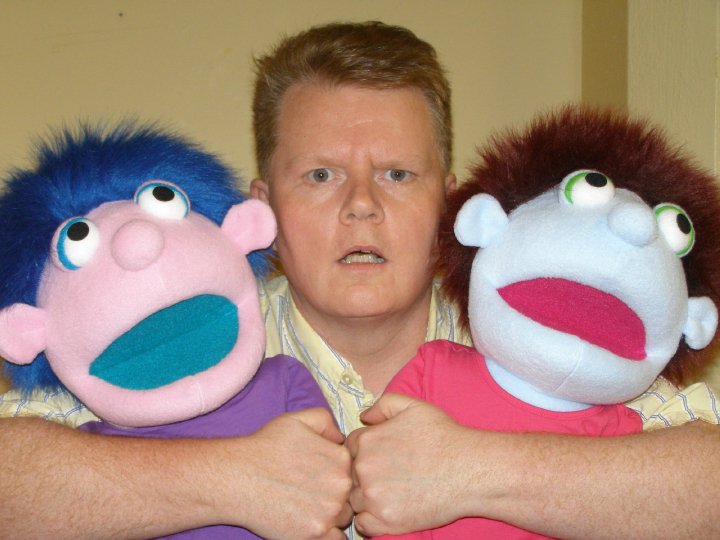
A born story-teller and punster, Randall told his first knock-knock joke in the Obstetrics Department of a Toronto hospital at the ripe old age of today. His early comedic repertoire consisted of poop jokes, fart jokes and snot jokes, but on learning that Vaudeville was dead, he learned how to write. After several failed attempts at living other people’s lives (scientist, journalist, press agent, ad man), he has more recently focused his energy on sketch comedy and screenwriting. In 2014, Randall won the Nashville Film Festival award for Best Animated Feature for his screenplay Tank’s. His influences are caffeine, Mel Brooks, sleep deprivation and human frailty.

Would love to hear your thoughts!

Randy (the one in the middle)

Image

Talking Comedy—Toronto Screenwriting Conference 2014

(L to R): Jeff Biederman, Katie Ford, Joseph Raso, Andrew Clark

(L to R): Jeff Biederman, Katie Ford, Joseph Raso, Andrew Clark

This past weekend, TSC2014 convened a panel of sitcom showrunners entitled Comedy Is A Funny Business, where the panelists discussed various aspects of developing comedy for Canadian television.

The panel was comprised of Jeff Biederman (showrunner for Spun Out), Joseph Raso (showrunner for Seed) and Katie Ford (showrunner for Working the Engels), and was moderated by Andrew Clark, Director of Humber College’s Comedy Writing and Performance Program.


How do you know you or something is funny?

From Raso’s perspective, most people who want to write comedy typically have good comedic sense, and that it is important to trust your own instincts on what is funny. The rest of the writing process comes down to mechanics. Ford added that it is often about what you watched as a kid, the shows you grew up with.

Biederman mentioned that he had taken improv and stand-up comedy classes several years earlier, but had never really enjoyed them. He still wanted to be associated with comedy, however, so he gravitated to comedy television. Ford is an advocate of such classes, however, as she feels it gives the writer a sense of what you are up against. And Raso echoed those sentiments suggesting it also makes sure that you give actors solid material with which to work.


Can you discuss the seeming renaissance of sitcoms in Canada?

According to Raso, it is important to have a solid premise or conceit for a show, a distinct way to describe the core idea, because simply having ideas for individual episodes won’t cut it. One of the challenges for Canadian sitcoms, he warns, however, is that it is so hard to get networks to see beyond the first year—one and done, as he describes it—which has doomed many shows in the past. For most shows, the first season is difficult as the show hasn’t yet managed an identity or found its audience.

For writers, Biederman adds, this can be a big challenge as it can take a while for a new writer to break through, and there are not a lot of places to build the necessary skills or unique voice needed to be successful.


Can you describe the pitching process?

For Biederman, it is about going in with a story. Rather than try to tell jokes or act things out, he prefers to focus on why this show, what is particularly interesting about this premise. And if you already have a spec pilot script, all the better, because it helps the creator and writer maintain his or her power in the conversation and gives the network something more definitive to look at.

For Ford, it is about walking in with your logline, introducing a sense of theme, outlining a typical episode and then describing the characters. But perhaps most importantly, letting people see your passion for the project and how you connect with the subject matter.

Raso couldn’t agree more. For him, the personal angle is key.

Ford also suggests that it is vital you engage the executive you are pitching because he, she or they are your first audience.


Can you talk about the writers’ room?

Biederman describes the mix as people sharing responsibility for the final product, more as partners than anything in a hierarchical sense. He even brings in outsiders to punch-up the script (e.g., jokes). He describes the room as ruthless but welcoming and admits that it’s not always easy to be in the room or to run it.

Ford agrees, suggesting that it is a collaborative environment, but is by no means a creative free-for-all. Her job is to listen for the voices that add to the show. Raso, meanwhile suggests that the hardest part of the job for him is that he has to say no a lot, but despite that difficulty, it is vital that the room start off with real, honest and open discussion.

Biederman suggests that table reads with the actors can be invaluable to the writers but that they don’t always happen. Scripts for a multi-camera show can change 50 or 60 times over the course of a week, Ford adds, limiting the usefulness of table reads. And single-camera shows tend to work on tighter timelines, so again table reads are not always possible.


So, how does a new writer get into the room?

Biederman suggests starting as a script coordinator rather than try to get in with samples of your writing. The job will give the novice writer invaluable production experience. Ford agrees, suggesting that her own script coordinator kept things together on her show.

Ford also suggests that new writers need to be heard, to get their voice out there by whatever mechanism they can find, whether Twitter feeds, blogs, anything. It’s about demonstrating your strengths and your personality to show you’d be a good fit for the room.

According to Biederman, the make-up of the room has steadily changed over the years. It’s not just television writers, but also stand-up comedians and performers who bring unique voices into the mix.

The biggest place he sees new writers fail is in not sending their work when he offers to look at it. The fear of it being not quite perfect kills a lot of opportunities. Just send the work, he says.


Spec script or spec pilot?

Both Raso and Ford were adamant that they much prefer to read original work over spec scripts. According to Ford, they’re just not interested in reading yet another Big Bang Theory spec or whatever show is popular. She finds it much harder to get a sense of a writer’s unique voice by looking at a script that is trying to be someone else’s voice.


tsc-logo

It’s a sad, sad, sad, sad world

Go to YouTube and search for Sid Caesar.

Right now. Don’t wait.

I’ll still be here when you get back.

Comedy lost another titan today with the passing of Sid Caesar at the age of 91.

A man who defined television sketch comedy as we know it today.

A man who trained and/or gave voice to some of the greatest comedic minds of the 20th century, including Carl Reiner, Mel Brooks, Mel Tolkein, Danny Simon, Larry Gelbart, Neil Simon and Woody Allen through shows like Caesar’s Hour and Your Show of Shows.

A physical giant, Caesar was capable of playing the brutish husband or the nebbish boyfriend. He brought laughs and tears. And he was the first to let his co-stars shine. Stars like Imogene Coca, Nanette Fabray, Howard Morris and Carl Reiner.

I am confident that all of these people would have influenced my life in one way or another without the likes of Sid Caesar, but he formed the nexus around which my comedic galaxy spun.

Thank you, Sid. Know that you were loved.


Related posts:

My Favorite Life

My Creative Journey

Jonathan Winters


The writer who… (UPDATED)

As an advertising copywriter, I was constantly called upon to summarize a client’s product with a single line, as few words as possible that would capture the brand essence of the product or service. The almighty tagline.

As a magazine writer, I am also called upon to summarize the stories I write into a sentence or fragment. Something that will give the reader the kernel of the story so they can decide whether they want to read it or move on.

And finally, as a budding screenwriter, I am asked to summarize my entire story in a single sentence so prospective producers can get my idea and see the possibilities, artistic but mostly commercial.

And yet, with all of this practice in concise summarization, there is yet one product that eludes my abilities: me as a writer.

At last year’s Austin Film Festival, during a session on how to work the festival, the Langlais brothers—that’s how they describe themselves, but Gene and Paul, for the record—challenged each of us to define ourselves in a single sentence as “the writer who…”. They suggested that if we could define ourselves as producing one type of screenplay, it would make it easier for producers and directors to wrap their heads around who we were and where to go when they needed that kind of screenplay. Call yourself something and then be the best that you can be.

The challenge for me was that I couldn’t even decide on a medium or genre, let alone determine what types of stories I wrote.

About the only medium I have not yet written for is radio and that’s more the result of lack of opportunity than lack of interest.

I am naturally inclined to write comedy, but my last two screenplays have been family drama and murder thriller with the possibility of a horror on the horizon.

For nine months or so, the question has plagued me. I am “the writer who…”

Recently, however, because of a screenwriting course and completely separate conversations about life with a friend, I have had a bit of a breakthrough, if not an actual answer.

Maybe, I’m looking at this challenge on the wrong level. Rather than focusing on the details of what I have done—genres, media, angles, etc—I need instead to take everything I have done to its most basic level. Stripped of the decorative details, what is the essence of what I create?

What is at the core of my favourite comedy sketches? My screenplays? My television shows? My magazine articles? And what am I doing that makes it mine?

I still can’t tell people I’m “the writer who…”, but I think I’m a little bit closer.

(Image is property of owner and is used without permission, about which I am of two minds.)


UPDATE

Interestingly, the Canadian film organization Raindance Toronto just posted an article called Creating a Personal Genre. Although aimed at filmmakers, the article clearly has overtones of what I presented above. Check it out.