
Sweeping power
Unrelenting flow
Roiling waters
Refusing containment
Man, I gotta pee
Sweeping power
Unrelenting flow
Roiling waters
Refusing containment
Man, I gotta pee

In honour of today’s weather and my psychiatric imbalances

As I wrote yesterday in “Write what you…No!”, I wanted to talk about a variant of writing on a topic in which you have expertise: the true story.
Now let me start off by saying that I have never written anything directly lifted from a true story—at least never attempted to fictionalize one—but I have spent the better part of two years listening to people try to do same, and it seems to me the effort is fraught with pitfalls.
(Ironically, however, I am about to start a project with someone that will be based on his true story, so let’s see if my attitudes change once I’m on the inside.)
The biggest challenge I have seen is that many novice writers forget that they need to tell a story. On the surface, that may sound ridiculous. It is a story. I know. I was there. The problem it seems is that a lot of writers try to chronicle the actual events that occurred rather than try to tell a story. That is a history, not a story.
It’s like sharing a joke with someone and having a third party enter asking what’s so funny. When you think about it, you realize the joke itself is not the funny part and you respond “You had to be there.”
The same holds true for the true story. With rare exceptions, while experiencing the actual events, you experienced emotions and actions that are just too difficult to translate into a narrative. And without your context, the audience loses something.
Likewise, you may be leaving out critical facts that are obvious or second-nature to you but elude us. When this happens, characters do not feel fully developed or plot points don’t seem connected, because we don’t instinctively see the link.
And ironically, despite what I just said, novice writers working on such stories tend to want to stick to the facts as they know it to the detriment of any sense of story…they refuse to fictionalize their story beyond changing names, settings and the odd plot point because to do more would be to remove the truth of their experiences.
Let me give an example.
A friend of mine was trying to develop a screenplay about a family coping with young adult son with a psychological disability, and the young man’s attempts to find his personal space. It was very well written, but at least in its initial stages, it felt like there were plot and motivational holes throughout the manuscript. As we discussed it in class, we learned that this was effectively a fictionalization of the writer’s family.
In her manuscript, the protagonist—the young man—was largely shut down from his family and even they largely repressed their feelings with each other as a coping mechanism. As an audience member, this made it difficult to get into the characters and rather than feel empathy or any form of connection with the protagonist, he just pissed many of us off. We hadn’t lived the experience the writer had, so we couldn’t see her story the way she did.
Try as we would to get the writer to see our dilemma, she was equally adamant that to make the protagonist any other way would make him unrealistic given his condition; a defensible position within limits. She couldn’t let go of enough of the truth to develop a story.
The story must come first if you ever hope to engage an audience. Even fact-laden documentaries and news items focus on a story or narrative. Without that, you are reading a dictionary or encyclopedia entry.
The truth or reality of your personal experiences are vitally important, but only in so much as they are used to bolster or support the story you are trying to tell. It is almost impossible to successfully do it the other way around.
(Image used without permission, and that’s my true story.)

What cries in your genetic code?
A hunt? A chase? A kill?
Or are you bred for simpler times?
A walk? A snack? A nap?

The adage I hear a lot in writing circles and books is “Write what you know”. By that, people mean write about the things for which you have a passion, because that passion for the subject will shine through your writing and become infectious to your reader or viewer.
To a large extent, I agree with this sentiment, but I think there has to be codicil. When you know how to write, write what you know.
Let me explain with an anecdote.
When I first started writing, I was coming out of a career as a biochemistry researcher who had spent the bulk of my training in protein biochemistry and genetics. That was where my passion lies. So, perhaps as no surprise, when I decided to become a science writer, I focused much of my initial energies on writing about protein biochemistry. I understood the science; I could see the story quickly; I could write about it with some fluency.
Unfortunately, despite or perhaps because of my passion and fluency, I was completely unreadable to anyone who wasn’t already a protein biochemist. I wasn’t speaking to my audience in terms they could understand but rather in terms I could understand. To a greater or lesser extent, I might as well have been writing in Klingon, which I suspect would have given me a broader audience.
When I finally realized what was happening—thanks to all of the people who beat me about the head—I made a pact with myself. Until I felt that I could really tell a story, I would do my best to avoid writing anything about that at which I was most expert. I had to become my audience: the relative non-experts.
About a year into writing about topics I had to research and for which I had to ask potentially stupid questions, my writing had matured to the point where I could go back to my area of expertise and approach it in the same way. I had finally arrived.
I think the same holds true for any kind of writing, whether news, novels, screenplays, blogs.
Until you are capable of telling a story that your audience can decipher, and more importantly wants to read, you are probably better served to stay away from the topics you know best. To do otherwise means running the risk that you will leave out the “obvious” and the “well, yeah” that you know in your bones, but that could be vitally important to an audience member trying to understand why certain facts or behaviours in your story exist.
Give yourself—and by extension, your audience—a chance to learn your story, to experience it at a visceral level. As you develop your story, you’ll likely find yourself asking questions of your plot or characters that your audience would ask. You want your audience to think, but you never want them to have to research. Until your work becomes part of a school curriculum, it shouldn’t require a study guide.
It is easier to remove the truly superfluous common knowledge or understanding later than it is to convince yourself that the information you need to add isn’t common knowledge.
When you are ready to tackle it, the subject(s) for which you have passion will still be there. Consider them the reward for all the hard work you did up front.
In a future post, I hope to discuss a flavour of this topic: “Based on a true story”.
This is so brilliant and funny that I have decided Ned must have stolen it from me! 😀
They say change is good, especially if there’s a nickel involved. Why a nickel? Because that’s all you need each Friday for Ned’s Nickel’s Worth on Writing! For newcomers, this is the day I share my collective wisdom from 15 years as a columnist and share it with you, at half the price of my hourly wage! Here are a just a couple of testimonials from regular readers of Ned’s NWOW…
“I discovered this website totally by accident — I haven’t slept since”
“Thanks to what I’ve learned from Ned’s NWOW, I’m now pursuing a rewarding career cleaning hazard cones!”
Enough accolades! Let’s get to it…
 There’s nothing quite like staring at a blank page, knowing that with a few strokes of the keyboard you will transform a landscape devoid of life into a living, breathing thing of your own creation. There’s also nothing quite…
View original post 1,172 more words
Reaching up to the stars or down to a child

Standing at the peak or sitting in protest

Achieving your glory or starting from scratch

Leading your team or following your dream
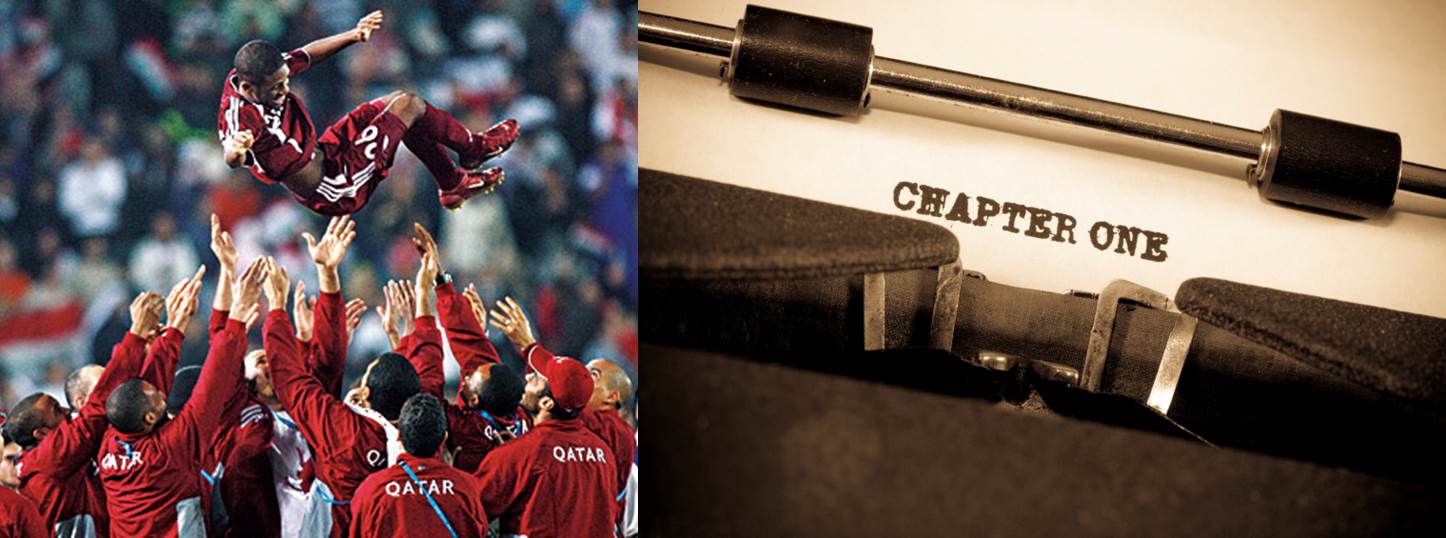
Crossing the finish line or starting over
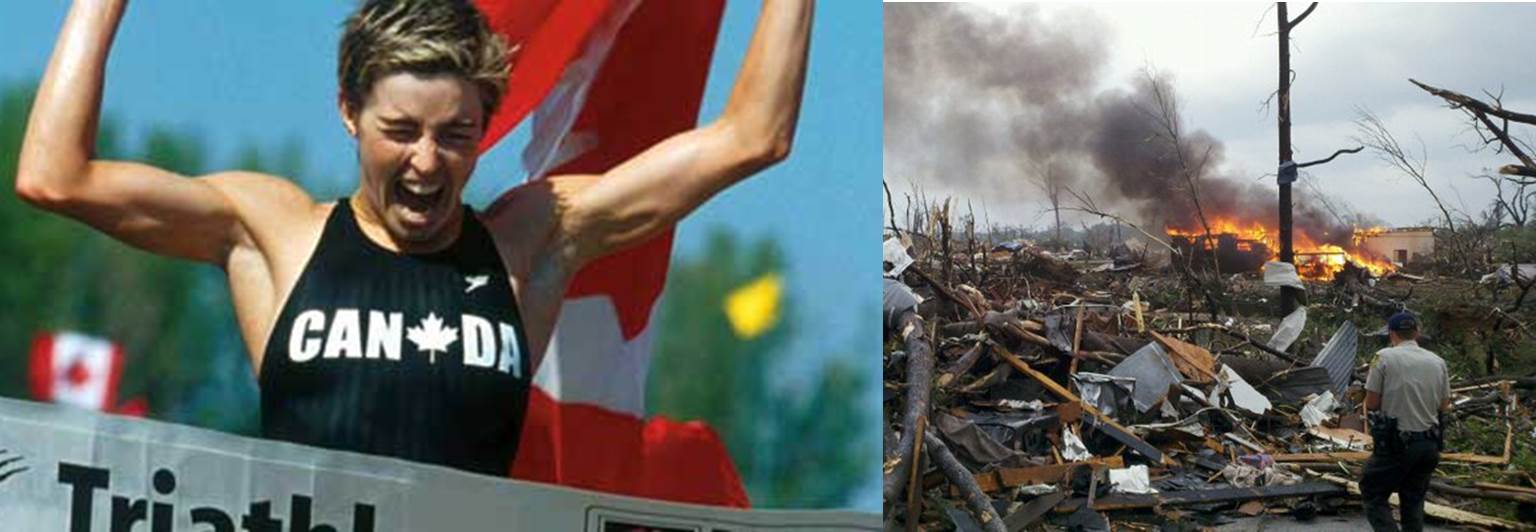
There are all kinds of courage
(Images used without permission but with plenty of gratitude.)
A Zeroeth Law of Writing.
Writing those initial words is like a trust exercise that has gone horribly wrong because you never quite hit the ground, but rather keep spinning until you puke something out (how’s that for metaphor goulash?).
There is a shitty part about doing a zero draft, and it is this: sometimes you have to look at a mess you’ve made and realize you’ve now got to make something worthwhile out of it. And, fuck, that seems like a lot of work.
Funny, the idea of just writing it the right way the first time around never seems like as much work. Just think it out until it all lines up perfectly and then write it. Right?
If you can actually do this, then I salute you. Also, I’m probably going to hunt you down and eat your brain in the hopes of gaining your powers.
Zero drafts are a mess. They’re stories without their skin on, just the bones and blood and unidentifiable bloated squashy bits all kind of hanging together in a semi-cohesive shape. It’ll fall apart if you so much as look at it…
View original post 220 more words
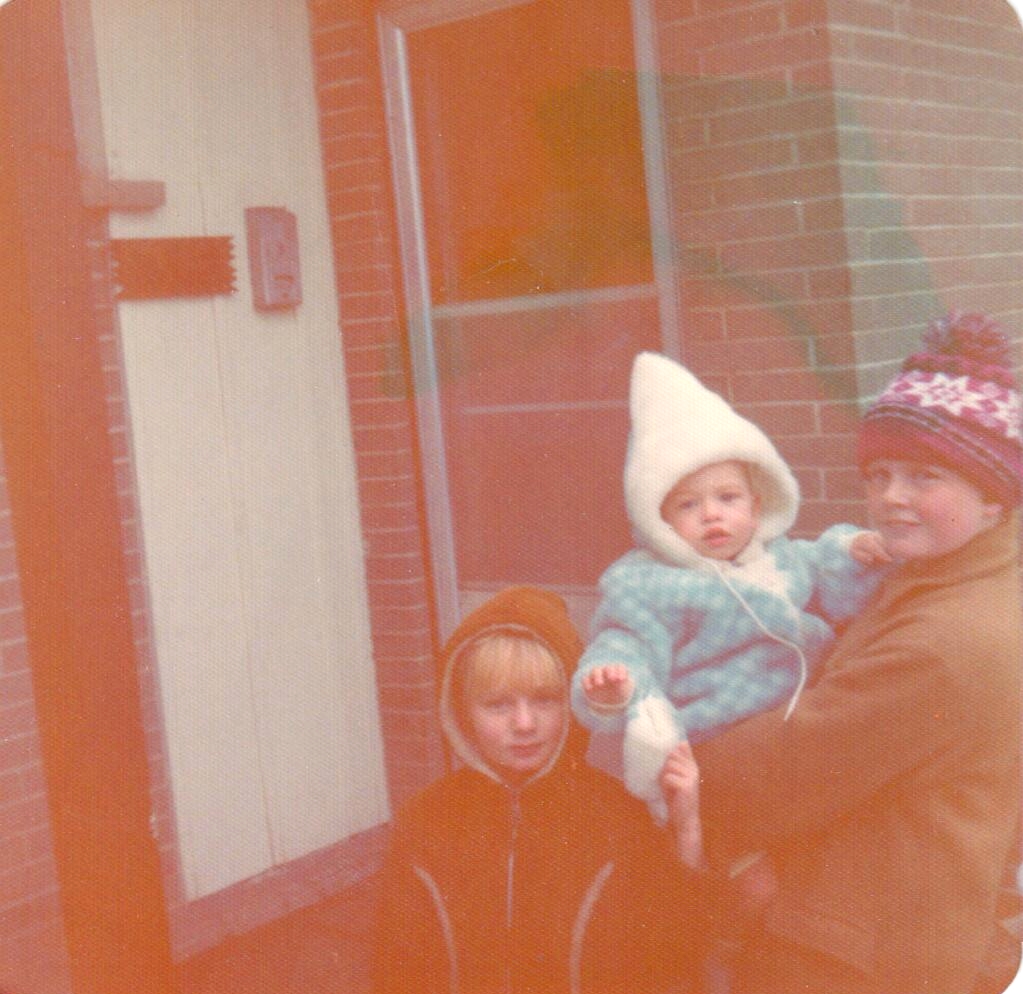
When we were young, my brothers and I were very close. The house was so small, we had little choice.
We moved a lot when we were kids, so we tended to see each other as playmates as much as anything, even though we were 5 and 5 years apart, me being the eldest. My brothers were constants in a sea of change.
At our youngest, spending time together was easy. Scott and I would use Shawn as cannon-fodder for any number of experiments, and he would respond as though it was great fun. The fact that Shawn did not die in childhood or does not suffer the after-effects of brain damage today is a testament to the strength and resiliency of the human skull.
As we got older, though, the strengths and directions of our individual personalities began to interfere with our genetic and social bond. I was the studious, overly verbose nerd. Scott was the quiet and reserved one; the observer. Shawn was the independent freedom fighter.
What were once common goals became more fractious, and as Shawn became older, he began to realize that his lot in life didn’t have to be guinea pig, and with his fiery temper, he in fact became a weapon of filial destruction. Only my decadal seniority kept him from killing Scott, who wasn’t always in my good books.
The genetic link continued to sever as we continued to age and each of us found less reason to spend time with the others. Our interests were different. Our needs were different. And our attitudes about the other two changed.
Around the time that I buggered off to college, Shawn’s rebellious streak took solid hold and he headed across the country to do his own thing. And Scott folded more into his own world.
In one way or another, we had effectively abandoned the family unit, and more important to my mother, the family unity. I can appreciate now how hard this must have been on her, but at the time, it all sounded like mom whining.
Over the next bunch of years, I think I saw Shawn twice…both weddings, one his. I saw Scott more regularly, but a lot of it felt forced as we would often meet at my mother’s place. I can only speak for me, but it felt like we were trying to maintain an illusion of what was.
There were good interactions between us. And I like to think there was still love. But there was no friendship. Genetics just wasn’t enough.
We parted company and lives. If asked, I am confident that any two thought the third was a complete asshole.
Time passes. We evolved and continue to become the men we need to be for ourselves. And from my perspective, something great has come out of that. We have been given a second chance at friendship.
As full-grown men with our own lives, interests and goals, we have chosen to welcome each other into our lives in one way or another. It is not the bond we shared in our youth, but I don’t know that any of us are too worried about that. (Shawn’s still too big and strong to let Scott and I pile drive him into the basement floor.)
The friendship I have with Shawn is different than the one I have with Scott, but both friendships are meetings of equals. One of the only bonds we seem to share as a trio, other than our familial link to our mother, is a neurological link to alcohol (damn, that’s one hell of a pub tab).
Shawn is the successful restaurateur, who is still the independent freedom fighter.
Scott is the dedicated family man, who is still the observer.
I am the raconteur, wit and writer, who is still the sexiest man in town (okay fine, the studious, overly verbose nerd).
But none of these descriptions is sufficient. We are simply the men that we are.
Shawn, Scott and I are brothers by birth, but we’re friends by choice. And that’s the way it should be.



If music be the food of love, mine must be a tone-deaf acapella
PIECES OF ME...
Mother, Nehiyaw, Metis, & Itisahwâkan - career communicator. This is my collection of opinions, stories, and the occasional rise to, or fall from, challenge. In other words, it's my party, I can fun if I want to. Artwork by aaronpaquette.net
Life at any age can be amazing! We only need to grab hold & experience it!
The internet web log of Michael Cedarwood. I used to be a stripper. Now I'm a writer.
Thoughts on creativity, Pharma and whatnot
Mindfulness, Philosophy, Spirituality, Meditation, Awareness, Religion, Nature Photography
Living for Happiness
A perspective from the other side of the hockey ocean
Romance Author
Author of Kritsotopoula, Girl of Kritsa and Rodanthe's Gift
Our opinions don't stink!
Rantings and Ravings on all things Screenwriting and Movies
My Elicits, an Inception... Learning to Live in Perfection


 createdbyrcw