Re: Rewrites (Part One)—Toronto Screenwriting Conference 2014

Chitlik

One of the definite highlights for me at this year’s TSC was the rewrite session offered by screenwriter, director and producer Paul Chitlik, who is now also a professor of screenwriting at Loyola Marymount University. For me, the practical sessions resonate much longer than the advice or adoration panels.

If there was one disappointment with Chitlik’s session it was that the 90 minutes apportioned to him were not nearly enough for him to really explain his process, try as he might. Thus, in many respects, the session was more of an appetite whetter for his book Rewrite: A Step-by-Step Guide to Strengthen Structure, Characters, and Drama in Your Screenplay.


Stages of review

For Chitlik, a good rewrite means taking 8 separate passes at your screenplay, which include:

  1. A review for structure
  2. A review for conflict
  3. A review of descriptive paragraphs
  4. A review of the protagonist’s dialogue
  5. A review of the antagonist’s dialogue
  6. A review of the supporting character’s dialogue
  7. A review of cuts that can be made
  8. A review of the presentation of the screenplay

According to Chitlik, this iterative review process causes many of his students to groan, but his attitude is that if you don’t like your script enough to read it eight times, you seriously need to rewrite your script or you need to throw it away and work on something else.


Structure: The main story elements

Before starting his specific rewrite techniques, Chitlik took us on a bit of an overview of the main elements of the main story, acknowledging that this number will vary depending on who you read or to what storytelling philosophy you ascribe.

His main points or pillars are: Ordinary life, inciting incident, end of Act I (goal or plan), midpoint, low point, final challenge, return to the now-forever-changed normal life.

In the ordinary life, we find our protagonist impressionable and naïve, and from Chitlik’s perspective, our first visual of the protagonist should give us some clue as to his or her character flaw. This is where we see the character in context and how the person’s flaw interferes with his or her normal life.

With the inciting incident, something external to the protagonist impacts his or her world, changing the world forever and forcing the character to take action. Chitlik acknowledges there is a lot of debate on where precisely within a screenplay the inciting incident should occur. He actually prefers later (toward page 15) to give us time to get to know the protagonist.

By the end of Act I, the protagonist has had a chance to reflect on the inciting incident and formulate a response. This is where the story really begins as the protagonist takes the lead. Chitlik acknowledges that this isn’t always the case, however, and offers the example of Thelma & Louise where Thelma doesn’t really take control of her world until the midpoint.

By the midpoint, the protagonist has been pursuing his or her goal but an external force spins the story on its axis, leaving the protagonist to come up with a new goal or plan. For Chitlik, the protagonist should also learn something new about him or herself when this happens.

By the end of Act II, though, the protagonist reaches the low point, ideally triggered by his or her flaw, where all is lost and the goal seems completely unattainable. As Chitlik notes the cliché, the dark night of the soul.

At some point, an external force triggers the protagonist to engage in the final challenge. Here, the protagonist must overcome his or her flaw, and often repairs a relationship. Chitlik notes that while this final challenge is often large and dramatic (e.g., a battle), it can also be quite small and subtle, but it must involve the protagonist overcoming the fatal flaw.

The protagonist then returns to the new normal. Life often moves just as it did in the beginning, but the protagonist’s approach or viewpoint is forever changed in some way.


Chitlik then suggested that the story is actually four stories, each of which has its own version of the 7 story elements, but are ideally intertwined with each other:

The Main Story included the basic plot points or challenges the protagonist faces

The Emotional Story describes the central relationship of the protagonist, whether with the antagonist, a love interest, or some other form

The Personal Growth Story shows how the protagonist comes to face and then overcome his or her flaw

The Antagonist’s Story highlights that the antagonist has his or her own goals in life (wants and needs)

Chitlik adds that we may never see the antagonist’s ordinary life and instead of a flaw, we want to show his or her human quality, which makes the antagonist both more empathetic to the audience and a bit more chilling.


In Part Two of this post, we will look more closely at Chitlik’s advice on dissecting first your main characters and then the actual screenplay itself.

tsc-logo

Talking Comedy—Toronto Screenwriting Conference 2014

(L to R): Jeff Biederman, Katie Ford, Joseph Raso, Andrew Clark

(L to R): Jeff Biederman, Katie Ford, Joseph Raso, Andrew Clark

This past weekend, TSC2014 convened a panel of sitcom showrunners entitled Comedy Is A Funny Business, where the panelists discussed various aspects of developing comedy for Canadian television.

The panel was comprised of Jeff Biederman (showrunner for Spun Out), Joseph Raso (showrunner for Seed) and Katie Ford (showrunner for Working the Engels), and was moderated by Andrew Clark, Director of Humber College’s Comedy Writing and Performance Program.


How do you know you or something is funny?

From Raso’s perspective, most people who want to write comedy typically have good comedic sense, and that it is important to trust your own instincts on what is funny. The rest of the writing process comes down to mechanics. Ford added that it is often about what you watched as a kid, the shows you grew up with.

Biederman mentioned that he had taken improv and stand-up comedy classes several years earlier, but had never really enjoyed them. He still wanted to be associated with comedy, however, so he gravitated to comedy television. Ford is an advocate of such classes, however, as she feels it gives the writer a sense of what you are up against. And Raso echoed those sentiments suggesting it also makes sure that you give actors solid material with which to work.


Can you discuss the seeming renaissance of sitcoms in Canada?

According to Raso, it is important to have a solid premise or conceit for a show, a distinct way to describe the core idea, because simply having ideas for individual episodes won’t cut it. One of the challenges for Canadian sitcoms, he warns, however, is that it is so hard to get networks to see beyond the first year—one and done, as he describes it—which has doomed many shows in the past. For most shows, the first season is difficult as the show hasn’t yet managed an identity or found its audience.

For writers, Biederman adds, this can be a big challenge as it can take a while for a new writer to break through, and there are not a lot of places to build the necessary skills or unique voice needed to be successful.


Can you describe the pitching process?

For Biederman, it is about going in with a story. Rather than try to tell jokes or act things out, he prefers to focus on why this show, what is particularly interesting about this premise. And if you already have a spec pilot script, all the better, because it helps the creator and writer maintain his or her power in the conversation and gives the network something more definitive to look at.

For Ford, it is about walking in with your logline, introducing a sense of theme, outlining a typical episode and then describing the characters. But perhaps most importantly, letting people see your passion for the project and how you connect with the subject matter.

Raso couldn’t agree more. For him, the personal angle is key.

Ford also suggests that it is vital you engage the executive you are pitching because he, she or they are your first audience.


Can you talk about the writers’ room?

Biederman describes the mix as people sharing responsibility for the final product, more as partners than anything in a hierarchical sense. He even brings in outsiders to punch-up the script (e.g., jokes). He describes the room as ruthless but welcoming and admits that it’s not always easy to be in the room or to run it.

Ford agrees, suggesting that it is a collaborative environment, but is by no means a creative free-for-all. Her job is to listen for the voices that add to the show. Raso, meanwhile suggests that the hardest part of the job for him is that he has to say no a lot, but despite that difficulty, it is vital that the room start off with real, honest and open discussion.

Biederman suggests that table reads with the actors can be invaluable to the writers but that they don’t always happen. Scripts for a multi-camera show can change 50 or 60 times over the course of a week, Ford adds, limiting the usefulness of table reads. And single-camera shows tend to work on tighter timelines, so again table reads are not always possible.


So, how does a new writer get into the room?

Biederman suggests starting as a script coordinator rather than try to get in with samples of your writing. The job will give the novice writer invaluable production experience. Ford agrees, suggesting that her own script coordinator kept things together on her show.

Ford also suggests that new writers need to be heard, to get their voice out there by whatever mechanism they can find, whether Twitter feeds, blogs, anything. It’s about demonstrating your strengths and your personality to show you’d be a good fit for the room.

According to Biederman, the make-up of the room has steadily changed over the years. It’s not just television writers, but also stand-up comedians and performers who bring unique voices into the mix.

The biggest place he sees new writers fail is in not sending their work when he offers to look at it. The fear of it being not quite perfect kills a lot of opportunities. Just send the work, he says.


Spec script or spec pilot?

Both Raso and Ford were adamant that they much prefer to read original work over spec scripts. According to Ford, they’re just not interested in reading yet another Big Bang Theory spec or whatever show is popular. She finds it much harder to get a sense of a writer’s unique voice by looking at a script that is trying to be someone else’s voice.

tsc-logo

On Second Thought

Do you think?

Why do we give our second thoughts so much more sway than our firsts? What is so magical about the second thought that makes it more believable, more honest, more sensible?

I had second thoughts about writing this simply because it was prompted by a conversation with a friend who is struggling with a dilemma. Would my friend be upset I was talking about him or her? Making light of his or her dilemma? Sharing secrets that weren’t mine?

I can deal with that.

Rare is the person who completely trusts his gut; who goes with the first thought that comes into his head. To the outside world, such a person is often considered rash or impulsive, perhaps even flighty. Rarely is he described as definitive or confident.

Second thought, in contrast, is seen as considered, rational, reasoned…well, thoughtful (or thought full).

The Senate of Canada’s Parliament has oft been described as the chamber of sober second thought, as though the House of Commons is populated by ADHD-riddled chickens, prone to explode at the slightest provocation.

(The realities of the Canadian Parliamentary system are fodder for a different blog post.)

The concept of sobriety does point to one of the benefits of second thought. The decision not to pursue flights of drunken fancy such as driving home after drinking too much rather than take a taxi. But while this points to the benefits of second thought, it also points to its source: Fear.

We have and listen to second thoughts because we are afraid. We are afraid that our first thought was ill-considered (rash) and might result in failure. And because we don’t want to take responsibility for that failure, we build a rationale for our alternative thoughts, thus making ourselves more confident in our decision.

The harsh truth, however, is that no matter what our final decision, there is always a risk of failure, perhaps catastrophic. The Titanic and Hindenburg were well-considered ventures based on sound and common practices. It was the unforeseen (if not unforeseeable) incidences that doomed the exercises.

To a greater or lesser extent, gut instincts and reactions are You unencumbered by rules and conventions. They represent the way you view the world and yourself without the censorship of social pressures. Thus, I believe, they more accurately represent your goals and desires, and ultimately what will make you happy.

Now, this is not a belief that was reasoned on the basis of careful study. If nothing else, that would defeat my argument. It does, however come from a lifetime of observing others and myself.

I have no reason to lie to myself when under my own control, in the absence of other influences—chemical or human. Thus, my gut instinct is my truth.

This doesn’t mean that I have to follow it—there may be extenuating circumstances to go another way—but I should never deny the instinct.

In denying it, I will never have the opportunity to build faith in it, and ultimately, second thought is a lack of faith in myself.

confident

Becoming the Mole

whack-a-mole-ogrady

Life used to be one giant game of Whack-A-Mole, the arcade game where you stand above a series of holes with a mallet or bat and try to smack moles as they arise randomly. In my case, however, those moles were work assignments, social responsibilities and general life requirements.

Just as I would deal with one call for my attention, it seemed two or three others would raise their ugly heads. Distracted and disoriented, I would reach for one task only to watch it recede and yet others arrive.

As a 60-second challenge in an arcade or amusement park, the game can be quite fun; a way to exercise your peripheral vision and reflexes.

As a lifestyle choice, however, it was exhausting.

A change—well chronicled in this blog—took place a couple of years ago, and my approach to Whack-A-Mole changed with it.

I still play the game, but now the moles are of my choosing. I know where the next mole will arise because I put it there.

A novel writing episode. A hockey game to attend. A poem to create. A book chapter to read. Words to cross in a puzzle. All of my choosing.

Movies to attend with friends. Colleagues to meet in a pub. Media on which to socialize. I can say yes…and I can say no.

As I learned to give up control of my life, I also made sure I gave up any over-arching sense of responsibility for the happiness or satisfaction of others. I do my best to fulfill my commitments, but I make sure I understand where my commitments end.

The result? I have never been more in control of my life.

XIR155451

Ironically, in my divestment of control came an unexpected freedom that has manifested itself as a muse that comes unbidden. I do not search or wait for the muse; she sits with me constantly. An earnest voice who insists on being heard.

I have become the mole. Now, it is my turn to pop up in other people’s lives—hopefully welcomed—to offer exciting new creative opportunities.

A new sketch or monologue. A book that needs illustration. An idea for a video. An invitation to photograph animals at the aquarium.

Go ahead. Gimme a whack!

mallet

(Images are property of owners and are used here without permission, but I thought I’d take a whack at it.)

Spring’s release

ux96cj-l-610x610-dress-floral-backless-floral-dress-summer-dress-open-back-summer-flowers-cute-clothing-pink

Greys and browns slowly release

Their deathly grip on our souls.

Minor moments of colour—

Red, orange, green, yellow—

Poke out weary heads,

Finding welcome, seizing hope.

Splashes grow to puddles,

Puddles into deluge,

And the world is bathed

In chromatic bliss.

Spring lines have arrived.

Can the sales be far behind?

(Image is property of owner and is used here without permission, but appreciation.)

Unexpected surprises: Steve Allen autobiography

Steve Allen

So, as I was waiting to join my friends in a taping of our sketch comedy show SomeTV!, I decided to check out a nearby second-hand book store.

Under normal circumstances, this would be a complete love-fest for me, but as funds have been a tad tight lately, I was really only in the store to browse (yeah…that could happen). Well, as I moved through the section of film and television books, I happened across an autobiography of Steve Allen, who among other things was the first host of The Tonight Show.

As I had nothing but respect for Allen’s comedic timing and his ability to get amazing, ad-libbed comments out of pretty much anyone, I picked the book up only to see that they were only asking $2.99 for the book, entitled Mark It And Strike It.

Despite this price being five times the cover price of the book, I decided I could afford the few dollars and bought it.

Wow! Was I in for a surprise!

That Allen manages to include information about his childhood, marriages and early jobs is the only reason that this volume could ever be called an autobiography. The reality is that a full two-thirds of the book are dedicated to a vast range of subjects that reflect more Allen’s thoughts on and opinions about the world in which he lives in 1960 (yes, the book is three years older than me).

Allen discusses the vast gulf that separates Art from Science. The loss of spirituality, or perhaps more accurately, the misappropriation of spirituality in the United States. McCarthyism and anti-Communist terrors that permeated society. Issues of racism and sexism that were tearing the country apart. The nature of humour and comedy and its tortuous demise at the hands of populism.

Aside from my surprise at finding such topics in an autobiography and in the ideas being expressed within the pages, the greatest reflection came as I reached the end of the book and realized that almost 55 years later how little has changed.

The Arts still suffer in a school system fixated on the STEM disciplines (science, technology, engineering, mathematics).

There is still rampant use of God and Jesus as weapons across the United States in defense of excluding other cultures.

Admittedly, anti-Communist sentiment has subsided as Communism itself has subsided, but it was quickly replaced by anti-Muslim sentiments.

One need only look at the leadership of the United States and the parasitic pundits to realize that racism and sexism still cling like so much fecal matter.

And the recent controversy over the Colbert Report shows that satire and wit remain under constant attack.

Yes, this was possibly the most effective $2.99 I have ever spent in my life as it gave me more than a few hours of entertainment…it gave me a never-ending stream of subjects to contemplate.


(PS This is not intended as a comment on the United States as we have more than our share of problems in Canada. I simply discussed the US as that was Steve Allen’s context.)


For more about Steve Allen, check out these links:

Frank Zappa on The Steve Allen Show

Steve Allen’s Man on the Street

Steve Allen Online (official web site)

Lesser known April days

slip_on_banana_peel

April Fuel’s Day – when gas is half-price at all retailers (particularly taco joints)

April Fall’s Day – when pranksters leave banana peels all over busy downtown streets

April Phallus Day – when everyone gets to be a dick

April Fail’s Day – when the community makes all those stupid videos about stupid ideas

April Fill’s Day – when women named April have sex

April Fell’s Day – when Norman’s daughter April holds a memorial for her dad

April Foal’s Day – when everyone gets to horse around

April Feel’s Day – when everyone on the subway/metro gets handsy

April Phile’s Day – when everyone who loves April won’t shut up about it

(Image is property of owners and is used here as a joke.)

Kid Lit publisher/illustrator needed

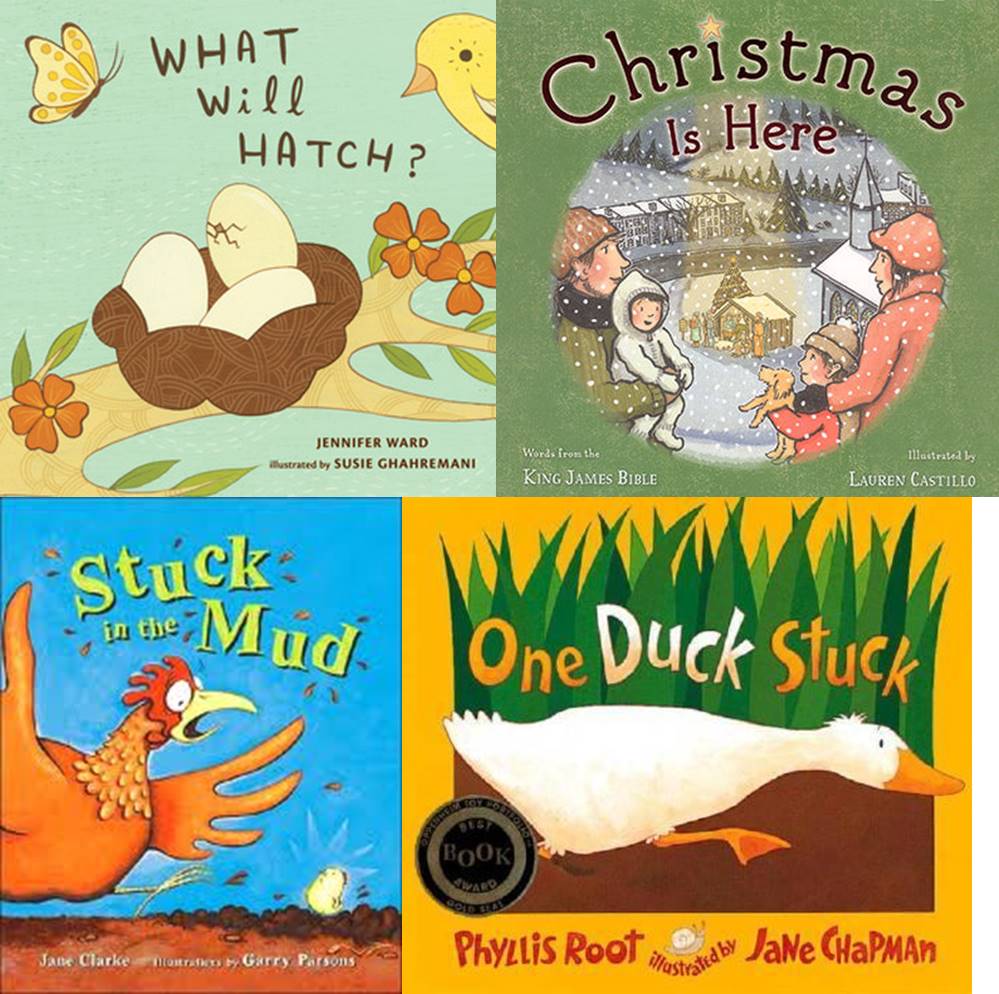
Looking for recommendations for a Kid Lit publisher for a new story I have written but do not yet have illustrated. Story is aimed at 3- to 5-year-olds.

Alternatively, looking for an illustrator who is used to working for no cash and can work with me on this to find a publisher.

In my head, the imagery for the story could be along the lines of any of the books in the image below, but I am open to other styles as well…this is just what resonates in my head.

In my head, these styles could work with my story, but remaining open to other ideas!

In my head, these styles could work with my story, but remaining open to other ideas!

Ultimately, I will go to the usual sources for these types of things, but thought I would check with my loving, supportive and talented social network to lend a hand, an ear, an eye…whatever you’ve got, really.

Any recommendations or thoughts, Universe?

Feel free to DM me…happy to share the story with people….thanks…Randy